

P0121 on 2008-2015 Scion xB: Throttle Position Sensor Causes and Fixes
On a 2008-2015 Scion xB, code P0121 is most often caused by a dirty electronic throttle body due to carbon buildup from oil consumption inherent to the 2AZ-FE engine. A thorough cleaning of the throttle body is a common and effective first step. If cleaning doesn't resolve the issue, the entire throttle body assembly, which includes the non-serviceable sensor, may need replacement. In some cases, rodent damage to the wiring harness has also been a confirmed cause.
- Code P0121 on a 2008-2015 Scion xB is most likely due to a dirty throttle body.
- Start your diagnosis by thoroughly cleaning the throttle body and performing an idle relearn.
- If cleaning doesn't solve the issue, the entire throttle body assembly will likely need to be replaced, as the sensor is built-in.
- The engine's known oil consumption issue makes this problem more common, so check your oil level regularly.
- Always inspect the wiring harness for damage before replacing expensive parts.
What's Unique About the 2008-2015 Scion xB
The 2008-2015 Scion xB uses the 2AZ-FE engine, which is known for excessive oil consumption due to a piston ring design flaw addressed in TSB S-SB-0024-11. This oil burning leads to heavy carbon and sludge buildup inside the electronic throttle body, causing the throttle plate to stick or move slowly. This mechanical sticking is a very frequent trigger for the electronic P0121 code on this specific vehicle. This makes a thorough cleaning the first and most effective diagnostic step, more so than on engines without this oil consumption tendency.
Symptoms You May Notice
- Check Engine Light is on
- Vehicle Stability Control (VSC) and/or Traction Control (TRAC) lights are on or flashing.
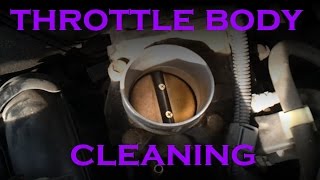
- Rough or fluctuating idle, sometimes hunting up and down. 🎬 Watch: How to fix a rough idle by cleaning the throttle body.
- Hesitation or stumbling during acceleration.
- Engine stalling at low speeds or when coming to a stop
- Vehicle enters 'limp mode' with severely reduced engine power.
- No response from the accelerator pedal (dead pedal).
- Replacing the accelerator pedal position (APP) sensor. While the code definition can include the pedal sensor, on the Scion xB with a 2AZ-FE, the problem is almost always at the throttle body itself or its wiring.
Most Likely Causes
- Dirty Throttle Body 🔴 High Probability → Shop Fuel Injection Throttle Body The 2AZ-FE engine's tendency to consume oil leads to increased carbon and oil sludge buildup in the intake system, which gums up the throttle plate and bore, preventing smooth movement.
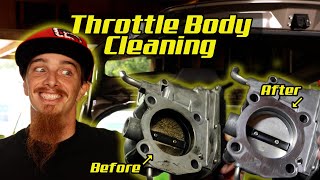
How to confirm: Visually inspect the inside of the throttle body and the throttle plate for a thick layer of black carbon buildup, especially around the edges where the plate seats.
Typical fix: Remove the throttle body from the intake manifold and clean it thoroughly with dedicated throttle body cleaner and a soft cloth. Do not spray cleaner directly into the plastic intake manifold. A new gasket should be used upon reinstallation.
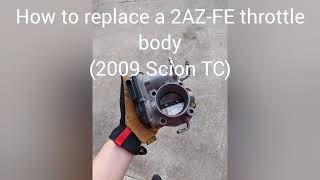
Est. part cost: $5-$20 for cleaner and a gasket - Failed Throttle Body Assembly 🟡 Medium Probability → Shop Fuel Injection Throttle Body The throttle position sensor (TPS) is integrated into the throttle body assembly and cannot be replaced separately on this model. If the sensor's internal Hall-effect elements or motor fail, the entire unit must be replaced. 🎬 Watch: Step-by-step guide to replacing the 2AZ-FE throttle body assembly.
How to confirm: After cleaning the throttle body, use a scan tool with live data to monitor the 'Throttle Position No. 1' and 'No. 2' PIDs. The voltage should change smoothly as you press the pedal. Jumps, dead spots, or readings that don't correspond to pedal movement indicate a failed sensor. The ECU expects a specific voltage difference between the two signals; a deviation triggers the code.
Typical fix: Replace the entire throttle body assembly. An idle relearn procedure is required after installation.
Est. part cost: $150-$400 - Damaged Wiring Harness ⚪ Low Probability
How to confirm: Visually inspect the wiring harness leading to the throttle body for any signs of damage. Rodents are a known cause, chewing through the wires and causing a complete loss of connection. Check for loose or corroded pins in the connector itself.
Typical fix: Repair or replace the damaged section of the wiring harness. In a confirmed case from a forum, splicing the severed wires back together resolved the P0121 and P0123 codes.
Est. part cost: $10-$50 for wiring repair supplies, but can be over $1000 if the entire engine harness is replaced at a dealer.
Rare But Worth Checking
- Faulty Powertrain Control Module (PCM): This is very rare. All other possibilities, especially the throttle body and its wiring, should be exhaustively ruled out before considering the PCM as the cause.
Diagnosis Steps
- Read the codes with an OBD-II scanner and confirm P0121 is present. Note any other codes, like P0123 (wiring issue) or P1605 (idle issue).
- Visually inspect the air intake hose for cracks or loose connections.
- Remove the air intake hose from the throttle body. Inspect the throttle plate and bore for heavy carbon buildup. This is the most likely cause.
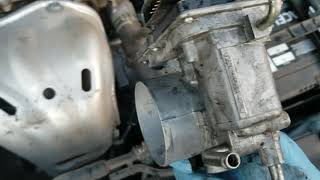
- If dirty, disconnect the negative battery terminal. Remove the throttle body assembly. This involves disconnecting the electrical connector, two coolant hoses (be prepared to plug them), 🎬 See this walkthrough for removing and deep cleaning the throttle body. and four 12mm mounting bolts.
- Thoroughly clean the throttle plate and bore using a dedicated throttle body cleaner and a soft, lint-free rag. Manually move the plate to clean all surfaces. Do not use abrasive materials.
- Reinstall the throttle body with a new gasket. Reconnect hoses and the electrical connector. Torque bolts to specification.
- Perform an idle relearn procedure. A common method is to reconnect the battery, start the engine and let it warm up completely, then let it idle for 5-10 minutes with no accessories on.
- If the code returns after cleaning, use a scan tool to monitor live data for the throttle position sensor PIDs (e.g., 'Throttle Position No. 1'). The voltage should sweep smoothly from about 0.5V at idle to around 4.5V at wide-open throttle, with no glitches or dropouts.
- If the live data shows erratic readings or doesn't change with pedal input, the throttle body assembly needs to be replaced.
- If the live data is erratic but the throttle body is new, meticulously inspect the wiring harness between the throttle body and the ECU for damage, especially from rodents.
Parts You'll Likely Need
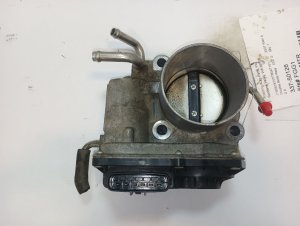
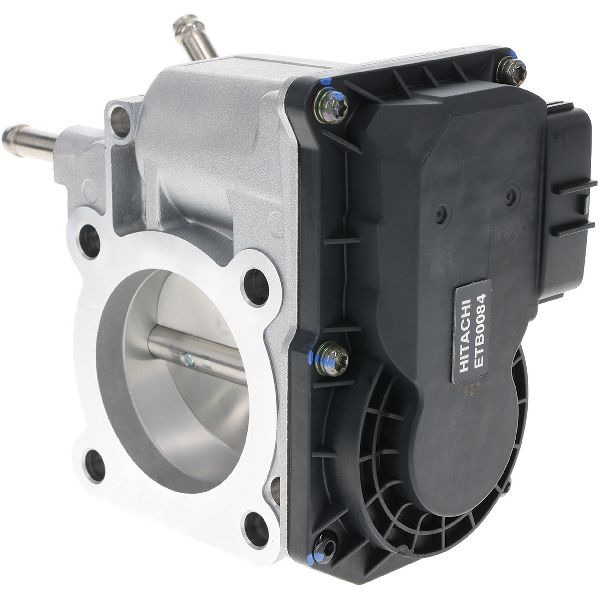
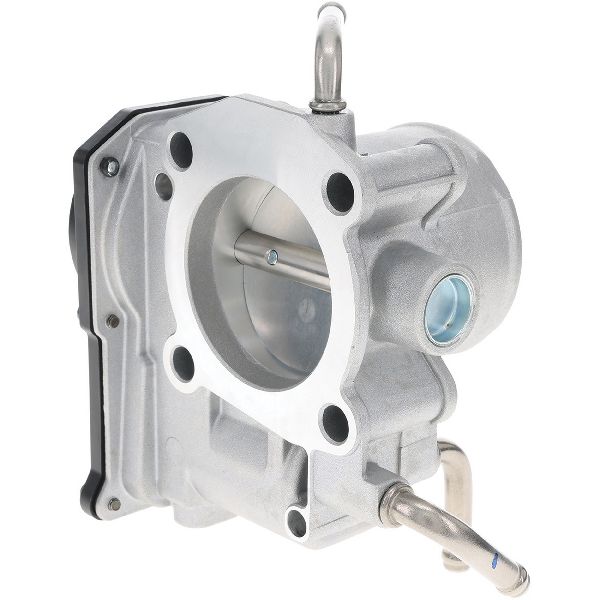
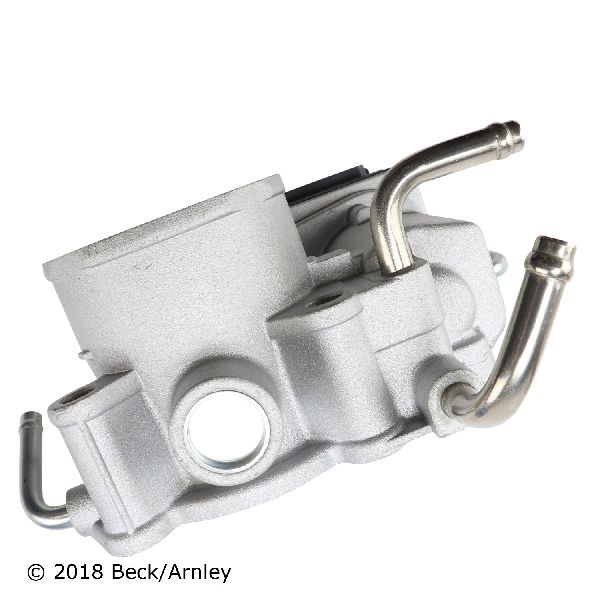
- Throttle Body Assembly
(OEM #22030-0H031)— This is the most common fix if cleaning fails. The throttle position sensor is integrated into this part and is not sold separately for this vehicle. This part number supersedes 22030-28070, 22030-28071, and 22030-0H030.
Trusted brands: Aisin, Denso (OEM supplier), Hitachi, Toyota Genuine Part
OEM price range: $300-$500
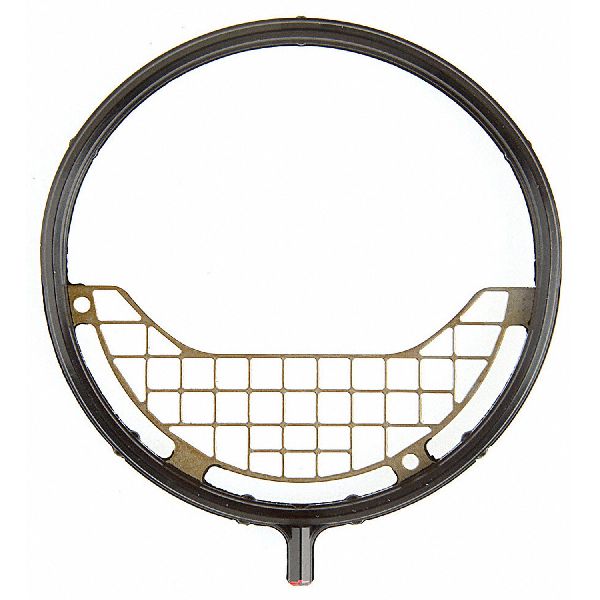
Aftermarket price range: $150-$250 - Throttle Body Gasket
(OEM #22271-0H040)— This gasket should always be replaced whenever the throttle body is removed for cleaning or replacement to prevent vacuum leaks.
Trusted brands: Fel-Pro, Mahle, OEM
OEM price range: $10-$20
Aftermarket price range: $5-$10
Related Codes That Often Appear With This One
- P0123 — This code indicates 'Throttle/Pedal Position Sensor/Switch 'A' Circuit High Input'. It often appears with P0121 when there is a severe electrical fault, such as a completely severed wiring harness, causing the voltage signal to go above the expected maximum.
- P1605 — This is a manufacturer-specific code for 'Rough Idle'. It can be stored as a history code when a dirty throttle body causes the idle to become unstable, which is a primary symptom of the P0121 fault.
- P0120 — Indicates a general malfunction in the 'Throttle/Pedal Position Sensor/Switch 'A' Circuit'. It's a broader code that can accompany the more specific P0121 performance code.
Technical Service Bulletins (TSBs) & Recalls
- S-SB-0024-11 / S-SB-0031-14: These TSBs address the root cause of excessive oil consumption in the 2AZ-FE engine by replacing the piston assembly. This is a major contributing factor to the throttle body contamination that triggers P0121.
- EG045-07: Addresses P0121/P0122/P0123 codes on some 2AZ-FE applications, recommending replacement of the throttle body assembly.
Platform-Specific Known Issues
- The 2AZ-FE engine was subject to a Technical Service Bulletin (TSB S-SB-0024-11 Rev2) for excessive oil consumption due to piston ring design. This underlying issue directly contributes to the carbon buildup that causes the P0121 code, making it a recurring problem for some owners if the engine repair was not performed.
- Another TSB, EG045-07, was issued for some earlier 2AZ-FE engines for a MIL ON with P0121, P0122, and P0123, where the fix was to replace the throttle body assembly with an updated part, indicating a known issue with the component itself.
Mechanic-Grade Diagnostic Values
- Throttle Position Sensor (VTA1) Voltage — expected: 0.5V - 1.0V at idle (throttle closed), smoothly increasing to ~4.5V at wide-open throttle (WOT).. Failure: Voltage is outside the expected range, shows jumps, dropouts, or does not change when the accelerator pedal is pressed.
- Throttle Position Sensor (VTA2) Voltage — expected: Varies in proportion to VTA1, but at a different voltage level. The ECU looks at the relationship between VTA1 and VTA2.. Failure: The voltage difference between VTA1 and VTA2 deviates from the normal operating range, which for this system is less than 0.8V or more than 1.6V for 2 seconds.
- ECM Power Source for Throttle Body (+BM) — expected: 9V to 14V (Battery Voltage).. Failure: Low or no voltage indicates a problem with the EFI MAIN relay or wiring from the fuse block.
- Throttle Body Connector Pin Voltages (at connector E5) — expected: Pin 1 (M+): Varies during operation. Pin 2 (M-): Varies during operation. Pin 3 (VC): 4.5V to 5.5V (Reference Voltage). Pin 4 (VTA1): 0.5V to 1.0V (closed) to ~4.5V (WOT). Pin 5 (VTA2): ~2.1V (closed) to ~4.9V (WOT). Pin 6 (E2): ~0V (Ground).. Failure: Incorrect voltage on VC (power) or E2 (ground) pins points to a wiring or ECU issue. Incorrect VTA1/VTA2 readings point to a sensor failure.
Scan Tool Commands That Help
- Toyota Techstream: Data List — To monitor live data PIDs for 'Throttle Pos #1' and 'Throttle Pos #2' to see their voltage outputs in real-time as the accelerator is pressed. This is crucial for identifying glitches or dead spots that indicate a failing sensor.
- Toyota Techstream: Active Test — To command the throttle motor to open and close, verifying the mechanical and electrical operation of the throttle body independent of the accelerator pedal input. This helps isolate a faulty throttle body from a faulty pedal sensor.
- Toyota Techstream: Utility -> Reset Memory — After replacing the throttle body, this function can be used to clear the old learned values from the ECU, forcing it to perform a new idle relearn. This is more thorough than simply disconnecting the battery.
Wiring & Ground Locations
- B1 / B2 — Located on the left rear of the engine block.. These are primary engine ground points. A loose or corroded ground here can cause erratic sensor readings and intermittent electrical problems for the entire engine management system, including the throttle body.
- Throttle Body Connector — The 6-pin electrical connector on the electronic throttle body assembly.. This is the single point of connection for the throttle motor and both position sensors. Check for bent/corroded pins, moisture intrusion, or rodent damage to the harness at this critical point.
- ECM Connectors (e.g., A9, B30) — The Engine Control Module (ECM) is located in the engine compartment, on the left side.. The wires from the throttle body terminate here. Specific pins for VTA1, VTA2, VC, and E2 can be back-probed to confirm signal integrity directly at the ECU, ruling out the entire wiring harness if signals are bad here.
Real Owner Repair Stories
- Reddit user u/Elkins45 (2009 Scion xB, 2.4L 2AZ-FE, 5-speed manual) — VSC OFF light flashing, Check Engine Light on, completely dead accelerator pedal. Codes P0121 and P0123 present.
❌ Tried (didn't work) Replacing the ETCS fuse., Disconnecting the battery to reset the ECU.
✅ What actually fixed it The wiring harness to the throttle body had been completely chewed through by mice. Splicing and repairing the severed wires resolved all symptoms and codes. - ScionLife.com forum user (Scion tC (with same 2AZ-FE engine), modified with a turbo kit.) — Sudden loss of power, dead accelerator pedal, car entered limp mode. Code P0121 was present.
❌ Tried (didn't work) Clearing the code (it returned).
✅ What actually fixed it The throttle body was extremely dirty, with oil from the aftermarket air filter causing the throttle plate to stick. A thorough cleaning of the throttle body resolved the issue and the code did not return.
OEM Part Supersession History
22030-28070, 22030-28071, 22030-0H030→22030-0H031— Internal improvements and revisions to address reliability issues noted in TSB EG045-07.
Model Year Variations Within This Range
- 2008-2010 (approx.): Some early production 2AZ-FE engines used a throttle body with four coolant hose connections. Toyota issued TSB-0111-10 detailing an updated design that uses only three connections. When replacing an old 4-hose unit with a new 3-hose unit, the lowest drain hose is simply removed and discarded per the TSB.
Diagnostic Flowchart
Used vs. New Parts: Buying Guide for This Vehicle
When a used part is the smart pick: A used OEM throttle body from a low-mileage donor vehicle can be a cost-effective choice, especially if the failure is electronic and not just due to dirt. Since the primary failure mode is often carbon buildup, a used part may still require a thorough cleaning before installation.
Donor-vehicle mileage cap: roughly under 80000 miles for the part to have meaningful remaining life.
What to inspect on the donor part:
- Check for a clean throttle plate and bore. Heavy, baked-on carbon suggests a hard life or an engine with severe oil consumption.
- Ensure the electrical connector pins are straight, clean, and free of corrosion.
- Verify the part number matches or is a known supersession for your vehicle.
- Ask for the donor vehicle's mileage if possible.
OEM-only on this vehicle (don't cheap out):
- Throttle Body Gasket - Always use a new gasket to prevent vacuum leaks; the cost is minimal.
Aftermarket brands forum-validated for this vehicle:
- Aisin (often the original OEM supplier)
- Denso (original OEM supplier)
- Hitachi
Brands owners have reported issues with on this vehicle:
- Ultra-cheap, unbranded units from online marketplaces may have lower quality electronics and materials, leading to premature failure or inconsistent performance.
Real Owner Stories
Aggregated from forums and TSBs cited above. Mileages and costs reflect what owners reported in those sources.
2009 Scion xB 2AZ-FE 2.4L
Symptoms: Started the car and the VSC Off and Check Engine lights were on. The accelerator pedal was completely unresponsive and had no effect on engine speed. The scanner showed codes P0121 and P0123.
What fixed it: The cause was mice having chewed the throttle body wiring harness completely in half. Splicing the severed wires back together resolved all issues.
Source hint: Reddit (r/MechanicAdvice, r/AskMechanics)
2008 Scion xB 2AZ-FE 2.4L
Symptoms: Check Engine Light (MIL) was on with codes P0121, P0122, and P0123 stored in the ECU.
What fixed it: The official fix was to replace the entire throttle body assembly with an updated part as recommended by the manufacturer.
Source hint: TSB EG045-07
Related OBD-II Codes
Frequently Asked Questions
My 2009 Scion xB is burning a lot of oil. Could this be related to my P0121 code?
Can I just replace the throttle position sensor (TPS) on my xB, or do I need the whole throttle body?
I cleaned my throttle body, but the P0121 code came back. What's the next step?
Are there any official service bulletins for a P0121 code on this Scion?
My accelerator pedal is completely dead and I have codes P0121 and P0123. What should I check?
Do I need to do anything special after installing a new throttle body on my Scion xB?
Helpful Videos
Used OEM Parts in Stock
New Aftermarket Parts Available



The information in this article is provided for general reference and educational purposes only. Vehicle specifications, procedures, and part compatibility can vary by production date, trim level, and region. Always consult your vehicle's factory service manual and verify part numbers before purchasing or performing repairs. Safety-critical components such as airbags, seat belts, and braking systems should be installed by a qualified professional.
- Scion xB:
- 🧭 Diagnostic Flowchart
- 🎬 Helpful Videos
- 🛍️ Shop This Part
- What's Unique About the 2008-2015 Scion xB
- Symptoms You May Notice
- Most Likely Causes
- Rare But Worth Checking
- Diagnosis Steps
- Parts You'll Likely Need
- Related Codes That Often Appear With This One
- Technical Service Bulletins (TSBs) & Recalls
- Platform-Specific Known Issues
- Mechanic-Grade Diagnostic Values
- Scan Tool Commands That Help
- Wiring & Ground Locations
- Real Owner Repair Stories
- OEM Part Supersession History
- Model Year Variations Within This Range
- Used vs. New Parts: Buying Guide for This Vehicle
- Real Owner Stories
- 2009 Scion xB 2AZ-FE 2.4L
- 2008 Scion xB 2AZ-FE 2.4L
- Related OBD-II Codes
- Frequently Asked Questions
- 🎟️ Get 5% Off