

P0121 on 2014-2018 Subaru Forester: Throttle Position Sensor Fixes
On a 2014-2018 Forester, P0121 is almost always caused by a dirty electronic throttle body, not a failed sensor. Carbon buildup prevents the throttle plate from moving smoothly, causing the sensor's reported position to be out of the expected range. The fix is to clean the throttle body and perform an idle relearn procedure. This is a common DIY job costing under $20 for a can of cleaner.
- Start with the cheapest and most likely fix: clean the throttle body thoroughly.
- An idle relearn procedure is mandatory after cleaning the throttle body or disconnecting the battery.
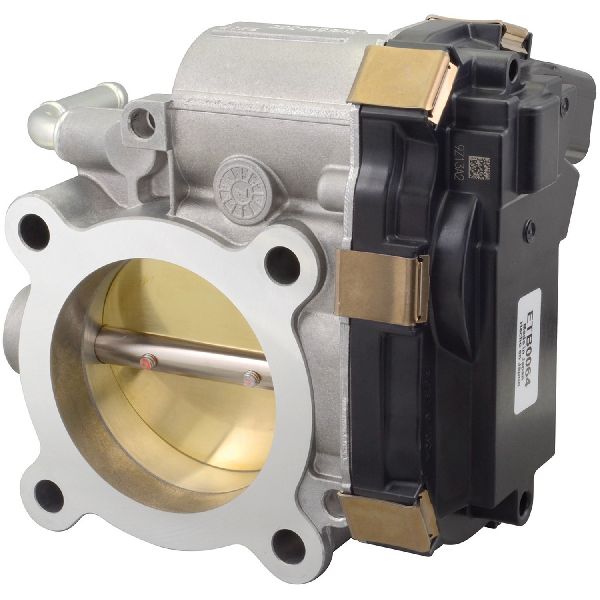
- The Throttle Position Sensor (TPS) is integrated into the throttle body and cannot be replaced separately on this vehicle.
- Do not confuse this code with an issue related to the accelerator pedal; P0121 points to the throttle body on the engine.
- If cleaning doesn't work, inspect the wiring before condemning the expensive throttle body assembly.
- If code P2135 is also present, the throttle body assembly has almost certainly failed internally.
What's Unique About the 2014-2018 Subaru Forester
Unlike older Subarus with a separate, replaceable throttle position sensor, the 2014-2018 Forester (fourth generation, SJ) has its TPS integrated directly into the electronic throttle body assembly. This means the sensor cannot be replaced by itself. The most common reason for this code is not electronic failure, but rather a physical buildup of carbon and oil residue inside the throttle body. This gunk, often from the PCV system, creates a sticky ring that prevents the throttle plate from closing smoothly or responding quickly to small inputs, causing the sensor's reading to lag or deviate from the ECM's expected value.
Symptoms You May Notice
- Check Engine Light is on
- Flashing cruise control light (a common Subaru behavior when the Check Engine Light is on)
- Hesitation or stumbling during acceleration
- Rough, unstable, or high idle
- Engine stalling, especially when coming to a stop or returning to idle
- Vehicle enters 'limp mode' with reduced engine power
- Erratic throttle response
- Poor fuel economy
- Replacing the Accelerator Pedal Position (APP) sensor. P0121 points specifically to the throttle body on the engine, not the gas pedal assembly.
- Assuming the Throttle Position Sensor has failed and needs replacement without first cleaning the throttle body. The issue is often mechanical (sticking) rather than electrical. 🎬 Watch: Understanding the P0121 code and how to fix it
- Replacing the Mass Airflow (MAF) sensor, as its symptoms can sometimes overlap with a faulty throttle body.
Most Likely Causes
- Dirty Throttle Body 🔴 High Probability → Shop Fuel Injection Throttle Body The PCV (Positive Crankcase Ventilation) system routes oil vapors and blow-by gases back into the intake manifold to be burned. Over time, these vapors can bake onto the relatively cooler surfaces of the throttle body and plate, causing a sticky, black carbon residue.
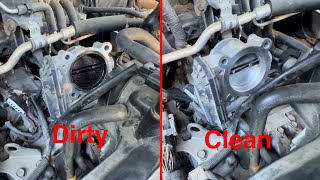
How to confirm: Remove the air intake duct from the throttle body and visually inspect for a ring of black carbon buildup around the throttle plate and bore. The buildup is often heaviest on the side facing the intake manifold.
Typical fix: Carefully clean the throttle body bore and plate with a dedicated throttle body cleaner and a soft, lint-free cloth or brush. 🎬 Watch: Step-by-step throttle body and MAF cleaning guide An idle relearn procedure must be performed afterward.
Est. part cost: $10-$20 - Faulty Throttle Body Assembly ⚪ Low Probability → Shop Fuel Injection Throttle Body While less common than a dirty throttle body, the internal electronics of the integrated sensor or the motor can fail over time. The dual potentiometers inside can develop dead spots or send conflicting signals.
How to confirm: If a thorough cleaning and idle relearn procedure does not resolve the code and symptoms, and the wiring is confirmed to be good, the throttle body assembly itself is the likely culprit. This is especially true if P0121 is accompanied by P2135.
Typical fix: Replace the entire throttle body assembly with a new OEM or high-quality aftermarket unit, followed by an idle relearn procedure.
Est. part cost: $450-$700 - Wiring or Connector Issue ⚪ Low Probability Vibrations and heat in the engine bay can, over many years, cause wires to chafe or connector pins to become loose or corroded. The connector at the throttle body is the most likely point of failure.
How to confirm: Inspect the wiring harness and connector going to the throttle body for any signs of damage, fraying, or corrosion. With the key on, engine off, use a multimeter to check for the correct reference voltage (usually 5V) and ground at the connector pins.
Typical fix: Repair the damaged section of wiring or clean/replace the connector.
Est. part cost: $5-$50
Rare But Worth Checking
- Faulty Engine Control Module (ECM): This is extremely rare. The ECM should only be considered after all other possibilities, including the throttle body and its wiring, have been definitively ruled out by a professional technician.
Diagnosis Steps
- Scan the vehicle for any other stored trouble codes to get a full picture of the issue.
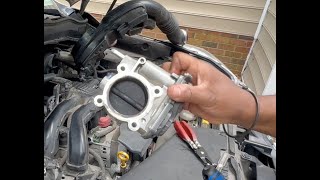
- Remove the air intake hose connected to the throttle body.
- Visually inspect the inside of the throttle body for carbon buildup. Pay close attention to the edges of the throttle plate and the bore where it seats.
- If dirty, perform a thorough cleaning. With the ignition OFF, spray throttle body cleaner onto a clean, lint-free rag (not directly into the throttle body) and wipe away all the black residue. Gently push the throttle plate open to clean the edges and seating area. Avoid using abrasive tools that could scratch the bore.
- Reconnect the air intake hose and ensure all connections are secure.
- Perform the Idle Relearn Procedure: Disconnect the negative battery terminal for at least 20 minutes. Press the brake pedal a few times to discharge any remaining electricity. Reconnect the battery. Turn the ignition key to the 'ON' position (do not start) for 15 seconds. Turn the key off for a few seconds. Start the engine and let it idle with no accessories on (no A/C, radio, lights) for 10-15 minutes, or until the engine reaches full operating temperature and the radiator fan cycles on and off. Turn the engine off. The relearn is complete. 🎬 See how to perform the idle relearn on a Forester
- Clear the P0121 code with a scan tool and take the vehicle for a test drive, including city and highway conditions, to see if the code returns.
- If the code returns, inspect the throttle body wiring harness and connector for damage. Check for 5V reference and good ground at the connector with a multimeter.
- If cleaning fails and the wiring is intact, the throttle body assembly likely needs to be replaced.
Parts You'll Likely Need
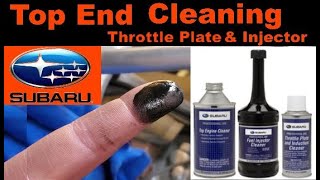
- Throttle Body Cleaner — This is the most common fix. Cleaning the throttle body removes the carbon buildup that causes the throttle plate to stick, which is the primary cause of this code.
Trusted brands: CRC, Berryman, Gumout
Aftermarket price range: $10-$20 - Throttle Body Assembly
(OEM #16112AA370 (for 2.5L FB25B) or 16112AA420 / 16112AA410 (for 2.0L FA20F DIT))— If cleaning the throttle body does not resolve the issue, the integrated sensor or motor has likely failed, requiring replacement of the entire assembly.
Trusted brands: Subaru (OEM), Hitachi (Often the OEM supplier)
OEM price range: $550-$880
Aftermarket price range: $300-$500
Related Codes That Often Appear With This One
- P2135 — This code indicates a 'Throttle/Pedal Position Sensor/Switch A/B Voltage Correlation' error. The throttle body uses two separate sensors for redundancy. If their voltage signals disagree with each other beyond a certain threshold, this code is set. When it appears with P0121, it strongly points to an internal electronic failure of the throttle body assembly itself.
Platform-Specific Known Issues
- Many owners on forums like subaruforester.org report this code appearing between 80,000 and 120,000 miles, coinciding with significant carbon buildup.
- The idle relearn procedure is particularly critical on this platform. Skipping it after cleaning or replacement will almost certainly result in a persistent high or erratic idle, even if the P0121 code does not return immediately.
Mechanic-Grade Diagnostic Values
- Throttle Position Sensor (TPS) Main Signal Voltage — expected: Approx. 0.5V at closed throttle, sweeping smoothly up to approx. 4.5V at wide-open throttle.. Failure: Voltage is stuck, shows dropouts, or does not sweep smoothly as the throttle plate is manually opened (with ignition on, engine off).
- Throttle Position Sensor (TPS) Sub Signal Voltage — expected: Operates in reverse of the main signal. Approx. 4.5V at closed throttle, sweeping smoothly down to approx. 0.5V at wide-open throttle.. Failure: Voltage does not correlate inversely with the main sensor's signal, indicating an internal fault.
- Throttle Body 6-Pin Connector Test (Key On, Engine Off) — expected: Using a multimeter: Two pins should show a 5V reference, two pins should show near 0V (ground), and the other two are the main/sub signal wires to be tested.. Failure: Missing 5V reference, missing ground (voltage higher than 0.1V), or signal voltages outside the expected range indicate a wiring issue or a failed ECM driver.
Scan Tool Commands That Help
- Professional Scan Tool (e.g., Subaru Select Monitor, Autel, Snap-on): Throttle Relearn / Throttle Body Relearn / Throttle Matching — This function should be used after cleaning or replacing the throttle body to clear the ECM's previously learned idle values and force it to recalibrate to the new, clean closed-throttle position. Failure to do so often results in a persistent high or unstable idle.
Wiring & Ground Locations
- Throttle Body Connector (6-Pin) — Directly on the electronic throttle body assembly, where the engine wiring harness connects.. This is the primary point for all electrical testing. A loose connection, corroded pins, or a damaged wire here will directly cause P0121 or related codes. The pinout typically consists of: 5V Reference (Main), TPS Signal (Main), Sensor Ground (Main), 5V Reference (Sub), TPS Signal (Sub), and Sensor Ground (Sub). An open ground wire is a known failure mode that can cause the signal voltage to be incorrect.
Real Owner Repair Stories
- Reddit user on r/Subaru_Outback (2015 Subaru Outback with related FB25 engine) — Multiple codes including P0107 (MAP Sensor), poor acceleration, lunging, and stalling.
❌ Tried (didn't work) Initial diagnosis pointed towards replacing sensors.
✅ What actually fixed it The root cause was a wiring/grounding issue. A multimeter test on the MAP sensor connector (which shares its power/ground architecture with the TPS) revealed the ground wire was open. This caused the signal wire to float high, mimicking a sensor failure. The fix was to repair the ground wire in the harness.
OEM Part Supersession History
16112AA420→16112AA410 (Possible)— Part number consolidation or minor revision.
Heads up: Both 16112AA420 and 16112AA410 are listed for the 2.0L FA20F DIT engine in the Forester XT. Always verify the correct part number with a VIN at a Subaru dealership before purchasing.
Model Year Variations Within This Range
- 2017-2018: The Forester received a mid-cycle refresh for the 2017 model year, which included a revised front fascia, updated EyeSight safety features, and minor tweaks to the 2.5L engine's CVT for improved fuel economy. However, there is no evidence that the electronic throttle body assembly or the common causes of code P0121 were changed as part of this refresh.
Diagnostic Flowchart
Other Known Issues on This Vehicle
Issues unrelated to this code that are worth knowing about as an owner of this generation:
- Excessive Oil Consumption (FB25B) 🔴 High — Very common in 2014-2016 models. Caused by defective low-tension piston rings. Consumption can exceed 1 quart per 1,200 miles. (Ref: TSB 02-157-14R was issued, and a class-action lawsuit led to extended warranties (now expired) for this issue.)
- Lineartronic CVT Failure/Shudder 🔴 High — Widespread across the 2014-2018 generation. Symptoms include shuddering, hesitation from a stop, and whining noises, often appearing between 60k-80k miles. (Ref: Subaru extended the CVT warranty to 10 years/100,000 miles for many affected vehicles due to the high failure rate.)
- A/C Compressor Clutch Failure 🟠 Medium — Common on 2014-2016 models. The electromagnetic clutch on the compressor fails, leading to a loss of A/C. The compressor itself is often fine. (Ref: TSB 10-84-16R addresses faulty electrical windings in the A/C compressor clutch assembly for 2014-2016 Foresters.)
- Rear Coil Spring Fracture 🟠 Medium — Rear coil springs can corrode and break, causing a sudden drop in ride height. More common on vehicles from salt-belt regions. (Ref: A recall was issued for this issue on certain 2014-2018 Foresters.)
- Cam Carrier Oil Leak (FB25B) 🟠 Medium — A known source of significant oil leaks from the front timing cover area. The repair is labor-intensive and can be expensive. (Ref: A TSB was issued to address this sealing issue.)
Used vs. New Parts: Buying Guide for This Vehicle
When a used part is the smart pick: A used OEM throttle body from a reputable salvage yard is often a smart choice if replacement is necessary. It can be significantly cheaper than a new OEM part and is often more reliable than a new, non-brand-name aftermarket part due to superior factory calibration and materials.
Donor-vehicle mileage cap: roughly under 80000 miles for the part to have meaningful remaining life.
What to inspect on the donor part:
- Verify the donor vehicle had low mileage.
- Inspect the throttle bore for deep scratches or scoring.
- Ensure the electrical connector pins are straight and free of corrosion.
- Check that the throttle plate moves without binding (though it will be stiff to move by hand).
OEM-only on this vehicle (don't cheap out):
- While not strictly OEM-only, it is strongly recommended to use a Genuine Subaru part or one from the original equipment manufacturer (like Hitachi) for the throttle body assembly to avoid software compatibility and calibration issues.
Aftermarket brands forum-validated for this vehicle:
- Hitachi (often the OEM supplier)
Brands owners have reported issues with on this vehicle:
- Generic, unbranded, or 'white-box' parts from online marketplaces should be avoided, as their internal electronics and motors may not meet OEM specifications for longevity and performance.
Real Owner Stories
Aggregated from forums and TSBs cited above. Mileages and costs reflect what owners reported in those sources.
2015 Subaru Forester (non-turbo)
Symptoms: Started sputtering out like no throttle; wouldn't go over 60 on flat ground and even less up hills, similar to a catalytic converter issue.
What fixed it: Turning the car off and back on provided temporary relief, but the context suggests throttle body cleaning or replacement is the standard resolution for these symptoms.
Source hint: Reddit r/SubaruForester
2014-2018 Subaru Forester — ~100000 miles
Symptoms: Idle and hesitation issues related to the throttle system.
What fixed it: Cleaning the throttle body and performing an idle relearn procedure.
Source hint: subaruforester.org
2014-2018 Subaru Forester
Symptoms: Filthy throttle body causing performance issues.
What fixed it: Cleaning the throttle body, which allowed the car to perform the idle relearn on its own.
Source hint: Reddit r/SubaruForester & r/subaru
Related OBD-II Codes
Frequently Asked Questions
My 2015 Forester is sputtering and won't go over 60 mph; could this be the P0121 code?
Is there a specific mileage when P0121 usually appears on the 2014-2018 Forester?
The dealer quoted me hundreds to fix P0121. Can I fix this myself on my Forester?
Why is my cruise control light flashing along with the Check Engine Light?
Do I need to do anything special after cleaning the throttle body on my FB25B engine?
Could my Forester's P0121 code be related to the excessive oil consumption issue?
Helpful Videos

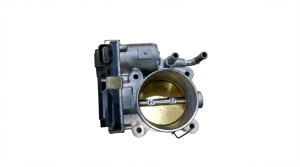
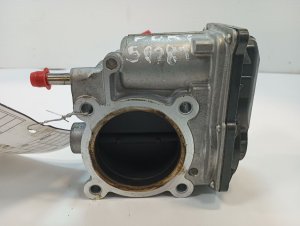
Used OEM Parts in Stock
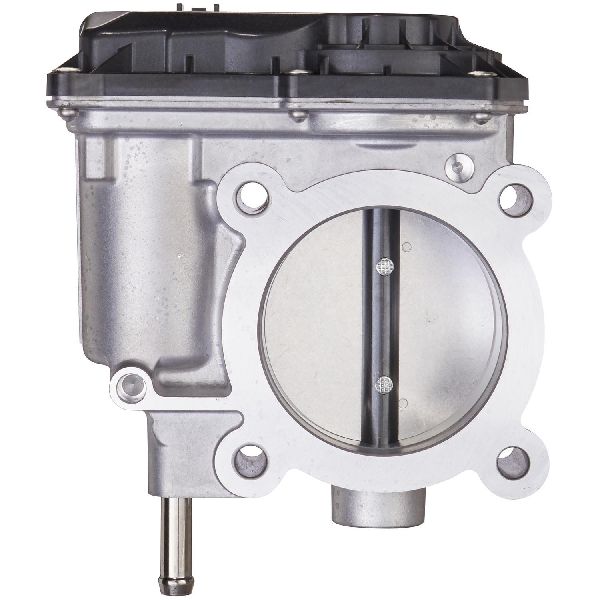
New Aftermarket Parts Available


The information in this article is provided for general reference and educational purposes only. Vehicle specifications, procedures, and part compatibility can vary by production date, trim level, and region. Always consult your vehicle's factory service manual and verify part numbers before purchasing or performing repairs. Safety-critical components such as airbags, seat belts, and braking systems should be installed by a qualified professional.
- Subaru Forester:
- 🧭 Diagnostic Flowchart
- 🎬 Helpful Videos
- 🛍️ Shop This Part
- What's Unique About the 2014-2018 Subaru Forester
- Symptoms You May Notice
- Most Likely Causes
- Rare But Worth Checking
- Diagnosis Steps
- Parts You'll Likely Need
- Related Codes That Often Appear With This One
- Platform-Specific Known Issues
- Mechanic-Grade Diagnostic Values
- Scan Tool Commands That Help
- Wiring & Ground Locations
- Real Owner Repair Stories
- OEM Part Supersession History
- Model Year Variations Within This Range
- Other Known Issues on This Vehicle
- Used vs. New Parts: Buying Guide for This Vehicle
- Real Owner Stories
- 2015 Subaru Forester (non-turbo)
- 2014-2018 Subaru Forester — ~100000 miles
- 2014-2018 Subaru Forester
- Related OBD-II Codes
- Frequently Asked Questions
- 🎟️ Get 5% Off