

P0123 on 2016-2022 Honda HR-V: Throttle Position Sensor High Input Causes and Fixes
On a 2016-2022 Honda HR-V with the 1.8L engine, code P0123 is almost always caused by a failed throttle position sensor (TPS). Because the sensor is integrated into the throttle body, the entire assembly must be replaced. The OEM part number is 16400-R1A-A21. Expect to pay $450-$600 for the part and perform an idle relearn procedure after installation.
- P0123 on a 2016-2022 HR-V means the throttle position sensor is sending an abnormally high voltage signal.
- The most likely fix is replacing the entire throttle body assembly (Part No. 16400-R1A-A21), as the sensor is built into it.
- Before buying parts, inspect the 6-pin wiring connector at the throttle body for obvious damage or corrosion.
- After replacing the throttle body, you must perform an idle relearn procedure for the engine to run correctly.
- Driving with this code is not recommended due to the high risk of entering 'limp mode' with sudden power loss.
What's Unique About the 2016-2022 Honda HR-V
On the 2016-2022 Honda HR-V, which uses a modern 'drive-by-wire' throttle system, the throttle position sensor (TPS) is not a separate, inexpensive part you can swap out. Instead, it is permanently integrated into the electronic throttle body assembly. This design, common on modern Hondas, means that if the internal sensor fails—the most common cause for P0123—the entire throttle body unit must be replaced. This makes the repair more costly and involved than on older vehicles with standalone sensors.
Symptoms You May Notice
- Check Engine Light is illuminated
- Vehicle enters 'limp mode' with drastically reduced engine power
- Hesitation, stumbling, or poor acceleration
- Erratic or high engine idle
- Engine may stall unexpectedly
- Loss of throttle response
- Flashing 'D' (Drive) indicator on the instrument cluster in some cases
- Attempting to buy and replace only the throttle position sensor. On the 2016-2022 HR-V, this part is not sold separately and is integrated into the throttle body assembly.
Most Likely Causes
- Failed Throttle Body Assembly (Integrated TPS) 🔴 High Probability → Shop Fuel Injection Throttle Body The throttle position sensor is an electronic component that wears out over time. Since it is integrated into the throttle body on this platform, the entire unit is the single point of failure for a sensor fault.
How to confirm: After confirming the wiring is intact, use a scan tool to monitor the live data for TPS voltage. If the voltage for 'TP Sensor A' is stuck high (e.g., at 5V) and does not change when the accelerator pedal is pressed, the sensor inside the throttle body has failed.
Typical fix: Replace the entire throttle body assembly with a new unit (Honda Part No. 16400-R1A-A21). A throttle body idle relearn procedure must be performed after installation for the engine to idle correctly.
Est. part cost: $450 - $600 - Wiring Harness or Connector Issue 🟡 Medium Probability Vibrations and heat in the engine bay can cause wires to chafe or the 6-pin connector at the throttle body to become loose or corroded over time.
How to confirm: Visually inspect the wiring harness going to the throttle body for any signs of damage, melting, or corrosion. Unplug the 6-pin connector and check for bent or corroded pins. Use a multimeter to check for a short to power on the signal wire and for continuity on the ground wire.
Typical fix: Repair the damaged section of the wiring harness or clean/replace the connector. Apply dielectric grease to the connector pins upon reassembly to protect against moisture.
Est. part cost: $5 - $50
Rare But Worth Checking
- Faulty Powertrain Control Module (PCM): → Shop Engine Control Module (ECM) This is extremely rare and should only be considered after the throttle body and all related wiring have been thoroughly tested and proven to be good. A PCM failure can sometimes cause incorrect interpretation of sensor signals.
- Dirty Throttle Body: → Shop Fuel Injection Throttle Body While less likely to cause a 'Circuit High' code compared to a 'Performance' code, heavy carbon buildup can theoretically cause the throttle plate to stick in a position that results in an abnormal voltage reading. Cleaning is a good first step if the throttle body appears very dirty.
Diagnosis Steps
- Connect an OBD-II scanner to confirm the P0123 code and check for any other related DTCs like P0223.
- Use the scanner's live data function to view the voltage of Throttle Position Sensor 'A'. Note the reading with the key on, engine off.
- Slowly press the accelerator pedal to the floor and observe the voltage. It should sweep smoothly from a low value (approx. 0.5V) to a high value (approx. 4.5V).
- If the voltage is stuck at a high value (e.g., 5V) and does not change, this strongly suggests a sensor or circuit fault.
- Turn the vehicle off. Disconnect the 6-pin electrical connector at the throttle body. Inspect the connector and pins for corrosion, moisture, or damage.
- Inspect the wiring harness leading to the throttle body for any visible signs of chafing, melting, or breaks.
- If the wiring and connector appear okay, the failure is almost certainly internal to the throttle body assembly.
- If a wiring fault is suspected, use a digital multimeter to test for the 5V reference voltage, proper ground, and for shorts on the signal wire at the connector.
- After replacing the throttle body, perform the Idle Relearn Procedure.
- Idle Relearn Procedure: Make sure all electrical accessories (A/C, radio, lights) are off. Start the engine and hold the RPM at 3,000 (in Park or Neutral) until the radiator fan cycles on, or until the engine reaches normal operating temperature. Then, let the engine idle for at least 5 minutes. The procedure is complete. 🎬 Watch: How to perform an idle relearn without a scan tool
Parts You'll Likely Need
- Throttle Body Assembly
(OEM #16400-R1A-A21)— This is the most common cause of a P0123 code on this vehicle because the non-serviceable Throttle Position Sensor (TPS) is integrated within this assembly.
Trusted brands: Honda (OEM), Hitachi (Often the OEM supplier), Bosch
OEM price range: $550-$600
Aftermarket price range: $300-$450
Related Codes That Often Appear With This One
- P0223 — This code indicates 'Throttle/Pedal Position Sensor/Switch 'B' Circuit High'. Since drive-by-wire systems use two sensors (A and B) for redundancy, a fault that affects both (like a wiring or power supply issue) can cause both codes to appear simultaneously.
Technical Service Bulletins (TSBs) & Recalls
- No specific Technical Service Bulletins (TSBs) directly addressing code P0123 for this vehicle were found in public databases. However, TSBs for other issues like start-stop button failures and paint problems exist for this generation.
Platform-Specific Known Issues
- Early Failure on a New Vehicle: An owner on a Quattroruote forum reported multiple warning lights, including the check engine light, appearing on a brand new HR-V with only 700km. The dealer suspected a faulty sensor, highlighting that even new vehicles are not immune to this electronic failure.
- Erratic Throttle Behavior: Some HR-V owners have reported erratic throttle behavior, including lurching or loss of power, which can be related to faults in the throttle control system that trigger codes like P0123.
Mechanic-Grade Diagnostic Values
- Throttle Position Sensor 'A' (TP SENSOR A) Voltage — expected: Approximately 0.45V - 0.5V at closed throttle, sweeping smoothly to approximately 4.5V at wide-open throttle (WOT).. Failure: Voltage is stuck at a high value (e.g., above 4.8V) regardless of throttle position.
- VCC5 (5V Reference Voltage) at Throttle Body Connector — expected: Approximately 5.0V with the key on, engine off.. Failure: Voltage is significantly lower than 5.0V or absent, indicating a wiring or PCM issue.
- SG5 (Sensor Ground) at Throttle Body Connector — expected: Near 0V, with good continuity to chassis ground.. Failure: Voltage is present on the ground wire, or there is high resistance to ground, indicating a grounding issue.
Scan Tool Commands That Help
- Honda Diagnostic System (HDS): TP SENSOR A Live Data Parameter — Use this to monitor the real-time voltage output of the primary throttle position sensor. A reading stuck high (over 4.8V) confirms the fault condition the PCM is seeing.
- Honda Diagnostic System (HDS): THROTTLE BODY RELEARN / TP POSITION CHECK — After replacing the throttle body assembly, the HDS can be used to perform a forced relearn procedure to reset learned values and ensure correct idle and throttle response. This is an alternative to the manual idle relearn procedure.
- Honda Diagnostic System (HDS): Clear DTCs — Used after the repair is complete to erase the P0123 code from the PCM's memory.
Wiring & Ground Locations
- Throttle Body 6-Pin Connector — Directly on the electronic throttle body, located between the air filter box and the intake manifold.. This is the main connection point for the integrated TPS. A loose connection, corrosion on the pins, or damaged wires at this connector are common causes for a P0123 high-voltage fault.
- G101 — On the engine block or transmission housing, a primary grounding point for the engine harness.. A poor G101 ground can cause floating or incorrect voltage readings on various engine sensors, including the TPS, as it provides the reference ground for the sensor circuit. A missing or corroded G101 bolt has been documented to cause no-start and erratic electrical issues on the HR-V.
- Throttle Body Connector Pin 6 (Red/Black wire) — Pin 6 on the 6-pin connector at the throttle body.. This is the specific pin for the TP Sensor A signal voltage. Technicians will back-probe this wire to check the live voltage output.
Real Owner Repair Stories
- YouTube channel 'Honest Auto Diagnostics' (2016 Honda HR-V) — No crank, no start, relays clicking rapidly, no high beams.
❌ Tried (didn't work) Bypassing starter relay.
✅ What actually fixed it The main engine ground bolt (G101) was completely missing from the wiring harness mounting point on the engine/transmission. Reinstalling a bolt to secure the ground connection restored proper electrical function and resolved the starting issues. While not a P0123 case directly, it demonstrates the critical importance of the G101 ground for overall engine electronics on this platform.
OEM Part Supersession History
16400-R1A-A21→16400-R1A-A21— No supersession found. This part number appears to be consistent for the model range.
Heads up: While this part number is correct for the HR-V, it is also used on other Honda models like the Civic (2012-2015). Always verify fitment with the vehicle's VIN before purchasing.
Model Year Variations Within This Range
- 2019-2022: The Honda HR-V received a facelift for the 2019 model year. However, the 1.8L R18Z9 engine and associated electronic throttle control system remained the same. Therefore, the causes and repair procedures for P0123 are identical across the entire 2016-2022 range.
Diagnostic Flowchart
Used vs. New Parts: Buying Guide for This Vehicle
When a used part is the smart pick: A used OEM throttle body from a low-mileage donor vehicle can be a cost-effective option, as the failure is electronic and not typically a high-wear mechanical item. Given the high cost of a new OEM part, a used unit from a reputable salvage yard with a warranty is a reasonable choice.
Donor-vehicle mileage cap: roughly under 60000 miles for the part to have meaningful remaining life.
What to inspect on the donor part:
- Check for a clean throttle plate and bore; excessive carbon may indicate a high-mileage or poorly maintained engine.
- Ensure the 6-pin electrical connector is not damaged, cracked, or has corroded pins.
- Verify the part number on the used unit matches the required OEM number (16400-R1A-A21).
- Purchase from a seller that offers a warranty (e.g., 30-90 days) to protect against receiving a DOA part.
OEM-only on this vehicle (don't cheap out):
- While not strictly 'OEM-only', using a genuine Honda (often made by Hitachi) or a Hitachi-branded aftermarket part is highly recommended for electronic throttle bodies to ensure proper software compatibility and performance.
Aftermarket brands forum-validated for this vehicle:
- Hitachi (often the original equipment manufacturer)
- Bosch
- Standard Motor Products (SMP)
- Dorman
Brands owners have reported issues with on this vehicle:
- Unbranded, 'white-box' parts from online marketplaces should be avoided due to a high likelihood of premature failure, poor calibration, and lack of warranty support.
Real Owner Stories
Aggregated from forums and TSBs cited above. Mileages and costs reflect what owners reported in those sources.
2016-2022 Honda HR-V — 435 miles
Symptoms: Multiple warning lights appeared on the dash, including the check engine light.
What fixed it: The dealer diagnosed a faulty sensor that required replacement.
Source hint: Il Forum di Quattroruote - 'HRV da 1 mese e già problemi'
Related OBD-II Codes
Frequently Asked Questions
Can I just replace the Throttle Position Sensor (TPS) on my 2017 Honda HR-V, or do I need the whole throttle body?
Is there a special procedure required after installing a new throttle body on my HR-V?
My HR-V is almost brand new and it's showing a P0123 code. Is that possible?
What voltage should I see from the TPS on my scan tool if it's working correctly?
Are there any official Honda recalls or TSBs for the P0123 code on this HR-V?
Does the Honda Fit from the same generation have this same throttle body problem?
If I buy a used throttle body, what should I look for?
Helpful Videos

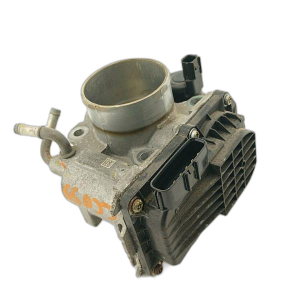
Used OEM Parts in Stock
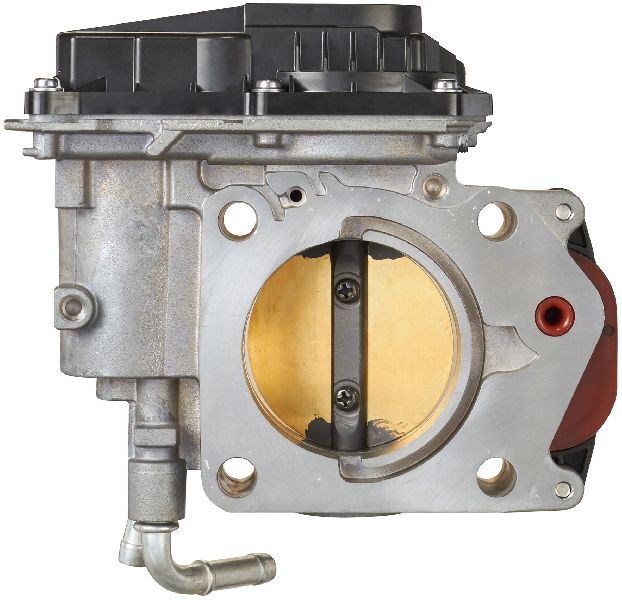
New Aftermarket Parts Available


The information in this article is provided for general reference and educational purposes only. Vehicle specifications, procedures, and part compatibility can vary by production date, trim level, and region. Always consult your vehicle's factory service manual and verify part numbers before purchasing or performing repairs. Safety-critical components such as airbags, seat belts, and braking systems should be installed by a qualified professional.
- Honda HR-V:
- 🧭 Diagnostic Flowchart
- 🎬 Helpful Videos
- 🛍️ Shop This Part
- What's Unique About the 2016-2022 Honda HR-V
- Symptoms You May Notice
- Most Likely Causes
- Rare But Worth Checking
- Diagnosis Steps
- Parts You'll Likely Need
- Related Codes That Often Appear With This One
- Technical Service Bulletins (TSBs) & Recalls
- Platform-Specific Known Issues
- Mechanic-Grade Diagnostic Values
- Scan Tool Commands That Help
- Wiring & Ground Locations
- Real Owner Repair Stories
- OEM Part Supersession History
- Model Year Variations Within This Range
- Used vs. New Parts: Buying Guide for This Vehicle
- Real Owner Stories
- 2016-2022 Honda HR-V — 435 miles
- Related OBD-II Codes
- Frequently Asked Questions
- 🎟️ Get 5% Off