

P0123 on 2015-2019 Hyundai Sonata: Throttle Position Sensor Circuit High Causes and Fixes
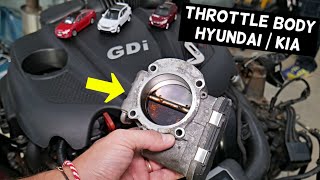
On a 2015-2019 Sonata, P0123 is almost always caused by a failed electronic throttle body assembly. The throttle position sensor (TPS) is integrated and cannot be replaced separately. Expect to pay $200-$400 for a new throttle body, with DIY replacement being manageable (2/5 difficulty). Before replacement, verify the wiring harness ground connection is solid, as a bad ground can also cause this 'circuit high' code.
- P0123 on a 2015-2019 Sonata almost always points to a failed electronic throttle body assembly, as the sensor is integrated.
- Before replacing the expensive throttle body, always check the wiring connector for a bad ground, which is a common and much cheaper fix.
- Be aware that the main symptom (limp mode) is also caused by major engine recalls (P1326 code). A flashing check engine light often points to the engine issue, while a solid light points to the throttle body.
- After replacing the throttle body, a 'relearn' procedure is recommended to ensure proper idle and performance. This can often be done without special tools by cycling the ignition.
What's Unique About the 2015-2019 Hyundai Sonata
For the 2015-2019 'LF' generation Sonata, the Throttle Position Sensor (TPS) is not a separate, serviceable part. It is integrated directly into the electronic throttle body assembly. This means that if the sensor itself fails, the entire throttle body unit must be replaced. Additionally, the primary symptom of this code—sudden, severe power loss known as 'limp mode'—is also a key symptom of major engine recalls (Campaign 953/T3G) related to the knock sensor and engine bearing wear on 2.0L and 2.4L Theta II engines. It's crucial to distinguish between a throttle system fault and these widespread engine issues, as the symptoms can be identical.
Generation note: The 2015-2019 model years cover the seventh generation (LF) of the Hyundai Sonata. This includes the initial 2015-2017 models and the facelifted 2018-2019 models. The causes and fixes for P0123 are consistent across these years, though part numbers for the throttle body may vary by engine type (1.6L Turbo, 2.0L Turbo, 2.4L GDI). The 2.0L Turbo engine received a new 8-speed automatic transmission for 2018, but the throttle body and its related diagnostics remain fundamentally the same.
Symptoms You May Notice
- Check Engine Light is on
- Vehicle suddenly enters 'limp mode' (drastically reduced engine power and RPM)
- Hesitation or stumbling when accelerating
- Rough, unstable, or high idle
- Engine stalling, especially when coming to a stop
- Poor or jerky acceleration
- Unpredictable or no throttle response
- Replacing the accelerator pedal assembly when the fault is in the throttle body circuit.
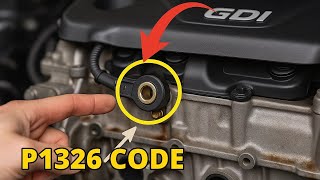
- Assuming the issue is part of the P1326 engine recall without first diagnosing the P0123 throttle circuit fault. 🎬 Watch: Learn more about the P1326 engine recall and bearing failure While symptoms overlap, they are separate issues that require different diagnostic paths.
Most Likely Causes
- Failed Electronic Throttle Body Assembly 🔴 High Probability → Shop Fuel Injection Throttle Body The Throttle Position Sensor (TPS) is integrated into the assembly and is a common failure point on this platform. It is not sold separately, requiring replacement of the entire unit. This is a well-documented failure pattern on Hyundai/Kia vehicles from this era.
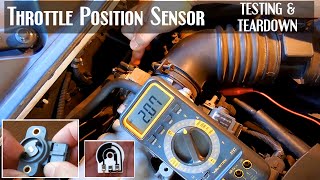
How to confirm: After confirming wiring is intact (good 5V reference and ground), if the TPS signal voltage is stuck high on a scan tool or with a multimeter, the internal sensor has failed. The voltage will read >4.8V and will not respond to throttle pedal input.
Typical fix: Replace the entire electronic throttle body assembly. A throttle relearn procedure should be performed after installation. This can often be done without a scan tool by turning the key to 'ON' for 30 seconds, then 'OFF' for 30 seconds, before starting the engine.
Est. part cost: $200-$450 - Wiring Harness or Connector Issue 🟡 Medium Probability A 'circuit high' code is often caused by a loss of the ground connection. Wires can become frayed, corroded, or broken within the harness leading to the throttle body. A poor ground connection causes the signal voltage to 'float' high, triggering the code.
How to confirm: Visually inspect the harness for damage. Use a multimeter on the throttle body connector (unplugged, key on) to test for a stable 5V reference, a good ground (<5 Ohms to chassis), and the signal wire. A bad ground (high resistance) is a common culprit for a high voltage reading.
Typical fix: Repair the broken or corroded wire(s) or replace the connector pigtail if the pins are damaged. Pay close attention to the ground wire (Pin 3 on the 6-pin connector).
Est. part cost: $10-$50 - Dirty or Sticking Throttle Body ⚪ Low Probability → Shop Fuel Injection Throttle Body Carbon and oil vapor buildup from the PCV system is common in GDI engines and can cause the throttle plate to not close properly. However, this more commonly causes idle issues or different codes (like P2135), and is less likely to cause a persistent 'circuit high' fault by itself.
How to confirm: Remove the air intake hose and visually inspect the throttle plate and bore for heavy carbon deposits that could prevent the plate from returning to its idle position.
Typical fix: Clean the throttle body bore and plate with a dedicated throttle body cleaner and a soft cloth or brush. Be careful not to move the plate manually if possible and do not spray cleaner directly into the electronic components.
Est. part cost: $5-$15
Rare But Worth Checking
- Faulty Powertrain Control Module (ECM): → Shop Engine Control Module (ECM) This is very rare. The ECM should only be considered after all other possibilities, including the throttle body and all related wiring, have been exhaustively tested and ruled out. A faulty driver in the ECM could fail to properly read the TPS signal.
- Faulty Accelerator Pedal Position (APP) Sensor: While possible, a faulty APP sensor will typically trigger its own specific codes (e.g., P2122, P2127). It is an uncommon cause for P0123 on this vehicle, as P0123 specifically refers to the sensor circuit at the throttle body.
Diagnosis Steps
- Connect an OBD-II scanner to confirm P0123 is present and check for any other related codes.
- Using the scanner's live data function, observe the voltage for 'TPS A' or 'TPS 1'. With the key on and engine off, the voltage should be around 0.5V at idle (pedal not pressed) and sweep smoothly up to ~4.5V as you slowly press the accelerator. If the voltage is stuck high (e.g., 4.8V or higher) and doesn't change, a circuit fault is confirmed.
- Turn the ignition off and disconnect the electrical connector at the throttle body. Inspect the 6 pins on both the harness and throttle body sides for corrosion, moisture, or damage.
- With the connector still unplugged and the key on (engine off), use a multimeter to test the terminals on the wiring harness side. You should find one pin with ~5 volts (reference, Pin 5), one with a good ground (less than 5 ohms of resistance to the negative battery terminal, Pin 3), and the signal wire (Pin 6).
- If the 5V reference is missing or the ground is bad, trace and repair the wiring harness. A bad ground is a common cause of a 'circuit high' code.
- If the power and ground wires test good, the fault is almost certainly internal to the throttle body assembly.
- After replacing the throttle body, perform a throttle relearn procedure. Turn the key to the 'ON' position (do not start) for 30 seconds, then turn to 'OFF' for 30 seconds. Repeat twice, then start the vehicle and let it idle for a few minutes.
- If the wiring and throttle body check out, the issue could be a rare ECM fault, which typically requires professional diagnosis.
Parts You'll Likely Need
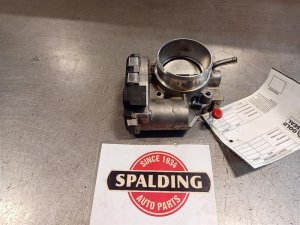
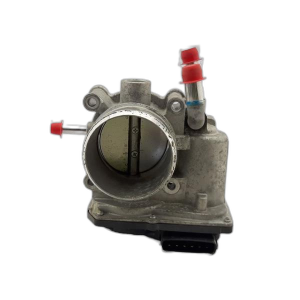
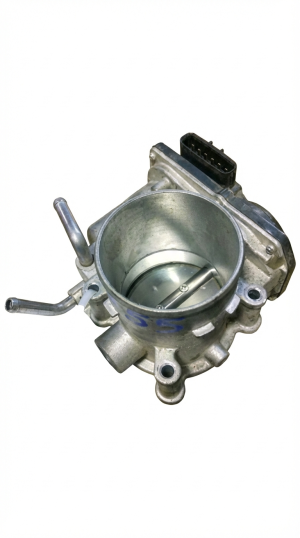
- Electronic Throttle Body Assembly
(OEM #35100-2G600 (for 2.4L), 35100-2G710 (for 2.0T), 35100-2B340 (for 1.6T))— This is the most common failure for code P0123, as the non-serviceable Throttle Position Sensor (TPS) is integrated within this assembly.
Trusted brands: Hyundai (OEM), Bosch, Hitachi, Standard Motor Products, Cardone (Remanufactured)
OEM price range: $350-$500
Aftermarket price range: $200-$350
Related Codes That Often Appear With This One
- P0222 — This code indicates 'Throttle/Pedal Position Sensor 'B' Circuit Low,' which is the secondary, redundant TPS. A failure in the throttle body assembly can cause faults in both sensors simultaneously.
- P2135 — This code means 'Throttle/Pedal Position Sensor/Switch 'A'/'B' Voltage Correlation.' It sets when the ECM sees that the signals from the two throttle position sensors do not agree with each other, pointing to a failing throttle body assembly.
- P1326 — This code is for the Knock Sensor Detection System. While not directly related, its primary symptom is also 'limp mode,' which can cause confusion. P1326 is often accompanied by a flashing check engine light, whereas P0123 is usually a solid light.
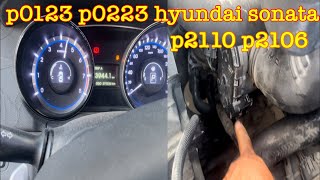
- P2110 — This code, 'Throttle Actuator Control System - Forced Limited RPM,' is a direct consequence of the P0123 fault. The PCM sets this code when it intentionally puts the vehicle into 'limp mode' as a protective measure.
Technical Service Bulletins (TSBs) & Recalls
- 20-01-006H (Campaign 953): Provides an ECM software update to enhance the knock sensor's ability to detect abnormal engine bearing noise, which also triggers limp mode.
- 20-01-004H-3 (Campaign T3G): Describes the service procedure for inspecting and potentially replacing the engine due to issues detected by the knock sensor system, which can present with limp mode symptoms.
- TSB 21-01-066H: Superseded bulletin that also describes diagnosis for DTC P1326 (Knock Sensor Detection System), a common source of confusion with P0123 symptoms.
Platform-Specific Known Issues
- This vehicle generation is subject to Service Campaign 953 and others, which involve a software update for the knock sensor detection system to prevent catastrophic engine failure. The symptoms of this system being triggered (limp mode, reduced power) are nearly identical to the symptoms of a P0123 fault, which can lead to misdiagnosis. A flashing check engine light is more indicative of the knock sensor issue (P1326), while a solid light is more common for P0123.
Mechanic-Grade Diagnostic Values
- TPS 'A' (TPS1) Signal Voltage, Key On Engine Off (KOEO) — expected: Approx. 0.5V - 0.7V at closed throttle (idle), sweeping smoothly to approx. 4.5V at wide-open throttle (WOT).. Failure: Voltage is stuck high (e.g., > 4.75V) and does not change when the throttle plate is moved.
- TPS 'A' (TPS1) Signal Wire Resistance to Ground — expected: Infinite resistance (open circuit).. Failure: Any low resistance reading indicates a short to ground in the signal wire.
- TPS Ground Circuit Resistance — expected: Less than 5 Ohms between the ground pin (Pin 3) on the harness connector and the negative battery terminal or a known good chassis ground.. Failure: A high resistance reading indicates a bad ground, which can cause the signal voltage to float high and trigger P0123.
- TPS Reference Voltage — expected: Approx. 5.0V DC on the reference pin (Pin 5) at the harness connector with KOEO.. Failure: Significantly lower or higher voltage indicates a problem with the ECM or the wiring.
- Live Data: Throttle Position Angle (Scan Tool) — expected: Approx. 5-10 degrees at idle. Should increase smoothly towards ~90 degrees at WOT.. Failure: Angle is stuck at a high value or does not correspond to the physical movement of the throttle plate.
Scan Tool Commands That Help
- Hyundai GDS-M / Autel MaxiSys or similar: Active Test: ETC Motor — This bidirectional command allows the technician to command the throttle body motor to open and close, typically in one-second intervals. It is used to verify if the throttle motor and gear mechanism are functioning correctly, independent of pedal input. If the throttle plate moves as commanded, it helps isolate the problem to the sensor side of the assembly or the wiring/ECM.
- Hyundai GDS-M / Autel MaxiSys or similar: Throttle Position Sensor Adaptation Reset — After replacing the throttle body or cleaning it, this function resets the learned idle and closed-throttle values in the ECM. While a manual relearn often works, using the scan tool function is the official and most reliable method to ensure the new part is calibrated correctly and prevent idle issues.
Wiring & Ground Locations
- Throttle Body Connector — The 6-pin electrical connector plugged directly into the electronic throttle body assembly, located at the end of the air intake duct on the engine.. This is the primary test point. P0123 is caused by high voltage on the TPS1 signal wire (Pin 6), often due to a loss of ground on Pin 3 or a short in the harness.
- Main Engine Ground Strap — A braided metal strap typically connecting the engine block or transmission housing to the vehicle's chassis/firewall, often near the driver's side strut tower or under the battery tray.. A corroded or loose main engine ground can cause unstable voltages and floating grounds for all engine sensors, including the TPS. This can lead to erroneous high voltage codes like P0123 when the sensor's dedicated ground wire is actually intact.
Real Owner Repair Stories
- hyundai-forums.com user (2016 Hyundai Sonata 2.4L) — Sudden limp mode, check engine light on, code P0123.
❌ Tried (didn't work) Cleaning the original throttle body.
✅ What actually fixed it The problem was resolved by replacing the entire electronic throttle body assembly with a new one and performing a relearn procedure. - YouTube Commenter on a P0123 diagnostic video (2015 Hyundai Sonata) — P0123 code, hesitation, and limp mode.
❌ Tried (didn't work) Replacing the throttle body assembly (the code returned).
✅ What actually fixed it After the new part didn't fix it, a mechanic traced the wiring and found a corroded ground wire in the harness near the firewall. Repairing the ground wire permanently solved the P0123 code. - NHTSA ODI #11445835 — An owner reported that even after a mechanic replaced the throttle body, the vehicle continued to show codes P0222 and P0123, noting that the throttle position pedal is not a regular stocked part.
- NHTSA ODI #11292479 — A report describes a persistent issue where new codes including P0123, P0222, and P2106 appeared after attempting repairs, leading to a limp mode condition that required a case assignment from the manufacturer.
OEM Part Supersession History
35100-2G600→35100-2G600 (current)— No major supersession noted for this specific part number, indicating the design has remained stable. However, always verify the part number with a VIN at the dealer.
Heads up: Ensure this part number is for the 2.4L engine. The 2.0L Turbo (35100-2G710) and 1.6L Turbo (35100-2B340) use different, incompatible throttle bodies.
Model Year Variations Within This Range
- 2018-2019: The 2018 model year marked a significant facelift for the Sonata. While the 2.4L and 1.6T engines remained largely the same, the 2.0T engine was paired with a new 8-speed automatic transmission, replacing the previous 6-speed. Additionally, suspension and steering components were stiffened. These changes do not directly affect the cause or diagnosis of P0123 but are important to note for overall vehicle context.
Diagnostic Flowchart
Other Known Issues on This Vehicle
Issues unrelated to this code that are worth knowing about as an owner of this generation:
- Theta II Engine Failure (Rod Bearing Wear) 🔴 High — Widespread across 2.0L Turbo and 2.4L GDI engines. Can occur at various mileages, often pre-100k miles. Led to massive recalls and class-action lawsuits. (Ref: NHTSA Recalls 162, 171, 209; Hyundai Campaigns 953, T3G. A lifetime warranty was extended for the engine short block for original and subsequent owners on affected vehicles that received the KSDS update.)
- Excessive Oil Consumption 🟠 Medium — Common on GDI engines, particularly the 2.4L. Often becomes noticeable after 60,000 miles. Can lead to carbon buildup and, if neglected, engine damage. (Ref: TSB 23-EM-008H provides guidelines for oil consumption testing and potential engine repair/replacement. TSB 23-EM-007H details a combustion chamber cleaning procedure.)
- Peeling White Paint 🟡 Low — Very common on vehicles with specific white and pearl white paint codes. Peeling often starts on the roof and hood. (Ref: Hyundai extended the paint warranty to 10 years/unlimited miles for this issue on affected models (Warranty Extension Z05).)
- Steering Column Coupler Noise 🟡 Low — Extremely common. A clicking or clunking noise is heard from the steering column when turning the wheel, especially at low speeds. Caused by the disintegration of a small, inexpensive rubber coupler in the power steering motor. (Ref: TSB 17-ST-002 extended the warranty for this part to 10 years/100,000 miles. The part number is 56315-2K000-FFF.)
- Engine Bay Fires 🔴 High — Less common than bearing failure but a significant safety risk. Can be caused by oil or fuel leaks contacting hot exhaust components, sometimes as a result of catastrophic engine failure. (Ref: Part of the broader Theta II engine investigations and recalls by NHTSA.)
Used vs. New Parts: Buying Guide for This Vehicle
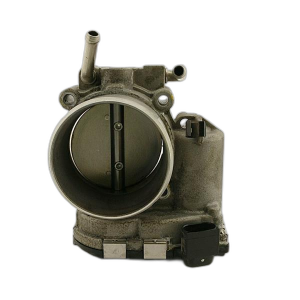
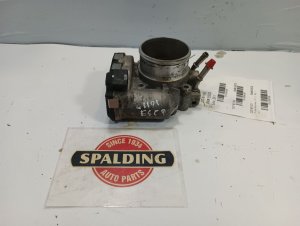
When a used part is the smart pick: A used OEM throttle body from a reputable salvage yard can be a cost-effective option, especially if from a low-mileage, rear-ended donor vehicle. Given that this is a common failure point, it is a moderate risk.
Donor-vehicle mileage cap: roughly under 60000 miles for the part to have meaningful remaining life.
What to inspect on the donor part:
- Verify the part number on the used unit matches your original exactly.
- Inspect the electrical connector pins for any signs of corrosion, moisture, or damage.
- Look at the throttle plate and bore; it should be relatively clean, not caked in heavy carbon.
- Ask for the donor vehicle's VIN and mileage to assess its history.
OEM-only on this vehicle (don't cheap out):
- While not strictly 'OEM-only', using a genuine Hyundai/Kia or a known OEM supplier like Bosch is highly recommended over no-name online marketplace brands to avoid premature failure or compatibility issues.
Aftermarket brands forum-validated for this vehicle:
- Bosch (often the OEM supplier)
- Standard Motor Products (SMP)
- Hitachi
Brands owners have reported issues with on this vehicle:
- Unbranded, generic parts from online marketplaces (e.g., eBay, Amazon) that lack a clear manufacturer or warranty information. These often have higher failure rates.
Real Owner Stories
Aggregated from forums and TSBs cited above. Mileages and costs reflect what owners reported in those sources.
2016 Hyundai Sonata 2.4L
Symptoms: Vehicle experienced limp mode and a P0123 code (TPS High Input).
What fixed it: Replacing the entire throttle body assembly resolved the issue after cleaning the original unit failed to fix it.
Source hint: https://www.hyundai-forums.com/threads/2016-sonata-2-4-limp-mode-p0123-tps-high-input.678098/
Documented NHTSA Reports
NHTSA ODI #11445835: An owner reported that after a mechanic replaced the throttle body, the vehicle still did not work correctly because of codes P0222 and P0123, which relate to the throttle position pedal.
NHTSA ODI #11292479: A report describes a situation where a vehicle entered limp mode and generated multiple codes including P0123 and P0222, persisting even after attempts to address grounding and other sensors.
Related OBD-II Codes
Frequently Asked Questions
My 2016 Sonata is in limp mode with a flashing check engine light; is this P0123?
Can I just replace the sensor on my 2015-2019 Sonata throttle body?
Is there a specific wire I should check for the P0123 'Circuit High' fault?
Do I need a professional scan tool to calibrate the new throttle body?
Does the engine failure recall (Campaign 953) affect how P0123 is diagnosed?
Could a dirty throttle body be causing my P0123 code?
Helpful Videos
Used OEM Parts in Stock
New Aftermarket Parts Available




The information in this article is provided for general reference and educational purposes only. Vehicle specifications, procedures, and part compatibility can vary by production date, trim level, and region. Always consult your vehicle's factory service manual and verify part numbers before purchasing or performing repairs. Safety-critical components such as airbags, seat belts, and braking systems should be installed by a qualified professional.
- Hyundai Sonata:
- 🧭 Diagnostic Flowchart
- 🎬 Helpful Videos
- 🛍️ Shop This Part
- What's Unique About the 2015-2019 Hyundai Sonata
- Symptoms You May Notice
- Most Likely Causes
- Rare But Worth Checking
- Diagnosis Steps
- Parts You'll Likely Need
- Related Codes That Often Appear With This One
- Technical Service Bulletins (TSBs) & Recalls
- Platform-Specific Known Issues
- Mechanic-Grade Diagnostic Values
- Scan Tool Commands That Help
- Wiring & Ground Locations
- Real Owner Repair Stories
- OEM Part Supersession History
- Model Year Variations Within This Range
- Other Known Issues on This Vehicle
- Used vs. New Parts: Buying Guide for This Vehicle
- Real Owner Stories
- 2016 Hyundai Sonata 2.4L
- Documented NHTSA Reports
- Related OBD-II Codes
- Frequently Asked Questions
- 🎟️ Get 5% Off