

P0128 on 2009-2017 Audi A4 2.0T: Causes and Fixes for Coolant Temperature Below Regulation
On the 2009-2017 Audi A4 2.0T, code P0128 is almost always caused by a failed thermostat that is stuck open. The thermostat is part of a plastic water pump assembly that is a known failure point. The fix is to replace the entire water pump and thermostat unit, which costs between $200-$450 for the parts. Some owners opt for aftermarket all-aluminum housings to prevent future failures of the plastic original.
- P0128 on your A4 almost certainly means you need a new thermostat.
- Due to the engine design, you must replace the entire water pump and thermostat assembly, not just the thermostat itself.
- This is a known weak point. Consider using a high-quality replacement part with an upgraded aluminum housing if available.
- Verify if your car is a B8 (pre-2013) or B8.5 (2013+) model to ensure you purchase the correct water pump assembly.
- While the car is drivable, fixing this promptly will restore fuel economy, heater performance, and prevent accelerated engine wear.
What's Unique About the 2009-2017 Audi A4
On the EA888 engine used in this Audi A4, the thermostat is not a simple, standalone part. It is integrated into a large, complex polymer (plastic) housing that also contains the water pump. This entire assembly is a notorious failure point; the plastic becomes brittle over time from heat cycles, leading to cracks, coolant leaks, and internal thermostat failure. Because of this integrated design, the standard repair is to replace the entire water pump and thermostat module, making the job more involved than on many other vehicles.
Generation note: This range covers the Audi A4 B8 (2009-2012) and B8.5 (2013-2016/2017) generations. Both use an EA888 engine, but the cooling systems differ. The B8 (Gen 2 EA888) typically uses a belt-driven water pump assembly. The B8.5 (Gen 3 EA888) uses a more complex, electronically managed water pump and thermostat module with a rotary valve to manage coolant flow for faster warm-ups. It is critical to order the correct part for your specific model year and VIN.
Symptoms You May Notice
- Check Engine Light is on
- Engine temperature gauge on the dashboard does not reach the middle 90°C (194°F) mark, often hovering around 60-70°C
- Temperature gauge drops towards cold when driving at highway speeds
- Heater blows lukewarm or cool air, even when the engine has been running for a while.
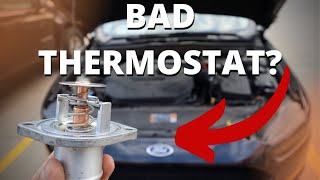
- Reduced fuel economy. 🎬 Watch: A quick guide to common symptoms of a bad thermostat.
- A 'two-trip' fault, meaning the Check Engine Light may not appear until the fault is detected on two consecutive drives.
- Replacing only the coolant temperature sensor when the thermostat is actually the problem. Given the high probability of thermostat failure on this engine, it should be the primary suspect, especially if P0128 is the only code present.
Most Likely Causes
- Failed Thermostat / Water Pump Assembly 🔴 High Probability → Shop Integrated Thermostat Housing Assembly The OEM water pump and thermostat housing is made of plastic that is known to crack, leak, and fail internally. The thermostat commonly fails by sticking in the open position, which is the direct cause of P0128.
How to confirm: Use an OBD-II scanner to monitor live coolant temperature data. If the temperature rises very slowly, never reaches ~90°C, or drops significantly at speed, the thermostat is stuck open. Also, visually inspect the assembly (located under the intake manifold) for signs of pink/white crusty residue from dried G13 coolant leaks. A pressure test of the cooling system can confirm a leak.
Typical fix: Replace the entire water pump and thermostat assembly. It is also recommended to replace the small toothed belt for the water pump at the same time. A full coolant drain and fill with the correct G13/G12evo spec coolant is required.
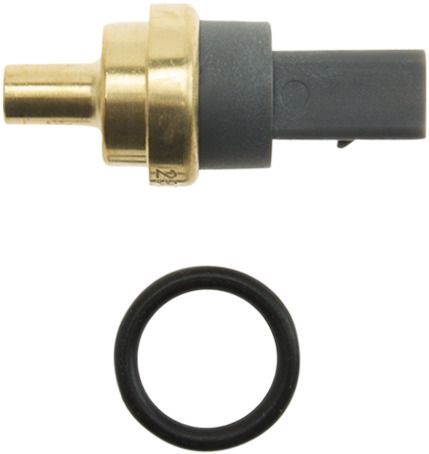
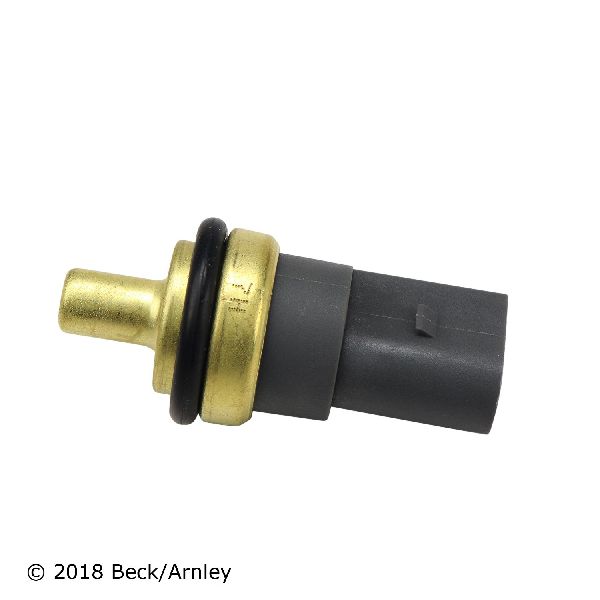
Est. part cost: $200-$450 - Faulty Engine Coolant Temperature (ECT) Sensor 🟡 Medium Probability → Shop Engine Coolant Temperature Sensor The sensor can fail and send inaccurate (too low) readings to the ECM. While less common than thermostat failure, it's a known issue. If other ECT-related codes (like P0116, P0117, P0118) are present with P0128, the sensor is a more likely culprit.
How to confirm: On a cold engine (after sitting overnight), use a scanner to compare the ECT sensor reading to the Intake Air Temperature (IAT) sensor reading. They should be within a few degrees of each other. If the ECT reading is significantly lower or irrational (e.g., -40°F), the sensor is likely bad.
Typical fix: Replace the engine coolant temperature sensor. On the EA888, the main G62 sensor is often located in the thermostat housing itself, and a new one may come with a new housing assembly. Check the new part to see if it's included.
Est. part cost: $20-$50 - Low Engine Coolant Level ⚪ Low Probability This is usually a symptom of another problem, most often a leak from the failing water pump/thermostat housing. If the level is low enough to create air pockets, the ECT sensor may give a false low reading, triggering P0128.
How to confirm: Check the coolant expansion tank when the engine is cold. If the level is below the 'MIN' line, you have a leak that needs to be found and fixed. A cooling system pressure test can help locate the source of the leak.
Typical fix: Find and repair the source of the coolant leak, then top up or refill the system with the correct Audi-spec coolant and properly bleed the air out.
Est. part cost: $20-$40 for coolant
Rare But Worth Checking
- Failed DSG Transmission Cooler In-Line Thermostat: → Shop Integrated Thermostat Housing Assembly On models equipped with the DSG automatic transmission, there is a small, secondary in-line thermostat in a hose for the transmission oil cooler. If this small thermostat sticks open, it can over-cool the engine coolant and trigger a P0128 code, even if the main thermostat is working correctly. This can be a very difficult-to-diagnose cause, as many technicians are unaware of its existence. 🎬 See how to diagnose this tricky secondary thermostat cooling issue.
- Cooling Fan Stuck On: → Shop Engine Cooling Fan Blade A failed fan control module or relay could cause the radiator fans to run continuously, even when the engine is cold. This constant airflow will prevent the engine from warming up properly, especially in cooler weather or at low speeds.
Diagnosis Steps
- Check the engine coolant level in the expansion tank (when the engine is cold). If it is low, top it off and inspect for obvious leaks.
- Connect an OBD-II scanner and verify P0128 is the primary code. Check for any other cooling system codes like P2181 or P0116.
- Use the scanner's live data function to monitor the Engine Coolant Temperature. Start the cold engine and watch the temperature rise.
- Observe the temperature reading. It should climb steadily to around 90-105°C (194-221°F) and stabilize. If it warms up extremely slowly, gets stuck at a lower temperature (e.g., 70°C), or drops significantly when you start driving at highway speeds, the thermostat is almost certainly stuck open.
- If the temperature reading is erratic, jumps around, or reads an illogical value (e.g., -40°F), the ECT sensor or its wiring is likely the problem. Compare ECT and IAT sensor readings on a cold engine; they should be nearly identical.
- Visually inspect the water pump/thermostat housing area on the side of the engine block, underneath the intake manifold. Look for any signs of coolant leaks, such as pink or white crusty residue. A pressure test of the cooling system can confirm a leak.
- Check that the radiator cooling fans are not running constantly from the moment the car is started.
- If the main thermostat and sensor check out, and the vehicle has a DSG transmission, investigate the secondary in-line thermostat for the transmission cooler.
Parts You'll Likely Need
- Water Pump & Thermostat Assembly
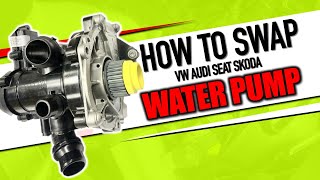
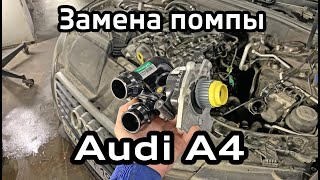
(OEM #06H121026DD (Typical for B8 Gen 2); 06L121111H / J / K / M / N / P (Typical for B8.5 Gen 3))— This is the most common failure item for code P0128. The original plastic housing is prone to failure, and the thermostat sticks open. It is replaced as a single unit. Part number varies by year and VIN, so confirmation is essential. 🎬 Watch: Step-by-step walkthrough for replacing the Gen 3 water pump.
Trusted brands: INA, Pierburg, Graf, Mahle, Bremmen Parts (offers an aluminum alternative)
OEM price range: $350-$500
Aftermarket price range: $200-$400 - Engine Coolant Temperature Sensor (G62)
(OEM #06A919501A)— The second most likely cause if the thermostat is confirmed to be working. It can send false readings to the ECM. Often included with a new thermostat assembly, but not always.
Trusted brands: Bosch, Hella, Delphi, VEMO
OEM price range: $30-$50
Aftermarket price range: $15-$30 - Engine Coolant / Antifreeze
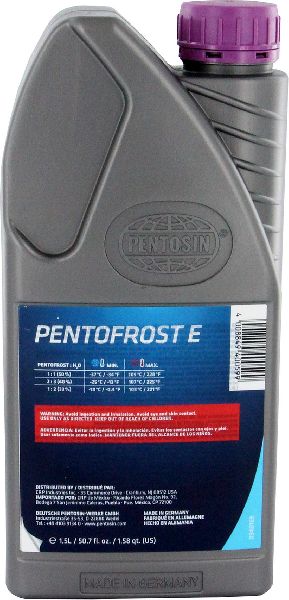
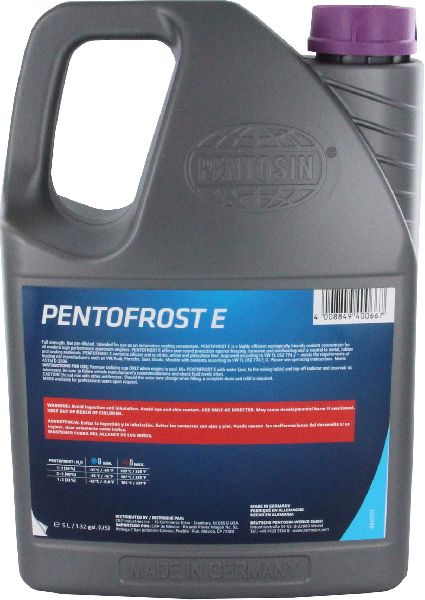
(OEM #G13, G12evo (or G12++))— The cooling system must be drained and refilled during the water pump replacement. Using the correct VAG-specific, phosphate-free coolant is critical to prevent corrosion and deposits.
Trusted brands: Audi Genuine, Pentosin Pentofrost, Febi Bilstein
Related Codes That Often Appear With This One
- P2181 — This code for 'Cooling System Performance' is a more generic flag that is often set along with P0128 on VW/Audi vehicles, pointing to the same failure of the thermostat to regulate temperature correctly.
- P0116 — This code for 'ECT Sensor Circuit Range/Performance' can appear if the thermostat is causing the temperature to behave erratically, making the sensor's readings seem illogical to the ECM.
- P0117 / P0118 — These codes for 'ECT Sensor Circuit Low/High' point more directly to a failure of the sensor or its wiring, rather than the thermostat itself. If these appear with P0128, the sensor should be investigated first.
Platform-Specific Known Issues
- The plastic water pump and thermostat housing assembly is a well-documented, high-failure-rate component on the EA888 engine, leading to both P0128 codes (from a stuck thermostat) and coolant leaks (from a cracked housing).
- There was a class-action lawsuit concerning premature water pump failures on many 2008-2014 VW and Audi vehicles equipped with the 2.0T EA888 engine.
Mechanic-Grade Diagnostic Values
- Engine Coolant Temperature (ECT) Sensor (G62) Resistance — expected: At 20°C (68°F), resistance should be 2000-3000 Ω. At 90°C (194°F), resistance should be 200-300 Ω.. Failure: A reading of infinite resistance (open circuit) or near-zero resistance (short circuit) indicates a failed sensor. Readings that don't decrease smoothly as the engine warms up also point to a fault.
- Engine Coolant Temperature (ECT) Sensor (G62) Voltage — expected: With the ignition on and engine cold (~20°C), the signal wire should read 3.0-3.5V. At normal operating temperature (~80°C), the voltage should drop to 1.0-1.3V.. Failure: Voltage that is stuck high (e.g., 5V) or low (e.g., 0V), or does not change as the engine warms, indicates a problem with the sensor or its wiring.
- Voltage Drop at Engine Ground Strap — expected: With the engine at operating temperature and idling, measure the voltage between the engine block and the chassis ground point. The reading should be less than 0.15 volts.. Failure: A reading higher than 0.15V indicates a degraded or corroded engine ground strap, which can cause erratic sensor readings and other electrical issues.
Scan Tool Commands That Help
- VCDS (VAG-COM): Engine -> Measuring Blocks or Live Data -> Group 130-134 (for cooling system) — Use this to monitor coolant temperatures at various points in the system (e.g., radiator outlet vs. engine outlet) in real-time. On Gen 3 EA888 engines, you can also observe the commanded and actual position of the rotary slide valves in the thermostat housing, which helps diagnose if the thermostat is being controlled correctly by the ECM.
- VCDS (VAG-COM): Engine -> Basic Settings -> "Activate and deactivate map cooling" — For Gen 3 EA888 engines with a map-controlled thermostat, this function allows you to command the thermostat's internal heating element on and off. This can test the electrical function of the thermostat, separate from its mechanical wax-pellet operation. This is useful if you suspect the thermostat is mechanically okay but not responding to ECU commands for faster warm-up.
- VCDS (VAG-COM) or OBDeleven: Live Data -> "Camshaft adaptation intake bank 1, phase position" — While not directly related to the cooling system, this value indicates timing chain stretch. Since the water pump on the Gen 2 EA888 is driven by a small belt off a balance shaft, and the entire front of the engine is often accessed for a water pump job, checking chain stretch at the same time is a critical 'while you're in there' diagnostic for engine health. A value approaching or exceeding -5 degrees indicates significant stretch requiring timing chain replacement.
Wiring & Ground Locations
- G62 Sensor Connector — On the EA888 Gen 2 (B8), the G62 sensor is on the water pump housing itself, which is under the intake manifold on the driver's side of the engine. On the EA888 Gen 3 (B8.5), it's integrated into the main connector for the water pump/thermostat assembly.. A loose or corroded connector at the sensor is a common point of failure. The wiring passes through a 14-pin connector under the intake manifold; a bad connection here can also cause intermittent sensor readings.
- G12 - Ground Connection — Located on the left rear of the engine compartment, near the firewall.. This is a primary ground point for many engine management components. Corrosion or a loose connection here can introduce electrical noise and cause incorrect readings from sensors like the G62 ECT sensor.
- G26 - Ground Connection — Located on the left side of the engine compartment, under the power steering reservoir.. This ground point serves the Coolant Fan Control module. A bad ground here could potentially cause the fans to run erratically or default to 'on', contributing to an overcooling condition that triggers P0128.
Real Owner Repair Stories
- North American Motoring forum user (2009 Mini Clubman S (Uses a similar diagnostic logic for P0128)) — P0128 code appeared three months after replacing a cracked thermostat housing with a brand new unit.
❌ Tried (didn't work) The owner was about to replace the new thermostat again, assuming it was faulty.
✅ What actually fixed it The electrical connector to the temperature sensor on the new thermostat housing was not fully clipped in. Although it looked connected, it was loose enough to cause an intermittent signal. Pushing the connector until it clicked and securing the clip resolved the code. - Reddit r/MechanicAdvice user (Unspecified vehicle) — P0128 code returned two months after replacing the thermostat and flushing the coolant.
❌ Tried (didn't work) Replacing the thermostat with an aftermarket OEM-equivalent part.
✅ What actually fixed it The user was advised that the aftermarket thermostat may have failed prematurely or was of poor quality. The resolution implied is to use a higher-quality OEM or trusted brand thermostat, as P0128 means the engine *is not* reaching temperature, which points directly back to the thermostat's function even if it's new.
OEM Part Supersession History
06L121111H→06L121111J, 06L121111K, 06L121111L, 06L121111M, 06L121111N, 06L121111P— Continuous revisions by VW/Audi to improve the reliability of the plastic housing and internal thermostat components of the EA888 Gen 3 water pump assembly. Each new letter generally represents an updated, more robust design.
Heads up: While all revisions are generally backwards compatible for the EA888 Gen 3 engine, it is always recommended to install the latest available revision (currently 'P' or newer) to get the most updated design and prevent premature failure.
Model Year Variations Within This Range
- 2009-2012 (B8): These models use the EA888 Gen 2 engine with a simpler, belt-driven water pump. The thermostat is still integrated but the assembly is less complex than the Gen 3. Diagnosis is more straightforward, focusing on the mechanical thermostat and ECT sensor.
- 2013-2017 (B8.5): These models use the EA888 Gen 3 engine, which features an 'Integrated Thermal Management' (ITM) system. The thermostat housing contains two rotary slide valves controlled by an electric motor (N493) that precisely directs coolant flow to speed up engine warm-up and control temperature more actively. This adds complexity, as a P0128 code could also be caused by a failure of the control motor or the slide valves, not just the thermostat itself.
Diagnostic Flowchart
Other Known Issues on This Vehicle
Issues unrelated to this code that are worth knowing about as an owner of this generation:
- Excessive Oil Consumption 🔴 High — Very common on 2009-2011.5 models with the CAEB engine code. A class-action lawsuit was filed for this issue. Caused by faulty piston rings and/or PCV valve. (Ref: Class Action Lawsuit Settlement)
- Timing Chain Tensioner Failure 🔴 High — The original timing chain tensioner is prone to failure, which can cause the chain to jump, leading to catastrophic engine damage. An updated part is available. Failure can occur without warning.
- PCV Valve Failure 🟠 Medium — The diaphragm in the Positive Crankcase Ventilation (PCV) valve can tear, causing a large vacuum leak. Symptoms include a rough idle, whistling noise, and lean codes (e.g., P2187).
- Carbon Buildup on Intake Valves 🟠 Medium — As a direct-injection engine, fuel does not wash over the intake valves. Over time (typically 60k-100k miles), carbon deposits build up, restricting airflow and causing misfires and performance loss.
Used vs. New Parts: Buying Guide for This Vehicle
When a used part is the smart pick: For this specific repair, using a used water pump and thermostat assembly is strongly discouraged. The part is a known failure item due to the plastic material degrading from heat cycles. A used part has unknown remaining life and is very likely to fail soon after installation, forcing you to do the difficult labor all over again.
Donor-vehicle mileage cap: roughly under 10000 miles for the part to have meaningful remaining life.
What to inspect on the donor part:
- If forced to consider a used part, look for one from a very low-mileage vehicle (under 10k miles).
- Inspect for any hairline cracks, especially around seams and hose connections.
- Check for any signs of pink/white coolant residue, which indicates a past or current leak.
- Look at the date code molded into the plastic; a newer part is preferable.
OEM-only on this vehicle (don't cheap out):
- Engine Coolant / Antifreeze: Use only genuine Audi G13, G12evo, or a reputable equivalent like Pentosin Pentofrost that meets the specification. Incorrect coolant can cause corrosion and damage the new water pump.
Aftermarket brands forum-validated for this vehicle:
- INA: Widely reported to be the original equipment manufacturer (OEM) for Audi; the part is often identical to the genuine part but with the Audi logo ground off.
- Pierburg, Mahle, Graf: These are other reputable OEM suppliers with a history of providing quality parts for German vehicles.
- Bremmen Parts, Graf, etc. (All-Aluminum Housings): Several brands offer full aluminum replacement housings that aim to permanently solve the plastic cracking issue. While promising, ensure they come from a reputable vendor with a good warranty.
Brands owners have reported issues with on this vehicle:
- Unbranded, low-cost units from online marketplaces. Many forum posts detail premature failures (leaking or thermostat failure within months) from cheap, no-name water pump assemblies. The significant labor involved makes it not worth the risk of using a low-quality part.
Real Owner Stories
Aggregated from forums and TSBs cited above. Mileages and costs reflect what owners reported in those sources.
Audi A4 B8 2.0T
Symptoms: The temperature gauge would not rise and the heater was blowing cool air for a long time.
What fixed it: The owner replaced the thermostat and sensor, though the source notes symptoms persisted, suggesting a potential need to check the secondary thermostat.
Source hint: Audi Owners Club (UK): Thermostat not rising
2009-2017 Audi A4 2.0T EA888
Symptoms: Thermostat stuck open, causing the engine to stay in the cold, high-friction warm-up phase.
What fixed it: Discussion regarding the necessity of repair to prevent increased engine wear.
Source hint: Reddit r/AskMechanics: thermostat stuck open ok to drive for a week or 2 code p0128
Audi A4 B8 2.0T
Symptoms: Dumping coolant heavily shortly after a water pump and belt replacement.
What fixed it: Correct installation and ensuring part quality for the water pump assembly.
Source hint: AudiWorld Forums: Just replaced waterpump/belt. Fine for a day, now dumping coolant
Related OBD-II Codes
Frequently Asked Questions
Is there a class-action lawsuit for water pump failures on the 2009-2017 Audi A4 2.0T?
My A4's temperature gauge drops when I'm on the highway; is this a P0128 symptom?
Can I just replace the thermostat, or do I need the whole water pump assembly?
What type of coolant should I use for my 2009-2017 Audi A4 after a thermostat repair?
Could my P0128 code be caused by the DSG transmission?
Is it safe to drive my Audi A4 with a P0128 code for a week or two?
Helpful Videos
We Have This Part in Stock


The information in this article is provided for general reference and educational purposes only. Vehicle specifications, procedures, and part compatibility can vary by production date, trim level, and region. Always consult your vehicle's factory service manual and verify part numbers before purchasing or performing repairs. Safety-critical components such as airbags, seat belts, and braking systems should be installed by a qualified professional.
- Audi A4:
- 🧭 Diagnostic Flowchart
- 🎬 Helpful Videos
- 🛍️ Shop This Part
- What's Unique About the 2009-2017 Audi A4
- Symptoms You May Notice
- Most Likely Causes
- Rare But Worth Checking
- Diagnosis Steps
- Parts You'll Likely Need
- Related Codes That Often Appear With This One
- Platform-Specific Known Issues
- Mechanic-Grade Diagnostic Values
- Scan Tool Commands That Help
- Wiring & Ground Locations
- Real Owner Repair Stories
- OEM Part Supersession History
- Model Year Variations Within This Range
- Other Known Issues on This Vehicle
- Used vs. New Parts: Buying Guide for This Vehicle
- Real Owner Stories
- Audi A4 B8 2.0T
- 2009-2017 Audi A4 2.0T EA888
- Audi A4 B8 2.0T
- Related OBD-II Codes
- Frequently Asked Questions
- 🎟️ Get 5% Off