

P0128 on 2019-2020 Lincoln Nautilus: Coolant Temperature Below Thermostat Regulating Temperature Causes and Fixes
P0128 on a 2019-2020 Lincoln Nautilus most often means the engine thermostat is stuck open or there's a problem with the coolant level or temperature sensor. On 2.0L EcoBoost engines, this code can also be an early warning of more serious issues like a failing EGR cooler or internal coolant leaks, as noted in manufacturer TSBs. For the 2.7L EcoBoost, a specific TSB points towards a faulty ECT sensor or its wiring harness, which is shared with the knock sensor.
- On the 2019-2020 Nautilus, P0128 is not a code to ignore. While the most likely cause is a simple thermostat, it can be an early warning for more serious issues.
- Always check the coolant level first. If it's low, you have a leak that must be found and fixed.
- For the 2.0L EcoBoost engine, be aware of TSB 20-2234, which links this code to potential EGR cooler failure and internal coolant leaks.
- If replacing parts, use the correct OEM-spec yellow coolant (Motorcraft VC-13-G) to ensure cooling system longevity.
- Given the documented issues, if the fix isn't an obvious thermostat or low coolant, consider professional diagnosis to rule out wiring or internal engine problems.
What's Unique About the 2019-2020 Lincoln NAUTILUS
For the 2019-2020 Lincoln Nautilus, especially with the 2.0L EcoBoost engine, P0128 is more than just a simple thermostat code. Lincoln has issued multiple Technical Service Bulletins (TSBs) that link P0128 to more complex problems. TSB 20-2234 specifically connects P0128 with low coolant, white smoke, and potential coolant intrusion into the engine cylinders via a faulty EGR cooler. An owner complaint filed with the NHTSA even documented a case where P0128 was present before a catastrophic internal engine failure requiring engine and turbo replacement. For the 2.7L EcoBoost, TSB SSM 48991 notes that P0128 can be caused by a faulty ECT sensor or its associated wiring harness, requiring replacement of both the ECT and knock sensor harness together. This makes it crucial for owners to investigate this code thoroughly rather than assuming it's just a bad thermostat.
Diagnostic Flowchart
Tap your situation to follow the diagnostic path that matches what you're seeing on this vehicle.
Symptoms You May Notice
- Check Engine Light (MIL) illuminated
- Engine temperature gauge reading lower than normal or not moving
- Heater not blowing hot air or taking a very long time to warm up
- Reduced fuel economy
- Engine taking longer than usual to warm up
- Over Temperature warning light may appear in some cases (as per TSBs)
- Noticeable loss of engine coolant with no visible external leak (symptom of a more severe internal leak)
- White steam or smoke from the exhaust (symptom of a more severe internal leak, like the EGR cooler)
- Replacing the thermostat without checking the coolant level first. A low coolant level, especially on the 2.0L engine, can indicate a more serious leak (like the EGR cooler) that must be addressed.
- Replacing the ECT sensor without first checking its wiring and connector for damage or corrosion, which is a known issue, particularly on the 2.7L engine per TSB SSM 48991.
Most Likely Causes
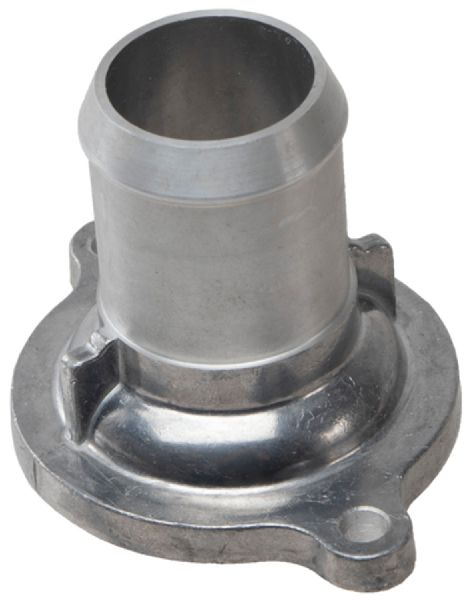
- Stuck-Open Engine Thermostat 🔴 High Probability → Shop Integrated Thermostat Housing Assembly Thermostats are wear items. When they fail, they are often designed to stick open to prevent overheating, which directly causes the P0128 code condition where the engine fails to warm up properly.
How to confirm: Monitor the ECT sensor data with a scan tool. If the temperature rises normally at idle but then drops significantly once the vehicle is moving at highway speeds, the thermostat is likely stuck open. Another method is to feel the upper radiator hose shortly after a cold start; it should remain cool until the engine reaches operating temperature. If it gets warm right away, the thermostat is open.
Typical fix: Replace the engine thermostat and gasket. 🎬 Watch: A quick guide to P0128 causes and fixes. It is recommended to drain and refill the coolant at the same time. Use Ford Motorcraft VC-13-G Yellow Pre-diluted Coolant. When installing the new thermostat, ensure the jiggle valve or air bleed is positioned at the top to allow air to escape the system.
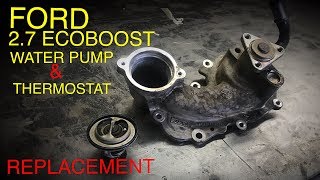
Est. part cost: $30-$80. OEM Motorcraft part for the 2.7L V6 is RT-1251. 🎬 See this walkthrough for 2.7L thermostat replacement. OEM Motorcraft part for the 2.0L L4 is RT-1257. - Low Engine Coolant Level 🟡 Medium Probability TSB 20-2234 specifically links P0128 with low coolant levels on the 2.0L EcoBoost engine, which may be due to a failing EGR cooler or other leaks. An owner complaint also cited coolant pooling in the cylinder head. This is a known failure pattern for this engine family.
How to confirm: Visually inspect the coolant reservoir when the engine is cold. The level should be between the 'MIN' and 'MAX' lines. If low, a cooling system pressure test is needed to find the source of the leak.
Typical fix: Identify and repair the source of the coolant leak. For the 2.0L engine, this may involve replacing the EGR cooler (Part No. K2GZ-9F464-A, superseded by K2GZ-9F464-B) and related gaskets per TSB 20-2234. Then, refill the system with the correct specification coolant.
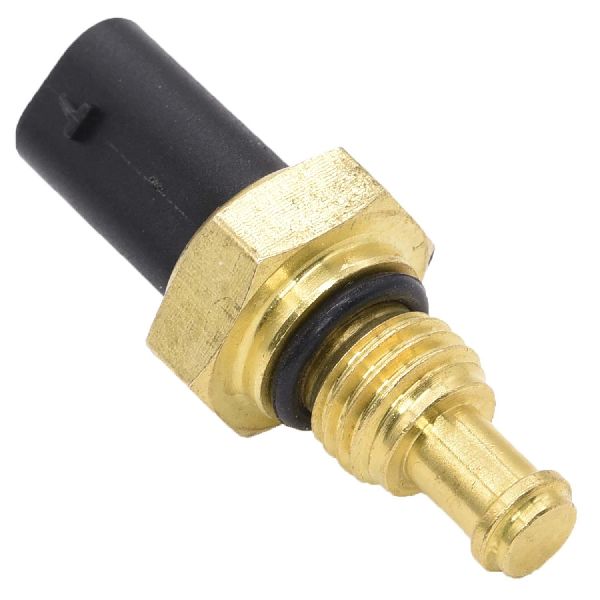
Est. part cost: $20 for coolant, but repair costs vary widely. An EGR cooler replacement can cost several hundred dollars in parts and labor. - Faulty Engine Coolant Temperature (ECT) Sensor 🟡 Medium Probability → Shop Engine Coolant Temperature Sensor For the 2.7L EcoBoost, TSB SSM 48991 specifically calls out the ECT sensor or its wiring as a cause for P0128 and other codes. For the 2.0L, it is also a common failure point on many vehicles.
How to confirm: Use a scan tool to observe the ECT reading. Does it behave erratically, or does it show an illogical temperature (e.g., -40°F) even when the engine is warm? Compare its reading to other temperature sensors on a cold engine; they should be similar. A multimeter can be used to check resistance; a good sensor should read between 2,000 and 3,000 ohms at 68°F (20°C).
Typical fix: Replace the ECT sensor. On the 2.7L engine, TSB SSM 48991 advises replacing both the ECT sensor (part number 12A648) and the knock sensor (causal part 12A699) as they are part of the same harness.
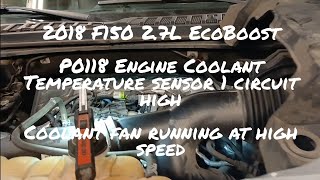
Est. part cost: $30-$50 for an OEM Motorcraft sensor. The cost is higher for the 2.7L fix due to the replacement of the associated knock sensor and harness. - ECT Sensor Wiring Harness Issue ⚪ Low Probability → Shop Engine Coolant Temperature Sensor TSB SSM 48991 explicitly mentions the wiring harness as a potential cause for P0128 on the 2.7L engine. The bulletin directs technicians to replace the ECT sensor and knock sensor harness 🎬 Watch: How to fix 2.7L sensor and harness issues. together to correct the condition. On related platforms with the 2.7L engine, other TSBs point to damaged wiring between harness connectors C1016 and C1168.
How to confirm: Visually inspect the wiring and connector leading to the ECT sensor for any signs of damage, corrosion, or loose pins. Perform a continuity and resistance test on the wiring between the sensor and the PCM.
Typical fix: For the 2.7L engine, the official fix is to replace the ECT sensor and knock sensor harness (Part No. 12A699) together. For the 2.0L, repair the damaged section of the wiring harness or replace the connector pigtail.
Est. part cost: $50-$100 for the harness assembly on the 2.7L, or $10-$50 for wiring repair supplies on the 2.0L.
Rare But Worth Checking
- Internal Coolant Leak (e.g., EGR Cooler, Cylinder Head/Block): While rare as the primary cause, on the 2.0L EcoBoost, P0128 can be an early indicator. TSB 20-2234 links P0128 to symptoms like low coolant and white smoke, which point to internal leaks via the EGR cooler. This is part of a wider, well-documented issue with the 2.0L EcoBoost engine block design, where a coolant passage between cylinders can lead to cracks and coolant intrusion, often requiring engine replacement. An NHTSA complaint (ODI #11716472) linked P0128 to a catastrophic engine failure from coolant intrusion. This is the most severe possibility and should not be overlooked.
- Cooling Fan Stuck On: → Shop Engine Cooling Fan Blade If the engine cooling fan runs constantly from the moment the car is started (even when cold), it can over-cool the engine and prevent it from reaching operating temperature, triggering P0128. This is usually caused by a failed fan control module, a stuck relay, or a faulty sensor providing incorrect data to the PCM.
Diagnosis Steps
- Check the Check Engine Light: Use an OBD-II scanner to confirm P0128 is the active code. Note any other codes present, as they can point to a specific subsystem (e.g., P044C for EGR, P0117 for ECT circuit).
- Inspect Coolant Level and Condition: With the engine cold, check the coolant level in the expansion tank. It should be between the MIN and MAX marks. Note the color and clarity of the coolant; it should be clean (Motorcraft Yellow), not rusty or oily. A low level is a critical clue.
- Monitor Coolant Temperature with a Scan Tool: Watch the live data from the ECT sensor. From a cold start, the temperature should climb steadily to around 195-215°F and stabilize. If it climbs very slowly, never reaches temperature, or drops sharply at highway speeds, suspect a stuck-open thermostat.
- Pressure Test the Cooling System: If the coolant was low, a pressure tester is essential. Pressurize the system (when cold) to the specification on the cap and watch for a pressure drop. Look for external leaks from hoses, the radiator, water pump, or thermostat housing.
- Inspect ECT Sensor and Wiring (Especially on 2.7L): If the temperature reading is erratic, non-existent, or stuck at a default value (like -40°F), inspect the ECT sensor's connector and wiring for damage or corrosion. On the 2.7L, this is a primary suspect per TSB SSM 48991.
- Test the Thermostat: If the thermostat is suspected, the most definitive test is to remove it and place it in a pot of water with a thermometer. It should be fully closed at room temperature and open at the temperature stamped on it (typically 190-195°F).
Parts You'll Likely Need
- Engine Coolant Thermostat
- Engine Coolant Temperature (ECT) Sensor
- Knock Sensor / ECT Harness
- EGR Cooler
- Engine Coolant
Related Codes That Often Appear With This One
- P0217 — Engine Coolant Over-Temperature Condition. TSBs 20-2234 (2.0L) and SSM 48991 (2.7L) show this code appearing with P0128, indicating the cooling system is highly unstable, possibly due to coolant loss or sensor issues.
- P1299 — Cylinder Head Over-Temperature Protection Active. This is a Ford-specific code that often appears with P0128 and P0217, as seen in TSBs 20-2234 and SSM 48991, reinforcing the severity of the underlying cooling system fault.
- P0116, P0117, P0118 — These codes relate to ECT Sensor Circuit Range/Performance, Low Input, and High Input, respectively. TSB SSM 48991 groups them with P0128 for the 2.7L engine, suggesting a common root cause in the sensor or its wiring.
- P044C — Exhaust Gas Recirculation Sensor C Circuit Low. This code is listed alongside P0128 in TSB 20-2234 for the 2.0L engine, pointing directly towards a fault in the EGR system, which could be the EGR cooler itself.
Technical Service Bulletins (TSBs) & Recalls
- SSM 48991: Notes that P0128 can be caused by ECT or knock sensor wiring harness issues.
- TSB 20-2234: Connects P0128 on the 2.0L EcoBoost with low coolant levels and potential EGR cooler failure.
- TSB 19-2046: Lists P0128 as one of several DTCs that may appear on early-build 2019 2.0L EcoBoost models due to various settings.
Platform-Specific Known Issues
- TSB 20-2234 (2.0L EcoBoost): Links P0128 to low coolant, white smoke, and over-temperature warnings. The cause may be a faulty EGR cooler or PCM software, requiring inspection and potential replacement of the EGR cooler and a PCM update.
- TSB SSM 48991: Indicates that P0128, along with many other codes, can be caused by issues with the ECT sensor or knock sensor wiring harness.
- NHTSA ODI #11716472: A real-world complaint where P0128 was one of the codes present before a major engine failure due to coolant pooling in the cylinder head, requiring a full engine and turbo replacement.
Mechanic-Grade Diagnostic Values
- ECT Sensor Resistance — expected: 2,000 - 3,000 Ohms (Ω) at 68°F (20°C). Resistance decreases as temperature increases.. Failure: A reading significantly outside this range, or an open circuit (infinite resistance), points to a faulty sensor.
- ECT Sensor Signal Voltage (Cold Engine) — expected: Approximately 2.0V to 3.0V on a cold engine (e.g., 70°F). The reading should be close to the Intake Air Temperature (IAT) sensor reading on a cold-soaked vehicle.. Failure: A voltage near 5.0V indicates an open circuit (P0118), while a voltage near 0V suggests a short to ground (P0117).
Wiring & Ground Locations
- ECT / Knock Sensor Harness (2.7L) — The ECT sensor is located under the intake manifold on the 2.7L EcoBoost. The wiring is integrated with the knock sensor harness.. TSB SSM 48991 explicitly states that P0128 (and other codes) may be due to this harness. The official repair is to replace both the ECT sensor (12A648) and the knock sensor harness (causal part 12A699) together, making this a critical, non-obvious diagnostic path.
- Connectors C1016 & C1168 — On related Ford platforms (Edge, Fusion, Continental) with the 2.7L engine, C1016 is the ECT sensor connector itself, and C1168 is a major engine-to-body harness inline connector, often near the driver's side of the engine bay.. TSB SSM 47791 identifies the wiring *between* these two connectors as a common location for chafing, breaks, or shorts that cause ECT-related codes, including P0128. Technicians may overlook this harness section if they only inspect the sensor connector itself.
Real Owner Repair Stories
- Aggregated from Ford Edge Forum user reports (2016 Ford Edge Sport 2.7L (platform mate to Nautilus)) — Engine Coolant Over Temperature warning light, erratic temperature gauge, cooling fans running constantly.
❌ Tried (didn't work) Initial diagnosis pointed towards a bad thermostat or a faulty ECT sensor.
✅ What actually fixed it The final repair was inspecting and repairing a damaged section of the wiring harness between connectors C1016 and C1168, as highlighted by Ford TSB SSM 47791. - YouTube user comment (Unspecified Ford vehicle) — P0128 code, temperature gauge would not move from 'cold', cooling fans running on high constantly.
❌ Tried (didn't work) Replacing the ECT sensor did not fix the problem.
✅ What actually fixed it Replacing the thermostat resolved all symptoms and cleared the code.
OEM Part Supersession History
K2GZ-9F464-A→K2GZ-9F464-B— Standard part revision for improved reliability or manufacturing process change.FT4Z-12A648-A→FT4Z-12A648-B— Standard part revision for the ECT sensor used on the 2.7L engine.
Model Year Variations Within This Range
- 2019 models built on or before 23-Jan-2019: TSB 19-2046 applies to 2.0L EcoBoost engines built on or before this date, indicating that P0128 could be due to PCM settings. This suggests a potential software or calibration difference in early-build 2019 models compared to later ones.
Helpful Videos
![How to Fix P0128 Engine Code in 3 Minutes [2 DIY Methods / Only $7.34]](https://img.youtube.com/vi/AfDXh4cko84/mqdefault.jpg)
![How to Fix FORD P0128 Engine Code in 3 Minutes [2 DIY Methods / Only $7.34]](https://img.youtube.com/vi/nUD6fDJpoV4/mqdefault.jpg)

We Have This Part in Stock



The information in this article is provided for general reference and educational purposes only. Vehicle specifications, procedures, and part compatibility can vary by production date, trim level, and region. Always consult your vehicle's factory service manual and verify part numbers before purchasing or performing repairs. Safety-critical components such as airbags, seat belts, and braking systems should be installed by a qualified professional.
- Lincoln NAUTILUS:
- 🧭 Diagnostic Flowchart
- 🎬 Helpful Videos
- 🛍️ Shop This Part
- What's Unique About the 2019-2020 Lincoln NAUTILUS
- Symptoms You May Notice
- Most Likely Causes
- Rare But Worth Checking
- Diagnosis Steps
- Parts You'll Likely Need
- Related Codes That Often Appear With This One
- Technical Service Bulletins (TSBs) & Recalls
- Platform-Specific Known Issues
- Mechanic-Grade Diagnostic Values
- Wiring & Ground Locations
- Real Owner Repair Stories
- OEM Part Supersession History
- Model Year Variations Within This Range
- 🎟️ Get 5% Off