

P0131 on 2001-2007 Ford Escape 3.0L V6: Causes, Fixes, and O2 Sensor Location
This code points to a faulty upstream oxygen sensor on Bank 1 (the firewall side). Replacing the Bank 1, Sensor 1 O2 sensor is the most common fix. Expect to pay $40-$80 for an aftermarket sensor and $100-$150 for an OEM part. It's a DIY-friendly repair for those with the right tools, though access to the sensor is notoriously difficult. Before replacing the sensor, check for exhaust leaks near the rear manifold and inspect the wiring.
- P0131 on a 2001-2007 Escape 3.0L V6 almost always points to the upstream oxygen sensor on the firewall side of the engine (Bank 1).
- Before replacing the sensor, perform a quick visual inspection for obvious exhaust leaks (soot marks) or damaged wiring, as these can also cause the code.
- Accessing this specific sensor is difficult due to its location on the rear cylinder bank. Be prepared for a tight squeeze.
- Use a quality direct-fit replacement sensor from a reputable brand like Motorcraft, Bosch, or Denso to ensure compatibility and longevity.
- Using an O2 sensor socket and penetrating oil will make the removal of the old sensor much easier.
What's Unique About the 2001-2007 Ford Escape
On the 3.0L V6 Ford Escape, the Bank 1 sensors are located on the cylinder bank closer to the firewall, which makes access significantly more challenging than for Bank 2 at the front of the vehicle. The specific sensor for code P0131, Bank 1 Sensor 1, is the upstream sensor on this rear bank. Owners frequently find this sensor extremely difficult to reach, often requiring work from underneath the vehicle and removal of the passenger side inner fender liner for better access. 🎬 Watch this walkthrough for reaching the difficult Bank 1 sensor. Special tools like O2 sensor sockets are recommended, and even then, some owners have had to modify wrenches to fit in the tight space.
Symptoms You May Notice
- Check Engine Light is on
- Reduced fuel economy
- Rough or unstable idle
- Engine hesitation or misfiring
- Rotten egg smell from the exhaust
- Replacing the wrong O2 sensor (e.g., the downstream sensor or the sensor on Bank 2). Bank 1 is the firewall side.
- Replacing the O2 sensor when the root cause is an exhaust leak, vacuum leak, or wiring issue.
- Assuming P0131 always means a bad sensor without checking live data to see if the sensor is correctly reporting a true lean condition caused by something else.
Most Likely Causes
- Faulty Bank 1, Sensor 1 Oxygen Sensor 🔴 High Probability → Shop Oxygen Sensor Oxygen sensors are wear items that degrade over time from constant exposure to high-temperature exhaust gases, carbon buildup, and other contaminants. Given the age of these vehicles, sensor failure is very common.
How to confirm: Use an OBD-II scanner with live data. A healthy upstream O2 sensor's voltage should fluctuate rapidly between approximately 0.1 and 0.9 volts. If the voltage for O2S11 is stuck low (consistently below 0.2V) even when revving the engine, the sensor is likely bad.
Typical fix: Replace the Bank 1, Sensor 1 (upstream, rear/firewall side) oxygen sensor. This often requires a special 22mm or 7/8" O2 sensor socket and significant patience due to poor access.
Est. part cost: $40 - $150 - Exhaust Leak 🟡 Medium Probability The rear exhaust manifold on the 3.0L V6 is known to develop cracks over time. Gaskets also degrade. A leak before the O2 sensor introduces unmetered air into the exhaust stream, which the sensor reads as a lean condition (low voltage).
How to confirm: Visually inspect the exhaust manifold on the firewall side and its connecting pipes for cracks, rust, or black soot marks indicating a leak. A common failure point is the manifold itself. A smoke machine test 🎬 See how to identify and fix a common exhaust leak. is the most definitive way to find a leak. You may also hear a ticking or hissing sound from the engine bay that changes with RPM.
Typical fix: Replace the leaking gasket or, more commonly, replace the cracked rear exhaust manifold.
Est. part cost: $20 (gasket) - $400 (manifold replacement) - Damaged Wiring or Connector ⚪ Low Probability The wiring harness for the rear O2 sensor is routed in a tight, hot area near the exhaust and firewall, making it susceptible to melting, chafing against engine components, or corrosion over time.
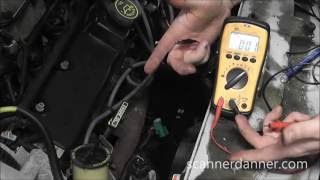
How to confirm: Visually inspect the entire wiring harness and connector leading to the Bank 1, Sensor 1 O2 sensor for any signs of melting, fraying, corrosion, or loose pins. Use a multimeter to check for continuity and proper voltage at the sensor connector according to the vehicle's service manual.
Typical fix: Repair the damaged section of the wiring harness or replace the connector pigtail. Ensure the repaired harness is secured away from hot exhaust components.
Est. part cost: $15 - $50
Rare But Worth Checking
- Vacuum Leak: A significant vacuum leak from sources like a cracked PCV hose or deteriorated intake manifold gaskets can cause the engine to run lean across all cylinders, which the O2 sensor will report. This would likely be accompanied by code P0171 (System Too Lean Bank 1) and potentially P0174 (System Too Lean Bank 2).
- Leaking Intake Manifold Gaskets: → Shop Engine Intake Manifold The lower intake manifold gaskets on the 3.0L Duratec V6 are a known failure point that can cause a vacuum leak, leading to lean codes like P0131 and P0171. This is a more involved repair but a common issue on higher-mileage engines.
- Low Fuel Pressure: Insufficient fuel pressure from a weak fuel pump or clogged filter can create a lean running condition. This would typically affect both cylinder banks and may set P0131 and a P0151 (Bank 2) or P0171/P0174 codes.
- Blown Fuse: On the Mazda Tribute platform mate, owners have reported that a blown 15A fuse labeled 'HEGO' (Heated Exhaust Gas Oxygen) in the engine bay fuse box can cause multiple O2 sensor codes to appear at once. This is worth checking before replacing sensors.
- Faulty Powertrain Control Module (PCM): This is extremely rare and should only be considered after all other possibilities, including wiring, leaks, and the sensor itself, have been exhaustively ruled out by a professional.
Diagnosis Steps
- Confirm the code P0131 is present using an OBD-II scanner.
- Check for any other stored codes, especially P0171, P0135, or P0174.
- Using the scanner's live data function, monitor the voltage of the Bank 1, Sensor 1 (O2S11) oxygen sensor with the engine warm and at idle. It should fluctuate rapidly between ~0.1V and ~0.9V. If it is stuck low (below 0.2V), it indicates a problem.
- Slightly raise the engine RPM to 2000-2500. If the voltage remains low, it further points to a sensor, wiring, or exhaust leak issue.
- Perform a thorough visual inspection of the Bank 1 exhaust manifold (firewall side) for any signs of cracks or black soot that would indicate an exhaust leak.
- Inspect the O2 sensor's wiring harness and connector for any visible damage, melting, or corrosion. Pay close attention to where the harness might rub against the engine or chassis.
- Check for vacuum leaks by listening for hissing sounds or by using a smoke machine, paying close attention to the intake manifold gaskets and all vacuum hoses.
- Check the fuse box for a blown fuse related to the O2 sensors (often labeled HEGO or similar).
- If an exhaust leak is suspected, confirm with a smoke test.
- If wiring, fuses, and exhaust/vacuum integrity are good, and the sensor voltage is stuck low, the oxygen sensor itself is the most likely culprit and should be replaced.
Parts You'll Likely Need
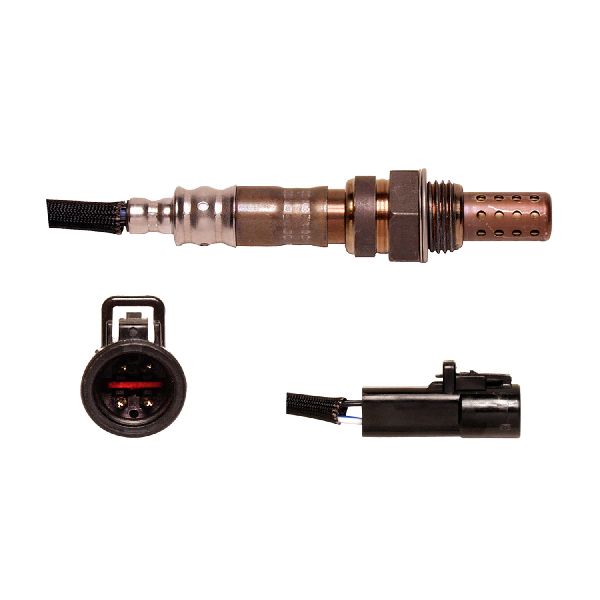
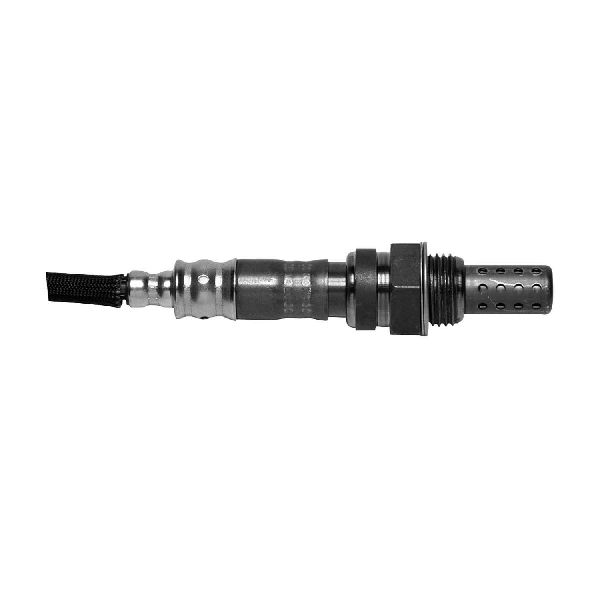
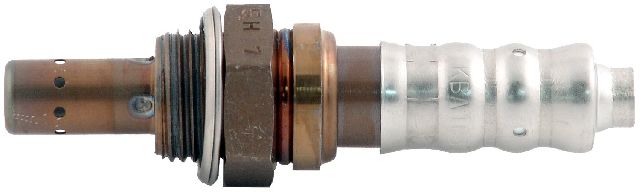
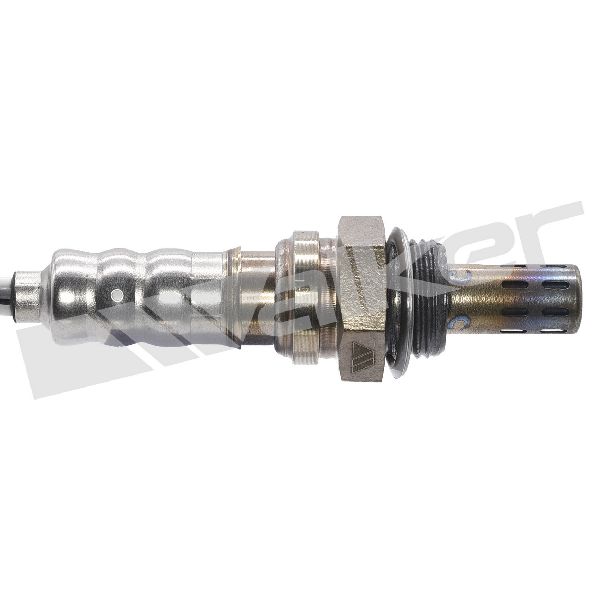
- Upstream Oxygen Sensor (Bank 1, Sensor 1)
(OEM #5C5Z-9F472-BA)— This is the sensor that the code directly identifies as having a low voltage circuit. It is a common wear-and-tear item and the most frequent cause of a P0131 code. This part number has been superseded by GU2Z-9G444-A.
Trusted brands: Motorcraft, Bosch, Denso, NTK/NGK
OEM price range: $90-$150
Aftermarket price range: $40-$80 - Oxygen Sensor Socket Set — A specialized socket with a cutout for the wire is often required to remove and install the O2 sensor, especially in tight locations like this one.
Trusted brands: Lisle, OEMTools, GearWrench
Aftermarket price range: $15-$40
Related Codes That Often Appear With This One
- P0171 — System Too Lean (Bank 1). This code is very common with P0131. The P0131 indicates the sensor's voltage is low, and P0171 is the code the PCM sets when it determines, based on that low voltage, that the air-fuel mixture is too lean. The root cause could be the sensor itself or a true lean condition (vacuum/exhaust leak).
- P0135 — O2 Sensor Heater Circuit Malfunction (Bank 1, Sensor 1). The heater inside the O2 sensor helps it reach operating temperature quickly. If the heater fails, the sensor can give slow or incorrect readings, sometimes triggering P0131 as well. A blown fuse can also cause this.
- P0420 — Catalyst System Efficiency Below Threshold (Bank 1). If the upstream O2 sensor (B1S1) provides incorrect data for a long time, it can lead to an improper air-fuel mixture that damages the catalytic converter, eventually triggering this code.
Technical Service Bulletins (TSBs) & Recalls
- While no TSB directly for P0131 on this specific model was found, TSBs for wiring harness chafing on other Ford models with 3.0L engines exist (e.g., 21-NA-149 for a different 3.0L), highlighting the importance of inspecting the wiring harness for damage.
Platform-Specific Known Issues
- Difficult Access to Bank 1 Sensor 1: The primary challenge for this repair is the location of the Bank 1 Sensor 1 O2 sensor. It is on the rear cylinder bank (firewall side), tucked between the engine and firewall, making it very difficult to see and reach. Mechanics and DIYers often need to work from below the vehicle and may need to remove other components like the passenger side inner fender liner to gain access. Even with specialized O2 sensor sockets, the tight clearance can be a significant source of frustration.
Mechanic-Grade Diagnostic Values
- O2 Sensor Heater Resistance — expected: 13.8 to 15.2 ohms. Failure: A reading outside of this range indicates a faulty heater element within the sensor.
- O2 Sensor Signal Wire Voltage (KOEO, sensor unplugged) — expected: 0 Volts. Failure: Ford vehicles of this era typically do not use a bias voltage on the O2 signal line. If voltage (e.g., ~0.5V) is present with the sensor unplugged, it could indicate a short to another circuit or an internal PCM fault.
- PCM Response Test (Advanced) — expected: When a small voltage (e.g., from body static or a test light) is applied to the signal wire at the unplugged harness connector, the scan tool PID for that sensor should show a corresponding voltage increase.. Failure: If the scan tool voltage does not change, it indicates an open or short in the signal wire between the connector and the PCM.
Hidden / Shadow Codes Worth Checking
- Mode $06, TID $01, CID $01-$04: These are not DTCs but test results from the onboard diagnostic monitor for the O2 sensors. A failing value in these tests can precede a P0131 code. They measure sensor switch time, response rate, and other parameters against calibrated limits. (see via A scan tool capable of displaying Mode $06 data is required.)
Scan Tool Commands That Help
- Ford IDS / FORScan / Capable Generic Scanner: Clear KAM (Keep Alive Memory) — After replacing an O2 sensor or fixing a related issue, clearing the KAM resets the long-term fuel trims and other learned adaptations. This forces the PCM to relearn values with the new, functional components immediately, rather than slowly adapting over time.
- Ford IDS / Capable Generic Scanner: Oxygen Sensor Monitor Drive Cycle — After a repair, the vehicle must complete a specific drive cycle to run the internal O2 sensor monitor and confirm the fix. For Ford, this typically involves warming the engine to normal operating temperature, ensuring the intake air temp is between 40-100°F, and then cruising at a steady 40 mph for four minutes.
Wiring & Ground Locations
- PCM Pin 93 (on a 2004 model) — At the main Powertrain Control Module connector. The PCM is typically located in the engine bay on the firewall.. This is the specific pin for the HO2S11 signal return (Red/White wire in some diagrams). Checking for continuity between this pin and the sensor harness connector pin is the definitive test for an open or shorted signal wire.
- G108 — On the firewall, at the rear of the engine compartment.. This is a primary engine ground point. While the O2 sensor signal is a floating ground referenced by the PCM, other related components and the PCM itself rely on clean chassis grounds like G108. A poor connection here can cause a variety of strange electrical issues.
- G105 — Located at the left front of the engine compartment.. Another key ground point for various engine bay components. Verifying that this ground is clean and tight is a good practice when diagnosing any electrical fault code.
Real Owner Repair Stories
- YouTube Commenter (Ford Escape (year not specified, but behavior is common)) — Persistent lean codes (likely P0171/P0174) which are often paired with O2 sensor codes like P0131.
❌ Tried (didn't work) Replaced both O2 sensors, Replaced MAF sensor, Replaced IAC valve and gasket, Replaced PCV valve, Cleaned throttle body and replaced gasket, Replaced air intake gasket, Replaced fuel pump, Replaced fuel filter, Used fuel injector cleaner, Replaced spark plugs, Checked air hoses for leaks
✅ What actually fixed it The final root cause was an exhaust leak. After replacing numerous parts, checking for an exhaust leak finally solved the lean condition that the O2 sensors were reporting.
OEM Part Supersession History
5C5Z-9F472-BA→GU2Z-9G444-A— Standard part number consolidation and updates by Ford.
Heads up: GU2Z-9G444-A is the correct current OEM replacement for the original part number specified for this application. Using other universal or incorrect sensors can lead to persistent codes.
Model Year Variations Within This Range
- 2005-2007: The 2005 model year facelift introduced several changes, including moving the automatic shifter from the column to the console and modifications to the 3.0L V6 to improve fuel economy. While the fundamental O2 sensor function remained, wiring harnesses and PCM software were updated. A 2005 engine and its electronics may not be a direct swap for a 2004 model without changing associated components.
Diagnostic Flowchart
Real Owner Stories
Aggregated from forums and TSBs cited above. Mileages and costs reflect what owners reported in those sources.
2009 Ford Escape
Symptoms: Needed to replace the Bank 1 Sensor 1 oxygen sensor and struggled with the location.
What fixed it: Replaced the sensor by sticking an arm between the firewall and the engine, describing the tight-clearance job as a 'bitch to do'.
Source hint: Reddit r/MechanicAdvice - O2 sensor replacement 2009 ford escape
Ford truck (similar access)
Symptoms: Faced severe access issues when trying to reach the Bank 1 Sensor 1 O2 sensor.
What fixed it: Accessed the sensor from underneath the vehicle, removed the inner fender liner, and used a heated and straightened 7/8" box-end wrench to get it to fit.
Source hint: YouTube - A Midwest Family - Ford Bank 1 Sensor 1 O2 Sensor Replacement
Ford Escape 3.0L V6
Symptoms: Experienced persistent P0171 and P0131 codes that did not go away after replacing the oxygen sensor.
What fixed it: Replaced the upper and lower intake manifold gaskets to resolve a vacuum leak.
Source hint: Escape City - Ford Escape & Mazda Tribute Forums
2001-2004 Mazda Tribute
Symptoms: Triggered multiple O2 sensor codes simultaneously.
What fixed it: Replaced a single blown 15A 'HEGO' fuse instead of replacing the oxygen sensors.
Source hint: YouTube - Watch this before replacing O2 sensors Mazda tribute 2001-2004
Related OBD-II Codes
Frequently Asked Questions
Why is it so difficult to replace the Bank 1 Sensor 1 oxygen sensor on my 3.0L V6 Escape?
I replaced the O2 sensor but P0131 came back. What else should I check on this engine?
Is there a specific fuse that can cause code P0131 on the Escape and Tribute?
Does TSB 21-NA-149 apply to my 2001-2007 Ford Escape?
What tools do I need to remove the upstream O2 sensor on the firewall side?
Will the diagnostic steps for P0131 be the same for my Mercury Mariner?
Helpful Videos
We Have This Part in Stock


The information in this article is provided for general reference and educational purposes only. Vehicle specifications, procedures, and part compatibility can vary by production date, trim level, and region. Always consult your vehicle's factory service manual and verify part numbers before purchasing or performing repairs. Safety-critical components such as airbags, seat belts, and braking systems should be installed by a qualified professional.
- Ford Escape:
- 🧭 Diagnostic Flowchart
- 🎬 Helpful Videos
- 🛍️ Shop This Part
- What's Unique About the 2001-2007 Ford Escape
- Symptoms You May Notice
- Most Likely Causes
- Rare But Worth Checking
- Diagnosis Steps
- Parts You'll Likely Need
- Related Codes That Often Appear With This One
- Technical Service Bulletins (TSBs) & Recalls
- Platform-Specific Known Issues
- Mechanic-Grade Diagnostic Values
- Hidden / Shadow Codes Worth Checking
- Scan Tool Commands That Help
- Wiring & Ground Locations
- Real Owner Repair Stories
- OEM Part Supersession History
- Model Year Variations Within This Range
- Real Owner Stories
- 2009 Ford Escape
- Ford truck (similar access)
- Ford Escape 3.0L V6
- 2001-2004 Mazda Tribute
- Related OBD-II Codes
- Frequently Asked Questions
- 🎟️ Get 5% Off