

P0132 on 2020-2024 Ford Explorer 2.3L: O2 Sensor High Voltage Causes and Fixes
For a 2020-2024 Explorer with the 2.3L engine, code P0132 almost always means the upstream oxygen sensor (Bank 1, Sensor 1) has failed. This sensor is a primary input for fuel control, and a high voltage reading forces the engine to run lean, causing poor performance. Replacing this sensor is the most common fix, with parts costing between $75 for aftermarket and $120 for an OEM Motorcraft part.
- P0132 on your Explorer means the upstream O2 sensor is sending a high voltage signal.
- The most probable cause is a failed oxygen sensor, which is a common wear item.
- You can continue driving, but you'll experience poor fuel mileage and risk damaging your catalytic converter if not addressed.
- A DIY replacement is feasible for those with basic tools, including a special O2 sensor socket.
- The correct OEM part is Motorcraft DY-1537, which corresponds to Ford part number L1MZ-9F472-E.
What's Unique About the 2020-2024 Ford Explorer
The 2020-2024 Explorer (sixth generation, U625) with the 2.3L EcoBoost I4 engine uses a specific wideband upstream O2 sensor. While the P0132 code is a generic powertrain code, the most common cause on modern vehicles like this is simply the sensor failing due to age and heat exposure. There are no widespread, documented issues or technical service bulletins (TSBs) specifically for P0132 on this platform, suggesting failures are typically isolated incidents of a standard wear-and-tear part rather than a systemic design flaw. The 2.3L EcoBoost is a widely used engine, and this fault is not unique to the Explorer.
Symptoms You May Notice
- Check Engine Light is on
- Decreased fuel economy
- Rough or unstable idle
- Hesitation or stumbling during acceleration
- Possible black smoke from the exhaust in severe cases if the cause is a true rich condition, not a failed sensor.
- Engine stalling or difficult starting in some cases
- Replacing the downstream (Sensor 2) 🎬 Watch: Understanding common Ford Explorer check engine light codes. oxygen sensor. This code is specific to Sensor 1, which is the upstream sensor before the catalytic converter. 🎬 See this walkthrough for replacing the 2.3L EcoBoost upstream sensor.
- Replacing the catalytic converter. A P0132 code is a potential cause of catalytic converter failure if left unfixed, not a symptom of it. A bad converter usually sets a P0420 code.
- Immediately replacing the O2 sensor without checking the wiring. If the voltage remains high after unplugging the sensor, the new sensor will not fix the problem.
Most Likely Causes
- Failed Upstream Oxygen Sensor (Bank 1, Sensor 1) 🔴 High Probability → Shop Oxygen Sensor Oxygen sensors are wear-and-tear items that operate in a high-heat environment. Contamination from fuel, oil, or coolant, as well as simple age-related degradation, are the primary reasons for failure across all vehicles.
How to confirm: Use an OBD-II scanner with live data. Observe the 'O2S11' voltage. If it is stuck high (e.g., >0.9V) and does not fluctuate rapidly between ~0.1V and 0.9V at operating temperature, the sensor has likely failed. 🎬 Watch: How to diagnose and fix high voltage O2 sensor codes. A definitive test is to unplug the sensor; if the scanner's voltage reading then drops to a medium reference voltage (around 0.45V), the sensor is confirmed bad.
Typical fix: Replace the Bank 1, Sensor 1 oxygen sensor. On the 2.3L I4 engine, this is the sensor located in the exhaust manifold or downpipe before the catalytic converter.
Est. part cost: $75-$120 - Wiring Harness or Connector Damage 🟡 Medium Probability The O2 sensor wiring is located in the hot engine bay, close to the exhaust. Wires can become brittle, melt, or chafe over time, leading to a short circuit to power. This can cause a constant high voltage signal to be sent to the PCM.
How to confirm: Visually inspect the entire wiring harness from the O2 sensor to the main engine harness. Look for any signs of melting, chafing, corrosion, or loose pins in the connector. If unplugging the sensor does not cause the high voltage reading on a scanner to drop, a short-to-power exists in the harness that must be traced with a multimeter.
Typical fix: Repair the damaged section of the wiring harness or replace the connector pigtail.
Est. part cost: $20-$50 - Engine Running Rich ⚪ Low Probability Not a platform-specific issue, but can be caused by other component failures such as leaking fuel injectors, a faulty fuel pressure regulator, or a bad Mass Airflow (MAF) sensor.
How to confirm: This is usually accompanied by other trouble codes (e.g., for fuel injectors, MAF sensor, or fuel pressure). The O2 sensor is correctly reporting a high voltage because there is genuinely too much fuel. Diagnose and fix the other codes first. A P0172 (System Too Rich Bank 1) code is a strong indicator.
Typical fix: Fix the underlying issue causing the rich condition, such as a leaking fuel injector, faulty fuel pressure regulator, or dirty MAF sensor.
Est. part cost: $50-$500+
Rare But Worth Checking
- Powertrain Control Module (PCM) Fault: → Shop Engine Control Module (ECM) This is extremely rare. A PCM fault in the voltage regulation circuit can theoretically cause a P0132 code. Before condemning the PCM, all other possibilities (sensor, wiring, actual rich condition) must be exhaustively ruled out. Ford's own diagnostic procedure points to a PCM replacement only after verifying the wiring harness is not shorted to power.
- Exhaust Leak: An exhaust leak upstream of the O2 sensor can sometimes, counter-intuitively, lead to a P0132 code. While it often causes a lean code (P0131), the turbulence and introduction of outside air can confuse the sensor and cause erratic, high readings. This is less common than a direct sensor or wiring failure.
Diagnosis Steps
- Connect an OBD-II scanner and confirm P0132 is the primary code. Check for any other codes that could indicate a rich condition (like P0172).
- Access live data on the scanner and monitor the voltage for 'O2S11' (Bank 1, Sensor 1).
- Start the engine and let it reach operating temperature. A healthy sensor's voltage should fluctuate rapidly between approximately 0.1V and 0.9V.
- If the voltage is stuck high (above 0.9V), the fault is confirmed.
- Turn the engine off. Visually inspect the O2 sensor's wiring harness and connector for any obvious damage, melting, or corrosion.
- To isolate the sensor from the wiring, disconnect the O2 sensor electrical connector.
- Turn the key to the 'On' position (engine off). Observe the live data voltage for O2S11 again. It should drop to a reference voltage (typically ~0.45V). If it does, the sensor itself is faulty and needs replacement.
- If the voltage remains high even with the sensor disconnected, there is a short-to-power in the wiring harness that needs to be located and repaired.
Parts You'll Likely Need
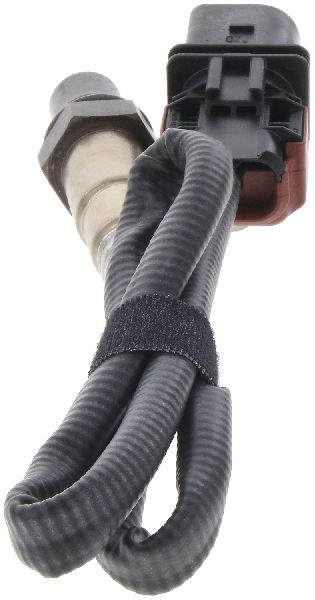
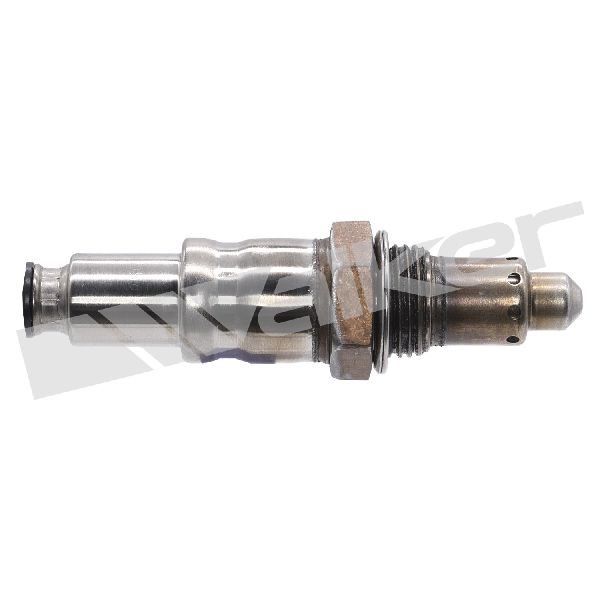
- Upstream Oxygen Sensor (Bank 1, Sensor 1)
(OEM #L1MZ-9F472-E)— This is the most common component to fail and cause a P0132 code. It is a standard wear-and-tear part.
Trusted brands: Motorcraft (DY-1537), Bosch, Denso, NTK
OEM price range: $100-$120
Aftermarket price range: $75-$100
Related Codes That Often Appear With This One
- P0172 — P0172 means "System Too Rich (Bank 1)". If the engine is actually running rich due to a bad injector or other issue, the O2 sensor will correctly report high voltage (P0132) and the PCM will also flag the rich condition it's detecting (P0172).
Mechanic-Grade Diagnostic Values
- HO2S11 PID Voltage (Live Data) — expected: Rapidly fluctuating between ~0.1V and 0.9V at warm idle.. Failure: Stuck at 1.5 volts or greater.
- HO2S11 PID Voltage (Sensor Unplugged, KOEO) — expected: Should drop to a reference voltage, typically ~0.45V.. Failure: PID voltage remains at 0.5 volts or greater, indicating a short to power in the harness.
- Resistance between HO2S Signal Circuit and VPWR/VREF — expected: Greater than 10,000 Ohms.. Failure: Resistance is less than 10,000 Ohms, indicating a short circuit. This test is performed with the sensor and PCM disconnected.
Scan Tool Commands That Help
- Ford IDS / FORScan: Wiggle Test — If the P0132 code is intermittent, a technician can monitor the HO2S11 PID live data while physically wiggling the sensor connector and harness to see if the voltage spikes, which would indicate a wiring issue.
- Ford IDS / FORScan: On-Demand Self-Test — This function commands the PCM to run its internal diagnostic checks on all available sensors and systems, which can help confirm if the P0132 fault is currently active (hard fault) or intermittent.
Wiring & Ground Locations
- HO2S11 Connector — On the 2.3L I4, the upstream O2 sensor (HO2S11) is located in the exhaust downpipe, just after the turbocharger and before the catalytic converter.. This is the primary connector to inspect for corrosion, damage, or loose pins. A fault here directly impacts the signal to the PCM.
- Downstream O2 Sensor Connector (HO2S12) — On 2020 Explorers, the downstream O2 sensor connector for Bank 1 was placed in the passenger side wheel well, making it highly susceptible to water intrusion from puddles.. While this location is for the downstream sensor (related to codes P0138/P0141), it indicates a potential design vulnerability. Wiring for the upstream sensor may be routed nearby and could be susceptible to similar water and corrosion issues, which could cause a short-to-power.
- PCM Connector — The Powertrain Control Module is typically located in the engine bay. A technician would disconnect it to perform resistance checks on the harness.. This is the final destination for the O2 sensor signal. Testing at this connector helps definitively rule out the entire wiring harness between the sensor and the PCM.
OEM Part Supersession History
L1MZ-9F472-E→L1MZ-9F472-E (current)— No supersession found, but part has a specified end date.
Heads up: Part listings show an effectivity date for the Explorer 2.3L 'To 5/13/2024'. This implies a different part may be used on vehicles built after this date. It is critical to verify the correct part number by VIN for late 2024 and newer models.
Model Year Variations Within This Range
- 2020: A TSB for a related O2 sensor code (P2243) on the 2.3L engine points to a required PCM software update, suggesting early-build 2020 models may have software-related vulnerabilities in the O2 sensor monitoring system.
- 2020: The downstream O2 sensor connector was reportedly placed in a vulnerable location in the passenger wheel well, prone to water damage. This may have been revised in later model years.
Diagnostic Flowchart
Other Known Issues on This Vehicle
Issues unrelated to this code that are worth knowing about as an owner of this generation:
- Rear Axle Bolt Fracture 🔴 High — Affects 2020-2022 models, widespread enough to trigger a major recall (NHTSA #22V255, Ford #23S55). Over 390,000 vehicles recalled. (Ref: Recall 22S27 / 23S55. The initial fix was a PCM software update to engage the parking brake if the bolt failed. The final fix involves replacing the bolt and bushing.)
- 10R60 Transmission Harsh/Erratic Shifting 🟠 Medium — Common complaints on 2020 models. Issues include harsh downshifts, clunky upshifts, and delayed engagement. (Ref: Multiple TSBs exist, including TSB 20-2305 for harsh 7-6 downshifts on early 2020 models and TSB 23-2176 for delayed reverse engagement. Software updates and internal component replacement may be required.)
- Coolant Intrusion / Cracked Engine Block 🔴 High — A known issue on the 2.3L EcoBoost family, though more documented on earlier model years. A TSB (SSM 52023) was issued for 2023 models with a specific build date range for cracked blocks. Symptoms include coolant loss, white smoke, and misfires. (Ref: TSB SSM 52023 for 2023 models. Older TSBs for other 2.3L applications exist, often requiring long block replacement.)
- SYNC 3 System Glitches 🟡 Low — Affects many Ford/Lincoln vehicles from 2019-2023. Symptoms include screen flickering, unresponsiveness, Bluetooth issues, and echo during calls. (Ref: TSB 22-2254 (later superseded by TSB 23-2307) provides a software update procedure to fix numerous performance-related concerns.)
Used vs. New Parts: Buying Guide for This Vehicle
When a used part is the smart pick: For this specific repair, a used oxygen sensor is almost never a smart choice. It is a sensitive electronic component and a wear-and-tear item with a finite lifespan. The cost savings are minimal compared to the risk of receiving a part that is already degraded or near failure.
Donor-vehicle mileage cap: roughly under 20000 miles for the part to have meaningful remaining life.
What to inspect on the donor part:
- If forced to use a salvaged part, source from a very low-mileage wreck.
- Ensure the ceramic tip is intact and light gray, not coated in black soot or white deposits.
- Check that the wiring and connector are free of any melting, corrosion, or stretched wires.
OEM-only on this vehicle (don't cheap out):
- Oxygen Sensor
Aftermarket brands forum-validated for this vehicle:
- Motorcraft (OEM)
- NTK
- Denso
- Bosch
Brands owners have reported issues with on this vehicle:
- Generic, unbranded 'economy' sensors from online marketplaces. The upstream sensor on EcoBoost engines is a precise wideband unit, and cheap aftermarket versions often lack the accuracy, causing performance issues or the code to return.
Real Owner Stories
Aggregated from forums and TSBs cited above. Mileages and costs reflect what owners reported in those sources.
2020 Ford Ranger 2.3L EcoBoost
Symptoms: Discussions point to sensor failure as the primary cause, followed by wiring issues.
What fixed it: Replacement of the Bank 1, Sensor 1 oxygen sensor.
Source hint: forum_citations regarding platform mates like the Ford Ranger and Mustang with the same 2.3L EcoBoost engine
Related OBD-II Codes
Frequently Asked Questions
Could my P0132 code be related to the TSB for cracked engine blocks on the 2023 Explorer?
Is there a specific brand of oxygen sensor I should use for my 2.3L EcoBoost engine?
If I have a P0132 and a P0172 code on my Explorer, which should I address first?
Can I use a used oxygen sensor from a salvaged Ford Ranger or Mustang to fix this?
Where is the Bank 1, Sensor 1 oxygen sensor located on the 2.3L I4 engine?
Could the high voltage reading be a wiring issue rather than a bad sensor?
Helpful Videos

We Have This Part in Stock

The information in this article is provided for general reference and educational purposes only. Vehicle specifications, procedures, and part compatibility can vary by production date, trim level, and region. Always consult your vehicle's factory service manual and verify part numbers before purchasing or performing repairs. Safety-critical components such as airbags, seat belts, and braking systems should be installed by a qualified professional.
- Ford Explorer:
- 🧭 Diagnostic Flowchart
- 🎬 Helpful Videos
- 🛍️ Shop This Part
- What's Unique About the 2020-2024 Ford Explorer
- Symptoms You May Notice
- Most Likely Causes
- Rare But Worth Checking
- Diagnosis Steps
- Parts You'll Likely Need
- Related Codes That Often Appear With This One
- Mechanic-Grade Diagnostic Values
- Scan Tool Commands That Help
- Wiring & Ground Locations
- OEM Part Supersession History
- Model Year Variations Within This Range
- Other Known Issues on This Vehicle
- Used vs. New Parts: Buying Guide for This Vehicle
- Real Owner Stories
- 2020 Ford Ranger 2.3L EcoBoost
- Related OBD-II Codes
- Frequently Asked Questions
- 🎟️ Get 5% Off