

P0132 on 2008-2014 Mercedes-Benz C-Class: O2 Sensor High Voltage Causes and Fixes
P0132 on a W204 C-Class almost always points to a failed upstream oxygen sensor (Bank 1, Sensor 1). This is a common wear item. Expect to pay $70-$150 for a quality aftermarket sensor (like Bosch) and around one hour of labor for replacement.
- P0132 on your C-Class means the Bank 1 upstream O2 sensor circuit has high voltage.
- The most probable cause is a failed O2 sensor, which is a routine replacement item, typically a Bosch brand sensor.
- Before buying a new sensor, always perform a quick visual check of the wiring and connector for obvious damage like melting or fraying.
- If you also have a P0172 (System Too Rich) code, the problem may be your fuel system, not the O2 sensor.
- Always verify the exact part number for your specific year and engine, as it can differ between pre-facelift (M272) and facelift (M276) W204 models.
What's Unique About the 2008-2014 Mercedes-Benz C-Class
For the W204 C-Class, this code is straightforward. The most common culprit is simply an aged Bank 1 upstream O2 sensor, with Bosch being the typical Original Equipment Manufacturer (OEM). On V6 models like the C300 and C350 (M272/M276 engines), 'Bank 1' refers to the passenger side (right side) of the engine in North American vehicles. While the cause is consistent, it's important to note that the 2012 facelift introduced new engines, so the exact part number for the sensor can vary between a 2010 C300 (M272 engine) and a 2013 C250 (M271/M274 engine) or C350 (M276 engine).
Generation note: The 2008-2014 range covers the W204 generation of the C-Class. However, it includes the pre-facelift (2008-2011) and facelift (2012-2014) models. The facelift introduced different engines, such as the M276 V6 and M274/M271 turbocharged four-cylinders, which may use different oxygen sensor part numbers than the earlier M272 V6 engines. The diagnostic principle remains the same across all engine types.
Symptoms You May Notice
- Check Engine Light is on.
- Reduced fuel economy.
- Rough or unstable idle.
- Engine hesitation or stumbling during acceleration.
- Black smoke from the exhaust in severe cases.
- Smell of raw fuel.
- Replacing the catalytic converter. A P0132 code is for the upstream sensor and does not directly indicate a bad converter.
- Replacing the downstream (Sensor 2) oxygen sensor. The code specifically points to Sensor 1.
- Replacing the wrong bank's sensor. On V6 models, Bank 1 is the passenger side (US) and Bank 2 is the driver's side.
Most Likely Causes
- Failed Upstream Oxygen Sensor (Bank 1, Sensor 1) 🔴 High Probability → Shop Oxygen Sensor Oxygen sensors are wear-and-tear parts that degrade over time from constant exposure to high-temperature exhaust gases. Failure between 80,000-120,000 miles is common.
How to confirm: Use an OBD-II scanner to monitor live data for the Bank 1 Sensor 1 voltage. If it is stuck high (e.g., >0.9V) and not fluctuating rapidly as it should during normal operation, the sensor has likely failed. A healthy sensor fluctuates between ~0.1V and ~0.9V multiple times per second.
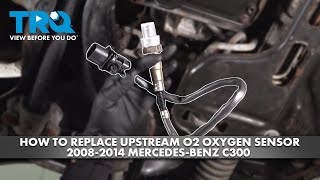
Typical fix: Replace the Bank 1, Sensor 1 oxygen sensor. It is located on the exhaust manifold or downpipe before the catalytic converter. 🎬 Watch: Step-by-step guide to replacing the upstream sensor.
Est. part cost: $70-$150 - Wiring or Connector Issue 🟡 Medium Probability The sensor wiring is routed near the hot exhaust and transmission. Over time, the protective loom can degrade, allowing wires to chafe or melt, causing a short circuit to power or ground.
How to confirm: Visually inspect the entire wiring harness from the O2 sensor to where it connects to the main engine harness. Look for melted plastic, frayed wires, or corrosion on the connector pins. Use a multimeter to check for a short to voltage on the signal wire with the sensor disconnected.
Typical fix: Repair the damaged section of the wiring harness or clean/replace the connector.
Est. part cost: $5-$50 - Engine Running Rich ⚪ Low Probability While less common than a sensor failure, issues like a leaking fuel injector, a faulty Mass Air Flow (MAF) sensor, or high fuel pressure can cause a genuinely rich condition, which the O2 sensor correctly reports.
How to confirm: This is a likely cause if other codes are present, such as P0172 (System Too Rich). Diagnosis involves checking fuel trims with a scan tool and testing components like fuel injectors and the fuel pressure regulator.
Typical fix: Repair the underlying cause of the rich condition, such as replacing a leaking fuel injector or cleaning the MAF sensor.
Est. part cost: $50-$400+
Rare But Worth Checking
- Exhaust Leak: An exhaust leak upstream of the O2 sensor can sometimes, though less commonly for a high voltage code, skew sensor readings. It's worth a quick inspection.
- Powertrain Control Module (PCM) Fault: → Shop Engine Control Module (ECM) This is very rare, but a fault within the PCM's internal driver for the O2 sensor circuit can cause the code. This should only be considered after all other possibilities have been exhaustively ruled out.
Diagnosis Steps
- Connect an OBD-II scanner and confirm P0132 is the active code. Check for any other codes, especially P0172.
- View the live data stream for 'O2 Sensor Voltage Bank 1 Sensor 1'.
- Observe the voltage at idle and while holding RPMs around 2500. A healthy, warm sensor will show voltage fluctuating rapidly between approximately 0.1V and 0.9V. If the voltage is stuck high (e.g., 0.9V or higher) and unresponsive, it confirms the fault condition. 🎬 See how to diagnose high voltage sensor readings.
- Perform a thorough visual inspection of the Bank 1 Sensor 1 wiring harness and connector. Look for any signs of melting, chafing, or corrosion. Pay close attention to where the harness might contact the exhaust manifold or engine block.
- If the wiring appears intact and the sensor voltage is stuck high, the most likely cause is a failed O2 sensor.
- If you have other codes like P0172, or if a new sensor doesn't fix the issue, further diagnosis of the fuel system (fuel pressure, injectors, MAF sensor) is required to rule out a rich running condition.
- Check for any exhaust leaks between the cylinder head and the upstream O2 sensor.
Parts You'll Likely Need
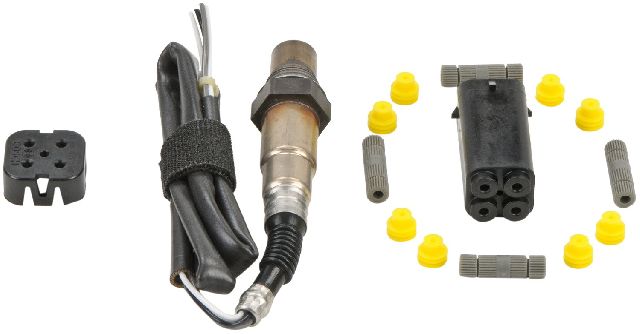
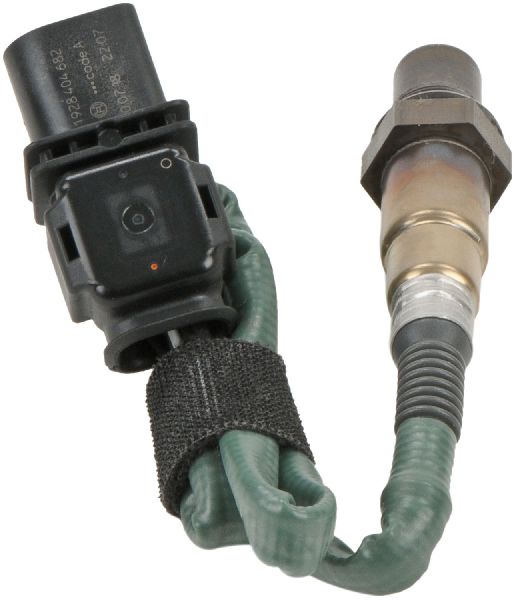
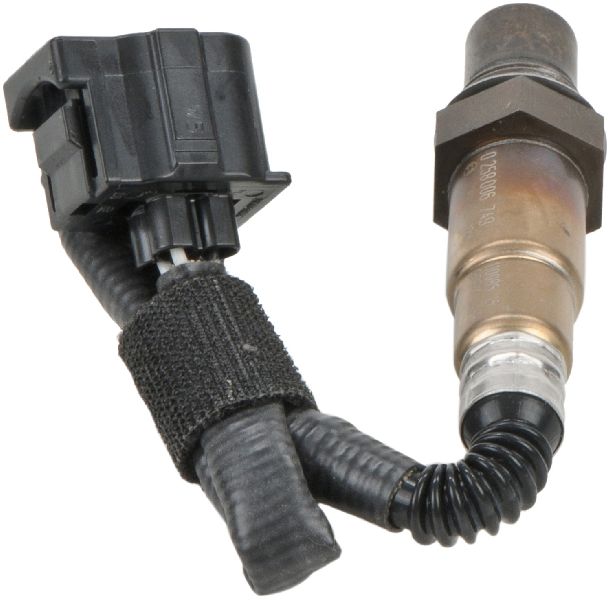
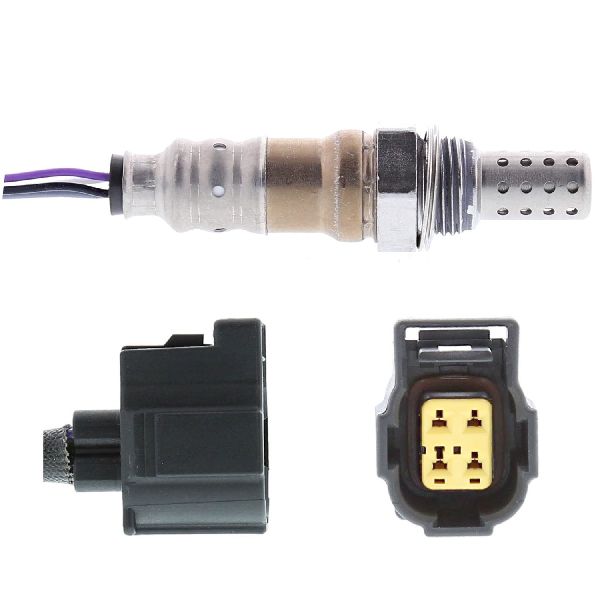
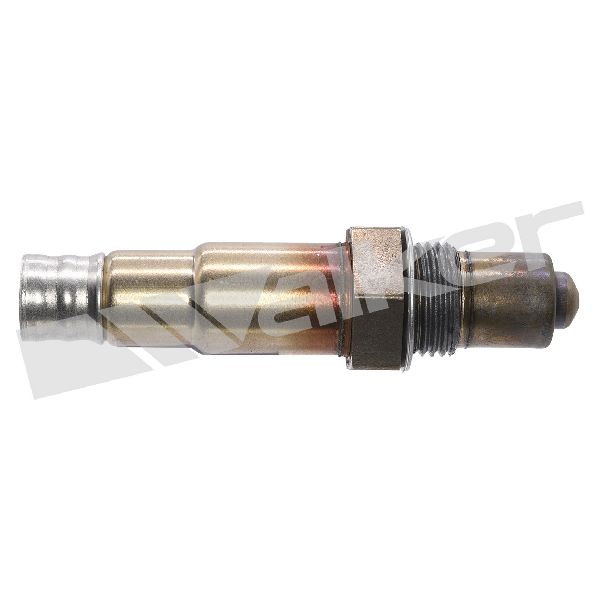
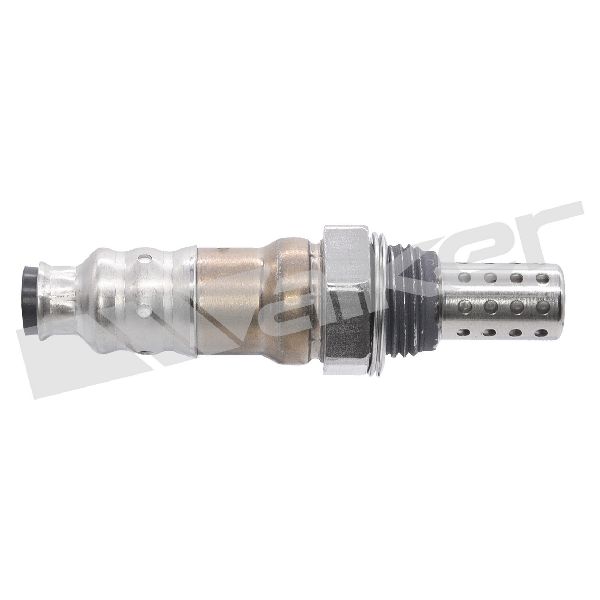
- Upstream Oxygen Sensor (Bank 1, Sensor 1)
(OEM #M272 Engine (e.g., C300/C350 2008-2011): A0035427018, Bosch 17019. M276 Engine (e.g., C350 2012-2014): A0065424918, Bosch 17242.)— This is the most common failure point for code P0132. It is a standard maintenance part that wears out over time.
Trusted brands: Bosch, Denso
OEM price range: $120-$180
Aftermarket price range: $70-$150
Related Codes That Often Appear With This One
- P0172 — If the engine is genuinely running rich, you will often see a P0172 (System Too Rich Bank 1) code alongside P0132. In this case, the O2 sensor is likely working correctly and the problem lies with the fuel system.
Platform-Specific Known Issues
- Access to the upstream (Sensor 1) O2 sensor on the M272/M276 engines can be tight. While the downstream sensor is easily accessible from under the car, the upstream sensor often requires removing the airbox and working from the top side of the engine bay. An offset O2 sensor socket is highly recommended for removal 🎬 Watch this walkthrough for a smooth W204 sensor replacement. and installation.
Diagnostic Flowchart
Other Known Issues on This Vehicle
Issues unrelated to this code that are worth knowing about as an owner of this generation:
- Rear Subframe Corrosion/Failure 🔴 High — Common enough for MBUSA to issue a warranty extension, especially in regions using road salt. Can occur as early as 8-10 years. (Ref: Mercedes-Benz USA extended the warranty to 20 years/unlimited miles for corrosion with perforation.)
- M272 V6 Balance Shaft Sprocket Wear 🔴 High — Affects pre-2009 M272 engines. Symptoms (rattling on startup, codes P0016/P0017) can appear from 60,000-100,000 miles. (Ref: A class-action lawsuit addressed this issue for earlier models. The repair involves replacing the gear with an updated, harder material.)
- 7G-Tronic (722.9) Transmission Conductor Plate Failure 🟠 Medium — Can occur in higher-mileage vehicles, often presenting as harsh shifting, getting stuck in gear (limp mode), or throwing speed sensor fault codes. (Ref: No specific recall, but a very well-documented failure. Common fault codes include P0717, P0718, P0722.)
- M271 Turbo (CGI) Engine Timing Chain Stretch 🔴 High — Affects 4-cylinder CGI models (e.g., C250). A rattling noise on cold starts is the primary symptom, often appearing between 60,000 and 100,000 miles.
- Electronic Ignition Switch (EIS) Failure 🟠 Medium — Can cause a no-start condition where the key is not recognized. It is a known electronic failure point that can occur after 80,000 miles.
Real Owner Stories
Aggregated from forums and TSBs cited above. Mileages and costs reflect what owners reported in those sources.
2008 Mercedes-Benz C300 — 43000 miles
Symptoms: Intermittent fault codes and a noticeable loss in MPG.
What fixed it: Diagnosis pointed toward the front (#1) oxygen sensor, which is noted for being more difficult to access than the rear sensor.
Source hint: MBWorld.org W204 Oxygen Sensor Diagnosis
Mercedes-Benz C-Class (W203/W204) — 50000 miles
Symptoms: Check Engine Light with P0132 code; owner suspected high-flow catalytic converters.
What fixed it: Checking for oil leaking at the cam sensors and at the O2 sensor connector pigtails.
Source hint: mbworld.org owner_reports
Mercedes-Benz C-Class
Symptoms: P0132 fault code present.
What fixed it: Replacement of the sensor with a new Bosch O2 sensor.
Source hint: MBClub.co.uk P0132 Fault Code
Related OBD-II Codes
Frequently Asked Questions
Is the P0132 code on my 2008-2014 C-Class related to the common rear subframe corrosion issue?
I have a C250 with the M271 Turbo engine; could a rattling noise be related to P0132?
Can I access the Bank 1 Sensor 1 O2 sensor from under my C300 or C350?
Will high-flow aftermarket catalytic converters cause a P0132 code on my W204?
Could oil leaking from cam sensors cause this O2 sensor code?
My 2008 C300 has P0132 and poor fuel economy; is this common at 43,000 miles?
Helpful Videos
We Have This Part in Stock

The information in this article is provided for general reference and educational purposes only. Vehicle specifications, procedures, and part compatibility can vary by production date, trim level, and region. Always consult your vehicle's factory service manual and verify part numbers before purchasing or performing repairs. Safety-critical components such as airbags, seat belts, and braking systems should be installed by a qualified professional.
- Mercedes-Benz C-Class:
- 🧭 Diagnostic Flowchart
- 🎬 Helpful Videos
- 🛍️ Shop This Part
- What's Unique About the 2008-2014 Mercedes-Benz C-Class
- Symptoms You May Notice
- Most Likely Causes
- Rare But Worth Checking
- Diagnosis Steps
- Parts You'll Likely Need
- Related Codes That Often Appear With This One
- Platform-Specific Known Issues
- Other Known Issues on This Vehicle
- Real Owner Stories
- 2008 Mercedes-Benz C300 — 43000 miles
- Mercedes-Benz C-Class (W203/W204) — 50000 miles
- Mercedes-Benz C-Class
- Related OBD-II Codes
- Frequently Asked Questions
- 🎟️ Get 5% Off