

P0132 on 2010-2016 Mercedes-Benz E-Class: O2 Sensor High Voltage Causes and Fixes
P0132 on a 2010-2016 E-Class almost always points to a failed upstream oxygen sensor on the passenger side (Bank 1, Sensor 1). The most common fix is replacing the sensor itself. Before replacing, inspect the wiring harness for melting, as its proximity to the exhaust makes it vulnerable. Expect to pay $60-$120 for a quality aftermarket sensor (like Bosch, the OEM supplier) or $150-$250 for a genuine Mercedes-branded part.
- P0132 means the upstream O2 sensor on the passenger side is reading a constant high voltage.
- The most likely cause is a failed sensor, but always inspect the wiring for heat damage before replacement.
- If accompanied by a P0172 code, the problem is likely a rich-running engine (e.g., bad MAF sensor), not the O2 sensor itself.
- Bosch is the OEM supplier, and their aftermarket part is a cost-effective, high-quality replacement.
What's Unique About the 2010-2016 Mercedes-Benz E-Class
On the W212 and C207/A207 generation E-Class with V6 or V8 engines (like the M272, M273, M276, and M278), 'Bank 1' is consistently the passenger's side of the engine in left-hand-drive vehicles. While the code itself is standard, the most common point of failure is simply the O2 sensor reaching the end of its service life, a frequent maintenance item on many higher-mileage German vehicles. Bosch is the original equipment manufacturer (OEM) for these sensors, making high-quality replacements readily available and often identical to the dealer part, just without the Mercedes-Benz logo.
Generation note: The 2010-2016 year range covers the W212 (Sedan and Wagon) and the C207/A207 (Coupe and Cabriolet). Engines evolved from the M272/M273 V6/V8 engines to the direct-injection M276/M278 around 2012. While the code's meaning and diagnostic principles are the same, the exact oxygen sensor part number may differ between these engine families. For example, a Bosch 17019 is listed for the earlier M272 E350, while a Bosch 17281 fits the later M276 E350.
Symptoms You May Notice
- Check Engine Light (MIL) is illuminated
- Reduced fuel economy
- Rough or unstable idle
- Engine hesitation or stumbling during acceleration
- Black smoke from the exhaust in some cases
- Strong smell of fuel
- Replacing the oxygen sensor without first checking the wiring for shorts. A melted wire will cause the new sensor to report the same fault.
- Replacing the oxygen sensor when the true cause is a leaking fuel injector or dirty MAF sensor. If code P0172 is also present, the fuel and air intake systems should be investigated first.
Most Likely Causes
- Failed Upstream Oxygen Sensor (Bank 1, Sensor 1) 🔴 High Probability → Shop Oxygen Sensor Oxygen sensors are wear-and-tear items that degrade over time from intense heat and exhaust contaminants. Failure is common on vehicles with over 80,000 miles. The sensor's internal heating element or sensing element can short out, causing a constant high voltage signal.
How to confirm: Use an OBD-II scanner to monitor live data for the Bank 1, Sensor 1 voltage. If the voltage is stuck high (e.g., >0.9V) and does not fluctuate rapidly between ~0.1V and 0.9V 🎬 See how to diagnose and fix a faulty oxygen sensor. during engine operation, the sensor has likely failed.
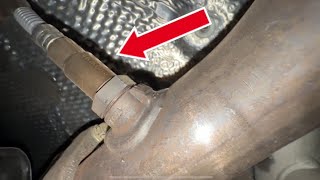
Typical fix: Replace the Bank 1, Sensor 1 oxygen sensor. This is the upstream sensor on the passenger side exhaust manifold. An O2 sensor socket is highly recommended for removal.
Est. part cost: $60-$250 - Damaged Sensor Wiring or Connector 🟡 Medium Probability The sensor wiring is routed near the hot exhaust system and can become brittle, melted, or frayed over time, causing a short circuit to power. This is a common point of failure and should always be checked before replacing the sensor.
How to confirm: Visually inspect the entire wiring harness from the O2 sensor to its connection point. Look for any signs of melting, chafing, or corrosion on the connector pins. Use a multimeter to check for a short to voltage on the signal wire.
Typical fix: Repair or replace the damaged section of the wiring harness or clean/replace the connector. Use heat-resistant loom and secure the wiring away from the exhaust manifold.
Est. part cost: $10-$100 - Engine Running Rich ⚪ Low Probability While less common than a sensor failure, issues like a leaking fuel injector, a faulty fuel pressure regulator, or a dirty Mass Airflow (MAF) sensor can force a rich condition, which the O2 sensor will accurately report as high voltage. If codes P0172 or P0175 are present, this is the more likely scenario.
How to confirm: Check fuel trim values with a scan tool. If long-term fuel trim is significantly negative (e.g., -10% or more), it confirms the ECU is trying to compensate for a rich condition. Also, check for other codes like P0172 (System Too Rich Bank 1).
Typical fix: Diagnose the root cause of the rich condition. This often involves cleaning the MAF sensor, checking fuel pressure, or testing fuel injectors.
Est. part cost: $50-$500+
Rare But Worth Checking
- Exhaust Leak: An exhaust leak upstream of the O2 sensor can sometimes, though less commonly for a high voltage code, skew sensor readings by drawing in outside air. It's worth a quick inspection of the exhaust manifold gasket.
- Blown O2 Sensor Fuse: → Shop Oxygen Sensor The oxygen sensor heater circuit is protected by a fuse. While a blown fuse more commonly causes a heater circuit code (e.g., P0135), it can sometimes lead to erratic sensor readings. Check the fuse box diagram for the O2 sensor or engine sensor fuse. On the W212, these are often grouped under 'fuel injection system' fuses.
- Faulty Engine Control Unit (ECU): This is extremely rare, but the ECU can fail internally and misinterpret the sensor's signal or provide an incorrect reference voltage. All other possibilities, especially wiring and the sensor itself, should be exhausted before considering the ECU as the cause.
Diagnosis Steps
- Connect an OBD-II scanner and confirm P0132 is the active code. Check for any other codes, especially P0172 (Rich Condition).
- View the live data stream for 'O2 Sensor Voltage B1S1'. At operating temperature, a healthy sensor's voltage should fluctuate rapidly between approximately 0.1V and 0.9V. If it is stuck high (e.g., 0.9V or more), proceed with diagnosis.
- If P0172 is present, investigate the fuel system first. Check long-term fuel trims; a large negative number confirms a rich condition. Inspect the MAF sensor for contamination and check fuel pressure.
- Turn off the engine and allow the exhaust to cool. Locate Bank 1, Sensor 1 (passenger side, upstream of the catalytic converter).
- Visually inspect the sensor's wiring harness for any signs of melting, chafing, or damage where it may contact the engine or exhaust. Check that the connector is secure and free of corrosion or oil contamination.
- If wiring looks good and no rich condition is suspected, the most probable cause is the sensor itself. Replace the Bank 1, Sensor 1 O2 sensor. A specialized 22mm offset oxygen sensor socket will make removal much easier.
- If wiring is damaged, repair it using heat-resistant materials. If the sensor is replaced, use a small amount of anti-seize compound on the threads, avoiding the sensor tip.
- After the repair, clear the trouble codes with the scanner and perform a drive cycle, including varied speeds and idle periods, to ensure the code does not return.
Parts You'll Likely Need
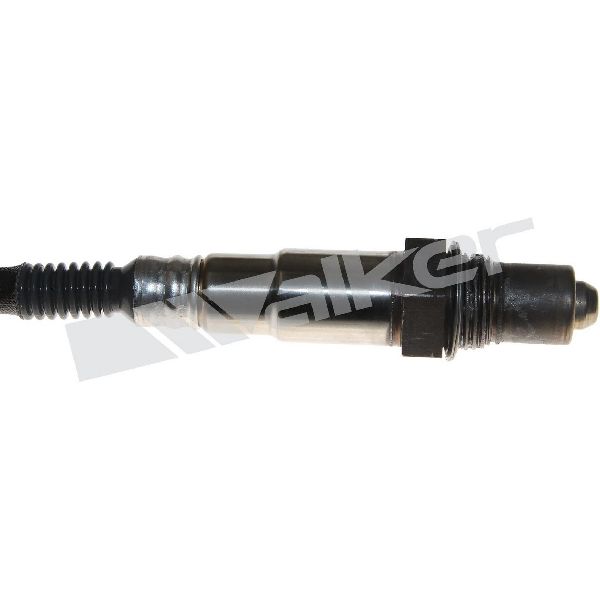
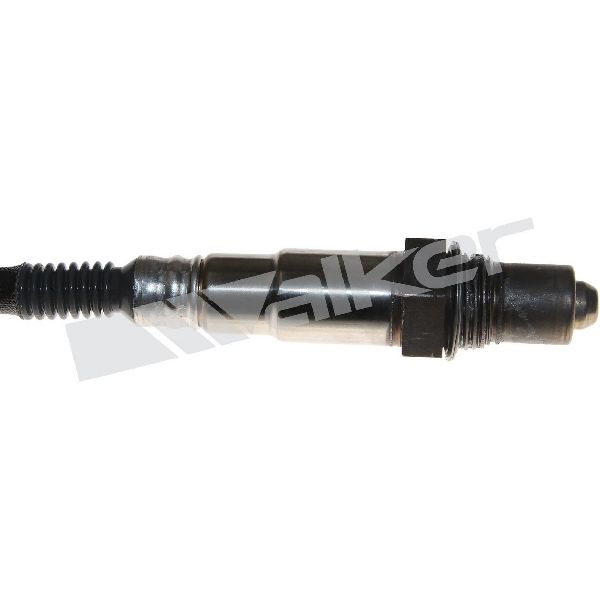
- Upstream Oxygen Sensor (Bank 1, Sensor 1)
(OEM #A0035427018 (example, verify by VIN))— This is the most common component to fail for code P0132. It is a standard wear item that directly produces the voltage signal monitored by the ECU.
Trusted brands: Bosch (OEM Supplier), Denso, NTK
OEM price range: $150-$250
Aftermarket price range: $60-$120
Related Codes That Often Appear With This One
- P0172 — System Too Rich (Bank 1). This code strongly suggests the O2 sensor is correctly reporting a high-voltage condition because the engine is actually running rich. The root cause is likely in the fuel system (injectors, fuel pressure) or air metering (MAF sensor), not the O2 sensor itself.
- P0131 — O2 Sensor Circuit Low Voltage (Bank 1 Sensor 1). Seeing both high and low voltage codes for the same sensor intermittently can point to a severe wiring issue (e.g., chafed wire shorting to ground and power) or a failing sensor that is fluctuating wildly out of range.
- P0175 — System Too Rich (Bank 2). If seen with P0172 and P0132, this points to a systemic issue affecting both engine banks, such as a faulty Mass Airflow (MAF) sensor or incorrect fuel pressure, rather than a single O2 sensor or injector.
Platform-Specific Known Issues
- Access to Bank 2 Sensor 1 vs Bank 1 Sensor 1: On M276 engines, owners report that replacing the Bank 1 (passenger side) sensor is relatively easy with good access after removing the air filter housing. However, replacing the Bank 2 (driver's side) sensor is significantly more difficult due to tight clearance with the steering column.
Mechanic-Grade Diagnostic Values
- O2 Sensor Heater Element Resistance — expected: 5-15 Ohms (when cold). Failure: A reading of infinite resistance (open circuit) or significantly outside the expected range indicates a failed heater element. Some sources note readings can be higher when hot.
- O2 Sensor Signal Voltage (Upstream, at idle) — expected: Rapidly fluctuating sine wave between ~0.1V and ~0.9V.. Failure: Voltage stuck high (above 0.8V - 0.9V) for an extended period.
- O2 Sensor Heater Circuit Voltage (at connector) — expected: Approximately 12V (Battery Voltage) with Key On, Engine Off.. Failure: No voltage indicates a problem with the power supply, which could be a blown fuse or a wiring issue.
- GM-Specific O2 Sensor Bias Voltage — expected: N/A for Mercedes, but for context, GM systems show a 450mV bias on an open circuit.. Failure: A signal stuck at 450mV on a GM vehicle points to an open in the signal wire or a bad ground. Mercedes uses a different system.
Scan Tool Commands That Help
- Xentry/DAS: Actual Values -> Lambda control upstream/downstream of catalytic converter — To view live data graphs of the oxygen sensor voltage, which is the primary method for confirming a stuck-high condition. Xentry provides a more detailed and reliable data stream than generic OBD-II scanners.
- Xentry/DAS: Adaptations -> Reset Fuel Trims — While no specific O2 sensor calibration is needed, resetting fuel trim adaptations after a repair (especially if a rich condition was present) forces the ECU to re-learn the air/fuel mixture with the new, functioning components.
- Xentry/DAS: Quick Test — To perform a full system scan of all control modules. This can reveal other stored or current faults that may not illuminate the check engine light but could be related to the P0132 code.
Wiring & Ground Locations
- W10 — Front strut top mount (engine bay). This is a primary engine ground point. A corroded or loose connection here can cause a variety of electrical issues, including erratic sensor readings.
- W11 — Located near the ECU/ECM, often in a plastic cable duct.. This is the specific ground for the engine control module's wiring assembly. A fault here can directly impact the reference voltage and ground for sensors like the O2 sensor.
- W16/4 — On the front wheelhouse, sometimes under or near the battery tray.. Another critical engine bay ground point. Forum users have identified this as a location that can be missed during diagnostics as it's not always clearly shown in all WIS documents.
- O2 Sensor Connector Pins — At the sensor connector, typically mounted to the transmission bell housing or firewall.. For manual testing, you need to know the pinout. On a typical 4-wire sensor, two wires are for the heater (often same color, e.g., white), one is the signal wire, and one is the signal ground. A wiring diagram is essential for accurate probing.
Real Owner Repair Stories
- Go-Parts article citing common M272 engine issues (2008-2014 Mercedes-Benz C-Class (W204) with M272 V6 engine) — Check Engine Light with code P0133 (Slow Response), but the root cause is relevant to P0132.
❌ Tried (didn't work) Not specified, but implies that simply replacing the sensor might not work if the underlying cause is contamination.
✅ What actually fixed it The article notes a common failure pattern on these engines where oil leaks from the camshaft position sensors, wicks down the wiring harness, and contaminates the O2 sensor connector and sensor itself, causing faults. The fix is to replace the leaking camshaft sensors, clean or replace the contaminated harness section, and replace the O2 sensor.
OEM Part Supersession History
35427018→003-542-70-18 / A0035427018— Standard part number evolution and tracking.
Heads up: The Bosch equivalent for A0035427018 is often listed as Bosch 0 258 017 016. It's crucial to verify the correct part for the specific engine (M272 vs M276) as they use different sensors.
Model Year Variations Within This Range
- 2010-2011 (Pre-Facelift with M272/M273): These models use port-injected engines. While the P0132 diagnosis is similar, the specific O2 sensor part number (e.g., Bosch 17019) is different from the later direct-injection engines.
- 2012-2016 (Facelift with M276/M278): These models use direct-injection engines. They require a different O2 sensor (e.g., Bosch 17281). The access to the sensors, particularly on the driver's side (Bank 2), is noted by owners to be very tight due to the steering column.
Diagnostic Flowchart
Other Known Issues on This Vehicle
Issues unrelated to this code that are worth knowing about as an owner of this generation:
- M276/M278 Timing Chain Tensioner Rattle on Startup 🟠 Medium — Common on earlier M276/M278 engines (pre-2013). A rattle for 2-3 seconds on a cold start indicates oil pressure bleed-down from the secondary chain tensioners. (Ref: Mercedes issued service bulletins to address this by installing check valves in the cylinder head oil passages and using updated tensioners.)
- Airmatic Suspension Failure 🔴 High — Very common on vehicles equipped with Airmatic, especially after 5-8 years or 60,000+ miles. Rubber air springs develop leaks, causing the vehicle to sag (often overnight).
- M278 V8 Engine Valve Stem Seal Wear 🔴 High — A known issue on the 4.7L twin-turbo M278 engine, leading to excessive oil consumption and blue smoke from the exhaust, particularly on startup. It is an expensive, labor-intensive repair.
- Oil Leaks from Upper Timing Covers & Camshaft Magnets 🟠 Medium — Common on M276 and M278 engines. The sealant on the upper front timing covers degrades, causing oil to leak down the front of the engine, often onto the alternator. Camshaft position sensor magnets also leak oil into the wiring harness.
- 7G-Tronic Transmission Conductor Plate Failure 🔴 High — Affects the 722.9 7-speed automatic transmission. Internal speed sensors on the conductor plate (part of the valve body) fail, causing harsh shifting, getting stuck in gear, or limp mode. More common on earlier W212 models.
- Fading Interior Wood Trim 🟡 Low — Widespread cosmetic issue where the wood trim, particularly the Burl Walnut, fades and becomes discolored from sun exposure over time.
Used vs. New Parts: Buying Guide for This Vehicle
When a used part is the smart pick: For this repair, buying a used part is almost never recommended. Oxygen sensors are wear-and-tear items with a finite lifespan determined by heat cycles and mileage. A used sensor has unknown remaining life and could fail shortly after installation, wasting time and money.
What to inspect on the donor part:
- Not applicable as used sensors are not advised.
OEM-only on this vehicle (don't cheap out):
- While not strictly 'OEM-only', using the OEM supplier (Bosch) is highly recommended. Cheap, unbranded aftermarket O2 sensors are known to have high failure rates, inaccurate readings, or shorter lifespans, often causing the code to return.
Aftermarket brands forum-validated for this vehicle:
- Bosch (OEM supplier)
- NTK
- Denso
Brands owners have reported issues with on this vehicle:
- Unbranded, no-name sensors from online marketplaces are a significant gamble and frequently lead to repeat repairs.
Real Owner Stories
Aggregated from forums and TSBs cited above. Mileages and costs reflect what owners reported in those sources.
2012-2015 Mercedes E-Class (W212) with M276 engine
Symptoms: Owner noted the difference in difficulty between sides, specifically mentioning the tight access on the driver's side (Bank 2) compared to the passenger side (Bank 1).
What fixed it: Replacement of the upstream O2 sensor.
Source hint: MBWorld.org thread titled 'w212-m276-upstream-o2-sensor.html'
2010-2016 Mercedes-Benz E-Class
Symptoms: The vehicle triggered a P0132 code indicating a high voltage circuit issue for the Bank 1 Sensor 1 Lambda sensor.
What fixed it: Replacing the Bank 1 Sensor 1 Lambda (O2) sensor.
Source hint: MBClub.co.uk
Related OBD-II Codes
Frequently Asked Questions
Where is the Bank 1 Sensor 1 oxygen sensor located on my Mercedes-Benz E-Class?
Is it true that the driver's side sensor is harder to replace than the passenger side on the M276 engine?
Could my P0132 code be caused by a dirty Mass Airflow (MAF) sensor instead of a bad O2 sensor?
What specific tool is recommended for removing the O2 sensor on this vehicle?
My E-Class has over 80,000 miles; is an O2 sensor failure expected?
Can oil leaks from the camshaft magnets cause issues with the engine sensors?
Helpful Videos
We Have This Part in Stock

The information in this article is provided for general reference and educational purposes only. Vehicle specifications, procedures, and part compatibility can vary by production date, trim level, and region. Always consult your vehicle's factory service manual and verify part numbers before purchasing or performing repairs. Safety-critical components such as airbags, seat belts, and braking systems should be installed by a qualified professional.
- Mercedes-Benz E-Class:
- 🧭 Diagnostic Flowchart
- 🎬 Helpful Videos
- 🛍️ Shop This Part
- What's Unique About the 2010-2016 Mercedes-Benz E-Class
- Symptoms You May Notice
- Most Likely Causes
- Rare But Worth Checking
- Diagnosis Steps
- Parts You'll Likely Need
- Related Codes That Often Appear With This One
- Platform-Specific Known Issues
- Mechanic-Grade Diagnostic Values
- Scan Tool Commands That Help
- Wiring & Ground Locations
- Real Owner Repair Stories
- OEM Part Supersession History
- Model Year Variations Within This Range
- Other Known Issues on This Vehicle
- Used vs. New Parts: Buying Guide for This Vehicle
- Real Owner Stories
- 2012-2015 Mercedes E-Class (W212) with M276 engine
- 2010-2016 Mercedes-Benz E-Class
- Related OBD-II Codes
- Frequently Asked Questions
- 🎟️ Get 5% Off