

P0132 on 2005-2010 Subaru Legacy GT: Front A/F Sensor High Voltage Causes and Fixes
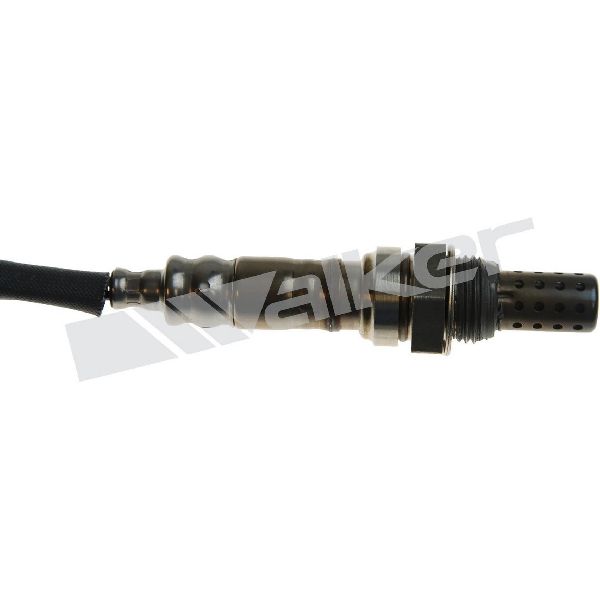
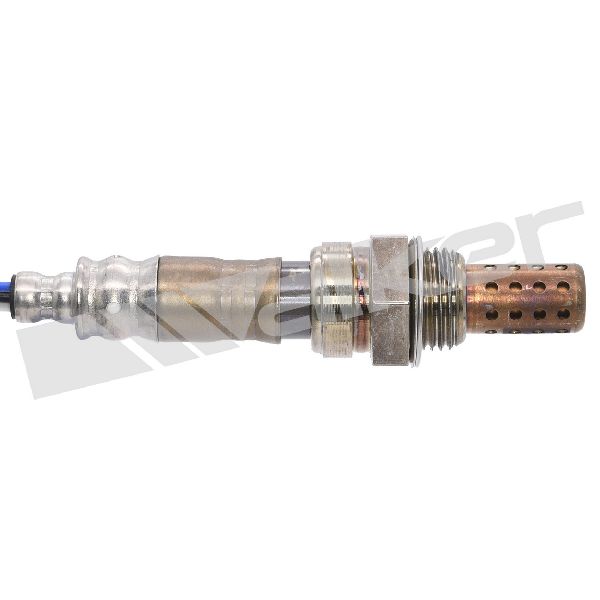
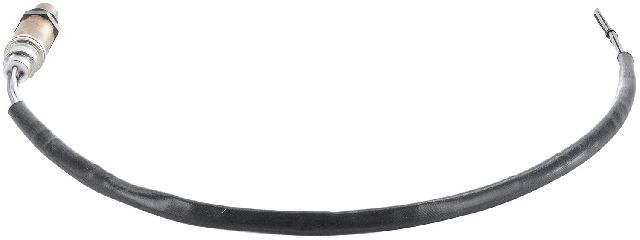
On a 2005-2010 Legacy GT, P0132 is almost always a failed front Air/Fuel (O2) sensor. The most reliable fix is replacing it with a genuine Subaru or direct-fit Denso part, which costs about $120-$180. Using universal or other aftermarket brands will likely cause the code to return. This is a straightforward DIY job with the right O2 sensor socket.
- P0132 on your Legacy GT almost certainly means the front A/F sensor has failed.
- You MUST use a genuine Subaru or Denso-branded replacement sensor. Using other brands will likely result in the code returning.
- The vehicle spans two generations (2005-2009 and 2010); ensure you buy the correct part number for your year.
- This is a manageable DIY repair with a special O2 sensor socket, which can save you several hundred dollars in labor costs.
- Do not ignore this code. Continued driving will hurt your fuel economy and can cause expensive damage to your catalytic converter.
What's Unique About the 2005-2010 Subaru Legacy GT
The 2.5L turbocharged EJ255 engine in the Legacy GT is notoriously sensitive to the quality of its front A/F sensor. Unlike many vehicles that might tolerate universal or budget O2 sensors, Subaru ECUs are calibrated for the specific response time and voltage curve of the OEM Denso sensor and will often reject other brands, causing the P0132 code to return immediately. Owners on forums like LegacyGT.com and NASIOC consistently report that only a genuine Subaru sensor or the direct Denso equivalent provides a lasting fix. The issue is less about a design flaw and more about the ECU's precise calibration requirements for managing the air/fuel mixture on this turbocharged platform.
Generation note: This range covers two distinct generations: the 4th Gen (2005-2009) and the 5th Gen (2010). While the cause and symptoms are identical, the front A/F sensor part number is different for each generation. Ensure you purchase the correct part for your specific model year, as they are not interchangeable.
Symptoms You May Notice
- Check Engine Light is on
- Flashing cruise control light (a common Subaru indicator of an engine fault)
- Significantly reduced fuel economy
- Rough or unstable idle, sometimes dropping RPMs by ~100
- Hesitation or stumbling during acceleration
- Strong smell of gasoline or rich exhaust
- Black smoke from the exhaust, particularly on cold starts or heavy acceleration
- Replacing the sensor with a cheap, non-Denso or non-OEM brand. This is the most common mistake and often leads to the code returning, as documented extensively in owner forums.
- Replacing the rear O2 sensor (Bank 1, Sensor 2) by mistake. P0132 is specifically for the front (pre-catalytic converter) sensor.
- Assuming the sensor is bad when the real issue is a damaged wiring harness that has shorted to power.
- Failing to check for underlying rich conditions (like a leaky injector) if a new, correct sensor doesn't resolve the code.
Most Likely Causes
- Failed Front Air/Fuel (A/F) Ratio Sensor 🔴 High Probability → Shop Oxygen Sensor The sensor's heating element fails, or the sensing element becomes contaminated or worn out over time (typically 75k+ miles), leading to a fixed high voltage signal. This is the most common failure point for P0132 on this platform by a wide margin.
How to confirm: Use an OBD-II scanner to monitor live data for 'Bank 1 Sensor 1 A/F Ratio'. A healthy sensor's voltage should fluctuate rapidly around a central point. If it's stuck high (e.g., >0.9V), the sensor has almost certainly failed. Disconnecting the sensor with the ignition on should cause the voltage to drop; if it does, the sensor is bad. If it stays high, you have a wiring short.
Typical fix: Replace the front A/F ratio sensor. It is critical to use a Denso or genuine Subaru part. Do not use a 'universal' or other aftermarket sensor, as the code will likely return.
Est. part cost: $120-$180 - Damaged Sensor Wiring or Connector 🟡 Medium Probability The wiring harness is routed near hot exhaust components, including the turbocharger and downpipe. Over time, the heat can cause the loom to become brittle and the wires to melt or chafe, leading to a short to power. The main connector is located on a bracket near the passenger-side strut tower and can also be a point of failure.
How to confirm: Visually inspect the entire wiring harness from the sensor to the connector on the passenger strut tower for any signs of melting, breaks, or corrosion. With the sensor and ECM unplugged, use a multimeter to check the signal wire for a short to power or ground.
Typical fix: Repair the damaged section of the wiring harness with heat-resistant materials and secure it away from heat sources using high-temperature zip ties or loom.
Est. part cost: $10-$100 - Engine Running Rich ⚪ Low Probability While less common for this specific code, issues like leaking fuel injectors or a faulty fuel pressure regulator can create a genuine rich condition that the A/F sensor is correctly reporting. This should be suspected if the code returns after replacing the sensor with a quality part and verifying the wiring.
How to confirm: Look for other accompanying codes, such as P0172 (System Too Rich). Use a scanner to check long-term fuel trims; if they are highly negative (e.g., -10% or more), the ECU is trying to compensate for excess fuel. A professional diagnosis may be needed to isolate the cause, which could involve a fuel pressure test or injector balance test.
Typical fix: Address the root cause of the rich condition, such as replacing leaking injectors or the fuel pressure regulator.
Est. part cost: $100-$500+
Rare But Worth Checking
- Exhaust Leak Before the Sensor: A crack in the exhaust manifold, uppipe, or a bad gasket before the A/F sensor can introduce outside air, disrupting pressure and temperature. This can cause the sensor to behave erratically and may trigger a high voltage code. This is worth checking while you are inspecting the area.
- Poor Engine Ground: A corroded or loose ground strap between the engine block and the chassis can create voltage offsets that interfere with sensitive sensor signals, including the A/F sensor. Check the main ground connections for integrity.
- Faulty Powertrain Control Module (PCM): → Shop Engine Control Module (ECM) This is extremely rare. The PCM's internal voltage regulation could fail, but all other possibilities, especially sensor quality and wiring, should be exhausted before considering PCM replacement.
Diagnosis Steps
- Read the code with an OBD-II scanner and confirm P0132 is present. Note any other codes, especially P0172. The cruise control light will likely be flashing.
- Use the scanner's live data function to observe the voltage of 'Bank 1, Sensor 1'. If the engine is warm and at idle, the voltage should fluctuate rapidly. If it is stuck high (e.g., >0.9V), the sensor is the most likely culprit.
- Wiring Check (Key On, Engine Off): Disconnect the A/F sensor connector near the passenger strut tower. With the ignition on, probe the harness-side connector. If the voltage on the scanner drops, the sensor is confirmed bad. If the voltage remains high, there is a short to power in the wiring harness that needs to be found and repaired.
- Perform a thorough visual inspection of the A/F sensor's wiring harness and connector, tracing it from the downpipe to the strut tower. Look for any signs of melting, chafing, or corrosion, especially near the turbo and downpipe.
- If the sensor is confirmed bad, replace the front A/F sensor with a new Denso or OEM part ONLY. Apply anti-seize to the threads and torque to specification.
- If the code returns after replacement with a known-good part, perform a more detailed wiring check. Disconnect the sensor and the ECM. Use a multimeter to check for continuity and for any shorts to power or ground in the signal wire.
- If wiring is confirmed to be good, investigate potential causes for a true rich-running condition. Check fuel trims, test fuel pressure, and inspect for leaking injectors.
- After any repair, clear the codes with the scanner and perform a drive cycle to ensure the fix was successful.
Parts You'll Likely Need
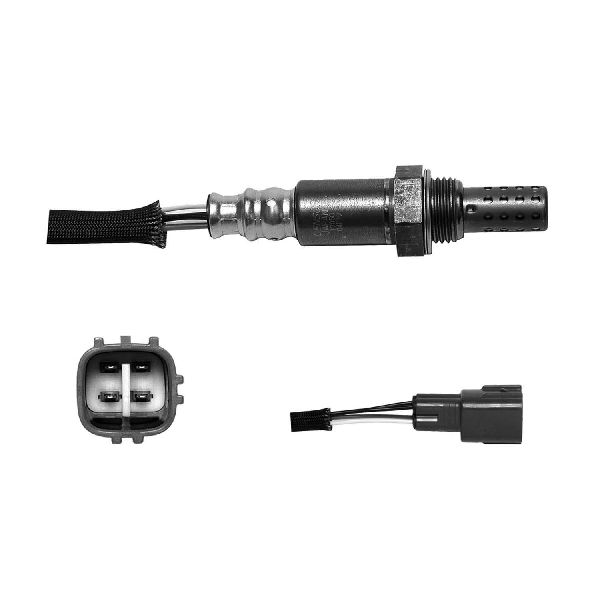
- Front Air/Fuel Ratio Sensor (2005-2009 Legacy GT)
(OEM #22641AA32A)— This is the direct OEM replacement for the 4th generation Legacy GT and is the most common failure part for code P0132.
Trusted brands: Denso (234-9120), Subaru (Genuine)
OEM price range: $160-$220
Aftermarket price range: $120-$150 - Front Air/Fuel Ratio Sensor (2010 Legacy GT)
(OEM #22641AA52A)— This is the correct OEM replacement for the 5th generation (2010-2012) Legacy GT with the 2.5L turbo engine. Part number 22641AA54A is for the non-turbo model.
Trusted brands: Denso (234-9123), Subaru (Genuine)
OEM price range: $170-$230
Aftermarket price range: $130-$160
Related Codes That Often Appear With This One
- P0172 — If the engine is genuinely running rich (e.g., from a leaky injector), you may also get a P0172 (System Too Rich Bank 1) code, as the A/F sensor is correctly reporting the problem.
- P0131 — A failing sensor can sometimes bounce between high and low voltage errors, so seeing P0131 (O2 Sensor Circuit Low Voltage) can sometimes precede or accompany a P0132 code as the sensor dies. A user on LegacyGT.com reported getting a P0132 immediately after replacing a sensor for a P0131, which was caused by using a universal Bosch sensor.
- P0032, P0133, P0134 — Codes for heater circuit high (P0032), slow response (P0133), or no activity (P0134) for the same sensor (Bank 1, Sensor 1) point to the same component failing in different ways.
Platform-Specific Known Issues
- Real Owner Experience: Universal Sensor Failure: A user on LegacyGT.com with a P0131 code replaced their sensor with a universal 4-wire Bosch unit. This immediately caused a new P0132 code to appear, which would not clear. This highlights the ECU's sensitivity and the need for a direct-fit Denso or OEM sensor to resolve the issue correctly.
Mechanic-Grade Diagnostic Values
- Front A/F Sensor Heater Circuit Resistance — expected: 2.0 to 3.4 ohms at room temperature.. Failure: A reading of 0 ohms (short circuit), infinite/O.L. (open circuit), or a value significantly outside the expected range indicates a failed heater element.
- Long Term Fuel Trim (A/F Learning #1) — expected: Should be within +/- 12% for a port-injected EJ engine.. Failure: A persistently high negative value (e.g., -15% or more) after sensor replacement suggests the ECU is still compensating for a rich condition caused by another issue, like a leaking injector.
- Short Term Fuel Trim (A/F Correction #1) — expected: Should fluctuate between -10% and +10% at a steady RPM.. Failure: Wild fluctuations or being pegged at a high negative value can indicate an issue the ECU is actively trying to correct.
- A/F Sensor Signal Voltage (Live Data) — expected: For a wideband A/F sensor, the voltage should hold relatively steady around 2.2V-3.3V, changing with engine load. Note: This differs from a traditional narrowband O2 sensor that switches between 0.1V and 0.9V.. Failure: A voltage stuck at a high value (e.g., >4.5V) or a low value (<0.5V) indicates a sensor or wiring fault. The P0132 code specifically relates to a prolonged high voltage condition.
Scan Tool Commands That Help
- Subaru Select Monitor (SSM) or equivalent professional scanner: A/F Sensor Heater Diagnosis — This is an active test to command the sensor's heater circuit on and off, which helps to verify the integrity of the heater element and its wiring, a very common failure point for this code.
Wiring & Ground Locations
- Main ECU/TCU Ground Point — On the back of the intake manifold. All ECU and TCU grounds terminate at this single spot.. Corrosion or looseness at this critical, and often overlooked, ground can cause a voltage potential difference between the engine and chassis, leading to erratic sensor readings and codes like P0132. Running a supplementary ground wire from this point directly to the battery negative terminal is a common reliability modification.
- Exhaust Manifold Ground Straps — Connect from the exhaust manifold heat shields to the frame on both passenger and driver sides.. These straps are exposed to heat and road salt, causing them to rot and break. While not a primary cause, a missing strap can contribute to grounding issues for the exhaust system components, potentially affecting sensor readings.
- Front A/F Sensor Connector (E24) — Mounted on a bracket near the passenger-side strut tower.. This is the primary connection point to test the sensor and harness. The pins can corrode, and the harness itself is prone to heat damage from the nearby turbocharger. Knowing its location is essential for diagnosis.
- ECM Connector B136 (Pins 33 & 35) — At the Engine Control Module, typically located in the passenger footwell area.. These are the specific pins for the front A/F sensor signal at the ECM. Probing here is the final step to confirm if a high voltage signal is reaching the ECM, definitively ruling out or confirming a wiring short between the sensor connector and the ECM.
Real Owner Repair Stories
- LegacyGT.com forum user (Subaru Legacy GT (4th Gen)) — Initially had a P0131 (O2 Sensor Circuit Low Voltage).
❌ Tried (didn't work) Replaced the front A/F sensor with a universal 4-wire Bosch sensor.
✅ What actually fixed it The universal sensor immediately caused a persistent P0132 code. The problem was only resolved by replacing the universal sensor with a proper OEM-equivalent (Denso) sensor. This demonstrates the ECU's pickiness. - The Factory Five Forum user (Subaru engine swap) (Subaru WRX engine (EJ series)) — Persistent P0031 (Heater Circuit Low) after trying multiple sensors.
❌ Tried (didn't work) Replacing the A/F sensor multiple times (including a non-Subaru branded Denso)., Verifying wiring continuity from sensor to ECM., Following the standard Subaru troubleshooting guide.
✅ What actually fixed it The issue was a poor ground connection at the E3 engine connector, which was shared with the OBD-II port. The ground resistance was high. Cleaning the connector and applying dielectric grease lowered the resistance and resolved the code. This highlights how a seemingly unrelated ground can affect the A/F sensor circuit.
OEM Part Supersession History
22641AA32A→No direct supersession found, remains the correct part for the specified years.— N/A
Heads up: This part is for 2005-2009 Legacy GT models. It is not compatible with 2010+ models, which use a different sensor.22641AA52A→No direct supersession found, remains the correct part for the specified years.— N/A
Heads up: This part is for 2010-2012 Legacy GT models. It is not compatible with pre-2010 models.
Model Year Variations Within This Range
- 2005-2009: Uses front A/F sensor part number 22641AA32A (Denso 234-9120).
- 2010: As part of the 5th generation redesign, uses front A/F sensor part number 22641AA52A (Denso 234-9123).
Diagnostic Flowchart
Other Known Issues on This Vehicle
Issues unrelated to this code that are worth knowing about as an owner of this generation:
- Turbo Oil Starvation (Banjo Bolt Filter) 🔴 High — Common on vehicles with infrequent oil changes or using non-synthetic oil. Can occur at any mileage if the filter clogs. (Ref: Subaru TSB #02-103-07 recommends inspecting the mesh screen in the turbo oil feed banjo bolt and shortening oil change intervals to 3,750 miles.)
- Piston Ringland Failure 🔴 High — A notorious weak point of the EJ255/EJ257 engine, especially when modified or driven hard. Can happen even on stock cars. Symptoms include high oil consumption and low compression.
- Catted Uppipe Failure (2005 models) 🔴 High — Primarily affects 2005 models. The catalytic converter material in the uppipe can break apart and be ingested by the turbo, causing catastrophic failure.
- Head Gasket Failure 🟠 Medium — While more famous on the naturally aspirated EJ25 engines, the turbo models are not immune. Failures can occur, often manifesting after 100k miles.
- Cracked Plastic Radiator End Tanks 🟡 Low — The plastic end tanks on the stock radiator can become brittle with age and heat cycles, often cracking after 100k miles, leading to coolant leaks.
Used vs. New Parts: Buying Guide for This Vehicle
When a used part is the smart pick: For this specific repair, buying a used Air/Fuel sensor is NOT recommended under any circumstances. These sensors are wear items with a finite lifespan, and a used part has unknown history and remaining life. The cost savings are minimal compared to the high probability of premature failure and the labor required for replacement.
What to inspect on the donor part:
- Not applicable, do not buy this part used.
OEM-only on this vehicle (don't cheap out):
- Front Air/Fuel Ratio Sensor
Aftermarket brands forum-validated for this vehicle:
- Denso (This is the Original Equipment Manufacturer, buying the Denso-branded part is identical to the Genuine Subaru part but often cheaper)
Brands owners have reported issues with on this vehicle:
- Bosch (specifically universal types)
- Any 'universal' fit sensor
- Unbranded or generic parts from online marketplaces
Real Owner Stories
Aggregated from forums and TSBs cited above. Mileages and costs reflect what owners reported in those sources.
2005 Subaru Legacy GT
Symptoms: The owner originally had a P0131 code and replaced the sensor with a universal 4-wire Bosch unit. This immediately caused a new P0132 code to appear that would not clear.
What fixed it: Replacing the universal sensor with a direct-fit Denso or OEM sensor.
Source hint: LegacyGT.com - DTC P0132 - Diagnostic procedure (https://legacygt.com/forums/showthread.php/dtc-p0132-diagnostic-procedure-185011.html)
2005 Subaru Legacy GT — ~75000 miles
Symptoms: Check Engine Light and flashing cruise control light; owner noted the front O2 sensor is a common failure point at this mileage.
What fixed it: Changing the front O2 sensor as preventative maintenance.
Source hint: LegacyGT.com - Common problems with 05 LGT? (https://legacygt.com/forums/showthread.php/common-problems-05-lgt-139939.html)
2005-2010 Subaru Legacy GT
Symptoms: High voltage readings on the O2 sensor after installing new sensors.
What fixed it: Diagnosing and addressing underlying rich-running conditions.
Source hint: Reddit r/subaru - O2 Sensor High Voltage After Installing New Sensors (https://www.reddit.com/r/subaru/comments/1bgf1oz/o2_sensor_high_voltage_after_installing_new/)
Related OBD-II Codes
Frequently Asked Questions
Can I use a universal Bosch sensor to fix the P0132 code on my Legacy GT?
Why is my cruise control light flashing along with the Check Engine Light?
Is there a specific mileage when the front A/F sensor usually fails on these cars?
Where is the main A/F sensor connector located on the 2005-2010 Legacy GT?
Could my P0132 code be related to the turbocharger heat?
Are there any TSBs I should be aware of regarding engine health on my 2005-2010 model?
Helpful Videos

We Have This Part in Stock


The information in this article is provided for general reference and educational purposes only. Vehicle specifications, procedures, and part compatibility can vary by production date, trim level, and region. Always consult your vehicle's factory service manual and verify part numbers before purchasing or performing repairs. Safety-critical components such as airbags, seat belts, and braking systems should be installed by a qualified professional.
- Subaru Legacy GT:
- 🧭 Diagnostic Flowchart
- 🎬 Helpful Videos
- 🛍️ Shop This Part
- What's Unique About the 2005-2010 Subaru Legacy GT
- Symptoms You May Notice
- Most Likely Causes
- Rare But Worth Checking
- Diagnosis Steps
- Parts You'll Likely Need
- Related Codes That Often Appear With This One
- Platform-Specific Known Issues
- Mechanic-Grade Diagnostic Values
- Scan Tool Commands That Help
- Wiring & Ground Locations
- Real Owner Repair Stories
- OEM Part Supersession History
- Model Year Variations Within This Range
- Other Known Issues on This Vehicle
- Used vs. New Parts: Buying Guide for This Vehicle
- Real Owner Stories
- 2005 Subaru Legacy GT
- 2005 Subaru Legacy GT — ~75000 miles
- 2005-2010 Subaru Legacy GT
- Related OBD-II Codes
- Frequently Asked Questions
- 🎟️ Get 5% Off