

P0132 on 2011-2018 Volvo S60: O2 Sensor High Voltage Causes and Fixes
This code almost always points to a faulty front (upstream) oxygen sensor. Expect to pay $150-$250 for an OEM-quality sensor (like Bosch) and another $100-$200 for labor if you don't install it yourself. It's a common and straightforward repair. Using a genuine or OEM-spec part is critical, as these engines are sensitive to aftermarket sensor quality.
- P0132 on your Volvo S60 almost always means the front oxygen sensor has failed.
- You can continue to drive, but you'll have poor fuel mileage and should fix it soon to avoid damaging your catalytic converter.
- Use a quality OEM-equivalent brand like Bosch or Denso for the replacement sensor. Specific part numbers are Volvo 31319664 (T5) and 30774563 (T6).
- Before replacing the sensor, always perform a quick visual inspection of the wiring and connector for obvious damage.
What's Unique About the 2011-2018 Volvo S60
On these Volvo T5 and T6 engines, the front O2 sensor is a critical input for fuel management. While the code itself is standard, access to the sensor can be tight, especially on the turbocharged models where it's located on the downpipe just after the turbocharger. Owners and technicians strongly recommend using a high-quality OEM-equivalent brand like Bosch or Denso, as these engines can be sensitive to cheaper aftermarket sensors, sometimes causing the code to return immediately.
Symptoms You May Notice
- Check Engine Light is on.
- Reduced fuel economy
- Engine may run rough, hesitate, or idle poorly, especially on a cold start.
- A strong smell of raw fuel from the exhaust
- Black smoke from the exhaust in severe cases
- Failed emissions test.
- Replacing the rear (downstream) O2 sensor. P0132 specifically refers to Sensor 1, which is always the upstream sensor.
- Replacing the catalytic converter. A bad converter does not cause this code; rather, ignoring this code can lead to a damaged converter.
- Ignoring a rich condition from another fault (like a bad PCV on a T6) and repeatedly replacing the O2 sensor, which is correctly reporting the rich mixture.
Most Likely Causes
- Faulty Front (Upstream) Oxygen Sensor 🔴 High Probability → Shop Oxygen Sensor O2 sensors are wear items that degrade over time due to constant exposure to high exhaust temperatures and contaminants. They typically have a lifespan of 60,000 to 100,000 miles. The heating element within the sensor can also fail, causing incorrect readings, especially during cold starts.
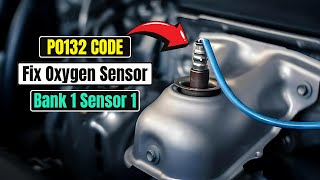
How to confirm: Use an OBD-II scanner with live data capability. Observe the 'O2S B1S1' voltage. If it is stuck high (e.g., >0.9V) and does not fluctuate rapidly during engine operation, the sensor has failed. A properly functioning sensor should oscillate quickly between ~0.1V and ~0.9V. You can also test the sensor's internal heater circuit resistance with a multimeter; a good sensor typically has a resistance between 3 and 20 ohms.
Typical fix: Replace the Bank 1 Sensor 1 oxygen sensor. Ensure the replacement is a heated sensor compatible with Volvo, preferably from an OEM supplier like Bosch or Denso.
Est. part cost: $150-$250 - Wiring or Connector Issue 🟡 Medium Probability The sensor wiring is routed near hot exhaust components and the engine block, making it susceptible to melting, chafing, or corrosion over time. The connector itself can also become contaminated with oil or dirt, leading to a poor connection.
How to confirm: Visually inspect the O2 sensor's wiring harness from the sensor to the main engine harness. Look for melted plastic, frayed wires, or corrosion in the connector. Use a multimeter to check for a short to voltage in the signal wire, which would cause a constant high reading.
Typical fix: Repair the damaged section of the wiring harness or clean/replace the corroded connector.
Est. part cost: $10-$50 - Engine Running Rich ⚪ Low Probability While less common for this specific code, issues like a leaking fuel injector or a faulty fuel pressure regulator can force too much fuel into the engine. On the T6 3.0L engine, a failed PCV oil trap diaphragm is a very common cause of a rich condition (often setting a P0172 code) which could potentially contribute to a P0132 code.
How to confirm: Check for other trouble codes, particularly P0172 (System Too Rich). Perform a fuel pressure test to ensure it's within Volvo's specifications. For the T6, the 'glove test' on the oil filler cap can confirm a bad PCV diaphragm (the glove will be sucked in).
Typical fix: Replace the faulty fuel injector, fuel pressure regulator, or PCV oil trap assembly.
Est. part cost: $100-$400
Rare But Worth Checking
- Exhaust Leak: An exhaust leak before the O2 sensor can sometimes, counter-intuitively, cause erratic readings. While it more often causes a lean code (P0131), a significant leak could disrupt airflow and cause a high voltage reading under certain conditions.
- Faulty Engine Control Module (ECM): → Shop Engine Control Module (ECM) This is extremely rare. The ECM should only be considered after all other possibilities, including the sensor, wiring, and fuel system, have been thoroughly tested and ruled out.
Diagnosis Steps
- Connect an OBD-II scanner and confirm P0132 is the primary code. Note any other codes present, especially P0172 or the Volvo-specific ECM-2110.
- Using the scanner's live data function, monitor the 'O2S B1S1' voltage. At operating temperature, it should fluctuate rapidly between approximately 0.1V and 0.9V. If it's stuck high (e.g., 0.9V - 1.1V), the sensor or its circuit is the likely problem.
- Turn off the engine and allow it to cool. Visually inspect the front O2 sensor's wiring harness for any signs of melting, chafing, or damage. Check that the connector is clean and securely plugged in.
- If the wiring looks good, test the O2 sensor's heater circuit resistance. Disconnect the sensor and use a multimeter across the two heater pins (often same-colored wires). A reading between 3-20 Ohms is expected. An open circuit (OL) indicates a failed sensor.
- If you suspect an underlying rich condition (e.g., if code P0172 is also present), test the fuel pressure. On T6 engines, perform the 'glove test' on the oil filler cap to check for a ruptured PCV diaphragm.
- Check for exhaust leaks between the cylinder head and the front O2 sensor. A ticking noise on startup is a common sign.
- If all other tests pass, the most probable cause is a failed front O2 sensor.
Parts You'll Likely Need
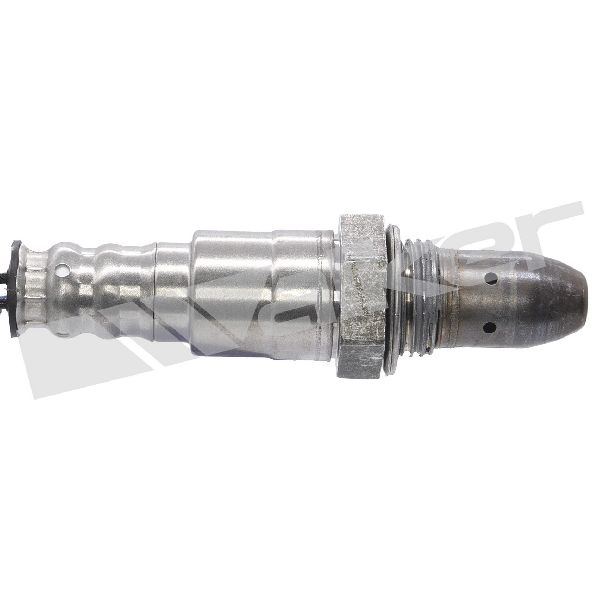
- Front (Upstream) Oxygen Sensor
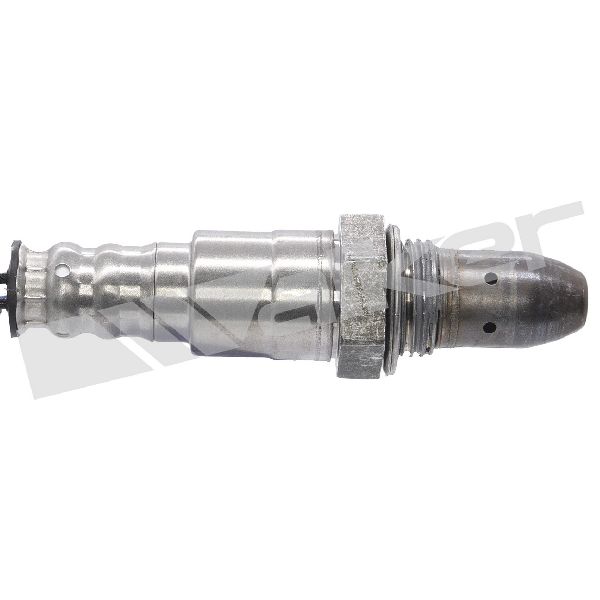
(OEM #T5 2.5L: Genuine Volvo 31319664; T6 3.0L: Genuine Volvo 30774563.)— This is the component that directly reports the high voltage signal. It is a wear item and the most common cause of P0132 by a large margin.
Trusted brands: Bosch (OEM supplier), Denso, NTK
OEM price range: $200-$280
Aftermarket price range: $150-$220
Related Codes That Often Appear With This One
- P0172 — P0172 (System Too Rich Bank 1) may appear if the engine is genuinely running rich due to a fuel system problem (like a bad injector or PCV system), which the O2 sensor is correctly detecting.
- P0133 — P0133 (O2 Sensor Circuit Slow Response) can accompany P0132 as it indicates the sensor is aging and not performing as expected.
- ECM-2110 — This is a Volvo-specific code for 'Front heated oxygen sensor (HO2S), heating' issues, which directly corresponds to faults in the Bank 1 Sensor 1 heater circuit that can lead to the generic P0132 code.
Platform-Specific Known Issues
- Owners on forums frequently emphasize the need to perform an ECU reset after sensor replacement to ensure the new sensor's readings are learned correctly. This can be done by disconnecting the battery for 15-30 minutes or, more effectively, using a scan tool to reset fuel trim adaptations.
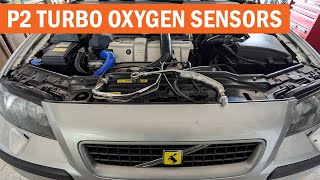
- Access to the sensor connector on turbocharged models can be difficult, sometimes requiring removal of the upper engine mount cross-brace for better access from the top. The connector itself is often located on a bracket on top of the transmission. 🎬 Watch: Tips for accessing difficult turbo oxygen sensor connectors.
Mechanic-Grade Diagnostic Values
- Front O2 Sensor (B1S1) Voltage — expected: Rapidly fluctuating between ~0.1V and ~0.9V at warm idle.. Failure: Stuck high, consistently above 0.9V.
- Front O2 Sensor Heater Circuit Resistance — expected: 3 to 20 Ohms when measured across the two heater circuit pins on the sensor connector.. Failure: Infinite resistance (Open Loop / 'OL') or zero resistance (short).
- Short Term Fuel Trim (STFT) at idle — expected: Fluctuating close to 0%.. Failure: Consistently high positive values (e.g., +15% to +25%) can indicate a vacuum leak that the system is trying to correct for, which can sometimes confuse O2 sensor diagnostics.
- O2 Sensor Heater Power Supply — expected: Approximately 12V (battery voltage) at the harness-side connector with the key on.. Failure: Near 0V, indicating a blown fuse or wiring issue upstream of the sensor.
Hidden / Shadow Codes Worth Checking
- ECM-2110: Front heated oxygen sensor (HO2S), heating. This is a Volvo-specific code indicating a fault in the heater circuit of the front O2 sensor. It directly corresponds to the conditions that can trigger a generic P0132 or related heater circuit codes like P0031/P0032. (see via Volvo-specific diagnostic tools like VIDA, or some advanced professional scanners.)
Scan Tool Commands That Help
- VIDA or advanced scanners (e.g., YOUCANIC): Resetting adaptation of fuel/air mixture (Fuel Trim Reset) — This function should be used after replacing an O2 sensor, MAF sensor, or fuel injectors. It clears the long-term learned fuel adjustments, forcing the ECM to create new ones based on readings from the new components, preventing the old, incorrect adaptations from causing issues.
Wiring & Ground Locations
- Front O2 Sensor Connector (T6) — The connector is typically mounted on a silver plate on top of the transmission, under the main fuse box and behind the master cylinder.. This connector is a common point for corrosion or poor contact. Its difficult-to-access location means it can be overlooked during visual inspections.
- 31/4 — Main engine ground connection point.. A poor engine ground can cause floating voltages and erratic sensor readings throughout the engine management system, including the O2 sensor signal.
- 31/2 — Ground connection on the left MacPherson strut tower.. This is a key chassis ground point. While not directly for the sensor, poor grounding here can create electrical noise and affect the ECM's reference voltage, potentially impacting sensor readings.
OEM Part Supersession History
30774563→30774563 (current)— This part number has remained stable but is cross-referenced by aftermarket manufacturers with their own numbers.
Heads up: Denso, the likely OEM supplier, sells this part under their own number, DOX-0529. Ensure any aftermarket part explicitly lists compatibility with the Volvo 30774563.31319664→31319664 (current)— This part number for the T5 2.5L engine has remained stable.
Heads up: Denso offers this part under their own number, DOX-0535. Using a direct-fit from a known OEM supplier like Denso or Bosch is critical.
Diagnostic Flowchart
Other Known Issues on This Vehicle
Issues unrelated to this code that are worth knowing about as an owner of this generation:
- Excessive Oil Consumption (2.5L T5 Engine) 🔴 High — Common on 2013-2016 models. Caused by faulty piston ring design leading to carbon clogging. Consumption can exceed 1 quart per 1,000 miles. (Ref: Volvo issued extended warranties (e.g., P10207) covering this issue for up to 8 years/100,000 miles, but many vehicles are now outside this window.)
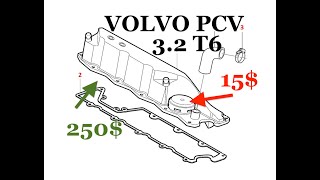
- PCV Oil Trap Failure (3.0L T6 Engine) 🟠 Medium — Very common, typically fails between 60,000-100,000 miles. The internal diaphragm tears, causing a loud whistling noise at idle and excessive crankcase vacuum.
- Automatic Transmission Shift Issues (Geartronic) 🟠 Medium — Some owners report harsh shifting, 'shift flares,' or delays, particularly between 2nd and 3rd gear. Often linked to worn valve bodies or old transmission fluid, as Volvo claimed it was 'sealed for life'. (Ref: Software updates and a revised B4 servo cover were issued for earlier P2 platform cars with this transmission, and the principles apply to P3. No specific recall for P3 models.)
- Leaking Windshield Bond 🟡 Low — A known design flaw on some P3 platform cars where the factory windshield bonding can fail, allowing water to leak into the cabin, potentially damaging electronics.
Used vs. New Parts: Buying Guide for This Vehicle
When a used part is the smart pick: For this repair, using used parts is generally not recommended for the sensor itself. However, if the cause is a damaged wiring harness connector, a used 'pigtail' connector from a junkyard vehicle can be a cost-effective repair.
Donor-vehicle mileage cap: roughly under 10000 miles for the part to have meaningful remaining life.
What to inspect on the donor part:
- For a connector pigtail, inspect for any signs of brittleness, melting, or corrosion on the pins.
- Ensure the locking tabs are intact and the wires have sufficient length for splicing.
OEM-only on this vehicle (don't cheap out):
- Oxygen Sensor: While OEM-supplier brands are acceptable, cheap, unbranded aftermarket sensors are known to cause persistent issues on these Volvos. It is highly recommended to use Genuine Volvo, Bosch, or Denso parts.
Aftermarket brands forum-validated for this vehicle:
- Bosch (often the original equipment supplier)
- Denso
- NTK
Brands owners have reported issues with on this vehicle:
- Unbranded, 'white-box' sensors sold on price alone often have incorrect heater resistances or slow response times, leading to the code returning.
Real Owner Stories
Aggregated from forums and TSBs cited above. Mileages and costs reflect what owners reported in those sources.
Volvo S60
Symptoms: Check engine light on; user was quoted a high price for replacement by a dealer.
What fixed it: DIY replacement of the front oxygen sensor using a quality brand like Bosch.
Cost: $475-$475
Source hint: VolvoForums - 'Bad front oxygen sensor, replace?'
Volvo V70 2.4T (P2 Platform)
Symptoms: P0132 DTC present; difficulty accessing connectors due to turbo components.
What fixed it: Replacing the front Bosch O2 sensor.
Source hint: YouTube/jamiecars - 'New Volvo P2 Turbo Oxygen Sensors After P0132 DTC On V70 2.4T'
Volvo S60
Symptoms: Check engine light returned after initial repair attempt.
What fixed it: The discussion highlights that while an aftermarket NTK part was used, ruling out vacuum leaks or rich running conditions is essential when aftermarket parts fail to clear the code.
Source hint: VolvoForums - 's60 front o2 sensor'
Related OBD-II Codes
Frequently Asked Questions
Which brand of oxygen sensor should I use for my S60 T5/T6 to avoid the light coming back on?
Is there a specific Volvo-specific code that often accompanies P0132?
I'm having trouble reaching the sensor connector on my T6 3.0L; where is it located?
Could my S60's PCV system be causing this high voltage O2 sensor code?
Do I need to do anything special after replacing the sensor on my 2011-2018 S60?
What is the expected resistance for the heater circuit on the front O2 sensor?
Helpful Videos

We Have This Part in Stock

The information in this article is provided for general reference and educational purposes only. Vehicle specifications, procedures, and part compatibility can vary by production date, trim level, and region. Always consult your vehicle's factory service manual and verify part numbers before purchasing or performing repairs. Safety-critical components such as airbags, seat belts, and braking systems should be installed by a qualified professional.
- Volvo S60:
- 🧭 Diagnostic Flowchart
- 🎬 Helpful Videos
- 🛍️ Shop This Part
- What's Unique About the 2011-2018 Volvo S60
- Symptoms You May Notice
- Most Likely Causes
- Rare But Worth Checking
- Diagnosis Steps
- Parts You'll Likely Need
- Related Codes That Often Appear With This One
- Platform-Specific Known Issues
- Mechanic-Grade Diagnostic Values
- Hidden / Shadow Codes Worth Checking
- Scan Tool Commands That Help
- Wiring & Ground Locations
- OEM Part Supersession History
- Other Known Issues on This Vehicle
- Used vs. New Parts: Buying Guide for This Vehicle
- Real Owner Stories
- Volvo S60
- Volvo V70 2.4T (P2 Platform)
- Volvo S60
- Related OBD-II Codes
- Frequently Asked Questions
- 🎟️ Get 5% Off