

P0133 on 1998-2012 Ford Ranger 4.0L: Causes and Fixes for Slow O2 Sensor Response
On a Ford Ranger with the 4.0L V6, code P0133 almost always means the upstream oxygen sensor on the passenger side (Bank 1, Sensor 1) is old and slow. The most common fix is to replace this sensor. Expect to pay $40-$70 for an aftermarket part or $70-$100 for an OEM Motorcraft sensor. The job is DIY-friendly.
- P0133 on your Ranger means the passenger-side, pre-catalytic converter O2 sensor is failing.
- The most reliable fix is to replace the sensor. Consider replacing the driver's side upstream sensor (for P0153) at the same time.
- Before buying parts, do a quick check for obvious exhaust leaks or damaged sensor wires.
- The OEM Motorcraft part number for the upstream sensor on a 4.0L SOHC is likely DY1092.
- This is a manageable DIY repair with a special O2 sensor socket, which can often be borrowed from auto parts stores.
What's Unique About the 1998-2012 Ford Ranger
For the Ford Ranger 4.0L V6, the P0133 code is a very common and straightforward fault. Unlike some modern vehicles where this code can be triggered by complex software issues, on the Ranger it almost always points to a simple mechanical failure. The primary cause is typically the original oxygen sensor simply wearing out after years of service and high mileage. Owners and mechanics report that a direct replacement of the sensor is a reliable fix, without the need for more complex diagnostics like PCM reprogramming that might be seen on newer Fords.
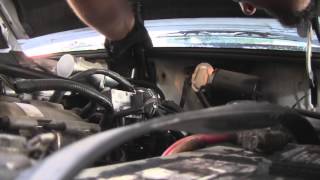
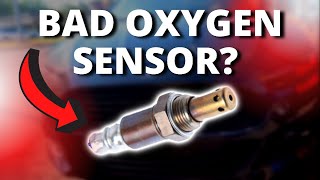
Generation note: The specified year range of 1998-2012 covers two versions of the 4.0L V6 engine. The 1998-2000 models used the 4.0L OHV (Overhead Valve) engine 🎬 See this 4.0L OHV oxygen sensor replacement walkthrough, while the 2001-2012 models used the 4.0L SOHC (Single Overhead Cam) engine. The meaning of code P0133 and its common causes are identical for both engine types, though the exact part number for the oxygen sensor may differ.
Symptoms You May Notice
- Check Engine Light is on
- Reduced fuel economy
- Rough or unsteady idle, sometimes surging when first started.
- Poor acceleration or engine performance.
- Failing a state emissions inspection
- Intermittent Check Engine Light that turns off by itself after a few drive cycles, only to return later.
- Replacing the catalytic converter. A P0133 code points to the sensor *before* the converter. A bad converter would typically set a P0420 code.
- Replacing the downstream (Sensor 2) oxygen sensor. P0133 specifically refers to Sensor 1, the upstream sensor responsible for fuel trim.
Most Likely Causes
- Failing or Aged Bank 1, Sensor 1 Oxygen Sensor 🔴 High Probability → Shop Oxygen Sensor Oxygen sensors are a wear item that typically become 'lazy' or slow to respond after 75,000 to 100,000 miles of service. Contamination from engine oil or coolant can also cause premature failure.
How to confirm: Use a scan tool to observe the live data graph for the Bank 1 Sensor 1 voltage. A healthy sensor's voltage should fluctuate rapidly and consistently between approximately 0.1V and 0.9V. A slow sensor will show lazy, delayed, or flattened voltage swings compared to the other bank's upstream sensor.
Typical fix: Replace the Bank 1, Sensor 1 (upstream, passenger side) oxygen sensor. It is often recommended to replace both upstream sensors (passenger and driver side) at the same time for balanced engine performance and to prevent getting a P0153 code shortly after. Be sure to apply anti-seize compound to the new sensor's threads.
Est. part cost: $40-$100 - Exhaust Leak 🟡 Medium Probability Exhaust manifold gaskets or the 'Y-pipe' can develop leaks from rust and age, which is common on older trucks. A leak before the O2 sensor allows outside air into the exhaust, skewing the sensor's readings and potentially causing it to respond slowly.
How to confirm: Visually inspect the exhaust manifold and all piping before the O2 sensor for cracks or black soot trails indicating a leak. You can also perform a smoke test or plug the tailpipe briefly while the engine is running to make leaks more audible.
Typical fix: Repair the leak. This may involve replacing a gasket (e.g., at the manifold-to-pipe flange) or welding a crack in the exhaust pipe.
Est. part cost: $10-$150 - Damaged Wiring or Connector ⚪ Low Probability
How to confirm: Visually inspect the O2 sensor's wiring harness and connector for any signs of melting, chafing, corrosion, or loose pins. The harness is routed near hot exhaust components and can be damaged if not secured properly.
Typical fix: Repair the damaged section of the wiring harness or clean/replace the connector. Check for continuity with a multimeter if damage isn't visible.
Est. part cost: $5-$50
Rare But Worth Checking
- Intake Vacuum Leak: A significant vacuum leak from a cracked hose or bad intake gasket can throw off the air-fuel mixture enough to trigger O2 sensor codes. However, this will almost always be accompanied by a lean code like P0171 or P0174.
- Dirty or Failing Mass Airflow (MAF) Sensor: → Shop Fuel Injection Air Flow Meter A contaminated MAF sensor can provide incorrect airflow readings to the PCM, leading to improper fueling calculations that can indirectly cause O2 sensor codes. Cleaning the MAF sensor with a dedicated cleaner is a common diagnostic step.
Diagnosis Steps
- Read the code with an OBD-II scanner to confirm P0133 is present. Note any other codes, like P0153 or P0171.
- Visually inspect the exhaust system from the passenger side exhaust manifold to the catalytic converter. Look for black soot, cracks, or listen for audible leaks, especially around the manifold flange.
- Inspect the wiring harness and connector for the Bank 1, Sensor 1 O2 sensor. Ensure it is not melted, frayed, or corroded, and that the connector is securely plugged in.
- Use a scan tool with live data graphing capabilities. Graph the voltage for Bank 1 Sensor 1 and Bank 2 Sensor 1 on the same screen. A slow sensor will have noticeably lazier and less frequent voltage swings compared to the healthy one. A good sensor should oscillate rapidly.
- If an exhaust leak is suspected, perform a smoke test to pinpoint its location.
- If no leaks or wiring issues are found, and the live data graph confirms a slow response, the most likely cause is a failed O2 sensor. Proceed with replacement.
- After repair, clear the codes and perform a drive cycle to ensure the Check Engine Light does not return.
Parts You'll Likely Need
- Upstream Oxygen Sensor (Bank 1, Sensor 1)
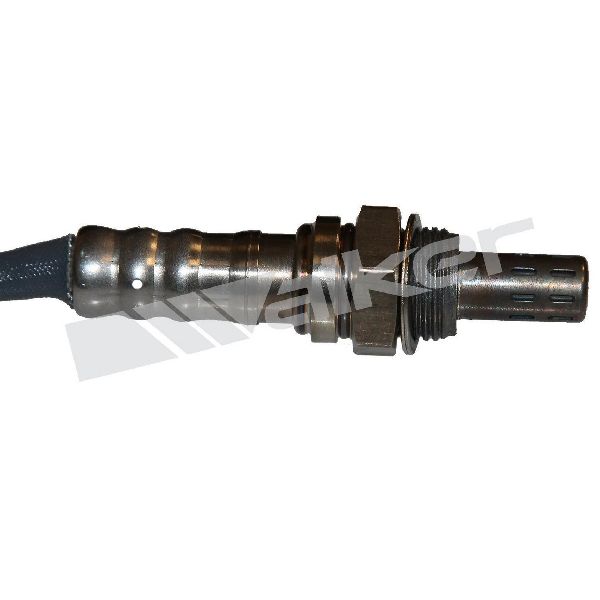
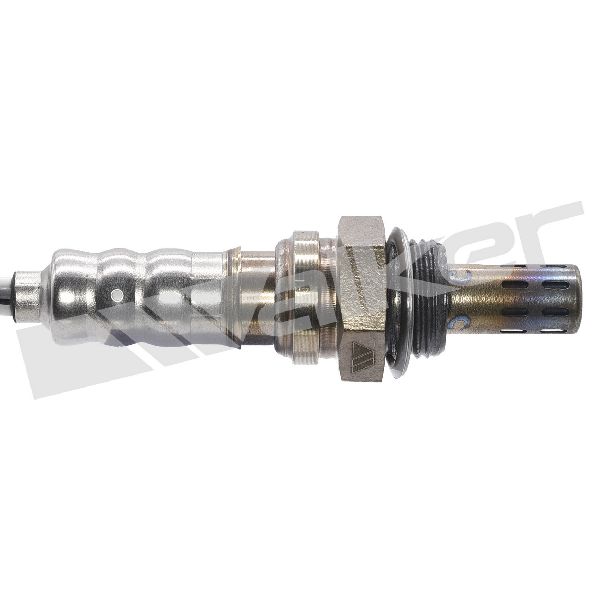
(OEM #Motorcraft DY1092 (for 4.0L SOHC, 2001-2011); Motorcraft DY847 may also fit. Bosch 15717 is a common aftermarket part.)— This is the sensor identified by the code. It is a common wear-and-tear item and the most frequent cause of P0133.
Trusted brands: Motorcraft, Bosch, Denso, NTK
OEM price range: $70-$100
Aftermarket price range: $40-$70
Related Codes That Often Appear With This One
- P0153 — This is the same 'slow response' code but for Bank 2 (driver's side). It's common to see both when the sensors are old and failing at the same rate, reinforcing the recommendation to replace them in pairs.
- P0171 — This code indicates 'System Too Lean (Bank 1)'. An exhaust leak before the O2 sensor can cause this code to appear alongside P0133 because the sensor detects the extra oxygen from the leak.
Platform-Specific Known Issues
- Intermittent Code Appearance: Some owners report the P0133 code appearing and then clearing itself after a few days, only to return later. This is a classic sign of a sensor that is on the verge of complete failure.
- Difficult Access to Bank 1 Sensor: While a DIY job, some owners on forums note that the Bank 1 (passenger side) sensor can be difficult to access due to its upward-facing orientation just above the catalytic converter, requiring specific tools like a crow's foot or slotted O2 sensor socket to reach.
Mechanic-Grade Diagnostic Values
- O2 Sensor Heater Element Resistance — expected: 3 to 30 Ohms. A common reading for a healthy sensor is between 4 and 7 Ohms.. Failure: A reading of OL (Open Loop) or infinite resistance indicates a burned-out heater element. A reading near zero indicates a short circuit. Either requires sensor replacement.
- Mode $06, Test ID $01, Component ID $01 (O2 Sensor Test B1S1) — expected: The measured value should be below the maximum threshold stored in the PCM. This is a pass/fail test run by the PCM itself.. Failure: If a scan tool shows the measured value for this test is at or above the maximum limit, it confirms the PCM has flagged the sensor's response time as too slow.
- O2 Sensor Heater Circuit Voltage — expected: 12V (battery voltage) with key on, engine off at the harness-side connector for the heater power wire.. Failure: No voltage suggests a problem with the power supply, likely a blown fuse (check fuse #13 in the engine bay fuse box) or a wiring issue upstream of the sensor.
Wiring & Ground Locations
- G100 / G104 — Located at the lower left-hand (driver's side) front of the engine compartment, often on the frame rail or near the battery tray.. These are primary chassis and engine grounds. Corrosion or a loose connection here can create electrical noise and unstable voltage references for the entire engine management system, including the PCM and its sensor inputs, potentially contributing to erroneous sensor codes.
- PCM Connector C175, Pin 60 (Gray/Light Blue wire) — This is the pin on the main 104-pin PCM connector that receives the signal from the Bank 1, Sensor 1 O2 sensor. The PCM is typically located on the passenger side firewall.. When diagnosing a persistent P0133 where the sensor and its local wiring are confirmed good, a technician may need to test for continuity and voltage directly at the PCM. This pin is the final destination for the sensor's signal before it's processed by the computer.
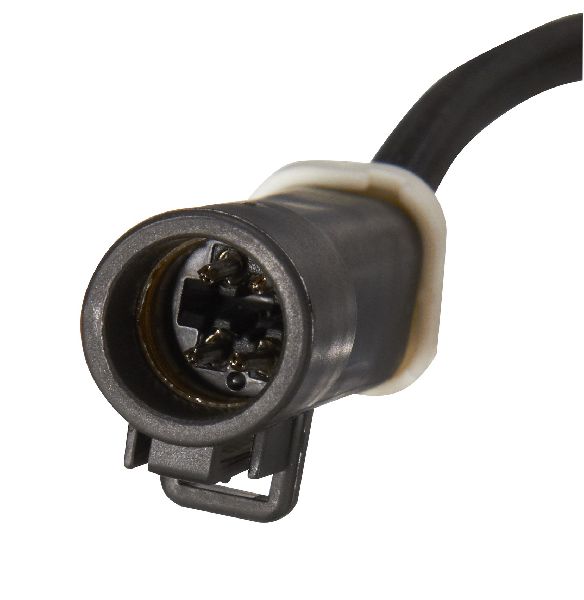
- O2 Sensor Harness Connector (Upstream) — The connector for Bank 1 Sensor 1 is located on the passenger side of the engine, with the harness running down towards the exhaust manifold/pipe junction. It is physically identical to the downstream sensor connector.. The upstream and downstream sensor connectors are often located near each other and can be identical. It is possible to accidentally swap them during a repair, which will cause the PCM to see an unresponsive signal from the upstream sensor (as it's reading the stable downstream sensor) and trigger a P0133.
Real Owner Repair Stories
- ScannerDanner on YouTube (Hyundai, but principle applies universally) (Hyundai with aftermarket exhaust installed) — Persistent P0133 code after replacing the O2 sensor multiple times.
❌ Tried (didn't work) Replacing the Bank 1 Sensor 1 O2 sensor (three times), Checking for exhaust leaks
✅ What actually fixed it The upstream and downstream O2 sensor connectors had been accidentally swapped. The PCM was reading the steady voltage from the post-catalyst sensor and interpreting it as a 'slow' or non-responsive upstream sensor. Swapping the connectors back to their correct positions resolved the code instantly. - Ranger-Forums user (Ford Ranger, year not specified) — Multiple transmission and O2 sensor heater codes appeared at once, including P0135 (B1S1 Heater) and P0155 (B2S1 Heater).
❌ Tried (didn't work) Initial assumption was multiple failed components.
✅ What actually fixed it A single blown 15A fuse (#13 in the engine bay fuse box) was the root cause. This fuse powers the heaters for both upstream O2 sensors as well as several transmission solenoids. Replacing the single fuse cleared all the codes.
OEM Part Supersession History
Unknown→Motorcraft DY-1092— Standard part evolution and consolidation.
Heads up: The DY-1092 is listed for a wide range of Ford applications, sometimes as upstream and sometimes as downstream. It is critical to verify the part by VIN. For the 4.0L SOHC Ranger (2001+), DY-1092 is often cited for the upstream position, but cross-referencing with brands like Bosch (15717) or Denso (234-4070) is recommended to ensure the correct sensor with the proper harness length and connector is chosen.
Model Year Variations Within This Range
- 1998-2000 (OHV) vs 2001-2012 (SOHC): While the P0133 code's meaning is the same, the fuel systems are different. The SOHC engine (2001+) uses a returnless fuel system with a 'fuel pressure pulsation damper' on the fuel rail, while the fuel pressure regulator is located inside the fuel tank as part of the pump assembly. The older OHV engine has a vacuum-operated fuel pressure regulator on the fuel rail. This is a critical distinction, as a failing fuel pressure regulator on an older model could be misdiagnosed, while it is not a possible cause for this code on the fuel rail of a newer SOHC model.
Diagnostic Flowchart
Other Known Issues on This Vehicle
Issues unrelated to this code that are worth knowing about as an owner of this generation:
- 4.0L SOHC Timing Chain Cassette Failure 🔴 High — Very common, especially on 2001-2004 models. The plastic guides for the timing chains wear out or break, often causing a 'rattling' noise on startup or at idle. Failure can be catastrophic, leading to engine damage. Replacement is engine-out work for the rear cassette. (Ref: Ford issued TSBs suggesting tensioner replacement as a first step for early-stage rattle.)
- Cracked Plastic Thermostat Housing 🟠 Medium — Extremely common across all 4.0L SOHC engines. The OEM two-piece plastic housing is prone to developing cracks or leaking at the seams, causing coolant loss. Many owners proactively replace it with a one-piece metal aftermarket housing.
- 5R55E Automatic Transmission Failures 🟠 Medium — Common issues include harsh shifting, delayed engagement into Drive or Reverse, and a flashing O/D light. Problems can sometimes be traced to a failed solenoid pack or servo bores, but often require a rebuild.
Used vs. New Parts: Buying Guide for This Vehicle
When a used part is the smart pick: For this repair, using a used part is almost never a smart choice. The primary cause of P0133 is the oxygen sensor itself, which is a wear item with a finite lifespan (typically 75k-100k miles). A used sensor from a junkyard has unknown mileage and is likely already partially degraded, offering poor value and a high probability of premature failure.
Donor-vehicle mileage cap: roughly under 15000 miles for the part to have meaningful remaining life.
What to inspect on the donor part:
- If forced to use a used sensor (e.g., emergency/budget constraint), source it from a vehicle with verified low mileage.
- Inspect the sensor tip: it should be light gray. Heavy black soot indicates a rich-running donor engine; white, crusty deposits indicate coolant/oil contamination.
- Ensure the wiring and connector are pristine, with no signs of melting, fraying, or brittle insulation.
Aftermarket brands forum-validated for this vehicle:
- Denso
- NTK
- Bosch
Brands owners have reported issues with on this vehicle:
- Unnamed, 'white-box' generic parts from online marketplaces should be avoided. Forum discussions frequently show these parts failing quickly or being dead-on-arrival.
Real Owner Stories
Aggregated from forums and TSBs cited above. Mileages and costs reflect what owners reported in those sources.
2000 Ford Ranger 4.0L V6 — 70000 miles
Symptoms: Check Engine Light on with codes P0153 and P0133.
What fixed it: The owner attempted cleaning the MAF sensor, but the context indicates these sensors are typically past their service life and require replacement.
Source hint: Ford Truck Enthusiasts Forums
2005 Ford Ranger 4.0L SOHC V6 — ~100000 miles
Symptoms: Rough, surging idle along with P0133 and other codes.
What fixed it: Replacement of O2 sensors that were well past their service life.
Source hint: Ranger-Forums.com - P0133 Diagnosis Discussion
2000 Ford Ranger 4.0L V6 — ~110000 miles
Symptoms: The P0133 code appeared and then turned off by itself intermittently.
What fixed it: Replacing the oxygen sensor provided a permanent fix.
Source hint: TheRangerStation.com - P0133 Code and Intermittent Light
Related OBD-II Codes
Frequently Asked Questions
Why does the Check Engine Light for P0133 on my Ranger keep turning off and then coming back on a few days later?
I'm seeing P0133 on my 4.0L SOHC; should I replace just the passenger side sensor?
My scan tool shows the O2 sensor voltage is moving; does that mean it's actually good?
Is there a specific tool I need to change the Bank 1 sensor on my Ranger?
Can an exhaust leak cause this code on the 4.0L SOHC engine?
Are there any TSBs for the timing chain rattle that might be related to my engine's performance?
Helpful Videos
We Have This Part in Stock

The information in this article is provided for general reference and educational purposes only. Vehicle specifications, procedures, and part compatibility can vary by production date, trim level, and region. Always consult your vehicle's factory service manual and verify part numbers before purchasing or performing repairs. Safety-critical components such as airbags, seat belts, and braking systems should be installed by a qualified professional.
- Ford Ranger:
- 🧭 Diagnostic Flowchart
- 🎬 Helpful Videos
- 🛍️ Shop This Part
- What's Unique About the 1998-2012 Ford Ranger
- Symptoms You May Notice
- Most Likely Causes
- Rare But Worth Checking
- Diagnosis Steps
- Parts You'll Likely Need
- Related Codes That Often Appear With This One
- Platform-Specific Known Issues
- Mechanic-Grade Diagnostic Values
- Wiring & Ground Locations
- Real Owner Repair Stories
- OEM Part Supersession History
- Model Year Variations Within This Range
- Other Known Issues on This Vehicle
- Used vs. New Parts: Buying Guide for This Vehicle
- Real Owner Stories
- 2000 Ford Ranger 4.0L V6 — 70000 miles
- 2005 Ford Ranger 4.0L SOHC V6 — ~100000 miles
- 2000 Ford Ranger 4.0L V6 — ~110000 miles
- Related OBD-II Codes
- Frequently Asked Questions
- 🎟️ Get 5% Off