

P0134 on 2000-2006 BMW X5 4.4L V8: Causes and Fixes for O2 Sensor Inactivity
P0134 on a 2000-2006 BMW X5 4.4L V8 almost always means the front oxygen sensor (Bank 1, Sensor 1) has failed. Bank 1 is the passenger side. Expect to pay $60-$120 for a quality aftermarket sensor (Bosch is OEM) or $150-$250 for a part from the BMW dealer. It's a DIY-friendly fix with a 22mm (or 7/8") O2 sensor socket, but the sensor can be seized in the exhaust pipe, requiring heat and penetrating oil.
- P0134 on your X5 means the passenger-side, pre-catalytic converter O2 sensor is not sending a signal.
- The most common cause by far is a failed sensor, which is a standard maintenance item that wears out. Bosch is the OEM supplier.
- Before replacing the sensor, perform a quick visual check of the wiring for any obvious damage and check the O2 sensor heater fuse.
- The sensor can be seized in the exhaust; soaking it with penetrating oil beforehand is a crucial step for a successful DIY repair.
- Driving with this code will hurt your fuel economy and could damage your catalytic converter over time.
What's Unique About the 2000-2006 BMW X5
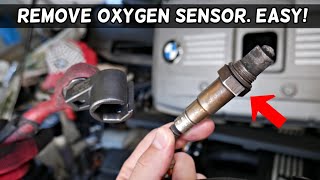
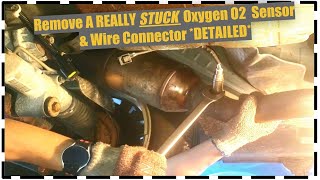
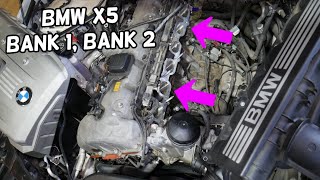
The 2000-2006 (E53) X5 4.4L used two different V8 engines: the M62TUB44 (2000-2003) and the N62B44 (2004-2006). While P0134 points to the same component on both, access and part numbers differ. Bank 1 is consistently the passenger side of the engine 🎬 Watch: How to identify Bank 1 vs Bank 2 on your BMW. (cylinders 1-4). These sensors have a typical service life and failure around 100,000 miles is very common, making this a frequent code for E53 owners. On the V8 models, access to the upstream sensors is from underneath the vehicle after removing a reinforcement plate. The sensors can be very tight or seized in the exhaust manifold, often requiring significant force, heat, and penetrating oil 🎬 See this walkthrough for removing a stuck BMW oxygen sensor. for removal.
Generation note: The 2000-2006 BMW X5 is a single generation (E53), but the 4.4L V8 engine was updated for the 2004 model year facelift. Pre-facelift models (2000-2003) use the M62TUB44 engine, while facelift models (2004-2006) use the N62B44 engine. This guide applies to both, as the function and failure mode of the O2 sensor are the same, though part numbers differ.
Symptoms You May Notice
- Check Engine Light is on.
- Reduced fuel economy by 10-20%.
- Rough or unstable idle.
- Engine hesitation or sluggishness during acceleration.
- Failure to pass an emissions test.
- Engine misfires or difficulty starting in some cases.
- Black smoke from the exhaust (rare).
- Replacing the wrong O2 sensor (e.g., the post-catalytic converter sensor or the sensor on the driver's side/Bank 2). Always confirm Bank 1 is the passenger side and Sensor 1 is pre-catalytic converter.
- Replacing the sensor when the actual fault is a damaged wire or a blown fuse for the heater circuit.
Most Likely Causes
- Failed Bank 1, Sensor 1 Oxygen Sensor 🔴 High Probability → Shop Oxygen Sensor Oxygen sensors are consumable parts that wear out over time, typically between 80,000 and 100,000 miles. The internal heating element can fail (often causing code P0135 simultaneously), or the sensing element can become contaminated by oil, coolant, or carbon, rendering it unable to produce a voltage signal.
How to confirm: Use an OBD-II scanner with live data to monitor the voltage of 'O2 Sensor Bank 1 Sensor 1'. With the engine warm, a healthy sensor's voltage should fluctuate rapidly between ~0.1V and 0.9V. If the voltage is flat, stuck (e.g., at 0.45V), or shows no activity, the sensor has failed. Swapping the Bank 1 and Bank 2 pre-cat sensors and seeing if the code moves to P0154 (Bank 2) is a definitive test.
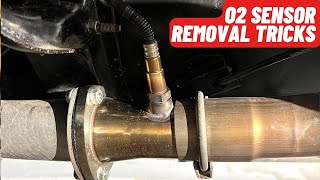
Typical fix: Replace the Bank 1, Sensor 1 (pre-catalytic converter) oxygen sensor. On the V8, this is located on the passenger side exhaust manifold and is accessed from below. The sensor often requires a 22mm (7/8") oxygen sensor socket and may need to be soaked in penetrating oil (like PB Blaster) overnight. 🎬 Watch: Pro tips and tricks for removing seized oxygen sensors.
Est. part cost: $60-$250 - Damaged Wiring or Connector 🟡 Medium Probability The O2 sensor wiring harness is routed near hot exhaust components and can become brittle, melt, or get damaged during other engine repairs (e.g., motor mount replacement). The connector pins can also corrode from moisture and road salt, causing a poor connection.
How to confirm: Visually inspect the wiring harness from the O2 sensor up to its connector in the engine bay. Look for any signs of melting, chafing, or breaks. Disconnect the sensor and inspect the connector pins for corrosion (green/white powder) or damage. Use a multimeter to check for continuity on the signal and heater circuit wires if a wiring diagram is available.
Typical fix: Repair the damaged section of wiring using heat-shrink butt connectors or replace the connector pigtail if it is damaged. Clean corroded connectors with electrical contact cleaner.
Est. part cost: $10-$50 - Exhaust Leak ⚪ Low Probability Exhaust manifold gaskets or the manifold itself can develop cracks over time, allowing unmetered outside air to be drawn into the exhaust stream before the O2 sensor. This excess oxygen makes the sensor read a constant lean condition (low voltage), which the DME can interpret as 'no activity'.
How to confirm: Listen for a ticking or puffing sound from the passenger side of the engine bay, especially when the engine is cold. A professional can use a smoke machine to pressurize the exhaust system and visually identify leaks. A DIY method is to spray soapy water on cold manifold joints and look for bubbles.
Typical fix: Replace the leaking exhaust manifold gasket or repair/replace the cracked exhaust component.
Est. part cost: $20-$200
Rare But Worth Checking
- Faulty Engine Control Module (DME): → Shop Engine Control Module (ECM) This is extremely rare. Before condemning the DME, all other possibilities, including the sensor, wiring, fuses, and exhaust system, must be exhaustively tested and ruled out.
- Blown O2 Sensor Heater Fuse: → Shop Oxygen Sensor The O2 sensor has an internal heater to bring it to operating temperature quickly. This heater circuit is powered by a fuse. If the fuse blows, the sensor may not heat up properly and will remain inactive, triggering P0134. Check the fuse box for fuses labeled 'O2 Heater' or similar.
Diagnosis Steps
- Connect an OBD-II scanner and confirm P0134 is the active code. Note any other codes present, especially P0135 or P0171.
- Using the scanner's live data function, monitor the voltage for 'O2 Sensor Bank 1 Sensor 1'.
- Start the engine and let it warm up. A healthy sensor's voltage should begin fluctuating rapidly between approximately 0.1V and 0.9V.
- If the voltage is stuck at a specific number (e.g., 0.45V) or shows no activity (flat line), the sensor or its circuit is faulty.
- Turn off the engine. Check the vehicle's fuse diagram and inspect the fuse for the oxygen sensor heaters.
- Visually inspect the sensor's wiring harness and connector for any obvious damage, melting, or corrosion. The harness runs from the passenger side exhaust manifold up into the engine bay.
- Check for exhaust leaks near the Bank 1 exhaust manifold. Listen for ticking noises when cold or use a smoke machine for a definitive test.
- If wiring, fuses, and the exhaust system are okay, the most probable cause is a failed oxygen sensor.
- As a final test, you can check the resistance of the sensor's internal heater circuit with a multimeter. Disconnect the sensor and measure resistance between the two wires of the same color (often white). An open circuit (infinite resistance) indicates a failed heater and a bad sensor.
Parts You'll Likely Need
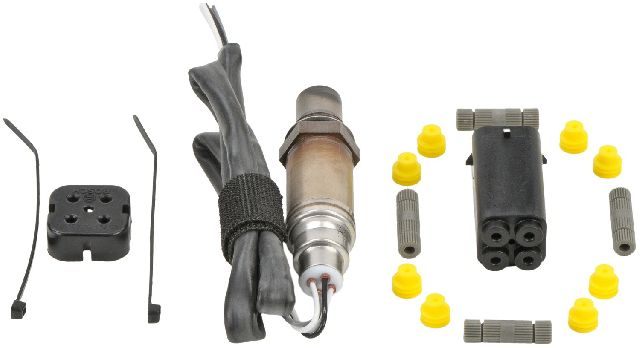
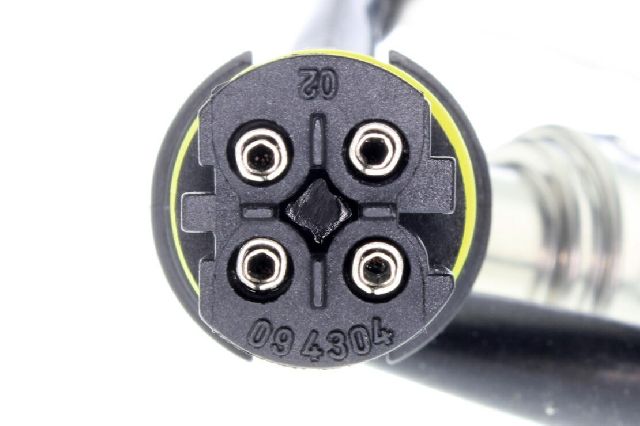
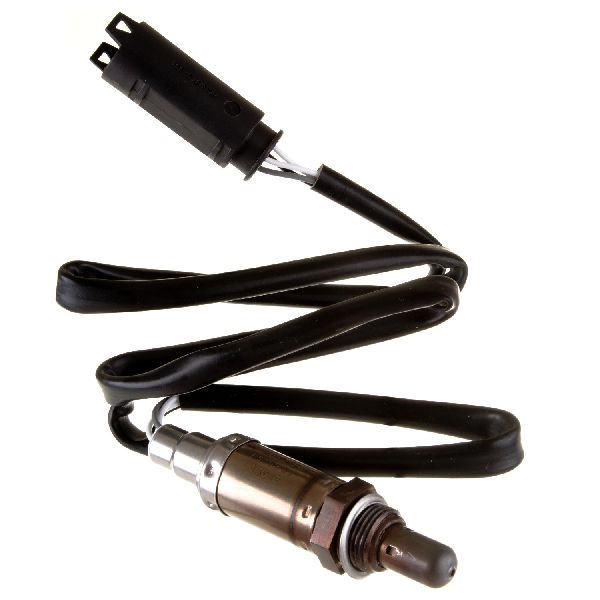
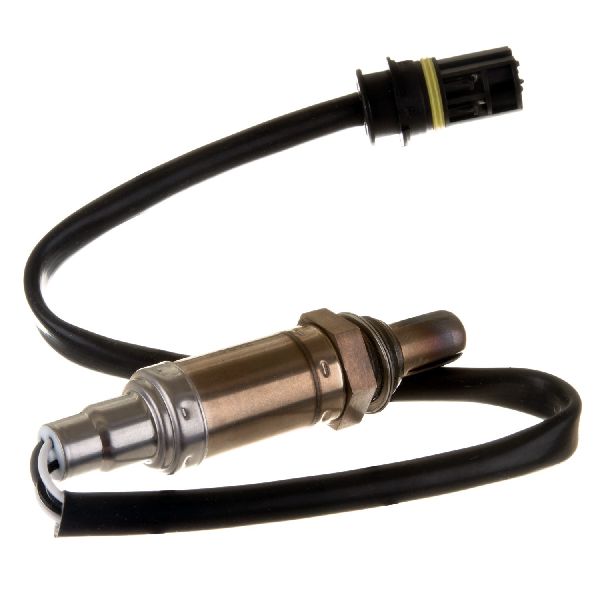
- Oxygen Sensor (Bank 1, Sensor 1)
(OEM #M62 (00-03): 11781742050 (Bosch 13477) | N62 (04-06): 11787530735)— This is the component that has failed and is no longer sending a signal to the engine computer. It is a common wear-and-tear item. Bosch is the Original Equipment Manufacturer.
Trusted brands: Bosch, NTK, Denso, Walker Products
OEM price range: $150-$250
Aftermarket price range: $60-$120 - Oxygen Sensor Socket — A special 22mm (7/8") socket with a cutout for the wire is required to remove and properly torque the new sensor.
Trusted brands: Lisle, OEMTools, GearWrench
OEM price range: $10-$30
Aftermarket price range: $10-$30
Related Codes That Often Appear With This One
- P0171 — If an exhaust leak is the cause of P0134, the extra air drawn in can cause the DME to perceive a lean condition, triggering a P0171 (System Too Lean, Bank 1) code.
- P0135 — This code indicates a fault in the heater circuit of the same O2 sensor (Bank 1, Sensor 1). It's very common to see both P0134 and P0135 together, which strongly points to a failed sensor itself, as the heater is an integral part of the sensor.
- P0030 — Similar to P0135, this is a generic code for 'HO2S Heater Control Circuit (Bank 1, Sensor 1)'. Seeing P0134 and P0030 together is a very strong indicator that the sensor itself has failed.
Platform-Specific Known Issues
- Seized O2 Sensors: → Shop Oxygen Sensor Owners frequently report that the original oxygen sensors are extremely difficult to remove due to being seized in the exhaust manifold from years of heat cycles and corrosion. Soaking the sensor threads with penetrating oil (like PB Blaster) for several hours or overnight is highly recommended. In some cases, heating the exhaust manifold bung with a torch is necessary to break it free.
- Access from Underneath: For the V8 models (M62 and N62), the pre-cat sensors are best accessed from underneath the vehicle. This requires safely lifting the vehicle on jack stands or a lift and removing a large metal reinforcement plate.
Mechanic-Grade Diagnostic Values
- O2 Sensor Heater Circuit Resistance — expected: 5-15 Ohms (Ω) between the two heater pins (usually same color wires) on the sensor connector.. Failure: A reading of 0Ω indicates a short circuit, while infinite resistance (OL) means the heater element is burned out and open.
- Live Data O2 Sensor Voltage (Upstream) — expected: Rapidly fluctuating sine wave between approximately 0.1V and 0.9V when the engine is warm and in closed loop.. Failure: A flat line, a signal stuck at a specific voltage (e.g., 0.45V), or very slow, lazy switching indicates a failed sensor.
- O2 Sensor Heater Circuit Voltage Supply — expected: 12V (battery voltage) at the heater pins on the harness side of the connector with the key on.. Failure: No voltage indicates a blown fuse, a bad relay, or a break in the wiring from the power source.
Hidden / Shadow Codes Worth Checking
- 227: BMW-specific fault code for 'O2 Bank 1 Control Deviation'. This indicates the DME has detected that the fuel mixture on Bank 1 is too lean and the O2 sensor is not adjusting as expected. It often accompanies P0134. (see via BMW-specific diagnostic tools like INPA, ISTA, or higher-end scanners with BMW software (e.g., Snap-on with European software).)
- 203: BMW-specific fault code for 'O2 Bank 2 Control Limit'. While this points to Bank 2, it can sometimes appear alongside Bank 1 codes if there is a systemic issue like a widespread vacuum leak or fuel pressure problem affecting both banks. (see via BMW-specific diagnostic tools like INPA, ISTA, or capable aftermarket scanners.)
Wiring & Ground Locations
- O2 Sensor Heater Fuse — Inside the electronics box (E-box) in the engine bay, typically on the passenger side under the cabin air filter housing. It is not in the main fuse panel. It's one of five fuses in a sealed black plastic carrier.. This fuse supplies power to the heaters for all O2 sensors. If it blows, the Bank 1 Sensor 1 heater will not work, preventing the sensor from reaching operating temperature and causing it to show 'no activity,' which triggers P0134. This is a common point of failure often missed by technicians who only check the main fuse boxes.
- DME Connector Pins — At the Digital Motor Electronics (DME) module, also located in the E-box in the engine bay.. For advanced diagnosis, a technician can test for continuity and voltage directly at the DME pins corresponding to the Bank 1 Sensor 1 signal, ground, and heater circuit. This definitively rules out wiring harness issues between the sensor and the computer. A wiring diagram for the specific DME (e.g., ME7.2 for M62, ME9 for N62) is required.
Real Owner Repair Stories
- Bimmer Merchant on YouTube (BMW E39 530i (M54 engine, similar DME logic)) — Check Engine Light with codes 227 (O2 Bank 1 Control Deviation) and 228 (O2 Bank 2 Control Deviation).
❌ Tried (didn't work) Performed a smoke test to check for vacuum leaks, but the test was negative (no leaks found).
✅ What actually fixed it After observing on a scan tool that the pre-cat O2 sensor fuel trims were stuck negative (rich) and not switching, they replaced both pre-catalytic converter O2 sensors. This resolved the codes and allowed the vehicle to pass its emissions test. - bavmods.com / Various BMW Forums (Various BMWs including E46, E90, E53) — Multiple O2 sensor heater circuit codes (e.g., P0031, P0037, P0051, P0057) appearing simultaneously, often including P0134.
❌ Tried (didn't work) Replacing one or all of the oxygen sensors.
✅ What actually fixed it The root cause was a single blown 30-amp fuse dedicated to the O2 sensor heaters, located in a hidden fuse carrier inside the engine bay electronics box (E-box), not the main fuse panels. Replacing this single fuse restored power to all sensor heaters and cleared all related codes.
"I Checked Everything" — The Actual Cause
- In a documented case on a BMW with similar engine management, the vehicle presented with O2 sensor deviation codes (227, 228). The standard procedure is to check for vacuum leaks, but a smoke test came back negative. The live data on a scan tool showed the pre-cat sensors were not switching correctly. The final fix was replacing the pre-cat O2 sensors themselves, which had failed internally without an obvious external cause.
Model Year Variations Within This Range
- 2000-2003: These models use the M62TUB44 engine with the Bosch ME7.2 engine management system. The pre-cat O2 sensor is BMW part number 11781742050, often corresponding to Bosch part number 13477.
- 2004-2006: These facelift models use the N62B44 engine with a newer Bosch ME9 series engine management system. The pre-cat O2 sensor is BMW part number 11787530735. While functionally identical, the sensors and their connectors may differ from the earlier M62 engine.
Diagnostic Flowchart
Real Owner Stories
Aggregated from forums and TSBs cited above. Mileages and costs reflect what owners reported in those sources.
BMW X5 E53
Symptoms: Triggered a P0134 code along with a P0030 heater circuit code.
What fixed it: Swapped the sensors between Bank 1 and Bank 2 to confirm the sensor was dead, and checked the wiring harness for damage caused by a previous motor mount replacement.
Source hint: Xoutpost.com thread titled 'O2 Sensor Question (P0030/P0134)'
BMW X5 E53 3.0L
Symptoms: The original oxygen sensor was completely seized in the exhaust manifold and would not break free.
What fixed it: Soaked the sensor threads in PB Blaster overnight and used a torch to heat the sensor bung until it was red hot to finally break it loose.
Source hint: Xoutpost.com thread titled 'DIY - E53 3.0 Oxygen Sensor Replacement'
BMW X5 E53
Symptoms: Needed to replace all four oxygen sensors due to age and failure.
What fixed it: Removed the front metal reinforcement plate to gain access to the sensors from underneath the vehicle, and torqued the new sensors to 50 Nm (37 ft-lb).
Source hint: Xoutpost.com thread titled 'Oxygen Sensors replacement'
BMW X5
Symptoms: Check engine light came on with code P0134 indicating the O2 sensor might need to be replaced.
What fixed it: Checked the oxygen sensor heater fuses as a preliminary diagnostic step before purchasing and installing a replacement sensor.
Source hint: Reddit r/AskMechanics thread titled 'Code P0134 - O2 Sensor Might Need To Be Replaced'
Related OBD-II Codes
Frequently Asked Questions
Where is the Bank 1 Sensor 1 oxygen sensor located on my 4.4L V8 X5?
I'm trying to remove the O2 sensor on my E53 X5 but it's completely stuck. What should I do?
What is the correct torque specification for installing the new oxygen sensor on the X5?
Could a recent motor mount replacement have caused my P0134 code?
At what mileage do the oxygen sensors typically fail on the 2000-2006 BMW X5?
Do I need any special tools to replace the pre-cat oxygen sensor on my 4.4L V8?
Helpful Videos
We Have This Part in Stock



The information in this article is provided for general reference and educational purposes only. Vehicle specifications, procedures, and part compatibility can vary by production date, trim level, and region. Always consult your vehicle's factory service manual and verify part numbers before purchasing or performing repairs. Safety-critical components such as airbags, seat belts, and braking systems should be installed by a qualified professional.
- BMW X5:
- 🧭 Diagnostic Flowchart
- 🎬 Helpful Videos
- 🛍️ Shop This Part
- What's Unique About the 2000-2006 BMW X5
- Symptoms You May Notice
- Most Likely Causes
- Rare But Worth Checking
- Diagnosis Steps
- Parts You'll Likely Need
- Related Codes That Often Appear With This One
- Platform-Specific Known Issues
- Mechanic-Grade Diagnostic Values
- Hidden / Shadow Codes Worth Checking
- Wiring & Ground Locations
- Real Owner Repair Stories
- "I Checked Everything" — The Actual Cause
- Model Year Variations Within This Range
- Real Owner Stories
- BMW X5 E53
- BMW X5 E53 3.0L
- BMW X5 E53
- BMW X5
- Related OBD-II Codes
- Frequently Asked Questions
- 🎟️ Get 5% Off