

P0134 on 2011-2015 Kia Optima: O2 Sensor No Activity Causes and Fixes
On a 2011-2015 Kia Optima, code P0134 almost always means the upstream oxygen sensor (Bank 1, Sensor 1) has failed. Replacing this sensor is the most common fix, with parts costing between $60 for an aftermarket brand and $180 for an OEM part. It's a DIY-friendly job for most home mechanics. Before replacing, always check the wiring harness for melting, as it is routed close to the exhaust.
- P0134 on your Optima almost certainly points to a failed upstream O2 sensor (Bank 1, Sensor 1).
- Before ordering a new sensor, perform a thorough visual inspection of the sensor's wiring harness for any signs of melting or damage, as this is a known weak point.
- Replacing the sensor is a manageable DIY job with the correct O2 sensor socket.
- This issue is shared with the platform-mate Hyundai Sonata of the same era.
What's Unique About the 2011-2015 Kia Optima
For the 2011-2015 Optima with either the 2.4L or 2.0L Turbo engine, the P0134 code is a very common and straightforward issue. The primary upstream O2 sensor is a frequent wear-and-tear item. A notable vulnerability on this platform is the sensor's wiring harness, which is routed close to the hot exhaust manifold; the plastic clips holding it can fail, allowing the wires to melt and cause a short or open circuit. This has been documented by mechanics in repair videos. However, in the vast majority of cases, the sensor itself is the root cause.
Symptoms You May Notice
- Check Engine Light is illuminated
- Decreased fuel economy
- Rough or uneven engine idle
- Engine hesitation or sluggish acceleration
- Failing a vehicle emissions test
- Replacing the downstream (Bank 1, Sensor 2) oxygen sensor. This code specifically points to Sensor 1, the upstream sensor.
- Replacing the catalytic converter. A bad sensor can harm the converter over time, but the sensor itself is the cause of the P0134 code, not the other way around.
Most Likely Causes
- Failed Upstream Oxygen Sensor (Bank 1, Sensor 1) 🔴 High Probability → Shop Oxygen Sensor This is a standard wear-and-tear component. The internal heater element can fail (which may also set a P0135 code), or the sensing element can become contaminated or simply age, preventing it from producing a signal. 🎬 Watch: How to diagnose O2 sensor circuit no activity
How to confirm: Using an OBD-II scanner with live data, monitor the 'O2S B1S1' voltage with the engine warm and idling. A healthy sensor's voltage will fluctuate rapidly between approximately 0.1V and 0.9V. If the voltage is stuck at a fixed number (e.g., 0.45V) or shows no activity (a flat line), the sensor has failed.
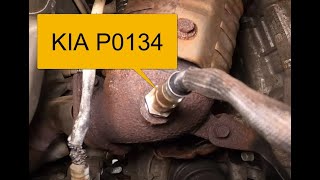
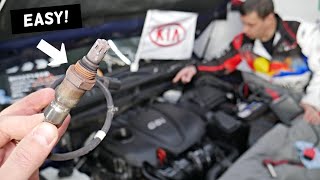
Typical fix: Replace the upstream oxygen sensor. It is located on the back of the engine in the exhaust manifold, accessible from the top. 🎬 See this walkthrough for upstream sensor location and removal An O2 sensor socket is highly recommended for removal.
Est. part cost: $60-$180 - Damaged Wiring or Connector 🟡 Medium Probability The sensor's wiring harness is routed near the exhaust manifold. The protective loom can become brittle from heat, and the wires can melt or break if they make contact with the hot exhaust, causing an open or short circuit. This is a commonly cited failure point in DIY repair forums and videos.
How to confirm: Visually inspect the entire length of the oxygen sensor's wiring harness from the sensor to the main engine harness. Look for melted plastic, chafed insulation, or broken wires. Check that the connector is securely plugged in and free of corrosion. A user on a Kia Soul forum noted their wiring insulation was damaged, causing intermittent issues.
Typical fix: Repair the damaged section of wiring or replace the connector pigtail. Secure the harness away from the exhaust manifold using high-temperature zip ties.
Est. part cost: $10-$30 - Blown Fuse for O2 Sensor Heater ⚪ Low Probability → Shop Oxygen Sensor
How to confirm: The oxygen sensor has an internal heater to bring it to operating temperature quickly. This heater is on a fused circuit. Check the fuse box in the engine bay for a fuse labeled 'SENSOR 1' or similar and verify it is not blown. On a 2013 Kia Optima, the upstream and downstream sensor fuses are located in the engine compartment fuse box.
Typical fix: Replace the blown fuse. If the fuse blows again immediately, it indicates a short circuit in the heater circuit wiring or the sensor itself that must be diagnosed.
Est. part cost: $1-$5 - Exhaust Leak ⚪ Low Probability
How to confirm: Listen for a ticking or hissing sound from the engine bay, especially when the engine is cold. Inspect the exhaust manifold and the pipe leading to the sensor for black soot marks, which indicate a leak. An exhaust leak before the sensor can introduce outside oxygen and prevent the sensor from reading correctly.
Typical fix: Replace the leaking gasket (e.g., exhaust manifold gasket) or repair the cracked exhaust component.
Est. part cost: $20-$150
Rare But Worth Checking
- Faulty Powertrain Control Module (PCM): → Shop Engine Control Module (ECM) This is extremely rare. The PCM should only be considered after all other possibilities, including the sensor, wiring, and fuses, have been thoroughly tested and ruled out.
Diagnosis Steps
- Connect an OBD-II scanner to confirm the P0134 code and check for any other stored codes, like P0135.
- Perform a visual inspection of the Bank 1 Sensor 1 (upstream) oxygen sensor's wiring harness and connector. Look for any signs of melting, chafing, or corrosion. Ensure the harness is clipped securely away from the exhaust.
- Check the fuse for the oxygen sensor heater circuit in the engine compartment fuse box (often labeled 'SENSOR 1').
- Start the engine and let it warm up to operating temperature.
- Using the live data function on your scanner, observe the voltage for 'O2S B1S1'. It should be fluctuating rapidly. If it is stuck, flat, or absent, the sensor is bad and needs to be replaced.
- If the sensor signal looks good on the scanner, use a multimeter to check for 12V power at the heater circuit wires on the sensor's connector (with key on, engine off).
- If the sensor and wiring test good, check for exhaust leaks between the cylinder head and the sensor.
- If all other possibilities are exhausted, the final, though very unlikely, possibility is a fault with the PCM.
Parts You'll Likely Need
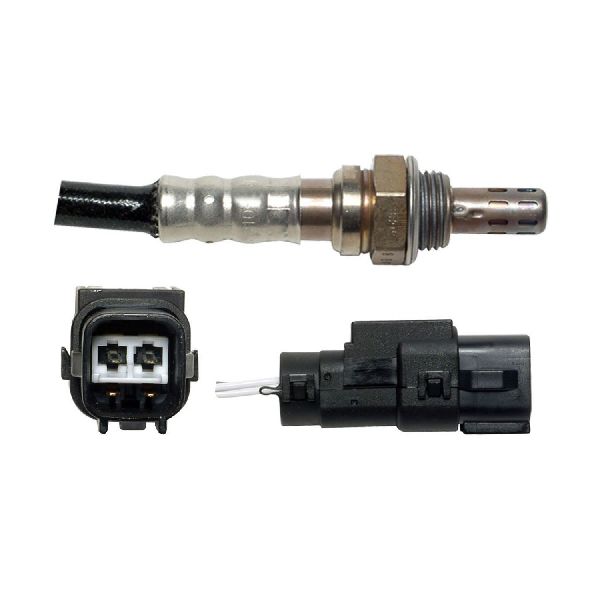
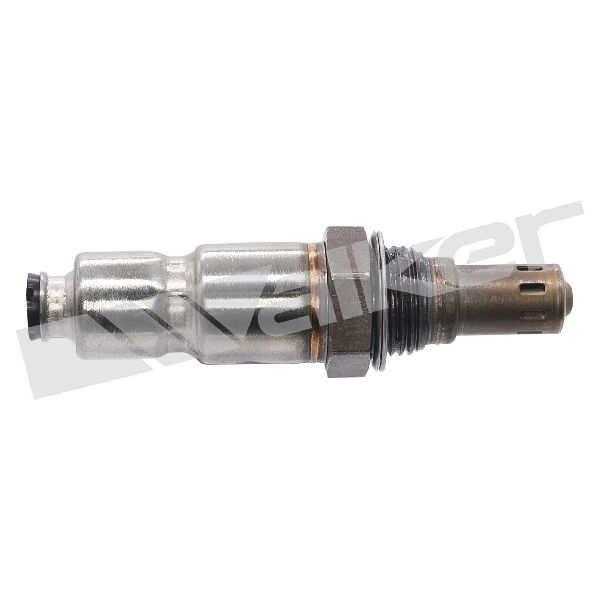
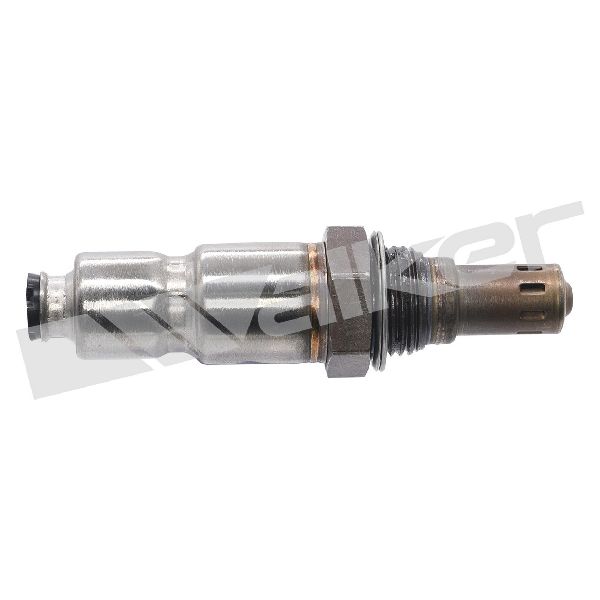
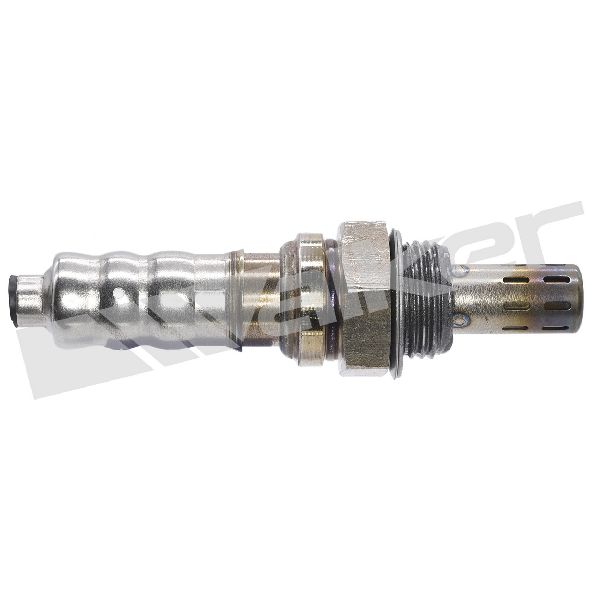
- Upstream Oxygen Sensor (Air/Fuel Ratio Sensor)
(OEM #39210-2G720)— This is the most common failure item for code P0134 on this vehicle. It is a critical component for fuel control and has a finite lifespan. Part number 39210-2G720 is specified for the 2.0L Theta II engine in the 2011-2015 Optima. Always verify with VIN.
Trusted brands: Kia (OEM), NGK/NTK, Denso, Bosch
OEM price range: $120-$260
Aftermarket price range: $60-$110
Related Codes That Often Appear With This One
- P0135 — This code indicates a failure in the O2 sensor's heater circuit. Since the sensor cannot become active without a working heater, a P0135 is very commonly seen with P0134 when the sensor's internal heater fails.
- P0171 or P0172 — If the sensor is failing in a way that causes a false lean (P0171) or rich (P0172) reading before it dies completely, these codes may be stored alongside P0134.
- P0133 — This code for 'Slow Response' can sometimes precede a P0134. As the sensor degrades, it may first become slow to respond before failing entirely and showing no activity.
Technical Service Bulletins (TSBs) & Recalls
- Kia Customer Satisfaction Program CS1604: While not related to P0134, this program addresses a common steering column noise by replacing the flexible coupler and extending its warranty.
- Hyundai/Kia TSB 23-FL-003H: Recommends using Techron fuel system cleaner to combat carbon deposits in GDI engines, an issue that can affect overall engine health.
Platform-Specific Known Issues
- Melted Wiring Harness: A recurring theme in owner forums and mechanic videos is the vulnerability of the O2 sensor's wiring. In a video by 'World Mechanics' on YouTube, the mechanic points out the plastic harness clip is often broken or missing, allowing the wires to rest on the exhaust heat shield and melt. 🎬 Watch: How to fix common Kia O2 sensor wiring issues This causes a direct short or open circuit, triggering P0134.
Mechanic-Grade Diagnostic Values
- O2 Sensor Heater Element Resistance — expected: 3.3 - 4.1 Ω at 21°C (70°F) for some Kia models, while a general acceptable range is 4 - 10 Ω.. Failure: A reading of infinite resistance (OL) indicates an open circuit in the heater element, confirming sensor failure.
- O2 Sensor Heater Circuit Voltage — expected: Approximately 12V (battery voltage) at the harness-side connector pin for the heater power supply with the Key On, Engine Off (KOEO).. Failure: No voltage suggests a blown fuse, faulty relay, or a break in the power supply wiring.
- Live Data O2 Sensor Voltage (B1S1) — expected: Rapidly fluctuating between ~0.1V (lean) and ~0.9V (rich) on a warm, idling engine.. Failure: Voltage is stuck at a static value (e.g., 0.45V) or shows a flat line with no activity.
Wiring & Ground Locations
- Engine Block / Cylinder Head Ground — Look for black wires with eyelets bolted directly to the engine block or cylinder head. A main ground strap connects the engine to the chassis.. A poor engine ground can create a voltage potential difference, causing erratic sensor readings. While not a primary cause for P0134, ensuring it's clean and tight is a fundamental step in any electrical diagnosis.
- Chassis Ground (Strut Tower) — The unpainted bolts on top of the strut towers in the engine bay serve as primary chassis ground points.. The O2 sensor circuit relies on a solid ground path to the PCM. A corroded or loose chassis ground can interrupt the sensor's signal or ground reference, potentially mimicking a failed sensor.
- Engine Ground Wiring Assembly — A specific ground wire assembly, OEM part number 918612T010, is listed for the 2011-2015 Kia Optima with both 2.0L and 2.4L engines.. This specific assembly provides a dedicated ground path for various engine components. Damage or corrosion to this harness could lead to sensor circuit faults.
OEM Part Supersession History
39210-2G710→39210-2G720— Standard part revision by the manufacturer.
Heads up: The new part number (39210-2G720) is a direct replacement for the old one.
Model Year Variations Within This Range
- 2014-2015: For the 2014 model year facelift, the 2.4L GDI engine's power was slightly detuned from 200 hp to 192 hp. This change does not affect the diagnosis or repair of code P0134, but is a notable variation within the generation.
- 2011-2013: The 2.4L GDI engine was rated at 200 hp. A six-speed manual transmission was available on the base LX trim until the 2013 model year, after which all models were automatic.
Diagnostic Flowchart
Other Known Issues on This Vehicle
Issues unrelated to this code that are worth knowing about as an owner of this generation:
- Catastrophic Engine Failure (Connecting Rod Bearings) 🔴 High — Widespread across 2011-2015 models with both 2.4L and 2.0T Theta II engines, often occurring under 100,000 miles. Caused by manufacturing debris restricting oil flow, leading to bearing wear and seizure. (Ref: Multiple recalls (e.g., NHTSA 20V750, 21V844) and a class-action lawsuit settlement led to extended warranties (15 years/150k miles) and engine replacements for affected vehicles. A Knock Sensor Detection System (KSDS) software update was issued to detect bearing failure early.)
- Steering Column Coupler Failure 🟠 Medium — Very common; owners report a clicking or knocking noise from the steering column when turning, especially at low speeds or when stopped. The flexible rubber coupler (part # 56315-2K000-FFF) disintegrates over time. (Ref: Kia issued a Customer Satisfaction Program (CS1604) and extended the warranty for this part to 10 years/unlimited mileage.)
- Intake Valve Carbon Buildup 🟠 Medium — A common issue for all Gasoline Direct Injection (GDI) engines, including the Theta II. Oil vapors from the PCV system bake onto the back of the intake valves, as fuel is injected directly into the cylinder and does not wash them clean. Can cause rough idle and power loss over 80k+ miles. (Ref: Kia/Hyundai TSB 23-FL-003H recommends periodic use of Techron fuel system cleaner to help with combustion chamber deposits, though this does not clean the intake valves themselves.)
- Engine Oil Consumption 🔴 High — Many owners report excessive oil consumption, which can be a precursor to the larger engine failure issue or a separate problem related to piston rings. This requires frequent oil level checks to prevent engine damage from low oil levels. (Ref: Often addressed as part of the broader engine failure recalls and warranty extensions.)
Used vs. New Parts: Buying Guide for This Vehicle
When a used part is the smart pick: For this repair, sourcing a used part is generally not recommended for the oxygen sensor itself. However, obtaining a used wiring harness pigtail from a junkyard is a viable option if only the connector or a small section of wire is damaged.
Donor-vehicle mileage cap: roughly under 100000 miles for the part to have meaningful remaining life.
What to inspect on the donor part:
- For a wiring pigtail, inspect for any signs of melting, brittleness, or cracking in the insulation.
- Ensure the connector's locking tab is intact and the internal pins are clean and free of corrosion.
- Avoid parts from vehicles that show signs of engine fire or major fluid leaks in the engine bay.
OEM-only on this vehicle (don't cheap out):
- While not directly related to P0134, if a catalytic converter replacement is ever needed, using an OEM part is highly recommended. Aftermarket converters on this platform have a reputation for failing to meet emissions standards or having a shorter lifespan.
Aftermarket brands forum-validated for this vehicle:
- NTK (part of NGK) and Denso are widely regarded as high-quality OEM suppliers for oxygen sensors and are excellent alternatives to the dealer part.
- Bosch is also a reputable OEM supplier, though some forum users express a slight preference for NTK or Denso for Japanese and Korean vehicles.
Brands owners have reported issues with on this vehicle:
- Avoid unbranded, generic "white-box" oxygen sensors. While cheap, they have a high failure rate and may not provide accurate readings, leading to persistent fuel trim issues even if the code is resolved.
Real Owner Stories
Aggregated from forums and TSBs cited above. Mileages and costs reflect what owners reported in those sources.
2011-2015 Kia Optima 2.4L GDI
Symptoms: The mechanic points out the plastic harness clip is often broken or missing, allowing the wires to rest on the exhaust heat shield and melt.
What fixed it: Securing the wiring harness away from the exhaust heat shield to fix a direct short or open circuit.
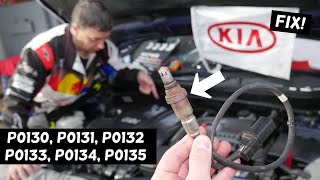
Source hint: YouTube - World Mechanics - KIA OPTIMA CODE P0130...P0135 FIX
2011-2015 Kia Soul
Symptoms: The P0134 code returned a month after replacing both O2 sensors; observed damaged wiring insulation near the exhaust.
What fixed it: Checking for damaged wiring insulation or potential vacuum leaks.
Source hint: Reddit r/KiaSoulClub - P0134 Returns After Sensor Replacement
Related OBD-II Codes
Frequently Asked Questions
Where is the upstream oxygen sensor located on my 2011-2015 Kia Optima 2.4L GDI?
Could a blown fuse cause the P0134 code on my 2013 Optima?
I replaced the sensor but P0134 returned; what should I check next on my Optima?
Does TSB 23-FL-003H relate to my O2 sensor issues?
Is there a specific tool recommended for DIY replacement on the Theta II engine?
Can an exhaust leak trigger P0134 on this model?
Helpful Videos
We Have This Part in Stock



The information in this article is provided for general reference and educational purposes only. Vehicle specifications, procedures, and part compatibility can vary by production date, trim level, and region. Always consult your vehicle's factory service manual and verify part numbers before purchasing or performing repairs. Safety-critical components such as airbags, seat belts, and braking systems should be installed by a qualified professional.
- Kia Optima:
- 🧭 Diagnostic Flowchart
- 🎬 Helpful Videos
- 🛍️ Shop This Part
- What's Unique About the 2011-2015 Kia Optima
- Symptoms You May Notice
- Most Likely Causes
- Rare But Worth Checking
- Diagnosis Steps
- Parts You'll Likely Need
- Related Codes That Often Appear With This One
- Technical Service Bulletins (TSBs) & Recalls
- Platform-Specific Known Issues
- Mechanic-Grade Diagnostic Values
- Wiring & Ground Locations
- OEM Part Supersession History
- Model Year Variations Within This Range
- Other Known Issues on This Vehicle
- Used vs. New Parts: Buying Guide for This Vehicle
- Real Owner Stories
- 2011-2015 Kia Optima 2.4L GDI
- 2011-2015 Kia Soul
- Related OBD-II Codes
- Frequently Asked Questions
- 🎟️ Get 5% Off