

P0135 on 2008-2016 Volvo XC70: O2 Sensor Heater Circuit Causes and Fixes
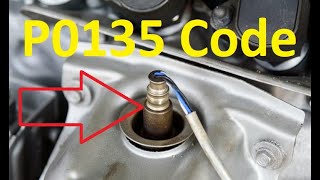
On a 2008-2016 Volvo XC70, code P0135 almost always means the internal heater in the front (upstream) oxygen sensor has failed. The most common fix is to replace the Bank 1, Sensor 1 O2 sensor. Before replacing, quickly check the associated fuse and the sensor's electrical connector for damage. Expect to pay $150-$250 for an OEM-quality sensor and about 0.5-1.0 hour of labor if done at a shop.
- P0135 points to a problem with the heater inside the front (upstream) oxygen sensor.
- The most likely fix is replacing the front O2 sensor, but always check the wiring connector for looseness/damage and the relevant fuse first.
- You can continue to drive, but you will experience poor fuel mileage and should get it fixed to avoid potential catalytic converter damage.
- This is a DIY-friendly repair with the proper O2 sensor socket.
- Use a quality OEM or brand-name sensor like Denso (OEM) or Bosch for best results; avoid universal sensors which may cause issues.
What's Unique About the 2008-2016 Volvo XC70
For the P3 platform XC70 with the 3.2L or 3.0L inline-six engine, diagnosing P0135 is straightforward as there's only one exhaust bank, eliminating any confusion about 'Bank 1' vs 'Bank 2'. The failure is typically not a design flaw covered by recalls, but a common wear item. Owners report that while the sensor itself is the most frequent culprit, it's worth checking the electrical connector's security, as loose connections have been known to trigger this specific code, mimicking a sensor failure. The inline engine configuration provides relatively easy access to the front O2 sensor compared to V-engine layouts.
Symptoms You May Notice
- Check Engine Light is on
- Reduced fuel economy, potentially by 10-20%.
- Rough or unstable idle, especially when the engine is cold.
- Failure to pass an emissions test.
- Exhaust may smell bad or emit black smoke during startup.
- Replacing the rear (downstream) oxygen sensor. P0135 specifically refers to Sensor 1, which is the front/upstream sensor.
- Replacing the oxygen sensor without first checking for a loose connector or a blown fuse, which are much cheaper and easier fixes.
- Using a cheap, universal oxygen sensor. Volvos can be finicky, and using a non-OEM equivalent brand like Denso or Bosch can lead to persistent issues.
Most Likely Causes
- Failed Front (Upstream) Oxygen Sensor 🔴 High Probability → Shop Oxygen Sensor The internal heater element is a common point of failure in oxygen sensors after many heat cycles and years of service. It is a standard wear-and-tear component.
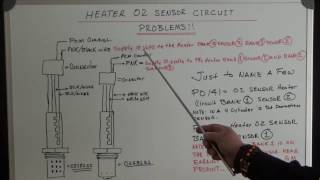
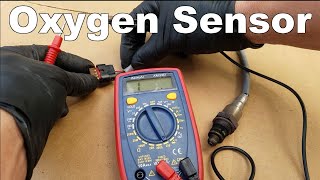
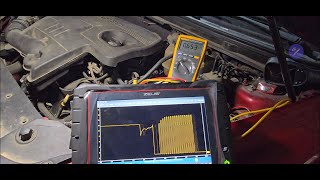
How to confirm: After confirming wiring and fuses are good, use a multimeter to test the resistance of the heater circuit within the sensor. Disconnect the sensor and measure between the two heater wires 🎬 See how to test oxygen sensor heater circuits. (usually the same color). A healthy sensor should have a low resistance, typically between 2.5 and 4 ohms when cold. An open circuit (infinite resistance) or a reading far outside this range confirms a failed heater.
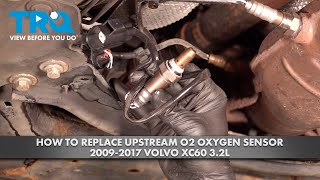
Typical fix: Replace the front (Bank 1, Sensor 1) oxygen sensor. 🎬 Watch: Step-by-step guide to replacing the upstream sensor.
Est. part cost: $150-$250 - Damaged or Loose Wiring/Connector 🟡 Medium Probability The wiring harness and connectors are exposed to significant heat and vibration in the engine bay. A forum user reported a case where the connector was simply not fully seated, causing the P0135 code. Another owner found the wire completely chewed through.
How to confirm: Visually inspect the entire wiring harness for the front O2 sensor, from the sensor body to the main engine harness. Check for melted sections, chafing, or breaks. Unplug the connector and check for corrosion, moisture, or bent/damaged pins. Ensure it clicks securely when reconnected.
Typical fix: Repair the damaged wiring or clean/secure the connector. If the connector itself is broken, it may need to be replaced.
Est. part cost: $0-$50 - Blown Fuse ⚪ Low Probability
How to confirm: Check the fuse boxes, primarily the one in the engine compartment. The owner's manual or a diagram on the fuse box cover should identify the specific fuse, which may be labeled for 'Heated oxygen sensor (HO2S)' or be part of a general engine control/emissions circuit. For the P3 XC70, a wiring diagram indicates fuse F39 in the engine bay fuse box (11B/39) is for the front oxygen sensor on 6-cylinder models. Pull the relevant fuse and check for a break in the filament.
Typical fix: Replace the blown fuse with a new one of the identical amperage rating. If the fuse blows again, it indicates a short circuit in the wiring or sensor that must be diagnosed.
Est. part cost: $1-$5
Rare But Worth Checking
- Faulty Engine Control Module (ECM): → Shop Engine Control Module (ECM) This is extremely rare. The ECM's internal driver for the heater circuit can fail, but all other potential causes should be exhaustively ruled out before considering ECM replacement, as it is expensive and requires programming.
Diagnosis Steps
- Read the trouble codes with an OBD-II scanner to confirm P0135 is present and note any other codes.
- Locate the front (upstream) oxygen sensor (Bank 1, Sensor 1) in the exhaust manifold. It is visible from the top of the engine bay.
- Carefully inspect the sensor's wiring harness and electrical connector for any signs of melting, chafing, corrosion, or physical damage. Ensure the connector is securely plugged in.
- Consult the owner's manual or fuse box diagrams to identify and inspect the fuse(s) for the O2 sensor heater circuit. For the P3 XC70, this is likely fuse F39 in the engine bay fuse box. Replace if blown.
- If the visual inspection and fuse check pass, disconnect the sensor's electrical connector.
- Use a multimeter to check for 12V power at the heater circuit pin on the harness side with the ignition on (engine off). This confirms the circuit from the fuse box to the connector is intact.
- Use the multimeter to measure the resistance across the two heater circuit pins on the sensor itself. A reading should be between approximately 2.5 and 4 ohms. A reading of infinite resistance (open circuit) or a value far outside this range indicates the sensor's internal heater has failed.
- If the sensor tests good but power is not present at the harness, there is a wiring issue between the fuse box/ECM and the sensor connector that needs to be traced.
- If all tests pass but the code persists, the issue could be an intermittent connection or, in very rare cases, the ECM itself.
Parts You'll Likely Need
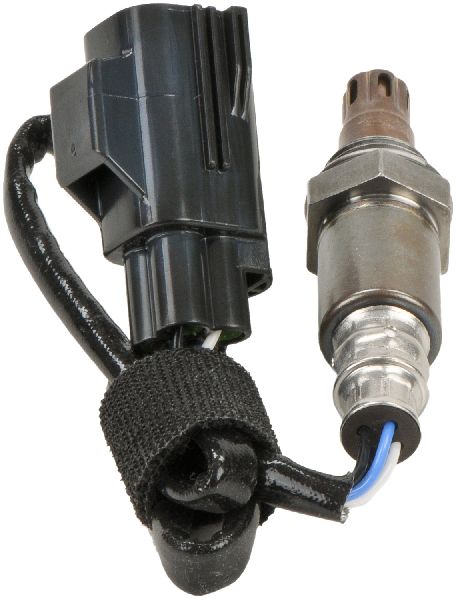
- Front Oxygen Sensor (Air/Fuel Ratio Sensor)
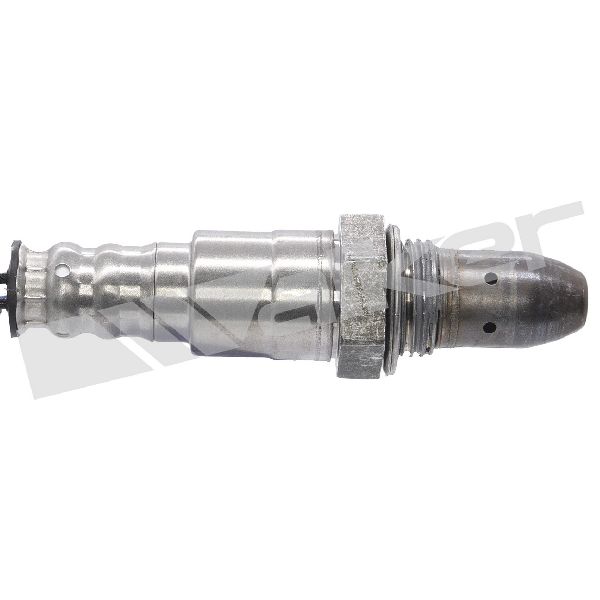
(OEM #30774700)— This is the component that contains the heater element that fails, triggering the P0135 code. It is the most common resolution for this issue.
Trusted brands: Denso (OEM supplier), Bosch
OEM price range: $220-$260
Aftermarket price range: $150-$200
Related Codes That Often Appear With This One
- P0130 — P0130 indicates a general malfunction in the O2 sensor circuit. It can appear alongside P0135 if the sensor has multiple internal faults or significant wiring issues.
- P0171 — If the O2 sensor is failing entirely (not just the heater), it can send incorrect data causing the engine to run lean and trigger a P0171 (System Too Lean) code.
Mechanic-Grade Diagnostic Values
- Front O2 Sensor Heater Circuit Resistance (Cold) — expected: 2.5 to 4.0 Ohms. Failure: Infinite resistance (open circuit) or a value significantly outside the expected range.
- Front O2 Sensor Heater Circuit Resistance (Hot) — expected: ~13 Ohms. Failure: Reading does not increase with temperature or shows an open circuit.
- Voltage at Harness Connector (Heater Circuit Power Pin) — expected: 12V+ with ignition on, engine off.. Failure: 0V or significantly less than battery voltage, indicating a problem upstream (fuse, relay, wiring).
Hidden / Shadow Codes Worth Checking
- CEM-4F41: This Central Electronic Module (CEM) code can be stored alongside the ECM's P0135 code. It specifically relates to the 'Front heated oxygen sensor, heating' and confirms the fault is electrical and related to the heater element or its supply. (see via A Volvo-specific scanner like VIDA is typically required to read CEM codes; they may not show up on generic OBD-II readers.)
Scan Tool Commands That Help
- Volvo VIDA: Activate/Deactivate HO2S Heater — After checking fuses and wiring, this bidirectional command allows a technician to manually command the heater circuit on and off. It's used to verify if the ECM driver is working and if the wiring can carry a load. A common technique is to connect a test light to the sensor connector and use VIDA to flash the light, confirming the entire circuit's integrity from the ECM to the connector.
Wiring & Ground Locations
- Fuse F39 — In the engine compartment fuse/relay box (11B/39).. A wiring diagram for the P3 platform specifically calls out F39 for the 'Front oxygen sensor, bank 1, 6-Cyl'. A blown fuse here will cause P0135.
- Engine Bay Ground Points — There are multiple critical ground points on the strut towers in the engine bay.. While not directly for the O2 sensor heater (which is often grounded via the ECM), poor engine bay grounds can cause a host of electrical issues and floating voltages that may affect sensor readings or trigger false codes. Checking that these are clean and tight is a good practice during diagnosis.
Real Owner Repair Stories
- VolvoForums user report (1998 Volvo V70 XC AWD (P80 platform, but illustrates a common P3 issue)) — Check Engine Light with codes P0130 and P0135.
❌ Tried (didn't work) Resetting codes (they returned in 2-3 days)., Initially planned to replace the sensor.
✅ What actually fixed it The user discovered the plastic bracket holding the O2 sensor connectors on top of the transmission was broken and hanging loose. This caused an insecure connection. After disassembling and properly repairing the connector housing and securing the bracket, the codes did not return.
OEM Part Supersession History
30774700→30774700 (current)— This part number has remained stable for the specified application.
Heads up: While the OEM part number is stable, it is cross-referenced by Denso as DOX-0409. Be aware that Volvo lists 30774700 for multiple positions (front/rear) on different models/years, so verifying fitment by VIN is critical. Using a universal sensor requiring splicing is a common cause of repeat failures.
Model Year Variations Within This Range
- 2011-2013: For the 3.0L T6 engine, power was increased to 304 hp and 440 Nm of torque starting in model year 2011. This does not affect the P0135 diagnosis but is a notable change within the generation.
- 2013+: The Haldex AWD system was updated from Generation IV to Generation V starting in 2013. This is unrelated to the P0135 code but is a significant platform variation.
- 2015.5-2016: Later model years began introducing the new 4-cylinder 'Drive-E' engines. This article specifically applies to the 3.2L I6 and 3.0L T6 engines, which were phased out. A 2015 XC70 could have either engine type, making verification critical.
Diagnostic Flowchart
Other Known Issues on This Vehicle
Issues unrelated to this code that are worth knowing about as an owner of this generation:
- Brake Vacuum Pump Oil Leak 🟠 Medium — Very common, especially on higher mileage (80k+ miles) vehicles. Leaks oil onto the transmission and driver's side suspension components. (Ref: No TSB, but aftermarket Viton seal kits are a popular, permanent fix.)
- Accessory Drive (READ) Belt Tensioner/Bearing Failure 🔴 High — Common failure point around 100k-150k km (60k-95k miles). Failure can cause the belt to shred and potentially get ingested by the timing chain, leading to catastrophic engine damage. (Ref: Recalls were issued for some early models for premature wear. It is a known weak point of the SI6 engine's Rear End Accessory Drive (READ) system.)
- PCV System Failure 🟠 Medium — The PCV diaphragm can tear (especially on T6 models) or the system can clog, leading to a whistling/hissing noise, high oil consumption, or oil leaks.
- Automatic Transmission Hard Shifting 🟠 Medium — Some owners report harsh shifts (especially 2-3) or shift flares as the vehicle ages, particularly if transmission fluid service is neglected. (Ref: Software updates were available, but mechanical wear (valve body, solenoids) is also a cause.)
- Oil Consumption (Early Models) 🟠 Medium — Some earlier SI6 engines (approx. 2010-2012) were noted for higher than average oil consumption due to piston ring design, though less common than on later 4-cylinder engines. (Ref: Volvo addressed some cases out of warranty, but it's not a universal problem.)
Used vs. New Parts: Buying Guide for This Vehicle
When a used part is the smart pick: For this repair, a used part is almost never a smart choice. The primary failure component is the oxygen sensor itself, which is a wear item with a finite lifespan. A used sensor has unknown remaining life and is a poor value. A used wiring harness pigtail could be a good choice if only the connector is damaged.
Donor-vehicle mileage cap: roughly under 10000 miles for the part to have meaningful remaining life.
What to inspect on the donor part:
- If sourcing a connector pigtail, ensure the locking tab is intact.
- Check for any signs of melting or heat damage on the plastic connector body.
- Ensure wires are flexible and not brittle or cracked.
OEM-only on this vehicle (don't cheap out):
- While not strictly 'OEM-only', using a reputable OEM-supplier brand is critical.
- Oxygen Sensor
Aftermarket brands forum-validated for this vehicle:
- Denso (often the original OEM supplier for this part)
- Bosch
Brands owners have reported issues with on this vehicle:
- Unknown/unbranded 'universal' sensors that require splicing wires. Forum reports frequently cite these as failing quickly or not working correctly on Volvos.
Real Owner Stories
Aggregated from forums and TSBs cited above. Mileages and costs reflect what owners reported in those sources.
2012 Volvo XC70 — 140000 miles
Symptoms: Check engine light triggered; car ran fine but fuel efficiency dropped from 24 mpg to 19 mpg.
What fixed it: Replacement of the heater circuit/oxygen sensor.
Source hint: AliExpress Product Page (User Experience Quote)
2010 Volvo XC70
Symptoms: P0135 code present.
What fixed it: Repair of a wire on the upstream sensor that had been chewed through.
Source hint: Reddit r/Volvo: A user with a 2010 XC70 confirmed their P0135 code was caused by a chewed-through wire
2007 Volvo S80 3.2L I6
Symptoms: P0135 code triggered.
What fixed it: Securing a loose electrical connector that was not fully seated.
Source hint: BobIsTheOilGuy.com: A thread discussing the 3.2L I6 engine
Related OBD-II Codes
Frequently Asked Questions
Where is the front oxygen sensor fuse located on my P3 XC70 3.2L?
What is the correct resistance for a new Bank 1 Sensor 1 oxygen sensor on the XC70?
Can a loose connector cause the P0135 code on a Volvo S80 or XC70?
My 2012 XC70 runs fine but has a P0135 code; should I worry about fuel economy?
Is there a specific part number for the front oxygen sensor on the 3.2L I6 engine?
Could the P0135 code be related to the whistling noise coming from my T6 engine?
Helpful Videos
We Have This Part in Stock

The information in this article is provided for general reference and educational purposes only. Vehicle specifications, procedures, and part compatibility can vary by production date, trim level, and region. Always consult your vehicle's factory service manual and verify part numbers before purchasing or performing repairs. Safety-critical components such as airbags, seat belts, and braking systems should be installed by a qualified professional.
- Volvo XC70:
- 🧭 Diagnostic Flowchart
- 🎬 Helpful Videos
- 🛍️ Shop This Part
- What's Unique About the 2008-2016 Volvo XC70
- Symptoms You May Notice
- Most Likely Causes
- Rare But Worth Checking
- Diagnosis Steps
- Parts You'll Likely Need
- Related Codes That Often Appear With This One
- Mechanic-Grade Diagnostic Values
- Hidden / Shadow Codes Worth Checking
- Scan Tool Commands That Help
- Wiring & Ground Locations
- Real Owner Repair Stories
- OEM Part Supersession History
- Model Year Variations Within This Range
- Other Known Issues on This Vehicle
- Used vs. New Parts: Buying Guide for This Vehicle
- Real Owner Stories
- 2012 Volvo XC70 — 140000 miles
- 2010 Volvo XC70
- 2007 Volvo S80 3.2L I6
- Related OBD-II Codes
- Frequently Asked Questions
- 🎟️ Get 5% Off