

P0136 on 2011-2015 Kia Optima 2.4L: O2 Sensor Circuit Malfunction Causes and Fixes
On a 2011-2015 Kia Optima with the 2.4L engine, code P0136 almost always means the downstream oxygen sensor (Bank 1, Sensor 2) has failed. It's a common, DIY-friendly fix, with aftermarket parts costing around $30-$80. Before replacing the sensor, always inspect its wiring harness, as it's known to break from its clips and melt on the exhaust pipe.
- P0136 on your Optima almost certainly points to the downstream O2 sensor (after the catalytic converter).
- Before buying a new sensor, perform a quick visual inspection of the wiring underneath the car to check for any melting or damage, as this is a known issue where the harness sags onto the exhaust.
- Also, check the 15A 'SENSOR 1' fuse in the engine bay fuse box.
- This is a very DIY-friendly repair. Replacing the sensor is the most common fix and can be done with basic tools and a special O2 sensor socket.
- Do not ignore this code. While it won't stop the car, it will cause a failed emissions test and can mask a more expensive catalytic converter problem.
What's Unique About the 2011-2015 Kia Optima
For this generation of Kia Optima (TF) and its platform-mate, the Hyundai Sonata, the P0136 code is a very common and straightforward issue. The cause is almost always the downstream O2 sensor itself failing from age and heat cycles. A notable secondary cause on this platform is the sensor's wiring harness coming loose from its plastic clips, which become brittle over time, allowing the harness to melt against the hot exhaust pipe and cause a short circuit. Otherwise, it's a standard wear-and-tear repair without significant manufacturer-specific complications.
Symptoms You May Notice
- Check Engine Light is illuminated
- Vehicle will fail an emissions test
- Potential for slightly reduced fuel economy
- In rare cases, a 'rotten egg' or sulfur smell from the exhaust if the catalytic converter is also failing
- In some instances, a rough idle or lack of acceleration if the engine's fueling is significantly affected over a long period.
- Replacing the upstream (Bank 1, Sensor 1) oxygen sensor instead of the correct downstream (Bank 1, Sensor 2) sensor.
- Replacing the oxygen sensor without first checking the wiring for damage, leading to the new sensor reporting the same fault.
Most Likely Causes
- Failed Downstream Oxygen Sensor (Bank 1, Sensor 2) 🔴 High Probability → Shop Oxygen Sensor Oxygen sensors are wear-and-tear components exposed to extreme heat and contaminants in the exhaust stream. They have a finite lifespan and failure is common across all vehicles, including the Optima.
How to confirm: After verifying the wiring and fuse are intact, the most practical step is to replace the sensor. Advanced diagnostics would involve graphing the sensor's voltage with a scan tool to observe a flat, erratic, or non-responsive signal.
Typical fix: Replace the Bank 1, Sensor 2 oxygen sensor.
Est. part cost: $30-$80 - Damaged Wiring or Connector 🟡 Medium Probability The wiring for the downstream sensor is routed underneath the car, and its plastic retaining clips are known to become brittle and break. This allows the harness to sag and make contact with the hot exhaust pipe, melting the insulation and causing a short circuit.
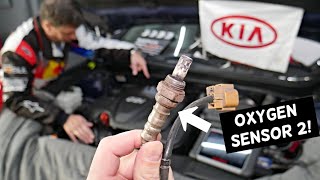
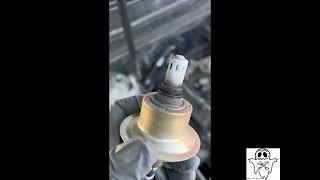
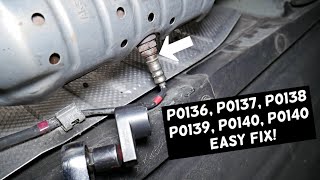
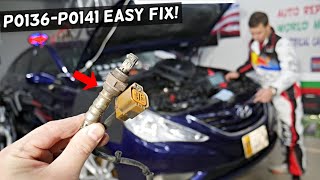
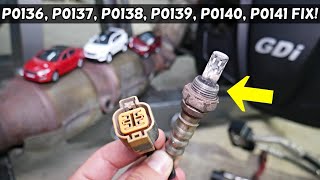
How to confirm: Visually inspect the entire length of the wiring harness from the O2 sensor to its connection point. Look for any signs of melting, chafing, corrosion, or loose connections. This is a critical check before replacing the sensor itself. 🎬 See how to easily fix these downstream O2 sensor codes.
Typical fix: Repair the damaged section of the wiring harness and secure it away from the exhaust using high-temperature resistant zip ties.
Est. part cost: $5-$20 - Blown O2 Sensor Fuse ⚪ Low Probability → Shop Oxygen Sensor A short in the sensor's heater element or its wiring can cause the associated fuse to blow.
How to confirm: In the engine compartment fuse box, locate the 15 amp fuse labeled 'SENSOR 1' and check for continuity. A blown fuse indicates an underlying short circuit that must be found.
Typical fix: Replace the blown fuse. If it blows again immediately, a short circuit exists in the wiring or the sensor itself and must be repaired.
Est. part cost: $1-$5
Rare But Worth Checking
- Exhaust Leak: An exhaust leak near the downstream O2 sensor can introduce outside oxygen, causing incorrect readings and potentially triggering a P0136 code. This is less common than a sensor or wiring failure.
- Failing Catalytic Converter: → Shop Catalytic Converter While a failing catalytic converter usually triggers code P0420, it can sometimes cause erratic readings from the downstream sensor first, leading to a P0136 code. If P0136 is fixed and P0420 appears later, the converter may be the root cause.
Diagnosis Steps
- Read the code with an OBD-II scanner to confirm P0136 is present.
- Perform a thorough visual inspection of the downstream O2 sensor's wiring harness and connector underneath the car. Pay close attention to the plastic clips meant to hold it; check if they are broken and if the harness has sagged onto the exhaust pipe. Look for any signs of melting, chafing, or corrosion.
- Check the 15A 'SENSOR 1' fuse in the engine compartment fuse box. Replace if blown.
- If the wiring and fuse are in good condition, the oxygen sensor itself is the most likely culprit.
- Using a scan tool with live data, observe the voltage from Bank 1 Sensor 2. On a healthy, warm engine at steady RPM, it should show a relatively stable voltage. If it's stuck, flat, or unresponsive to changes in engine conditions, it confirms the sensor has failed.
- Check for any exhaust leaks between the catalytic converter and the downstream O2 sensor. A hissing sound may be audible.
Parts You'll Likely Need
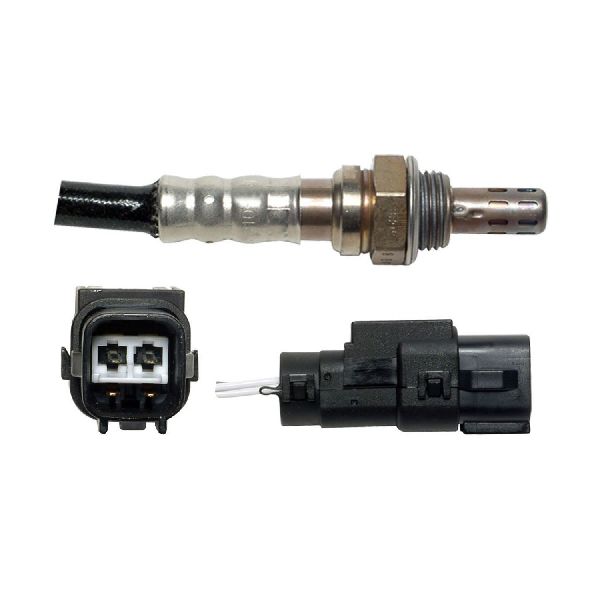
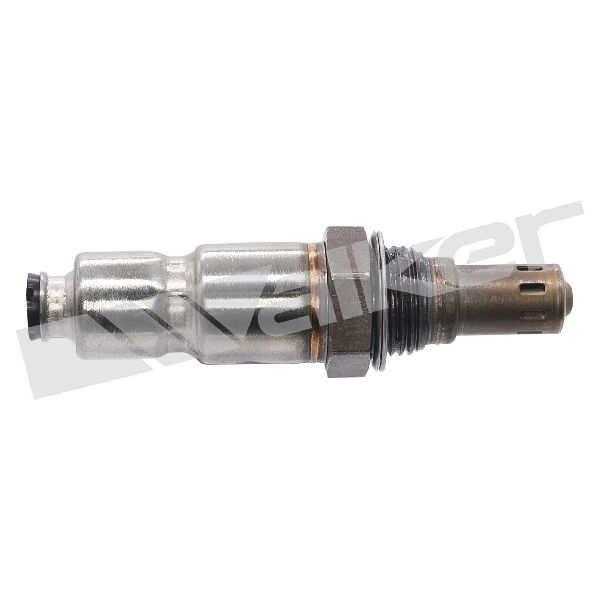
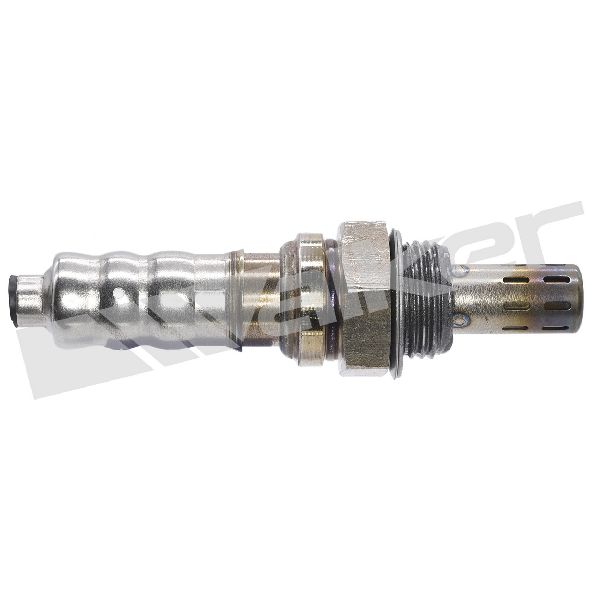
- Downstream Oxygen Sensor (Bank 1, Sensor 2)
(OEM #39210-2G550, 39210-2G200, 39210-2G400 (Verify with VIN, as multiple parts were used based on production date and emissions package))— This sensor is a common wear-and-tear item and is the most frequent cause of the P0136 code.
Trusted brands: Denso, NGK/NTK, Bosch, Kia/Hyundai (OEM)
OEM price range: $100-$170
Aftermarket price range: $30-$80
Related Codes That Often Appear With This One
- P0137 — This code indicates 'O2 Sensor Circuit Low Voltage' for the same sensor, which is a specific type of circuit malfunction that can also trigger the general P0136 code.
- P0138 — This code indicates 'O2 Sensor Circuit High Voltage' for the same sensor, another specific fault that falls under the P0136 umbrella.
- P0141 — This code points to a failure in the heater circuit of the same downstream O2 sensor. A faulty heater can cause the sensor to report incorrectly, triggering P0136.
- P0420 — This code means 'Catalyst System Efficiency Below Threshold.' A faulty downstream O2 sensor (causing P0136) can't monitor the catalytic converter correctly, which can lead to a false P0420 code. Always fix P0136 first.
Platform-Specific Known Issues
- While no TSBs directly address P0136 on the Optima, the 2011-2014 models with the 2.4L GDI engine were subject to a major engine recall (SC147) for potential engine failure due to manufacturing debris. While unrelated to this specific code, owners must be aware of the overall engine health history of this platform, as issues like excessive oil consumption can eventually affect exhaust components.
Mechanic-Grade Diagnostic Values
- Downstream O2 Sensor (B1S2) Live Data Voltage — expected: Relatively stable voltage between 0.6V and 0.9V on a warm, running engine at a steady RPM.. Failure: Voltage is stuck low (below 0.2V), stuck high (above 0.9V), or is completely flat and unresponsive.
- O2 Sensor Heater Element Resistance — expected: Between 4 and 10 ohms when measured across the two heater pins on a disconnected, cold sensor.. Failure: A multimeter reading of 'OL' (Open Line) or infinite resistance, indicating a broken internal heater element.
- O2 Sensor Heater Circuit Power Supply — expected: Approximately 12V (battery voltage) at the power supply pin on the harness-side of the connector with the Key On, Engine Off.. Failure: Little to no voltage, indicating a blown fuse or a break in the power wire.
- O2 Sensor Installation Torque — expected: 26 to 33 ft-lbs.. Failure: N/A. Overtightening can damage the sensor; undertightening can cause an exhaust leak.
Scan Tool Commands That Help
- Kia GDS (Global Diagnostic System): Resetting adaptive values — After replacing the oxygen sensor or repairing a circuit fault, this function in the 'Vehicle S/W Management' menu clears the old learned fuel trim and sensor performance values from the PCM, allowing it to adapt to the new component correctly.
Real Owner Repair Stories
- Reddit r/MechanicAdvice via Go-Parts.com (2017 Hyundai Sonata 2.4L GDI (sister vehicle)) — Intermittent P0136 code that kept returning.
❌ Tried (didn't work) Replacing the downstream oxygen sensor
✅ What actually fixed it A close inspection revealed the O2 sensor wiring harness was rubbing against a heat shield, causing an intermittent short. Repairing the damaged wire and securing the harness away from the shield permanently solved the problem. - AliExpress Product Review / Forum Post (2017 Kia Optima, 98,000 miles) — Recurring P0138 (O2 Sensor High Voltage) code, which is a specific type of P0136 circuit fault.
❌ Tried (didn't work) Clearing the code without performing repairs
✅ What actually fixed it The owner used a scan tool to view live data and confirmed the Bank 1 Sensor 2 voltage was stuck at 0.92V. Replacing the downstream oxygen sensor with a new part resolved the code within two drive cycles.
Diagnostic Flowchart
Other Known Issues on This Vehicle
Issues unrelated to this code that are worth knowing about as an owner of this generation:
- Theta II Engine Seizure/Failure 🔴 High — Widespread across 2011-2014 models. Manufacturing debris can block oil passages, leading to connecting rod bearing failure and catastrophic engine damage, often before 100,000 miles. (Ref: Recall SC147; Class-Action Lawsuit Settlement extending engine warranty.)
- Excessive Oil Consumption 🟠 Medium — Common issue related to piston ring design in the Theta II engine, often a precursor to more severe engine problems. Many owners report consuming over a quart of oil per 1,000 miles. (Ref: Kia has an oil consumption test procedure (TSB ENG222).)
- Worn Steering Column Flexible Coupler 🟡 Low — Extremely common problem causing a distinct clicking or ticking noise when turning the steering wheel as the rubber coupler degrades. (Ref: TSB CHA072 / Customer Satisfaction Program CS1604 extended the warranty for this part.)
- Cracked/Leaking Low-Pressure Fuel Hose 🔴 High — Common enough on 2013-2014 models to warrant a recall. The hose can crack from engine heat, leak fuel, and pose a significant fire risk. (Ref: NHTSA Recall 20V100000 / 18V907000.)
- Hydraulic Electronic Control Unit (HECU) Electrical Short 🔴 High — Affects a wide range of 2011-2015 models. An electrical short can occur within the HECU, potentially causing an engine compartment fire while parked or driving. (Ref: NHTSA Recall 20V519000.)
Used vs. New Parts: Buying Guide for This Vehicle
When a used part is the smart pick: A used part only makes sense for the wiring connector (pigtail) if the original is melted or damaged. The oxygen sensor itself is a wear-and-tear item and should always be purchased new.
Donor-vehicle mileage cap: roughly under 120000 miles for the part to have meaningful remaining life.
What to inspect on the donor part:
- For a used connector pigtail, inspect for non-brittle plastic.
- Ensure there is no green corrosion on the electrical pins.
- Verify there is at least 4-6 inches of wire past the connector to allow for proper splicing.
OEM-only on this vehicle (don't cheap out):
- No parts for this repair are strictly OEM-only, but using a reputable aftermarket brand is critical.
Aftermarket brands forum-validated for this vehicle:
- Denso
- NGK/NTK
- Bosch
Real Owner Stories
Aggregated from forums and TSBs cited above. Mileages and costs reflect what owners reported in those sources.
2015 Kia Optima 2.4L GDI
Symptoms: Check engine light with P0136 code.
What fixed it: The owner located the sensor 2 oxygen sensor after the catalytic converter and verified the wiring for opens, shorts, or bad connections. Replacing the downstream O2 sensor resolved the issue.
Cost: $30-$50
Source hint: YouTube comment by Whyingo on 'KIA P0136 Code'
2011 Hyundai Sonata 2.4L GDI
Symptoms: Check Engine Light with code P0137 (low voltage, related to P0136); the code returned even after the sensor was replaced.
What fixed it: Finding and repairing the wiring harness that had melted onto the exhaust pipe.
Source hint: Hyundai-Forums - '2011 Hyundai Sonata - Check Engine Light with code P0137'
2013 Kia Optima 2.4L GDI
Symptoms: Check engine light illuminated with codes P0136 and P0137.
What fixed it: Replacement of the downstream oxygen sensor (Bank 1, Sensor 2).
Source hint: YouTube - 'KIA OPTIMA CODE P0136 P0137... OXYGEN SENSOR, EASY FIX' by World Mechanics
Related OBD-II Codes
Frequently Asked Questions
Does the major engine recall SC147 for the 2011-2014 Kia Optima 2.4L GDI cause the P0136 code?
I replaced my downstream O2 sensor but the P0136/P0137 code came back. What else should I check on my Optima?
Which fuse should I check for the oxygen sensor circuit on a 2011-2015 Kia Optima?
Is there a specific TSB for oil consumption that might be related to my exhaust issues?
Can a faulty steering column coupler or a fuel hose recall cause a P0136 code?
How much should I expect to pay for a replacement downstream O2 sensor for my 2.4L Optima?
Helpful Videos
We Have This Part in Stock



The information in this article is provided for general reference and educational purposes only. Vehicle specifications, procedures, and part compatibility can vary by production date, trim level, and region. Always consult your vehicle's factory service manual and verify part numbers before purchasing or performing repairs. Safety-critical components such as airbags, seat belts, and braking systems should be installed by a qualified professional.
- Kia Optima:
- 🧭 Diagnostic Flowchart
- 🎬 Helpful Videos
- 🛍️ Shop This Part
- What's Unique About the 2011-2015 Kia Optima
- Symptoms You May Notice
- Most Likely Causes
- Rare But Worth Checking
- Diagnosis Steps
- Parts You'll Likely Need
- Related Codes That Often Appear With This One
- Platform-Specific Known Issues
- Mechanic-Grade Diagnostic Values
- Scan Tool Commands That Help
- Real Owner Repair Stories
- Other Known Issues on This Vehicle
- Used vs. New Parts: Buying Guide for This Vehicle
- Real Owner Stories
- 2015 Kia Optima 2.4L GDI
- 2011 Hyundai Sonata 2.4L GDI
- 2013 Kia Optima 2.4L GDI
- Related OBD-II Codes
- Frequently Asked Questions
- 🎟️ Get 5% Off