

P0137 on 2017-2024 Chrysler Pacifica 3.6L: O2 Sensor Low Voltage Causes and Fixes
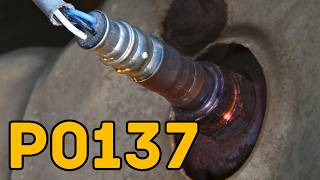
The P0137 code on a 2017-2024 Chrysler Pacifica most often means the rear downstream oxygen sensor (Bank 1, Sensor 2) has failed. This sensor is difficult to access against the firewall, making the repair more labor-intensive. Before replacing the sensor, inspect for oil leaks from the rear valve cover, as oil contamination of the sensor's connector is a known issue. Expect to pay $40-$80 for an aftermarket sensor and $100-$150 for an OEM equivalent.
- P0137 on your Pacifica points directly to the downstream oxygen sensor on the rear cylinder bank (Bank 1).
- The most common fix is to replace the oxygen sensor itself, but it is critical to use an OEM or OES brand like Mopar or NTK.
- Before replacing parts, always inspect the rear valve cover for oil leaks and check the sensor's wiring and connector for damage or oil contamination, as these are common and cheaper-to-fix issues.
- The primary challenge with this repair is the sensor's location against the firewall, which makes it a labor-intensive job.
- While you can drive the vehicle, it's best to address the issue to ensure your vehicle can pass emissions and to avoid potentially masking more serious catalytic converter problems.
What's Unique About the 2017-2024 Chrysler Pacifica
On the front-wheel-drive Pacifica, the 3.6L Pentastar engine is mounted transversely. This places Bank 1 (the rear cylinder bank) directly against the firewall, making access to its components notoriously difficult. While the P0137 code itself is straightforward, replacing the Bank 1, Sensor 2 oxygen sensor is a more involved job than on many other vehicles. Mechanics or DIYers may need to remove other components, like the upper intake manifold, to gain adequate access, which significantly increases labor time and cost.
Symptoms You May Notice
- Check Engine Light is on
- Failing an emissions test
- Slight decrease in fuel economy in some cases
- Rough or unstable idle (less common)
- Noticeable exhaust fume odor (uncommon)
- Replacing the wrong oxygen sensor (e.g., replacing the Bank 2 sensor or the upstream Sensor 1).
- Replacing the catalytic converter before properly diagnosing the O2 sensor and its circuit.
- Replacing the O2 sensor without addressing an underlying oil leak from the valve cover that is contaminating the connector.
Most Likely Causes
- Failed Bank 1, Sensor 2 Oxygen Sensor 🔴 High Probability → Shop Oxygen Sensor Oxygen sensors are wear-and-tear items that operate in a harsh exhaust environment and have a finite lifespan, typically around 70,000 to 100,000 miles. Owners and technicians widely report that Pentastar engines are sensitive to aftermarket sensors, making OEM/OES parts (Mopar, NTK, Denso) highly recommended to avoid repeat failures.
How to confirm: Using an OBD-II scanner with live data, monitor the voltage of the Bank 1, Sensor 2. A healthy downstream sensor should show a relatively stable voltage (typically around 0.6-0.8V). If the voltage is stuck low (below 0.2V) or is not responding, the sensor is likely faulty. 🎬 Watch: This video explains the common causes of low O2 voltage.
Typical fix: Replace the Bank 1, Sensor 2 oxygen sensor. Due to its location against the firewall, this is more labor-intensive than replacing the Bank 2 sensor.
Est. part cost: $40-$150 - Damaged Wiring or Connector 🟡 Medium Probability The wiring harness for the O2 sensor is located under the vehicle and is exposed to road debris, moisture, and extreme heat from the exhaust, which can cause corrosion or physical damage over time.
How to confirm: Visually inspect the wiring harness and connector leading to the Bank 1, Sensor 2 for any signs of melting, chafing, corrosion, or loose pins. A multimeter can be used to check for continuity and proper voltage/ground at the connector.
Typical fix: Repair the damaged section of wiring or clean/replace the connector. Ensure repairs are sealed against moisture.
Est. part cost: $10-$50 - Oil Leak from Valve Cover Gasket 🟡 Medium Probability → Shop Engine Valve Cover The 3.6L Pentastar engine family is known for valve cover gaskets that can leak oil. On platforms like the Jeep Wrangler, oil from the Bank 1 (passenger side) valve cover is known to drip directly onto the Bank 1, Sensor 2 connector, saturating it and causing an electrical short that triggers P0137. This should be inspected as a possible root cause on the Pacifica as well. Manufacturer TSB Bulletin #9003790 specifically notes that oil leaking from the valve cover onto the O2 sensor can cause fault codes including P0137, and technicians should verify if the gasket is pinched, out of position, rolled, or cut.
How to confirm: Inspect the area around the rear (Bank 1) valve cover and down the side of the engine block towards the exhaust for signs of fresh or caked-on oil. Check the O2 sensor's electrical connector for oil contamination.
Typical fix: First, replace the leaking valve cover gasket. Then, thoroughly clean the oil from the O2 sensor connector with electrical contact cleaner. If the code returns, replace the oxygen sensor itself.
Est. part cost: $50-$250 (for gasket set and sensor) - Exhaust Leak ⚪ Low Probability
How to confirm: Visually inspect the exhaust system from the manifold to the catalytic converter for cracks or loose connections. Listen for an audible ticking or hissing sound, especially when the engine is cold. An exhaust leak before the sensor can introduce outside air, causing a false low voltage reading. A mechanic can perform a smoke test to pinpoint hard-to-see leaks.
Typical fix: Repair the leak by replacing the faulty gasket or welding the cracked component.
Est. part cost: $20-$200
Rare But Worth Checking
- Failing Catalytic Converter: While a bad O2 sensor is more common, a P0137 code can sometimes be an early indicator of a catalytic converter that is becoming inefficient. If replacing the sensor doesn't fix the code, the converter's health should be investigated.
- PCM Software Issue: Chrysler has issued software updates for other O2 sensor-related codes on this platform. TSB 18-059-16 was a powertrain flash for earlier 3.6L engines to address overly sensitive calibrations. It's worth checking with a dealer for any applicable PCM updates before performing major repairs.
Diagnosis Steps
- Connect an OBD-II scanner and confirm the presence of the P0137 code. Note any other codes present.
- Using the scanner's live data stream, observe the voltage from the Bank 1, Sensor 2 O2 sensor. It should be relatively stable. If it's stuck below 0.2V, the sensor or circuit is the likely problem.
- Perform a thorough visual inspection of the rear (Bank 1) valve cover for any signs of oil leaks dripping down toward the exhaust and O2 sensor.
- Perform a thorough visual inspection of the Bank 1, Sensor 2 wiring and connector. Look for any signs of damage, melting, oil contamination, or corrosion. The sensor is on the rear exhaust manifold, after the catalytic converter.
- Inspect the exhaust system for any leaks between the engine and the O2 sensor. Listen for hissing or ticking noises when the engine is cold.
- If the wiring and exhaust are okay, and there are no oil leaks, the most likely cause is a failed O2 sensor.
- Test the sensor's heater circuit. A failed heater can also cause incorrect voltage readings and may set its own specific trouble code. A healthy heater should measure between 3 and 30 ohms.
- If a new sensor does not resolve the code, check with a dealer for any available PCM software updates. If none, the issue may be with the PCM, though this is rare.
Parts You'll Likely Need
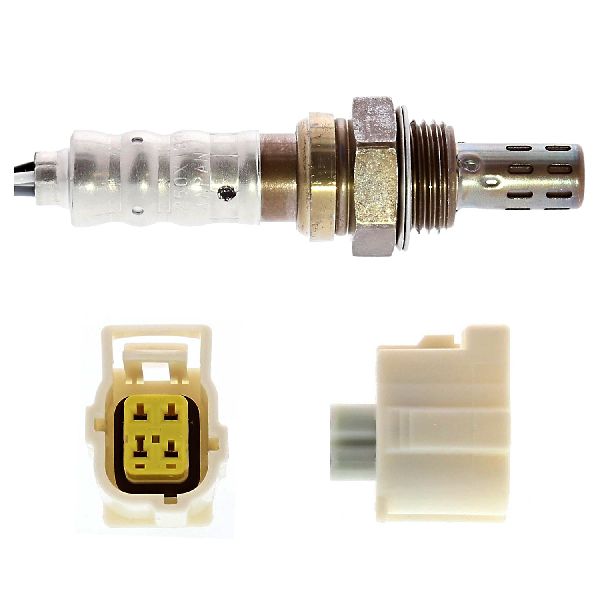
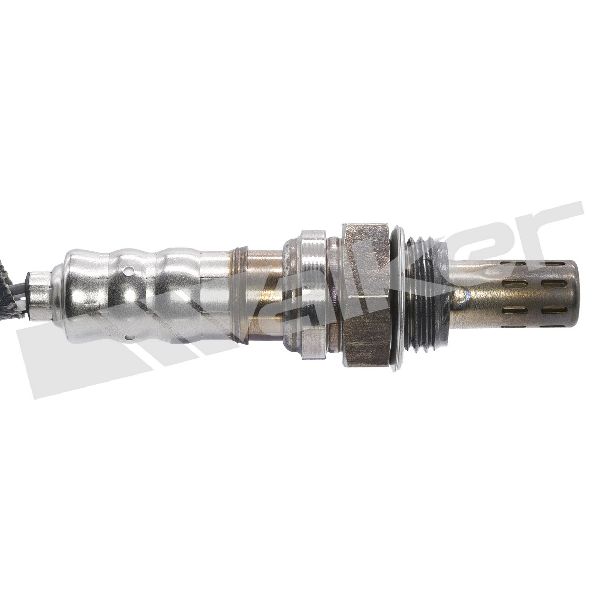
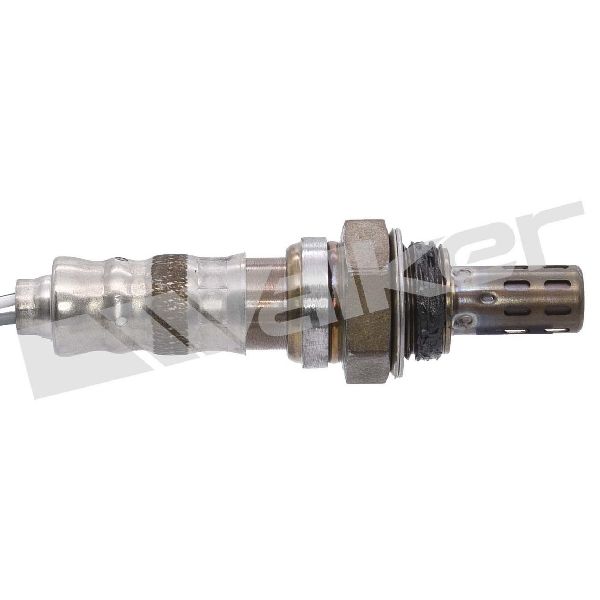
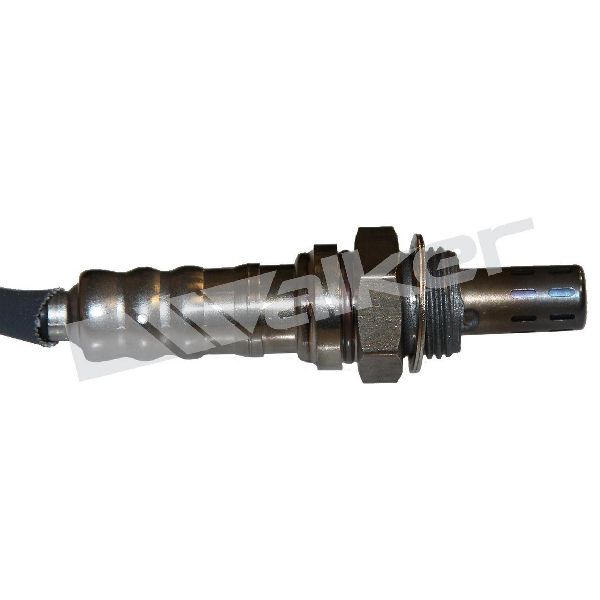
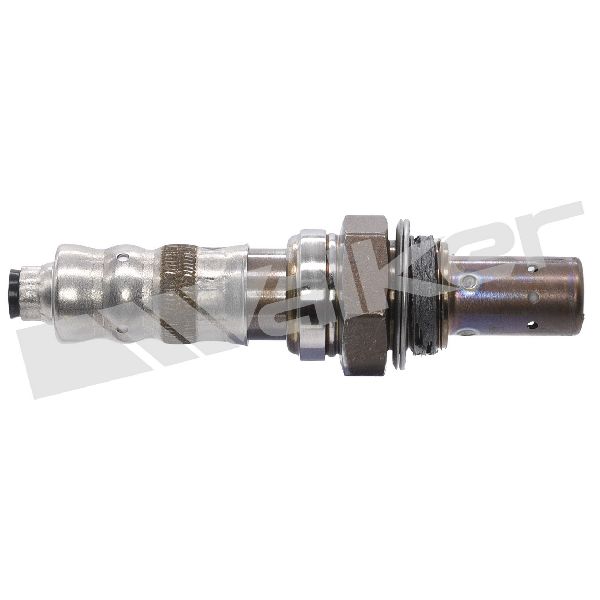
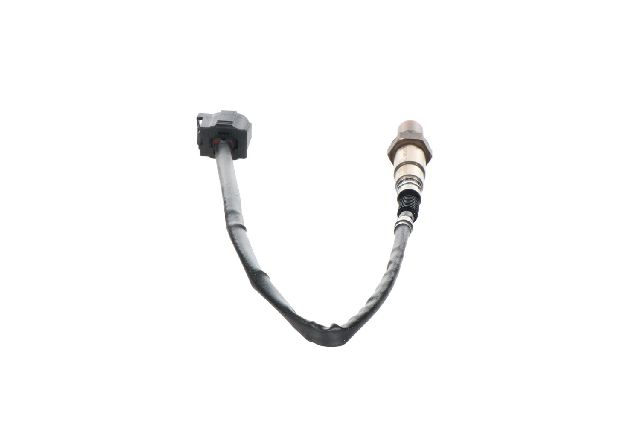
- Oxygen Sensor (Bank 1, Sensor 2)
(OEM #05149180AB (This is a common downstream sensor, but always verify with VIN. Note: On some related platforms, this part is the same as the upstream sensors).)— This is the most common component to fail and cause a P0137 code. It is a wear item.
Trusted brands: Mopar (OEM), NTK, Denso, Bosch
OEM price range: $100-$150
Aftermarket price range: $40-$80
Related Codes That Often Appear With This One
- P0136 — P0136 indicates a general malfunction in the same O2 sensor circuit (Bank 1, Sensor 2).
- P0138 — P0138 is the opposite of P0137, indicating high voltage in the same sensor circuit. Seeing them together could point to an erratic wiring short.
- P0420 — P0420 (Catalyst System Efficiency Below Threshold Bank 1) can appear if the P0137 fault is left unaddressed, as the PCM cannot accurately monitor the catalytic converter's performance.
- P2096 — P2096 (Post Catalyst Fuel Trim System Too Lean Bank 1) can be caused by an exhaust leak or a faulty O2 sensor giving incorrect lean readings, which are related root causes for P0137.
Technical Service Bulletins (TSBs) & Recalls
- TSB 9003756: Pertains to vehicles with the 3.6L V6 engine where oil leaking from the valve cover onto the O2 sensor causes fault codes including P0137.
- TSB Bulletin #9003790: This bulletin specifically addresses the 3.6L V6 V.V.T. engine, noting that oil leaking from the valve cover onto the O2 sensor can trigger P0137, P0140, P2096, and P0157.
Platform-Specific Known Issues
- Access to the Bank 1 (rear) oxygen sensors is significantly restricted by the firewall and may require removal of the upper intake manifold for replacement, increasing labor time and cost.
- The 3.6L Pentastar engine family has a known issue with oil leaks from the valve cover gaskets, which can contaminate the O2 sensor connector and cause this code. TSB 9003756 was issued for other Chrysler vehicles with this engine for oil leaking from the valve cover causing O2 sensor faults like P0137.
Mechanic-Grade Diagnostic Values
- Downstream O2 Sensor (B1S2) Signal Voltage — expected: Relatively stable voltage between 0.6V and 0.8V when the catalytic converter is at operating temperature and working efficiently.. Failure: Sustained voltage below 0.2V for an extended period (e.g., 20 seconds) will trigger P0137.
- O2 Sensor Heater Element Resistance — expected: Between 3 and 30 ohms when measured across the two heater pins on the sensor connector (often the two same-colored wires). Some sources specify a tighter range of 4-10 ohms for a healthy sensor.. Failure: A reading of infinite resistance (Open Loop / 'OL') or near-zero ohms (short circuit) indicates a failed heater element.
- O2 Sensor Heater Circuit Power Supply — expected: Approximately battery voltage (12.0V - 12.6V) with Key On, Engine Off (KOEO) at the harness-side connector.. Failure: A reading near 0V suggests a blown fuse (check F25 in the TIPM), a break in the power wire, or a TIPM/fuse box issue.
Scan Tool Commands That Help
- wiTECH (Chrysler Dealer Tool) or high-end aftermarket scanner: O2 Sensor Heater Test — This is a bidirectional command that allows the technician to manually activate the O2 sensor's heater circuit. It is used to verify if the heater element, wiring, fuse, and PCM driver are all functioning correctly without having to wait for the PCM to command it on during a drive cycle. This can quickly isolate a failed heater from a wiring or PCM issue.
Wiring & Ground Locations
- O2 Sensor Heater Fuse — Fuse F25 (20A) in the engine bay fuse box, also known as the Totally Integrated Power Module (TIPM). This fuse is often labeled for the 'Automatic Shutdown' (ASD) relay, which powers the O2 heaters.. A blown F25 fuse will cut power to the O2 sensor's internal heater. A cold sensor cannot produce an accurate voltage signal, which can lead to the PCM interpreting the output as an erroneously low voltage, potentially setting a P0137 code, although a heater circuit code (like P0037) is more common.
- B1S2 Connector — On the exhaust pipe, downstream of the rear catalytic converter, close to the firewall. The wiring harness runs up the back of the engine.. This connector is the primary point for testing both the sensor and the circuit back to the PCM. It is also susceptible to contamination from oil leaking from the rear valve cover, which can short the signal wire to ground, directly causing a P0137 low voltage reading.
"I Checked Everything" — The Actual Cause
- In a related TSB for GM vehicles (18-NA-009), a P0137 code was traced to a leaking power steering hose dripping fluid onto the O2 sensor wiring harness. The fluid contaminated the connector and wiring, causing a signal short to ground. This is an edge case to consider if a visual inspection for oil leaks is clean but the connector appears wet or contaminated with an unknown fluid.
OEM Part Supersession History
5149180AA→05149180AB— Standard part revision by the manufacturer. The new part is a direct replacement for the old one.
Model Year Variations Within This Range
- 2021-2024: The Chrysler Pacifica received a significant refresh for the 2021 model year, including updated exterior styling and a new Uconnect 5 infotainment system. While the core 3.6L Pentastar engine remained, wiring harnesses and module software may have changed. Technicians should be aware that TSBs or software updates might be specific to pre- or post-refresh models. For example, TSB 18-050-22 REV A for a related O2 heater code specifically applies to 2021 models.
Diagnostic Flowchart
Other Known Issues on This Vehicle
Issues unrelated to this code that are worth knowing about as an owner of this generation:
- Transmission Shifting Problems 🔴 High — Commonly reported on 2017-2023 models, sometimes starting around 30,000 miles. Includes harsh/jerky shifting, hesitation, and sometimes complete failure. (Ref: Multiple TSBs for software updates exist. Recall 23V-010 was issued for Pacifica Hybrids for unexpected engine shutdown due to a transmission wiring short.)
- Engine Stalling / Sudden Power Loss 🔴 High — Reported unexpectedly at various speeds, posing a safety risk. Can be related to transmission issues or other engine problems. (Ref: Class action lawsuits have been filed concerning Pentastar engine failures and stalling.)
- Faulty Engine Start-Stop (ESS) System 🟠 Medium — Very common issue where the system becomes unavailable, often indicated by a 'Service Stop/Start System' message. The root cause is almost always a failed auxiliary battery, which has a short lifespan (1-3 years).
- Pentastar V6 Rocker Arm/Lifter Failure 🟠 Medium — A known issue across the 3.6L Pentastar family, though less frequent on later models. Symptoms include a distinct ticking noise from the top of the engine, which can lead to misfires and eventual engine damage if ignored. (Ref: Subject of a class-action lawsuit. Chrysler extended the warranty on the left cylinder head for early (2011-2013) engines for a related issue.)
- Leaking Oil Filter Housing / Cooler Assembly 🟠 Medium — The plastic oil filter adapter housing, located in the engine valley, is prone to cracking and leaking oil or coolant. This is a common failure point on most 3.6L Pentastar engines. (Ref: TSB 9003273 mentions an O-ring kit (68191356AA) for repairs, indicating manufacturer awareness.)
Used vs. New Parts: Buying Guide for This Vehicle
When a used part is the smart pick: For this specific repair, using a used part is almost never a smart choice. The primary cause of P0137 is a failed oxygen sensor, which is a wear-and-tear item with a finite lifespan. Installing a used sensor is risky as its remaining life is unknown, and it may have come from a vehicle with issues (like oil burning) that could have contaminated it.
Donor-vehicle mileage cap: roughly under 20000 miles for the part to have meaningful remaining life.
What to inspect on the donor part:
- If forced to use a used sensor for a temporary diagnosis, pull it from the lowest-mileage vehicle possible.
- Inspect the sensor tip for heavy black soot (rich running), white deposits (coolant/oil burning), or physical damage.
- Ensure the connector is clean, free of oil, and has no bent or corroded pins.
OEM-only on this vehicle (don't cheap out):
- Oxygen Sensor: While not strictly 'OEM-only', using a Mopar, NTK, or Denso sensor is highly recommended. The 3.6L Pentastar PCM can be sensitive to the voltage signals and heater characteristics of cheaper, off-brand sensors, leading to the code returning shortly after replacement.
Aftermarket brands forum-validated for this vehicle:
- NTK (often the original OEM supplier)
- Denso
- Bosch
Brands owners have reported issues with on this vehicle:
- Avoid unbranded, 'white-box' parts from online marketplaces. While tempting due to low cost, they have a high failure rate and often do not meet the precise specifications required by the PCM, causing persistent codes.
Real Owner Stories
Aggregated from forums and TSBs cited above. Mileages and costs reflect what owners reported in those sources.
2017-2024 Chrysler Pacifica 3.6L V6
Symptoms: The owner reported getting both P0137 and P0157 codes simultaneously, indicating issues with both downstream O2 sensors.
What fixed it: The discussion points to replacing the downstream O2 sensors to resolve the circuit low voltage issues.
Source hint: https://www.pacificaforums.com/threads/p0137-and-p0157-o2-sensor-circuit-low-voltage.37589/
3.6L V6 Minivan
Symptoms: The owner experienced both P0137 (low voltage) and P0138 (high voltage) codes at the same time.
What fixed it: The combination of high and low voltage codes pointed to a wiring issue rather than a simple sensor failure.
Source hint: https://forum.chryslerminivan.net/threads/p0137-and-p0138-at-the-same-time.174115/
2018-2024 Jeep Wrangler 3.6L V6 — ~85000 miles
Symptoms: P0137 code triggered by oil contamination on the sensor harness.
What fixed it: Replacing the passenger-side (Bank 1) valve cover gasket to stop the leak, then cleaning or replacing the O2 sensor harness.
Source hint: https://www.jlwranglerforums.com/forum/threads/3-6l-oxygen-sensors.116035/
Documented NHTSA Reports
Chrysler 200 Owner Report
Symptoms: An owner reported that when the car is off, the radio and other controls go bright then dim. When checked with a code reader, multiple codes appeared including P0506, P0137, P0171, P0131, and P0302 (NHTSA ODI #11678542).
Related OBD-II Codes
Frequently Asked Questions
Does TSB 9003756 apply to my Chrysler Pacifica's P0137 code?
Which brand of oxygen sensor should I use for my 3.6L Pentastar engine?
Why is the labor cost higher for Bank 1, Sensor 2 on the Pacifica compared to other sensors?
Can a valve cover gasket leak really cause an O2 sensor circuit code like P0137?
How long do the oxygen sensors typically last on a Chrysler Pacifica?
Where is the Bank 1, Sensor 2 located on my Pacifica?
Helpful Videos

We Have This Part in Stock

The information in this article is provided for general reference and educational purposes only. Vehicle specifications, procedures, and part compatibility can vary by production date, trim level, and region. Always consult your vehicle's factory service manual and verify part numbers before purchasing or performing repairs. Safety-critical components such as airbags, seat belts, and braking systems should be installed by a qualified professional.
- Chrysler Pacifica:
- 🧭 Diagnostic Flowchart
- 🎬 Helpful Videos
- 🛍️ Shop This Part
- What's Unique About the 2017-2024 Chrysler Pacifica
- Symptoms You May Notice
- Most Likely Causes
- Rare But Worth Checking
- Diagnosis Steps
- Parts You'll Likely Need
- Related Codes That Often Appear With This One
- Technical Service Bulletins (TSBs) & Recalls
- Platform-Specific Known Issues
- Mechanic-Grade Diagnostic Values
- Scan Tool Commands That Help
- Wiring & Ground Locations
- "I Checked Everything" — The Actual Cause
- OEM Part Supersession History
- Model Year Variations Within This Range
- Other Known Issues on This Vehicle
- Used vs. New Parts: Buying Guide for This Vehicle
- Real Owner Stories
- 2017-2024 Chrysler Pacifica 3.6L V6
- 3.6L V6 Minivan
- 2018-2024 Jeep Wrangler 3.6L V6 — ~85000 miles
- Documented NHTSA Reports
- Chrysler 200 Owner Report
- Related OBD-II Codes
- Frequently Asked Questions
- 🎟️ Get 5% Off