

P0137 on 2008-2015 Scion xB: Causes and Fixes for O2 Sensor Low Voltage
On a 2008-2015 Scion xB, code P0137 almost always points to a failing downstream oxygen sensor (Bank 1, Sensor 2). It's a common high-mileage failure. Expect to pay around $50-$150 for a quality aftermarket sensor (like Denso) and about 30 minutes to an hour for DIY replacement. Before replacing, check wiring for damage.
- P0137 on your Scion xB points to a low voltage signal from the downstream O2 sensor (after the catalytic converter).
- The most likely cause is a failed O2 sensor, which is a common part to replace on a vehicle of this age. Denso is the OEM supplier and a recommended replacement brand.
- Before buying a new sensor, always perform a quick visual inspection of the sensor's wiring and connector for any obvious damage, especially under the car near the passenger side.
- This is a DIY-friendly repair for most home mechanics. An O2 sensor socket (22mm or 7/8") is recommended and may require penetrating oil if the sensor is seized.
- Do not ignore this code, as it will cause an automatic failure of an emissions test and can mask other potential issues.
What's Unique About the 2008-2015 Scion xB
The 2AZ-FE engine in the second-generation Scion xB is a straightforward inline-four, so there's only one exhaust bank (Bank 1), simplifying diagnosis. This code is very common as these vehicles age. While the primary cause is often a tired sensor, owners on forums have noted that wiring damage and even high humidity or rain can sometimes trigger the code intermittently before the sensor fails completely. The simultaneous illumination of the Traction Control light is a common quirk with this code on this platform.
Symptoms You May Notice
- Check Engine Light is on.
- Traction control light may also illuminate.
- Potentially decreased fuel efficiency.
- In rare cases, a rough or unstable idle.
- Failure to pass an emissions test.
- Possible exhaust or rotten egg smell if the issue is related to a failing catalytic converter.
- Replacing the upstream Air/Fuel Ratio sensor (Sensor 1) instead of the downstream Oxygen Sensor (Sensor 2). P0137 specifically refers to Sensor 2, which is located after the catalytic converter.
- Immediately replacing the sensor without checking for exhaust leaks or wiring damage first. An exhaust leak before the sensor can mimic the symptoms of a failed sensor.
Most Likely Causes
- Failing Downstream O2 Sensor (Bank 1, Sensor 2) 🔴 High Probability → Shop Oxygen Sensor Oxygen sensors are wear items and typically have a lifespan of 80,000-100,000 miles. As these vehicles are all over 10 years old, sensor failure is the most common reason for this code. The internal heater or the sensing element itself can fail.
How to confirm: Use an OBD-II scanner with live data capability. Observe the voltage for 'B1S2'. A healthy sensor on a warm engine should show a relatively stable voltage, typically between 0.45V and 0.8V. If the voltage is stuck below 0.2V or is completely flat, the sensor has likely failed. According to Toyota's service manual, the code sets when the voltage is 0.21V or less.
Typical fix: Replace the downstream (post-catalyst) oxygen sensor. A 22mm or 7/8" oxygen sensor socket is highly recommended for removal, as the sensor can be seized in the exhaust pipe.
Est. part cost: $50-$150 - Damaged Wiring or Connector 🟡 Medium Probability The sensor and its wiring are located under the vehicle, exposed to road debris, moisture, and heat, which can cause corrosion or physical damage over time. Forum users report checking the wiring harness that runs under the car near the passenger side as a first step.
How to confirm: Visually inspect the wiring harness and connector leading to the downstream O2 sensor. Look for any frayed wires, corrosion in the connector pins, or signs of the harness melting on the exhaust pipe. The connector is located up inside the chassis and can be difficult to reach but should be checked for moisture and debris.
Typical fix: Repair the damaged section of the wiring harness or clean/replace the connector.
Est. part cost: $5-$50 - Exhaust Leak ⚪ Low Probability Rust and corrosion can cause leaks in the exhaust system, especially at gaskets or weld seams. A leak before the sensor allows outside air into the exhaust stream.
How to confirm: Listen for a ticking or hissing sound from the exhaust, especially when the engine is cold. A shop can perform a smoke test to pinpoint the exact location of a leak. A leak before the sensor will introduce extra oxygen, causing a false low-voltage reading.
Typical fix: Replace the leaking gasket or repair the section of the exhaust pipe that has a hole.
Est. part cost: $20-$200
Rare But Worth Checking
- Failing Catalytic Converter: While a bad catalytic converter more commonly causes a P0420 code, a degraded converter can sometimes alter exhaust gas composition enough to cause a P0137. This is usually a last resort after ruling out the sensor and wiring.
- Engine Control Module (ECM) Issue: → Shop Engine Control Module (ECM) In very rare instances, the ECM itself can be the source of the problem, but this should only be considered after all other possibilities have been exhaustively checked.
- Blown A/F Heater Fuse: The oxygen sensor circuit, specifically the heater element, is protected by a fuse. If this fuse blows, the sensor cannot heat up to its operational temperature, which can lead to incorrect voltage readings and trigger a P0137 code, often alongside heater circuit codes.
Diagnosis Steps
- Connect an OBD-II scanner and confirm the presence of the P0137 code. Check for any other pending or active codes, especially heater circuit codes (e.g., P0037).
- Using the scanner's live data function, monitor the voltage of the Bank 1 Sensor 2 (B1S2) O2 sensor with the engine fully warmed up and idling. The voltage should be relatively stable. If it's stuck below 0.21V, this points towards a bad sensor or a circuit issue.
- Perform a thorough visual inspection of the downstream O2 sensor's wiring harness and connector for any signs of damage, melting, corrosion, or loose connections.
- Check for exhaust leaks between the engine and the downstream O2 sensor. Listen for unusual noises and look for black soot around exhaust connections. A cold start is the best time to feel for leaks by hand (carefully!).
- Check the fuse for the A/F (Air/Fuel) or O2 sensor heater circuit, typically located in the engine bay fuse box.
- If the wiring, fuse, and exhaust system are intact, the most likely cause is a failed O2 sensor.
- After replacing the part, clear the code with the scanner and perform a drive cycle to ensure the Check Engine Light does not return.
Parts You'll Likely Need
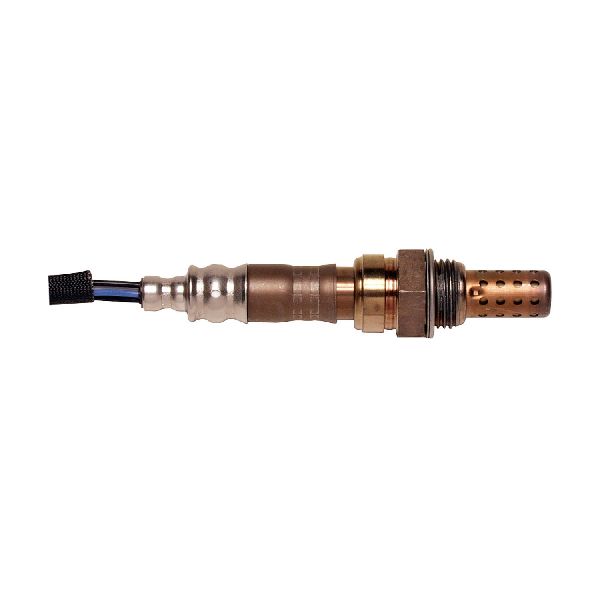
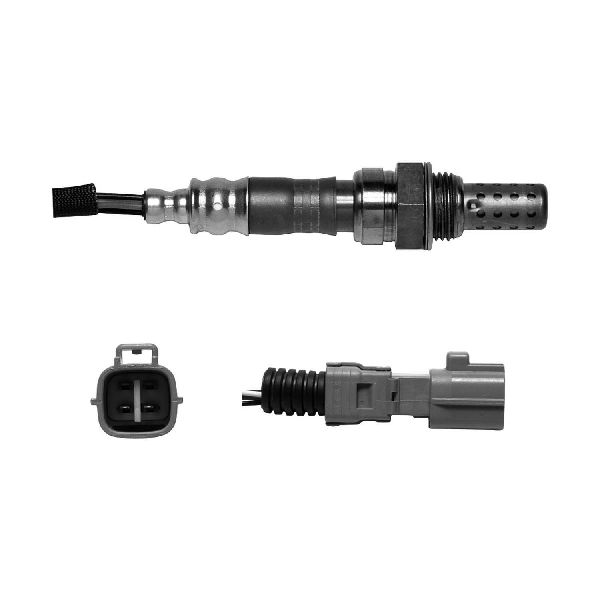
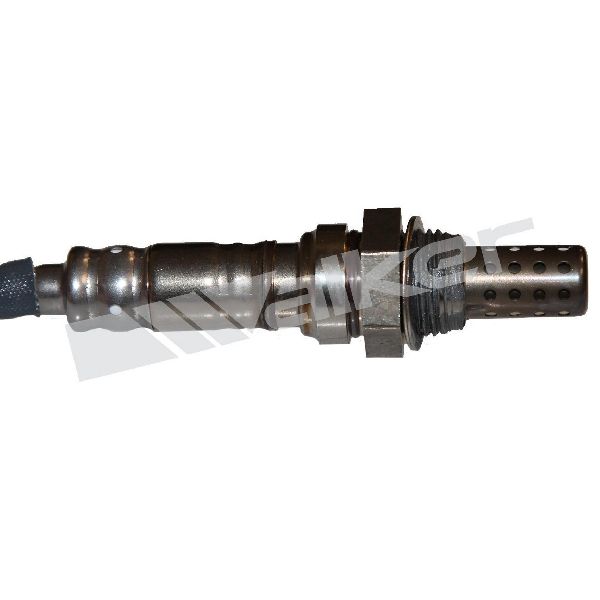
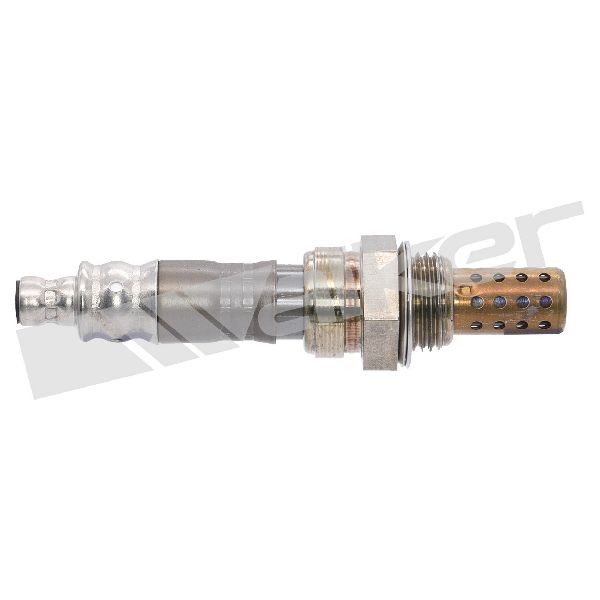
- Downstream Oxygen Sensor (Bank 1, Sensor 2)
(OEM #89465-52380)— This is the component that the code directly identifies as having a low voltage signal. It is a common wear-and-tear item and the most frequent fix for P0137.
Trusted brands: Denso (OEM Supplier), Bosch, Walker
OEM price range: $120-$180
Aftermarket price range: $50-$100 - Oxygen Sensor Socket — A special tool (22mm or 7/8") with a slot for the wire is often necessary to remove and install the O2 sensor, which can be seized in the exhaust pipe.
Trusted brands: Lisle, OEMTools, GearWrench
Aftermarket price range: $10-$25
Related Codes That Often Appear With This One
- P0136 — P0136 is a general malfunction code for the same sensor circuit. They often appear together as the ECM tries to diagnose the fault.
- P0138 — P0138 indicates high voltage for the same sensor. Seeing it with P0137 could point to an intermittent short or a very erratic sensor.
- P0420 — If the O2 sensor is failing, it can't accurately report on the catalytic converter's function, which might lead to a false P0420 (Catalyst System Efficiency Below Threshold) code. Conversely, a failing catalyst can sometimes cause the P0137 code.
Platform-Specific Known Issues
- Intermittent Code in High Humidity/Rain: Multiple owners on Reddit have reported the P0137 code appearing only during or after rainy weather or in high humidity, suggesting a potential issue with moisture getting into a worn sensor or a compromised wiring connector. The code often clears itself once conditions dry out.
- Traction Control Light Co-Illumination: It is a very common and documented quirk on this platform for the traction control/VSC light to illuminate whenever the Check Engine Light is triggered by an emissions-related code like P0137. This is a default safety behavior by the ECM and does not indicate a separate problem with the traction control system. The light will turn off when the P0137 fault is resolved.
Mechanic-Grade Diagnostic Values
- Downstream O2 Sensor (B1S2) Heater Resistance — expected: 5 to 10 Ω at 20°C (68°F). Failure: Resistance outside of this range indicates a faulty heater element within the sensor.
- Downstream O2 Sensor (B1S2) Voltage Signal at ECM — expected: Relatively stable voltage between 0.45V and 0.8V on a warm, running engine.. Failure: Voltage stuck below 0.21V for an extended period (e.g., 15-20 seconds) triggers the P0137 fault. This can be checked directly at the ECM connector pins.
- Mode $06 - Heated O2 Sensor Monitor (Bank 1, Sensor 2) — expected: A 'Pass' result for the corresponding Test ID (TID). For this monitor, look for TID $06, CID $01 (or similar, depending on scanner).. Failure: A 'Fail' result, or a current value that is very close to the maximum limit, indicates the sensor is performing poorly, even if a DTC has not yet been set. This can confirm a degrading sensor before it fails completely.
Hidden / Shadow Codes Worth Checking
- Mode $06 Failure: Before a P0137 code becomes permanent, the vehicle's On-Board Diagnostic system runs non-continuous tests. The results are stored in Mode $06. A technician can view this data with an advanced scan tool to see if the Bank 1 Sensor 2 voltage test is failing or marginal. For this era of Toyota, this is typically found under Test ID (TID) $06. A failure here is a strong indicator that the sensor or its circuit is faulty, even if the Check Engine Light is intermittent. (see via An OBD-II scanner that supports Mode $06 data display.)
Scan Tool Commands That Help
- Toyota Techstream: Active Test: Injection Volume — A technician can use this function to manually alter the fuel injection volume, forcing the air-fuel ratio rich or lean. While observing the B1S2 voltage in live data, this test helps confirm if the sensor is responsive. If the voltage remains stuck low despite a forced rich condition, it strongly suggests a failed sensor or circuit issue, rather than an actual lean running condition.
Wiring & Ground Locations
- ECM Connector E6 — The Engine Control Module (ECM) is located behind the glove box. Connector E6 is one of the main plugs into the ECM.. For advanced diagnosis, you can test the O2 sensor signal directly at the ECM. The signal wire (OX2) and ground wire (E2) for the downstream sensor terminate here. This allows a technician to rule out the entire wiring harness between the sensor and the ECM in one step.
- Ground Point EB — On the 2AZ-FE engine, a critical ground point labeled 'EB' is located on the engine block, near the starter motor.. Multiple engine sensors, including the Heated Oxygen Sensor circuit, share this ground point. A loose or corroded connection at this specific location can cause erratic or low voltage readings for various components, including the downstream O2 sensor, leading to a P0137 code that would not be fixed by replacing the sensor itself.
- Downstream O2 Sensor Connector (H3/B19) — The connector for the downstream O2 sensor is located under the vehicle, attached to the chassis, typically above the exhaust pipe and forward of the rear axle.. This connector is the primary point of failure for wiring issues due to its exposure to moisture and road debris. The intermittent codes reported in rainy weather are almost certainly caused by moisture intrusion at this connector or a break in the wire nearby. The connector has four pins: Heater (+B), Heater Control (HT), Signal (OX), and Sensor Ground (E2).
Real Owner Repair Stories
- Reddit user on r/ScionxB (2014 Scion xB) — A persistent P0137 code that would not go away for several months.
❌ Tried (didn't work) The user did not specify parts replaced, but noted the code was 'stubborn', implying initial attempts were unsuccessful.
✅ What actually fixed it The user discovered a physically damaged wiring harness near the rear passenger wheel well. The wires were frayed and exposed, causing the low voltage signal. Repairing this section of the harness resolved the code. - Scionlife.com forum user (2012 Scion xB with 50,000 miles) — Intermittent P0137 code appearing as 'pending' or 'historic' for over a year. The code would clear itself after a couple of weeks, then return. The frequency of the code returning increased over time.
❌ Tried (didn't work) The user was in the diagnostic phase, considering a new battery or fuel additives.
✅ What actually fixed it Another user advised that a partially cut wire was a more likely cause than sensor failure at such low mileage. The slow degradation and intermittent nature of the fault strongly point to a wiring issue that eventually became a hard fault, a common pattern for this code.
OEM Part Supersession History
89465-52380→The part number 89465-52380 is the current valid OEM part number for the downstream oxygen sensor for the 2008-2015 Scion xB. It has not been superseded by a newer number.— N/A
Heads up: While other sensors may physically fit, using the correct OEM (Denso) or equivalent part is critical. Universal sensors or incorrect part numbers can lead to persistent codes or other performance issues.
Model Year Variations Within This Range
- 2008-2015: The 2AZ-FE engine was used consistently throughout the entire second generation (2008-2015) of the Scion xB. There were no significant changes to the engine management or emissions control system related to this code during its production run. A minor facelift for the 2011 model year was primarily cosmetic and did not affect the diagnosis or repair of P0137.
Diagnostic Flowchart
Real Owner Stories
Aggregated from forums and TSBs cited above. Mileages and costs reflect what owners reported in those sources.
2014 Scion XB
Symptoms: Had codes P2195, P0607, P0138, and a 'stubborn p0137 code for a few months'. Also noticed a hole in the exhaust.
What fixed it: The issue was not resolved in the thread. A user suggested wrapping the exhaust hole with tape as a temporary test.
Source hint: Reddit r/ScionxB
2012 Scion xB — 50000 miles
Symptoms: An intermittent P0137 code that appears and disappears over a long period.
What fixed it: The thread demonstrated the slow-failure nature of the sensor, requiring replacement.
Source hint: Scionlife.com - P0137 on 2012 xB with 50k miles
2014 Scion xB
Symptoms: Persistent P0137 code.
What fixed it: Found a damaged wiring harness near the rear passenger wheel well, which was the cause of the persistent code.
Source hint: Reddit r/ScionxB - P0137 Code On 2014 Scion XB…Pics Included
Scion xB
Symptoms: Owner experienced the P0137 code along with the traction control light, noting the issue seemed related to rain and humidity.
What fixed it: Identified as a moisture intrusion issue affecting the sensor/wiring during wet conditions.
Source hint: Reddit r/ScionxB - P0137 / P0607
Related OBD-II Codes
Frequently Asked Questions
Why did my traction control light come on at the same time as the P0137 code on my Scion xB?
My P0137 code only appears when it rains or is highly humid. Is this normal for the 2008-2015 xB?
Where should I look first for wiring damage causing a P0137 on my xB?
What voltage reading indicates a failed downstream O2 sensor on the 2.4L 2AZ-FE engine?
At what mileage do the oxygen sensors typically fail on the 2008-2015 Scion xB?
We Have This Part in Stock



The information in this article is provided for general reference and educational purposes only. Vehicle specifications, procedures, and part compatibility can vary by production date, trim level, and region. Always consult your vehicle's factory service manual and verify part numbers before purchasing or performing repairs. Safety-critical components such as airbags, seat belts, and braking systems should be installed by a qualified professional.
- Scion xB:
- 🧭 Diagnostic Flowchart
- 🛍️ Shop This Part
- What's Unique About the 2008-2015 Scion xB
- Symptoms You May Notice
- Most Likely Causes
- Rare But Worth Checking
- Diagnosis Steps
- Parts You'll Likely Need
- Related Codes That Often Appear With This One
- Platform-Specific Known Issues
- Mechanic-Grade Diagnostic Values
- Hidden / Shadow Codes Worth Checking
- Scan Tool Commands That Help
- Wiring & Ground Locations
- Real Owner Repair Stories
- OEM Part Supersession History
- Model Year Variations Within This Range
- Real Owner Stories
- 2014 Scion XB
- 2012 Scion xB — 50000 miles
- 2014 Scion xB
- Scion xB
- Related OBD-II Codes
- Frequently Asked Questions
- 🎟️ Get 5% Off