

P0138 on 2013-2017 Honda Accord: O2 Sensor High Voltage Causes and Fixes
On a 2013-2017 Honda Accord, code P0138 is almost always caused by a failed downstream oxygen sensor (Bank 1, Sensor 2). This sensor monitors catalytic converter efficiency. Replacing this sensor is a straightforward DIY job, with a quality aftermarket part (Denso/NTK) costing around $50-$90. Using an O2 sensor socket is highly recommended.
- P0138 on your Accord almost certainly means you need a new downstream (post-catalytic converter) oxygen sensor.
- This is a DIY-friendly repair that can be done in under an hour with basic tools and an O2 sensor socket (22mm or 7/8").
- Do not replace the catalytic converter or the upstream sensor; this code is specific to Bank 1, Sensor 2.
- For best
What's Unique About the 2013-2017 Honda Accord
For the 9th generation Honda Accord (2013-2017), this code is a very common and straightforward issue. Unlike some vehicles where this code might lead to a complex diagnosis of fuel systems or the PCM, on this Accord it almost always points directly to the downstream O2 sensor itself. Owners and technicians on forums strongly recommend using OEM-supplier brands like Denso or NTK, as these Accords can be sensitive to the calibration of cheaper, universal-fit sensors.
Symptoms You May Notice
- Check Engine Light is on.
- Failure to pass an emissions inspection.
- Slightly increased fuel consumption.
- Rough idling or poor engine performance (rare for a downstream sensor issue).
- Strong exhaust odor due to a rich fuel mixture (less common).
- Replacing the wrong oxygen sensor (i.e., the upstream Sensor 1, also called an Air/Fuel Ratio Sensor). P0138 is specific to Sensor 2, which is downstream of the catalytic converter.
- Replacing the catalytic converter. A P0138 code points to a sensor or circuit problem, not a bad converter. A bad converter would typically trigger a P0420 code.
- Using a cheap, universal 'splice-in' oxygen sensor. Hondas are known to be sensitive, and these often cause performance issues or premature failure.
Most Likely Causes
- Failed Downstream Oxygen Sensor (Bank 1, Sensor 2) 🔴 High Probability → Shop Oxygen Sensor Oxygen sensors are wear-and-tear items that fail over time from constant exposure to high-temperature exhaust gases and contaminants. They typically have a lifespan of 60,000 to 90,000 miles. On this platform, it is the most frequent cause of P0138.
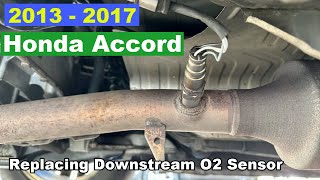
How to confirm: Use an OBD-II scanner to monitor the live data for 'B1S2'. If the voltage is stuck high (e.g., above 0.9V) and does not fluctuate, the sensor has likely failed. A healthy downstream sensor should show a slowly fluctuating voltage. The sensor is located underneath the car, screwed into the exhaust pipe after the catalytic converter. 🎬 Watch: See exactly where the Bank 1 Sensor 2 is located.
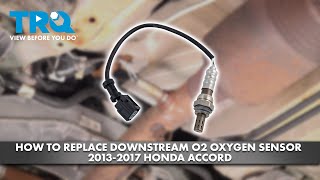
Typical fix: Replace the Bank 1, Sensor 2 oxygen sensor. An O2 sensor socket (typically 22mm or 7/8") is recommended for removal. Apply anti-seize compound to the threads if not pre-applied. 🎬 See this walkthrough on how to replace the downstream sensor. It is highly recommended to use a direct-fit sensor from an OEM brand like Denso or NTK.
Est. part cost: $50-$120 - Damaged Wiring or Connector 🟡 Medium Probability The sensor wiring runs underneath the vehicle and is exposed to road debris, moisture, and extreme heat from the exhaust, which can cause wires to fray, break, melt, or short to a power source over time.
How to confirm: Visually inspect the entire wiring harness from the O2 sensor to its connection point. Look for any signs of melting, chafing, corrosion in the connector, or breaks in the wire. Check for a short to power in the signal wire using a multimeter, as this can force the voltage high.
Typical fix: Repair the damaged section of the wiring harness or replace the connector pigtail. Ensure the repair is sealed from moisture.
Est. part cost: $10-$50
Rare But Worth Checking
- Exhaust Leak: An exhaust leak before the O2 sensor can allow outside air into the exhaust stream, which can sometimes cause erratic sensor readings. While more likely to cause a low voltage code (P0137), it's worth a quick check by listening for hissing sounds near the exhaust.
- Faulty Powertrain Control Module (PCM): This is extremely rare. The PCM should only be considered after all other possibilities, including the sensor and its entire circuit, have been thoroughly tested and ruled out.
- Rich Running Condition: While a stuck high voltage reading usually points to a sensor/circuit fault, a severe rich running condition (e.g., from a leaking fuel injector) could theoretically cause the code. However, this would almost certainly be accompanied by other codes and more severe drivability symptoms.
Diagnosis Steps
- Connect an OBD-II scanner and confirm that P0138 is the active code. Check for any other codes, like P0141 or P0139.
- View the freeze frame data to see the engine conditions when the code was set.
- Access the live data stream on the scanner and observe the voltage for 'O2S B1S2' (Bank 1, Sensor 2).
- A healthy downstream sensor will show a relatively stable voltage that fluctuates slowly, typically between 0.1V and 0.9V. If the voltage is stuck high (e.g., >0.9V), it confirms the fault condition.
- Safely raise and support the vehicle. Locate Sensor 2 in the exhaust pipe, just downstream of the catalytic converter.
- Visually inspect the sensor's wiring harness and connector for any signs of damage, melting, or corrosion.
- If the wiring looks good, the most probable cause is a failed sensor. Consider testing the sensor's heater circuit for proper resistance if you have a multimeter.
- Replace the Bank 1, Sensor 2 oxygen sensor. A 22mm (or 7/8") oxygen sensor socket will make removal much easier. Apply anti-seize compound to the threads if not pre-applied.
- Clear the trouble code with the scanner and perform a drive cycle to ensure the code does not return.
Parts You'll Likely Need
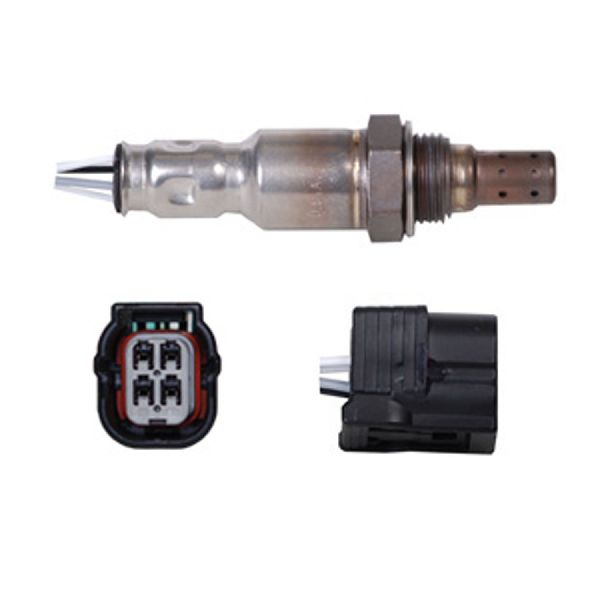
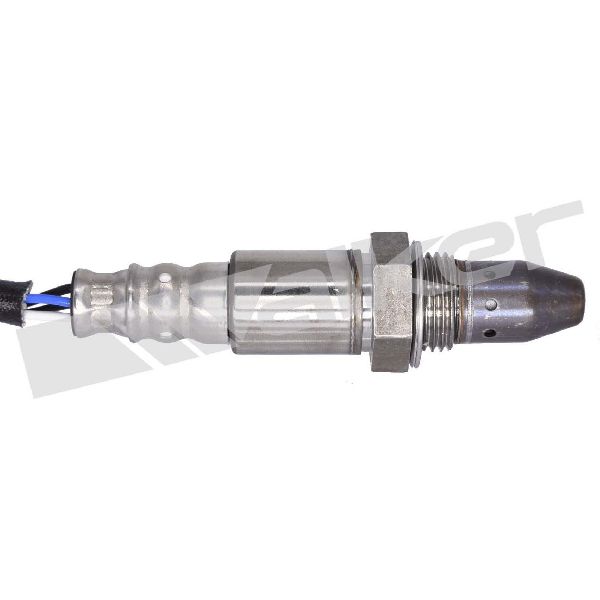
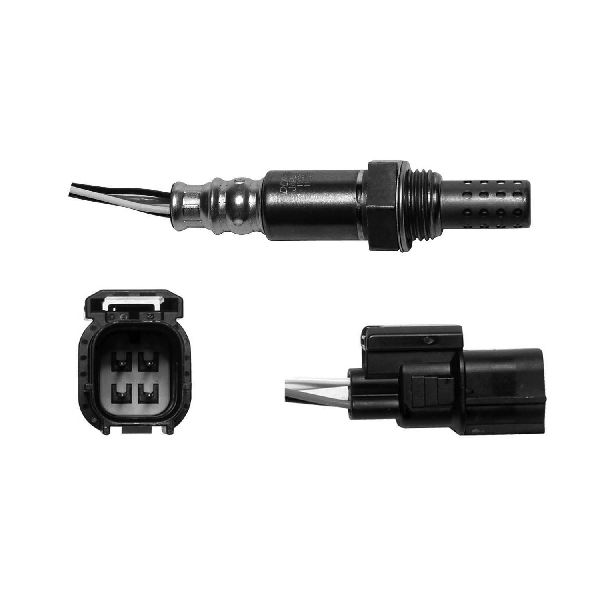
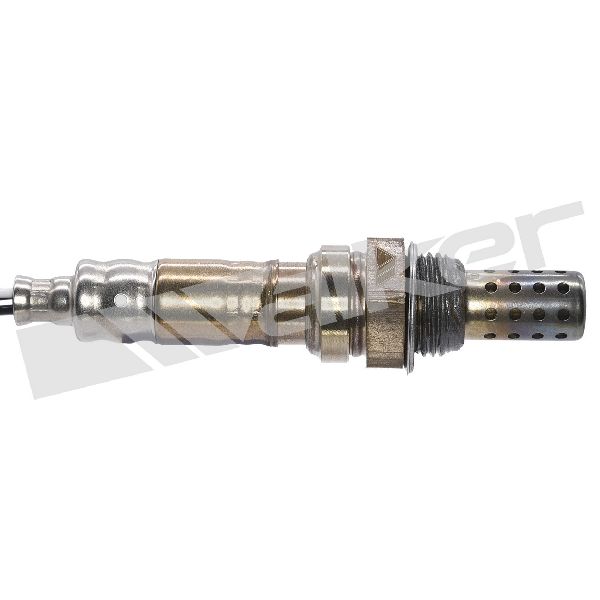
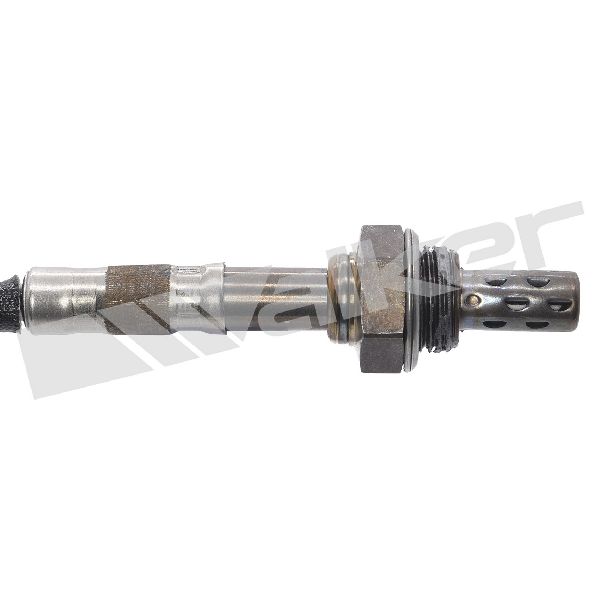
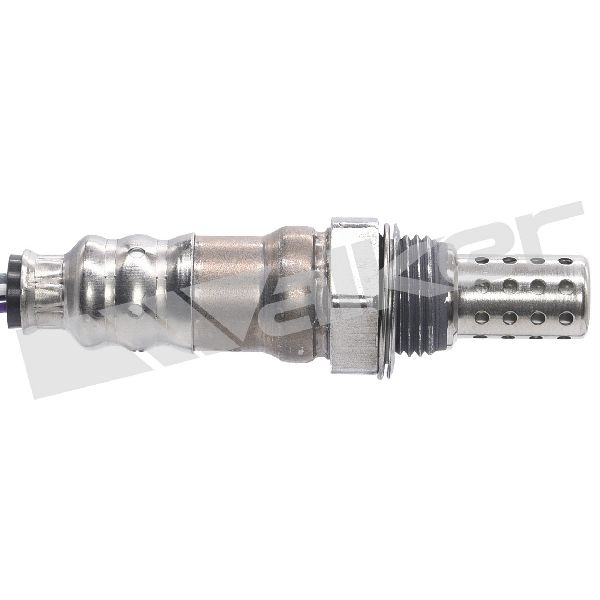
- Downstream Oxygen Sensor (Bank 1, Sensor 2)
(OEM #36532-5A2-A01 (for 2.4L 4-Cyl), 36542-5G1-A01 (for 3.5L V6 Rear Bank))— This is the component that has failed in the vast majority of P0138 cases on this vehicle.
Trusted brands: Denso (e.g., 234-4574 for 2.4L), NTK
OEM price range: $100-$180
Aftermarket price range: $50-$90
Related Codes That Often Appear With This One
- P0141 — This code indicates a malfunction in the heater circuit of the same Bank 1, Sensor 2. It's very common to see both codes together, as a failure of the sensor's internal heater element often accompanies a signal circuit failure.
- P0420 — A faulty Sensor 2 that is stuck high (P0138) cannot properly report on the catalytic converter's efficiency, which can sometimes mask or incorrectly trigger a P0420 (Catalyst System Efficiency Below Threshold) code.
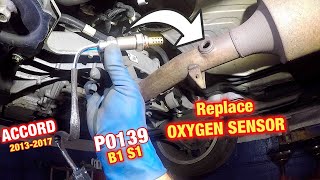
- P0139 — This code indicates "O2 Sensor Circuit Slow Response (Bank 1 Sensor 2)". It can appear alongside P0138 if the sensor is failing in multiple ways, both sticking high and not responding quickly enough to changes in exhaust content. 🎬 Watch: How to replace the sensor when dealing with P0139 codes.
Platform-Specific Known Issues
- Forum Consensus Confirms Sensor Failure: Multiple threads on forums like DriveAccord.net confirm that for the 9th generation Accord, P0138 is almost always solved by replacing the downstream (Bank 1, Sensor 2) O2 sensor with a quality Denso or NTK part.
Mechanic-Grade Diagnostic Values
- Downstream O2 Sensor (B1S2) Heater Circuit Resistance — expected: 10 to 40 Ω. Some sources cite a wider range of 4-25 Ω, while others suggest a narrower 2-5 Ω may be acceptable for newer sensors.. Failure: An open circuit (OL) or a reading significantly outside the 10-40 Ω range indicates a failed heater element within the sensor.
- Downstream O2 Sensor (B1S2) Live Data Voltage at Idle (Warm Engine) — expected: A healthy sensor should show a slowly fluctuating or relatively stable voltage, typically between 0.1V and 0.9V, often averaging around 0.5V to 0.7V.. Failure: A voltage that is stuck high (consistently above 0.9V) confirms the fault condition described by P0138.
- PCM Fault Trigger Threshold — expected: The PCM will log code P0138 if the secondary O2 sensor voltage remains above a specific threshold for a set period.. Failure: For many Hondas, this threshold is 1.1V or 1.27V.
Scan Tool Commands That Help
- Honda HDS (Honda Diagnostic System): Secondary HO2S Test — This function in the dealer-level software allows a technician to monitor the specific voltage of Sensor 2. The diagnostic procedure involves running the engine at a steady RPM and checking if the voltage remains at or above 1.27V, which would confirm the fault condition the PCM is detecting.
Wiring & Ground Locations
- Downstream O2 Sensor Connector (B1S2) — For the 4-cylinder engine, the connector is located on a bracket on the passenger side of the vehicle, accessible from underneath. For the V6, the Bank 1 downstream sensor connector is near the firewall.. This is a 4-pin connector. The two same-colored wires (often black) are for the heater circuit. The other two are for the sensor signal and ground. A short-to-power on the signal wire, potentially from a damaged harness where it's close to the heater power wire, can cause a constant high voltage reading and trigger P0138.
OEM Part Supersession History
36532-5A2-A01→36532-5A2-305— Standard part update/revision by Honda.
Heads up: The parts are interchangeable for the 2.4L 4-cylinder engine.
Model Year Variations Within This Range
- 2013-2017: The 3.5L V6 models have different downstream O2 sensor part numbers depending on the transmission. For example, part number 36532-5G2-A01 is listed for V6 models with a manual transmission, while 36542-5G1-A01 is for V6 models with an automatic transmission.
Diagnostic Flowchart
Other Known Issues on This Vehicle
Issues unrelated to this code that are worth knowing about as an owner of this generation:
- Grinding or Whining Starter Motor 🟠 Medium — Very common on 2013-2015 models, especially V6 with automatic transmission. Tends to occur around 50,000+ miles. (Ref: Honda TSB 16-002 advises replacing the starter and rotating the torque converter ring gear.)
- VTC Actuator Rattle on Cold Start 🟠 Medium — Common on 2.4L 4-cylinder engines. A brief, loud rattle for 1-2 seconds upon cold startup. (Ref: Honda TSB 09-010 (superseded) addresses this for earlier models, but the issue persists in this generation.)
- Burnt-Out LED Daytime Running Lights (DRL) 🟡 Low — Common on 2016-2017 models. The LED strip in the headlight assembly fails, requiring expensive replacement of the whole unit. (Ref: Honda TSB 19-042 extended the warranty for this issue to 10 years/unlimited miles.)
- Premature Battery Failure / Parasitic Drain 🟠 Medium — Widespread complaints, particularly for 4-cylinder models with a smaller-than-average battery. Can lead to no-start situations. (Ref: A recall was issued for a battery sensor on some models. Class action lawsuits have been filed regarding parasitic drain.)
- Excessive Oil Consumption (Earth Dreams Engines) 🟠 Medium — Some owners of the 2.4L 'Earth Dreams' engines report higher than normal oil consumption, potentially related to the use of thin 0W-20 oil and piston ring design.
Used vs. New Parts: Buying Guide for This Vehicle
When a used part is the smart pick: Buying a used oxygen sensor is not recommended. They are wear-and-tear items with a finite lifespan, and a used part may have significant wear or contamination, causing it to fail shortly after installation.
Donor-vehicle mileage cap: roughly under 60000 miles for the part to have meaningful remaining life.
What to inspect on the donor part:
- If buying used is unavoidable, inspect the sensor tip for heavy carbon buildup, white deposits (from coolant), or oily residue.
- Check the wiring and connector for any signs of melting, fraying, or corrosion.
- Ask for the mileage of the donor vehicle; a low-mileage donor is preferable.
Aftermarket brands forum-validated for this vehicle:
- Denso (OEM supplier, part #234-4574 for 2.4L)
- NTK (also known as NGK)
Brands owners have reported issues with on this vehicle:
- Generic or unbranded 'universal' sensors that require splicing wires are frequently reported to cause issues or fail prematurely on Honda vehicles.
Real Owner Stories
Aggregated from forums and TSBs cited above. Mileages and costs reflect what owners reported in those sources.
2016 Honda Accord V6 Touring
Symptoms: Intermittent check engine light for P0138, which appears around 3/4 of a tank of fuel and disappears by 1/4 of a tank. Also has a P0328 code.
What fixed it: The user had not found a fix at the time of posting and was seeking advice after initial attempts failed.
Source hint: reddit.com - Intermittent P0138 code. : r/Cartalk
Related OBD-II Codes
Frequently Asked Questions
Which brand of oxygen sensor should I use for my 2013-2017 Honda Accord to fix P0138?
Where is the Bank 1, Sensor 2 oxygen sensor located on my Accord?
Can I use a used oxygen sensor from a salvage yard to save money?
Is there a TSB for the LED daytime running lights on my 2016-2017 Accord?
My 2013-2015 Accord V6 has a grinding noise when starting; is this related to P0138?
What size tool do I need to remove the downstream O2 sensor on this vehicle?
Helpful Videos
We Have This Part in Stock

The information in this article is provided for general reference and educational purposes only. Vehicle specifications, procedures, and part compatibility can vary by production date, trim level, and region. Always consult your vehicle's factory service manual and verify part numbers before purchasing or performing repairs. Safety-critical components such as airbags, seat belts, and braking systems should be installed by a qualified professional.
- Honda Accord:
- 🧭 Diagnostic Flowchart
- 🎬 Helpful Videos
- 🛍️ Shop This Part
- What's Unique About the 2013-2017 Honda Accord
- Symptoms You May Notice
- Most Likely Causes
- Rare But Worth Checking
- Diagnosis Steps
- Parts You'll Likely Need
- Related Codes That Often Appear With This One
- Platform-Specific Known Issues
- Mechanic-Grade Diagnostic Values
- Scan Tool Commands That Help
- Wiring & Ground Locations
- OEM Part Supersession History
- Model Year Variations Within This Range
- Other Known Issues on This Vehicle
- Used vs. New Parts: Buying Guide for This Vehicle
- Real Owner Stories
- 2016 Honda Accord V6 Touring
- Related OBD-II Codes
- Frequently Asked Questions
- 🎟️ Get 5% Off