

P0138 on 2003-2007 Saturn Ion 2.2L: O2 Sensor High Voltage Causes and Fixes
On a 2003-2007 Saturn Ion, code P0138 almost always means the downstream (post-catalytic converter) oxygen sensor has failed. Replacing this sensor is the most common fix, costing around $40-$85 for an aftermarket part and is a straightforward DIY job for many. Before replacing, a quick visual inspection of the wiring for melting or damage is recommended.
- P0138 on a Saturn Ion almost always means you need a new downstream oxygen sensor (Sensor 2).
- Before buying parts, do a quick visual check of the sensor's wiring under the car for any obvious melting or damage.
- Use a direct-fit replacement sensor from a reputable brand like Denso, Bosch, or ACDelco to ensure compatibility and avoid splicing wires.
- This is a DIY-friendly repair, but the old sensor can be very tight; use penetrating oil and the correct 7/8" (22mm) O2 sensor socket.
- Ensure major safety recalls for the ignition switch and power steering have been completed on your vehicle.
What's Unique About the 2003-2007 Saturn Ion
The 2003-2007 Saturn Ion uses the GM Delta platform, sharing its 2.2L L61 Ecotec engine with cars like the Chevrolet Cobalt and HHR. For this P0138 code, the issue is rarely complex; it's typically a straightforward failure of the downstream O2 sensor due to age and heat cycles. While the L61 engine is known for other issues like ignition control module failures that can lead to P0420 (catalyst inefficiency), a P0138 code by itself almost always points directly to the sensor or its wiring, making diagnosis relatively simple. The problem is so consistent across the platform that the diagnostic approach for a P0138 on a Chevrolet Cobalt is identical.
Symptoms You May Notice
- Check Engine Light is on
- Decreased fuel economy
- Rough or unstable idle
- Failure to pass an emissions inspection
- Strong exhaust odor due to a rich fuel mixture
- Poor engine performance or hesitation
- Replacing the catalytic converter. A P0138 code points to a sensor circuit fault, not converter efficiency. 🎬 See this guide on P0138 causes and common repair mistakes A bad converter typically sets a P0420 code.
- Replacing the upstream (Bank 1, Sensor 1) oxygen sensor. The code specifically identifies Sensor 2, which is the downstream sensor.
Most Likely Causes
- Failed Downstream Oxygen (O2) Sensor 🔴 High Probability → Shop Oxygen Sensor Oxygen sensors are wear items that degrade over time from constant exposure to high heat and exhaust contaminants. With a typical lifespan of 90,000-120,000 miles, simple failure from age is the most common reason for this code on a high-mileage Ion. Contamination from oil or coolant can also cause the sensor to fail and stick at a high voltage.
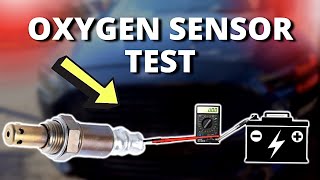
How to confirm: Use a scan tool to monitor live data for 'O2 Bank 1 Sensor 2'. If the voltage is stuck high (e.g., above 0.9V) and does not fluctuate, the sensor has failed internally. 🎬 Watch: How to test an oxygen sensor using a multimeter A healthy downstream sensor should show a slowly fluctuating voltage, typically between 0.4V and 0.7V.
Typical fix: Replace the downstream (post-catalytic converter) oxygen sensor. Ensure you use a direct-fit replacement from a reputable brand like ACDelco, Denso, or NGK/NTK to avoid wiring issues.
Est. part cost: $40-$85 - Damaged O2 Sensor Wiring or Connector 🟡 Medium Probability → Shop Oxygen Sensor The sensor's wiring harness runs underneath the vehicle, making it susceptible to damage from road debris, heat from the exhaust pipe, and moisture. The wires can melt, chafe, or break, and the connector pins can corrode. This is a known issue on platform mates like the Chevy Cobalt as well.
How to confirm: Visually inspect the entire wiring harness from the O2 sensor to its connection point. Look for melted insulation, chafed or broken wires, and any corrosion on the connector pins. A short-to-power in the signal wire can also cause a constant high voltage reading.
Typical fix: Repair the damaged section of wire or replace the connector pigtail. If the damage is on the sensor side of the harness, replacing the sensor itself is the fix.
Est. part cost: $10-$30
Rare But Worth Checking
- Engine Running Excessively Rich: While a rich condition can cause a high voltage reading, it would typically trigger other codes as well, such as P0172 (System Too Rich). This could be due to a leaking fuel injector or a faulty fuel pressure regulator. If P0138 is the only code, this is an unlikely cause.
- Faulty Powertrain Control Module (PCM): This is extremely rare. The PCM's internal driver for the O2 sensor circuit can fail, but all other possibilities should be exhausted before considering PCM replacement. Sometimes a PCM software update may be required, but this is less common.
- Exhaust Leak Before the Sensor: An exhaust leak between the upstream and downstream sensors can, in some cases, affect sensor readings. However, this more commonly causes low voltage or catalyst efficiency codes (P0420), not a P0138 high voltage code.
Diagnosis Steps
- Read the code with an OBD-II scanner to confirm P0138 is present and note any other codes.
- Visually inspect the downstream O2 sensor, which is located on the exhaust pipe after the catalytic converter. Check for obvious damage to the sensor or its wiring harness. Look for melted plastic, frayed wires, or a corroded connector.
- Use a scan tool with live data capability to observe the voltage for 'O2 Bank 1 Sensor 2'.
- At operating temperature, the voltage should fluctuate slowly. If the voltage is stuck high (consistently above 0.9V-1.1V), it confirms the fault condition.
- To isolate the sensor from the wiring, unplug the O2 sensor connector. The voltage on the scan tool (reading the harness side) should drop to a default value (around 450mV). If it does, the sensor itself is faulty and sending the high voltage signal.
- If the voltage stays high even with the sensor unplugged, there is a short to power in the vehicle's wiring harness that needs to be traced and repaired.
- If the sensor is confirmed to be the fault, proceed with replacement. 🎬 Watch: Step-by-step downstream O2 sensor replacement on a Saturn Ion Soaking the sensor's threads with penetrating oil before attempting removal is highly recommended as they are often seized. Use a dedicated 22mm (7/8") O2 sensor socket for removal and installation.
Parts You'll Likely Need
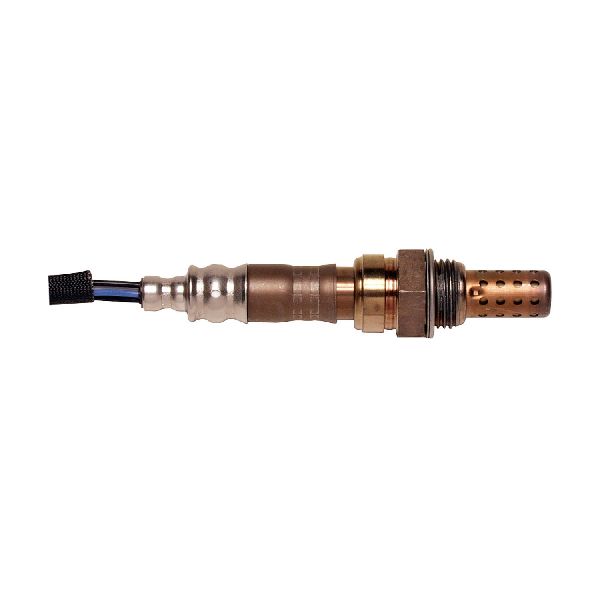
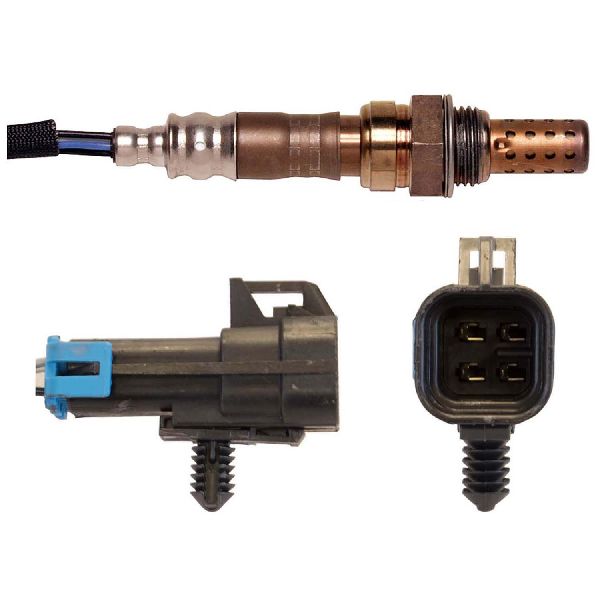
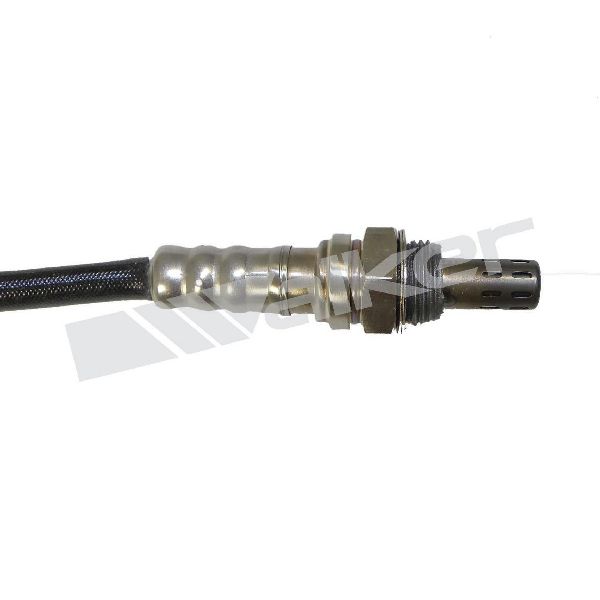
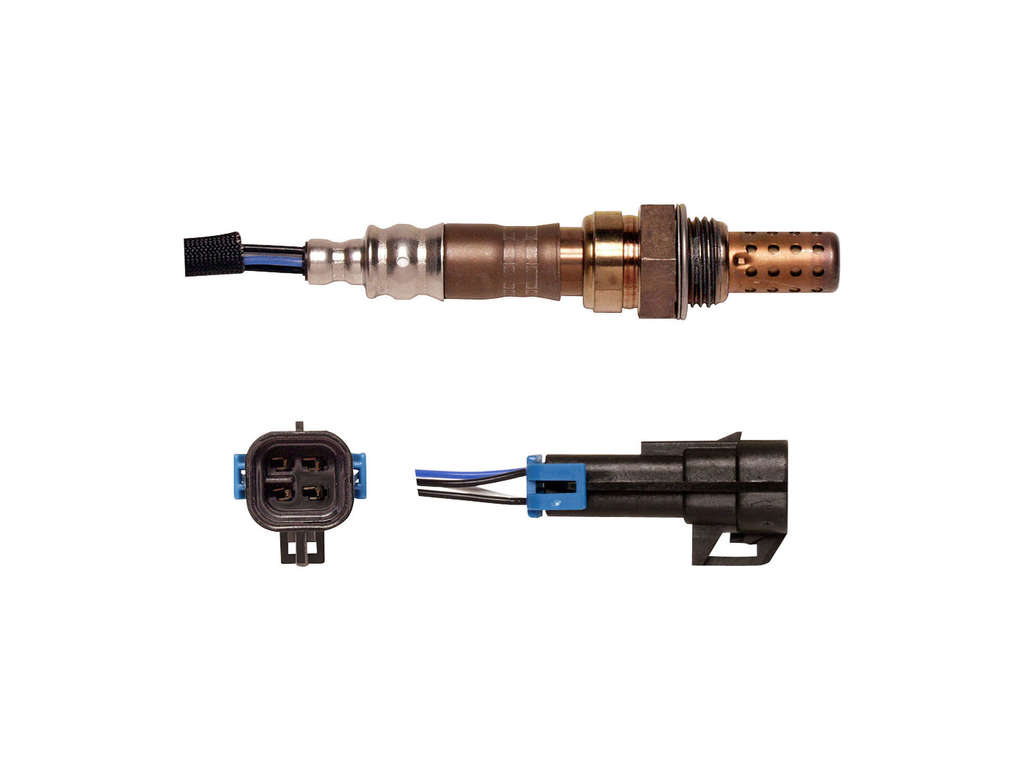
- Downstream Oxygen Sensor
(OEM #12578576)— This is the component that fails in the vast majority of P0138 cases on the Saturn Ion due to age and heat exposure.
Trusted brands: ACDelco (GM Genuine), Denso, Bosch, NGK/NTK
OEM price range: $70-$120
Aftermarket price range: $40-$85
Related Codes That Often Appear With This One
- P0140 — P0140 (O2 Sensor Circuit No Activity Detected) can appear if the sensor has failed completely or has a wiring issue that causes it to stop sending a signal.
- P0420 — A failing O2 sensor (P0138) might be replaced, only for the new, functional sensor to correctly identify that the catalytic converter is inefficient, triggering a P0420 code. This is common on the L61 engine if a prior misfire from a bad ignition module damaged the converter.
- P0137 — P0137 (O2 Sensor Circuit Low Voltage) can appear alongside P0138 if there is an intermittent wiring short or the sensor is failing erratically.
- P0141 — P0141 (O2 Sensor Heater Circuit Malfunction) often appears with sensor performance codes like P0138, as a failure of the internal heater element can cause the sensor to send incorrect voltage readings.
Platform-Specific Known Issues
- While not a direct cause of P0138, the 2003-2007 Saturn Ion was subject to a major recall for a faulty ignition switch that could cause the engine to turn off while driving (NHTSA Recall No. 14V047000). It's crucial to ensure this recall has been performed on your vehicle.
- Another significant recall involved a sudden loss of electric power steering (EPS) assist (NHTSA Recall No. 14V153000). This was a widespread issue affecting multiple GM models on this platform.
- A recall was also issued for 2003-2004 models where the fuel filter could corrode and leak fuel (NHTSA ID: 03V460000).
Mechanic-Grade Diagnostic Values
- PCM DTC Trigger Threshold — expected: Sensor voltage should remain below 1.0V-1.2V.. Failure: The PCM will set code P0138 if the Bank 1 Sensor 2 voltage exceeds 1.042V - 1.065V for more than 3.8 to 10 seconds.
- O2 Sensor Heater Element Resistance — expected: 3 to 25 Ohms when measured across the two heater wires (often the same color) at ambient temperature.. Failure: A reading of OL (Open Loop) or infinite resistance indicates a broken heater element. A reading of 0 Ohms indicates a short. Both conditions warrant sensor replacement.
- O2 Sensor Signal Wire Voltage (Sensor Unplugged) — expected: Approximately 450mV (0.45V) on the harness-side connector for the signal wire.. Failure: If voltage remains high (above 1.0V) with the sensor unplugged, it confirms a short-to-power in the vehicle's wiring harness, not a faulty sensor.
Scan Tool Commands That Help
- Tech 2 / GDS2: O2 Sensor Heater Test — This bidirectional command allows the technician to manually activate the heater circuit for Sensor 2. It's used to verify if the heater relay, fuse, wiring, and the heater element itself are functioning correctly without having to wait for the PCM to command it on.
- Tech 2 / GDS2: Fuel Trim Reset — After replacing an O2 sensor that may have been causing incorrect fuel mixture readings, resetting the long-term fuel trims forces the PCM to relearn the fuel delivery strategy with data from the new, accurate sensor. This should be done after the repair is complete.
Wiring & Ground Locations
- Downstream O2 Sensor Connector (C142 equivalent) — On the main engine harness, near the firewall, where the downstream O2 sensor sub-harness connects.. This is the primary test point. A 2007 Saturn Ion forum post identifies the wire colors for a 4-wire sensor as: Pink/Black (12V Heater Power), Tan/White (Heater Ground), Purple/White (Signal), and Black/White (Signal Ground/Return). Verifying voltages and continuity at these pins is critical for diagnosing a wiring fault vs. a sensor fault.
- PCM Connector — The Powertrain Control Module is located in the engine bay. The O2 sensor signal and ground wires terminate here.. If a short or open is suspected after testing at the sensor connector, a continuity test must be performed between the sensor connector pins and the corresponding pins at the PCM to locate the fault in the harness.
OEM Part Supersession History
12565680, 12568221, 12578573→12578576— Part consolidation and potential design updates by GM over the production life of the Delta platform vehicles.
Heads up: ACDelco service part number 213-3138 is the direct equivalent to GM part number 12578576. Some parts retailers note that programming may be required, but this is highly unlikely for a conventional O2 sensor on this platform and may be a generic disclaimer.
Model Year Variations Within This Range
- 2007: The 2007 model year L61 engine received several updates, including a new Gen II block, cylinder head refinements, new camshaft design, and a new E37 Engine Control Module. Power increased from 140 hp to 145 hp. While the P0138 code's cause and diagnosis remain the same, the PCM and some engine components are not interchangeable with 2003-2006 models.
- 2003-2004: Early models used a different fuel system design with a return line, whereas later models may have used a returnless system. This does not directly affect the P0138 code but is a notable variation in the platform's fuel delivery.
Diagnostic Flowchart
Other Known Issues on This Vehicle
Issues unrelated to this code that are worth knowing about as an owner of this generation:
- Ignition Switch Failure 🔴 High — Extremely common across all model years, leading to a massive recall. Weight on the key ring can cause the switch to move out of the 'Run' position, shutting off the engine while driving. (Ref: NHTSA Recall No. 14V047000)
- Electric Power Steering (EPS) Failure 🔴 High — Very common, resulting in a sudden loss of power steering assist. This was the subject of a major safety recall. GM was criticized for waiting years to issue the recall despite thousands of complaints. (Ref: NHTSA Recall No. 14V153000)
- Timing Chain Tensioner and Guide Failure 🔴 High — A well-documented weak point of the early 2.2L L61 Ecotec engine. An inadequate oiler design leads to chain stretch and guide failure. If the chain jumps time or breaks, it will cause catastrophic engine damage as it is an interference engine. (Ref: GM TSB #03-06-01-017 (describes updated repair procedure))
- Ignition Control Module (ICM) Failure 🟠 Medium — Common failure due to heat soak from its location on top of the engine. A failing ICM causes misfires (P0300), which can quickly destroy the catalytic converter, leading to a P0420 code.
- Front Turn Signal/DRL Bulb Socket Failure 🟡 Low — Common issue where the front turn signal and daytime running lamp stops working due to loss of contact in the socket. (Ref: NHTSA Recall No. 04V521000)
- Cheap Interior Materials and Build Quality 🟡 Low — A frequent owner complaint. Fabrics stain easily and plastic panels often have poor fit and finish, leading to rattles and a generally low-quality feel.
Used vs. New Parts: Buying Guide for This Vehicle
When a used part is the smart pick: For this repair, a used part is almost never a smart choice. The primary failure part, the oxygen sensor, is a wear item with a finite lifespan. Installing a used sensor is likely to lead to another failure in a short time. A used wiring pigtail from a junkyard could be a cost-effective option if only the connector is damaged.
Donor-vehicle mileage cap: roughly under 50000 miles for the part to have meaningful remaining life.
What to inspect on the donor part:
- For a wiring pigtail, inspect for any signs of melting, brittleness, or corrosion on the connector pins.
- Ensure the locking tab on the connector is intact and functional.
- Select a pigtail from a vehicle that does not show signs of fire or major fluid leaks in the engine bay.
Aftermarket brands forum-validated for this vehicle:
- Denso
- NGK / NTK
- Bosch
Brands owners have reported issues with on this vehicle:
- Unbranded, 'white-box' parts from online marketplaces should be avoided. Faulty-out-of-the-box failures are common and can lead to wasted time and misdiagnosis.
Real Owner Stories
Aggregated from forums and TSBs cited above. Mileages and costs reflect what owners reported in those sources.
2007 Chevrolet Cobalt 2.2L L61
Symptoms: The user detailed a timing chain failure on the 2.2L L61 engine platform.
What fixed it: The context describes an updated repair procedure via GM TSB #03-06-01-017 for timing chain tensioner and guide failure.
Source hint: Saturn Forum - 'L61 timing chains'
2003-2007 Saturn Ion 2.2L L61 — ~105000 miles
Symptoms: P0138 code appearing even after replacing the sensor.
What fixed it: Checking fuel trims for an underlying rich condition.
Source hint: Reddit r/MechanicAdvice
Related OBD-II Codes
Frequently Asked Questions
Is there a recall for the 2003-2007 Saturn Ion that causes the engine to shut off while driving?
My 2003 Saturn Ion is leaking fuel near the filter; is this a known issue?
I have a P0138 code on my Ion; what brand of O2 sensor should I use for the replacement?
Can a failure in the Ignition Control Module (ICM) lead to other exhaust codes on the 2.2L L61?
Is the loss of power steering on my Saturn Ion related to the P0138 code?
What is the typical lifespan of the downstream O2 sensor on a Saturn Ion?
Helpful Videos
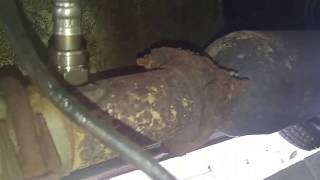
We Have This Part in Stock


The information in this article is provided for general reference and educational purposes only. Vehicle specifications, procedures, and part compatibility can vary by production date, trim level, and region. Always consult your vehicle's factory service manual and verify part numbers before purchasing or performing repairs. Safety-critical components such as airbags, seat belts, and braking systems should be installed by a qualified professional.
- Saturn Ion:
- 🧭 Diagnostic Flowchart
- 🎬 Helpful Videos
- 🛍️ Shop This Part
- What's Unique About the 2003-2007 Saturn Ion
- Symptoms You May Notice
- Most Likely Causes
- Rare But Worth Checking
- Diagnosis Steps
- Parts You'll Likely Need
- Related Codes That Often Appear With This One
- Platform-Specific Known Issues
- Mechanic-Grade Diagnostic Values
- Scan Tool Commands That Help
- Wiring & Ground Locations
- OEM Part Supersession History
- Model Year Variations Within This Range
- Other Known Issues on This Vehicle
- Used vs. New Parts: Buying Guide for This Vehicle
- Real Owner Stories
- 2007 Chevrolet Cobalt 2.2L L61
- 2003-2007 Saturn Ion 2.2L L61 — ~105000 miles
- Related OBD-II Codes
- Frequently Asked Questions
- 🎟️ Get 5% Off