

P0139 on 2007-2015 Audi Q7: Slow O2 Sensor Response Causes and Fixes
This code almost always means the downstream oxygen sensor (Bank 1, Sensor 2) is old and needs replacement. Before replacing it, check for exhaust leaks, which are a common issue. Expect to pay $70-$150 for an OEM-quality sensor and about an hour of labor if you don't do it yourself.
- P0139 on your Q7 almost always points to the downstream oxygen sensor on the passenger side (Bank 1, Sensor 2).
- Before buying a new sensor, always inspect for exhaust leaks, especially at the flex pipes, as this is a common issue that can trigger a false code.
- Use an OEM-quality sensor from a brand like Bosch (the original supplier), NTK, or Denso for a reliable, long-lasting repair.
- This is a DIY-friendly repair for most, but the sensor can be seized in the exhaust pipe, requiring an O2 sensor socket and potentially a torch to remove.
What's Unique About the 2007-2015 Audi Q7
For the first-generation Audi Q7, the P0139 code is a straightforward issue that rarely points to complex problems. The V8 and V6 engines are robust, but their oxygen sensors, typically supplied by Bosch, have a finite lifespan and become sluggish after 100,000 miles. A noteworthy issue on this platform is the tendency for the flexible sections of the exhaust pipes to develop small leaks over time. These leaks can introduce outside air, tricking the O2 sensor and causing a false P0139 code, making a thorough exhaust inspection a critical first step before replacing any parts.
Symptoms You May Notice
- Illuminated Check Engine Light
- Failing a state emissions inspection
- Slightly decreased fuel economy
- In rare cases, minor engine hesitation upon acceleration after decelerating.
- Rough idle or potential stalling when decelerating.
- Noticeable exhaust odor.
- Replacing the catalytic converter. A P0139 code points to the sensor's reaction time, not the converter's efficiency. A bad converter would typically trigger a P0420 code.
- Replacing the wrong oxygen sensor. Ensure you are replacing Bank 1 (passenger side in the US) and Sensor 2 (downstream/post-catalyst). The upstream sensor is Sensor 1.
Most Likely Causes
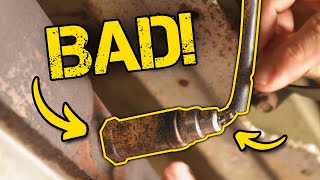
- Aged or Failed Oxygen Sensor 🔴 High Probability → Shop Oxygen Sensor Oxygen sensors are wear items. After many heat cycles and exposure to exhaust gases, the internal sensing element degrades and slows its reaction time. This is the most common cause on high-mileage vehicles, as the sensor gets contaminated with carbon and other deposits.
How to confirm: Use a diagnostic scan tool to graph the voltage of Bank 1, Sensor 2. 🎬 See how to test your O2 sensor with a scanner. A healthy downstream sensor on a warm, running engine should show a relatively steady, non-fluctuating voltage (typically between 0.6V and 0.8V). If it's switching slowly, is stuck at a certain voltage (e.g., 0.3V), or mirrors the upstream sensor's rapid activity, it has likely failed. An easier method for DIYers is to swap the Bank 1 and Bank 2 downstream sensors and see if the fault code moves to Bank 2 (P0159).
Typical fix: Replace the Bank 1, Sensor 2 oxygen sensor. It is recommended to use an O2 sensor socket for removal and apply anti-seize compound to the threads of the new sensor.
Est. part cost: $70-$180 - Exhaust System Leak 🟡 Medium Probability The flexible joints (flex pipes) in the Q7's exhaust system are a known weak point and can develop cracks or pinhole leaks over time. These leaks allow unmetered oxygen into the exhaust stream before the sensor, skewing its readings and causing a slow response error.
How to confirm: Perform a visual inspection of the exhaust system from the engine to the rear of the vehicle, looking for black soot marks or cracks, especially around welds and flex pipes. For best results, have a shop perform a smoke test, which will force smoke through the exhaust and make even the smallest leaks visible.
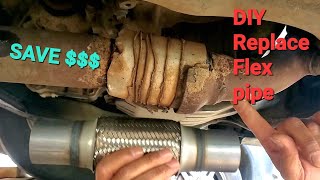
Typical fix: Repair or replace the leaking section of the exhaust pipe. Often, a new flex pipe can be welded in without replacing the entire exhaust section. 🎬 Watch: Step-by-step guide to replacing a leaking flex pipe.
Est. part cost: $50-$300 - Damaged Wiring or Connector ⚪ Low Probability
How to confirm: Visually inspect the wiring harness leading to the Bank 1, Sensor 2. Look for any signs of melting from contact with the hot exhaust, chafing, or corrosion inside the electrical connector itself. Use a multimeter to check for continuity and proper voltage at the connector. High resistance in the wiring can delay the signal.
Typical fix: Repair the damaged section of the wiring harness or clean/replace the connector. Ensure the harness is properly secured away from heat sources.
Est. part cost: $10-$50
Rare But Worth Checking
- Engine Control Module (ECM) Software Issue: → Shop Engine Control Module (ECM) While no specific TSB for P0139 exists for this Q7, other Audi models have received software updates to adjust the sensitivity of O2 sensor monitoring. If all other causes are ruled out, checking with a dealer for any available ECM updates is a worthwhile final step, as a processing delay in the module itself can mimic a slow sensor.
- Leaking Fuel Injector: A leaking fuel injector on Bank 1 can cause an overly rich condition that the O2 sensor struggles to read, potentially being interpreted as a slow response. This is less common and would usually be accompanied by other codes (like P0172) and more severe driveability symptoms.
Diagnosis Steps
- Connect an OBD-II scanner to confirm P0139 is the only code present. Note any other codes, such as P0159, P0171, or P0420, as they can guide diagnosis.
- Warm the engine to operating temperature. Use the scanner's live data function to view the voltage graphs for both Bank 1 Sensor 1 (upstream) and Bank 1 Sensor 2 (downstream).
- Observe the patterns. The upstream sensor (Sensor 1) should fluctuate rapidly between ~0.1V and ~0.9V. The downstream sensor (Sensor 2) should be relatively stable and hold a steady voltage, usually above 0.5V. If Sensor 2 is fluctuating lazily, is stuck, or responds very slowly to throttle changes, it points towards a bad sensor.
- Perform a thorough visual inspection of the exhaust system for any signs of leaks (soot, cracks), especially around the flex pipes and manifold gaskets.
- If leaks are suspected, confirm with an exhaust smoke test. This is the most reliable method for finding small leaks.
- Inspect the wiring and connector for the Bank 1, Sensor 2 for any physical damage, melting, corrosion, or loose pins.
- If no leaks or wiring damage are found, the oxygen sensor is the primary suspect. Swapping the downstream sensors from Bank 1 and Bank 2 is a definitive way to confirm a bad sensor. If the code changes to P0159 (Bank 2), the sensor is faulty.
- If the sensor, wiring, and exhaust are all confirmed to be good, consult a dealer or specialist shop to check for any available ECM software updates.
Parts You'll Likely Need
- Oxygen Sensor (Bank 1, Sensor 2)
(OEM #4L0906262G, 1K0-998-262-T (Verify with VIN))— This is the component identified by the code as responding too slowly. It is a common wear-and-tear item that fails with age and mileage.
Trusted brands: Bosch (OEM supplier), NTK, Denso
OEM price range: $120-$180
Aftermarket price range: $70-$130
Related Codes That Often Appear With This One
- P0420 — If the catalytic converter is truly failing, it can sometimes cause the downstream O2 sensor to read erratically, potentially triggering a slow response code alongside the primary catalyst efficiency code.
- P0159 — This is the equivalent 'Slow Response' code for Bank 2, Sensor 2. Seeing both P0139 and P0159 simultaneously could point to a systemic issue like a shared wiring problem, exhaust leaks on both banks, or an ECM software issue.
Technical Service Bulletins (TSBs) & Recalls
- TSB 2014753/7 - While not for P0139, this TSB is frequently mentioned in forums regarding misfire codes (P030x) on the FSI engines, which are caused by carbon buildup, a major platform issue.
Platform-Specific Known Issues
- DIY Sensor Replacement Experience: A user on Reddit with a similar VW engine confirmed their P0139 was fixed by replacing the sensor. They noted the old sensor's voltage was stuck at 0.3V, and after splicing in a new universal Bosch sensor, the readings returned to a normal fluctuating range between 0.2V and 0.7V.
- Importance of Exhaust Smoke Test: Multiple sources emphasize that before replacing the sensor, a smoke test is crucial. A small, hard-to-see leak in the flex pipe is a very common cause for this code on Audis and can lead to unnecessary sensor replacement.
Mechanic-Grade Diagnostic Values
- O2 Sensor Heater Element Resistance — expected: 2.5 - 15 Ohms (when cold). Failure: A reading of infinite resistance (OL - open circuit), zero ohms (short circuit), or a very high reading (e.g., >20 Ohms) indicates a failed heater element inside the sensor. VCDS may report much higher values on a running engine, but the cold resistance check is definitive.
- O2 Sensor Heater Circuit Voltage Supply — expected: ~12V (Battery Voltage) at the harness connector pin with Key On, Engine Off.. Failure: No voltage indicates a problem upstream of the sensor, such as a blown fuse (check fuse panel B) or a wiring issue, not a faulty sensor.
- Downstream O2 Sensor Voltage (Live Data) — expected: Relatively stable voltage between 0.6V and 0.8V on a warm, running engine at steady RPM.. Failure: Voltage that is stuck (e.g., 0.3V), fluctuating slowly in a large wave, or mirroring the rapid switching of the upstream (Sensor 1) indicates a failed sensor or an issue like an exhaust leak.
Scan Tool Commands That Help
- VCDS (VAG-COM): Engine -> Basic Settings -> 'Automatic test sequence' (e.g., IDE00553) or 'B200 Readiness Code' — After a repair (like replacing the O2 sensor) or clearing codes, the emissions readiness monitors will be reset. Instead of a lengthy drive cycle, this function allows a technician to force the ECM to run its internal tests to set readiness for an emissions inspection. The procedure requires holding the brake and accelerator pedals while the ECU cycles the engine RPM.
- VCDS (VAG-COM): Engine -> Readiness (Function 15) — This is used to check the status of the 8 readiness bits to see which, if any, emissions monitors have not yet completed their self-tests. If the Oxygen Sensor monitor shows 'Failed or Incomplete' after a drive cycle, it points towards a persistent problem.
Wiring & Ground Locations
- O2 Sensor Connectors (3.0T) — On the 3.0T V6, all four O2 sensor connectors are grouped together on a bracket on the driver's side of the firewall/cowl area. Bank 1 Sensor 2 (the cause of P0139) is typically a black connector.. Correctly identifying the connector is critical for testing or replacement. Swapping sensors for diagnosis is much easier when their connection points are adjacent.
- Engine Ground Strap — The main engine-to-chassis ground strap is located on the passenger side (on LHD vehicles) at the bottom of the engine.. This strap is known to corrode or fail internally, creating high resistance. A poor ground can cause numerous electrical issues, including erratic sensor readings that could potentially trigger a slow response code.
- Main Chassis Ground Point — A primary ground connection point is located in the cabin, in front of the left-hand (driver's) seat, near the battery which is under the seat. Another known good ground point is the dedicated jump-start ground post in the engine bay, near the power steering reservoir.. When performing electrical tests with a multimeter, using a known, clean ground point is essential for accurate voltage and resistance readings.
- O2 Sensor Connector (Bank 1, Sensor 2) — The connector is a 4-pin or 6-pin connector. On a 4-pin, two wires are for the heater circuit (often same color) and two are for the signal. On a 6-pin, there are additional wires. The specific connector for this sensor on the 3.0T is a black 6-pin connector (T6d).. Knowing the pinout is required to test the heater resistance directly at the sensor's connector pins and to check for voltage/ground from the harness side.
OEM Part Supersession History
4L0906262G→Current OEM part number, verify with VIN at dealer.— Standard part revisions for improved longevity or manufacturing process changes.
Heads up: While this part number is listed for the Q7, it is primarily for the upstream sensor on the 3.0T engine. It is critical to verify the correct downstream sensor part number for your specific engine (4.2L vs 3.0L) and model year using the VIN, as they are not interchangeable.
Model Year Variations Within This Range
- 2007-2010 (4.2L FSI V8): The 4.2L V8 has a different engine architecture and exhaust routing than the later 3.0T V6. While the code's meaning is identical, the physical location of Bank 1, Sensor 2 and its wiring harness will be specific to the V8 platform. Access may be more or less difficult.
- 2011-2015 (3.0L TFSI V6): On the supercharged 3.0T V6, all four O2 sensor electrical connectors are conveniently located together on the driver's side of the firewall, making diagnosis and swapping easier. Bank 1 is the passenger side cylinder bank.
Diagnostic Flowchart
Other Known Issues on This Vehicle
Issues unrelated to this code that are worth knowing about as an owner of this generation:
- Carbon Buildup on Intake Valves 🔴 High — Common on FSI/TFSI direct-injection engines, especially after 60,000-80,000 miles. Can cause misfires, rough idle, and loss of power. In severe cases, it can lead to valve damage requiring engine replacement. (Ref: Audi TSB 2014753/7 addresses misfire codes related to carbon buildup.)
- Air Suspension Failure 🟠 Medium — Common failure point. Issues include leaking air springs (struts), failing compressors, and faulty valve blocks, leading to a sagging vehicle, rough ride, and warning lights.
- Panoramic Sunroof Drain Leaks 🔴 High — Drain tubes for the panoramic sunroof frequently become clogged with debris, causing water to leak into the cabin. This often damages sensitive electronics located in the rear cargo area, such as the MMI/Bose amplifier, leading to expensive electrical failures.
- Water Pump Failure 🟠 Medium — The water pumps, particularly those with plastic components used in models before 2015, are prone to premature failure, causing coolant leaks and potential engine overheating.
- Engine Misfires / Ignition Coil Failure 🟡 Low — More frequent in earlier models (2007-2011), often caused by failing ignition coils or spark plugs. Results in rough running and a flashing check engine light.
Used vs. New Parts: Buying Guide for This Vehicle
When a used part is the smart pick: For this specific P0139 repair, a used part is almost never a smart choice. However, if the cause is a leaking flex pipe, a used section of exhaust pipe from a low-mileage, rust-free donor vehicle could be a cost-effective alternative to a new OEM pipe section.
Donor-vehicle mileage cap: roughly under 70000 miles for the part to have meaningful remaining life.
What to inspect on the donor part:
- For an exhaust pipe section: Inspect thoroughly for any signs of rust, cracks (especially at welds), or previous repairs. Ensure the flex joint is intact and not frayed.
- For any electrical part: Do not buy used. O2 sensors are wear items and have a finite life.
OEM-only on this vehicle (don't cheap out):
- Oxygen Sensor
Aftermarket brands forum-validated for this vehicle:
- Bosch (OEM supplier for this part)
- NTK
- Denso
Brands owners have reported issues with on this vehicle:
- Generic, unbranded, or 'no-name' sensors from online marketplaces. These frequently fail to meet the ECM's strict response time parameters, causing the code to return immediately or shortly after installation.
Real Owner Stories
Aggregated from forums and TSBs cited above. Mileages and costs reflect what owners reported in those sources.
Volkswagen Touareg (V6/V8)
Symptoms: The oxygen sensor voltage was stuck at 0.3V.
What fixed it: Splicing in a new universal Bosch oxygen sensor, which returned readings to a normal range between 0.2V and 0.7V.
Source hint: Reddit r/MechanicAdvice
Porsche Cayenne (V6/V8)
Symptoms: P0139 code present on the dashboard.
What fixed it: The issue was diagnosed as 'Aging of Oxygen Sensor'.
Source hint: RennTech.org
Audi Q7 (FSI/TFSI)
Symptoms: P0139 code; suspected sensor failure.
What fixed it: Replacing the sensor fixed the code, but the user noted that a smoke test is crucial first because flex pipe leaks are very common on Audis.
Source hint: vehicle_specific_issues - Importance of Exhaust Smoke Test
Related OBD-II Codes
Frequently Asked Questions
Does Audi TSB 2014753/7 address the P0139 code on my Q7?
Which oxygen sensor is responsible for the P0139 code on a US-model Audi Q7?
Is there a recommended brand for replacement O2 sensors for the 4.2L or 3.0L engines?
Could a leak in my Q7's exhaust flex pipe cause a P0139 code?
How can I confirm if the sensor itself is bad without buying a new one immediately?
What should the voltage reading look like for a healthy Bank 1 Sensor 2 on my Audi?
Helpful Videos

The information in this article is provided for general reference and educational purposes only. Vehicle specifications, procedures, and part compatibility can vary by production date, trim level, and region. Always consult your vehicle's factory service manual and verify part numbers before purchasing or performing repairs. Safety-critical components such as airbags, seat belts, and braking systems should be installed by a qualified professional.
- Audi Q7:
- 🧭 Diagnostic Flowchart
- 🎬 Helpful Videos
- What's Unique About the 2007-2015 Audi Q7
- Symptoms You May Notice
- Most Likely Causes
- Rare But Worth Checking
- Diagnosis Steps
- Parts You'll Likely Need
- Related Codes That Often Appear With This One
- Technical Service Bulletins (TSBs) & Recalls
- Platform-Specific Known Issues
- Mechanic-Grade Diagnostic Values
- Scan Tool Commands That Help
- Wiring & Ground Locations
- OEM Part Supersession History
- Model Year Variations Within This Range
- Other Known Issues on This Vehicle
- Used vs. New Parts: Buying Guide for This Vehicle
- Real Owner Stories
- Volkswagen Touareg (V6/V8)
- Porsche Cayenne (V6/V8)
- Audi Q7 (FSI/TFSI)
- Related OBD-II Codes
- Frequently Asked Questions
- 🎟️ Get 5% Off