

P0140 on 2008-2014 Mercedes-Benz C-Class: O2 Sensor Circuit Fixes
This code means the downstream oxygen sensor (Bank 1, Sensor 2) is not sending a signal. The most common fix is replacing the sensor itself, which costs around $70-$180 for the part. It's a straightforward DIY job for many owners. Bank 1 is the passenger side on LHD vehicles.
- P0140 means the downstream oxygen sensor on Bank 1 (passenger side on LHD cars) is not communicating with the car's computer.
- The most likely cause is a failed oxygen sensor, which is a common wear-and-tear part.
- You can continue to drive the car, but you will fail an emissions test and should get it fixed to ensure the emission system is working correctly.
- Before replacing parts, always check the sensor's wiring, connector, and the associated fuse for the heater circuit.
What's Unique About the 2008-2014 Mercedes-Benz C-Class
For the W204 generation C-Class (2008-2014), the P0140 code is a straightforward emissions-related fault that does not typically point to a unique, systemic issue with this specific platform. The causes are standard across most vehicles, with the oxygen sensor itself being the most frequent point of failure due to age or contamination. Diagnosis follows a conventional path of checking the sensor, its wiring, and the exhaust system for leaks. The key platform-specific information is knowing that Bank 1 is the passenger side on V6 models.
Symptoms You May Notice
- Check Engine Light is on
- Vehicle fails emissions/smog test
- Potential for slightly reduced fuel economy
- Possible rough idle or hesitation, though often there are no drivability symptoms.
- Replacing the upstream (Bank 1, Sensor 1) oxygen sensor. This code specifically points to the downstream sensor (Sensor 2).
- Assuming cleaning the Mass Airflow (MAF) sensor will fix the issue. While a severely contaminated MAF can cause broader fuel trim problems, it is not a direct cause of a P0140 'no activity' fault and should not be the first diagnostic step.
Most Likely Causes
- Faulty Downstream Oxygen Sensor (Bank 1, Sensor 2) 🔴 High Probability → Shop Oxygen Sensor Oxygen sensors are wear-and-tear items that degrade over time from heat and contaminants in the exhaust. The internal heating element, which is necessary for the sensor to work quickly, can also fail, leading to a 'no activity' code.
How to confirm: Using a scan tool, observe the live data for the Bank 1 Sensor 2 voltage. A healthy sensor will show a relatively steady voltage, while a dead sensor will show a flat, unchanging voltage (often near 0.45V) or no signal at all. You can also test the sensor's internal heater circuit for resistance with a multimeter; an open circuit or a reading outside the 2-10 ohm range indicates a failed heater.
Typical fix: Replace the Bank 1, Sensor 2 oxygen sensor. This sensor is located in the exhaust pipe after the catalytic converter on the passenger side (LHD vehicles).
Est. part cost: $70-$180 - Wiring or Connector Issue 🟡 Medium Probability The wiring for the downstream O2 sensor runs under the vehicle and is exposed to road debris, moisture, and heat, which can cause damage over time. Connectors can become corroded or wires can break or get shorted.
How to confirm: Visually inspect the wiring harness and connector leading to the sensor for any signs of melting, chafing, or corrosion. Perform a 'wiggle test' on the harness while watching live data to see if the signal returns. Check for a blown fuse for the O2 sensor heater circuit, as this will cause the sensor to remain inactive.
Typical fix: Repair the damaged section of wiring or clean/replace the corroded connector. Replace any blown fuses.
Est. part cost: $5-$50 - Exhaust Leak ⚪ Low Probability Rust or damage can cause leaks at exhaust manifold gaskets or pipe flanges. A leak before the O2 sensor can allow outside air into the exhaust stream, causing an incorrect reading, although this more commonly affects the upstream sensor.
How to confirm: Listen for a ticking or hissing sound from the exhaust system, especially when the engine is cold. A visual inspection may reveal soot trails near gaskets or cracks in the pipes. A smoke test is the most definitive way to find small leaks.
Typical fix: Replace the leaking gasket or repair the damaged section of the exhaust pipe.
Est. part cost: $20-$200
Rare But Worth Checking
- Engine Control Module (ECM) Failure: → Shop Engine Control Module (ECM) This is very rare. Before suspecting the ECM, all other possibilities, including the sensor, wiring, and exhaust system, must be thoroughly ruled out. An ECM issue might also be accompanied by other, unrelated trouble codes. In some cases, even after sensor replacement, the code returns, which may point to a faulty ECM input circuit.
Diagnosis Steps
- Scan for Codes: Use an OBD-II scanner to confirm P0140 is the only code present. If other codes exist, address them first.
- Inspect Sensor and Wiring: Visually inspect the Bank 1, Sensor 2 oxygen sensor (passenger side on LHD V6/V8 models) and its wiring harness. Look for obvious damage, such as melted wires, chafing against the chassis, or a corroded connector.
- Check Live Data: With the engine running, use a scan tool to monitor the voltage from Bank 1, Sensor 2. It should show a relatively stable voltage. If it's flatlined (e.g., stuck at 0V or 0.45V) or shows no reading, the sensor or its circuit is faulty.
- Test the Heater Circuit: Disconnect the sensor and use a multimeter to check for 12V power and ground at the harness connector for the heater circuit (with ignition on). Check the resistance of the heater circuit within the sensor itself; it should typically be between 2 and 10 ohms. An open circuit (infinite resistance) means the heater is bad.
- Check for Exhaust Leaks: With the engine running, carefully listen and feel for any leaks in the exhaust system upstream of the sensor.
- Replace the Sensor: If the wiring, fuse, and exhaust system are good, and the sensor shows no activity and/or has a failed heater circuit, the sensor itself has failed and should be replaced.
- Clear Code and Test Drive: After the repair, clear the trouble code with the scanner and perform a test drive to ensure the code does not return. Be aware of intermittent issues; one owner on MBWorld reported the code returning even after a new sensor and a wiring check by a specialist, indicating a more complex underlying problem.
Parts You'll Likely Need
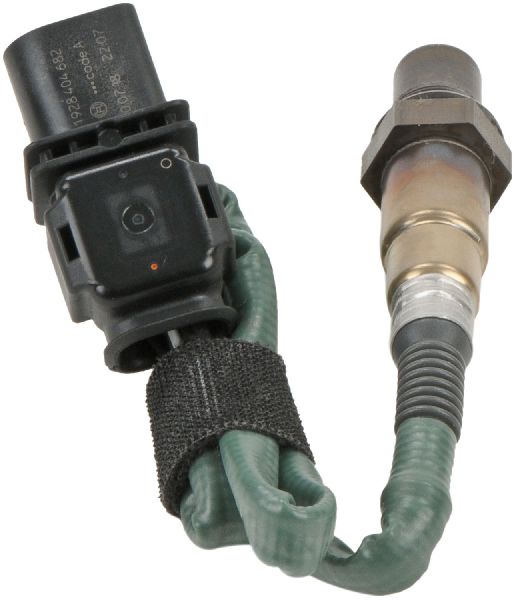
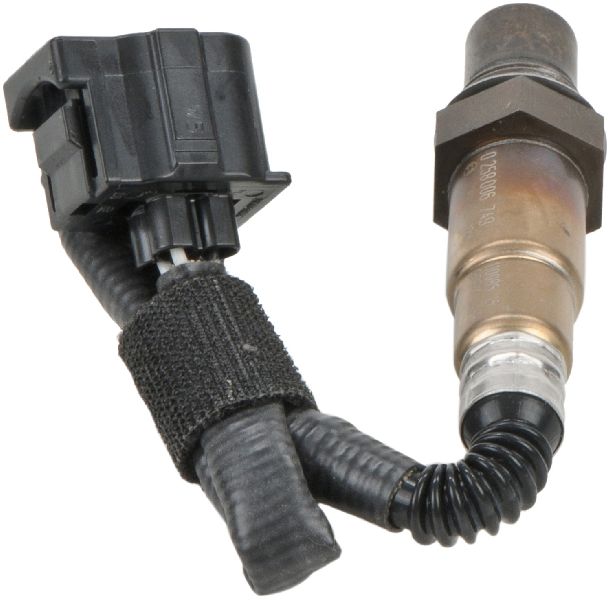
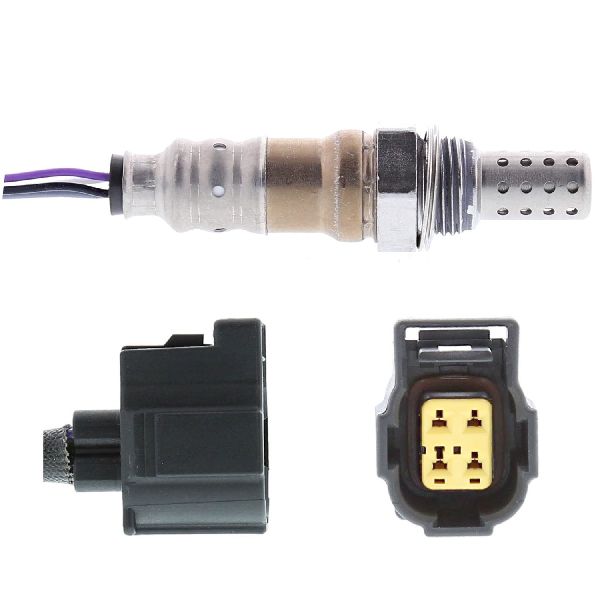
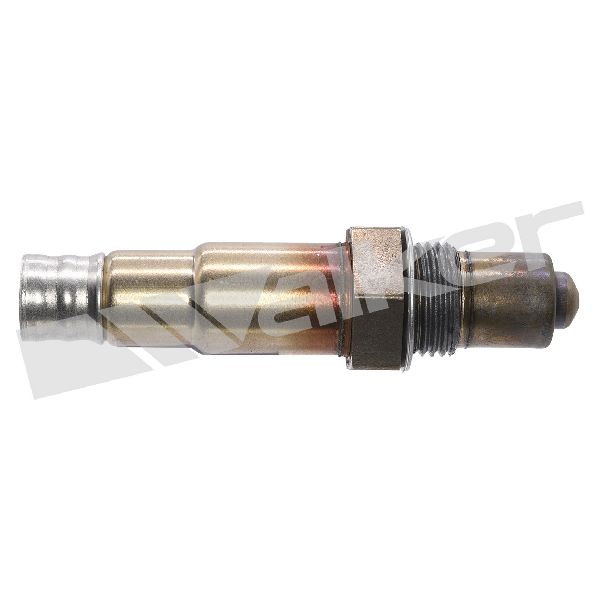
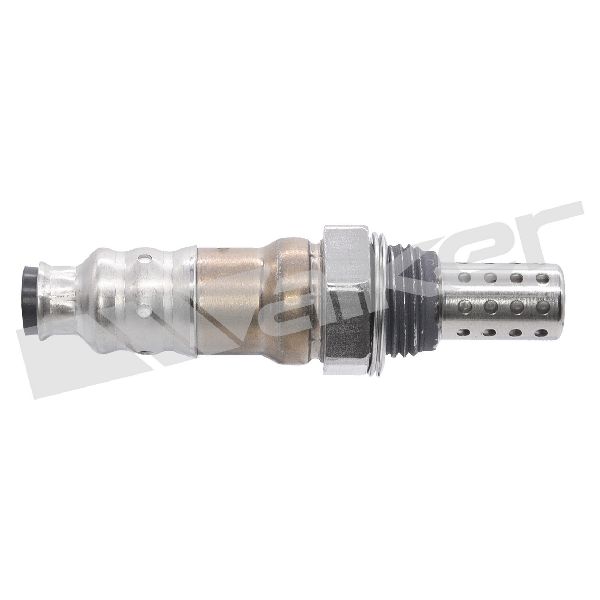
- Downstream Oxygen Sensor (Bank 1, Sensor 2)
(OEM #A0045420818)— This is the most common cause of a P0140 code, as the sensor is a wear item that eventually fails from heat and contamination.
Trusted brands: Bosch, Denso, NTK
OEM price range: $120-$200
Aftermarket price range: $70-$150
Platform-Specific Known Issues
- Bank 1 Location: On Mercedes-Benz W204 models with a V6 (M272) or V8 engine, Bank 1 is located on the passenger side of the vehicle for left-hand drive (LHD) cars. Bank 2 is on the driver's side. This is critical information for locating the correct sensor.
Mechanic-Grade Diagnostic Values
- O2 Sensor Heater Element Resistance — expected: 2-10 Ohms. Failure: An open circuit (infinite resistance) or a value outside the specified range indicates a failed heater element.
- Downstream O2 Sensor Live Data Voltage (Engine Warm) — expected: Relatively stable voltage, typically between 0.1V and 0.9V.. Failure: A flat, unchanging voltage (often stuck near 0V or 0.45V) indicates no activity.
Scan Tool Commands That Help
- Professional Bi-Directional Scan Tool (e.g., XENTRY/STAR): ECM/PCM Self-Test or Control Module Verification — Use this function after verifying the sensor and wiring are good. If the ECM fails the self-test or cannot report sensor data despite a good circuit, it points towards an internal module fault.
Wiring & Ground Locations
- O2 Sensor Circuit Fuses — In the W204, relevant fuses can be in the front SAM (Signal Acquisition Module) under the hood and the rear SAM in the trunk. Specific fuses to check include #4, #6, #25, and #27 in the front SAM, and #34 in the rear SAM. Fuse #42 (engine management) may also be relevant.. 🎬 See this guide to locate your O2 sensor fuses and relays. The O2 sensor's internal heater requires power to function. A blown fuse will prevent the sensor from warming up and sending a signal, directly causing a P0140 'no activity' code.
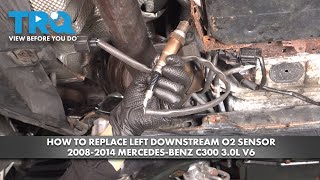
- O2 Sensor Connectors — The electrical connectors for both upstream and downstream O2 sensors are typically mounted on the lower sides of the transmission bell housing.. These connectors are a common point for corrosion or damage due to their exposed location. The pre-cat and post-cat sensor connectors are physically different 🎬 Watch: Detailed O2 sensor replacement walkthrough for the M272 engine. to prevent incorrect installation.
OEM Part Supersession History
A0045420818→No official supersession found, but multiple Bosch part numbers are equivalent.— N/A
Heads up: The OEM part A0045420818 is cross-referenced to Bosch part numbers 16747 and 0258006747. Ensure any replacement has the correct connector and cable length for the specific vehicle position (downstream).
Model Year Variations Within This Range
- 2012-2014 (Facelift): The W204 platform received a significant facelift in 2012, which included new engines. The C300 retained the M272 V6, but the C350 received the direct-injected M276 V6, and the C250 received a 1.8L turbocharged I4 (M271 EVO). While the P0140 code's meaning is the same, the physical layout of the exhaust and the specific routing of the sensor wiring may differ between these engines and the pre-facelift (2008-2011) models. However, the downstream sensor part number (A0045420818) is used across many of these engine variants.
Diagnostic Flowchart
Other Known Issues on This Vehicle
Issues unrelated to this code that are worth knowing about as an owner of this generation:
- M272 V6 Balance Shaft Sprocket Wear 🔴 High — Common on M272 engines built before engine serial number 2729..30 468993 (approx. pre-2008 models). Failure can occur between 60,000-100,000 miles. (Ref: Subject of a class-action lawsuit and Mercedes-Benz Technical Service Bulletins. Repair requires engine removal.)
- Electronic Steering Lock (ESL) Failure 🔴 High — Very common across the W204 platform. Often starts as an intermittent no-start condition and becomes a permanent failure, stranding the vehicle. Can occur after 5-8 years. (Ref: No official recall, but a widely known failure. Repair involves replacing the ESL module or using an emulator, which requires programming.)
- Rear Subframe Corrosion/Rust 🔴 High — Affects many W204 vehicles, especially in regions with road salt. Corrosion occurs from the inside out, leading to perforation and potential failure of suspension mounting points. (Ref: Mercedes-Benz extended the warranty to 20 years/unlimited miles for replacement of the rear subframe if it suffers from corrosion with perforation.)
- M271 Engine Timing Chain Stretch 🟠 Medium — Common on the 1.8L 4-cylinder CGI engines (M271). Symptoms include a rattling noise on cold starts. Typically occurs from 80,000-120,000 miles. (Ref: No recall, but updated parts (chain, tensioner) are available. Repair is moderately expensive.)
Used vs. New Parts: Buying Guide for This Vehicle
When a used part is the smart pick: Almost never for an oxygen sensor. O2 sensors are consumable parts with a finite lifespan determined by heat cycles and contamination. Installing a used sensor is a significant gamble, as its remaining life is unknown and it may fail shortly after installation, forcing you to do the labor again.
What to inspect on the donor part:
- Not applicable, as purchasing a used O2 sensor is strongly discouraged.
OEM-only on this vehicle (don't cheap out):
- While not strictly 'OEM-only', using a sensor from the original equipment manufacturer (Bosch for this vehicle) or another reputable OE-supplier like Denso or NTK is highly recommended. Avoid unbranded, low-cost sensors, as they have a high failure rate and may not perform to the required specifications.
Aftermarket brands forum-validated for this vehicle:
- Bosch (OEM supplier)
- Denso
- NTK
Brands owners have reported issues with on this vehicle:
- Generic or unbranded 'white-box' parts from online marketplaces.
Real Owner Stories
Aggregated from forums and TSBs cited above. Mileages and costs reflect what owners reported in those sources.
2013 Mercedes-Benz C-Class 1.6L Petrol Turbo — 36000 miles
Symptoms: The check engine light came on just 400 miles outside of the dealer's warranty.
What fixed it: The owner identified codes P0140 and P0141 (O2 Sensor Circuit No Activity and Heater Circuit Malfunction for Bank 1 Sensor 2).
Source hint: owner_reports: Mercedes-Benz Owners' Forums
Mercedes-Benz E-Class (W211) M272 V6
Symptoms: Intermittent check engine light with code P0140.
What fixed it: The code kept returning even after replacing sensors and having the wiring checked by a specialist, highlighting a complex intermittent fault.
Source hint: https://mbworld.org/forums/e-class-w211/787968-intermittent-cel-o2-sensor-p0140.html
Related OBD-II Codes
Frequently Asked Questions
Where is Bank 1 Sensor 2 located on my V6 Mercedes-Benz C-Class?
Could a blown fuse cause the P0140 code on my W204?
Is there a known issue with the rear subframe on the 2008-2014 C-Class that I should check while fixing this?
My 2013 C-Class has P0140 and P0141; are these related?
I replaced the sensor but P0140 keeps returning on my M272 engine. What else could it be?
Helpful Videos

We Have This Part in Stock


The information in this article is provided for general reference and educational purposes only. Vehicle specifications, procedures, and part compatibility can vary by production date, trim level, and region. Always consult your vehicle's factory service manual and verify part numbers before purchasing or performing repairs. Safety-critical components such as airbags, seat belts, and braking systems should be installed by a qualified professional.
- Mercedes-Benz C-Class:
- 🧭 Diagnostic Flowchart
- 🎬 Helpful Videos
- 🛍️ Shop This Part
- What's Unique About the 2008-2014 Mercedes-Benz C-Class
- Symptoms You May Notice
- Most Likely Causes
- Rare But Worth Checking
- Diagnosis Steps
- Parts You'll Likely Need
- Platform-Specific Known Issues
- Mechanic-Grade Diagnostic Values
- Scan Tool Commands That Help
- Wiring & Ground Locations
- OEM Part Supersession History
- Model Year Variations Within This Range
- Other Known Issues on This Vehicle
- Used vs. New Parts: Buying Guide for This Vehicle
- Real Owner Stories
- 2013 Mercedes-Benz C-Class 1.6L Petrol Turbo — 36000 miles
- Mercedes-Benz E-Class (W211) M272 V6
- Related OBD-II Codes
- Frequently Asked Questions
- 🎟️ Get 5% Off