

P0140 on 2017-2024 Subaru Impreza: Rear O2 Sensor 'No Activity' Causes and Fixes
On a 2017-2024 Subaru Impreza, code P0140 is almost always caused by a failed rear oxygen sensor. Subaru has issued a Technical Service Bulletin (TSB #09-115-24) for a redesigned sensor to fix this common problem. The updated OEM part is #22690AB08A. Expect to pay ~$80-$120 for a quality aftermarket sensor (like Denso or NTK) and ~$150-$250 for the OEM part.
- P0140 on your Impreza almost certainly means the rear oxygen sensor has failed.
- This is a known issue with a Subaru-issued TSB (#09-115-24) and a redesigned OEM part is available.
- You can continue driving, but you will fail an emissions test, so the repair is necessary for compliance.
- The repair is DIY-friendly for those with basic tools; the main tool needed is a 22mm (or 7/8") O2 sensor socket.
- Before ordering a part, always perform a quick visual inspection of the sensor's wiring for any obvious damage, as this is the second most likely cause.
What's Unique About the 2017-2024 Subaru Impreza
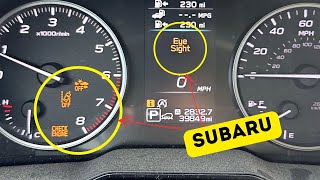
For this generation of Impreza and its platform-mates like the Crosstrek, the P0140 code is a well-documented and predictable failure. Subaru acknowledged the issue by releasing Technical Service Bulletin #09-115-24, which applies directly to the 2017-2024 Impreza. The TSB explains that the original-spec rear O2 sensors are prone to internal cracking, leading to an open or short circuit. This means the problem is rarely a diagnostic mystery and is most often solved by replacing the sensor with a redesigned part. A notable quirk on modern Subarus is that any Check Engine Light, including from a P0140, will typically disable other systems like EyeSight, cruise control, and Reverse Automatic Braking (RAB) 🎬 Watch: Why your EyeSight and cruise control disable with a CEL as a safety precaution.
Generation note: The 2017-2024 year range covers two Impreza generations: the 5th generation (2017-2023) and the 6th generation (starting 2024). The relevant Technical Service Bulletin (TSB #09-115-24) covers both generations, indicating the cause and fix are consistent across this entire year span.
Symptoms You May Notice
- Check Engine Light is illuminated.
- Vehicle will fail an emissions test.
- Cruise control, EyeSight, and other driver aids may be disabled.
- Replacing the catalytic converter. A P0140 code indicates a problem with the sensor *monitoring* the converter, not the converter itself.
- Replacing the front oxygen sensor (Air/Fuel Ratio Sensor). This code is specific to the rear sensor (Sensor 2).
- Using a cheap, off-brand oxygen sensor. Subarus are notoriously sensitive to sensor brands, and using anything other than OEM, Denso, or NTK can lead to the code returning.
Most Likely Causes
- Failed Rear Oxygen Sensor (Bank 1, Sensor 2) 🔴 High Probability → Shop Oxygen Sensor Subaru issued TSB #09-115-24 for a known defect in the original sensor. It has an 'optimized coating' in the redesigned part to prevent internal cracking that causes a short or open circuit, leading to the 'no activity' code.
How to confirm: Use a scan tool to observe live data for 'Bank 1 Sensor 2'. If the voltage is stuck (often near 0.45V) and does not fluctuate, or reads below 0.03V or above 1.2V with the engine warm, the sensor has failed. You can also test the sensor's internal heater circuit with a multimeter; an open circuit or resistance over 50 ohms confirms failure.
Typical fix: Replace the rear oxygen sensor with the updated OEM part (22690AB08A) or a quality aftermarket equivalent from Denso or NTK. Apply anti-seize compound to the threads of the new sensor before installation. A 22mm (or 7/8") O2 sensor socket is required.
Est. part cost: $80-$250 - Damaged Wiring or Connector 🟡 Medium Probability The sensor's wiring harness runs underneath the vehicle and is exposed to road debris, water, and exhaust heat. Wires can become frayed, melted, or corroded. The connector itself often sits on top of the transmission, where it can be stressed or damaged during other service, like a clutch replacement.
How to confirm: Visually inspect the entire length of the wiring from the sensor to its connection point. Check for melted sections near the exhaust, chafing, or breaks. Unplug the connector and check for corrosion, water intrusion, or bent pins.
Typical fix: Repair the damaged section of wire or replace the connector pigtail. Ensure the harness is properly secured away from heat sources and moving parts.
Est. part cost: $10-$50
Rare But Worth Checking
- Exhaust Leak: An exhaust leak before the rear O2 sensor can introduce outside oxygen and cause incorrect readings. While this more commonly triggers performance codes (like P0420), a significant leak near the sensor could potentially contribute to erratic signals that might be interpreted as 'no activity' in some edge cases.
- Blown Fuse: The O2 sensor's internal heater has a circuit that is often protected by a fuse. If this fuse blows, the sensor cannot reach its operating temperature and will not produce a signal, which can trigger P0140. This is more commonly associated with a P0141 heater code, but they are often linked.
- Faulty Engine Control Module (ECM): → Shop Engine Control Module (ECM) In very rare instances, the internal driver circuit in the ECM that reads the O2 sensor can fail. This should only be considered after a new, quality sensor and verified wiring do not resolve the code.
Diagnosis Steps
- Read the code with an OBD-II scanner to confirm P0140 is present and check for any other related codes (P0137, P0138, P0141 are common).
- Visually inspect the rear oxygen sensor, which is located on the exhaust pipe after the catalytic converter. Look for obvious damage to the sensor or its wiring harness.
- Inspect the wiring harness for signs of melting, chafing, or corrosion, following it from the sensor to where it connects to the main harness, often on top of the transmission.
- Use a scan tool to monitor live data for 'Bank 1 Sensor 2'. With the engine warm and running, the voltage should fluctuate slowly. If it is stuck at a fixed value (e.g., 0.45V) or shows no reading, this confirms a lack of activity.
- If the wiring appears intact, the most probable cause is a failed oxygen sensor, as documented in the Subaru TSB.
- (Optional) Before replacing, you can test the old sensor. Disconnect it and use a multimeter to check the resistance of the heater circuit (typically two same-colored wires). An open loop (infinite resistance) or a reading over 50 ohms indicates a failed heater and a bad sensor.
- Check the vehicle's fuse box for any blown fuses related to the O2 sensor or emissions systems.
- If a new, high-quality (OEM/Denso/NTK) sensor and verified wiring do not fix the issue, the problem may lie with the ECM, which requires professional diagnosis.
Parts You'll Likely Need
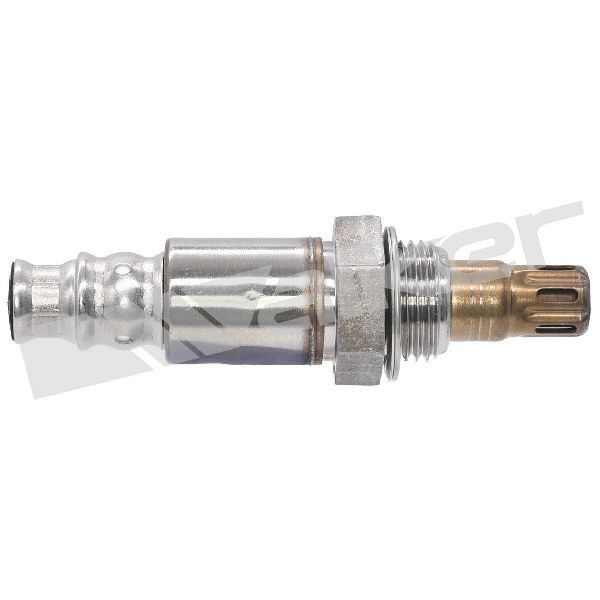
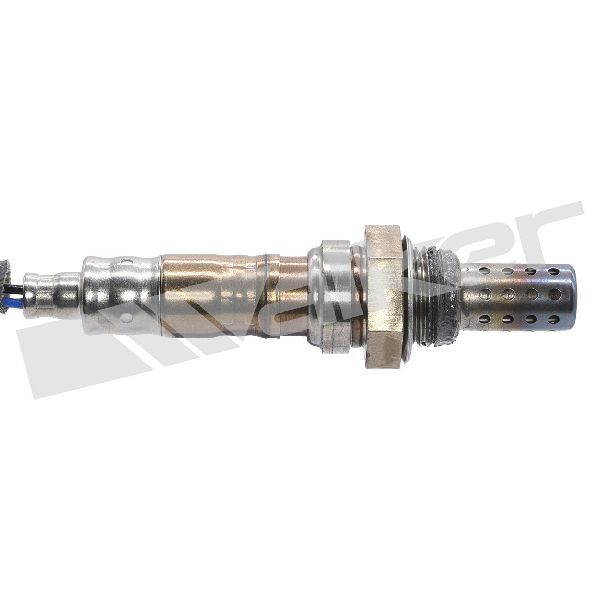
- Rear Oxygen Sensor (Downstream)
(OEM #22690AB08A (supersedes 22690AB070))— This is the component identified by Subaru in TSB 09-115-24 as being prone to failure. The redesigned part is required for a permanent fix. The new part can be identified by the Denso part number '150200-9011' engraved on it.
Trusted brands: Denso (OEM Supplier), NTK
OEM price range: $150-$250
Aftermarket price range: $80-$120
Related Codes That Often Appear With This One
- P0137 — This code for 'O2 Sensor Circuit Low Voltage' is for the same sensor. Both codes are listed in Subaru's TSB #09-115-24 as being caused by the same internal sensor failure.
- P0138 — This code for 'O2 Sensor Circuit High Voltage' is for the same sensor. It is also covered by TSB #09-115-24 and points to the same faulty component.
- P0141 — This code for 'O2 Sensor Heater Circuit Malfunction' refers to the internal heater inside the same sensor assembly. A failed heater will prevent the sensor from working, causing a 'no activity' code. It is also part of TSB #09-115-24.
Technical Service Bulletins (TSBs) & Recalls
- 09-115-24: Announcing the availability of a new, improved rear oxygen sensor to address DTCs P0137, P0138, P0140, and P0141 due to internal sensor cracking. Applies to 2017-24 Impreza/Crosstrek, 2019-23 Forester, and 2020-24 Legacy/Outback.
- Bulletin #09-115-24R: This updated manufacturer record further details the specific Diagnostic Trouble Codes detected by the Engine Control Module, including P0137, P0138, P0140, and P0141, all relating to the Bank 1 Sensor 2 circuit.
Platform-Specific Known Issues
- Subaru Technical Service Bulletin #09-115-24 was released to address recurring P0140, P0137, P0138, and P0141 codes. It announces a redesigned rear oxygen sensor with an improved internal 'optimized coating' to prevent cracking and failure.
- The TSB notes that the Subaru part number for the sensor did not change, but the new part can be identified by its Denso part number engraved on the sensor body.
- The presence of any Check Engine Light on this platform typically disables the EyeSight driver-assist system, cruise control, and other related features as a precautionary measure.
Mechanic-Grade Diagnostic Values
- Rear O2 Sensor (B1S2) Heater Circuit Resistance — expected: 5 - 15 Ohms when measured at room temperature across the two heater pins (often the two same-colored wires).. Failure: An open circuit (infinite resistance, 'OL') or a resistance reading over 50 Ohms indicates a failed heater element within the sensor.
- Rear O2 Sensor (B1S2) Live Data Voltage (Engine Warm) — expected: A relatively stable voltage, typically fluctuating slowly above 0.5V, indicating the catalytic converter is working efficiently.. Failure: A flat-line voltage that is stuck (often at a bias of ~0.45V), reads 0V, is below 0.03V, or is above 1.2V. This indicates no sensor activity.
Hidden / Shadow Codes Worth Checking
- Mode $06, Test ID $41: This is the on-board monitor test for the Bank 1, Sensor 2 oxygen sensor. It can reveal data that hasn't yet triggered a full diagnostic trouble code. Specific Component IDs (CIDs) like $02 (Minimum output voltage) and $81 (Maximum output voltage) can show if the sensor's voltage has gone outside its expected range, even intermittently. (see via Requires an advanced OBD-II scan tool that supports Mode $06 data display. The raw data may need to be interpreted or converted from hexadecimal.)
Scan Tool Commands That Help
- Subaru Select Monitor (SSM) or equivalent professional scanner: O2 Sensor Monitor Test / Oxygen Sensor Heater Test — This function allows a technician to actively monitor O2 sensor data, including rich/lean switch times and threshold voltages. It can also command the heater circuit to verify its operation. This is useful for diagnosing an intermittent or 'lazy' sensor that hasn't completely failed but is not performing correctly.
Wiring & Ground Locations
- Rear O2 Sensor Connector (B1S2) — On some models, the gray connector is found by accessing the passenger side of the engine compartment from underneath the vehicle and partially removing the front corner of the passenger-side fender liner. It is clipped to the frame or a nearby harness. This is an alternative location to the more commonly cited spot on top of the transmission.. This connector is a primary point of failure due to corrosion, water intrusion, or physical damage. Knowing all possible locations is critical when a visual inspection from one angle doesn't reveal the connector.
Real Owner Repair Stories
- Reddit user on r/subaru (Subaru WRX (similar engine logic)) — Persistent P0140 and P0138 codes after replacing the O2 sensor.
❌ Tried (didn't work) Replacing the rear O2 sensor.
✅ What actually fixed it The user had a 'cat delete' (catalytic converter was removed) and a corresponding tune. The P0140 code was being triggered because, without a catalytic converter, the sensor's readings were outside the expected range, mimicking a sensor failure. The ultimate fix is to either reinstall the stock catalytic converter and flash a stock tune, or have a tuner 'write out' the rear O2 sensor from the ECU's programming (for off-road use only). - Reddit user on r/subaru (Subaru (model year not specified, but behavior is relevant)) — P0140 code would only appear when the ambient temperature was above freezing. In winter, the code would not return after being cleared.
❌ Tried (didn't work) Clearing the code during cold weather.
✅ What actually fixed it The user did not post the final fix, but the symptom itself is a critical diagnostic clue. This behavior strongly suggests a hairline crack in the sensor's internal ceramic or a break in the wiring that only creates an open circuit when materials expand in warmer temperatures. The fix would be to replace the sensor or repair the wiring, but the temperature-dependency is the key to diagnosis.
OEM Part Supersession History
22690AB070→22690AB08A— The original sensor was prone to internal cracking, leading to failure. The new part is a redesigned, more durable sensor released under TSB 09-115-24 to address this specific issue.
Diagnostic Flowchart
Real Owner Stories
Aggregated from forums and TSBs cited above. Mileages and costs reflect what owners reported in those sources.
Subaru (Modified)
Symptoms: The P0140 code kept returning even after replacing the rear oxygen sensor.
What fixed it: Troubleshooting the wiring harness and considering the ECU as the potential fault after parts replacement failed.
Source hint: Reddit r/subaru - Thread 'What's wrong I keep get P0140'
Subaru Impreza STI
Symptoms: Received a P0140 error code after installing a decat pipe modification.
What fixed it: Forum members advised diagnosing whether it was a dead sensor, a wiring harness fault, or an issue caused directly by the decat modification.
Source hint: ScoobyNet.com - Thread 'O2 sensor P0140 error code'
Subaru WRX
Symptoms: Persistent codes returning after installing generic auto parts store O2 sensors like Bosch or Walker.
What fixed it: Replacing the generic sensor with an OEM, Denso, or NTK sensor, which are noted as the only reliable choices for this platform.
Source hint: Reddit r/WRX - Thread '02 sensor'
Related OBD-II Codes
Frequently Asked Questions
Does TSB #09-115-24 apply to my 2017-2024 Subaru Impreza for code P0140?
Why did my EyeSight and cruise control stop working when the P0140 code appeared?
Can I use an aftermarket Bosch or Walker oxygen sensor to fix P0140 on my Impreza?
Where is the wiring connector for the rear oxygen sensor located on the Impreza?
How can I tell if I have the updated rear oxygen sensor mentioned in the Subaru TSB?
What other codes might show up alongside P0140 due to the sensor cracking issue?
Helpful Videos
We Have This Part in Stock

The information in this article is provided for general reference and educational purposes only. Vehicle specifications, procedures, and part compatibility can vary by production date, trim level, and region. Always consult your vehicle's factory service manual and verify part numbers before purchasing or performing repairs. Safety-critical components such as airbags, seat belts, and braking systems should be installed by a qualified professional.
- Subaru Impreza:
- 🧭 Diagnostic Flowchart
- 🎬 Helpful Videos
- 🛍️ Shop This Part
- What's Unique About the 2017-2024 Subaru Impreza
- Symptoms You May Notice
- Most Likely Causes
- Rare But Worth Checking
- Diagnosis Steps
- Parts You'll Likely Need
- Related Codes That Often Appear With This One
- Technical Service Bulletins (TSBs) & Recalls
- Platform-Specific Known Issues
- Mechanic-Grade Diagnostic Values
- Hidden / Shadow Codes Worth Checking
- Scan Tool Commands That Help
- Wiring & Ground Locations
- Real Owner Repair Stories
- OEM Part Supersession History
- Real Owner Stories
- Subaru (Modified)
- Subaru Impreza STI
- Subaru WRX
- Related OBD-II Codes
- Frequently Asked Questions
- 🎟️ Get 5% Off