

P0141 on 2013-2018 Ford C-Max 2.0L Hybrid: O2 Sensor Heater Fixes & Part Costs
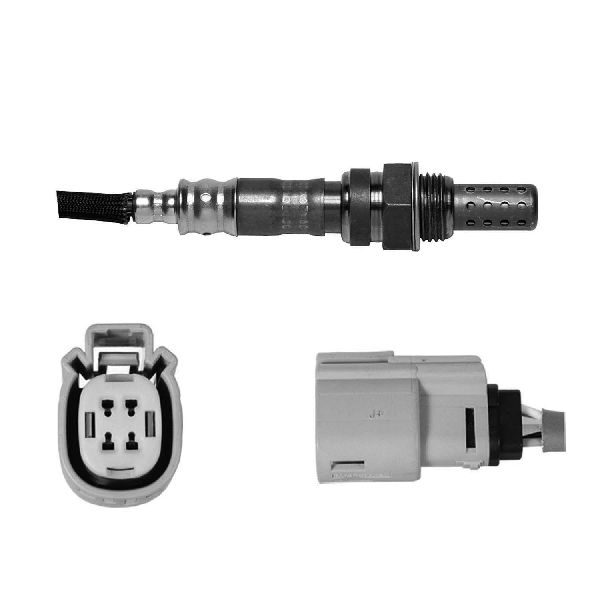
This code almost always means the downstream oxygen sensor (Bank 1, Sensor 2) has failed. It's a common DIY repair involving replacing the sensor located after the catalytic converter. Expect to pay $50-$90 for an aftermarket part or more for OEM.
- P0141 on your C-Max points directly to a problem with the heater in your downstream (post-catalytic converter) O2 sensor.
- The most common fix by a wide margin is to simply replace the downstream O2 sensor.
- This is a DIY-friendly repair for most home mechanics with basic tools and an O2 sensor socket.
- Before buying a new sensor, it's wise to quickly check the related fuse to rule out a simple electrical issue.
- You can continue to drive the car, but you will fail an emissions test and may experience slightly reduced fuel economy until it's fixed.
What's Unique About the 2013-2018 Ford C-Max
On the Ford C-Max's 2.0L inline 4-cylinder engine, there is only one exhaust bank, so 'Bank 1' is the only bank. 'Sensor 2' definitively refers to the downstream sensor, located after the catalytic converter. The repair is straightforward, with the sensor's electrical connector being accessible just behind the CV axle. This is a standard wear-and-tear failure and not indicative of a unique design flaw on the C-Max Hybrid platform.
Symptoms You May Notice
- Check Engine Light is on
- Failing a vehicle emissions test
- Slightly decreased fuel economy over time
- Replacing the upstream (Bank 1, Sensor 1) oxygen sensor. P0141 is specific to the downstream (Sensor 2) heater circuit.
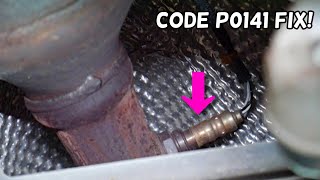
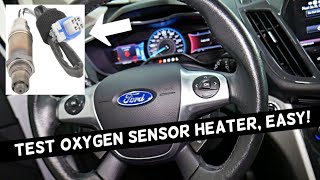
- Replacing the catalytic converter. A bad converter typically sets codes like P0420, not a heater circuit code like P0141. 🎬 Watch this video for a breakdown of P0141 causes and fixes.
Most Likely Causes
- Failed Downstream Oxygen Sensor 🔴 High Probability → Shop Oxygen Sensor Oxygen sensors are wear items with a finite lifespan. The internal heating element is often the first part to fail due to constant heat cycles and exposure to exhaust gases.
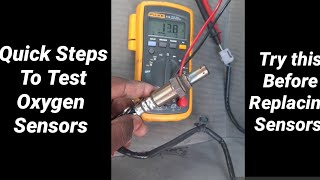
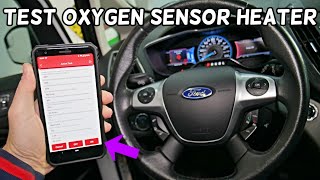
How to confirm: After checking fuses, test the resistance of the heater circuit within the O2 sensor itself using a multimeter. Disconnect the sensor and measure between the two same-colored wires. A normal reading is typically between 5-20 ohms; an infinite resistance (open circuit) reading confirms the internal heater has failed. 🎬 See how to test the O2 heater circuit with a multimeter.
Typical fix: Replace the Bank 1, Sensor 2 (downstream) oxygen sensor.
Est. part cost: $50-$160 - Damaged Wiring or Connector 🟡 Medium Probability The sensor and its wiring are located under the vehicle, exposed to road debris, moisture, and heat from the exhaust, which can cause damage over time. Rodents have also been known to chew the soy-based wire insulation used in many modern cars.
How to confirm: Visually inspect the wiring harness leading to the downstream O2 sensor for any signs of melting, chafing, or corrosion. The connector is located behind the CV axle. Check the connector pins for corrosion or damage. Use a multimeter to verify power and ground are present at the connector with the key on.
Typical fix: Repair the damaged section of the wiring harness or clean/replace the electrical connector.
Est. part cost: $5-$50 - Blown Fuse ⚪ Low Probability
How to confirm: Consult the owner's manual to locate the fuse for the O2 sensor heater circuit. On the related Ford Focus, this is often fuse F32 (10A) in the engine bay fuse panel. Visually inspect the fuse to see if it is blown.
Typical fix: Replace the blown fuse. If the new fuse blows immediately, it indicates a short circuit in the wiring or the sensor itself that must be diagnosed.
Est. part cost: $1-$5
Rare But Worth Checking
- Powertrain Control Module (PCM) Fault: → Shop Engine Control Module (ECM) This is extremely rare. The PCM should only be suspected after all other possibilities, including the sensor and its entire circuit, have been thoroughly tested and ruled out.
Diagnosis Steps
- Scan the vehicle for any other trouble codes. Address other codes first if they are present.
- Check the fuse for the O2 sensor heater circuit in the vehicle's fuse box. Replace if blown.
- Perform a visual inspection of the downstream O2 sensor's wiring harness and connector. Look for any signs of melting, fraying, or corrosion. The connector is located behind the CV axle.
- If the wiring appears intact, disconnect the sensor. With the ignition on (engine off), use a multimeter to check for battery voltage and a good ground at the connector on the harness side.
- If power and ground are present, test the resistance of the heater circuit on the sensor itself. A reading that is out of the manufacturer's specified range (typically 5-20 ohms) or an open circuit/infinite resistance confirms the sensor has failed.
- If the sensor's resistance is within spec, there is likely an intermittent issue in the wiring harness that requires more detailed testing.
- After replacing the sensor or repairing the wiring, clear the code with a scan tool and perform a test drive to ensure the code does not return.
Parts You'll Likely Need
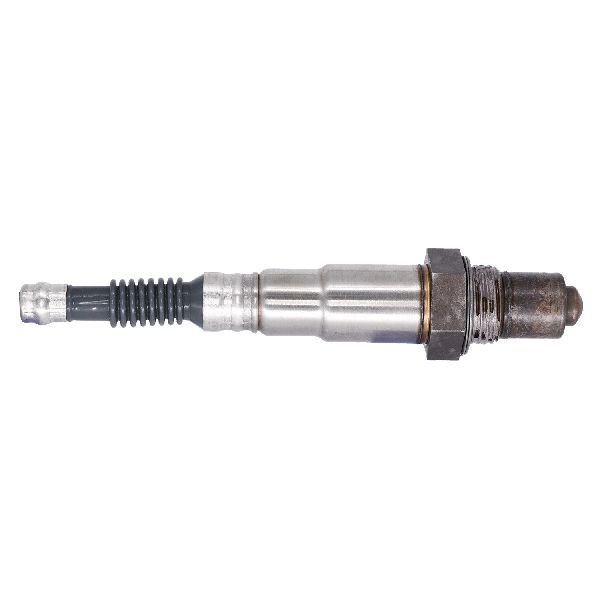
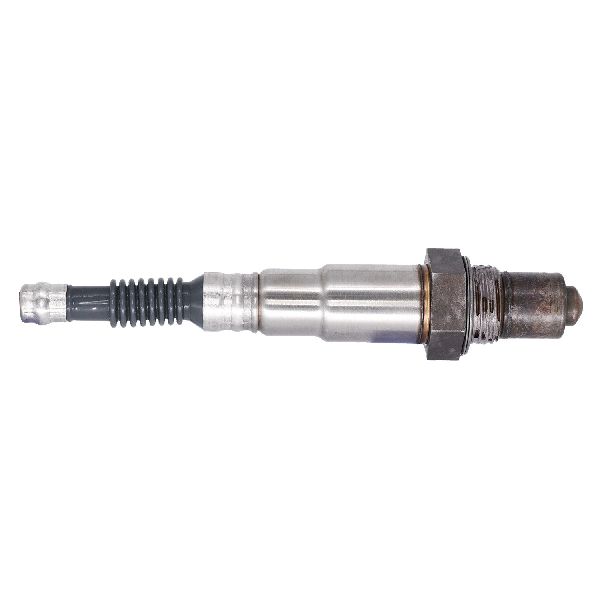
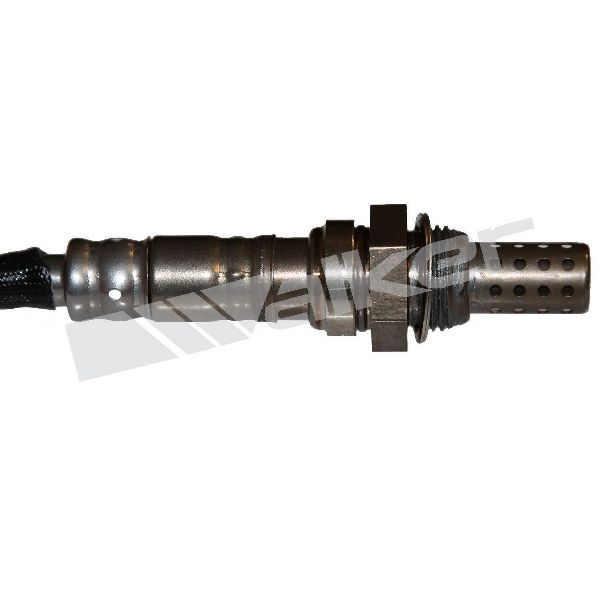
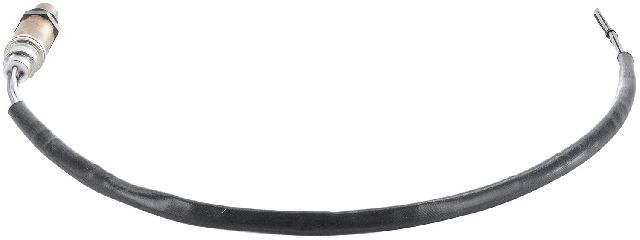
- Downstream Oxygen Sensor (Bank 1, Sensor 2)
(OEM #DY-1203)— This is the component that contains the heater circuit reported as faulty by the P0141 code. Its internal heating element fails over time.
Trusted brands: Motorcraft, Denso, Bosch, NGK
OEM price range: $100-$180
Aftermarket price range: $50-$90
Mechanic-Grade Diagnostic Values
- Downstream O2 Sensor (HO2S12) Heater Circuit Resistance — expected: 5 to 20 Ohms when cold. Some Ford-specific sources suggest a tighter range of 5-10 Ohms is common for a healthy sensor.. Failure: A reading of infinite resistance (OL on a multimeter) indicates an open circuit and a failed heater element. A reading significantly outside the expected range also indicates a faulty sensor.
- Voltage at HO2S12 Harness Connector (Heater Power Pin) — expected: Battery voltage (approx. 12V) with Key On, Engine Off (KOEO).. Failure: Zero or very low voltage suggests a blown fuse, a break in the power wire from the PCM power relay, or a faulty relay.
- Live Data - Downstream O2 Sensor Voltage (after replacement/repair) — expected: After a cold start and warmup, the voltage should fluctuate. When revving the engine, the voltage should respond by swinging between approximately 0.1V and 0.9V.. Failure: A sensor that is stuck at a specific voltage (e.g., ~0.45V) and does not respond to changes in engine RPM is not functioning correctly.
Hidden / Shadow Codes Worth Checking
- Mode $06, TID $81, CID $12: This refers to the On-Board Diagnostic Monitor Test Results for the HO2S Heater Monitor (Bank 1, Sensor 2). A failure in this specific monitor test directly corresponds to the fault that triggers the P0141 code. (see via Requires a professional scan tool capable of displaying Mode $06 data (e.g., Ford IDS, FORScan, high-end Snap-on or Autel scanners).)
Scan Tool Commands That Help
- Ford IDS (Integrated Diagnostic System) or FORScan: HO2S Heater Test (or similar active command) — This bidirectional command allows a technician to manually activate the O2 sensor heater circuit. If the heater can be commanded on and current draw is observed in live data, it proves the PCM driver and wiring are likely intact, pointing more definitively toward an intermittent sensor or connection issue.
Wiring & Ground Locations
- HO2S12 Connector — Under the vehicle, on the exhaust pipe just after the catalytic converter. The electrical connector is typically gray and located behind the passenger side CV axle.. This is the primary connection point for the sensor. All voltage and resistance tests are performed here. It is exposed to road debris and heat, making it a common point of failure due to corrosion or wire damage.
- Fuse F32 (Engine Bay Fuse Box) — In the under-hood fuse box (Battery Junction Box). On related platforms like the Focus, it's a 10A or 15A fuse.. This fuse often supplies the power to the O2 sensor heater relay. A blown fuse will cut power to the heater circuit, causing P0141. It is the first and easiest electrical check to perform.
- G106 (Ground Point) — On related Ford platforms, a key engine ground is located behind the left (driver's side) headlamp assembly.. While the O2 heater is controlled via a pulsed ground from the PCM, the PCM itself relies on a solid chassis ground. A corroded or loose main ground can cause a host of intermittent electrical issues, including erratic sensor behavior, though it would likely be accompanied by other codes.
Real Owner Repair Stories
- fordcmaxhybridforum.com user thread (2013 Ford C-Max Hybrid, ~110,000 miles) — Check Engine Light with code P0141.
❌ Tried (didn't work) Initially checked fuses, which were all good.
✅ What actually fixed it Replacing the downstream (Bank 1, Sensor 2) oxygen sensor with an OEM Motorcraft part (DY-1203) resolved the code.
OEM Part Supersession History
ES7Z-9G444-A (Engineering Number)→No major supersessions noted. The service part number DY-1203 has remained consistent for the 2013-2018 model years.— N/A
Diagnostic Flowchart
Other Known Issues on This Vehicle
Issues unrelated to this code that are worth knowing about as an owner of this generation:
- HF35 Transmission Noises/Failure 🔴 High — Common enough to warrant multiple TSBs. Can manifest as grinding, thumping, or rubbing noises. (Ref: TSB 22-2396, TSB 20-2219, TSB 14B07)
- 12V Battery Parasitic Drain 🟠 Medium — Frequently reported by owners, leading to a dead battery after the vehicle sits. Often linked to software glitches or faulty modules not 'going to sleep'. (Ref: TSB ASI-44360 and ASI-44287 mention BCM low voltage from poor grounds, which can cause similar electrical issues.)
- Shift Cable Bushing Failure 🔴 High — Widespread across many Ford models of this era. The bushing degrades, causing the shift cable to detach from the transmission, potentially leading to a rollaway risk. (Ref: Ford Safety Recall 22S43)
- Electronic Power Steering (EPAS) Failure 🔴 High — Some owners report sudden loss of power steering assist. While a major recall (15S18) existed for other Fords, C-Max owners have reported similar failures without recall coverage. (Ref: Recall 14S18 for a small batch of 2014 models due to improperly assembled steering gears.)
- SYNC 2 / MyFord Touch System Glitches 🟡 Low — Common complaints of frozen screens, unresponsiveness, or features failing to work. Can sometimes contribute to the 12V battery drain issue. (Ref: TSB 13-6-17 addresses SYNC feature inoperability.)
Used vs. New Parts: Buying Guide for This Vehicle
When a used part is the smart pick: A used oxygen sensor is almost never recommended. It is a wear-and-tear component exposed to extreme heat and exhaust gases. The remaining lifespan is unknown, and the cost savings are minimal compared to the labor of replacing it again. Only consider it as a last resort for budget reasons from a very low-mileage donor.
Donor-vehicle mileage cap: roughly under 30000 miles for the part to have meaningful remaining life.
What to inspect on the donor part:
- Check for physical damage to the sensor tip and wiring.
- Avoid sensors from vehicles with known engine problems (oil burning, coolant leaks) as these can contaminate and ruin an O2 sensor.
- Ensure the connector is clean, free of corrosion, and the locking tab is intact.
Aftermarket brands forum-validated for this vehicle:
- Motorcraft (OEM)
- Denso
- NTK / NGK
- Bosch
Brands owners have reported issues with on this vehicle:
- Universal sensors that require cutting and splicing wires. The heater resistance may not match OEM specifications, causing the code to return.
- Unbranded, 'white-box' parts from online marketplaces with no warranty or brand reputation.
Real Owner Stories
Aggregated from forums and TSBs cited above. Mileages and costs reflect what owners reported in those sources.
2013 Ford C-Max 2.0L Hybrid
Symptoms: The P0141 code appeared, pointing to the post-catalytic converter sensor heater circuit.
What fixed it: The owner discussed checking the engine bay fuse (#33 in their specific model) before proceeding with sensor replacement.
Source hint: "C-Max p0141 code" - Car Mechanics UK ProBoards, Jan 2016
2013 Ford C-Max 2.0L Hybrid
Symptoms: Check Engine Light with code P0141 (O2 Sensor Heater Circuit Malfunction).
What fixed it: Replacement of the downstream oxygen sensor located behind the CV axle.
Source hint: "CODE P0141 02 SENSOR HEATER CIRCUIT MALFUNCTION FORD C-MAX FORD FUSION LINCOLN MKZ" - YouTube (Electrical Car Repair LIVE), Apr 2022
Related OBD-II Codes
Frequently Asked Questions
Where is the downstream O2 sensor connector located on my 2013 Ford C-Max?
Which fuse should I check for a P0141 code on my C-Max Hybrid?
Can I use a universal O2 sensor to fix the P0141 code on my C-Max?
Is the P0141 code related to the HF35 transmission issues or the 12V battery drain on my C-Max?
Does the P0141 code affect my Ford C-Max's fuel economy?
My C-Max has a P0141; should I replace the sensor immediately?
Helpful Videos

We Have This Part in Stock


The information in this article is provided for general reference and educational purposes only. Vehicle specifications, procedures, and part compatibility can vary by production date, trim level, and region. Always consult your vehicle's factory service manual and verify part numbers before purchasing or performing repairs. Safety-critical components such as airbags, seat belts, and braking systems should be installed by a qualified professional.
- Ford C-Max:
- 🧭 Diagnostic Flowchart
- 🎬 Helpful Videos
- 🛍️ Shop This Part
- What's Unique About the 2013-2018 Ford C-Max
- Symptoms You May Notice
- Most Likely Causes
- Rare But Worth Checking
- Diagnosis Steps
- Parts You'll Likely Need
- Mechanic-Grade Diagnostic Values
- Hidden / Shadow Codes Worth Checking
- Scan Tool Commands That Help
- Wiring & Ground Locations
- Real Owner Repair Stories
- OEM Part Supersession History
- Other Known Issues on This Vehicle
- Used vs. New Parts: Buying Guide for This Vehicle
- Real Owner Stories
- 2013 Ford C-Max 2.0L Hybrid
- 2013 Ford C-Max 2.0L Hybrid
- Related OBD-II Codes
- Frequently Asked Questions
- 🎟️ Get 5% Off