

P0141 on 2000-2006 Honda Insight: O2 Sensor Heater Failure Causes and Fixes
This code almost always means the heater inside the downstream (post-catalytic converter) oxygen sensor has failed. The most common fix is to replace the sensor itself. Before replacing, check the #4 (15A) fuse in the under-hood fuse box. Expect to pay $40-$100 for a quality aftermarket sensor (Denso or NTK) and $150-$250 for an OEM part. It's a straightforward DIY job for many owners.
- P0141 points directly to a problem with the heater circuit in the rear (downstream) O2 sensor.
- The most likely fix is replacing the downstream O2 sensor because its internal heater has burned out.
- Before buying a new sensor, take a few minutes to check the #4 (15A) under-hood fuse and inspect the wiring for obvious damage, as this can save you money.
- Do not replace the catalytic converter for this code; P0141 is an electrical circuit code, not a converter efficiency code.
- This repair is generally considered DIY-friendly and requires basic hand tools and a multimeter for diagnosis. Use a Denso or NTK replacement sensor for best results.
What's Unique About the 2000-2006 Honda Insight
The first-generation Honda Insight (ZE1) is a pioneering hybrid known for its lightweight aluminum construction and focus on fuel efficiency. While the P0141 code relates to a standard emissions component, the vehicle's unique design means the sensor's wiring path and accessibility can differ from more conventional cars. The core cause, however, remains typical for any Honda of this era: the heater element within the O2 sensor simply wears out over time. There are no widespread, unique platform defects that cause this code outside of normal component aging. It's crucial to use a high-quality Denso or NTK sensor, as the Insight's ECU can be sensitive to off-brand sensor signals.
Symptoms You May Notice
- Check Engine Light is on.
- Failure to pass a vehicle emissions test.
- Replacing the catalytic converter. A P0141 code specifically points to the O2 sensor's heater circuit, not the efficiency of the converter. A failing catalytic converter would typically trigger a P0420 code.
Most Likely Causes
- Failed Downstream Oxygen Sensor 🔴 High Probability → Shop Oxygen Sensor The internal heater element is a common failure point on O2 sensors after many years and thousands of heat cycles. Given the age of all 2000-2006 Insights, this is the most likely cause.
How to confirm: Disconnect the sensor and measure the resistance between the two same-colored wires (usually black) on the sensor side of the connector. For a Honda of this era, a good sensor should read between 10 and 40 ohms when cool. An infinite resistance reading (open circuit) or a reading far outside this range confirms the heater has failed. 🎬 Watch: How to test and replace a Honda O2 sensor
Typical fix: Replace the downstream (Bank 1, Sensor 2) oxygen sensor. A special 22mm slotted socket or wrench is often needed.
Est. part cost: $40-$100 - Damaged Wiring or Corroded Connector 🟡 Medium Probability The wiring runs under the vehicle and is exposed to road debris, moisture, and heat, which can cause damage over time. The connector is located on the driver's side, and while somewhat protected, can still get wet and corrode.
How to confirm: Visually inspect the entire wiring harness from the sensor to where it enters the cabin. Check for frayed wires, melting, or breaks. Unplug the connector and check for green or white corrosion on the pins. With the key on (engine off), use a multimeter to confirm 12V power at the harness-side connector.
Typical fix: Repair the damaged section of wire or clean the connector terminals with electrical contact cleaner. If the connector is severely damaged, it may need to be replaced.
Est. part cost: $5-$30 - Blown Fuse ⚪ Low Probability
How to confirm: Check fuse #4 (15A) in the under-hood fuse box. This fuse often protects the heater circuits for both the primary and secondary O2 sensors. Pull the fuse and visually inspect if the internal wire is broken or test for continuity with a multimeter.
Typical fix: Replace the blown fuse. If the fuse blows again immediately, it indicates a short circuit in the wiring or the sensor itself that must be diagnosed. This is a strong indicator of a shorted heater element in one of the O2 sensors.
Est. part cost: $1-$5
Rare But Worth Checking
- Faulty Engine Control Module (ECM): → Shop Engine Control Module (ECM) This is very rare. Before suspecting the ECM, all other possibilities (sensor, wiring, fuse) must be exhaustively tested and ruled out. An ECM failure would typically present with other codes or more severe symptoms.
Diagnosis Steps
- Read the code with an OBD-II scanner to confirm P0141 is the only code present.
- Check fuse #4 (15A) in the under-hood fuse box. If it's blown, replace it and see if it blows again. If it does, a short circuit is present.
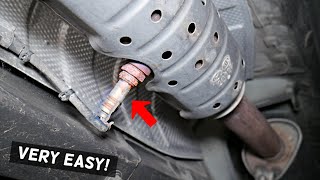
- Locate the downstream oxygen sensor. It is installed in the exhaust pipe after the catalytic converter. 🎬 See this quick guide to locating the downstream sensor You will need to raise the driver's side of the vehicle to access it.
- Inspect the sensor's wiring harness and connector for any obvious signs of damage, such as burns, chafing, or corrosion. The connector is located near the driver's side front wheel well area.
- If the fuse and wiring appear intact, disconnect the O2 sensor connector.
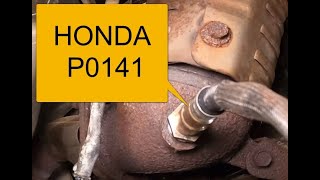
- Using a multimeter set to Ohms (Ω), measure the resistance across the two heater pins on the SENSOR side of the connector (these are the two wires of the same color, typically black). A good sensor should read between 10-40 ohms. An 'OL' or infinite reading means the heater is broken and the sensor must be replaced. A reading of near-zero ohms indicates a short circuit. 🎬 Watch: Common causes and fixes for the P0141 code
- If the sensor resistance is good, check for power at the HARNESS side of the connector. Turn the ignition key to the 'ON' position (engine off). Use a multimeter to check for battery voltage (approx. 12V) on the power wire (typically Black/Yellow).
- If power and sensor resistance are good, the final check is for a bad ground wire or a fault in the ECM circuit, which may require a more advanced wiring diagram to trace.
- If the sensor's heater circuit is open or shorted (Step 6), replace the downstream O2 sensor. It is highly recommended to use a Denso or NTK branded sensor.
Parts You'll Likely Need
- Downstream Oxygen Sensor
(OEM #36532-PHM-A11)— This is the most common cause of a P0141 code, as the internal heater element fails over time.
Trusted brands: Denso (OEM Supplier) - Part #234-4733, NTK (OEM Supplier) - Part #24660, Bosch (Use with caution, some owners report issues)
OEM price range: $150-$250
Aftermarket price range: $40-$100
Platform-Specific Known Issues
- Owner Experience: Simple Replacement: A user on InsightCentral.net with a 2001 Insight reported getting the P0141 code. They tested the heater circuit and found it open. They replaced the sensor with a Denso unit, cleared the code, and the problem was resolved. The entire process took less than an hour.
- Repair Story: Fuse Was The Culprit: In a thread on Honda-Tech, a user with a similar Honda vehicle found their P0141 was caused by a blown O2 heater fuse. After replacing the sensor, the new fuse blew immediately, indicating the old sensor had an internal short that caused the original fuse to fail. Replacing the sensor and then the fuse fixed the issue permanently.
Mechanic-Grade Diagnostic Values
- Secondary O2 Sensor Heater Resistance — expected: 5.0 to 6.4 ohms at room temperature.. Failure: A reading of infinite resistance (Open Loop / 'OL') or near-zero ohms (short circuit) indicates a failed heater element.
- Heater Circuit Power Supply Voltage — expected: Approximately 12V (battery voltage) at the harness connector's power wire (often Black/Yellow or Black/Red) with the key in the ON position, engine off.. Failure: No voltage indicates a blown fuse or a break in the power wire.
- Secondary O2 Sensor Signal Wire at ECU — expected: The signal wire for the secondary O2 sensor (SHO2S) terminates at pin D14 of the Engine Control Module (ECM).. Failure: This is a location for advanced testing; if power, ground, and sensor resistance are all good, a technician would test for continuity between the sensor connector and this pin.
Wiring & Ground Locations
- D14 (SHO2S) — On the 'D' connector of the Engine Control Module (ECM).. This is the specific pin where the secondary O2 sensor's signal wire terminates. It's essential for advanced diagnosis to check for a wiring break between the sensor and the ECM.
- Fuse #4 (15A) — In the under-hood fuse and relay box.. This fuse provides the 12V power for the O2 sensor's heater circuit. A blown fuse will immediately cause a P0141 code.
Diagnostic Flowchart
Other Known Issues on This Vehicle
Issues unrelated to this code that are worth knowing about as an owner of this generation:
- IMA Hybrid Battery Failure 🔴 High — Very common. Most original batteries have failed by now. Lifespan is typically 8-12 years or 100,000-150,000 miles. Failure is accelerated by infrequent driving.
- Clogged EGR System 🟠 Medium — Common, especially on cars over 100,000 miles. Causes hesitation, shuddering, and P0401 trouble code. Requires removal and cleaning of the EGR plate and passages.
- CVT Automatic Transmission Judder 🟠 Medium — A well-known issue on CVT-equipped models. Caused by a worn start clutch or degraded fluid. Can manifest as a shudder or jerk when accelerating from a stop.
- Manual Transmission Second Gear Synchro Wear 🟡 Low — A known weak point on 5-speed manual models. Results in grinding when shifting into second gear, especially when cold.
- Drivetrain-to-Chassis Ground Strap Corrosion 🟠 Medium — Common on older vehicles, especially in rust-prone areas. Can cause a variety of strange electrical issues, including IMA system faults and random warning lights.
Used vs. New Parts: Buying Guide for This Vehicle
When a used part is the smart pick: A used part is only recommended for the wiring harness connector (pigtail) if the original is physically damaged or corroded beyond repair. The sensor itself should always be purchased new.
Donor-vehicle mileage cap: roughly under 150000 miles for the part to have meaningful remaining life.
What to inspect on the donor part:
- For a connector pigtail, ensure the plastic is not brittle or cracked.
- Check for any signs of corrosion (green or white powder) on the metal pins.
- Ensure there is at least 6-8 inches of clean, un-spliced wire attached to the connector for easier installation.
Aftermarket brands forum-validated for this vehicle:
- Denso (OEM supplier)
- NTK (OEM supplier)
Brands owners have reported issues with on this vehicle:
- Universal 'splice-it-yourself' sensors are strongly discouraged due to potential resistance and voltage signal mismatches that can cause persistent issues on this vehicle.
Real Owner Stories
Aggregated from forums and TSBs cited above. Mileages and costs reflect what owners reported in those sources.
2001 Honda Insight 1.0L I3
Symptoms: Check Engine Light on with code P0141; testing revealed the heater circuit was open.
What fixed it: Replaced the sensor with a Denso unit and cleared the code.
Source hint: InsightCentral.net - Owner Experience: Simple Replacement
2000-2006 Honda Insight 1.0L I3
Symptoms: P0141 code present. After replacing the sensor, the new fuse blew immediately.
What fixed it: Replacing the sensor (which had an internal short) and then replacing the blown O2 heater fuse.
Source hint: Honda-Tech - Repair Story: Fuse Was The Culprit
Honda Owner Report
Symptoms: The vehicle experienced difficulty accelerating and the check engine light illuminated with multiple codes including P0141.
What fixed it: A technician at a dealership identified codes P0102, P0141, and P0340, then cleared the lights and test drove the vehicle to confirm the repair (NHTSA ODI #10284957).
Source hint: NHTSA ODI #10284957
Related OBD-II Codes
Frequently Asked Questions
Which brand of oxygen sensor should I use for my 2000-2006 Honda Insight to fix P0141?
Where is the fuse located for the O2 sensor heater circuit on the Insight?
How can I confirm if the downstream sensor heater has actually failed on my ECA1 1.0L I3?
Where is the downstream oxygen sensor connector located on this vehicle?
Could a blown fuse be the only reason for my P0141 code?
Is the P0141 code related to the common IMA hybrid battery failures on the Insight?
Helpful Videos


We Have This Part in Stock


The information in this article is provided for general reference and educational purposes only. Vehicle specifications, procedures, and part compatibility can vary by production date, trim level, and region. Always consult your vehicle's factory service manual and verify part numbers before purchasing or performing repairs. Safety-critical components such as airbags, seat belts, and braking systems should be installed by a qualified professional.
- Honda Insight:
- 🧭 Diagnostic Flowchart
- 🎬 Helpful Videos
- 🛍️ Shop This Part
- What's Unique About the 2000-2006 Honda Insight
- Symptoms You May Notice
- Most Likely Causes
- Rare But Worth Checking
- Diagnosis Steps
- Parts You'll Likely Need
- Platform-Specific Known Issues
- Mechanic-Grade Diagnostic Values
- Wiring & Ground Locations
- Other Known Issues on This Vehicle
- Used vs. New Parts: Buying Guide for This Vehicle
- Real Owner Stories
- 2001 Honda Insight 1.0L I3
- 2000-2006 Honda Insight 1.0L I3
- Honda Owner Report
- Related OBD-II Codes
- Frequently Asked Questions
- 🎟️ Get 5% Off