

P0141 on 2000-2005 Lexus IS300: O2 Sensor Heater Circuit Causes and Fixes
This code almost always means the Bank 1, Sensor 2 oxygen sensor has failed. This is the downstream sensor on the front exhaust manifold (cylinders 1-3). Replacing it with a Denso OEM part (234-4015) is the most common fix. Expect to pay $60-$100 for the part and consider it a straightforward DIY job that can be done in under an hour.
- P0141 on a 2000-2005 IS300 points directly to the heater circuit in the downstream oxygen sensor on the front exhaust manifold (Bank 1, Sensor 2).
- This is a very common failure due to age, and it does not typically cause any serious driving problems aside from an illuminated Check Engine Light and failing an emissions test.
- The most likely fix is to replace the sensor. Use an OEM part from Denso (part #234-4015 which cross-references to Lexus #89465-53190) for best results.
- Before replacing the part, it's wise to do a quick visual check of the sensor's wiring for any obvious melting or damage. A dedicated fuse is unlikely, but checking the main EFI fuse is a good precaution.
- This repair is considered DIY-friendly and can usually be completed in under an hour with basic tools, penetrating oil, and an O2 sensor socket.
What's Unique About the 2000-2005 Lexus IS300
The first-generation Lexus IS300 uses the robust 2JZ-GE engine, which has a well-documented and straightforward emissions system with four oxygen sensors. Fortunately, the sensor indicated by P0141 (Bank 1, Sensor 2) is one of the easiest to access on the vehicle. Unlike the firewall-side sensor (Bank 2, Sensor 1) which is notoriously difficult to reach, B1S2 is located underneath the car, just after the front catalytic converter, and can often be replaced in under an hour. Owners consistently report that the original Denso sensors are highly reliable, and failure of the heater circuit after 15-20+ years is a common and expected maintenance item.
Symptoms You May Notice
- Check Engine Light is on.
- Flashing traction control light (which often accompanies a Check Engine Light on this model).
- Failure to pass an emissions/smog test.
- Replacing the wrong oxygen sensor. The IS300 has four O2 sensors. P0141 is specifically for Bank 1 (front manifold, cylinders 1-3), Sensor 2 (downstream/post-catalyst).
- Replacing the catalytic converter. A heater circuit fault code is not related to the efficiency of the catalytic converter and will not be fixed by replacing it.
Most Likely Causes
- Failed Bank 1, Sensor 2 Oxygen Sensor 🔴 High Probability → Shop Oxygen Sensor The internal heater element of the oxygen sensor is a simple resistor that has a finite lifespan. After thousands of heat cycles over many years, the element simply burns out like a lightbulb filament, creating an open circuit.
How to confirm: Disconnect the sensor and test the resistance across the two heater wires (typically the two wires of the same color, often black on Denso sensors). A reading of infinite resistance (open circuit) or zero resistance (short circuit) confirms failure. The Lexus service manual specifies a resistance between 5.1 and 6.3 ohms at 68°F (20°C), though some owners report new sensors reading slightly higher, around 6.5 ohms. Given the high probability and low part cost, many owners opt to replace it without testing.
Typical fix: Replace the Bank 1, Sensor 2 oxygen sensor. Denso is the OEM manufacturer and is highly recommended. The correct part is Denso 234-4015.
Est. part cost: $60-$100 - Damaged Wiring or Connector 🟡 Medium Probability The sensor and its wiring are located under the car and are exposed to road debris, water, speed bumps, and extreme exhaust heat. This can cause wires to melt, fray, or corrode over time. The connector itself can also become brittle and fail.
How to confirm: Visually inspect the entire length of the sensor's wiring harness from the sensor to where it enters the cabin. Check the electrical connector for any signs of melting, chafing, breaks, or corrosion. Check for a secure connection. A Reddit user shared an image of a completely severed wire near the sensor being the cause of their P0141.
Typical fix: Repair the damaged section of the wire or replace the connector pigtail. In severe cases, the harness may need to be replaced.
Est. part cost: $5-$30 - Blown Fuse or Faulty Relay ⚪ Low Probability
How to confirm: While some Toyota/Lexus vehicles have a dedicated 'A/F Heater' fuse or relay, forum discussions for the IS300 and GS300 suggest the O2 sensor heaters are powered directly by the ECU. However, it is still wise to check the main EFI (Electronic Fuel Injection) fuse in the engine bay fuse box, as a problem there could affect multiple systems. The fuse boxes are located in the engine bay near the battery and in the driver's and passenger's side kick panels.
Typical fix: Replace the blown fuse. If the new fuse blows immediately, it indicates a short circuit in the wiring or the sensor itself that must be diagnosed.
Est. part cost: $1-$5
Rare But Worth Checking
- Faulty Engine Control Module (ECM): → Shop Engine Control Module (ECM) This is extremely rare. The ECM's internal driver circuit for the heater could fail. This should only be considered after confirming the sensor, wiring, and fuses are all in perfect working order. Replacing the ECM is a last resort.
Diagnosis Steps
- Confirm the code P0141 is present using an OBD-II scanner.
- Visually inspect the Bank 1, Sensor 2 oxygen sensor, which is located on the exhaust pipe just after the front catalytic converter. Check its wiring and connector for any obvious damage like melting, fraying, or corrosion.
- Check the main EFI fuse in the engine compartment fuse box.
- If the visual inspection passes, disconnect the sensor's electrical connector. The connector is located inside the vehicle, under the front of the passenger seat or carpet area.
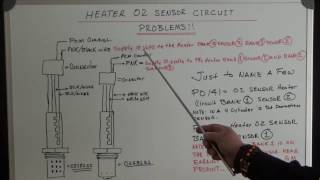
- Using a multimeter set to ohms, measure the resistance between the two heater pins on the sensor side of the connector (these are often the two wires of the same color). A healthy sensor should read between 5.1 and 6.3 ohms 🎬 See how to test the heater circuit with a multimeter. at room temperature. An infinite reading (OL) means the heater is broken and the sensor must be replaced.
- If the sensor resistance is good, turn the ignition key to the 'ON' position (engine off). Use a multimeter set to DC volts to check for 12V power at the corresponding heater circuit pins on the vehicle harness side of the connector.
- If there is no voltage, there is a problem with the wiring harness or the ECM. If voltage is present and the sensor's resistance is good, there may be an intermittent connection issue or a fault in the ECM's monitoring circuit (very rare).
Parts You'll Likely Need
- Oxygen Sensor (Bank 1, Sensor 2)
(OEM #89465-53190)— This is the component that contains the heater element that fails and triggers the P0141 code. The original part is Denso.
Trusted brands: Denso (OEM)
OEM price range: $80-$110
Aftermarket price range: $60-$90
Platform-Specific Known Issues
- Seized Sensor in Exhaust Bung: After many years and heat cycles, the oxygen sensor can become seized in the exhaust pipe. It is critical to spray the base of the sensor with a quality penetrating oil (like PB Blaster) and let it soak before attempting removal. Some owners have had to cut the wires of the old sensor to fit a 6-point deep socket over it with a large breaker bar to get it loose. Applying heat to the exhaust bung (not the sensor) can also help.
- Concrete Repair Story from ClubLexus: A user on ClubLexus with a 2000 GS300 (same engine/sensor) documented their P0141 fix. They purchased the correct Denso sensor on eBay for $65. They noted the key tools were an O2 sensor socket and an extendable ratchet. 🎬 Watch: This walkthrough shows the tools and steps for installation. They advised disconnecting the battery, spraying the old sensor with penetrating wrench, waiting 30 minutes, then removing it. They confirmed Bank 1 Sensor 2 is the lower sensor on the passenger side manifold. The entire job was completed for the cost of the part and basic tools, saving over $200 compared to a dealer quote.
Mechanic-Grade Diagnostic Values
- O2 Sensor Heater Element Resistance — expected: 5.1 - 6.3 Ohms at 20°C (68°F). Failure: Infinite resistance (Open circuit) or near-zero resistance (Short circuit).
- Voltage at ECM Connector Pin for B1S2 Heater (HT1B) — expected: 9 - 14 Volts (Battery Voltage) with ignition ON, engine OFF.. Failure: 0 Volts indicates an open in the wiring harness or a fault in the EFI Main Relay or ECM.
- Heater Circuit Current Draw — expected: Less than 2 Amps.. Failure: The ECM will trigger P0141 if the current draw exceeds 2 Amps, indicating a short circuit.
Scan Tool Commands That Help
- Toyota Techstream: Active Test: "Control the O2 Sensor Heater" — After replacing a sensor or repairing wiring, this command allows the technician to manually activate the heater circuit to confirm the repair without needing to complete a full drive cycle. It can also be used to verify voltage and ground at the sensor connector when the heater is commanded ON.
- Toyota Techstream: Data List: "O2S B1S2", "O2 Sensor Heater B1S2" — To monitor the live voltage output of the sensor and the status (On/Off) of the heater circuit as commanded by the ECM. This helps confirm if the ECM is attempting to activate the heater.
Wiring & Ground Locations
- HT1B (Heater) — Pin B7 on the ECM connector. The wire is typically Green/Black.. This is the specific pin at the Engine Control Module that provides the switched power to the Bank 1, Sensor 2 heater element. A voltage check here can quickly determine if the ECM driver is functioning.
- OX1B (Signal) — Pin B28 on the ECM connector. The wire is typically White.. While not directly part of the heater circuit, damage to the harness could affect both signal and heater wires. Knowing this pin helps in comprehensive harness testing.
- Engine Harness Grounds — There are two primary ground points for the engine harness located on the intake manifold. One is near the front and another is bolted to the rear of the manifold.. A poor ground connection at these points can cause a variety of electrical issues, including erratic sensor behavior. While less likely to cause a specific heater code, it's a critical check for any electrical fault diagnosis on the 2JZ-GE.
- B1S2 Connector — Inside the cabin, under the front passenger seat carpet.. This is the primary disconnection point for testing the sensor vs. the vehicle harness. Its location inside the cabin protects it from the elements but can make it a hassle to access. A poor connection here is a possible, though uncommon, cause of the code.
Real Owner Repair Stories
- YouTube user RJayStyle (2000-2005 Lexus IS300) — Check Engine Light on, TRAC light flashing, OBD code P0037 (Heater Circuit Low - functionally similar diagnosis to P0141).
✅ What actually fixed it The replacement Denso sensor did not have the correct connector. The technician had to de-pin the new sensor and the old factory connector and re-pin the new sensor with the original Lexus connector to make it fit. After this, the code was cleared and did not return. - Reddit r/IS300 user (First-gen Lexus IS300) — P0141 code present.
❌ Tried (didn't work) The owner's buddy had previously installed new O2 sensors, but wired them incorrectly.
✅ What actually fixed it The user was advised that the two same-colored wires (often white on universal sensors) are for the heater circuit and that the harness connects under the passenger seat. The ultimate fix was to replace the incorrectly wired sensor with a correct, plug-and-play Denso sensor from RockAuto, which resolved the issue. - Lexus Owners Club forum user (Lexus IS200 (similar system)) — P0141 code returned after multiple fixes.
❌ Tried (didn't work) Replaced the O2 sensor on the manifold., Replaced the catalytic converter.
✅ What actually fixed it In a highly unusual case, the user found the problem was caused by using the wrong grade of engine oil (Castrol Magnatec C3). After changing the oil back to the previously used grade (Magnatec A5), the code was resolved. This is an edge case, likely related to contaminants affecting sensor readings over time, not a direct heater circuit failure.
Model Year Variations Within This Range
- 2001 vs 2002-2005: The 2001 model year had several first-year quirks, such as no center armrest and different trim panels. While the engine and emissions systems related to P0141 are identical across all years (2001-2005), it's noted that 2002 and later models had many small bugs corrected. This does not directly affect the P0141 diagnosis but is relevant context for owners.
Diagnostic Flowchart
Real Owner Stories
Aggregated from forums and TSBs cited above. Mileages and costs reflect what owners reported in those sources.
2000 Lexus GS300 2JZ-GE
Symptoms: Triggered a P0141 code. The owner noted the sensor was the lower one on the passenger side manifold.
What fixed it: Disconnected the battery, sprayed the old sensor with penetrating wrench, waited 30 minutes, and removed it using an O2 sensor socket and an extendable ratchet. Replaced it with a Denso sensor purchased on eBay.
Cost: $65-$65
Source hint: ClubLexus forum thread 'How to change GS300 02 Sensor Bank 1 Sensor 2 Code P0141'
Lexus IS300
Symptoms: Check engine light with a P0141 code caused by a completely severed wire near the sensor on the exhaust.
What fixed it: Replaced the damaged sensor with a new Denso unit from RockAuto, which took about 5 minutes to install.
Cost: $60-$60
Source hint: Reddit r/IS300 thread 'Any ideas on how to fix P0141; O2 Sensor Heater Circuit Bank 1 Sensor 2'
2002 Lexus IS300
Symptoms: Received a P0141 code. During attempted repair, the old sensor was completely seized in the exhaust header.
What fixed it: The seized sensor stripped the threads in the header during removal, ultimately requiring a full header replacement to fix the vehicle.
Source hint: ClubLexus forum thread '02 IS300 P0141 code'
Lexus GS300
Symptoms: Vehicle threw both P0135 and P0141 codes simultaneously.
What fixed it: Determined that there are no dedicated fuses for the heater circuit and that they are powered directly from the ECU, confirming that failed sensors were the most likely cause rather than a simple blown fuse.
Source hint: Lexus Owners Club thread 'P0135 & P0141 Fault Codes (o2 Sensor Heater Circuit Bank 1 Sensor 1 & 2)'
Related OBD-II Codes
Frequently Asked Questions
Where is the Bank 1 Sensor 2 oxygen sensor located on my 2000-2005 Lexus IS300?
What is the correct replacement oxygen sensor for the IS300 P0141 code?
Is there a dedicated fuse for the O2 sensor heater on the 2JZ-GE engine?
How can I test if my IS300's O2 sensor heater is actually bad before buying a part?
Why is my traction control light flashing along with the Check Engine Light?
Are there any common issues when removing the old Bank 1 Sensor 2 sensor?
Helpful Videos


The information in this article is provided for general reference and educational purposes only. Vehicle specifications, procedures, and part compatibility can vary by production date, trim level, and region. Always consult your vehicle's factory service manual and verify part numbers before purchasing or performing repairs. Safety-critical components such as airbags, seat belts, and braking systems should be installed by a qualified professional.
- Lexus IS300:
- 🧭 Diagnostic Flowchart
- 🎬 Helpful Videos
- What's Unique About the 2000-2005 Lexus IS300
- Symptoms You May Notice
- Most Likely Causes
- Rare But Worth Checking
- Diagnosis Steps
- Parts You'll Likely Need
- Platform-Specific Known Issues
- Mechanic-Grade Diagnostic Values
- Scan Tool Commands That Help
- Wiring & Ground Locations
- Real Owner Repair Stories
- Model Year Variations Within This Range
- Real Owner Stories
- 2000 Lexus GS300 2JZ-GE
- Lexus IS300
- 2002 Lexus IS300
- Lexus GS300
- Related OBD-II Codes
- Frequently Asked Questions
- 🎟️ Get 5% Off