

P0148 on 2010-2019 Ford Taurus 3.5L EcoBoost: Fuel Delivery Error Causes and Fixes
Code P0148 on a 3.5L EcoBoost Taurus means the engine isn't getting the high-pressure fuel it needs. This is most often caused by a failing High-Pressure Fuel Pump (HPFP), a bad Fuel Pump Driver Module (FPDM), or a faulty Fuel Rail Pressure Sensor. On this specific engine, catastrophic failure of the HPFP and the camshaft lobe that drives it is a known issue. Expect a repair cost of $400-$1,800+ depending on the failed component and extent of damage.
- P0148 on your Taurus SHO indicates a serious fuel delivery problem on the high-pressure side; stop driving to prevent stalling and potential engine damage.
- Diagnosis requires a scan tool that can read Ford-specific live data to compare desired vs. actual fuel rail pressure.
- The most likely failures are the High-Pressure Fuel Pump (HPFP), the Fuel Pump Driver Module (FPDM), or the Fuel Rail Pressure Sensor (FRPS).
- Do not immediately assume the in-tank fuel pump is bad; proper diagnosis is key to avoiding expensive and unnecessary repairs.
- Due to the extremely high pressures and complexity, this is a job best left to a professional mechanic familiar with Ford EcoBoost engines.
What's Unique About the 2010-2019 Ford Taurus
The 3.5L EcoBoost is a Gasoline Direct Injection (GDI) engine, which means it has two fuel pumps: a low-pressure pump in the tank and a high-pressure fuel pump (HPFP) driven by the camshaft. Code P0148 almost always points to a problem in this high-pressure circuit. A common and severe failure on this platform involves the HPFP's internal plunger or the roller follower wearing down, which in turn can destroy the dedicated lobe on the camshaft that drives it. This leads to a catastrophic loss of fuel pressure and can require engine replacement if the damage is severe.
Symptoms You May Notice
- Significant loss of engine power, especially during acceleration
- Engine hesitation or sputtering under load
- Rough or unstable idle
- Engine stalling, sometimes without warning
- Check Engine Light is illuminated
- Hard starting or long crank times
- Strong fuel odor
- Black smoke from the exhaust
- Replacing the in-tank fuel pump when the actual problem is the High-Pressure Fuel Pump (HPFP) or the Fuel Pump Driver Module (FPDM).
- Replacing the HPFP when the issue is just a faulty Fuel Rail Pressure Sensor providing bad data to the computer.
- Ignoring the low-pressure side of the system. A failing FPDM or weak in-tank pump can starve the HPFP, causing it to be flagged as the problem.
Most Likely Causes
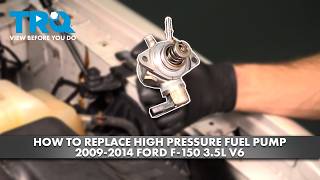
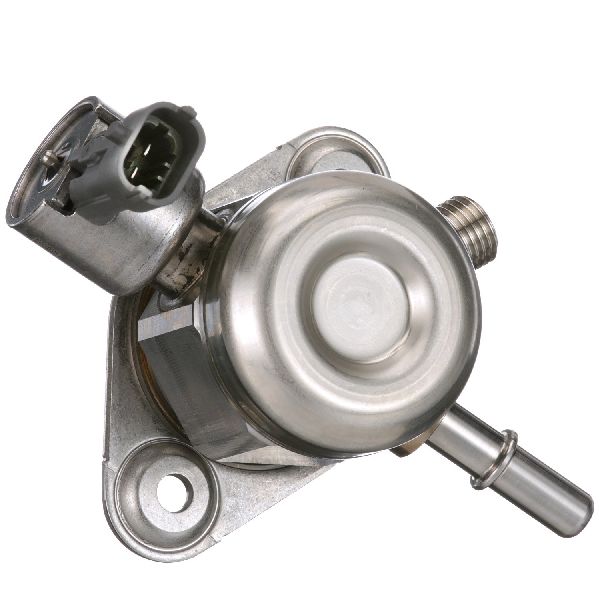
- Failing High-Pressure Fuel Pump (HPFP) 🔴 High Probability → Shop Fuel Pump The HPFP is a mechanical pump driven by a dedicated lobe on the camshaft. Over time, the pump's internal plunger or the roller follower can wear down and completely disintegrate. This failure mode often takes out the camshaft lobe that drives it, leading to a complete inability to generate high pressure and requiring major engine work.
How to confirm: Use a diagnostic scan tool to monitor both desired and actual fuel rail pressure. During a wide-open throttle run (safely), if the actual pressure drops significantly while desired pressure remains high, the HPFP is a likely culprit. Upon removal, visually inspect the pump's plunger and the roller follower for wear, scoring, or complete destruction. Also, inspect the camshaft lobe for scoring or visible wear, which confirms a catastrophic failure.
Typical fix: Replacement of the High-Pressure Fuel Pump. In severe cases where the camshaft lobe is damaged, the camshaft must also be replaced, which is a major engine repair. The fuel lines connected to the HPFP are often one-time use and must be replaced as well.
Est. part cost: $300-$700 - Faulty Fuel Pump Driver Module (FPDM) 🟡 Medium Probability → Shop Fuel Pump The FPDM controls the voltage to the in-tank low-pressure pump. These modules are a known failure point on many Ford vehicles. A faulty FPDM can't command the low-pressure pump to supply enough fuel to the HPFP, causing it to be starved for fuel under high demand, which triggers P0148. There was a recall (16V925000 / Ford 16S31) for the 2013-2015 Taurus for an overheating component in the fuel pump electric module, which could cause a loss of power to the fuel pump.
How to confirm: The FPDM is typically located under the rear passenger seat cushion. 🎬 Watch: How to replace the Fuel Pump Driver Module A technician can test for power and ground signals going into the module and check for the correct output signal to the pump while the engine is running. No output with correct input signals confirms a bad module. A scan tool may also show related codes like P025A.
Typical fix: Replacement of the Fuel Pump Driver Module.
Est. part cost: $60-$150 - Faulty Fuel Rail Pressure Sensor (FRPS) 🟡 Medium Probability → Shop Fuel Pressure Sensor Sensors can fail electronically, sending incorrect readings to the PCM. The sensor might read a lower pressure than is actually present, or the reading might be erratic, causing the PCM to trigger the P0148 code even if the mechanical parts are fine.
How to confirm: With the key on but the engine off, the fuel rail pressure reading on a scan tool should be low and stable (typically under 100 PSI, matching the low-side pressure). If it's reading erratically, zero, or an unusually high value, the sensor is likely faulty. Checking the sensor's voltage output against specifications is another diagnostic step.
Typical fix: Replacement of the Fuel Rail Pressure Sensor. This sensor is located on the high-pressure fuel rail, often under the intake manifold, 🎬 Watch: How to replace the fuel rail pressure sensor making access difficult.
Est. part cost: $50-$120 - Weak In-Tank Low-Pressure Fuel Pump ⚪ Low Probability → Shop Fuel Pump While the in-tank pump is generally reliable, it can weaken with age and mileage. If it cannot supply a sufficient volume of fuel to the HPFP, the high-pressure side will fail to meet its target pressure under load.
How to confirm: Connect a fuel pressure gauge to the low-pressure system's service port. The pressure should meet Ford's specifications (typically 40-75 PSI) at idle and maintain it under load. A significant drop in pressure indicates a weak pump or a clogged filter.
Typical fix: Replacement of the in-tank fuel pump module assembly.
Est. part cost: $250-$500
Rare But Worth Checking
- Clogged Fuel Filter: → Shop Fuel Filter The fuel filter is integrated into the fuel pump module assembly in the tank and is non-serviceable separately. While not a common cause on its own, a severely clogged filter can restrict flow and contribute to this code.
- Damaged Wiring: Wiring issues to the HPFP, FPDM, or fuel rail pressure sensor can cause erratic signals or loss of power. Check for chafed wires or corroded connectors, especially in the engine bay and near the FPDM under the rear seat.
- Leaking Fuel Injector: A fuel injector that is stuck open or leaking can cause a drop in rail pressure, potentially triggering a P0148 code, though this is less common.
Diagnosis Steps
- Connect a high-quality OBD-II scanner capable of reading live data from Ford-specific modules.
- Monitor 'Desired Fuel Rail Pressure' and 'Actual Fuel Rail Pressure' PIDs.
- With the Key On, Engine Off, check the Actual Fuel Rail Pressure reading. It should be low (under 100 PSI). A high or erratic reading suggests a bad Fuel Rail Pressure Sensor (FRPS).
- Start the engine and let it idle. The desired and actual pressures should be nearly identical.
- Safely perform a brief, wide-open throttle acceleration test while monitoring the data. If 'Actual' pressure drops significantly while 'Desired' pressure spikes, a mechanical delivery issue is present.
- If pressure drops, the next step is to isolate the low-pressure and high-pressure systems. Test the low-pressure pump's output pressure using a mechanical gauge to ensure it meets specifications (40-75 PSI). If it does, the problem is likely on the high-pressure side (HPFP).
- If low-pressure is weak, test the Fuel Pump Driver Module (FPDM) for correct input and output signals before condemning the in-tank pump.
- If both low-pressure and FPDM function are confirmed, the High-Pressure Fuel Pump (HPFP) is the primary suspect. Carefully remove the HPFP.
- Inspect the HPFP plunger, the roller follower, and its camshaft drive lobe for mechanical wear, scoring, or damage upon removal. This is a critical step on this engine.
Parts You'll Likely Need
- High-Pressure Fuel Pump (HPFP)
(OEM #AG9Z-9D376-B (Motorcraft CM5250) - Always verify with VIN)— This is the most common mechanical failure point for code P0148 on the 3.5L EcoBoost engine, often failing catastrophically.
Trusted brands: Motorcraft, Bosch
OEM price range: $450-$700
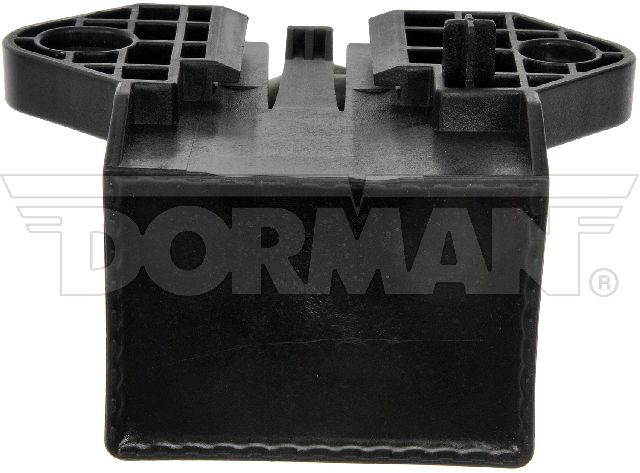
Aftermarket price range: $300-$550 - Fuel Pump Driver Module (FPDM)
(OEM #BU5Z-9F972-A (Motorcraft PFS1049) - Always verify with VIN)— A common electronic failure point that controls the low-pressure pump. A recall was issued for 2013-2015 models for this part.
Trusted brands: Motorcraft, Dorman, Standard Motor Products
OEM price range: $80-$120
Aftermarket price range: $60-$90 - Fuel Rail Pressure Sensor (FRPS)
(OEM #BU5Z-9F972-B (Motorcraft CM5229) - Always verify with VIN)— This high-pressure sensor is a frequent failure point and can send incorrect data, mimicking a mechanical pump failure. It is often misidentified as the HPFP itself due to confusing part descriptions.
Trusted brands: Motorcraft, Bosch
OEM price range: $65-$100
Aftermarket price range: $40-$70
Related Codes That Often Appear With This One
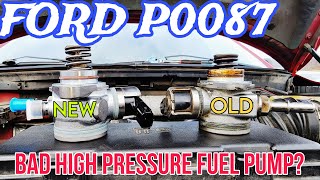
- P0087 — P0087 (Fuel Rail/System Pressure - Too Low) is a very similar code and often appears with P0148, as both indicate a failure to meet fuel pressure targets.
- P025A — P025A (Fuel Pump Module Control Circuit/Open) can appear if the Fuel Pump Driver Module (FPDM) has failed or has an electrical fault.
- P053F — P053F (Cold Start Fuel Pressure Performance) can be stored alongside P0148 and P0087, pointing towards a comprehensive failure in the high-pressure fuel system's ability to build pressure, especially on startup.
Technical Service Bulletins (TSBs) & Recalls
- Recall 16V925000: A component within the fuel pump electric module (PEM) may overheat causing a loss of electrical power to the fuel pump on 2013-2015 Taurus models.
Platform-Specific Known Issues
- There was a recall (14S30) for the fuel pump on some 2014-2015 Taurus models, which could lead to stalling. While not directly for P0148, it highlights known issues in the fuel system for this platform.
Mechanic-Grade Diagnostic Values
- Low-Pressure Fuel System Pressure — expected: 40-75 PSI at idle.. Failure: Pressure drops below 40 PSI, especially under load, indicating a weak in-tank pump, FPDM issue, or clogged filter.
- High-Pressure Fuel System Pressure (Scan Tool PID) — expected: Approx. 250-500 PSI at idle, rising to over 2,150 PSI under load.. Failure: Actual pressure fails to follow desired pressure, or drops significantly during acceleration.
- Fuel Rail Pressure Sensor (FRPS) Voltage (KOEO) — expected: Greater than 0.5V, typically around 0.5V-1.0V representing low-side pressure.. Failure: Voltage is stuck high (e.g., ~4.8V) or reads 0V, indicating a failed sensor or wiring short/open.
- Fuel Pump Driver Module (FPDM) Pump Current — expected: 4-9 Amps during normal operation.. Failure: Sustained current draw over 12A indicates a failing in-tank pump motor causing an overcurrent condition.
- PCM Connector Ground Pins — expected: Less than 0.1V voltage drop between the ground pins on the PCM connector and the battery negative terminal.. Failure: Voltage reading higher than 0.1V indicates high resistance in the ground circuit, which can cause erratic PCM behavior.
Scan Tool Commands That Help
- Ford IDS (Integrated Diagnostic System): Relative Injector Flow Test — To perform a contribution/balance test on the high-pressure injectors to see if one is leaking or clogged, which could cause a pressure drop. This was added in IDS release 73.
- Ford IDS (or equivalent high-end scanner): HPFP Volume Control Valve (VCV) Duty Cycle Command — To manually command the solenoid that regulates pressure on the HPFP. This directly tests the pump's mechanical regulator function to see if it's stuck.
- Ford IDS / FORScan: Module Initialization / Fuel Injection Pump Adjustment — After replacing a major fuel system component like the HPFP or PCM, this function may be required to sync the new module with the vehicle's security system (PATS).
- Ford IDS: Power Balance Test — To graphically display the power contribution of each cylinder. A cylinder with a leaking injector may show a significant deviation, helping to pinpoint a pressure loss issue.
Wiring & Ground Locations
- FPDM (Fuel Pump Driver Module) — Under the rear passenger seat cushion, mounted to the floor.. This module controls the low-pressure pump. Its location makes it susceptible to moisture if windows are left open or spills occur. Check the connector for corrosion.
- G105 — A primary engine ground located at the rear of the engine compartment.. A poor engine ground can cause incorrect readings from various sensors, including those in the fuel system.
- PCM Ground Pins — On the main PCM electrical connector, located at the rear of the engine compartment near the firewall. On a similar F-150 harness, there are four main ground pins grouped together.. The PCM relies on a solid ground reference to interpret sensor voltages correctly. High resistance here can cause dozens of phantom codes, including fuel pressure errors.
- Passenger Side Harness Chafe Point — The wiring harness that runs along the passenger side frame rail and up into the engine bay, near the inner splash shield.. This area is susceptible to water splash. On a documented F-150 repair, a single corroded wire in this harness that supplied reference voltage to multiple sensors caused nine different codes, including MAP and VCT sensor faults that could indirectly affect fuel calculations.
Real Owner Repair Stories
- YouTube channel 'Airan' (2016 Ford Fusion (different model, but identical codes and 2.0L EcoBoost system architecture)) — P0087 and P0148, hesitation, jerking, shaking, misfire at startup.
❌ Tried (didn't work) Replaced high-pressure fuel pump (HPFP), Replaced low-pressure in-tank fuel pump, Replaced fuel pump driver module (FPDM)
✅ What actually fixed it The low-pressure fuel line sensor was faulty and stuck at a high reading (109 PSI / 4.82V). This tricked the PCM into thinking the low-side pressure was fine, so it didn't command the FPDM to send enough fuel, which starved the HPFP under load. Replacing the low-pressure sensor (P/N BU5Z-9F972-B) resolved the issue. - YouTube channel 'Advanced Level Auto' (2013 Ford F-150 (similar EcoBoost platform)) — Intermittent no-start, no communication with PCM, dashes on the odometer instead of mileage.
❌ Tried (didn't work) Initial assumption of a bad PCM.
✅ What actually fixed it A loose female pin connection for fuse #75 (PCM power) in the under-hood fuse box. Applying pressure to the fuse restored power to the PCM. The fix was to carefully tighten the pin terminal within the fuse box to ensure a solid connection, resolving the intermittent power loss that was causing the PCM to shut down.
OEM Part Supersession History
BU5A-9F972-BA→BU5A-9F972-CA— Part revision for the low-pressure fuel line sensor. The revised part is identifiable by a small hole in its body.
Heads up: This part number is for a low-pressure line sensor, which has been documented as a fix for P0148/P0087 on other EcoBoost platforms. It is often confused with the high-pressure FRPS. Ensure you are diagnosing the correct sensor.
Model Year Variations Within This Range
- 2013-2015: These model years were subject to Ford recall 16S31 (NHTSA 16V621000) for a faulty Fuel Pump Driver Module (FPDM) that could overheat and cause the engine to stall or fail to start, producing symptoms identical to P0148.
Diagnostic Flowchart
Other Known Issues on This Vehicle
Issues unrelated to this code that are worth knowing about as an owner of this generation:
- Internal Water Pump Failure 🔴 High — Common over 80,000 miles. The transverse 3.5L EcoBoost (used in the Taurus) has an internal, timing-chain-driven water pump. When it fails, it leaks coolant directly into the engine oil, which can cause catastrophic engine failure if not caught immediately.
- Power Transfer Unit (PTU) Overheating/Failure 🔴 High — Very common on AWD models, sometimes failing as early as 30,000-60,000 miles. The unit is located near the hot exhaust, lacks cooling, and holds very little fluid, which breaks down quickly. Ford's 'lifetime fluid' recommendation is widely disputed by owners who recommend fluid changes every 20-30k miles.
- Timing Chain Stretch (Gen 1) 🟠 Medium — Primarily affects first-generation (pre-2017) engines, often presenting as a 'cold start rattle' between 70,000-120,000 miles. Caused by wear in the primary timing chain links. Can lead to timing-related codes and, if ignored, engine damage. (Ref: Multiple TSBs exist for F-150s, but the issue is inherent to the engine design across platforms.)
- Carbon Buildup on Intake Valves 🟠 Medium — A common issue for all GDI engines, including the 3.5L EcoBoost. Over time, oil and fuel deposits bake onto the back of the intake valves, restricting airflow and causing misfires and performance loss, typically noticeable after 60,000-100,000 miles.
- Turbo Coolant Line Leaks 🟠 Medium — The fittings for the coolant lines that feed the turbochargers can develop leaks over time. This can lead to coolant loss and potential overheating. The location makes repair labor-intensive.
Used vs. New Parts: Buying Guide for This Vehicle
When a used part is the smart pick: A used Fuel Pump Driver Module (FPDM) can be a cost-effective choice, as it is a simple electronic module. A used intake manifold may also be sourced if the original is damaged during a sensor replacement. Other electronic sensors can be considered if from a low-mileage, verified-running donor vehicle.
Donor-vehicle mileage cap: roughly under 70000 miles for the part to have meaningful remaining life.
What to inspect on the donor part:
- For an FPDM, ensure the donor vehicle was not in a flood.
- Check electrical connector pins on any used sensor or module for corrosion or damage.
- Ask for the VIN of the donor car to check for accident history and verify mileage.
OEM-only on this vehicle (don't cheap out):
- High-Pressure Fuel Pump (HPFP): This is a critical, high-wear mechanical part. The risk of premature failure from a used unit is very high. The catastrophic failure mode of this part (damaging the camshaft) makes a new OEM part the only recommended option.
- Fuel Rail Pressure Sensor (FRPS): Given the high labor cost to access this sensor (intake manifold removal), the small savings on a used part are not worth the risk of having to do the job twice. Use a new OEM (Motorcraft or Bosch) part.
Aftermarket brands forum-validated for this vehicle:
- Bosch (Often the OEM supplier for fuel components)
- Motorcraft (Ford's OEM parts brand)
Brands owners have reported issues with on this vehicle:
- No-name, unbranded sensors from online marketplaces. The accuracy of fuel pressure sensors is critical for engine performance and safety, and cheap aftermarket sensors are a common source of incorrect diagnoses and repeat failures.
Real Owner Stories
Aggregated from forums and TSBs cited above. Mileages and costs reflect what owners reported in those sources.
Ford EcoBoost Engine
Symptoms: Catastrophic failure accompanied by codes P0087, P0148, and P053F.
What fixed it: Replacement of the High-Pressure Fuel Pump (HPFP) and the damaged camshaft.
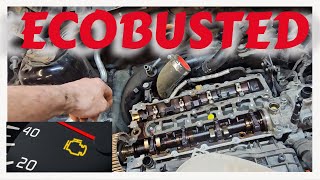
Source hint: Video by 'The Flat Rate Mechanic' showing a catastrophic HPFP and camshaft lobe failure on a Ford EcoBoost engine with codes P0087, P0148, and P053F.
2011-2016 Ford F-150 3.5L EcoBoost
Symptoms: Fuel dilution in the oil, discovered during a used oil analysis.
What fixed it: This condition is often caused by a leaking seal on the high-pressure fuel pump.
Source hint: A thread discussing fuel dilution in oil, which can be caused by a leaking seal on the high-pressure fuel pump on bobistheoilguy.com
Related OBD-II Codes
Frequently Asked Questions
Is there a recall for the fuel system on my 2013-2015 Ford Taurus that could cause a P0148?
Where is the Fuel Pump Driver Module (FPDM) located on the Ford Taurus?
Can a bad camshaft cause the P0148 code on the 3.5L EcoBoost?
Why does my Taurus SHO have a strong fuel odor and black smoke with this code?
Is the Fuel Rail Pressure Sensor easy to replace on the 3.5L EcoBoost engine?
What should the fuel pressure be for the low-pressure system on a 2010-2019 Taurus?
Helpful Videos


Used OEM Parts in Stock
New Aftermarket Parts Available


The information in this article is provided for general reference and educational purposes only. Vehicle specifications, procedures, and part compatibility can vary by production date, trim level, and region. Always consult your vehicle's factory service manual and verify part numbers before purchasing or performing repairs. Safety-critical components such as airbags, seat belts, and braking systems should be installed by a qualified professional.
- Ford Taurus:
- 🧭 Diagnostic Flowchart
- 🎬 Helpful Videos
- 🛍️ Shop This Part
- What's Unique About the 2010-2019 Ford Taurus
- Symptoms You May Notice
- Most Likely Causes
- Rare But Worth Checking
- Diagnosis Steps
- Parts You'll Likely Need
- Related Codes That Often Appear With This One
- Technical Service Bulletins (TSBs) & Recalls
- Platform-Specific Known Issues
- Mechanic-Grade Diagnostic Values
- Scan Tool Commands That Help
- Wiring & Ground Locations
- Real Owner Repair Stories
- OEM Part Supersession History
- Model Year Variations Within This Range
- Other Known Issues on This Vehicle
- Used vs. New Parts: Buying Guide for This Vehicle
- Real Owner Stories
- Ford EcoBoost Engine
- 2011-2016 Ford F-150 3.5L EcoBoost
- Related OBD-II Codes
- Frequently Asked Questions
- 🎟️ Get 5% Off