

P0148 on 2017-2019 Volkswagen Golf: Fuel Delivery Error Causes and Fixes
P0148 on a 2017-2019 VW Golf indicates a 'Fuel Delivery Error'. This is most often caused by a failing high-pressure fuel pump (HPFP) or a clogged fuel filter. It frequently appears with code P0087 (Fuel Rail Pressure Too Low), and diagnosis should focus on the entire fuel delivery system, from the in-tank pump to the engine-mounted pump.
- P0148 on your Golf means there's a fuel delivery problem, most likely related to low fuel pressure.
- This code is very often seen with P0087 (Fuel Rail Pressure Too Low), which reinforces the diagnosis.
- The most common causes are a failing high-pressure fuel pump (HPFP), its cam follower, or a clogged fuel filter.
- Do not ignore this code. It can cause stalling, which is a safety risk, and potential engine damage.
- Due to the high pressures involved, diagnosis and repair are best left to a qualified mechanic.
What's Unique About the 2017-2019 Volkswagen GOLF

For the 2017-2019 VW Golf (Mk7/Mk7.5 generation) with the EA888 Gen3 engine, the fuel system has two key pumps: a low-pressure fuel pump (LPFP) in the tank and a high-pressure fuel pump (HPFP) driven by four lobes on the exhaust camshaft. P0148, especially when seen with P0087, often points directly to a problem with the HPFP or its cam follower, which are known wear items on VW/Audi direct-injection engines. The provided NHTSA technical service bulletins confirm that VW groups P0148 with fuel pressure codes P0087 and P053F, indicating a recognized pattern of fuel system faults on these models. [VIN4APIN20210324, VIN4APIN20210316, VIN4APIN20210225] Additionally, a specific VW Tech Tip (published 09-18-2020) points to a known failure of the in-tank LPFP causing a no-start on an incline with low fuel, which can also trigger P0148.
Diagnostic Flowchart

Tap your situation to follow the diagnostic path that matches what you're seeing on this vehicle.
Symptoms You May Notice
- Check Engine Light is on
- EPC (Electronic Power Control) light may be on
- Engine hesitation or loss of power, especially during acceleration
- Engine stalls, runs rough, or enters 'limp mode'
- Hard starting or no-start condition, sometimes only when the engine is warm or parked on an incline
- Reduced fuel economy
- Strong fuel smell
- Black smoke from the exhaust
- Replacing the HPFP without also replacing the cam follower, which often leads to a quick repeat failure of the new pump.
- Replacing fuel pumps when the actual issue is a simple clogged fuel filter.
- Guessing between the LPFP and HPFP without proper diagnosis. The 'incline test' is a strong indicator for the LPFP, while logging pressure under load is key for diagnosing the HPFP.
Most Likely Causes

- Failing High-Pressure Fuel Pump (HPFP) 🔴 High Probability → Shop Fuel Pump The HPFP is a mechanical pump that is a known wear-and-tear item on VW's direct-injection engines. Internal failure or wear on its cam follower can lead to insufficient pressure. Forum users on golfmk7.com and Reddit frequently cite the HPFP as the ultimate fix for a persistent P0087/P0148 combination.
How to confirm: A technician will use a scan tool to log requested vs. actual fuel rail pressure under load. If the actual pressure cannot meet the demand (e.g., drops significantly during a wide-open throttle pull), the HPFP is weak. At idle, a healthy pump should maintain around 40-50 bar (580-725 PSI), rising to 200 bar (2900 PSI) under load. A failing pump may only show 6-10 bar at idle.
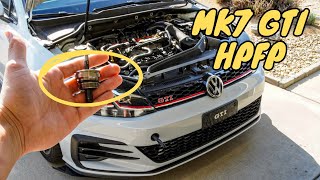
Typical fix: Replace the high-pressure fuel pump and its cam follower. 🎬 Watch: How to install a high-pressure fuel pump upgrade It is critical to replace the follower at the same time to prevent repeat failure.
Est. part cost: $350-$500 - Clogged Fuel Filter 🟡 Medium Probability → Shop Fuel Filter The fuel filter is a maintenance item that is often overlooked. If it becomes clogged, it can starve the HPFP of the fuel it needs to build pressure. Some owners on forums have added an additional in-line filter to protect upgraded injectors, which can also become a point of failure.
How to confirm: Perform a low-pressure fuel system test. If the pressure from the in-tank pump is low at the filter outlet, the filter is likely restricted. Given its relatively low cost, it's often replaced as a preventative measure during fuel system diagnosis.
Typical fix: Replace the in-line fuel filter. The OEM part number for many 2.0L models is 5Q0127177.
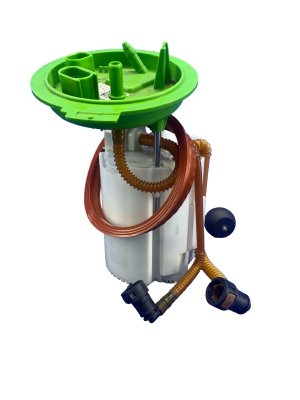
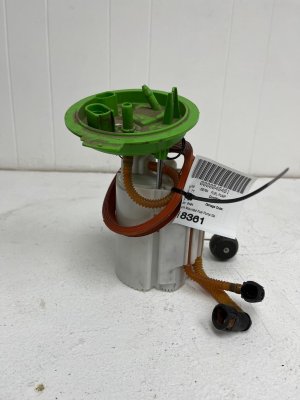
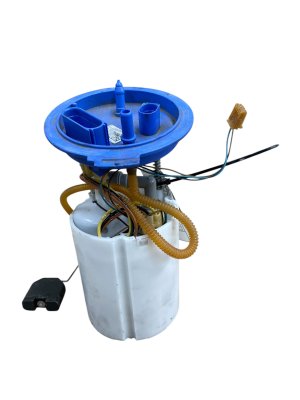
Est. part cost: $30-$80 - Failing In-Tank Low-Pressure Fuel Pump (LPFP) 🟡 Medium Probability → Shop Fuel Pump The in-tank pump supplies fuel to the HPFP. If it weakens, it cannot provide enough volume for the HPFP to pressurize, triggering the code. A specific VW Tech Tip (20-18-01TT) notes a failure mode where the pump can't hold pressure due to a faulty internal valve, causing no-starts on an incline with low fuel (under 1/4 tank).
How to confirm: A fuel pressure gauge can be used to test the output pressure of the low-pressure pump; it should be between 4 and 7 bar depending on ECM request. The most telling sign is replicating the 'no-start on an incline' issue described in the Tech Tip.
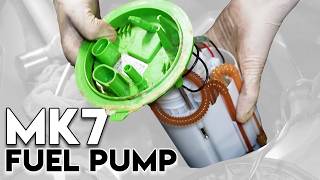
Typical fix: Replace the in-tank fuel pump assembly. 🎬 See this walkthrough for removing the low-pressure fuel pump
Est. part cost: $150-$500 - Faulty Fuel Pressure Sensor ⚪ Low Probability → Shop Fuel Pressure Sensor While less common than pump failures, the low-pressure sensor (G410) or high-pressure sensor (G247) can fail and send incorrect data to the ECM. An older VW TSB for other engines (01 12 20 / 2027458) describes how fuel can intrude into the low-pressure sensor, causing false readings and triggering codes like P0087.
How to confirm: Compare the fuel pressure reading from a scan tool with the reading from a mechanical fuel pressure gauge. If the readings differ significantly, the sensor is bad. For the G247 high-pressure sensor, VW specifies that if the scan tool value deviates more than ±5.0 bar from the mechanical gauge, the sensor is faulty.
Typical fix: Replace the fuel rail pressure sensor (G247) or the low-pressure sensor (G410). An updated low-pressure sensor part number mentioned in a TSB is 06E 906 051 K.
Est. part cost: $50-$150
Rare But Worth Checking
- Leaking Fuel Injector: A fuel injector stuck open can cause a drop in rail pressure, triggering P0148. This can be more common on tuned vehicles and may sometimes be intermittent, causing rough idle and stalling when warm. A failure can lead to fuel washing oil from the cylinder walls or causing a hydraulic lock. A leak-down test can be performed with VCDS by monitoring rail pressure after the engine is shut off; a rapid drop indicates a leak.
- Damaged Wiring or Connectors: Corrosion or damage to the wiring for the fuel pumps or pressure sensor can cause erratic signals and trigger the code. One owner on a forum found that loose pins in the high-pressure rail sensor's electrical plug were the root cause of a persistent P0087 after a new pump didn't fix the issue.
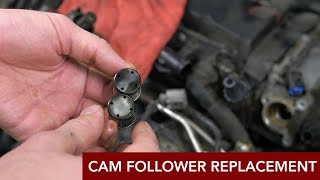
- Worn HPFP Cam Follower: → Shop Fuel Pump While the EA888 Gen3 has an improved roller-style follower compared to older engines, significant wear or failure is still possible, especially on high-mileage or modified cars. A worn follower prevents the HPFP from achieving its full stroke, directly reducing its output. If it fails completely, it can cause severe damage to the camshaft. 🎬 Watch: DIY guide for replacing the fuel pump cam follower
- Failing Fuel Pump Control Module (J538): → Shop Fuel Pump This module controls the in-tank low-pressure pump. Failures can be caused by overheating, corrosion, or internal faults, leading to poor LPFP performance. Symptoms can include a humming noise from the rear of the car after shutdown or a no-start with multiple warning lights. Some modules have been updated with aluminum housings for better heat dissipation.
Diagnosis Steps
- Scan the ECM for all stored trouble codes. Note any other codes present, especially P0087 or misfire codes.
- Check the freeze frame data to see the engine conditions (RPM, load, etc.) when the code was set.
- Visually inspect the fuel system for any obvious leaks, from the tank to the engine.
- If the fuel level is below 1/4 tank, park the car on a steep incline and attempt to start it. If it fails to start, the in-tank low-pressure fuel pump (LPFP) is highly suspect per VW Tech Tip 20-18-01TT.
- Using a scan tool (VCDS/OBDeleven preferred), monitor requested vs. actual fuel rail pressure. For UDS modules, use 'Advanced Measuring Values' to log 'Fuel high pressure: actual value'. Log the values during a drive with a wide-open throttle pull. A significant drop where actual pressure cannot meet requested pressure points to a weak HPFP or fuel restriction.
- Perform a low-pressure fuel system test. With a scan tool, check 'Fuel low pressure; actual value'. At idle, it should be around 5.0 bar +/- 0.5 bar. With the engine off, it should read a non-zero value.
- If low-side pressure is good but high-side pressure drops under load, the focus shifts to the high-pressure system. Inspect the high-pressure fuel pump (HPFP) and, critically, its cam follower for wear or damage.
- If both pumps and the filter seem okay, test the high-pressure fuel sensor (G247) by comparing its electronic reading to a mechanical gauge (like VAS 6394). A deviation greater than 5 bar indicates a faulty sensor.
- Inspect wiring and connectors for the fuel pumps and sensors for any signs of damage, corrosion, or hairline cracks, especially the connector on the HPFP and the G247 sensor itself.
Parts You'll Likely Need
- High-Pressure Fuel Pump (HPFP)
(OEM #06K127025E (supersedes 06K127025B, 06K127025D))— This is the most common mechanical failure point that directly causes P0148 and P0087 on this engine.
Trusted brands: Bosch, Hitachi, VW Genuine
OEM price range: $350-$500
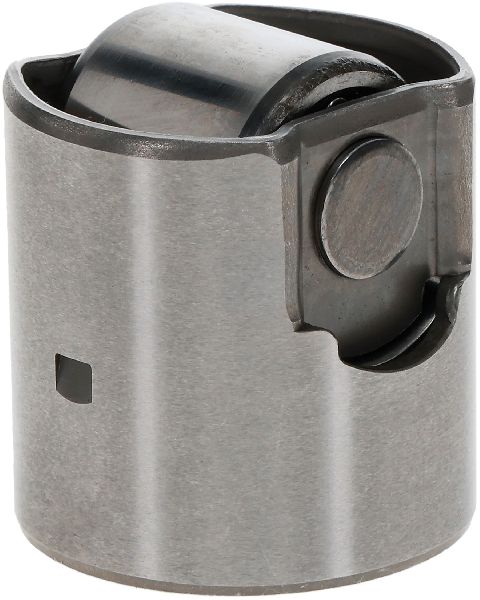
Aftermarket price range: $250-$400 - HPFP Cam Follower
(OEM #06L109311)— This is a critical wear item that must be inspected and is almost always replaced with the HPFP to prevent premature failure of the new pump and potential camshaft damage.
Trusted brands: INA, VW Genuine
OEM price range: $30-$50
Aftermarket price range: $20-$40 - Fuel Filter
(OEM #5Q0127177)— A clogged filter is a common and relatively inexpensive cause of low fuel pressure that should be checked before replacing more expensive components.
Trusted brands: Mann-Filter, Mahle, Bosch
OEM price range: $50-$80
Aftermarket price range: $30-$60
Related Codes That Often Appear With This One
- P0087 — This code means 'Fuel Rail/System Pressure - Too Low'. P0148 is a general fuel delivery error, while P0087 specifically indicates the pressure is below the minimum threshold. They almost always appear together because a delivery error results in low pressure.
- P053F — This code indicates 'Cold Start Fuel Pressure Performance'. Its appearance with P0148 is noted in VW TSBs and suggests the fuel pressure issue is also present during cold starts. [VIN4APIN20210324, VIN4APIN20210316, VIN4APIN20210225]
- P0300-P0304 — These are random or specific cylinder misfire codes. Insufficient fuel pressure can lead to a lean condition, causing the fuel to fail to ignite properly in one or more cylinders.
Technical Service Bulletins (TSBs) & Recalls

- VIN4APIN20210324: Notes grouping of P0148, P0087, and P053F.
- VIN4APIN20210316: Notes grouping of P0148, P0087, and P053F.
- VIN4APIN20210225: Notes grouping of P0148, P0087, and P053F.
- VIN4APIN20210304: Notes grouping of P0148, P0087, and P053F.
- VW Tech Tip 20-18-01TT / 2050135/2: Describes a no-start condition on an incline with low fuel due to a faulty in-tank fuel pump, which can cause P0148.
Platform-Specific Known Issues
- NHTSA Technical Service Bulletins for 2017-2019 Golfs consistently group P0148 with P0087 and P053F, indicating a known pattern of fuel delivery faults recognized by the manufacturer. [VIN4APIN20210324, VIN4APIN20210316, VIN4APIN20210225, VIN4APIN20210304]
- VW Tech Tip 20-18-01TT (also 2050135/2) describes a specific failure of the in-tank fuel pump causing a crank/no-start condition when parked on an incline with less than 1/4 tank of fuel, which can log code P0148.
- Intermittent hot-start issues, where the car starts, sputters, and dies after being parked for a short period while warm, have been reported by owners and linked to a failing HPFP.
Mechanic-Grade Diagnostic Values
- Low-Pressure Fuel System (LPFP) at Idle — expected: 5.0 bar +/- 0.5 bar. Failure: Significantly lower pressure, or a duty cycle over 60% at idle suggests a weak LPFP or clogged filter.
- High-Pressure Fuel System (HPFP) at Idle — expected: ~40-50 bar (~580-725 PSI). Failure: Pressure significantly lower, potentially 6-10 bar, indicates a failing HPFP.
- High-Pressure Fuel System (HPFP) Under Load — expected: Up to 200 bar (2900 PSI). Failure: Actual pressure fails to meet specified pressure during a wide-open throttle pull.
- High-Pressure Fuel Sensor (G247) Accuracy Test — expected: Scan tool reading should be within 5 bar of a mechanical pressure gauge reading.. Failure: A deviation greater than 5 bar indicates a faulty G247 sensor.
- Injector Leak-Down Test (Engine Off, Hot) — expected: Rail pressure should rise due to heat soak and then hold steady.. Failure: A rapid or steady drop in rail pressure after shutdown points to one or more leaking injectors or a bad check valve in the HPFP.
Scan Tool Commands That Help
- VCDS (Ross-Tech) or similar: Advanced Measuring Values (UDS Modules) — For Mk7/Mk7.5 Golfs, which use the UDS protocol, this function replaces the older 'Measuring Blocks'. Use this to select and log parameters like 'Fuel high pressure: actual value' and 'Fuel low pressure: actual value' to diagnose pump performance under various conditions.
- VCDS (Ross-Tech) or similar: Injector Leak-Down Test — After bringing the engine to operating temperature, shut it off and monitor the 'Fuel high pressure: actual value'. Heat soak should cause the pressure to rise and then hold. A steady drop indicates a leak in the high-pressure system, most commonly a leaking injector.
Wiring & Ground Locations
- Fuel Pump Control Module (J538) — Under the rear seat, near the access panel for the in-tank fuel pump.. This module powers the low-pressure fuel pump. Corrosion, overheating, or a bad connection here can starve the entire system of fuel, directly causing a P0148 error.
- High-Pressure Fuel Sensor (G247) Connector — On the high-pressure fuel rail, located under the intake manifold.. Forum users report that the internal pins of this connector can loosen over time, causing an intermittent poor connection that sends false low-pressure signals to the ECU, triggering P0087 and P0148 even when all mechanical parts are good.
- Primary Engine Bay Ground Point — On the bulkhead behind the battery, where multiple brown wires connect to the chassis.. A poor ground connection here can cause a variety of electrical issues, including erratic behavior from the ECU and fuel system control modules, potentially leading to false codes.
- Earth Point on Cylinder Head (15) — On the cylinder head itself, providing a ground path for engine-mounted sensors.. The high-pressure fuel sensor (G247) and other critical engine sensors rely on a solid ground. A compromised connection at this point could lead to incorrect sensor readings.
Real Owner Repair Stories
- GOLFMK7 forum user (2015 VW GTI (Mk7)) — Intermittent P0087 code, engine would struggle at idle.
❌ Tried (didn't work) Initial diagnosis pointed towards replacing the low-pressure or high-pressure fuel pumps.
✅ What actually fixed it The issue was traced to loose internal clamping of the pins in the high-pressure rail sensor's (G247) electrical plug. Replacing the pins in the connector resolved the fault. - Reddit user in /r/Volkswagen (VW Mk7.5 Golf R (similar platform)) — P0087 code, loss of power.
❌ Tried (didn't work) Not specified, but implies other common causes were investigated first.
✅ What actually fixed it Replacing the Fuel Pump Control Module (J538) finally resolved the issue.
When the Usual Fixes Don't Work
- In several documented cases, owners replaced both the low-pressure and high-pressure fuel pumps but the P0148/P0087 codes persisted. The ultimate fix was often found to be electrical rather than mechanical. One owner on a GOLFMK7 forum discovered the problem was loose pins within the connector for the high-pressure fuel rail sensor (G247), which caused intermittent false readings. Another owner with similar symptoms on a related platform found the Fuel Pump Control Module (J538) was at fault, not the pump it controls. These instances highlight the importance of diagnosing the entire system, including wiring and control modules, before committing to expensive pump replacements.
Model Year Variations Within This Range
- 2018-2019 (Mk7.5 Facelift): The DSG-equipped models received a 7-speed DQ381 transmission, replacing the 6-speed DQ250 in the Mk7. While not directly related to the fuel system, it's a key identifier of the facelift. Some later 2019+ models in certain markets (primarily UK/EU) were fitted with a Gasoline Particulate Filter (GPF), which can affect exhaust sound but does not fundamentally change the P0148 diagnosis.
Helpful Videos
Used OEM Parts in Stock
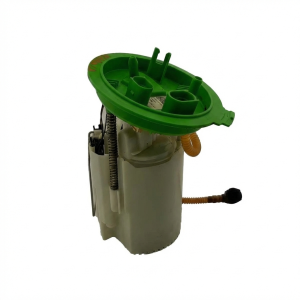
New Aftermarket Parts Available


The information in this article is provided for general reference and educational purposes only. Vehicle specifications, procedures, and part compatibility can vary by production date, trim level, and region. Always consult your vehicle's factory service manual and verify part numbers before purchasing or performing repairs. Safety-critical components such as airbags, seat belts, and braking systems should be installed by a qualified professional.
- Volkswagen GOLF:
- 🧭 Diagnostic Flowchart
- 🎬 Helpful Videos
- 🛍️ Shop This Part
- What's Unique About the 2017-2019 Volkswagen GOLF
- Symptoms You May Notice
- Most Likely Causes
- Rare But Worth Checking
- Diagnosis Steps
- Parts You'll Likely Need
- Related Codes That Often Appear With This One
- Technical Service Bulletins (TSBs) & Recalls
- Platform-Specific Known Issues
- Mechanic-Grade Diagnostic Values
- Scan Tool Commands That Help
- Wiring & Ground Locations
- Real Owner Repair Stories
- When the Usual Fixes Don't Work
- Model Year Variations Within This Range
- 🎟️ Get 5% Off