

P0148 on 2017-2023 Volkswagen Jetta: Fuel Delivery Error Causes and Fixes
P0148 on a 2017-2023 VW Jetta indicates a 'Fuel Delivery Error.' It's often seen with code P0087 and points to a problem with either the high-pressure fuel pump (HPFP) on the engine or the low-pressure fuel pump in the tank. A failing in-tank pump is a known issue confirmed by a VW Tech Tip, causing a no-start on an incline. Forum discussions confirm both pumps are common failure points, with some owners experiencing issues even on brand new vehicles.
- P0148 on a 2017-2023 Jetta is a serious fuel delivery error, almost always appearing with P0087 (low fuel pressure).
- The two most likely causes are a failing in-tank (low-pressure) fuel pump or a failing engine-mounted (high-pressure) fuel pump.
- A key diagnostic clue is to check if the car fails to start when parked on an incline with low fuel; if so, the in-tank pump is the problem.
- Do not ignore this code, as it can lead to stalling and potential engine damage from a lean fuel condition.
- Diagnosis requires testing both the low and high-pressure sides of the fuel system to pinpoint the faulty component.
What's Unique About the 2017-2023 Volkswagen JETTA
On this generation of Jetta, P0148 is frequently accompanied by codes P0087 (Fuel Rail Pressure Too Low) and P053F (Cold Start Fuel Pressure Performance). This pattern is so common that Volkswagen issued a specific Tech Tip, 20-18-01TT (also known as 2050135/2), to address it. This document highlights a faulty in-tank fuel pump that fails to retain fuel, causing a no-start condition when the car is parked on an incline with less than a quarter tank of fuel. This specific, documented failure makes the in-tank pump a primary suspect on this platform.
Diagnostic Flowchart
Tap your situation to follow the diagnostic path that matches what you're seeing on this vehicle.
Generation note: This range covers the end of the Jetta A6 (2017-2018) and the entire Jetta A7 (2019-2023) generations. The fuel delivery issues noted in TSBs and forums appear across both generations, particularly on models with the EA211 (1.4T/1.5T) and EA888 (2.0T GLI) engines, suggesting a similar fuel system design and common failure points.
Symptoms You May Notice
- Check Engine Light is on
- Reduced engine power and hesitation during acceleration.
- Engine stumbles, runs rough, or sputters.
- Intermittent stalling, especially at low speeds or shortly after starting.
- Long crank time before the engine starts.
- Crank but no-start condition, especially when parked on an incline with low fuel.
- Strong smell of fuel.
- Replacing only the high-pressure fuel pump (HPFP) without checking the low-pressure pump in the tank. Both are common failure points, and the incline-start issue is specific to the low-pressure pump.
- Replacing fuel injectors when the issue is actually insufficient pressure from a failing pump or clogged filter.
- Ignoring a worn cam follower when replacing the HPFP on a 2.0T engine, leading to a repeat failure of the new pump.
Most Likely Causes
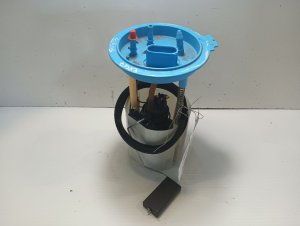
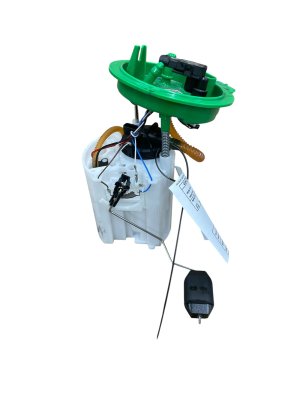
- Failing In-Tank Fuel Pump (Low-Pressure Pump) 🔴 High Probability → Shop Fuel Pump VW Tech Tip 20-18-01TT explicitly notes that the in-tank pump assembly can fail to retain fuel at an internal valve. This causes fuel to drain away from the pump when parked on an incline with a low tank, leading to a no-start and a P0148 code. Forum users have reported this pump failing even on very new vehicles.
How to confirm: Perform the 'incline test' as described in VW's own service literature: if the car fails to start on an incline with <1/4 tank but starts on a flat surface, the in-tank pump is the prime suspect. A technician can also perform a low-side fuel pressure test; pressure should meet VW specifications (typically 50-65 PSI or higher).
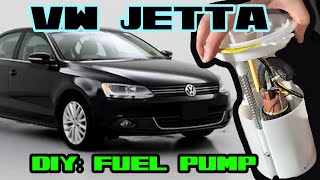
Typical fix: Replace the in-tank fuel pump assembly (also called the fuel sender unit). 🎬 See this step-by-step walkthrough for replacing the in-tank fuel pump.
Est. part cost: $150-$350 - Failing High-Pressure Fuel Pump (HPFP) 🔴 High Probability → Shop Fuel Pump The HPFP is a mechanical pump driven by the camshaft. Its internal components, such as the electronic solenoid or the plunger, can fail, or the cam follower that drives it can wear out. This is a common failure on many direct-injection engines, including the EA888 2.0T in the Jetta GLI.
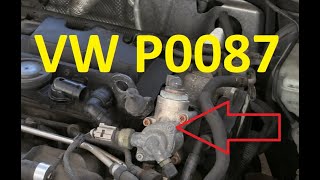
How to confirm: After confirming the low-pressure pump is working, a technician can monitor high-side fuel pressure with a scan tool. If the actual pressure consistently fails to meet the desired pressure under load 🎬 Watch: Diagnosing and fixing low fuel rail pressure and HPFP issues., the HPFP is likely at fault. Visual inspection of the cam follower for wear is also recommended, especially on the 2.0T engine.
Typical fix: Replace the high-pressure fuel pump and, if worn, the cam follower.
Est. part cost: $200-$500 - Clogged Fuel Filter 🟡 Medium Probability → Shop Fuel Filter The fuel filter is a maintenance item that is often overlooked. A clogged filter restricts fuel flow to the HPFP, causing pressure to drop and triggering P0148 or P0087.
How to confirm: A low-pressure fuel test will show pressure dropping under load. If the in-tank pump is healthy, the filter is the next logical cause. Replacing the filter is a relatively inexpensive diagnostic step.
Typical fix: Replace the fuel filter. If contamination is suspected, the fuel tank may need to be drained and cleaned.
Est. part cost: $30-$70 - Faulty Fuel Pressure Sensor ⚪ Low Probability → Shop Fuel Pressure Sensor
How to confirm: Use a scan tool to compare the fuel pressure reading from the sensor with a manual fuel pressure gauge. If the readings differ significantly, the sensor is bad.
Typical fix: Replace the fuel rail pressure sensor.
Est. part cost: $50-$120
Rare But Worth Checking
- Leaking Fuel Injector: A fuel injector stuck open can cause a drop in fuel rail pressure, triggering the code. This would also likely cause a rich running condition, misfires, and potentially a fuel smell.
- Damaged Camshaft Lobe: In severe cases, the camshaft lobe that drives the HPFP can be worn down or 'wiped out' by a failed cam follower, preventing the pump from generating any pressure. This is a major engine repair and may be accompanied by metal shavings in the oil.
Diagnosis Steps
- Connect an OBD-II scanner and confirm P0148 is present. Note any other codes, especially P0087 and P053F.
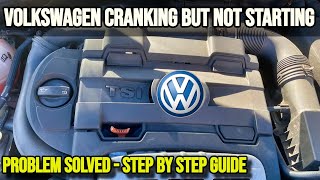
- Check the fuel level. If below 1/4 tank, try the 'incline test' as described in VW Tech Tip 20-18-01TT: park the vehicle on a steep incline. If it fails to start, but then starts on level ground, 🎬 Watch: How to troubleshoot a VW that cranks but won't start. the in-tank fuel pump is the likely culprit.
- Connect a fuel pressure gauge to the low-pressure service port. Check that the pressure meets manufacturer specifications (typically 50-65 PSI or higher). If pressure is low or drops under load, suspect the in-tank pump or clogged fuel filter.
- If low-pressure is good, use a scan tool to monitor the desired vs. actual fuel pressure on the high-pressure rail while driving. If the actual pressure cannot keep up with the desired pressure, especially under acceleration, the high-pressure fuel pump (HPFP) is the primary suspect.
- If the HPFP is suspected (especially on 2.0T GLI models), remove the pump to visually inspect the cam follower for wear or damage. Also check the oil for metal shavings, which would indicate a more severe failure.
- If both pumps seem to be working correctly, test the fuel pressure sensor by comparing its reading on the scan tool to a manual gauge.
Parts You'll Likely Need
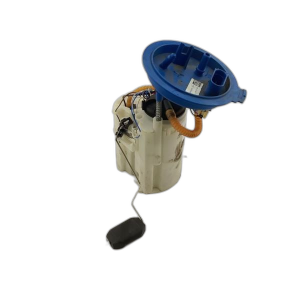
- In-Tank Fuel Pump Assembly
(OEM #5QM919051H (Verify by VIN))— A known failure point documented in VW Tech Tip 20-18-01TT, causing a no-start on inclines and triggering P0148. A forum member confirmed this part number fixed their issue on a GLI.
Trusted brands: Bosch, VDO, Continental, Genuine VW/Audi
OEM price range: $250-$400
Aftermarket price range: $150-$300 - High-Pressure Fuel Pump (HPFP)
(OEM #06L127025R / 04E127026H (Verify by VIN & Engine))— A common cause for P0148 and P0087 on direct injection engines when the pump can no longer meet pressure demands.
Trusted brands: Bosch, Hitachi, Genuine VW/Audi
OEM price range: $300-$550
Aftermarket price range: $200-$450 - HPFP Cam Follower
(OEM #06L109311 (For 2.0T EA888))— A critical wear item that drives the HPFP on the 2.0T engine. A worn follower will cause low pressure and can destroy both the HPFP and the camshaft if it fails completely. It is best practice to replace it when replacing the HPFP.
Trusted brands: INA, Genuine VW/Audi
OEM price range: $40-$70
Aftermarket price range: $25-$50
Related Codes That Often Appear With This One
- P0087 — This code means 'Fuel Rail/System Pressure - Too Low' and is a direct result of the fuel delivery error identified by P0148. They almost always appear together for this issue.
- P053F — This code means 'Cold Start Fuel Pressure Performance' and indicates the system is struggling to build or maintain pressure during startup, which is consistent with a failing pump.
Technical Service Bulletins (TSBs) & Recalls
- VW Tech Tip 20-18-01TT (also 2050135/2): Details the 'crank but no start' condition when parked on an incline with low fuel. It identifies the cause as a faulty in-tank fuel pump assembly that fails to retain fuel pressure and explicitly links this symptom to fault code P0148.
- Audi TSB 2079461/1: While for Audi, it covers the same P0148 and P0087 codes and provides a diagnostic flow. It instructs technicians to first rule out issues with the low-pressure fuel system before suspecting the high
Platform-Specific Known Issues
- Crank/No-Start on Incline: Volkswagen Tech Tip 20-18-01TT (also 2050135/2) describes a specific issue where the vehicle may crank but not start when parked on an incline with a low fuel level (under 1/4 tank), storing fault P0148. The cause is a faulty in-tank fuel pump assembly that fails to retain fuel at an internal valve. The official fix is to replace the entire in-tank fuel pump assembly.
Mechanic-Grade Diagnostic Values
- High-pressure fuel rail pressure at idle (engine warm) — expected: Approximately 40 bar (580 PSI) or 4,000 kPa. Varies by specific engine.. Failure: Significantly lower pressure than specified value.
- High-pressure fuel rail pressure during heat soak (engine off) — expected: Pressure should rise to over 60 bar (870 PSI) within a few minutes of shutting off a hot engine.. Failure: If pressure fails to rise or drops, it can indicate a leaking injector or a bad check valve in the high-pressure fuel pump.
Scan Tool Commands That Help
- VCDS (VAG-COM): Engine (01) -> Measuring Blocks (08) -> Group 106 — For older CAN-based controllers, this is used to view the live fuel rail pressure. This helps diagnose if the high-pressure fuel pump is meeting the requested pressure.
- VCDS (VAG-COM): Engine (01) -> Adv. Measuring Values — For newer UDS-based controllers, this function is used to search for and select 'Fuel high pressure actual value' and 'specified value'. This is critical for diagnosing a mismatch between what the ECU requests and what the HPFP delivers.
- ODIS (VW/Audi Dealer Tool): Software Version Management (SVM) — In some cases, fuel delivery and monitoring strategies are improved via software updates. A dealer can check if an ECM update is available for the vehicle, which could resolve certain logic-based faults.
Wiring & Ground Locations
- Fuel Pump Control Module (J538) — On many modern VWs, the fuel pump control module is located under the rear seat, near the access panel for the in-tank fuel pump itself. On older models or different platforms, it could be near the fuel tank underneath the vehicle.. The fuel pump control module regulates the voltage to the in-tank (low-pressure) fuel pump. A failure of this module due to corrosion or internal faults can cause the pump to perform poorly or not at all, directly leading to low fuel supply and a P0148 code.
Real Owner Repair Stories
- Reddit user in r/GLI (2023 6-speed Jetta GLI with 340 miles) — Car cut out at idle, then Check Engine Light came on with code P0148.
❌ Tried (didn't work) The dealer initially struggled to diagnose the problem, having the car for over a month even with VW engineering involved.
✅ What actually fixed it The initial diagnosis was a bad fuel pump. However, the dealer could not resolve the issue, and the owner pursued a buyback under lemon law. A different user in the same thread with a long crank and P0148 on a 2025 6MT reported the fix was a new Fuel Pump/Sender Unit, Part Number 5QM919051H. - Reddit user in r/JettaGLI (2019 Jetta GLI with 100,000 km) — Started car, after 30 seconds of idling it sputtered and died. Restarting resulted in a long crank before it fired up and threw code P0148.
❌ Tried (didn't work) The user was debating between replacing injectors or the low-pressure fuel pump (LPFP).
✅ What actually fixed it The thread did not have a final resolution from the original poster, but another user with identical symptoms on a 2019 GTI chimed in, indicating the problem is not isolated. The symptoms strongly point towards a failing LPFP based on community consensus.
OEM Part Supersession History
Various older part numbers→1K0906093H (example for some 2.0T models)— The fuel pump control module for 2.0T FSI/TSI engines has undergone several revisions to improve reliability.
Heads up: It is critical to use the latest revised part number for the specific vehicle's VIN. Using an older, non-revised module can lead to a repeat failure.
Model Year Variations Within This Range
- 2022-2023: In 2022, the Jetta (non-GLI) received a facelift and the engine was updated from the 1.4L EA211 to the 1.5L EA211 EVO engine, which is also used in the Taos. While the core architecture is similar, some components in the fuel and engine management systems may have different part numbers or software versions compared to the 2017-2021 1.4T models.
Helpful Videos
Used OEM Parts in Stock
New Aftermarket Parts Available

The information in this article is provided for general reference and educational purposes only. Vehicle specifications, procedures, and part compatibility can vary by production date, trim level, and region. Always consult your vehicle's factory service manual and verify part numbers before purchasing or performing repairs. Safety-critical components such as airbags, seat belts, and braking systems should be installed by a qualified professional.
- Volkswagen JETTA:
- 🧭 Diagnostic Flowchart
- 🎬 Helpful Videos
- 🛍️ Shop This Part
- What's Unique About the 2017-2023 Volkswagen JETTA
- Symptoms You May Notice
- Most Likely Causes
- Rare But Worth Checking
- Diagnosis Steps
- Parts You'll Likely Need
- Related Codes That Often Appear With This One
- Technical Service Bulletins (TSBs) & Recalls
- Platform-Specific Known Issues
- Mechanic-Grade Diagnostic Values
- Scan Tool Commands That Help
- Wiring & Ground Locations
- Real Owner Repair Stories
- OEM Part Supersession History
- Model Year Variations Within This Range
- 🎟️ Get 5% Off