

P0149 on 2015-2019 Ford Transit 3.2L Power Stroke: Fuel Timing Error Causes and Fixes
On a 2015-2019 Ford Transit with the 3.2L diesel, P0149 almost always indicates a failing high-pressure fuel injection pump (HPFP), a Bosch CP4.2 model known for this issue. This is a critical failure that can cause a sudden stall. A recall (16S33) was issued for 2015-2016 models for this exact problem. Repair costs can be extremely high ($8,000 - $15,000+) if the pump has failed and contaminated the entire fuel system with metal debris.
- P0149 on a 2015-2019 Transit 3.2L is a critical warning that should be addressed immediately.
- Do not drive the vehicle, as a sudden engine stall is a significant safety risk.
- The most likely cause is a failing high-pressure fuel pump (HPFP), a known issue for this engine.
- The first and most important diagnostic step is to check the fuel filter for metal debris.
- If metal is present, expect a very expensive repair involving the replacement of the entire fuel system.
What's Unique About the 2015-2019 Ford Transit
The 3.2L Power Stroke engine in this generation of Transit uses a Bosch CP4.2 high-pressure fuel pump (HPFP), a component notorious for catastrophic failure across multiple vehicle brands. Unlike many vehicles where P0149 could have several electrical or sensor-related causes, on this specific platform, it is overwhelmingly linked to the mechanical failure of this HPFP. The issue was so prevalent on early models that Ford issued recall 16S33. The failure mode is often catastrophic, sending metallic shavings (swarf) throughout the entire fuel system, turning a single part failure into a full system replacement costing thousands.
Symptoms You May Notice
- Check Engine Light illuminated
- Engine is noisy or runs rough, sometimes described as a 'marbles in a can' sound
- Reduced engine power or 'limp mode'
- Hesitation or stumbling on acceleration
- Engine stalling, potentially without warning, especially at low RPM
- Difficulty starting the engine or extended crank times
- Excessive white or black smoke from the exhaust
- Replacing only the fuel filter without checking for metal debris. If the pump has failed, a new filter will immediately clog with new debris.
- Replacing fuel injectors without addressing the root cause (the failing pump). New injectors will be destroyed by contaminated fuel.
- Replacing only the high-pressure fuel pump after contamination has occurred. Residual metal in the lines, rails, or tank will destroy the new pump and injectors.
Most Likely Causes
- High-Pressure Fuel Injection Pump (HPFP) Failure 🔴 High Probability → Shop Fuel Pump This is a well-documented, common failure point on the 3.2L Power Stroke engine, which uses the failure-prone Bosch CP4.2 pump. This led to Ford recall 16S33 for 2015-2016 models. The pump's design is susceptible to wear from the lower lubricity of US diesel fuel and aeration, leading to internal metal-on-metal contact.
How to confirm: Check the fuel filter housing and take a fuel sample. The presence of a metallic sheen or glitter (known as 'swarf') confirms the pump is disintegrating and has contaminated the system. A technician can also monitor commanded vs. actual fuel rail pressure with a diagnostic scanner; a large, erratic discrepancy or inability to build pressure under load points to pump failure.
Typical fix: If metal is found, the entire fuel system must be replaced to prevent repeat failures. This includes the high-pressure pump, all five fuel injectors, fuel rails, all high-pressure lines, and a thorough cleaning/flushing of the fuel tank and low-pressure lines. If no metal is present (caught very early), only the pump may need replacement.
Est. part cost: $1000 - $7000+ - Air in the Fuel System ⚪ Low Probability
How to confirm: Check for any recent fuel filter changes or work on the fuel system that could have introduced air. Look for leaks in fuel lines. The system may need to be properly bled. This is a possible but unlikely cause for P0149 on this platform compared to HPFP failure. Aeration is considered a primary killer of the CP4.2 pump.
Typical fix: Bleed the fuel system according to the manufacturer's procedure to remove all air.
Est. part cost: $0 - Faulty Fuel Timing Solenoid ⚪ Low Probability While a common cause on older Ford diesel engines, it is far less common on the 3.2L Power Stroke compared to outright pump failure. The solenoid is often integral to the HPFP.
How to confirm: Test the solenoid's resistance with a multimeter. The expected resistance is between 10 and 20 Ohms across the two pins, and over 10 kΩ from either pin to the solenoid body (ground). This should only be investigated after confirming the fuel is free of metal debris.
Typical fix: Replace the fuel timing solenoid. On some pumps, this can be replaced separately, while on others it is integral to the pump.
Est. part cost: $100 - $300
Rare But Worth Checking
- Stretched Timing Chain: → Shop Engine Timing Chain While very rare to cause P0149 by itself, a severely stretched timing chain could theoretically affect the synchronization between the crankshaft and the high-pressure fuel pump, which is driven by the chain. This would usually set other codes related to cam/crank correlation first.
- PCM or Wiring Issues: A fault in the wiring harness between the PCM and the fuel pump, or an internal PCM fault, could cause this code. This should only be considered after all mechanical and fuel system components have been ruled out as it is extremely unlikely.
Diagnosis Steps
- Scan the vehicle for all OBD-II codes. Note any other codes that appear alongside P0149, especially P0087.
- CRITICAL STEP: Remove the fuel filter and pour its contents into a clean, clear container. Let it settle and inspect for metallic glitter or shavings ('swarf') with a strong light. The presence of any metal confirms HPFP failure and fuel system contamination.
- If no metal is found, check for air in the fuel system. Look for leaks and ensure the system is properly bled, especially if the fuel filter was recently changed.
- Using a diagnostic scan tool, monitor live data for Commanded vs. Actual Fuel Rail Pressure. A large discrepancy, erratic readings, or inability to build pressure points to a pump or regulator issue.
- Inspect the wiring harness and connectors for the high-pressure fuel pump and its control module for any signs of damage, corrosion, or loose connections.
- If all other possibilities are exhausted, consider testing the fuel timing solenoid's resistance and function.
- Given the high probability of HPFP failure, if metal is present, do not proceed with replacing individual parts. The entire system must be addressed to prevent immediate re-failure.
Parts You'll Likely Need
- High-Pressure Fuel Injection Pump (HPFP)
(OEM #FB3Z-9A543-J (supersedes older numbers))— This is the most common cause of P0149 on the 3.2L Power Stroke. The original Bosch CP4.2 pumps are prone to internal failure.
Trusted brands: Motorcraft, Bosch
OEM price range: $1000 - $1500
Aftermarket price range: $600 - $1000 - Fuel System Contamination Kit
(OEM #CK4Z-9B273-A (example kit, verify by VIN))— If the HPFP fails and sends metal through the system, this comprehensive kit is required. It typically includes a new HPFP, all 5 fuel injectors, fuel rails, and all associated lines.
Trusted brands: Motorcraft
OEM price range: $4000 - $6000
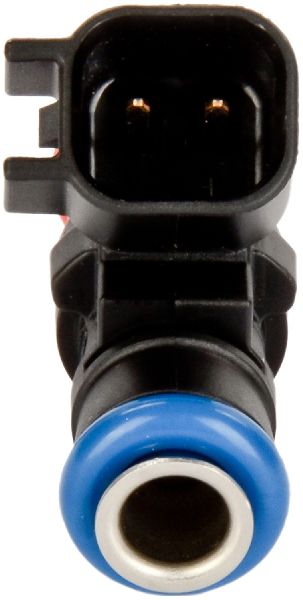
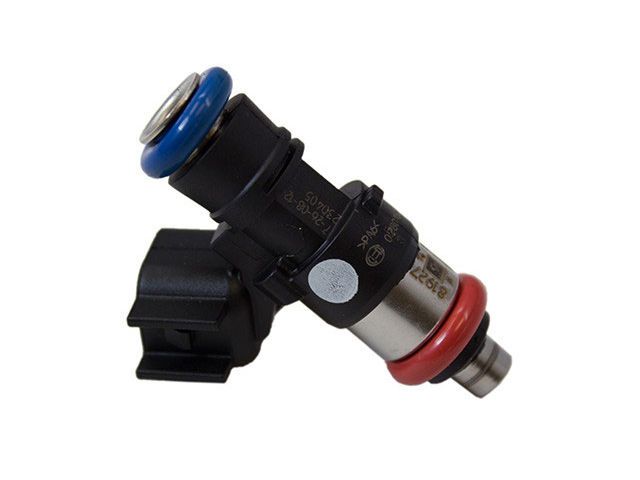
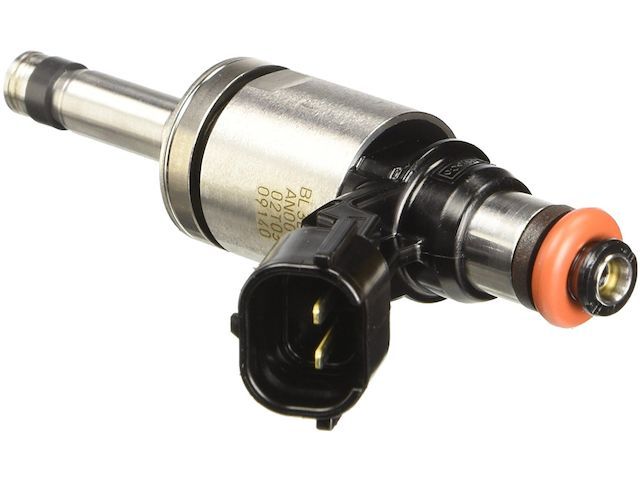
Aftermarket price range: N/A - Fuel Injector
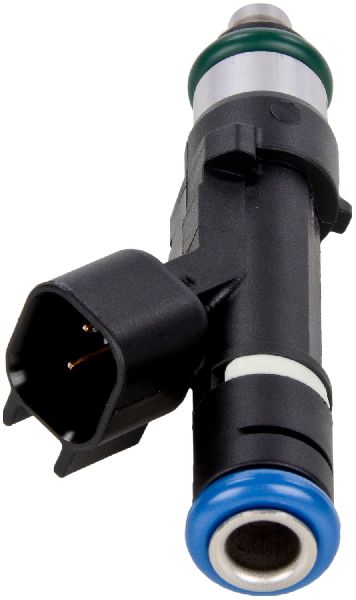
(OEM #CK4Z-9E527-A)— Required if the old injectors have been contaminated by metal debris from a failed HPFP. All 5 must be replaced.
Trusted brands: Motorcraft, Bosch
OEM price range: $250 - $400 each
Aftermarket price range: $150 - $300 each
Related Codes That Often Appear With This One
- P0087 — Fuel Rail/System Pressure - Too Low. This code often appears with P0149 because a failing pump cannot build or maintain the pressure commanded by the PCM.
- P1564 — Injection Pump Control Module Requesting Reduced Fuelling. This Ford-specific code indicates the pump's own control module has detected a fault and is limiting fuel, often seen with P0149.
- P0088 — Fuel Rail/System Pressure - Too High. Less common, but can occur if the pump's internal regulation fails erratically.
Technical Service Bulletins (TSBs) & Recalls
- While not for P0149 specifically, TSB SSM 47712 addresses fuel system concerns on 2015-2019 Transits with the 3.2L diesel, indicating ongoing manufacturer attention to the fuel system.
- The old TSB 64/2004 cited in Pass 1 is for much older models and not relevant to the P5AT engine's common rail system.
Platform-Specific Known Issues
- Ford Recall 16S33 was issued for 2015-2016 Ford Transit vehicles equipped with the 3.2L diesel engine to address the high-pressure fuel pump failure, which could cause an engine stall without warning. The recall involved replacing the HPFP and, in some cases, other fuel system components if contamination was found.
- The Bosch CP4.2 pump used in this engine is widely known for failures across many manufacturers (Ford, GM, Ram, VW) due to its incompatibility with lower-lubricity U.S. diesel fuel.
Mechanic-Grade Diagnostic Values
- High-Pressure Fuel Rail Pressure (Scan Tool, Cranking) — expected: ~220 bar (3,200 PSI). Failure: Pressure does not build while cranking or is significantly lower.
- High-Pressure Fuel Rail Pressure (Scan Tool, Idle) — expected: 300-500 bar (4,350-7,250 PSI). Failure: Pressure is erratic, drops significantly, or is stuck high or low.
- High-Pressure Fuel Rail Pressure (Scan Tool, 2000 RPM No-Load) — expected: Rises toward 1200-1600 bar (17,400-23,200 PSI). Failure: Pressure fails to rise with RPM or drops under light load.
- Fuel Timing Solenoid (VCV) Resistance — expected: 10 to 20 Ohms. Failure: A reading of 0 Ohms (short), infinite/OL (open), or any resistance to the solenoid body.
- Fuel Volume Control Valve Fuse — expected: Fuse F37 (7.5A) in the engine compartment fuse box should be intact.. Failure: A blown fuse will cut power to the valve, preventing fuel pressure regulation.
Wiring & Ground Locations
- Low-Pressure Fuel Pump Control Module — On the frame rail near the fuel tank.. While P0149 is a high-pressure code, a fault in the low-pressure control module or its wiring can starve the HPFP, leading to pressure and timing deviations. Key wires to check at the module are Brown/Purple (power in) and Gray/Yellow (power out to pump).
- Battery Ground — The main battery is under the driver's seat, with a key ground point from the battery to the seat mount box/van floor.. Poor ground connections can cause a host of electrical issues and low voltage conditions for the PCM and other modules, potentially leading to erroneous timing codes. A voltage drop test from the engine block to the negative battery terminal should be less than 0.2V.
OEM Part Supersession History
FB3Z-9A543-A, FB3Z-9A543-F→FB3Z-9A543-J— Part revision and update by the manufacturer.
Model Year Variations Within This Range
- 2015-2016: These model years were subject to Ford Recall 16S33 specifically for the failure-prone high-pressure fuel pump. Vehicles from 2017-2019 were not included in the recall, though they use the same fundamental CP4.2 pump design and can still experience the failure.
Diagnostic Flowchart
Other Known Issues on This Vehicle
Issues unrelated to this code that are worth knowing about as an owner of this generation:
- Driveshaft Flexible Coupling (Giubo) Failure 🔴 High — Widespread on 2015-2017 models, can fail as early as 30,000 miles. Leads to severe vibration and potential driveshaft separation. (Ref: Safety Recall 17S15, superseded by 19S38 (NHTSA #19V767).)
- Internal EGR Cooler Leak 🔴 High — Common on 2015-2019 models. Causes unexplained coolant loss, white smoke, and can lead to engine overheating or damage. (Ref: Customer Satisfaction Program 21M03 (extended warranty to 11yr/120k miles); TSB SSM 46122.)
- Turbocharger Failure 🟠 Medium — Can occur with higher mileage. Symptoms include loss of power, whistling noises, and excessive smoke.
- Transmission Failure / Harsh Shifting 🟠 Medium — Some reports of premature transmission failure or harsh shifting on 2015-2016 models, sometimes requiring full replacement.
- Variable Displacement Oil Pump Failure 🔴 High — A known potential failure point. The pump can fail to prime or fail internally, leading to sudden loss of oil pressure and catastrophic engine damage.
Used vs. New Parts: Buying Guide for This Vehicle
When a used part is the smart pick: For this specific failure, using used parts from the high-pressure fuel system is strongly discouraged. The risk of introducing microscopic metal debris from a donor vehicle into your repaired system is extremely high and can cause immediate failure of the new components. Used parts should only be considered for external components like brackets, wiring harnesses (if inspected thoroughly), or the low-pressure fuel pump module after confirming the donor vehicle did not suffer an HPFP failure.
What to inspect on the donor part:
- Absolute proof the donor vehicle did NOT have a P0149, P0087, or related fuel system failure.
- For a low-pressure pump, inspect the donor vehicle's fuel filter for any signs of metal 'glitter'. If any is found, do not use any part from that fuel system.
- Inspect wiring connectors for corrosion, broken clips, or previous repair splices.
OEM-only on this vehicle (don't cheap out):
- High-Pressure Fuel Pump (HPFP)
- Fuel Injectors
- Fuel Rails
- High-Pressure Fuel Lines
Aftermarket brands forum-validated for this vehicle:
- Bosch (as the OEM supplier for the pump itself)
Brands owners have reported issues with on this vehicle:
- Unnamed, no-brand 'white box' parts from online marketplaces are extremely risky for critical fuel system components. Given the catastrophic failure mode, sticking to OEM (Motorcraft) or the original manufacturer (Bosch) is the safest path.
Real Owner Stories
Aggregated from forums and TSBs cited above. Mileages and costs reflect what owners reported in those sources.
2016 Ford Transit 3.2L Power Stroke — 31000 miles
Symptoms: Early signs of EGR carbon buildup and premature rear brake wear noted during inspection of known platform issues.
What fixed it: Technician (Dr Soot) identified these as part of broader engineering failures on the 3.2L platform.
Source hint: YouTube video by a technician (Dr Soot) titled '2016 Transit 3.2L Engineering fails'
Ford Transit 3.2L Power Stroke
Symptoms: P0149 code appearing after a long drive, leading to engine stalling at low RPMs.
What fixed it: The symptoms were identified as classic for High-Pressure Fuel Pump (HPFP) failure, requiring fuel system inspection for metal debris.
Source hint: fordtransit.org forum thread titled 'P0149 after long drive, stalls at low RPM'
Related OBD-II Codes
Frequently Asked Questions
Is there a recall for the high-pressure fuel pump on my 2015 Ford Transit 3.2L?
I found metallic 'glitter' in my fuel filter. Do I really need to replace the whole fuel system?
Why is the Bosch CP4.2 pump in my Transit prone to P0149 and failure?
Does TSB SSM 47712 apply to my 2018 Transit 3.2L?
Can I just replace the fuel timing solenoid to fix P0149?
Are there other major issues I should watch for on my 2016 Transit 3.2L besides the fuel pump?
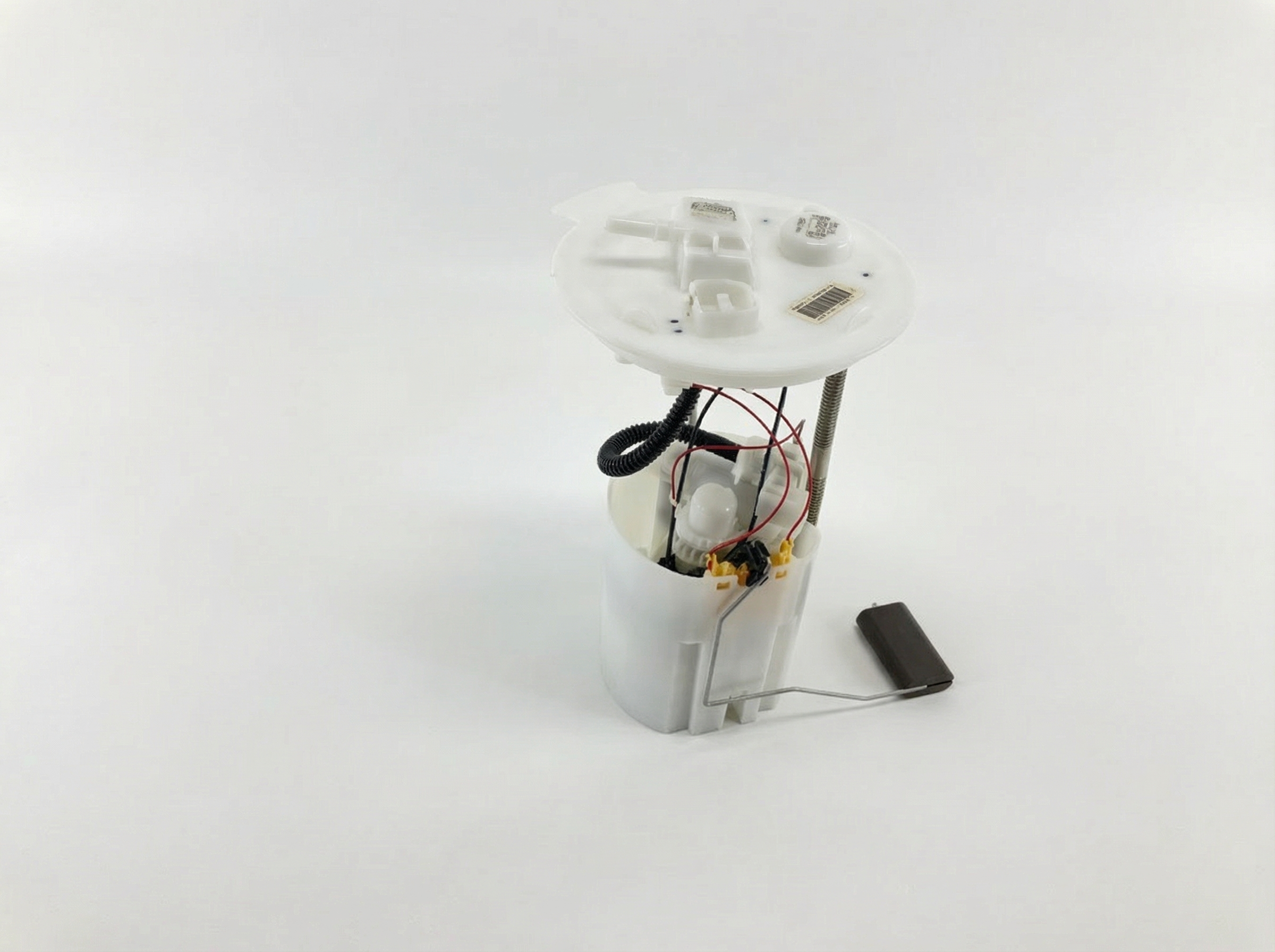
Used OEM Parts in Stock

New Aftermarket Parts Available

The information in this article is provided for general reference and educational purposes only. Vehicle specifications, procedures, and part compatibility can vary by production date, trim level, and region. Always consult your vehicle's factory service manual and verify part numbers before purchasing or performing repairs. Safety-critical components such as airbags, seat belts, and braking systems should be installed by a qualified professional.
- Ford Transit:
- 🧭 Diagnostic Flowchart
- 🛍️ Shop This Part
- What's Unique About the 2015-2019 Ford Transit
- Symptoms You May Notice
- Most Likely Causes
- Rare But Worth Checking
- Diagnosis Steps
- Parts You'll Likely Need
- Related Codes That Often Appear With This One
- Technical Service Bulletins (TSBs) & Recalls
- Platform-Specific Known Issues
- Mechanic-Grade Diagnostic Values
- Wiring & Ground Locations
- OEM Part Supersession History
- Model Year Variations Within This Range
- Other Known Issues on This Vehicle
- Used vs. New Parts: Buying Guide for This Vehicle
- Real Owner Stories
- 2016 Ford Transit 3.2L Power Stroke — 31000 miles
- Ford Transit 3.2L Power Stroke
- Related OBD-II Codes
- Frequently Asked Questions
- 🎟️ Get 5% Off