

P0170 on 2004-2011 Audi A6 3.2L FSI: Fuel Trim Malfunction Causes and Fixes
On the Audi A6 3.2L FSI, code P0170 is most often caused by a vacuum leak from a cracked hose or a dirty/faulty Mass Airflow (MAF) sensor. The PCV valve is a primary suspect for vacuum leaks. Start by inspecting all vacuum lines, testing the PCV system, and cleaning the MAF sensor before replacing any parts.
- Do not immediately replace parts. The P0170 code on this Audi is most often caused by a simple vacuum leak.
- A smoke test is the most efficient way to diagnose vacuum leaks and can save you hundreds of dollars in unnecessary parts.
- Always try cleaning the MAF sensor with a proper, residue-free cleaner before opting for a replacement.
- Because this is a direct-injection engine, keep carbon buildup in mind as a potential root cause if the more common fixes do not resolve the code.
What's Unique About the 2004-2011 Audi A6
The C6 generation Audi A6 with the 3.2L FSI V6 engine is known for two key issues that frequently lead to the P0170 code. First, its complex network of vacuum hoses, and particularly the PCV (Positive Crankcase Ventilation) valve diaphragm, becomes brittle and tears with age, making vacuum leaks extremely common. Second, as a direct injection (FSI) engine, it is inherently prone to significant carbon buildup on the intake valves, which can disrupt airflow and cause fuel trim issues that might be misdiagnosed as sensor failures.
Symptoms You May Notice
- Check Engine Light is on
- Rough or fluctuating idle
- Hesitation or stumbling during acceleration
- Noticeable loss of engine power
- Reduced fuel economy
- In some cases, a hissing or whistling sound from the engine bay indicating a vacuum leak
- Difficulty starting the engine
- Replacing the oxygen sensor when the actual problem is a vacuum leak. A smoke test is highly recommended before buying expensive sensors.
- Replacing the MAF sensor without first attempting to clean it. Often, contamination is the issue, not outright failure.
- Assuming a fuel pump failure without first checking the much cheaper and more common fuel filter.
Most Likely Causes
- Vacuum Leaks (especially PCV Valve) 🔴 High Probability The plastic and rubber vacuum lines, and especially the diaphragm inside the PCV valve (oil separator), become brittle and tear over time due to engine heat cycles. A failed PCV valve creates a significant unmetered air leak directly into the intake manifold.
How to confirm: A primary symptom of a failed PCV valve is strong suction at the oil filler cap while the engine is running, making it difficult to remove. You may also hear a loud whistling noise. The most effective method to find any vacuum leak is to have a smoke test performed, which forces smoke into the intake system to reveal the exact location of any leaks.
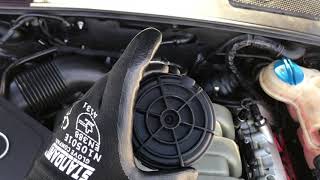
Typical fix: Replace the PCV valve/oil separator assembly. 🎬 Watch this step-by-step PCV valve replacement walkthrough On the 3.2L engine, this part is often located under the intake manifold. It's also wise to replace any other cracked or brittle vacuum hoses found during the inspection.
Est. part cost: $50-$200 (PCV Assembly), $20-$150 (other hoses) - Dirty or Faulty Mass Airflow (MAF) Sensor 🔴 High Probability → Shop Fuel Injection Air Flow Meter The MAF sensor is located in the intake tract and can become contaminated with oil vapor and dirt over time, causing it to send inaccurate airflow data to the ECU. This is a very common cause for fuel trim codes across many vehicle brands.
How to confirm: First, try cleaning the sensor using a dedicated 🎬 Watch this quick guide on cleaning your MAF sensor MAF sensor cleaner spray. Do not touch the delicate sensor wires. If cleaning does not resolve the issue, monitor the MAF sensor readings with an OBD-II scanner to see if they are within the expected range for the given RPM. A faulty sensor may provide readings that are erratic or do not change with engine speed.
Typical fix: Clean the sensor. If the problem persists, replace the MAF sensor assembly. Bosch is the OEM supplier for this part.
Est. part cost: $10 (cleaner) - $250 (new sensor) - Failing Upstream Oxygen (O2) Sensor 🟡 Medium Probability → Shop Oxygen Sensor O2 sensors are wear items that degrade over time. A lazy or failed Bank 1 upstream sensor will send incorrect information about the air-fuel mixture to the ECU, directly causing fuel trim problems.
How to confirm: Use a diagnostic scanner to graph the voltage of the Bank 1, Sensor 1 O2 sensor. A healthy sensor will show rapidly fluctuating voltage between approximately 0.1V and 0.9V. A sensor that is slow to respond or has a flat-lined voltage is indicative of failure.
Typical fix: Replace the Bank 1 (passenger side) upstream (pre-catalytic converter) oxygen sensor. Access is often improved by removing the airbox, and a special 22mm slotted socket is typically required for removal.
Est. part cost: $75-$200 - Clogged Fuel Filter or Weak Fuel Pump ⚪ Low Probability → Shop Fuel Filter The fuel filter can become clogged over many miles, restricting fuel flow. While less common, the in-tank low-pressure fuel pump can also weaken with age, failing to supply adequate pressure to the high-pressure fuel pump.
How to confirm: Connect a fuel pressure gauge to the low-pressure fuel system to check if the pressure is within Audi's specifications. A significant drop in pressure under load indicates a problem.
Typical fix: Replace the fuel filter first, as it is a routine maintenance item. If the pressure is still low, the in-tank fuel pump will likely need to be replaced.
Est. part cost: $40-$100 (filter), $200-$400 (pump)
Rare But Worth Checking
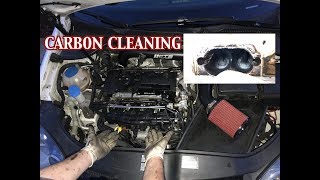
- Carbon Buildup on Intake Valves: As a direct-injection engine, the 3.2L FSI is highly susceptible to carbon deposits on the intake valves. While this more commonly causes misfire codes (P030x), severe buildup can restrict airflow to specific cylinders on Bank 1, leading to a fuel trim imbalance and a P0170 code. This often requires professional walnut shell media blasting to clean.
- Leaking Fuel Injector: A fuel injector on Bank 1 could be stuck open or leaking, causing a rich condition that the ECU cannot correct. This would typically be accompanied by other symptoms like a strong fuel smell, and may also set a P0172 'System Too Rich' code.
- Faulty EVAP Purge Valve (N80): The EVAP purge valve can fail and stick open, creating a vacuum leak that allows unmetered fuel vapor from the charcoal canister to enter the intake manifold at the wrong time. This is a common failure item on many Audi/VW vehicles.
Diagnosis Steps
- Read the fault codes with an OBD-II scanner and view live data for Short-Term (STFT) and Long-Term (LTFT) fuel trims for both banks. Note if the trims are highly positive (lean) or negative (rich).
- Visually inspect the engine bay for any obvious disconnected or cracked vacuum hoses, particularly around the intake manifold and PCV system.
- With the engine idling, carefully try to remove the oil filler cap. If there is extreme suction holding it down, the PCV valve diaphragm has likely failed.
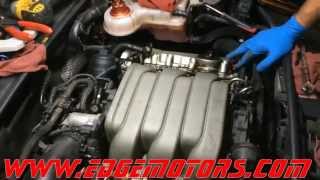
- Perform a smoke test to accurately pinpoint 🎬 See how to perform a cheap DIY smoke test any unmetered air leaks that are not visible. This is the most definitive test for vacuum leaks.
- If no vacuum leaks are found, remove and clean the Mass Airflow (MAF) sensor with a dedicated cleaner. Allow it to dry completely before reinstalling.
- If the code returns, use the scanner to monitor the voltage of the Bank 1 upstream O2 sensor. It should fluctuate rapidly between ~0.1V and ~0.9V. If it's slow to respond or stuck, it likely needs replacement.
- Check the low-side fuel pressure to ensure the fuel pump and filter are functioning correctly.
- If all else fails, inspect the intake valves for heavy carbon buildup, which may require professional media blasting to clean.
Parts You'll Likely Need
- PCV Valve / Oil Separator
(OEM #06E103547P)— The internal diaphragm is a very common failure point, causing a large vacuum leak that directly leads to fuel trim malfunctions.
Trusted brands: Genuine Audi/VW, Vaico, Febi Bilstein
OEM price range: $120-$200
Aftermarket price range: $50-$100 - Mass Airflow (MAF) Sensor
(OEM #0280218069 (Bosch))— A contaminated or failed MAF sensor provides incorrect airflow data, which is a primary input for the ECU's fuel calculations.
Trusted brands: Bosch, Hitachi
OEM price range: $200-$300
Aftermarket price range: $80-$180 - Upstream Oxygen Sensor (Bank 1)
(OEM #06E906265F)— A failing O2 sensor gives false readings of the exhaust mixture, causing the ECU to make incorrect fuel trim adjustments.
Trusted brands: Bosch, NTK, Denso
OEM price range: $150-$220
Aftermarket price range: $75-$150
Related Codes That Often Appear With This One
- P0171 — This code for 'System Too Lean (Bank 1)' often precedes or accompanies P0170, indicating the specific direction of the fuel trim error. It's commonly caused by vacuum leaks.
- P0173 — This is the equivalent 'Fuel Trim Malfunction' code for Bank 2. If P0170 and P0173 appear together, it points to a problem affecting both banks, such as a faulty MAF sensor or a major vacuum leak at the intake manifold.
- P2187 — This code for 'System Too Lean at Idle (Bank 1)' is a strong indicator of an unmetered air leak, such as a failed PCV valve, which is a primary cause of P0170 on this engine.
Platform-Specific Known Issues
- PCV Valve Diaphragm Failure: The rubber diaphragm inside the PCV valve is a known weak point. When it tears, it creates a massive vacuum leak, often causing a loud whistling or sucking sound and making the oil cap very difficult to remove while the engine is running.
- Brittle Vacuum Lines: Many small plastic vacuum lines, including one-way check valves, become extremely brittle with age and can crack or break, causing difficult-to-find vacuum leaks. A user on AudiWorld forums traced a leak to a broken plastic nipple on a check valve (part # 07C1335
Mechanic-Grade Diagnostic Values
- Low-Pressure Fuel System — expected: 4.0-6.0 Bar (58-87 PSI) depending on engine load. Should be near 6.0 Bar with key on, engine off.. Failure: Pressure consistently below 4.0 Bar, especially under load, indicates a failing in-tank pump or clogged filter.
- High-Pressure Fuel System — expected: Up to 110 Bar (1595 PSI). This is monitored via scan tool, not a mechanical gauge.. Failure: Actual pressure significantly deviates from requested pressure, often pointing to a failing High-Pressure Fuel Pump (HPFP) or cam follower.
- Mass Airflow (MAF) Sensor Reading at Idle — expected: Approximately 3.0-5.0 g/s at a stable warm idle.. Failure: Readings are erratic, do not increase smoothly with RPM, or are significantly outside the expected range.
- Long-Term Fuel Trims (LTFT) via VCDS — expected: Within +/- 10%. Ideally as close to 0% as possible.. Failure: Values exceeding +10% indicate the ECU is adding significant fuel to correct a lean condition (e.g., vacuum leak). Values exceeding -10% indicate a rich condition.
- Upstream O2 Sensor Heater Resistance — expected: 5-20 ohms at room temperature.. Failure: Infinite resistance (open circuit) or a reading significantly higher than 20 ohms indicates a failed heater element within the sensor.
Scan Tool Commands That Help
- VCDS (VAG-COM): Engine -> Meas. Blocks -> Group 032 — Use this to view long-term fuel trims (LTFT). The first field is idle trim (additive), and the second is partial throttle trim (multiplicative). This is the primary data to determine if the engine is running lean or rich and by how much.
- VCDS (VAG-COM): Engine -> Meas. Blocks -> Group 033 — Use this to view live short-term fuel trim (STFT) data, which shows the ECU's immediate response to the O2 sensor readings.
- VCDS (VAG-COM): Engine -> Fault Codes -> Clear Codes — After a repair (like fixing a vacuum leak), clearing the codes will reset the long-term fuel trims in Group 032 back to 0%. This allows you to immediately see if the repair was effective by watching the short-term trims in Group 033 stay near zero.
Wiring & Ground Locations
- Engine Block Ground Strap — A primary ground strap typically connects the engine block or cylinder head to the chassis/firewall to provide a return path for the starter, alternator, and ignition system.. A corroded or loose engine ground can cause erratic voltage signals from critical sensors like the MAF and O2 sensors, leading to incorrect fuel trim calculations.
- Sensor Ground Connection (Sender Earth) — A wiring diagram indicates a specific 'sender earth' connection (point 327) within the engine compartment wiring harness that serves multiple sensors.. A fault in this shared ground point can simultaneously affect readings from multiple sensors, making diagnosis difficult and potentially causing fuel trim codes.
- Oil Filter Housing Ground — A small ground wire is attached to one of the bolts on the oil filter housing.. This ground point is often forgotten or left unattached after engine work. Its absence can lead to various electrical issues and fault codes.
Real Owner Repair Stories
- AudiWorld Forums (2005 Audi A6 3.2L) — Check Engine Light with codes for intake runner flaps stuck open/closed.
❌ Tried (didn't work) Initial diagnosis pointed towards a sensor or actuator failure.
✅ What actually fixed it The vacuum actuator arm, which uses a plastic ball-and-socket joint to control the intake runner flaps, had popped off due to the plastic ball wearing out. The entire intake runner assembly had to be replaced because the small plastic part was not sold separately. This fault can disrupt airflow and contribute to fuel trim issues.
"I Checked Everything" — The Actual Cause
- A cracked oil filter housing can cause a vacuum leak that is sometimes missed by a smoke test, as the crack may only open under specific temperature and pressure conditions. This can lead to lean codes like P0170/P0171. The leak is often accompanied by an oil leak from the same area.
OEM Part Supersession History
06E103547 / 06E103547E→06E103547P— Revisions to improve the durability of the internal diaphragm and materials to better withstand heat and oil vapors.
Model Year Variations Within This Range
- 2005-2007: Some earlier models (e.g., 2005) used an aluminum oil separator/PCV assembly, while later models switched to a plastic design. Additionally, electrical connectors for components like cam position sensors and the oil pressure switch may differ between early (2005) and later (2007+) models, requiring parts from the old engine to be swapped over during an engine replacement.
Diagnostic Flowchart
Other Known Issues on This Vehicle
Issues unrelated to this code that are worth knowing about as an owner of this generation:
- Timing Chain Tensioner & Guide Failure 🔴 High — Very common, especially on higher mileage vehicles (80k-120k miles). A key symptom is a 1-3 second rattle on cold startup.
- Severe Intake Valve Carbon Buildup 🔴 High — Inevitable due to the FSI direct injection design. Performance degradation is noticeable by 60k-80k miles, often requiring manual cleaning (walnut blasting).
- Intake Manifold Runner Flap Motor/Linkage Failure 🟠 Medium → Shop Engine Intake Manifold — Common failure causing rough idle and check engine lights (e.g., P2006, P2008). The plastic linkage arms can break or the motor can fail.
- High Oil Consumption 🟠 Medium — Many 3.2L FSI engines consume oil at a higher-than-average rate, often due to wear on piston rings and valve seals as the engine ages.
- Thermostat Failure 🟡 Low — The thermostat can fail, typically sticking open, which leads to the engine not reaching full operating temperature and can affect fuel economy and heater performance.
Used vs. New Parts: Buying Guide for This Vehicle
When a used part is the smart pick: For this vehicle, used parts are generally not recommended for the common failure items that cause P0170. Rubber and plastic components like the PCV valve and vacuum hoses are primary culprits, and used parts will have similar age-related brittleness. A used MAF or O2 sensor is also a gamble with no guarantee of remaining lifespan.
Donor-vehicle mileage cap: roughly under 80000 miles for the part to have meaningful remaining life.
What to inspect on the donor part:
- For any electronic sensor, verify the part number exactly matches the original.
- Inspect plastic components for any hairline cracks, especially at connection nipples.
- Ask for the donor vehicle's mileage; lower is always better.
- Avoid parts from vehicles that show signs of overheating or oil sludge.
OEM-only on this vehicle (don't cheap out):
- PCV Valve / Oil Separator: Aftermarket versions have a high failure rate. The diaphragm quality is critical, and OEM or OEM-supplier (Hengst) parts are strongly recommended for longevity.
- Mass Airflow (MAF) Sensor: While some aftermarket brands exist, the OEM Bosch sensor is calibrated specifically for the engine's ECU. Using off-brand sensors can lead to persistent fuel trim issues even if the part is new.
Aftermarket brands forum-validated for this vehicle:
- Bosch, NTK, Denso for Oxygen Sensors
- Hengst for PCV Valve (OEM Supplier)
- Vaico, Febi Bilstein for various hoses and gaskets
Brands owners have reported issues with on this vehicle:
- Unnamed, no-brand 'white box' electronic sensors (MAF, O2) from online marketplaces often have poor quality control and can be dead on arrival or fail quickly.
Real Owner Stories
Aggregated from forums and TSBs cited above. Mileages and costs reflect what owners reported in those sources.
2005-2011 Audi A6 3.2L FSI
Symptoms: Lean codes (P0171/P0174) and general fuel trim issues (P0170/P0173).
What fixed it: Replacing the PCV valve, which is frequently cited as the first place to check for these specific codes on the 3.2L FSI.
Source hint: Audizine (audizine.com) discussions regarding fuel trim issues on the 3.2L FSI
2005-2011 Audi A6 3.2L FSI
Symptoms: Difficult-to-find vacuum leaks causing fuel trim codes.
What fixed it: Replacing a broken plastic nipple on a check valve (part # 07C1335).
Source hint: AudiWorld Forums (audiworld.com) user report in vehicle_specific_issues
Related OBD-II Codes
Frequently Asked Questions
Why is it so difficult to remove my oil filler cap while the engine is running on my A6 3.2L?
I'm seeing P0170 on my 2006 Audi A6 3.2L; could this be related to the timing chain rattle I hear on cold starts?
Is there a specific brand of Mass Airflow (MAF) sensor I should use for the 3.2L FSI engine?
Could carbon buildup on my intake valves cause fuel trim issues like P0170?
Where is the PCV valve located on the Audi 3.2L FSI V6 engine?
What tool do I need to replace the Bank 1 upstream oxygen sensor on my A6?
Helpful Videos

Used OEM Parts in Stock
New Aftermarket Parts Available

The information in this article is provided for general reference and educational purposes only. Vehicle specifications, procedures, and part compatibility can vary by production date, trim level, and region. Always consult your vehicle's factory service manual and verify part numbers before purchasing or performing repairs. Safety-critical components such as airbags, seat belts, and braking systems should be installed by a qualified professional.
- Audi A6:
- 🧭 Diagnostic Flowchart
- 🎬 Helpful Videos
- 🛍️ Shop This Part
- What's Unique About the 2004-2011 Audi A6
- Symptoms You May Notice
- Most Likely Causes
- Rare But Worth Checking
- Diagnosis Steps
- Parts You'll Likely Need
- Related Codes That Often Appear With This One
- Platform-Specific Known Issues
- Mechanic-Grade Diagnostic Values
- Scan Tool Commands That Help
- Wiring & Ground Locations
- Real Owner Repair Stories
- "I Checked Everything" — The Actual Cause
- OEM Part Supersession History
- Model Year Variations Within This Range
- Other Known Issues on This Vehicle
- Used vs. New Parts: Buying Guide for This Vehicle
- Real Owner Stories
- 2005-2011 Audi A6 3.2L FSI
- 2005-2011 Audi A6 3.2L FSI
- Related OBD-II Codes
- Frequently Asked Questions
- 🎟️ Get 5% Off