

P0171 on 2006-2011 Kia Rio 1.6L: Causes and Fixes for System Too Lean
For a 2006-2011 Kia Rio, code P0171 is most often caused by a vacuum leak from a cracked hose (like the PCV hose) or a dirty/faulty Mass Airflow (MAF) sensor. Start by inspecting all vacuum lines and cleaning the MAF sensor before checking for fuel delivery issues, which should be around 50 PSI.
- Start your diagnosis by thoroughly inspecting for vacuum leaks, especially cracked hoses around the intake manifold and PCV system. This is the most common and cheapest fix.
- If no vacuum leaks are found, the next step is to clean the Mass Airflow (MAF) sensor with a dedicated cleaner.
- Do not replace the oxygen sensor immediately; it is often correctly reporting a lean condition caused by another component.
- If the simple fixes don't work, test the fuel pressure to check for a weak fuel pump or clogged filter before moving to more complex diagnostics.
What's Unique About the 2006-2011 Kia Rio
The 2006-2011 Kia Rio (JB generation) with the 1.6L Alpha II engine is relatively straightforward. Unlike more complex GDI engines, the common causes for P0171 are typically basic issues like vacuum leaks from aging rubber hoses or sensor problems. Owners frequently report fixing this code by addressing cracked vacuum lines or cleaning the MAF sensor, making it a very DIY-friendly diagnosis to start with.
Symptoms You May Notice
- Check Engine Light is on
- Rough or high idle
- Hesitation or stumbling during acceleration
- Reduced engine power
- Decreased fuel economy
- Hissing noise from the engine bay, indicating a vacuum leak
- Engine may stall at stops
- Engine may have difficulty starting
- Replacing the oxygen sensor first. The O2 sensor is often just the messenger reporting the lean condition. Always rule out vacuum leaks, MAF sensor issues, and fuel delivery problems before replacing the sensor.
Most Likely Causes
- Vacuum Leak 🔴 High Probability Rubber hoses, like the PCV (Positive Crankcase Ventilation) hose and vapor canister purge valve hoses, can become brittle and crack over time due to age and heat exposure. A cracked intake manifold gasket is also a possible, though less frequent, cause.
How to confirm: Visually inspect all vacuum hoses connected to the intake manifold for cracks or disconnection. Listen for a hissing sound at idle. A common DIY method is to carefully spray brake cleaner or carburetor cleaner around suspected leak points with the engine running; a change in idle speed can pinpoint the leak. A smoke test is the most definitive professional method.
Typical fix: Replace the cracked or broken hose(s). In one documented case for a 2006 Rio, a frayed hose near the purge valve was the direct cause.
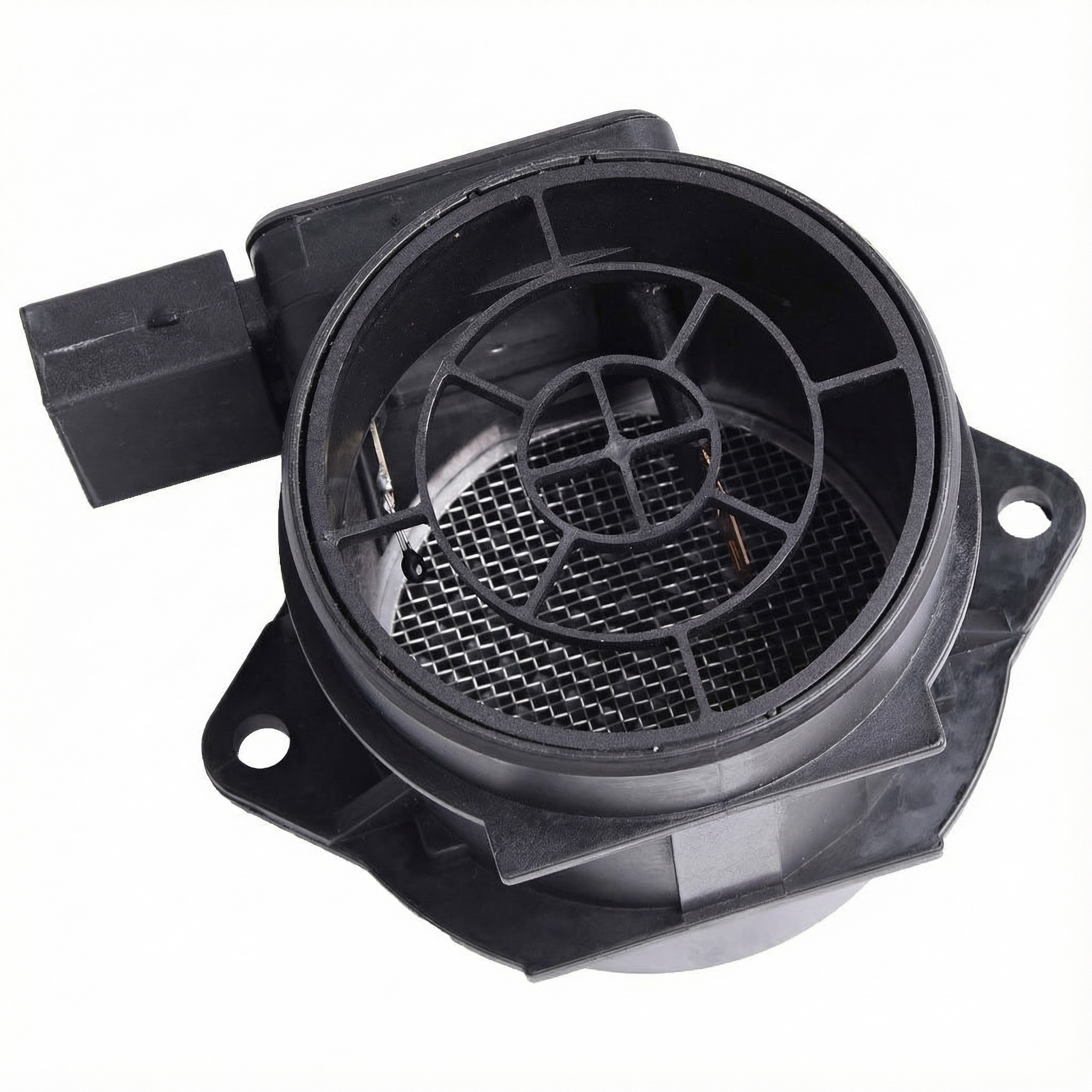
Est. part cost: $5-$30 - Dirty or Faulty Mass Airflow (MAF) Sensor 🟡 Medium Probability → Shop Fuel Injection Air Flow Meter Oil and dirt can contaminate the MAF sensor's hot wire, causing it to send incorrect (lower) airflow readings to the ECM, which then fails to command enough fuel.
How to confirm: Unplug and remove the sensor, which is located on the air cleaner housing. Visually inspect the sensing wire for contamination. Cleaning with a dedicated MAF sensor cleaner is highly effective and should be tried first. Do not use other chemicals like brake or carb cleaner, as they can damage the sensor.
Typical fix: Clean the sensor with MAF sensor cleaner. If the problem persists, replace the MAF sensor. After replacement, it is recommended to disconnect the battery for 10-15 minutes to reset the ECM's fuel trim adaptations.
Est. part cost: $10 (cleaner) or $60-$120 (new sensor) - Low Fuel Pressure 🟡 Medium Probability A weak fuel pump or a clogged in-tank fuel filter can fail to deliver the required amount of fuel to the engine, directly causing a lean condition.
How to confirm: Connect a fuel pressure gauge to the fuel rail. The pressure should be approximately 50 PSI for this vehicle. If pressure is low, the issue is likely the fuel pump module, which includes the pump, filter, and sender.
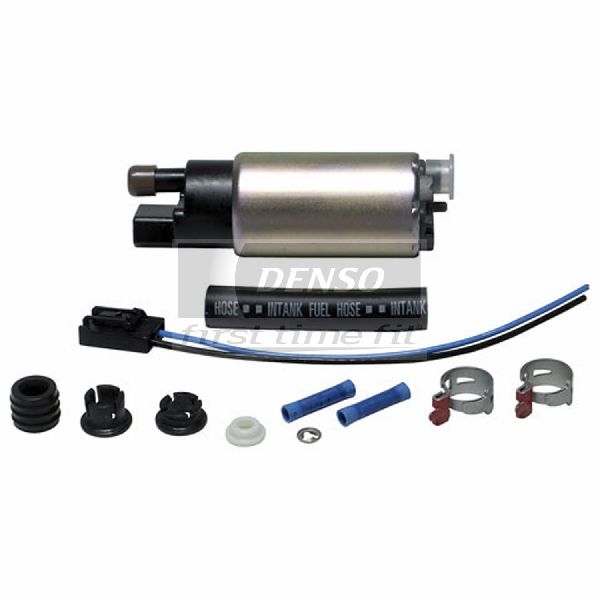
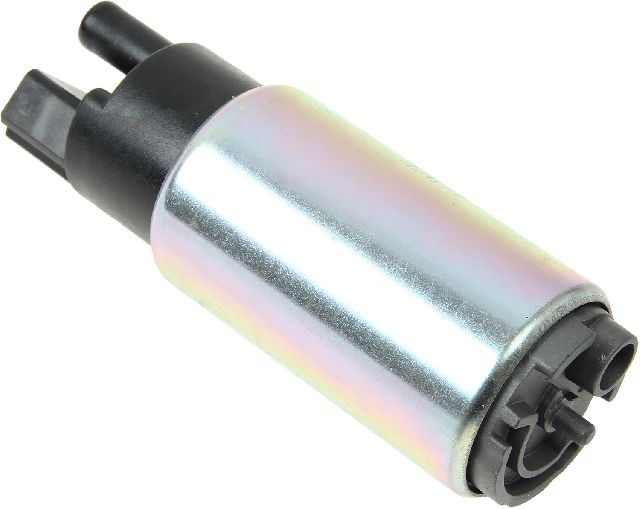
Typical fix: Replace the fuel pump module assembly located in the fuel tank.
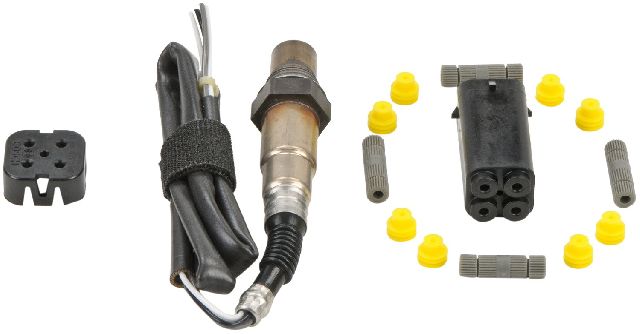
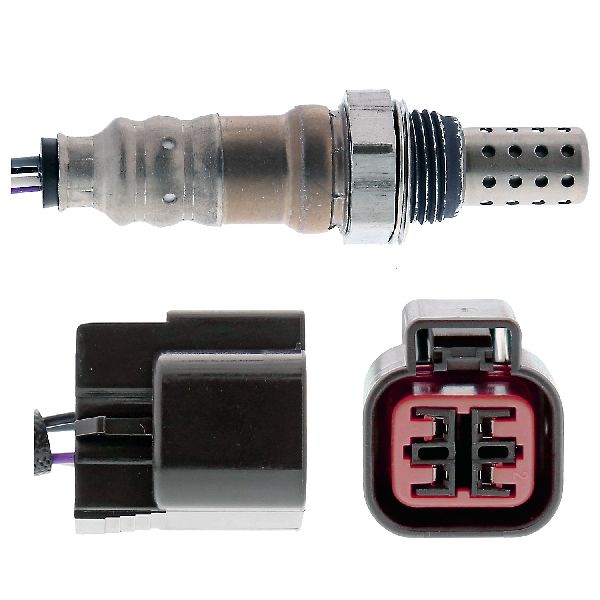
Est. part cost: $150-$250 (pump assembly) - Faulty Upstream Oxygen (O2) Sensor ⚪ Low Probability → Shop Oxygen Sensor
How to confirm: The O2 sensor's job is to report the air-fuel mixture. While it can fail and send false 'lean' signals, it's more often correctly reporting a problem caused by something else. Use a scan tool to watch the O2 sensor voltage (Bank 1, Sensor 1). It should fluctuate rapidly between approximately 0.1 and 0.9 volts. A lazy or stuck sensor is a sign of failure.
Typical fix: Replace the upstream (Bank 1, Sensor 1) oxygen sensor.
Est. part cost: $50-$120
Rare But Worth Checking
- Clogged Fuel Injectors: → Shop Fuel Injector If one or more injectors are partially clogged, they won't deliver enough fuel, leading to a lean condition. This is less common than vacuum leaks or fuel pressure issues.
- Exhaust Leak Before O2 Sensor: → Shop Oxygen Sensor A crack in the exhaust manifold or a leaking gasket before the first O2 sensor can allow outside air to be pulled into the exhaust stream. This tricks the O2 sensor into thinking the engine is running lean.
- Leaking Intake Manifold Gasket: → Shop Engine Intake Manifold While a vacuum leak, this is a more involved repair. On similar engines, a failed intake manifold gasket is a known cause of P0171 and can sometimes be identified by a whistling noise at partial throttle.
Diagnosis Steps
- Read the codes: Use an OBD-II scanner to confirm P0171 and check for any other stored codes.
- Check for vacuum leaks: Visually inspect all vacuum hoses, especially the PCV hose, air intake duct, and purge valve hoses for cracks, splits, or loose connections. Listen for a hissing sound with the engine running.
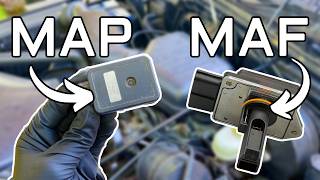
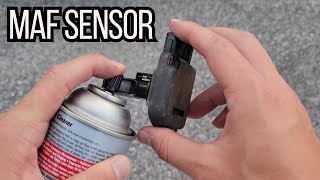
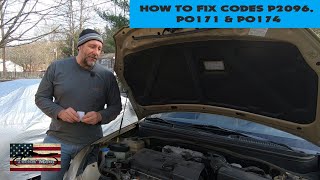
- Clean the MAF Sensor: Disconnect, remove, and clean the Mass Airflow sensor using a dedicated MAF sensor cleaner. Allow it to dry completely before reinstalling. 🎬 Watch this fast and easy guide to cleaning your sensor. After reinstalling, consider disconnecting the battery for 10-15 minutes to reset the ECM.
- Analyze Fuel Trims: Use a scanner to view live data. High positive Short-Term (STFT) and Long-Term (LTFT) fuel trims (e.g., >15-20%) confirm the engine is compensating for a lean condition.
- Test Fuel Pressure: If vacuum leaks and the MAF sensor are ruled out, test the fuel pressure. Connect a gauge to the fuel rail and verify pressure is holding steady around 50 PSI.
- Inspect the Oxygen Sensor: Monitor the upstream O2 sensor's voltage with a scan tool. It should fluctuate rapidly. If it's slow, stuck, or flat-lined, it may be faulty.
- Perform a Smoke Test: If a vacuum leak is suspected but not visible, a smoke test is the most effective way to pinpoint the source of the leak.
Parts You'll Likely Need
- PCV Valve & Hose
(OEM #26740-26700 (Valve), Hose varies)— The PCV valve and its associated rubber hoses are a very common failure point due to age and heat, causing unmetered air to enter the engine, which is a primary cause of P0171.
Trusted brands: Kia (OEM), Beck Arnley (045-0339), Standard Motor Products (V361)
OEM price range: $15-$40
Aftermarket price range: $5-$20 - Mass Airflow (MAF) Sensor
(OEM #28164-25000 (Interchange))— A dirty or failed MAF sensor provides incorrect data to the computer, leading to an improper air-fuel mixture. Cleaning often works, but replacement is the next step.
Trusted brands: Kia (OEM), Delphi, SKP (SK2451091)
OEM price range: $150-$200
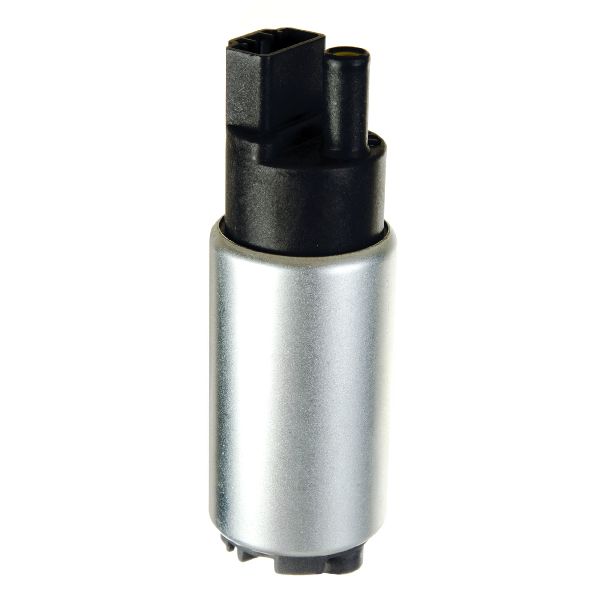
Aftermarket price range: $40-$110 - Fuel Pump Assembly
(OEM #31110-1G500 (Interchange), E8730M (Interchange))— A weak fuel pump cannot supply enough fuel, directly causing a lean condition. This is a likely cause if vacuum leaks and sensor issues are ruled out.
Trusted brands: Delphi, Spectra Premium (SP3018M), Bosch (69544)
OEM price range: $250-$350
Aftermarket price range: $150-$250 - Upstream Oxygen Sensor — If the sensor itself fails, it can send a false lean signal to the computer. It's a common replacement but should be tested before being condemned.
Trusted brands: Denso, NGK, Bosch
OEM price range: $100-$150
Aftermarket price range: $50-$120
Related Codes That Often Appear With This One
- P0174 — This code is for 'System Too Lean (Bank 2)'. It would not appear on the 1.6L inline-4 engine, which only has one bank. It is commonly seen with P0171 on V6 or V8 engines.
- P0300-P0304 — Misfire codes can occur because a lean air-fuel mixture may not ignite properly in one or more cylinders.
- P2096 — This code for 'Post Catalyst Fuel Trim System Too Lean Bank 1' indicates a lean condition detected by the downstream oxygen sensor. It often shares the same root causes as P0171, such as vacuum leaks or fuel delivery problems.
Technical Service Bulletins (TSBs) & Recalls
- TSB ENG033 / ENG085: While not directly for P0171, these bulletins address an ECM reprogramming for 2006-2007 models to fix issues including rough idle, which is a common symptom of a lean condition.
- Bulletin #TSB-ENG160R1: While issued for other Kia models like the Sportage and Optima, this bulletin highlights that Kia has utilized ECU software upgrades to address MIL illumination for DTC P0171.
Platform-Specific Known Issues
- A documented repair for a 2006 Kia Rio with P0171 showed the cause to be a small, frayed rubber hose connected to the vapor canister purge valve. Replacing this inexpensive hose resolved the code.
- Across the Kia platform, owners have reported P0171 appearing alongside other fuel system codes. For instance, NHTSA ODI #11581569 notes P0171 occurring with P0087 (Fuel pressure too low), suggesting that fuel delivery components are a critical inspection point when this code triggers.
Mechanic-Grade Diagnostic Values
- Fuel Pressure — expected: 49-52 PSI. Failure: Pressure below 49 PSI indicates a weak fuel pump or clogged filter.
- Fuel Injector Resistance — expected: 15.9 Ohms. Failure: Significantly higher or lower resistance, or an open circuit, indicates a faulty injector.
- Upstream Oxygen Sensor (B1S1) Voltage — expected: Rapidly fluctuating between 0.1 and 0.9 Volts. Failure: Voltage is stuck high, low, or shows slow response.
- Fuel Level Sender Resistance (in Fuel Pump Assembly) — expected: 8-200 Ohms. Failure: Readings outside this range can indicate a faulty fuel level sender, though this does not directly cause P0171.
Wiring & Ground Locations
- Engine Block Ground — Main ground strap from the engine block to the chassis.. A poor engine ground can cause incorrect readings from sensors that use the block as a ground reference, such as the oxygen sensor, potentially contributing to lean codes.
- Intake Manifold Ground — Ground point on or near the intake manifold.. Ensures sensors mounted on the intake manifold, like the MAP sensor (if applicable) and others, have a stable ground reference. A forum post mentions this as a key grounding point.
- ECM/PCM Ground — Ground wires leading to the Engine Control Module (ECM), typically located in the engine bay or under the dash.. The ECM requires a solid ground to accurately process sensor inputs and control fuel delivery. Wiring diagrams are essential for tracing these specific pins.
- MAF Sensor Connector — Connector on the Mass Airflow sensor, located on the air intake tube after the air filter box.. Corrosion or damage at this connector can interrupt the signal to the ECM, causing it to miscalculate airflow and trigger a P0171 code.
Real Owner Repair Stories
- 2CarPros Forum (2009 Kia Rio) — Long cranking time before starting, P0171 code.
❌ Tried (didn't work) Checked for vacuum leaks (none found), Cleaned 'mostly all the sensors'
✅ What actually fixed it The fuel pressure was found to be low. Replacing the fuel pump resolved the P0171 code and the long crank issue. - YouTube user 'Pinoy Padyakero' (2006 Kia Rio) — P0171 code.
❌ Tried (didn't work) Replacing the upstream oxygen sensor, Replacing spark plugs
✅ What actually fixed it Discovered a small, frayed rubber vacuum hose connected to the purge valve. Trimming the frayed end and re-securing the hose fixed the vacuum leak and cleared the code.
Documented NHTSA Reports
- An owner reported in NHTSA ODI #11579942 that the P0171 code appeared and was described as measuring air in the fuel system, stating "bank 1 running lean."
- NHTSA ODI #11597574 describes a recurring issue where P0171 and P0191 popped into the system shortly after the vehicle was picked up from service.
- In NHTSA ODI #11716465, an owner expressed concern regarding P0171 and P0174 codes appearing alongside P0191, noting reports of carbon buildup in similar engines.
OEM Part Supersession History
Not specified→26740-26700— This is the widely available OEM part number for the PCV valve fitting this generation.
Heads up: This part is widely cross-referenced for many Hyundai/Kia models from this era, including the 1.6L Alpha II engine.
Model Year Variations Within This Range
- 2006-2010: These years primarily used the 1.6L DOHC four-cylinder 'Alpha II' engine.
- 2011 (and later): Around 2010-2011, Hyundai/Kia began phasing in the newer 'Gamma' engine family to replace the Alpha. While still 1.6L, some parts and sensor locations may differ. The Gamma engine was introduced in 2006 but its adoption in the Rio may have occurred towards the end of this generation's run.
Diagnostic Flowchart
Other Known Issues on This Vehicle
Issues unrelated to this code that are worth knowing about as an owner of this generation:
- Valve Cover Gasket Leaks 🟠 Medium → Shop Engine Valve Cover — Common as the vehicle ages. The rubber gasket becomes hard and brittle from heat cycles, causing oil to seep onto the engine block or exhaust.
- Oil Consumption 🟠 Medium — The 1.6L Alpha II engine has been noted by owners to have issues with piston rings and valve seals, leading to higher than normal oil consumption.
- Front Strut 'Creaking' Noise 🟡 Low — Some vehicles may experience a creaking noise from the front struts when driving on rough roads. (Ref: Service Action SA109)
- ECM Logic for Rough Idle 🟡 Low — Some 2006-2007 models experienced rough idling that could be addressed with an ECM software update. (Ref: TSB ENG033)
- Loose Stabilizer Bar Link Bolts 🟡 Low — The upper mounting bolts for the stabilizer bar links could become loose on some vehicles. (Ref: Service Action SA103)
Used vs. New Parts: Buying Guide for This Vehicle
When a used part is the smart pick: For this repair, used parts are generally not recommended due to the nature of the common failures. However, a used intake manifold could be a cost-effective option if the original is confirmed to be cracked, as it is a simple, non-wear component. Structural parts like brackets or connectors are also good candidates for used purchase.
Donor-vehicle mileage cap: roughly under 80000 miles for the part to have meaningful remaining life.
What to inspect on the donor part:
- For hoses: Check for any signs of dry rot, cracking, or swelling. Squeeze the hose to feel for brittleness. Avoid any that are not pliable.
- For sensors (MAF, O2): Inspect connectors for corrosion or damage. Look for physical damage to the sensor body. Buying used sensors is risky as their remaining life is unknown.
- For fuel pumps: Avoid used fuel pumps. The labor to replace it is significant, and a used pump's reliability is a major gamble.
OEM-only on this vehicle (don't cheap out):
- PCV Valve: While aftermarket is available, the OEM valve is inexpensive and known to work correctly. Given its importance in the crankcase ventilation system, sticking with the OEM design is a safe bet.
Aftermarket brands forum-validated for this vehicle:
- O2 Sensors: Denso, NGK, Bosch are reputable brands frequently recommended for oxygen sensors.
- Fuel Pump: Delphi, Spectra Premium, and Bosch are well-regarded aftermarket brands for fuel pump assemblies.
Brands owners have reported issues with on this vehicle:
- Unbranded 'no-name' electronic sensors (MAF, O2) from online marketplaces can have high failure rates and may not be calibrated correctly for the vehicle, potentially causing the same or new codes to appear.
Real Owner Stories
Aggregated from forums and TSBs cited above. Mileages and costs reflect what owners reported in those sources.
2006 Kia Rio 1.6L
Symptoms: Check engine light with code P0171; owner previously replaced the oxygen sensor and four spark plugs without success.
What fixed it: The owner discovered a small, frayed rubber vacuum hose connected to the vapor canister purge valve. He cut off the frayed section and reattached the hose, which resolved the code.
Source hint: YouTube - 'My Kia Rio Throws a P0171 code. My Journey on How it Was Fixed'
2006 Kia Rio 1.6L
Symptoms: Check engine light is on with multiple codes including P0171, P0446, P0507, and P2187.
What fixed it: Diagnosis of a lean condition at idle and evaporative emission system issues.
Source hint: SureTrack forum report
Related OBD-II Codes
Frequently Asked Questions
My 2006 Kia Rio has a rough idle; is there a software fix for this?
What is the correct fuel pressure for a 2006-2011 Kia Rio 1.6L?
Can I use any cleaner to fix a dirty MAF sensor on my Rio?
Is there a specific vacuum hose on the 1.6L engine known to cause P0171?
Does the Hyundai Accent share the same P0171 issues as my Kia Rio?
Should I replace my O2 sensor first to fix P0171?
Helpful Videos

Used OEM Parts in Stock
New Aftermarket Parts Available


The information in this article is provided for general reference and educational purposes only. Vehicle specifications, procedures, and part compatibility can vary by production date, trim level, and region. Always consult your vehicle's factory service manual and verify part numbers before purchasing or performing repairs. Safety-critical components such as airbags, seat belts, and braking systems should be installed by a qualified professional.
- Kia Rio:
- 🧭 Diagnostic Flowchart
- 🎬 Helpful Videos
- 🛍️ Shop This Part
- What's Unique About the 2006-2011 Kia Rio
- Symptoms You May Notice
- Most Likely Causes
- Rare But Worth Checking
- Diagnosis Steps
- Parts You'll Likely Need
- Related Codes That Often Appear With This One
- Technical Service Bulletins (TSBs) & Recalls
- Platform-Specific Known Issues
- Mechanic-Grade Diagnostic Values
- Wiring & Ground Locations
- Real Owner Repair Stories
- Documented NHTSA Reports
- OEM Part Supersession History
- Model Year Variations Within This Range
- Other Known Issues on This Vehicle
- Used vs. New Parts: Buying Guide for This Vehicle
- Real Owner Stories
- 2006 Kia Rio 1.6L
- 2006 Kia Rio 1.6L
- Related OBD-II Codes
- Frequently Asked Questions
- 🎟️ Get 5% Off