

P0171 on 2016-2023 Mazda CX-9 2.5L Turbo: Lean Code Causes and Fixes
On a 2016-2023 Mazda CX-9, code P0171 is often caused by a faulty EVAP purge solenoid valve, leading to a fluctuating idle. A dirty Mass Airflow (MAF) sensor is another top cause. Start by cleaning the MAF sensor; if that fails, the purge valve is a likely and affordable replacement part (~$60-$100 OEM). If the idle is stable but the code persists, suspect a vacuum leak from a cracked intake manifold gasket.
- For a P0171 code on a 2016-2023 CX-9, the most likely causes are a faulty EVAP purge solenoid valve or a dirty MAF sensor.
- A symptom of a fluctuating/surging idle strongly points towards the purge solenoid valve.
- Always start diagnosis with the simplest, cheapest steps: visually inspect for vacuum leaks and clean the MAF sensor with dedicated cleaner.
- A Mazda TSB acknowledges that faulty fuel injectors can be the root cause on this engine if simpler fixes don't work.
- Do not ignore the code, as a persistent lean condition can cause expensive damage to your catalytic converter over time.
What's Unique About the 2016-2023 Mazda CX-9
While P0171 is a generic code, the 2.5L SkyActiv-G Turbo engine in the second-generation CX-9 has specific patterns. Many owners report a faulty EVAP purge solenoid valve is the culprit, a relatively simple fix characterized by a surging idle. Additionally, Mazda issued Technical Service Bulletins (MT-021/17, later updated by MT-004-22) for these engines that point to faulty fuel injectors as a potential root cause if more common issues like vacuum leaks or sensor problems are ruled out. Manufacturer TSB Bulletin #MT-004-22 specifically notes that vehicles may experience the Check Engine Light ON with DTC P0171 along with possible misfire codes.
Symptoms You May Notice
- Check Engine Light is on
- Rough or fluctuating idle, especially when stopped in gear or at a stoplight.
- Hesitation or lack of power during acceleration
- Engine stalling at low speeds or when stopped
- Reduced fuel economy
- Hissing noise from the engine bay, indicating a vacuum leak.
- Engine revving on its own (surging) between 1000-2500 RPM while idling.
- Replacing the oxygen sensor first. While it can be the cause, it's less likely than a vacuum leak, dirty MAF, or faulty purge valve. Always diagnose before replacing parts.
Most Likely Causes
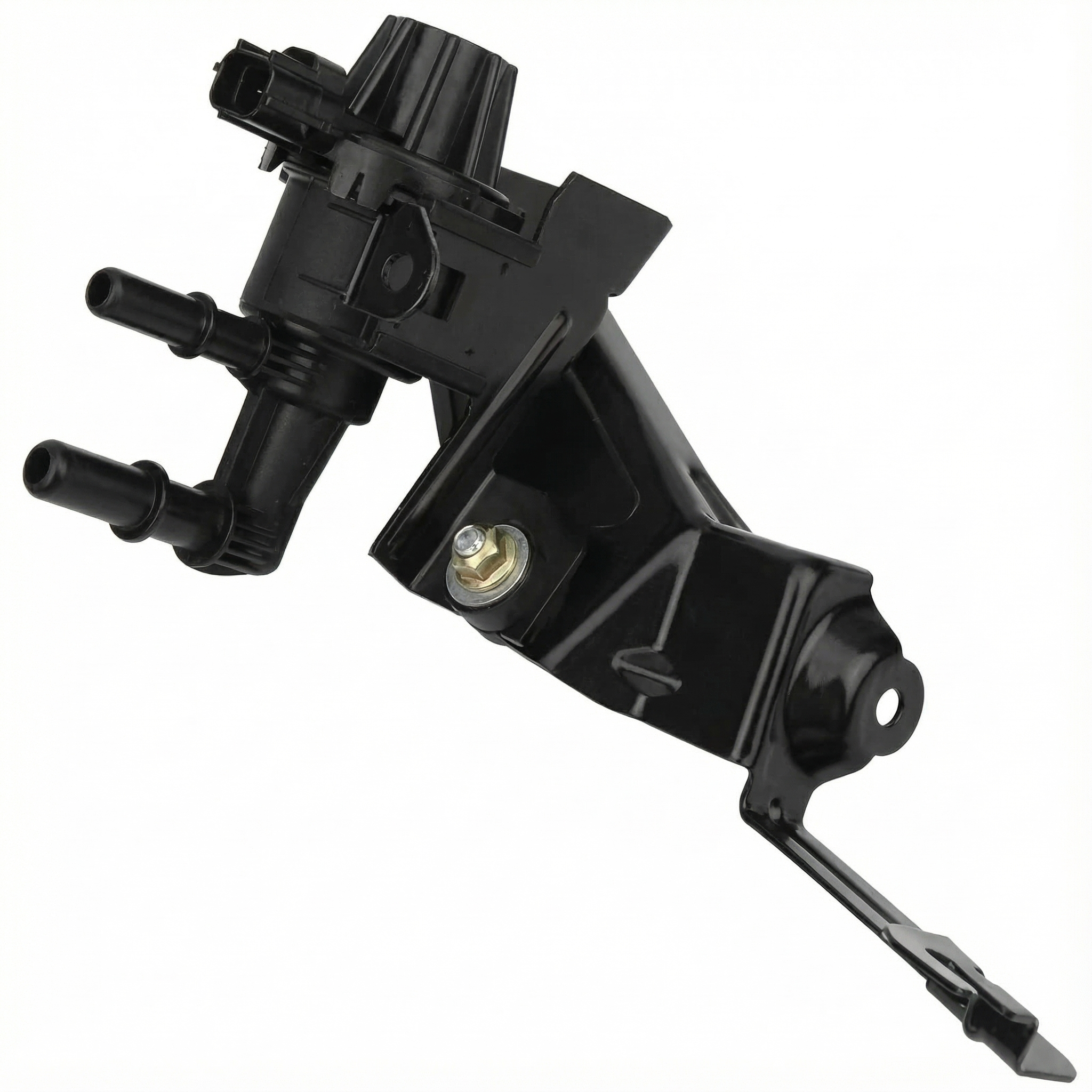
- Faulty EVAP Purge Solenoid Valve 🔴 High Probability → Shop Vapor Canister Multiple owner reports on forums and Reddit specifically for the 2016+ CX-9 identify this part as the cause of P0171, often with a characteristic surging idle. It's a common failure across many modern Mazda models.
How to confirm: With the engine idling, disconnect the electrical connector and the vacuum hose from the intake manifold side of the valve. Place your finger over the port on the valve; you should not feel any vacuum. If suction is present at idle, the valve is stuck open and must be replaced. A faulty valve can also cause a P0496 code.
Typical fix: Replace the purge solenoid valve. It is located on top of the engine towards the firewall and is held by one bolt, making it a 10-minute DIY job. 🎬 Watch: See this CX-9 purge solenoid replacement walkthrough.
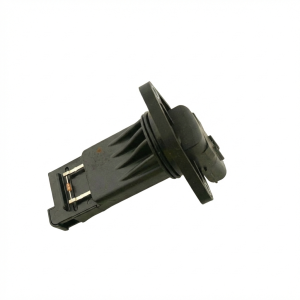
Est. part cost: $60-$100 - Dirty or Faulty Mass Airflow (MAF) Sensor 🔴 High Probability → Shop Fuel Injection Air Flow Meter The MAF sensor measures the air entering the engine. Oil from aftermarket air filters, dirt, or debris can contaminate the sensor element, causing it to under-report airflow and leading the PCM to inject too little fuel.
How to confirm: Remove the sensor and visually inspect the small wires for contamination. Use a dedicated MAF sensor cleaner spray to clean it. Do not touch the wires. 🎬 Watch: A quick guide on cleaning the MAF sensor safely. A scan tool showing abnormally low grams/sec airflow at idle (e.g., below 2.0 g/s for a 2.5L engine) can also indicate a dirty sensor. If cleaning doesn't help, replacement is the next step.
Typical fix: Clean the MAF sensor with a specialized cleaner. If the problem persists, replace the sensor.
Est. part cost: $20 (cleaner) or $75-$150 (new sensor) - Vacuum Leak 🟡 Medium Probability The intake manifold gaskets on Skyactiv engines are a known failure point, hardening over time and causing leaks. A Reddit user with a 2017 CX-9 also reported leaks from the airbox and a chewed EGR hose found via smoke test. A leak has a more pronounced effect at idle, often causing P2187 to appear with P0171.
How to confirm: Perform a visual inspection of all vacuum lines and the air intake boot for cracks or loose connections. A professional smoke test is the most effective way to pinpoint the source of a leak, especially for 🎬 Watch: How to find vacuum leaks using a smoke machine. intake manifold gaskets.
Typical fix: Replace the cracked hose, leaking gasket, or faulty component. The intake manifold gasket is a common and relatively inexpensive part, but labor can be more involved.
Est. part cost: $10-$300 - Clogged or Faulty Fuel Injectors ⚪ Low Probability → Shop Fuel Injector Mazda TSB MT-021/17 specifically lists replacing the fuel injectors as the final repair step for P0171 if other diagnostics do not resolve the issue. This indicates a known, albeit less common, failure path for the direct-injection injectors on this engine.
How to confirm: This requires advanced diagnostics, including monitoring fuel trims with a scan tool and potentially performing a fuel injector balance test. This is often best left to a professional.
Typical fix: Replace the faulty fuel injectors. This is a costly repair.
Est. part cost: $400-$800+
Rare But Worth Checking
- Failing Front Oxygen (A/F) Sensor: → Shop Oxygen Sensor The upstream Air/Fuel ratio sensor can become slow or biased with age, sending incorrect lean signals to the PCM. It's listed as a check in the official Mazda TSB before injector replacement. However, it should be one of the last parts replaced, as it's more often reporting a real problem than being the problem itself.
- Low Fuel Pressure: A weak fuel pump or clogged fuel filter can starve the engine for fuel, causing a lean condition. This is less common but should be considered if the lean condition worsens under load.
- Leaking EGR Valve or Cooler: One owner reported that leaks from the EGR valve and a faulty EGR cooler were contributing factors to their P0171 code, found during a smoke test.
Diagnosis Steps
- Read the codes with an OBD-II scanner. Note freeze frame data, especially long-term fuel trim (LTFT). A high positive value (e.g., +20% or higher) combined with a high short-term fuel trim (STFT) confirms the lean condition.
- Inspect the engine bay for obvious issues: check that the air filter box is securely latched, and look for cracked, disconnected, or collapsed vacuum hoses.
- Test the EVAP purge solenoid valve. With the engine idling, disconnect the vacuum hose from the intake side. If you feel suction from the valve's port, it is stuck open and must be replaced.
- If the purge valve is good, remove and clean the Mass Airflow (MAF) sensor using a dedicated MAF sensor cleaner. Allow it to dry completely before reinstalling. Do not touch the sensor wires.
- Clear the codes and drive the vehicle to see if the code returns. If it does, proceed to the next step.
- Perform a smoke test to check for hard-to-find vacuum leaks. Pay close attention to the intake manifold gaskets, PCV hoses, and the air intake boot after the MAF sensor.
- With a capable scan tool, monitor the live data for the front oxygen (A/F) sensor to ensure it is switching correctly and not biased lean.
- If all else fails, the issue may be fuel-related. Check fuel pressure to rule out a weak fuel pump. If pressure is good, follow the diagnostic procedure in Mazda TSB MT-021/17, which may lead to replacing the fuel injectors.
Parts You'll Likely Need
- EVAP Canister Purge Solenoid Valve
(OEM #PE01-18-751)— A very common failure point on this specific vehicle that causes P0171 and a fluctuating idle. Confirmed by numerous owner reports as a quick and effective fix.
Trusted brands: Mazda (OEM), Standard Motor Products, Dorman
OEM price range: $80-$110
Aftermarket price range: $40-$70 - Mass Airflow (MAF) Sensor
(OEM #PE01-13-215)— Often becomes contaminated, leading to incorrect air metering. Cleaning is a common first step, but replacement is sometimes necessary.
Trusted brands: Mazda (OEM), Denso, Delphi, Walker
OEM price range: $90-$150
Aftermarket price range: $50-$100 - Intake Manifold Gasket
(OEM #PY8V-20-305)— These gaskets can harden and fail over time, creating a vacuum leak that is a primary cause of lean codes. A smoke test is the best way to confirm a leak at the gasket.
Trusted brands: Mazda (OEM), Fel-Pro, Mahle
OEM price range: $5-$15
Aftermarket price range: $5-$25
Related Codes That Often Appear With This One
- P2187 — This code is 'System Too Lean at Idle (Bank 1)'. It often appears with P0171 and strongly points towards a vacuum leak, as these leaks have the most significant effect at idle when engine vacuum is highest.
- P0300-P0304 — These are misfire codes. A lean condition can cause the air-fuel mixture to fail to ignite properly, leading to misfires. Mazda TSB MT-004-22 notes that misfire codes can appear with P0171.
- P0101 — This code is 'Mass Airflow (MAF) Circuit Range/Performance'. It can be triggered alongside P0171 if the MAF sensor is heavily contaminated or failing, providing readings that are out of the expected range.
Technical Service Bulletins (TSBs) & Recalls
- MT-021/17: Details the diagnostic procedure for P0171 on Skyactiv engines, leading to fuel injector replacement if checks of the intake system, MAF sensor, and A/F sensor do not resolve the lean condition.
- MT-004-22: Addresses troubleshooting for rough idle and misfire codes (P0300-P0304), which can accompany a P0171 code. This bulletin notes that vehicles may experience the Check Engine Light ON with DTC P0171 and possibly DTCs P030X.
Platform-Specific Known Issues
- The 2.5L Turbo engine is known for a few significant issues detailed in the 'known_issues' section, most notably a tendency for the cylinder head to crack on earlier models (2016-2020), causing an external coolant leak. While this does not directly cause P0171, it is a critical issue for owners to be aware of.
Mechanic-Grade Diagnostic Values
- Mass Airflow (MAF) Sensor Live Data — expected: 2.0 - 4.0 g/s at stable, warm idle. The value should increase smoothly with RPM.. Failure: Reading is significantly lower than 2.0 g/s at idle, does not increase with RPM, or is stuck at a specific value.
- Mass Airflow (MAF) Sensor Signal Voltage — expected: 0.5V - 1.5V at idle.. Failure: Voltage is below 0.5V or does not increase steadily with RPM.
- Long Term Fuel Trim (LTFT) + Short Term Fuel Trim (STFT) — expected: Total correction (LTFT + STFT) should be less than +20% under normal operation.. Failure: Sustained total correction above +25% will trigger the P0171 code. High positive trims at idle that decrease at higher RPMs strongly suggest a vacuum leak. High positive trims that worsen at higher RPMs suggest a MAF or fuel delivery issue.
- Upstream Air/Fuel (A/F) Ratio Sensor Voltage — expected: Unlike a traditional O2 sensor, this is a wideband sensor. On many modern cars, it will hold a steady reference voltage (e.g., ~2.2V) during normal operation.. Failure: Voltage that is stuck, erratic, or does not respond as expected when a rich or lean condition is manually induced. This requires an advanced scan tool and knowledge to test accurately.
Scan Tool Commands That Help
- FORScan (or similar advanced scanner): Live Data Monitoring (PIDs) — Essential for diagnosing P0171. Monitor LTFT, STFT, MAF (g/s), and A/F sensor voltage to understand the engine's behavior and pinpoint whether the issue is a vacuum leak, sensor fault, or fuel delivery problem.
- FORScan (or similar advanced scanner): EVAP System Test / Purge Valve Duty Cycle — Can be used to command the EVAP purge solenoid valve open and closed while monitoring for changes in fuel trims or engine RPM to confirm its operation without physically accessing it.
Wiring & Ground Locations
- MAF Sensor Connector — On the air intake tube, just after the air filter housing.. The 2016-2023 CX-9 uses a 5-pin connector for the MAF sensor. A poor connection, damaged wiring, or corrosion at this connector can cause incorrect MAF readings, leading directly to a P0171 code. The connector has a red security lock that must be disengaged before unplugging.
Real Owner Repair Stories
- Reddit user 'Alexander-701' (2019 Mazda CX-9 GT, 182,xxx miles) — Engine revving by itself when idling, driving slowly, or braking. P0171 code present.
❌ Tried (didn't work) Online research and troubleshooting.
✅ What actually fixed it Replaced the EVAP Purge Solenoid Valve. The user described it as a 10-minute job that completely resolved the symptoms. - Reddit user 'Which-Run-2129' (2017 Mazda CX-9 2.5 Turbo, 140,000 km) — Rough idle, high revs (surging up to 2000-2500 RPM), and P0171 code.
❌ Tried (didn't work) Clearing the code (it would return after about 60 minutes of driving).
✅ What actually fixed it A smoke test revealed multiple leaks. The final fix involved repairing leaks from the air intake box (due to rodent damage), a chewed hose, a leaking EGR valve, and a faulty EGR cooler. A leaking rocker cover gasket was also found and replaced. - Mazdas247 Forum user 'Duke Yugo' (2016 Mazda CX-9) — Engine revving up and down when idling, P0171 code.
❌ Tried (didn't work) Using Gumout Intake Valve and Turbo Cleaner.
✅ What actually fixed it Replaced the EVAP Purge Solenoid Valve. The user reported the car ran great immediately after replacement.
"I Checked Everything" — The Actual Cause
- In one documented case on a Mazda 3 with a Skyactiv engine, a smoke test showed no vacuum leaks, but the P0171 code persisted. The root cause was discovered to be a MAF sensor that was not properly secured in the airbox; the screws were stripped, allowing unmetered air to be sucked in around the sensor housing. This is a mechanical air leak that a smoke test might miss if the smoke adapter is placed after the MAF sensor.
OEM Part Supersession History
PE01-18-751→PE01-18-751— This part number has remained consistent and fits a very wide range of Mazda vehicles from 2012 to 2025, indicating a stable design with no major revisions or supersessions that would cause compatibility issues.
Model Year Variations Within This Range
- 2016-2023: While the core 2.5L SkyActiv-G Turbo engine and causes for P0171 are consistent across this range, earlier models (2016-2020) are more susceptible to a cracked cylinder head coolant leak. This is a separate, major issue to be aware of but does not directly cause the P0171 lean code.
Diagnostic Flowchart
Other Known Issues on This Vehicle
Issues unrelated to this code that are worth knowing about as an owner of this generation:
- Cracked Cylinder Head (External Coolant Leak) 🔴 High — Most common on 2016-2020 models. A well-documented failure where a crack develops near an exhaust manifold stud, causing a coolant leak at the rear of the engine. Repair is very expensive if out of warranty. (Ref: TSB 01-012/20)
- Excessive Oil Consumption (Valve Stem Seals) 🟠 Medium — Primarily affects certain 2021 models. The valve stem seals were found to be faulty, leading to significant oil consumption and potential blue smoke from the exhaust. Mazda issued a TSB (R070/23) to address this. (Ref: TSB R070/23)
- Premature Brake Booster Failure 🟠 Medium — Reported by owners, sometimes around 100,000-120,000 km. Results in a hard brake pedal and increased stopping distance. It is not a gradual wear item but a component failure.
- Rear Differential Failure 🟠 Medium — Some owners have experienced humming or grinding noises from the rear, leading to a costly differential replacement, sometimes around 100,000-160,000 km.
- Leaking Oil Control Valve (OCV) 🟡 Low — A relatively common and minor issue where the OCV, located on top of the engine, develops a small oil leak. It's an easy fix but something to look for during inspection.
- Chipping/Flaking 'Soul Red Crystal' Paint 🟡 Low — Particularly noted on 2017-2018 models, the multi-layer Soul Red paint is known to be thin and prone to chipping and flaking easily, making touch-ups difficult.
Used vs. New Parts: Buying Guide for This Vehicle
When a used part is the smart pick: For this repair, used parts are generally not recommended for the common failure items. However, a used air filter box assembly from a salvage yard could be a cost-effective solution if the original is cracked or damaged by rodents, which has been reported as a source of leaks.
Donor-vehicle mileage cap: roughly under 75000 miles for the part to have meaningful remaining life.
What to inspect on the donor part:
- For an airbox, check for any cracks, especially around mounting points and the MAF sensor housing.
- Ensure all clips and latches are intact and functional.
- Verify there is no evidence of rodent damage or nesting.
OEM-only on this vehicle (don't cheap out):
- Mass Airflow (MAF) Sensor: While brands like Denso are OEM suppliers and trustworthy, cheap, unbranded aftermarket MAF sensors are notoriously unreliable and can cause persistent diagnostic headaches. Sticking to Mazda OEM or Denso is the safest path.
- EVAP Purge Solenoid Valve: Given the low cost of the OEM part (under $100) and its high failure rate, installing a used one is not a good value proposition.
Aftermarket brands forum-validated for this vehicle:
- Denso (for MAF and A/F sensors)
- NGK/NTK (for Oxygen/A-F sensors)
- Standard Motor Products (for EVAP Purge Valve)
Brands owners have reported issues with on this vehicle:
- Unbranded or 'white-box' electronic sensors (MAF, O2) from online marketplaces are frequently cited as being improperly calibrated and failing quickly.
Real Owner Stories
Aggregated from forums and TSBs cited above. Mileages and costs reflect what owners reported in those sources.
2016 Mazda CX-9 2.5L Turbo
Symptoms: Engine revving up and down (surging) between 1000-2500 RPM while idling.
What fixed it: Replacement of the EVAP purge solenoid valve.
Cost: $60-$100
Source hint: Mazdas247.com thread titled '2016 CX-9 DTC Code P0171 Engine revving up and down when idling - Purge Solenoid'
2017 Mazda CX-9 2.5L Turbo
Symptoms: System too lean P0171 code; owner suspected rodent issues or vacuum leaks.
What fixed it: A smoke test revealed leaks from the airbox and a chewed EGR hose.
Source hint: Reddit r/MazdaCX9 post 'System too lean P0171 code/rodent issue/leaks/'
2019 Mazda CX-9 2.5L Turbo
Symptoms: Check engine light with code P0171.
What fixed it: Diagnostic steps following TSB MT-021/17, which can lead to fuel injector replacement if intake and sensor checks pass.
Source hint: Reddit r/MazdaCX9 post '2019 Mazda CX9 GT P0171 code'
Related OBD-II Codes
Frequently Asked Questions
My 2016 CX-9 is idling roughly and the engine is revving on its own between 1000-2500 RPM. Is this related to P0171?
Is there a TSB for P0171 on the Mazda CX-9 2.5L Turbo?
Can a dirty MAF sensor cause a P0171 on my CX-9?
I have P0171 and P2187 together on my 2017 CX-9. What does this mean?
Could my P0171 code be related to the cracked cylinder head issue?
Is the EVAP purge valve a difficult DIY repair for a CX-9 owner?
Helpful Videos
Used OEM Parts in Stock
New Aftermarket Parts Available


The information in this article is provided for general reference and educational purposes only. Vehicle specifications, procedures, and part compatibility can vary by production date, trim level, and region. Always consult your vehicle's factory service manual and verify part numbers before purchasing or performing repairs. Safety-critical components such as airbags, seat belts, and braking systems should be installed by a qualified professional.
- Mazda CX-9:
- 🧭 Diagnostic Flowchart
- 🎬 Helpful Videos
- 🛍️ Shop This Part
- What's Unique About the 2016-2023 Mazda CX-9
- Symptoms You May Notice
- Most Likely Causes
- Rare But Worth Checking
- Diagnosis Steps
- Parts You'll Likely Need
- Related Codes That Often Appear With This One
- Technical Service Bulletins (TSBs) & Recalls
- Platform-Specific Known Issues
- Mechanic-Grade Diagnostic Values
- Scan Tool Commands That Help
- Wiring & Ground Locations
- Real Owner Repair Stories
- "I Checked Everything" — The Actual Cause
- OEM Part Supersession History
- Model Year Variations Within This Range
- Other Known Issues on This Vehicle
- Used vs. New Parts: Buying Guide for This Vehicle
- Real Owner Stories
- 2016 Mazda CX-9 2.5L Turbo
- 2017 Mazda CX-9 2.5L Turbo
- 2019 Mazda CX-9 2.5L Turbo
- Related OBD-II Codes
- Frequently Asked Questions
- 🎟️ Get 5% Off