

P0171 on 1998-2000 Saab 9-3 B204i: Lean Code Causes and Fixes
On a 1998-2000 Saab 9-3 with the B204i engine, P0171 almost always means there is a vacuum leak from old, cracked rubber hoses or a dirty Mass Airflow (MAF) sensor. Start by replacing all accessible 4mm vacuum lines, paying close attention to the PCV system and the hose to the fuel pressure regulator. Cleaning the MAF sensor is the next critical step.
- For a P0171 code on a 1998-2000 Saab 9-3, immediately suspect old, cracked vacuum hoses.
- The second most likely cause is a dirty Mass Airflow (MAF) sensor. Always try cleaning it with dedicated MAF cleaner before replacing it.
- A smoke test is the most reliable way to find a vacuum leak if it's not visually obvious.
- Replacing all the small vacuum lines with 4mm silicone hose is a cheap, effective, and long-lasting repair that often solves the problem.
- Do not replace the oxygen sensor unless you have definitively ruled out all possible air leaks and fuel delivery issues.
What's Unique About the 1998-2003 Saab 9-3
The first-generation Saab 9-3, particularly with the B204i engine, is prone to this code primarily due to the age of its components. After two decades, the rubber vacuum hoses used throughout the engine bay become hard, brittle, and inevitably crack, creating elusive air leaks. The crankcase ventilation (PCV) system hoses are particularly notorious for failing. While the core causes are similar to other vehicles, the high probability of aged vacuum lines makes them the number one suspect on this specific platform, often more so than sensor failures.
Symptoms You May Notice
- Check Engine Light is on
- Rough or unsteady idle
- Hesitation or sputtering during acceleration
- Noticeable loss of power
- Engine may stall when coming to a stop.
- Hissing sound from the engine bay.
- Replacing the front oxygen sensor first. The O2 sensor is often doing its job correctly by reporting the lean condition. The root cause is usually an unmetered air leak or a fuel delivery issue, not the sensor itself.
Most Likely Causes
- Cracked or Disconnected Vacuum Hoses 🔴 High Probability → Shop Vacuum Hose The original rubber vacuum lines are now over 20 years old and are well-known to become brittle and crack from heat and age, causing unmetered air to enter the engine. The PCV system hoses and the vacuum line to the fuel pressure regulator are especially common failure points.
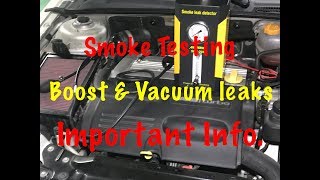
How to confirm: Visually inspect all small-diameter (especially 4mm) vacuum hoses for cracks, splits, or loose connections. A smoke test is the most effective way to find leaks that aren't obvious. A less precise method is to carefully spray brake cleaner or carb cleaner on the hoses with the engine idling and listen for a change in engine RPM.
Typical fix: Replace all accessible vacuum lines. It is highly recommended to use more durable silicone vacuum hose, which is readily available.
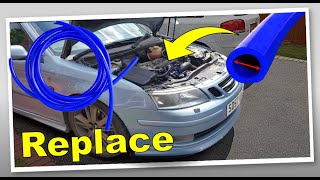
Est. part cost: $10-$30 for bulk silicone hose 🎬 Watch: How to replace your vacuum lines with silicone hoses.
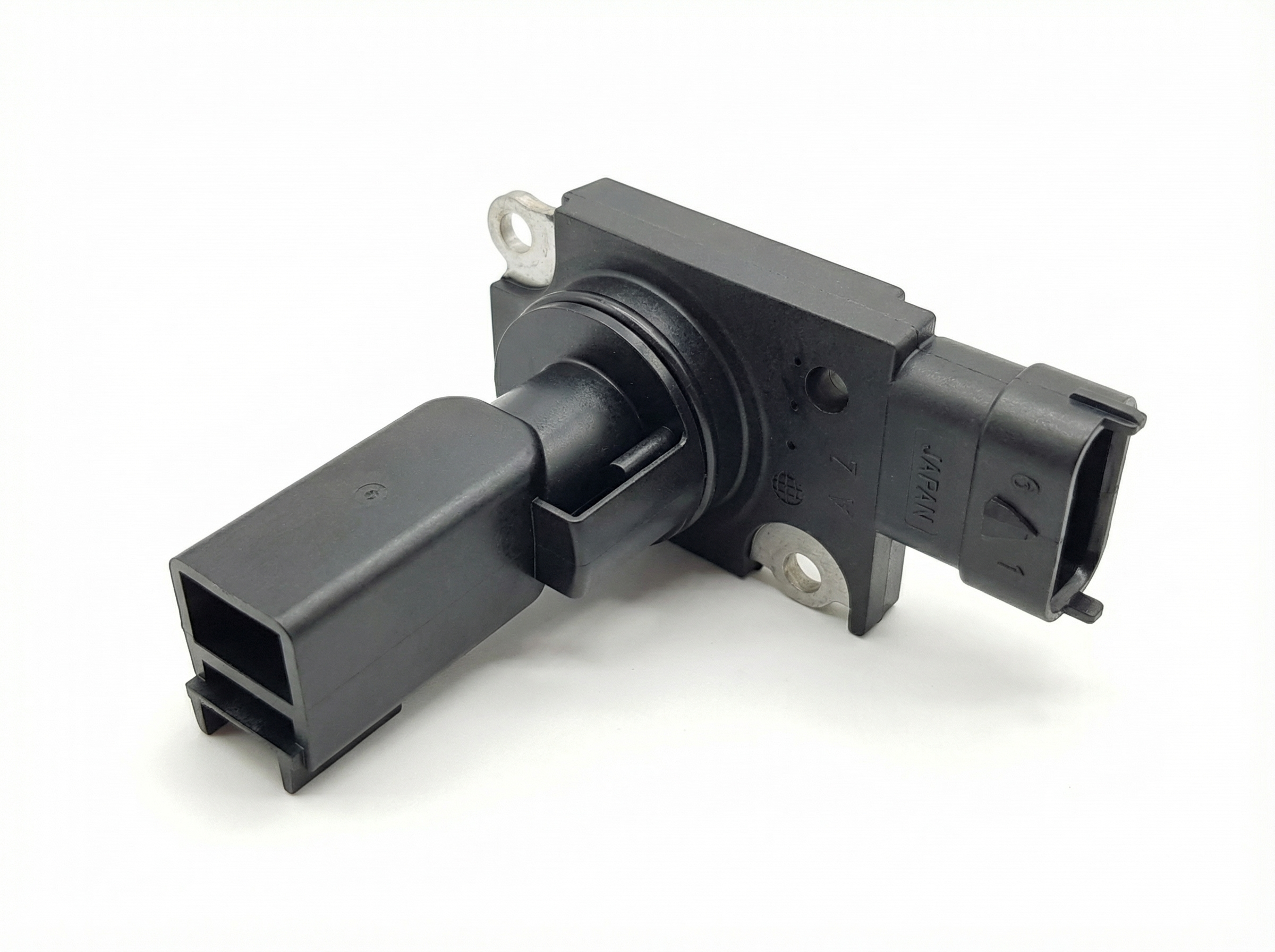
- Dirty or Faulty Mass Airflow (MAF) Sensor 🔴 High Probability → Shop Fuel Injection Air Flow Meter Over time, the sensor's hot wire can become contaminated with dirt or oil vapor from the crankcase ventilation system, causing it to inaccurately measure the air entering the engine. This under-reporting of air causes the ECU to inject too little fuel, creating a lean condition.
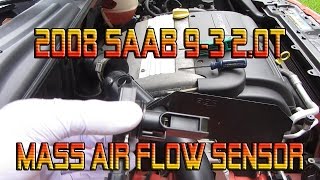
How to confirm: Unplug and remove the sensor (typically held by two Torx screws). Visually inspect the small wires inside. A definitive test involves monitoring its output with a scan tool, but cleaning is a simple and often effective first step. 🎬 See this walkthrough on how to clean your MAF sensor. A quick field test is to disconnect the MAF sensor; if the engine's idle or performance improves, the sensor is likely faulty.
Typical fix: First, try cleaning the sensor wires carefully with a dedicated MAF sensor cleaner spray. Do not touch the wires. If cleaning doesn't resolve the issue, replace the sensor with a quality OEM unit from a brand like Bosch.
Est. part cost: $5-$15 for cleaner, $70-$200 for a new sensor - Leaking Air Intake Hose/Duct 🟡 Medium Probability → Shop Engine Air Intake Resonator The large rubber/plastic duct between the air filter box (where the MAF is located) and the throttle body can develop cracks in its flexible, ribbed sections due to age and engine movement.
How to confirm: With the engine off, remove the duct and carefully inspect it from all angles, flexing it to reveal any hidden cracks or splits. These splits can be hard to see while the hose is installed.
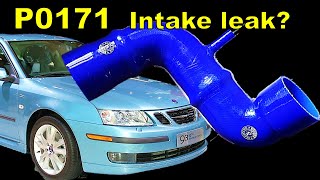
Typical fix: Replace the damaged air intake duct. Upgraded silicone versions are available that are more durable than the original plastic/rubber part. 🎬 Watch: Finding and fixing leaks in the air intake duct.
Est. part cost: $40-$100 - Weak Fuel Pump or Clogged Fuel Filter ⚪ Low Probability → Shop Fuel Filter While not as common as air leaks, the fuel pump and filter are wear items that can lead to low fuel pressure after many years of service.
How to confirm: Connect a fuel pressure gauge to the fuel rail's service port (Schrader valve). Check that the pressure is within the manufacturer's specified range at idle and under load. The fuel filter is a maintenance item and if its history is unknown, replacement is a good preventative measure.
Typical fix: Replace the clogged fuel filter or the failing fuel pump.
Est. part cost: $20-$50 for a filter, $150-$300 for a fuel pump assembly
Rare But Worth Checking
- Failing Front Oxygen Sensor: → Shop Oxygen Sensor This is a possible cause, but it's more likely the sensor is accurately reporting a lean condition caused by another issue. Replace the O2 sensor only after all potential air leaks and fuel delivery problems have been ruled out.
- Leaking Fuel Injector O-rings: → Shop Fuel Injector The small rubber O-rings that seal the fuel injectors can dry out and crack, creating a small vacuum leak at the base of the injector.
- Leaking Intake Manifold Gasket: → Shop Engine Intake Manifold The gasket between the intake manifold and the cylinder head can fail, creating a significant vacuum leak. This can be diagnosed with a smoke test or by carefully spraying carb cleaner near the gasket mating surface while listening for an RPM change.
- Faulty EVAP Purge Valve: → Shop Vapor Canister On related GM-platform vehicles, a purge valve stuck open is a very common cause for P0171. It allows unmetered fuel vapor and air to enter the intake at the wrong time, causing a lean mixture. This is a plausible, though less commonly cited, cause on the Saab 9-3.
Diagnosis Steps
- Check for any other stored trouble codes that could point to a specific system.
- Perform a thorough visual inspection of the engine bay, focusing on all small vacuum lines connected to the intake manifold and throttle body. Pay special attention to the PCV hoses and the line going to the fuel pressure regulator.
- Inspect the large air intake duct between the MAF sensor and the throttle body for any tears or cracks.
- If no visual faults are found, perform a smoke test to pressurize the intake system with low-pressure smoke. This will quickly and accurately reveal the location of any hard-to-see leaks from hoses, gaskets, or seals.
- If no leaks are found, remove the MAF sensor and clean it using a dedicated MAF sensor cleaner. Allow it to dry completely before reinstalling.
- Use a scan tool (ideally a Saab Tech2) to observe Short-Term Fuel Trim (STFT) and Long-Term Fuel Trim (LTFT) data. In Trionic 5, this is called 'Multiplicative Adaptation'. A value greater than +10% strongly suggests a vacuum leak.
- Clear the code and drive the vehicle to see if the code returns. If it does, proceed to check the fuel system.
- Test the fuel pressure using a gauge to ensure the fuel pump and filter are providing adequate fuel flow. The system should maintain 3.0 bar (43.5 PSI).
- If all other possibilities have been exhausted, consider that the front oxygen sensor may be faulty and providing incorrect readings.
Parts You'll Likely Need
- Silicone Vacuum Hose (4mm)
(OEM #9136243 (Sold in 5m lengths))— The original rubber hoses are the most common failure point leading to P0171. Replacing them with durable silicone hose is a preventative and long-lasting fix.
Trusted brands: Proparts Sweden, DO88, Generic
OEM price range: $90-$100 for 5m
Aftermarket price range: $10-$30 for 10 feet - Mass Airflow (MAF) Sensor
(OEM #55557008, 9173386)— This sensor is the second most likely cause if it's dirty or has failed, providing incorrect airflow data to the ECU.
Trusted brands: Bosch (OEM Supplier), Delphi, Hitachi
OEM price range: $120-$250
Aftermarket price range: $70-$150 - MAF Sensor Cleaner — Often, the MAF sensor is just dirty and does not need to be replaced. This specialty cleaner is the correct and safe way to clean it.
Trusted brands: CRC, Liqui Moly
OEM price range: N/A
Aftermarket price range: $5-$15
Technical Service Bulletins (TSBs) & Recalls
- TSB Bulletin #PIP3711B: Although issued for related GM-platform vehicles like the 9-7X, this bulletin notes that a P0171 code can occur with no engine performance concerns. The bulletin indicates this is often caused by unmetered air entering the engine due to an intake leak or air filter concern.
Platform-Specific Known Issues
- Fuel Pressure Regulator Vacuum Hose: → Shop Vacuum Hose The short 4mm vacuum hose that connects to the fuel pressure regulator on the end of the fuel rail is prone to cracking. A leak here directly impacts fuel pressure regulation and is a very common, specific cause of P0171 on this engine.
Mechanic-Grade Diagnostic Values
- Fuel Pressure — expected: 3.0 bar (43.5 PSI). Failure: Significantly lower pressure indicates a weak fuel pump, clogged filter, or faulty regulator.
- Trionic 5 Multiplicative Adaptation (Long-Term Fuel Trim) — expected: Close to 0%, within +/- 5%. Failure: Sustained positive values >10% indicate the ECU is adding fuel to compensate for a lean condition (likely a vacuum leak). The P0171 code may set when this value exceeds a threshold, sometimes as high as 25%.
- Throttle Position Sensor (TPS) Voltage (Non-TCS) — expected: ~0.2V at idle, up to ~4.0V at Wide Open Throttle (WOT).. Failure: Erratic or out-of-range voltage can cause incorrect fuel and ignition calculations. While not a direct cause of P0171, a faulty TPS can contribute to overall poor engine management.
- Mass Air Flow (MAF) Sensor Reading at Idle — expected: A warm engine at idle with no load should read approximately 3.50-4.50 g/s.. Failure: A reading significantly lower than expected suggests a dirty or failing MAF sensor, causing the ECU to under-fuel the engine.
Scan Tool Commands That Help
- Saab Tech2: Read Data Display > Multiplicative Adaptation — This is the primary function for diagnosing P0171. It shows the long-term fuel trim value that the Trionic 5 ECU is using. A high positive number confirms the lean condition that triggered the code.
- Saab Tech2: Jiggle Test for Wiring Harness — The Saab WIS suggests using the Tech2 to monitor sensor values while physically wiggling the engine wiring harness to identify intermittent short circuits or open circuits that could cause erratic sensor readings leading to a lean code.
Wiring & Ground Locations
- G2 — In the engine bay on the side plate in front of the left-hand (driver's side in LHD) wheel housing, behind the battery.. This is a primary chassis ground point. Corrosion or a loose connection here can affect the stability of the entire electrical system, including the ECU and its sensors, potentially causing erroneous readings.
- G7A, G7B, G7L, G7P — On the side of the intake pipe to cylinder 4.. These are critical engine grounding points. G7L is specifically designated for the Lambda (Oxygen) sensor. A poor ground here can directly cause faulty O2 sensor readings, leading to incorrect fuel trim adjustments and potentially triggering a P0171 code.
- G25 — Main battery ground cable connection to the gearbox.. This is the main engine/transmission ground. If this connection is compromised, the engine block may have a poor ground reference, affecting all sensors that ground through the block, including the knock sensor and crankshaft position sensor, which can indirectly impact fuel calculations.
Real Owner Repair Stories
- SaabCentral Forums (2000 Saab 9-3 B204i) — P0171 code, rough idle, hesitation.
❌ Tried (didn't work) Replaced all vacuum lines, Cleaned MAF sensor, Replaced fuel filter, Replaced front oxygen sensor
✅ What actually fixed it The intake manifold gasket was found to be leaking. A smoke test did not initially reveal the leak, but spraying carb cleaner near the gasket mating surface caused a significant change in engine RPM, confirming the leak's location. Replacing the intake manifold gasket resolved the P0171 code and all symptoms.
"I Checked Everything" — The Actual Cause
- A cracked intake manifold gasket. On the B204i, the gasket can sometimes fail in a way that a low-pressure smoke test doesn't make obvious. The leak may only become significant under the high vacuum of an idling engine. In these cases, the 'old school' method of carefully spraying carb cleaner around the manifold-to-head mating surface is more effective at finding the leak.
- A failing MAF sensor. A MAF sensor that is dirty or failing electronically may under-report the amount of air entering the engine. Since no air is 'leaking' into the system post-MAF, a smoke test will come back clean. The ECU, believing there is less air than there actually is, injects too little fuel, creating a lean condition.
OEM Part Supersession History
9173386→55557008— Part number consolidation and revision by the manufacturer (Bosch/Saab/GM).
Heads up: While both part numbers refer to the correct MAF sensor for this application, it is crucial to use a quality OEM-supplier part like Bosch. Cheap, unbranded aftermarket sensors are widely reported on forums to be poorly calibrated, causing persistent P0171 codes or other running issues even when new.
Model Year Variations Within This Range
- 1998-1999: These models exclusively used the Trionic 5.5 (T5) engine management system for the B204i engine.
- 2000: The 2000 model year was a transition year. While the B204i still used Trionic 5, other engines in the 9-3 lineup began switching to the newer Trionic 7 (T7) system. It's important to confirm the engine is a B204i, as T7-based engines (like the B205) have different diagnostic procedures and failure points for P0171.
Diagnostic Flowchart
Real Owner Stories
Aggregated from forums and TSBs cited above. Mileages and costs reflect what owners reported in those sources.
Saab 9-5 2.3T BioPower
Symptoms: Check Engine Light (P0171 & P0101). SID display showed fuel trim adaptation (Amul) maxed out.
What fixed it: Built and installed a new vacuum hose assembly with check valves for the line going to the intake 'cobra' pipe. This brought the fuel trim values back towards a normal range. (Prior to this, replacing the MAF, front O2 sensor, and throttle body hose did not fix the issue).
Source hint: Saabclub.fi forum thread 'P0171 & P0101 - Foorumi – Saabclub.fi'
Saab 900 II / 9-3 I (B204)
Symptoms: P0171 check engine light after about 100 km of driving.
What fixed it: Replaced the MAP/APC sensor. The new sensor gave a higher pressure reading (2-3 kPa more) and long term fuel trims appeared to stabilize at about 50%.
Source hint: Saab-Cars.de forum thread 'Zu magereres Gemisch Trionic 5 - 900 II - 9-3 I - Forum - Saab Cars'
Related OBD-II Codes
Frequently Asked Questions
Why is the fuel pressure regulator vacuum hose so important on my B204i engine?
What fuel trim values on my Saab Tech2 scanner indicate a vacuum leak?
Should I replace my original rubber vacuum lines with OEM Saab parts?
How do I test the MAF sensor on my 1998-2003 Saab 9-3?
What fuel pressure should my B204i engine have if I suspect a failing fuel pump?
Are there upgraded parts for the air intake duct on the Saab 9-3?
Helpful Videos
We Have This Part in Stock

The information in this article is provided for general reference and educational purposes only. Vehicle specifications, procedures, and part compatibility can vary by production date, trim level, and region. Always consult your vehicle's factory service manual and verify part numbers before purchasing or performing repairs. Safety-critical components such as airbags, seat belts, and braking systems should be installed by a qualified professional.
- Saab 9-3:
- 🧭 Diagnostic Flowchart
- 🎬 Helpful Videos
- 🛍️ Shop This Part
- What's Unique About the 1998-2003 Saab 9-3
- Symptoms You May Notice
- Most Likely Causes
- Rare But Worth Checking
- Diagnosis Steps
- Parts You'll Likely Need
- Technical Service Bulletins (TSBs) & Recalls
- Platform-Specific Known Issues
- Mechanic-Grade Diagnostic Values
- Scan Tool Commands That Help
- Wiring & Ground Locations
- Real Owner Repair Stories
- "I Checked Everything" — The Actual Cause
- OEM Part Supersession History
- Model Year Variations Within This Range
- Real Owner Stories
- Saab 9-5 2.3T BioPower
- Saab 900 II / 9-3 I (B204)
- Related OBD-II Codes
- Frequently Asked Questions
- 🎟️ Get 5% Off