

P0171 on 2003-2011 Saab 9-3 2.0T: Lean Mixture Causes and Fixes
On a 2003-2011 Saab 9-3 with the 2.0T engine, code P0171 is most often caused by a vacuum leak from a cracked hose. Check the large intake pipe between the air filter and turbo ('cobra pipe') and all smaller vacuum lines first, especially those for the PCV system and brake booster. A smoke test is the best way to find the leak.
- P0171 on a Saab 9-3 2.0T almost always points to a vacuum leak.
- Your first and most important check should be the large rubber intake pipe between the air filter box and the turbo for cracks.
- A smoke test is the most reliable way to find hidden leaks in the many smaller vacuum hoses.
- Before replacing expensive sensors like the MAF or O2 sensor, always rule out physical air leaks and test fuel pressure.
- If you own a 2010-2011 model, verify if the fuel pump recall has been completed.
What's Unique About the 2003-2011 Saab 9-3
The B207R engine is turbocharged, making it particularly sensitive to unmetered air leaks between the Mass Airflow (MAF) sensor and the turbocharger. A very common failure point is the main accordion-style intake hose, often called the "cobra pipe," which can develop cracks over time due to heat and engine movement, causing this specific code. While many cars get this code, the diagnosis on a 9-3 should always start with a thorough inspection of this specific pipe and the numerous small vacuum lines, including the brake booster and PCV hoses, which are known to degrade.
Symptoms You May Notice
- Check Engine Light is on
- Rough or fluctuating idle, especially on a cold start
- Hesitation or sputtering during acceleration
- Noticeable loss of power
- A hissing or whistling sound from the engine bay, indicating a vacuum leak
- Engine may stall when coming to a stop
- Engine may be difficult to start
- Brake pedal feels hard or spongy (if the brake booster hose or check valve is leaking)
- Replacing the oxygen sensor first. While a faulty O2 sensor can cause a P0171, it's far more likely that the sensor is correctly reporting a problem caused by a vacuum leak or fuel delivery issue. Always diagnose leaks and fuel pressure before replacing sensors.
Most Likely Causes
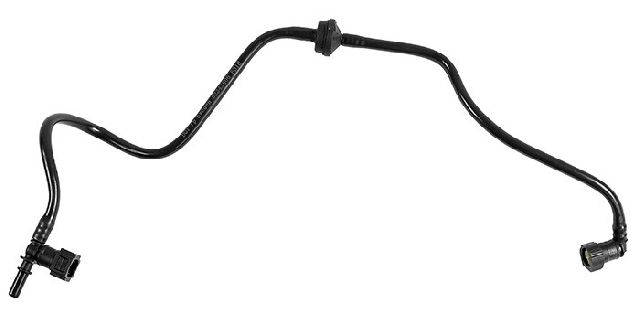
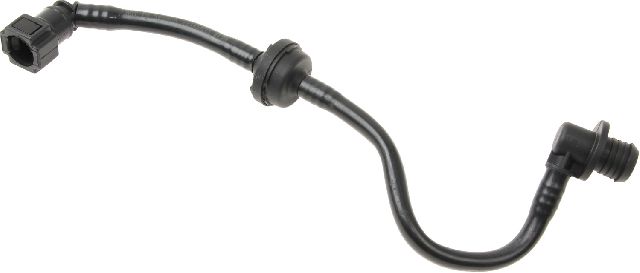
- Cracked or disconnected vacuum hoses 🔴 High Probability → Shop Vacuum Hose The engine bay contains numerous rubber and plastic vacuum lines for the PCV system, brake booster, and EVAP system that become brittle and crack with age and heat cycles. The small check valves within these lines can also fail.
How to confirm: Perform a smoke test. This involves injecting smoke into the intake system and watching for where it escapes. Alternatively, you can carefully spray short bursts of brake cleaner or a propane torch (unlit) around vacuum lines with the engine idling; a change in idle RPM when you spray a certain spot indicates a leak. Pay close attention to the brake booster hose and the PCV system hoses.
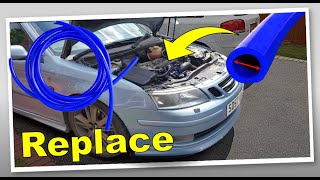
Typical fix: Replace the specific cracked hose, elbow, or check valve. It's often inexpensive and preventative to replace all accessible vacuum lines at once. 🎬 Watch: Step-by-step guide to replacing your B207 vacuum lines.
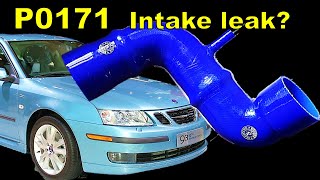
Est. part cost: $10-$60 - Cracked main air intake hose ("Cobra Pipe") 🔴 High Probability → Shop Engine Air Intake Resonator The flexible, concertina sections of the large rubber/plastic intake pipe between the MAF sensor and the turbocharger inlet are known to split due to engine movement and heat. This is a very well-documented failure.
How to confirm: Remove the pipe and carefully inspect it, bending the accordion sections to reveal hidden cracks. The cracks can be difficult to see when the pipe is installed, especially on the underside.
Typical fix: Replace the intake pipe. Upgraded one-piece silicone replacement pipes are available and are more durable than the original part.
Est. part cost: $50-$150 - Dirty or Faulty Mass Airflow (MAF) Sensor 🟡 Medium Probability → Shop Fuel Injection Air Flow Meter The MAF sensor wire can become contaminated by oil vapor or dirt, causing it to under-report the amount of air entering the engine, leading the ECU to command an insufficient amount of fuel.
How to confirm: First, try cleaning the sensor using only dedicated MAF sensor cleaner; do not touch the delicate sensor wire. If cleaning doesn't resolve the issue, monitor the sensor's readings with a scan tool. If fuel trims are high across all RPM ranges (not just at idle), it points towards a faulty MAF rather than a vacuum leak.
Typical fix: Clean the sensor. If the problem persists, replace the MAF sensor. A faulty new sensor is possible, though rare.
Est. part cost: $15 (cleaner) - $150 (new sensor) - Weak Fuel Pump or Clogged Fuel Filter ⚪ Low Probability → Shop Fuel Filter A failing fuel pump cannot supply enough fuel to meet the engine's demand, leading to a lean mixture. A recall was issued for faulty fuel pumps on some 2010-2011 models (NHTSA Campaign ID: 11V015000).
How to confirm: Connect a fuel pressure gauge to the fuel rail's service port. For the B207R, you should see approximately 3 bar (43.5 PSI) at the rail. The pressure should remain stable under load. A significant drop indicates a fuel delivery problem.
Typical fix: Replace the fuel pump and/or fuel filter. Check if your vehicle was part of the recall.
Est. part cost: $200-$400
Rare But Worth Checking
- Leaking Intake Manifold Gasket: → Shop Engine Intake Manifold The gasket between the plastic intake manifold and the cylinder head can fail, creating a vacuum leak. This is less common than hose failures but is a known cause for P0171. A smoke test is the best way to confirm this, as the leak is often at the back or underside of the manifold.
- Faulty Front Oxygen Sensor: → Shop Oxygen Sensor An O2 sensor that is old and slow to respond can incorrectly report a lean condition. This is usually a last resort after all potential vacuum leaks and fuel delivery issues have been ruled out. Owners often replace this first, only for the code to return.
- Leaking Fuel Injector O-rings: → Shop Fuel Injector The small rubber O-rings that seal the fuel injectors can dry out and crack, creating a small vacuum leak at the base of the injector where it meets the intake manifold.
- Faulty Brake Booster or Check Valve: A leak in the brake booster diaphragm or a failure of the one-way check valve in the vacuum hose can create a significant unmetered air leak, triggering P0171. This may also be accompanied by a hard brake pedal.
Diagnosis Steps
- Read the freeze frame data with a scan tool to see the engine conditions when the code was set. Note the Long Term Fuel Trim (LTFT) and Short Term Fuel Trim (STFT) values. High positive numbers (e.g., LTFT > +15%) confirm the lean condition.
- Analyze fuel trims at different RPMs. If LTFT is high at idle but drops towards zero at 2,500 RPM, a vacuum leak is the most likely cause. If LTFT remains high at all RPMs, suspect a MAF or fuel delivery issue.
- Perform a thorough visual inspection of the engine bay. Look for any obviously cracked, disconnected, or collapsed hoses, paying close attention to the large intake boot (cobra pipe) between the air filter housing and the turbocharger.
- Listen for a hissing sound with the engine running, which can pinpoint a large vacuum leak.
- Perform a smoke test. This is the most effective method for locating hard-to-see vacuum leaks from hoses (PCV, brake booster), gaskets, or the cobra pipe.
- If no vacuum leaks are found, remove and clean the Mass Airflow (MAF) sensor using only a dedicated MAF sensor cleaner. Allow it to dry completely before reinstalling.
- If the code returns, test the fuel pressure. Connect a fuel pressure gauge to the service port on the fuel rail and verify the pressure is stable around 3 bar (43.5 PSI) at idle and under load.
- If fuel pressure and all intake paths are good, investigate the front oxygen sensor. Use a scan tool to graph its voltage; it should fluctuate rapidly between approximately 0.1V and 0.9V. A slow or stuck sensor may be faulty.
- As a final step, consider less common causes like a leaking brake booster, leaking fuel injector O-rings, or a failing intake manifold gasket.
Parts You'll Likely Need
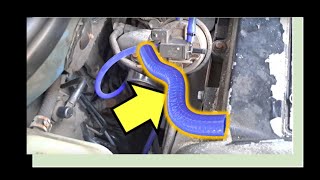
- Vacuum Hose Kit — Multiple vacuum lines in the PCV and brake booster systems 🎬 Watch: How to install a durable silicone crankcase breather hose. are the most common source of leaks due to age and heat. A common failure is the check valve in the brake booster line.
Trusted brands: ACDelco, CRP Rein, Proparts
OEM price range: $40-$80
Aftermarket price range: $20-$50 - Air Intake Hose (Cobra Pipe)
(OEM #12790714)— This specific pipe is a known weak point on the B207R engine and frequently cracks in its accordion section, causing a large unmetered air leak.
Trusted brands: Saab (Genuine), Proparts, Maptun Parts (Silicone), do88 (Silicone)
OEM price range: $120-$180
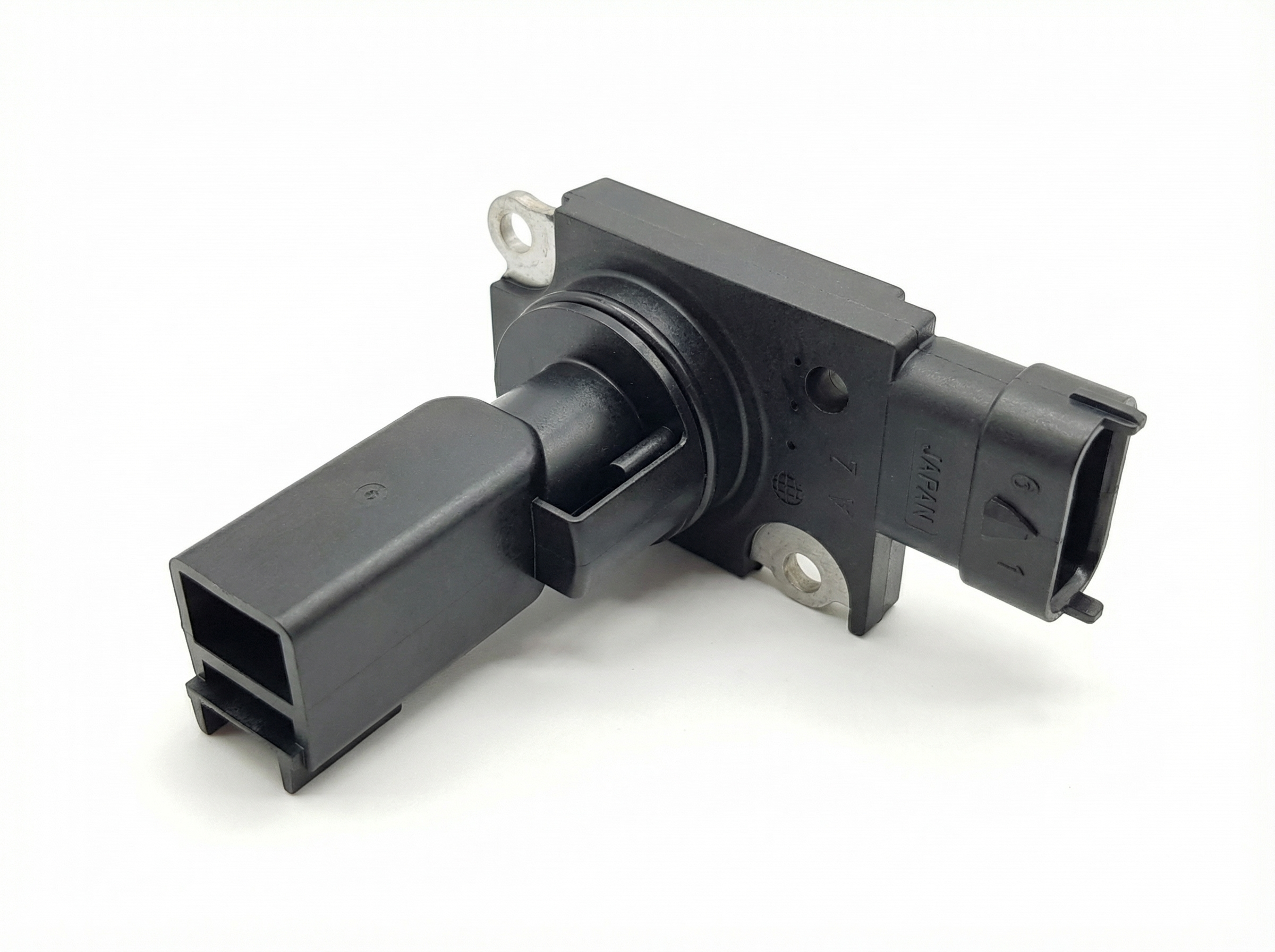
Aftermarket price range: $50-$100 - Mass Airflow (MAF) Sensor
(OEM #12790644)— If cleaning the original sensor doesn't work, a replacement is the next step. It's a critical sensor for fuel calculations.
Trusted brands: Bosch (OEM), Hitachi, Spectra Premium
OEM price range: $120-$180
Aftermarket price range: $60-$120
Related Codes That Often Appear With This One
- P0174 — This code is 'System Too Lean (Bank 2)'. It would not appear on the Saab 9-3's inline engine, but is the companion code on V-type engines with the same underlying problem.
- P0300-P0304 — These are cylinder misfire codes. A lean mixture can fail to ignite properly, causing misfires, especially under load.
- P0101 — This code indicates a 'Mass Air Flow (MAF) Circuit Range/Performance' problem. A dirty or failing MAF sensor is a common cause for both P0101 and P0171.
Platform-Specific Known Issues
- A recall was issued for 2010-2011 Saab 9-3 models for a defective fuel pump that could seize and cause the engine to stall (NHTSA Campaign ID: 11V015000). If you have one of these model years, check if this recall was performed, as a failing pump can cause a P0171 code.
Technical Service Bulletins (TSBs) & Recalls
- A manufacturer service bulletin for the same make, Bulletin #PIP3711B, notes that a P0171 code may be found even with no engine performance concerns. This can be caused by unmetered air entering the engine due to an intake leak or air filter concern.
Mechanic-Grade Diagnostic Values
- Mass Airflow (MAF) Sensor Reading at Idle — expected: 3.4 g/s to 3.8 g/s (approximately 1.7-1.9 g/s per liter of displacement). Failure: Significantly lower values can indicate a vacuum leak (unmetered air bypassing the sensor). Significantly higher values could indicate a contaminated sensor.
- Mass Airflow (MAF) Sensor Reading at 2500 RPM — expected: 15 to 25 g/s. Failure: A reading that does not increase smoothly with RPM or stays low suggests a faulty MAF sensor.
- Long-Term Multiplicative Adaptation (Fuel Trim) — expected: Close to 0%. Failure: The P0171 code is typically set when this value exceeds +25%.
- Brake Booster Vacuum Check — expected: With the engine off, the brake pedal should get progressively harder to press with each pump (1-3 times). When starting the engine with the pedal depressed, the pedal should drop slightly.. Failure: If the pedal does not get hard to press, or does not drop when the engine is started, it indicates a leak in the brake booster or its check valve.
Scan Tool Commands That Help
- Saab Tech2: Read Freeze Frame Data — To see the exact engine parameters (RPM, load, temperature, fuel trims) at the moment the P0171 code was triggered. This is crucial for determining if the lean condition occurs at idle, under load, or when cold/hot.
- Saab Tech2: Graph O2S 1 (Front Oxygen Sensor) — After verifying no vacuum leaks, this test checks the sensor's health. A healthy sensor's voltage should fluctuate rapidly. A slow or biased sensor can falsely trigger a lean code.
- Saab Tech2: Fuel Trim Reset / Adaptation Reset — After a repair (like fixing a vacuum leak or replacing a MAF sensor), resetting the long-term fuel adaptations forces the Trionic ECU to relearn the fuel mixture immediately, which can confirm the fix and turn off the CEL faster.
Wiring & Ground Locations
- G2 — On the side of the left-hand structural member in the engine bay, near the connector bracket by the battery.. This is a primary chassis ground point for the battery. A poor connection here can cause widespread electrical issues and erratic sensor readings, including those from the MAF and O2 sensors that are critical for fuel mixture calculation.
- G7 — On the engine control module's (ECU) top right attachment lug.. This provides a direct ground for the ECU itself. Corrosion or a loose connection at this point can directly impact the ECU's processing and its ability to correctly interpret sensor data, potentially leading to incorrect fuel trim calculations and a P0171 code.
- G25 — Directly on the gearbox (early models) or left-hand engine mounting (later models).. This is the main engine/transmission ground strap. A faulty connection here can create a voltage potential difference between the engine block (where sensors are grounded) and the chassis, leading to noisy or incorrect signals from the O2 sensor and crankshaft position sensor, affecting fuel and timing.
Real Owner Repair Stories
- DoItYourself.com Community Forums (2000 Saab 9-3, 50,000 miles) — Check Engine Light with P0171, but engine idled and ran great.
❌ Tried (didn't work) Replacing the front O2 sensor (code returned after 2 days).
✅ What actually fixed it The owner performed multiple actions at once: cleaned the MAF sensor, replaced the fuel filter, replaced some visibly deteriorated vacuum hoses, and added Seafoam to the fuel tank. The code did not return, with the owner suspecting the dirty MAF sensor was the primary culprit. - YouTube - 'BEST STEP BY STEP GUIDE TO FIX P0171 REPLACE OLD FUEL INJECTORS' (Not specified, but general diagnosis applicable.) — P0171 code, very high positive fuel trims (+39%).
❌ Tried (didn't work) Diagnosed good vacuum, ruling out a major vacuum leak.
✅ What actually fixed it The owner noticed moist dirt around the fuel injectors, indicating a leak. Upon removal, the top O-rings were found to be thin and brittle. Replacing the fuel injector O-rings and cleaning the injectors caused the long-term fuel trim to drop significantly from +39% to +19.9%, indicating the leak at the injector base was a major contributor to the lean condition.
"I Checked Everything" — The Actual Cause
- A cracked exhaust manifold or leaking exhaust manifold gasket upstream of the front oxygen sensor can cause P0171. During the exhaust stroke, the low pressure pulses can draw in outside air through the crack. The O2 sensor sees this extra oxygen and incorrectly reports a lean mixture to the ECU, which then tries to add fuel. This is often missed because a smoke test of the intake system will show no leaks.
Model Year Variations Within This Range
- 2003-2006 (Pre-facelift): The PCV (Positive Crankcase Ventilation) system on earlier B207 engines was less robust. While not a direct cause of P0171, a malfunctioning PCV system can lead to oil contamination of sensors and pressure imbalances in the crankcase that may exacerbate lean conditions. An updated PCV kit (often referenced as update #6, though that primarily applies to the older T7 engine) with revised hoses and check valves is a common preventative maintenance item.
Diagnostic Flowchart
Real Owner Stories
Aggregated from forums and TSBs cited above. Mileages and costs reflect what owners reported in those sources.
2008 Saab 9-3T
Symptoms: Triggered a P0171 lean code and required extensive troubleshooting, including pulling Tech2 freeze frame data.
What fixed it: After replacing multiple parts, the community suggested investigating the crankshaft position sensor and resetting the O2 sensor adaptations.
Source hint: Reddit r/saab - Need Help Diagnosing P0171 Lean Code
2000 Saab 93 — ~50000 miles
Symptoms: P0171 lean code on a low-mileage vehicle.
What fixed it: Cleaning the MAF sensor, replacing the fuel filter, and fixing a deteriorated vacuum line.
Source hint: DoItYourself.com Forums - 2000 Saab 93 P0171 lean code
Saab 9-3
Symptoms: Rough idle accompanied by a potential vacuum leak.
What fixed it: Diagnosing and addressing a leak at the brake booster vacuum hose check valve assembly.
Source hint: SaabCentral Forums - Brake Booster Vacuum Hose Check Valve
Saab 9-3
Symptoms: P0171 code present, but scan tool showed contradictory negative LTFT and STFT values, complicating the diagnosis.
What fixed it: Required advanced diagnostic analysis of fuel trims to determine the root cause of the contradictory data.
Source hint: SaabCentral Forums - P0171, but negative LTFT (and STFT)
Related OBD-II Codes
Frequently Asked Questions
Is there a recall for the fuel pump on my Saab 9-3 that could cause a P0171 code?
What is the 'Cobra Pipe' and why is it a common cause for P0171 on the B207R engine?
How can I tell if my P0171 is caused by a vacuum leak or a bad MAF sensor on my 2.0T?
My brake pedal feels hard and I have a P0171 code. Are these related?
What should the fuel pressure be at the rail for the B207R engine?
Can I use parts from a Chevy Cobalt SS to fix my Saab 9-3's P0171 issue?
Helpful Videos
Used OEM Parts in Stock
New Aftermarket Parts Available


The information in this article is provided for general reference and educational purposes only. Vehicle specifications, procedures, and part compatibility can vary by production date, trim level, and region. Always consult your vehicle's factory service manual and verify part numbers before purchasing or performing repairs. Safety-critical components such as airbags, seat belts, and braking systems should be installed by a qualified professional.
- Saab 9-3:
- 🧭 Diagnostic Flowchart
- 🎬 Helpful Videos
- 🛍️ Shop This Part
- What's Unique About the 2003-2011 Saab 9-3
- Symptoms You May Notice
- Most Likely Causes
- Rare But Worth Checking
- Diagnosis Steps
- Parts You'll Likely Need
- Related Codes That Often Appear With This One
- Platform-Specific Known Issues
- Technical Service Bulletins (TSBs) & Recalls
- Mechanic-Grade Diagnostic Values
- Scan Tool Commands That Help
- Wiring & Ground Locations
- Real Owner Repair Stories
- "I Checked Everything" — The Actual Cause
- Model Year Variations Within This Range
- Real Owner Stories
- 2008 Saab 9-3T
- 2000 Saab 93 — ~50000 miles
- Saab 9-3
- Saab 9-3
- Related OBD-II Codes
- Frequently Asked Questions
- 🎟️ Get 5% Off