

P0171 on 2012-2017 Subaru Crosstrek: System Too Lean Causes and Fixes
On a 2012-2017 Crosstrek, P0171 is most often caused by a vacuum leak from a cracked intake air duct or a dirty Mass Airflow (MAF) sensor. A very common secondary cause is an oil-fouled front Air/Fuel ratio sensor due to leaking valve cover gaskets. Cleaning the MAF sensor costs under $20, and replacing the intake duct is around $50-$100 for the part. Both are common DIY fixes.
- Start your diagnosis by cleaning the MAF sensor and thoroughly inspecting the large intake air duct for cracks.
- A smoke test is the most effective tool for finding elusive vacuum leaks that cause this code.
- When inspecting the front A/F sensor (upstream O2), also check the valve cover directly above it for any signs of oil leaks.
- Do not replace any parts without first confirming the failure. Cleaning the MAF or finding a cracked hose can save you hundreds of dollars.
- On a Subaru, a Check Engine Light for P0171 will almost always disable the cruise control system as a safety precaution; this is normal.
What's Unique About the 2012-2017 Subaru Crosstrek
For the first-generation Crosstrek, the P0171 code frequently points to one of two specific issues. A very common failure point is the plastic intake air duct hose, which can develop cracks along its accordion ribs, creating a vacuum leak that the MAF sensor cannot measure. Additionally, the FB20B engine's passenger-side valve cover and cam carrier gaskets can leak oil directly onto the front air/fuel ratio sensor (upstream O2 sensor), causing it to fail and send incorrect lean readings to the computer.
Symptoms You May Notice
- Check Engine Light is on
- Flashing cruise control light (a common Subaru feature when the CEL is active)
- Rough or unstable idle
- Engine hesitation or stumbling during acceleration
- Reduced fuel economy
- Sluggish performance or loss of power
- Noticeable 'gassy' or rich smell from the exhaust, as the ECM overcompensates with fuel. 🎬 Watch: A complete guide to diagnosing and fixing P0171 codes
- Replacing the rear (downstream) O2 sensor. The rear sensor's primary job is to monitor catalytic converter efficiency and it has little impact on fuel trim. The front A/F sensor is the one that controls the air-fuel mixture.
- Replacing the MAF sensor without cleaning it first. A simple $15 cleaning is often all that is needed.
Most Likely Causes
- Cracked Intake Air Duct 🔴 High Probability → Shop Engine Air Intake Duct The plastic/rubber duct between the air filter housing and the throttle body is known to develop cracks along its accordion-like seams due to heat and age, allowing unmetered air to enter the engine post-MAF sensor.
How to confirm: Visually inspect the entire intake duct, especially in the crevices of the flexible sections. Squeeze the duct while the engine is running and listen for changes in idle. A smoke test is the most effective way to confirm a leak in this part.
Typical fix: Replace the entire intake air duct. This is a straightforward DIY job requiring only basic hand tools.
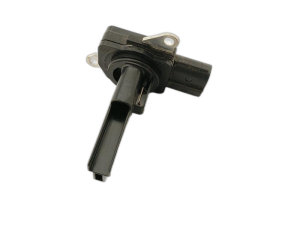
Est. part cost: $50-$100 - Dirty Mass Airflow (MAF) Sensor 🔴 High Probability → Shop Fuel Injection Air Flow Meter Oil vapor from the PCV system or fine dust that gets past the air filter can coat the sensitive wires of the MAF sensor, causing it to under-report the amount of air entering the engine.
How to confirm: Remove the MAF sensor (held by two screws) and visually inspect the internal wires. If they appear dirty, cleaning is the first step. A scan tool can also show abnormal MAF readings at idle (should be around 2.0-4.0 g/s for the FB20B).
Typical fix: Clean the sensor using only dedicated MAF sensor cleaner spray. Do not touch the wires. Let it air dry completely before reinstalling. 🎬 See this simple DIY for cleaning your Subaru MAF sensor If cleaning doesn't resolve the issue, the sensor may need to be replaced.
Est. part cost: $15 (cleaner) or $100-$200 (new sensor) - Failing Front Air/Fuel (A/F) Ratio Sensor 🟡 Medium Probability → Shop Oxygen Sensor This sensor (also known as the upstream O2 sensor or Bank 1 Sensor 1) can fail from age or contamination. A known issue on the FB20B engine is a leaking passenger-side valve cover gasket or cam carrier seal, which drips oil directly onto the A/F sensor and its wiring, causing it to malfunction and send false lean signals.
How to confirm: Inspect the valve cover and front timing cover on the passenger side, directly above the sensor, for any signs of oil leaks. Use a scan tool to monitor the sensor's voltage; it should fluctuate rapidly. A slow or stuck reading indicates a problem.
Typical fix: Replace the front A/F ratio sensor. If an oil leak is present, that must be repaired first to prevent repeat failure of the new sensor. This often involves replacing the valve cover gasket and potentially resealing the cam carrier.
Est. part cost: $100-$250 for the sensor, plus potentially $200-$500+ for gasket repairs. - Other Vacuum Leaks (PCV Hose, Intake Gaskets) ⚪ Low Probability
How to confirm: Perform a smoke test to check for leaks from smaller vacuum lines, the PCV system, or the intake manifold gaskets. You can also carefully spray brake cleaner or starting fluid around suspected areas while the engine is running and listen for a change in idle speed. 🎬 Watch: A quick trick to find hidden vacuum leaks easily
Typical fix: Replace the specific hose or gasket that is found to be leaking. The PCV valve itself can sometimes stick, requiring replacement.
Est. part cost: $10-$150
Rare But Worth Checking
- Low Fuel Pressure: While less common than air leaks, a weak fuel pump or clogged fuel filter can cause a lean condition. If you experience symptoms like extended cranking or loss of power under heavy load, it's worth checking fuel pressure. Specification is typically 49-58 psi. A manufacturer report for a similar platform, NHTSA ODI #10496665, noted a P0171 where the diagnosis was a fuel line issue that put the vehicle into limp mode.
- Clogged Fuel Injectors: → Shop Fuel Injector If one or more fuel injectors are partially clogged, they won't deliver enough fuel, leading to a lean mix. This is less likely than other causes but can happen over time.
- Weak Battery: On modern Subarus, a failing battery can cause a host of random, seemingly unrelated electronic issues and codes, including P0171. If the battery is original or over 4-5 years old, have it tested.
- Brake Booster Vacuum Leak: While rare, a vacuum leak can occur at the brake system. NHTSA ODI #10865341 describes a case where a P0171 code was traced to a cracked vacuum valve around the brake booster check valve.
Diagnosis Steps
- Read Fuel Trims: Use an OBD-II scanner to check the Short-Term (STFT) and Long-Term (LTFT) fuel trims. High positive numbers (e.g., >15-20%) confirm the engine is compensating for a lean condition.
- Inspect for Oil Leaks onto A/F Sensor: With a flashlight, look at the passenger side of the engine, below the valve cover and front timing cover. Check the front A/F sensor (the one before the catalytic converter) and its wiring for any signs of fresh oil dripping onto it.
- Inspect Intake Air Duct: Carefully inspect the large rubber/plastic hose between the air filter box and the engine for any cracks, tears, or loose connections. Pay close attention to the ribbed, flexible sections. Squeeze it to reveal hidden cracks.
- Clean the MAF Sensor: Disconnect the battery. Unplug and remove the MAF sensor (located on the air filter box lid). Spray the internal wires generously with a dedicated MAF sensor cleaner. Let it dry completely for at least 30 minutes before reinstalling. NHTSA ODI #11329091 notes a case where a P0171 was addressed by cleaning the MAF sensor after no other leaks were found.
- Perform a Smoke Test: If no obvious leaks are found, a smoke test is the most reliable way to find hidden vacuum leaks from gaskets, seals, or small cracks in hoses like the PCV line.
- Test the Front A/F Sensor: Using a capable scan tool, graph the A/F sensor's output voltage or current. A healthy sensor will show rapid fluctuations. A lazy, biased, or flat-lined sensor is likely faulty.
- Check Fuel Pressure: If all air-side tests are negative, connect a fuel pressure gauge to the fuel system to ensure the fuel pump is delivering adequate pressure according to manufacturer specifications (approx. 49-58 psi).
- Test the Battery: Have the battery load-tested at an auto parts store, especially if it is more than 4 years old. A weak battery can cause various electrical gremlins in these cars.
Parts You'll Likely Need
- Intake Air Duct / Hose
(OEM #14462AA540)— This part is a known failure point on this platform, with seams that split and cause unmetered air leaks. This specific part number appears to be incorrect for the Crosstrek, often being associated with turbo models. The correct part is likely integrated with the upper air cleaner case assembly.
Trusted brands: Subaru (OEM)
OEM price range: $50-$100
Aftermarket price range: $30-$60 - Front Air/Fuel Ratio Sensor (Bank 1, Sensor 1)
(OEM #22641AA610)— This is the primary sensor for measuring the air-fuel mixture. It can fail with age or due to oil contamination from a leaking valve cover gasket. Owners and technicians strongly recommend using the OEM Subaru or original Denso part for reliability.
Trusted brands: Denso (OEM supplier), Subaru (OEM)
OEM price range: $200-$280
Aftermarket price range: $100-$180 - Mass Airflow (MAF) Sensor
(OEM #22680AA380)— Often just needs cleaning, but if it fails, it will cause incorrect fuel calculations. Replacement is the fix if cleaning doesn't work.
Trusted brands: Denso (OEM supplier), Hitachi, Subaru (OEM)
OEM price range: $150-$250
Aftermarket price range: $80-$150 - MAF Sensor Cleaner — This is a required first step before considering MAF sensor replacement. It's a very common and cheap fix.
Trusted brands: CRC, WD-40 Specialist
Aftermarket price range: $10-$20
Related Codes That Often Appear With This One
- P0170 — P0170 is a more generic 'Fuel Trim Malfunction' code that can sometimes accompany P0171.
- P0300-P0304 — A severe lean condition can cause misfires. P0300 indicates a random misfire, while P0301-P0304 would point to specific cylinders.
Technical Service Bulletins (TSBs) & Recalls
- TSB 02-157-14R: While not directly for P0171, this TSB addresses excessive oil consumption on 2012-2013 Impreza and 2013 Crosstrek models with the 2.0L FB engine, which can lead to oil leaks and other engine issues. The fix involves replacing the engine short block in verified cases.
- TSB 02-172-18R: Details a new, more heat-resistant oil filler tube o-ring to address oil seepage concerns, which can contribute to oil leaks in the engine bay.
Platform-Specific Known Issues
- A cracked intake air duct hose is a frequent cause of P0171 on this and related Subaru models.
- Leaking valve cover gaskets can drip oil onto the front A/F sensor, causing it to fail and trigger a P0171 code.
- NHTSA ODI #11486440 notes that an intermittent failure of the air fuel sensor can cause a rich fuel condition and affect mileage, leading to the P0171 code.
Mechanic-Grade Diagnostic Values
- Mass Airflow (MAF) Sensor Reading at Idle — expected: Approximately 2.0 - 4.0 g/s for a 2.0L engine at normal operating temperature with no load. A common rule of thumb is 1.7 to 1.9 g/s per liter of displacement.. Failure: A reading significantly lower than 2.0 g/s at idle can indicate a vacuum leak (unmetered air entering after the sensor). A significantly higher reading could indicate a contaminated sensor.
- Long-Term Fuel Trim (LTFT) — expected: Ideally within +/- 5%. Acceptable up to +/- 10%.. Failure: When LTFT for Bank 1 is consistently above +15% to +25%, it confirms the ECM is compensating for a significant lean condition and will trigger P0171.
- Fuel Pressure — expected: 49 - 58 psi at the fuel rail.. Failure: Pressure significantly below 49 psi indicates a potential issue with the fuel pump, filter, or regulator, leading to insufficient fuel supply.
Wiring & Ground Locations
- Front A/F Ratio Sensor Connector — On the passenger side of the engine, near the front timing cover and below the valve cover. The sensor threads into the exhaust manifold before the catalytic converter.. This is a critical inspection point. Oil leaking from the valve cover or cam carrier seal above can saturate this connector and the sensor itself, causing it to fail and send false lean readings.
Real Owner Repair Stories
- Reddit user in /r/Crosstrek (2016 Subaru Crosstrek 5MT, 75k miles) — Check Engine Light (P0171), very rich/gassy exhaust smell, poor/sluggish idle, occasional misfires.
❌ Tried (didn't work) Initial diagnosis pointed towards common vacuum leaks or MAF issues.
✅ What actually fixed it The user discovered the passenger-side valve cover gasket was leaking oil, which completely saturated the front A/F (O2) sensor directly below it. Cleaning the sensor and surrounding area temporarily resolved the issue. The permanent fix was replacing the valve cover gaskets and the oil-fouled A/F sensor. - NHTSA ODI #11712991 — An owner reported that their engine stalled with a P0171 code present and several dash lights illuminated; following the stall, the vehicle would only crank but not start.
"I Checked Everything" — The Actual Cause
- In one documented case on a Subaru STI (which shares some diagnostic principles), a user had a persistent P0171 with maxed-out fuel trims despite a clean smoke test, good fuel pressure, and a new MAF sensor. The root cause was suspected to be a faulty aftermarket Air/Oil Separator (AOS) that was allowing unmetered air under vacuum conditions at idle, a leak that did not show up under the positive pressure of a smoke test.
OEM Part Supersession History
22641AA610→N/A (Still current)— This is the widely accepted OEM part number for the Front Air/Fuel Ratio Sensor for the 2012-2017 Crosstrek.
Heads up: Many aftermarket sensors are available, but forums strongly recommend using the OEM Subaru or the original supplier (Denso) part to avoid compatibility issues and repeat failures.14462AA540→N/A— This part number, sometimes associated with P0171, is for the intake duct on TURBO models like the Forester XT or WRX and does NOT fit the naturally aspirated FB20B in the Crosstrek.
Heads up: This part is incompatible. The correct Crosstrek intake duct is often integrated with the air cleaner housing assembly, and a specific part number for just the flexible hose is not commonly listed.
Model Year Variations Within This Range
- 2012-2017 (First Generation): The FB20B engine in this generation uses port fuel injection. The second-generation Crosstrek (2018+) uses the FB20D engine, which features direct injection and has different components and diagnostic considerations.
Diagnostic Flowchart
Other Known Issues on This Vehicle
Issues unrelated to this code that are worth knowing about as an owner of this generation:
- Excessive Oil Consumption 🔴 High — Common in early FB20 engines (approx. 2012-2015). Subaru acknowledged the issue, considering consumption up to 1 quart per 1,200 miles as potentially normal, but later issued a TSB for short block replacement in severe cases. (Ref: TSB 02-157-14R)
- CVT Transmission Failure/Hesitation 🔴 High — More prevalent in earlier models (2013-2015), with symptoms including shuddering, hesitation, and potential failure of the torque converter lock-up solenoid or valve body. (Ref: Subaru extended the CVT warranty to 10 years/100,000 miles for many affected vehicles (TSB 16-107-17).)
- Premature Wheel Bearing Failure 🟠 Medium — Owners report noisy or failing wheel bearings (front or rear) at mileages as low as 30,000-60,000 miles, though many last over 100k. The symptom is a loud humming or grinding noise that increases with speed.
- Brake Light Switch Failure 🟡 Low — A faulty brake light switch could prevent brake lights from illuminating and, on push-start models, prevent the car from starting or shifting out of park. This was widespread enough to trigger a recall. (Ref: Recall WUE-90)
- Key Stuck in Ignition / Park Position Switch Failure 🟡 Low — A common complaint where a faulty switch in the shifter assembly fails to detect that the car is in Park, preventing the key from being removed from the ignition. (Ref: TSB 16-112-18R)
Used vs. New Parts: Buying Guide for This Vehicle
When a used part is the smart pick: For this repair, a used part is a smart choice for the plastic intake air duct/air cleaner housing. It is a simple, non-wear item, and a used part from a reputable salvage yard is a cost-effective alternative to a new OEM assembly.
Donor-vehicle mileage cap: roughly under 100000 miles for the part to have meaningful remaining life.
What to inspect on the donor part:
- For an intake duct, inspect the flexible accordion sections for any signs of cracking, brittleness, or oil saturation.
- Ensure all mounting tabs and hose connection points are intact and not broken.
- Check that the vehicle it came from did not have a front-end collision that could have stressed the plastic.
OEM-only on this vehicle (don't cheap out):
- Front Air/Fuel Ratio Sensor: Due to sensitivity and calibration, it is highly recommended to use an OEM Subaru or Denso (the OEM supplier) sensor. Aftermarket sensors are notorious for causing persistent issues or failing prematurely.
Aftermarket brands forum-validated for this vehicle:
- Denso for the Air/Fuel Ratio Sensor (as they are the OEM supplier).
- CRC or WD-40 Specialist for MAF Sensor Cleaner.
Brands owners have reported issues with on this vehicle:
- Unbranded or 'white-box' electronic sensors (MAF, A/F sensors) from online marketplaces are frequently cited as unreliable and a common cause of misdiagnosis.
Real Owner Stories
Aggregated from forums and TSBs cited above. Mileages and costs reflect what owners reported in those sources.
2015 Subaru Crosstrek 2.0L
Symptoms: Check engine light on; owner noted recommendations to check for oil on the A/F sensor wiring.
What fixed it: Inspection for a cam carrier or valve cover leak affecting the A/F sensor.
Source hint: Reddit r/subaru thread titled '2015 crosstrek p0171 engine bank 1 too lean'
2016 Subaru Crosstrek 2.0L — 65000 miles
Symptoms: P0171 code persisted even after the owner cleaned the MAF sensor and replaced the PCV valve.
What fixed it: The context indicates cleaning the MAF and replacing the PCV were unsuccessful, requiring further diagnosis of the A/F sensor or intake duct.
Source hint: Reddit r/MechanicAdvice thread titled 'Help p0171 on 2016 crosstrek already replaced'
2013 Subaru Crosstrek 2.0L
Symptoms: Check engine light active; found the front A/F sensor saturated with oil.
What fixed it: Replacing the passenger-side valve cover gasket and the front A/F sensor. Cleaning the sensor was only a temporary fix.
Source hint: Reddit r/Crosstrek thread titled 'p0171 check engine light'
Related OBD-II Codes
Frequently Asked Questions
My 2013 Crosstrek is consuming a lot of oil and now has a P0171 code. Is there a TSB for this?
Can a leaking valve cover gasket cause a P0171 lean code on my FB20B engine?
What are the specific MAF sensor readings I should look for on my Crosstrek to diagnose P0171?
Is there a specific part of the intake I should check for leaks on my 2012-2017 Crosstrek?
My cruise control light is flashing along with the Check Engine Light; is this related to P0171?
I've heard about an oil filler tube O-ring issue; could this be related to my lean code?
Helpful Videos



We Have This Part in Stock

The information in this article is provided for general reference and educational purposes only. Vehicle specifications, procedures, and part compatibility can vary by production date, trim level, and region. Always consult your vehicle's factory service manual and verify part numbers before purchasing or performing repairs. Safety-critical components such as airbags, seat belts, and braking systems should be installed by a qualified professional.
- Subaru Crosstrek:
- 🧭 Diagnostic Flowchart
- 🎬 Helpful Videos
- 🛍️ Shop This Part
- What's Unique About the 2012-2017 Subaru Crosstrek
- Symptoms You May Notice
- Most Likely Causes
- Rare But Worth Checking
- Diagnosis Steps
- Parts You'll Likely Need
- Related Codes That Often Appear With This One
- Technical Service Bulletins (TSBs) & Recalls
- Platform-Specific Known Issues
- Mechanic-Grade Diagnostic Values
- Wiring & Ground Locations
- Real Owner Repair Stories
- "I Checked Everything" — The Actual Cause
- OEM Part Supersession History
- Model Year Variations Within This Range
- Other Known Issues on This Vehicle
- Used vs. New Parts: Buying Guide for This Vehicle
- Real Owner Stories
- 2015 Subaru Crosstrek 2.0L
- 2016 Subaru Crosstrek 2.0L — 65000 miles
- 2013 Subaru Crosstrek 2.0L
- Related OBD-II Codes
- Frequently Asked Questions
- 🎟️ Get 5% Off