

P0174 on 2011-2017 Chrysler 200 3.6L: Causes and Fixes for Lean Bank 2
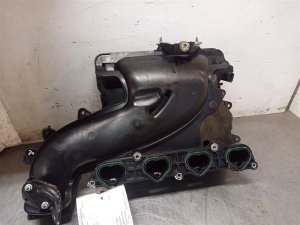
On the 3.6L Pentastar V6, code P0174 is most often caused by a vacuum leak from failed upper and lower intake manifold gaskets. A DIY replacement costs about $40-$80 in parts. While the manifold is off, it's critical to inspect the oil filter housing for leaks, another extremely common issue that often leads to repeated intake removal and eventual manifold failure.
- P0174 on a 2011-2017 Chrysler 200 with the 3.6L V6 almost always points to a vacuum leak.
- The most likely culprit is failed upper and lower intake manifold gaskets, a known weak point for this engine.
- Do not replace the oxygen sensor without first performing a smoke test to definitively rule out a vacuum leak.
- When replacing the intake gaskets, it is highly recommended to also replace the PCV valve and inspect the oil filter housing for leaks to save on future labor costs.
What's Unique About the 2011-2017 Chrysler 200
The 3.6L Pentastar V6, used across many Chrysler, Dodge, and Jeep vehicles, features a composite (plastic) intake manifold. Over time, the rubber gaskets that seal the manifold to the cylinder heads are exposed to thousands of heat cycles, causing them to harden, shrink, and crack. This creates vacuum leaks, which are the most common cause of P0174 on this specific engine. This problem is compounded by another notorious Pentastar issue: the cracking plastic oil filter/cooler housing located in the engine valley directly beneath the intake manifold. Repairing the oil filter housing requires removing the intake manifold, and these repeated removal/reinstallation cycles can stress the already brittle plastic manifold, increasing the likelihood of warpage or cracks that prevent a proper seal, leading to persistent vacuum leaks.
Generation note: This guide covers the 2011-2014 (JS generation) and 2015-2017 (UF generation) of the Chrysler 200. Both generations used the 3.6L Pentastar V6, and the common causes for P0174, particularly intake gasket failure, are consistent across both. However, 2011-2013 models are also susceptible to a specific left cylinder head defect that can cause misfires on Bank 2. For the 2016 model year, the Pentastar engine was upgraded with features like two-stage variable valve lift, a new intake manifold, and a higher compression ratio (11.3:1 vs 10.2:1), which may alter some diagnostic values but does not change the primary causes of this code.
Symptoms You May Notice
- Check Engine Light is on
- Rough or high idle
- Engine hesitation or stumbling during acceleration
- Reduced engine power
- Decreased fuel economy
- A hissing or whistling sound from the engine bay (indicating a vacuum leak)
- Replacing the oxygen sensor first. A vacuum leak is far more common on this engine. The O2 sensor is often doing its job correctly by reporting the lean condition caused by the unmetered air.
- Replacing fuel injectors without confirming a fuel delivery problem through pressure and flow tests.
Most Likely Causes
- Leaking Intake Manifold Gaskets 🔴 High Probability → Shop Engine Intake Manifold The 3.6L Pentastar's composite intake manifold and rubber gaskets are prone to failing after many heat cycles, causing them to become hard and brittle. This is the most widely reported cause for P0171 and P0174 codes on this engine.
How to confirm: Perform a smoke test on the intake system. Smoke will be seen escaping from the area where the lower intake manifold meets the cylinder heads. Alternatively, spraying carburetor cleaner or starting fluid near the gasket mating surface with the engine running will cause a noticeable change in engine RPM if a leak is present, though a smoke test is safer and more definitive.
Typical fix: Replace both the upper and lower intake manifold gaskets. This is a set of gaskets, often sold as a complete kit.
Est. part cost: $30-$80 - Faulty PCV Valve or Hose 🟡 Medium Probability → Shop PCV Valve The PCV valve and its connecting hose can become brittle, cracked, or clogged over time, creating an unmetered vacuum leak. The valve is located on the rear of the Bank 2 (firewall side) cylinder head, under the intake manifold, making it wise to replace during an intake gasket job.
How to confirm: Inspect the PCV valve and hose for any visible cracks, brittleness, or blockage. The valve itself should rattle when shaken; if it doesn't, or if it's stuck open, it needs replacement.
Typical fix: Replace the PCV valve and any damaged hoses. It is often replaced as a preventative measure when the intake manifold is removed for a gasket replacement.
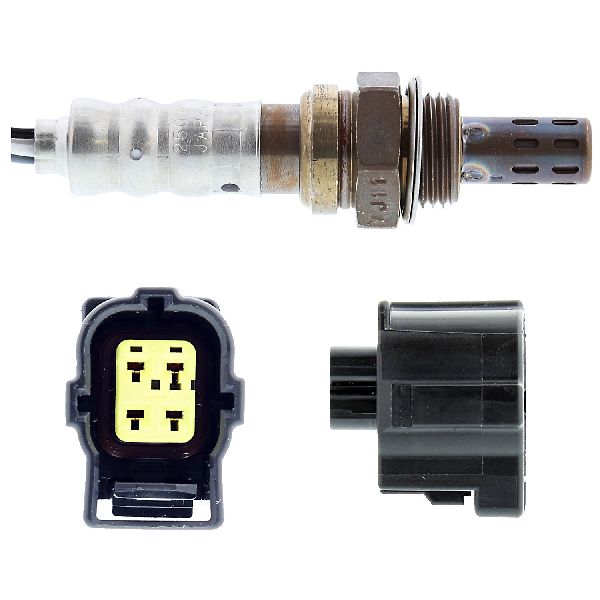
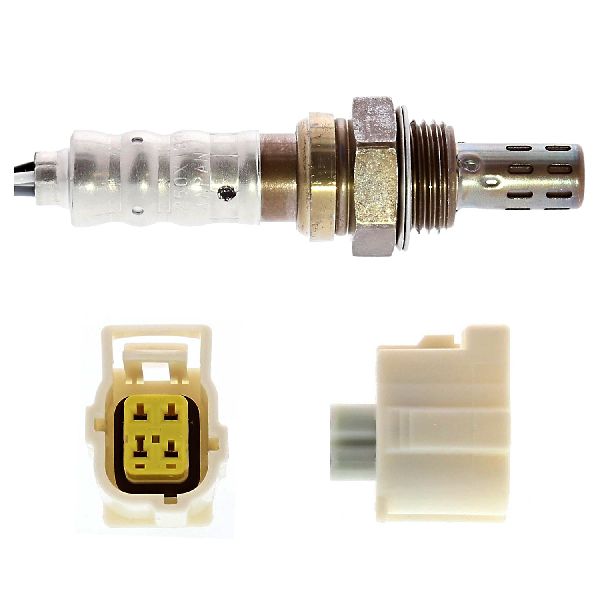
Est. part cost: $15-$40 - Faulty Upstream Oxygen (O2) Sensor ⚪ Low Probability → Shop Oxygen Sensor O2 sensors are wear items and can fail over time, sending incorrect readings to the PCM. However, they are more often misdiagnosed as the cause when the real issue is a vacuum leak. The sensor is usually correctly reporting the lean condition.
How to confirm: Use an OBD-II scanner with live data capabilities to monitor the Bank 2, Sensor 1 voltage. A healthy sensor will show rapidly fluctuating voltage between approximately 0.1V and 0.9V. A sensor that is stuck low (<0.45V) or slow to respond may be faulty. Always rule out vacuum leaks first before replacing the sensor.
Typical fix: Replace the Bank 2, Sensor 1 (upstream) oxygen sensor.
Est. part cost: $50-$120
Rare But Worth Checking
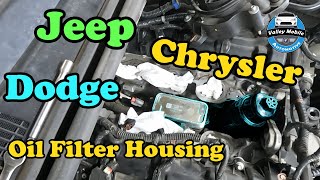
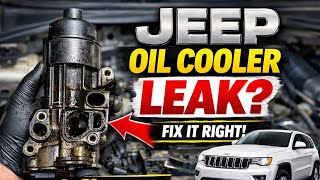
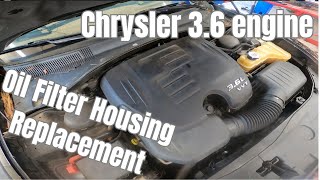
- Leaking Oil Filter/Cooler Housing: This is a very common failure point on the 3.6L Pentastar, located in the engine valley beneath the intake manifold. While it primarily causes oil and coolant leaks, a severe crack in the housing or failure of its mounting seals could potentially create a vacuum leak. It should always be inspected for leaks whenever the intake manifold is removed. 🎬 Watch: Full guide to replacing a leaking oil filter housing.
- Weak Fuel Pump or Clogged Injector: → Shop Fuel Pump A lack of fuel can also cause a lean code. This is less common than a vacuum leak. Check fuel pressure at the fuel rail to confirm. A fuel delivery issue would likely affect both banks, also triggering a P0171 code.
- Exhaust Leak: A leak in the exhaust manifold or pipe before the upstream O2 sensor can pull in fresh air, causing the sensor to report a false lean condition.
- Dirty or Faulty MAP Sensor: The 3.6L Pentastar uses a Manifold Absolute Pressure (MAP) sensor, not a MAF sensor. A dirty or faulty MAP sensor can send incorrect data to the PCM, contributing to a lean condition. While it would typically affect both banks, it's an easy and inexpensive item to clean as a diagnostic step.
Diagnosis Steps
- Connect an OBD-II scanner and confirm P0174 is the active code. Check for any other codes, especially P0171 (lean bank 1) or P030x (misfires).
- Check the freeze frame data to see the engine conditions (RPM, load, temperature) when the code was set.
- Monitor long-term fuel trim (LTFT) for Bank 1 and Bank 2. High positive numbers (e.g., +15% or higher) on Bank 2 confirm the lean condition. 🎬 Watch: How to use fuel trim data to find the leak. If both banks are high, suspect a leak common to both.
- Perform a thorough visual inspection of the engine bay. Look for any cracked, disconnected, or brittle vacuum hoses, especially around the intake manifold and PCV system.
- The most effective next step is to perform a smoke test on the intake system. Introduce smoke into a vacuum line and look for leaks, paying close attention to the intake manifold gaskets, PCV valve, and oil filler cap.
- If no vacuum leaks are found, inspect the Bank 2 upstream O2 sensor's wiring for damage. Use a scanner to monitor its live data to ensure it is switching correctly.
- If no vacuum or sensor issues are found, check fuel pressure at the fuel rail to rule out a fuel delivery problem. The pressure should be within the manufacturer's specification (typically around 58 psi for this platform).
- Inspect and clean the MAP sensor. A contaminated sensor can provide incorrect data to the PCM.
Parts You'll Likely Need
- Intake Manifold Gasket Set (Upper and Lower)
(OEM #5184331AC (Lower), 5184562AC (Upper))— This is the most common failure point leading to vacuum leaks and a P0174 code on the 3.6L Pentastar engine.
Trusted brands: Mopar, Fel-Pro (Kit P/N: MS 97204), Mahle
OEM price range: $40-$60
Aftermarket price range: $25-$50 - PCV Valve
(OEM #68083202AC)— It's an inexpensive wear item that can cause vacuum leaks. It's located under the intake manifold, so it is best practice to replace it at the same time as the intake gaskets.
Trusted brands: Mopar, Standard Motor Products (SMP)
OEM price range: $20-$35
Aftermarket price range: $10-$20 - Upstream Oxygen Sensor (Bank 2, Sensor 1) — Replaced only after vacuum leaks and fuel delivery issues have been definitively ruled out.
Trusted brands: Denso, NTK, Bosch
OEM price range: $80-$130
Aftermarket price range: $50-$90
Related Codes That Often Appear With This One
- P0171 — System Too Lean (Bank 1). If both P0171 and P0174 are present, it strongly indicates a large vacuum leak affecting the entire engine, such as the intake manifold gaskets.
- P0300, P0302, P0304, P0306 — Random or specific cylinder misfire codes for Bank 2. A severe lean condition can prevent proper combustion, leading to misfires on the affected cylinders. For 2011-2013 models, these codes could also point to the known cylinder head defect.
Technical Service Bulletins (TSBs) & Recalls
- TSB 09-002-14 Rev. B: While not for P0174 directly, this TSB addresses misfire codes (P0302, P0304, P0306) on the left cylinder head (Bank 2) for 2011-2013 models due to a manufacturing defect. A severe misfire condition could potentially be investigated alongside a lean code for that bank.
Platform-Specific Known Issues
- The 3.6L Pentastar engine is known for intake manifold gasket failure causing lean codes P0171 and P0174.
- The oil filter/cooler housing, located under the intake manifold, is another notorious failure point that commonly leaks oil and should be inspected/replaced during an intake gasket job to prevent future labor costs and potential vacuum leaks from repeated disassembly.
Mechanic-Grade Diagnostic Values
- MAP Sensor Voltage at Idle — expected: 0.8V to 1.5V. Failure: Voltage significantly outside this range at hot idle with no vacuum leaks.
- MAP Sensor Voltage at Wide Open Throttle (WOT) — expected: Above 3.5V. Failure: Voltage does not rise significantly when snapping the throttle.
- Fuel Pressure (Key On, Engine Off) — expected: ~58 psi (400 kPa). Failure: Pressure is significantly lower, or it bleeds off rapidly (more than 20 psi in 30 minutes), indicating a leak or bad check valve.
- Long Term Fuel Trim (LTFT) — expected: Ideally between -10% and +10%. Failure: Sustained readings of +25% or more on Bank 2 will trigger P0174.
Scan Tool Commands That Help
- wiTECH or equivalent professional scan tool: Reset Fuel Adaptives / Clear Adaptive Memory — After replacing a component that affects the air-fuel mixture (like intake gaskets or O2 sensors), this function should be used to clear the old learned fuel trim values. This forces the PCM to relearn the fuel strategy immediately with the new parts, preventing the old, incorrect adjustments from causing rough running or a premature return of the check engine light.
- wiTECH or equivalent professional scan tool: Fuel Injector Balance Test — If a single-bank lean code (P0174) persists after vacuum leaks are ruled out, this bidirectional test can help identify a clogged or failing injector on Bank 2. The tool commands each injector to fire for a set duration, and the resulting pressure drop in the fuel rail is measured. A smaller-than-expected pressure drop for an injector on Bank 2 would indicate it is restricted.
Real Owner Repair Stories
- JK-Forum.com user 'sgtwhy' (2011 Jeep JK Rubicon (with 3.6L Pentastar)) — Vehicle would not rev over 2000 RPMs, acceleration fades. Codes P0171, P0174, and P0884 appeared after hitting a large pool of standing water at high speed.
❌ Tried (didn't work) Replaced MAP sensor, Replaced Air Filter, Cleaned/inspected air intake, Cleared codes with scan tool, Disconnected battery for several hours
✅ What actually fixed it The user did not post the final resolution, but the symptoms point towards water intrusion into a major electrical connector (like the PCM connector) or damage to the wiring harness, causing multiple system faults beyond a simple vacuum leak. The combination with a transmission code (P0884) makes an electrical issue highly likely.
OEM Part Supersession History
5184331AB (and earlier revisions)→5184331AC— Likely a material or manufacturing process improvement to increase durability and resistance to heat-cycle fatigue.Multiple, including 68105583AG and earlier.→Multiple, including 68365931AD, 68596318AB, and others depending on engine plant and model year.— The original plastic oil filter/cooler housing was extremely prone to cracking and leaking. Mopar has released several updated versions with improved materials. The latest revisions do not always include new sensors, requiring the old ones to be transferred.
Heads up: CRITICAL: Different engine manufacturing plants used different housings and sensors concurrently. It is essential to verify the correct part number by VIN or by checking the engine plant code. Aftermarket aluminum housings (e.g., Dorman 926-959) are a popular alternative to the OEM plastic part.
Model Year Variations Within This Range
- 2011-2013: These early Pentastar engines were susceptible to a left-bank (Bank 2) cylinder head failure due to valve guide wear, covered under an extended warranty. This could cause misfires (P0302, P0304, P0306) and could potentially be related to a P0174 code on that bank.
- 2016-2017: The updated 'Pentastar Upgrade' engine was introduced starting in the 2016 model year. It features a two-stage variable valve lift (VVL) system, a higher 11.3:1 compression ratio, a new intake manifold design, and cooled EGR. While the root causes of P0174 (vacuum leaks) are the same, some part numbers (like the intake manifold itself) and diagnostic values may differ from the earlier 2011-2015 engines.
Diagnostic Flowchart
Other Known Issues on This Vehicle
Issues unrelated to this code that are worth knowing about as an owner of this generation:
- Cracked Oil Filter/Cooler Housing 🔴 High — Extremely common, often occurs between 60,000 and 120,000 miles. The plastic housing becomes brittle from heat cycles and can crack, leading to significant oil and/or coolant leaks into the engine valley.
- Rocker Arm / Cam Follower Failure ('Pentastar Tick') 🔴 High — Common across all model years. Needle bearings in the rocker arms fail, causing a distinct ticking/tapping noise, which can lead to misfires (e.g., P030x) and camshaft damage if not addressed. (Ref: TSB 09-011-25 suggests a manufacturing issue with supplier parts.)
- Left Cylinder Head Failure (2011-2013 models) 🔴 High — Affected a small percentage of early Pentastar engines (2011-2013). It caused excessive valve guide wear on the left bank (cylinders 2, 4, 6), leading to misfires and requiring cylinder head replacement. (Ref: TSB 09-002-14 Rev. B; Covered under an extended warranty (X56) for 10 years/150,000 miles.)
- ZF 9-Speed Transmission Problems (2015-2017 models) 🟠 Medium — Widespread complaints of harsh shifting, lurching, and unexpectedly shifting into neutral. Addressed by multiple software updates and some recalls (e.g., NHTSA 15V-090 for a rollaway risk). (Ref: Multiple software update TSBs and recalls were issued.)
- Cooling System Failures (Water Pump/Radiator) 🟠 Medium — Failures of the water pump or radiator can lead to overheating conditions. This is a general issue for the Pentastar engine across various platforms.
Used vs. New Parts: Buying Guide for This Vehicle
When a used part is the smart pick: For this repair, using used parts is generally not recommended. The primary failure items—gaskets, PCV valve, and the oil filter housing—fail due to heat and age. A used part from a junkyard has experienced the same wear and is likely to fail soon, if it hasn't already. The only potential exception is a complete intake manifold assembly if the original is physically cracked, but this is a high-risk purchase.
Donor-vehicle mileage cap: roughly under 30000 miles for the part to have meaningful remaining life.
What to inspect on the donor part:
- For an intake manifold, inspect meticulously for any hairline cracks, especially around bolt holes and seams.
- Ensure all threaded inserts are intact and not stripped.
- Check the mating surfaces for warping with a straight edge.
- Avoid any parts that are oily, grimy, or show signs of overheating (discoloration).
OEM-only on this vehicle (don't cheap out):
- Oil Filter / Cooler Housing: While Mopar's plastic design is flawed, many cheap aftermarket versions are even worse and can fail catastrophically. If not using a well-regarded aluminum aftermarket part, stick with the latest revision OEM Mopar part.
- PCV Valve: This is an inexpensive but critical component. The cost savings of an aftermarket part are negligible and not worth the risk of a poor-quality valve causing immediate issues.
Aftermarket brands forum-validated for this vehicle:
- Intake Gaskets: Fel-Pro is a highly respected brand for gaskets and their MS 97204 kit is a reliable alternative to OEM.
- Oxygen Sensors: NTK or Denso are often the original equipment manufacturers for Chrysler and are considered top-tier replacements.
- Oil Filter Housing: Dorman (specifically the aluminum versions like 926-959) is a popular, widely-used upgrade over the OEM plastic housing.
Brands owners have reported issues with on this vehicle:
- Unbranded 'white-box' intake gaskets and oil filter housings from online marketplaces. The quality control on these parts is often non-existent, and failure can lead to repeating the entire labor-intensive repair.
Real Owner Stories
Aggregated from forums and TSBs cited above. Mileages and costs reflect what owners reported in those sources.
2012 Chrysler 200 3.6L Pentastar V6 — ~90000 miles
Symptoms: The plastic oil filter housing became brittle from heat cycles and cracked, leading to significant oil and coolant leaks into the engine valley.
What fixed it: Replacement of the oil filter/cooler housing, often performed alongside intake manifold gaskets to save on labor.
Source hint: vehicle_specific_issues and known_issues section regarding Cracked Oil Filter/Cooler Housing
2011 Chrysler 200 3.6L Pentastar V6 — ~120000 miles
Symptoms: Check engine light for lean bank 2 (P0174) and a hissing sound from the engine bay; engine exhibited a rough idle.
What fixed it: Replacement of both the upper and lower intake manifold gaskets.
Source hint: common_causes for Leaking Intake Manifold Gaskets
Related OBD-II Codes
Frequently Asked Questions
Does TSB 09-002-14 Rev. B apply to my 2012 Chrysler 200 with a P0174 code?
Is the cylinder head failure on early 3.6L Pentastar engines covered by a warranty?
I hear a hissing sound from my engine bay along with the P0174 code; what is the most likely cause?
Should I replace the PCV valve while fixing the intake manifold gaskets?
Can a cracked oil filter housing cause issues related to the intake system?
My 2015 Chrysler 200 is lurching and has a P0174; are these related?
Helpful Videos
Used OEM Parts in Stock
New Aftermarket Parts Available


The information in this article is provided for general reference and educational purposes only. Vehicle specifications, procedures, and part compatibility can vary by production date, trim level, and region. Always consult your vehicle's factory service manual and verify part numbers before purchasing or performing repairs. Safety-critical components such as airbags, seat belts, and braking systems should be installed by a qualified professional.
- Chrysler 200:
- 🧭 Diagnostic Flowchart
- 🎬 Helpful Videos
- 🛍️ Shop This Part
- What's Unique About the 2011-2017 Chrysler 200
- Symptoms You May Notice
- Most Likely Causes
- Rare But Worth Checking
- Diagnosis Steps
- Parts You'll Likely Need
- Related Codes That Often Appear With This One
- Technical Service Bulletins (TSBs) & Recalls
- Platform-Specific Known Issues
- Mechanic-Grade Diagnostic Values
- Scan Tool Commands That Help
- Real Owner Repair Stories
- OEM Part Supersession History
- Model Year Variations Within This Range
- Other Known Issues on This Vehicle
- Used vs. New Parts: Buying Guide for This Vehicle
- Real Owner Stories
- 2012 Chrysler 200 3.6L Pentastar V6 — ~90000 miles
- 2011 Chrysler 200 3.6L Pentastar V6 — ~120000 miles
- Related OBD-II Codes
- Frequently Asked Questions
- 🎟️ Get 5% Off