

P0174 on 2015-2017 GMC Yukon XL: System Too Lean Bank 2 Causes and Fixes
P0174 on a 2015-2017 Yukon XL means the passenger side of the engine is running lean. The most common causes are a dirty or faulty Mass Airflow (MAF) sensor or a vacuum leak from a failed intake manifold gasket. Start by cleaning the MAF sensor and inspecting the intake for leaks, especially as cold weather can make gasket leaks worse.
- P0174 means the passenger side of your engine has too much air or not enough fuel.
- Before buying parts, inspect and clean the Mass Airflow (MAF) sensor and check for the specific 'cast flashing' issue mentioned in TSB #PIP5446.
- The most likely cause is either a dirty MAF sensor or a vacuum leak, most commonly from the intake manifold gaskets.
- If both P0171 and P0174 codes are present, the problem is almost certainly something that affects the whole engine.
- Don't immediately replace the O2 sensor; it's usually just doing its job of reporting the lean condition.
What's Unique About the 2015-2017 Gmc YUKON XL
For this generation of GMC Yukon XL with the EcoTec3 V8 engines, lean codes like P0174 are often linked to specific issues documented by GM. A notable problem is excess material, or "cast flashing," near the Mass Air Flow (MAF) sensor housing, which can disrupt airflow readings and cause lean conditions, as highlighted in Technical Service Bulletin #PIP5446. Additionally, these engines can be sensitive to fuel with high ethanol content (over 10%), which can also trigger this code, as noted in TSB #PIP5227. The intake manifold gaskets are also a well-documented failure point, often becoming brittle and leaking, a problem that can be more pronounced in cold weather.
Diagnostic Flowchart
Tap your situation to follow the diagnostic path that matches what you're seeing on this vehicle.
Symptoms You May Notice
- Check Engine Light is on
- Rough or unstable idle, which may be worse on a cold start.
- Hesitation or sputtering when accelerating, particularly between 0-30% throttle. [TSB #PIP5446, 2, 3]
- Reduced engine power and poor acceleration.
- Decreased fuel economy.
- Hissing or whistling noises from the engine bay, indicating a vacuum leak.
- Replacing the oxygen sensor first. The O2 sensor is often just accurately reporting a problem that exists elsewhere, such as a vacuum leak or MAF sensor issue. Always diagnose before replacing parts.
Most Likely Causes
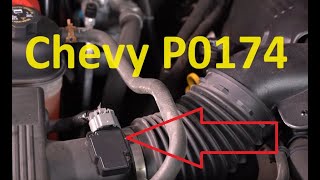
- Dirty, Faulty, or Obstructed Mass Airflow (MAF) Sensor 🔴 High Probability → Shop Fuel Injection Air Flow Meter TSB #PIP5446 specifically calls out inspecting for "cast flashing" near the MAF sensor. Debris, like paper from a rodent-damaged air filter, or even a crumpled air intake boot can also obstruct the sensor and cause false lean readings.
How to confirm: Inspect the MAF sensor wiring and housing. Remove the sensor and check for dirt, oil, or debris on the hot wire. A scan tool showing abnormally low g/s readings at idle is another indicator. Per TSB #PIP5446, inspect the air filter housing lid for excess plastic flashing near the sensor.
Typical fix: First, try cleaning the sensor with a dedicated MAF sensor cleaner. If cleaning doesn't resolve the issue or if the sensor is faulty, it must be replaced. If flashing is found in the housing per the TSB, the air filter housing lid should be replaced.
Est. part cost: $80-$160 - Vacuum Leak (Intake Manifold Gasket) 🔴 High Probability The intake manifold gaskets on the Gen V V8 engines are a known failure point. The original plastic carrier design becomes brittle from heat cycles and exposure to ethanol in fuel, leading to cracks and vacuum leaks. The issue is often more apparent in cold weather when materials contract.
How to confirm: A professional smoke test is the most effective way to find a vacuum leak. Alternatively, you can carefully spray brake cleaner or a propane torch (unlit) around the intake manifold gasket area with the engine running; a change in idle RPM or fuel trims indicates a leak. 🎬 See how to find vacuum leaks using this simple trick Visual inspection after removal often shows dirt tracks where air has been bypassing the gasket.
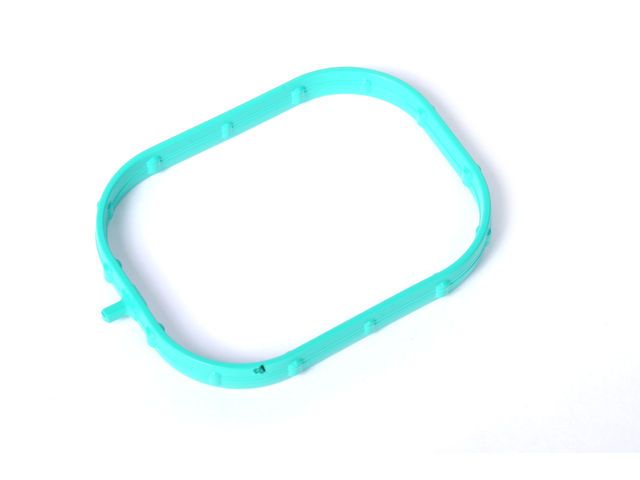
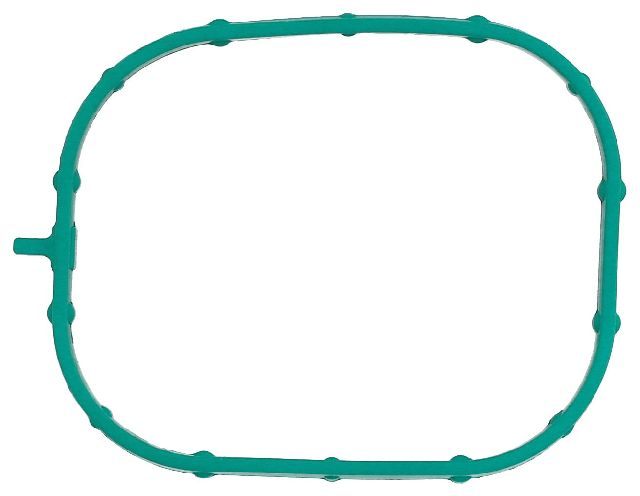
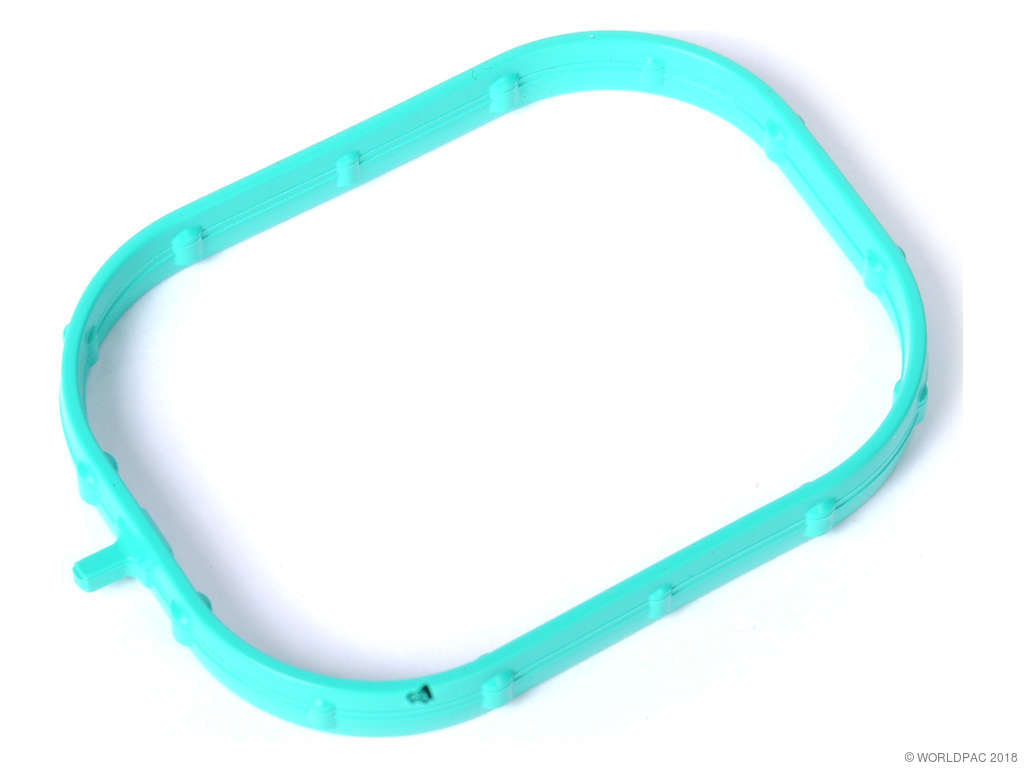
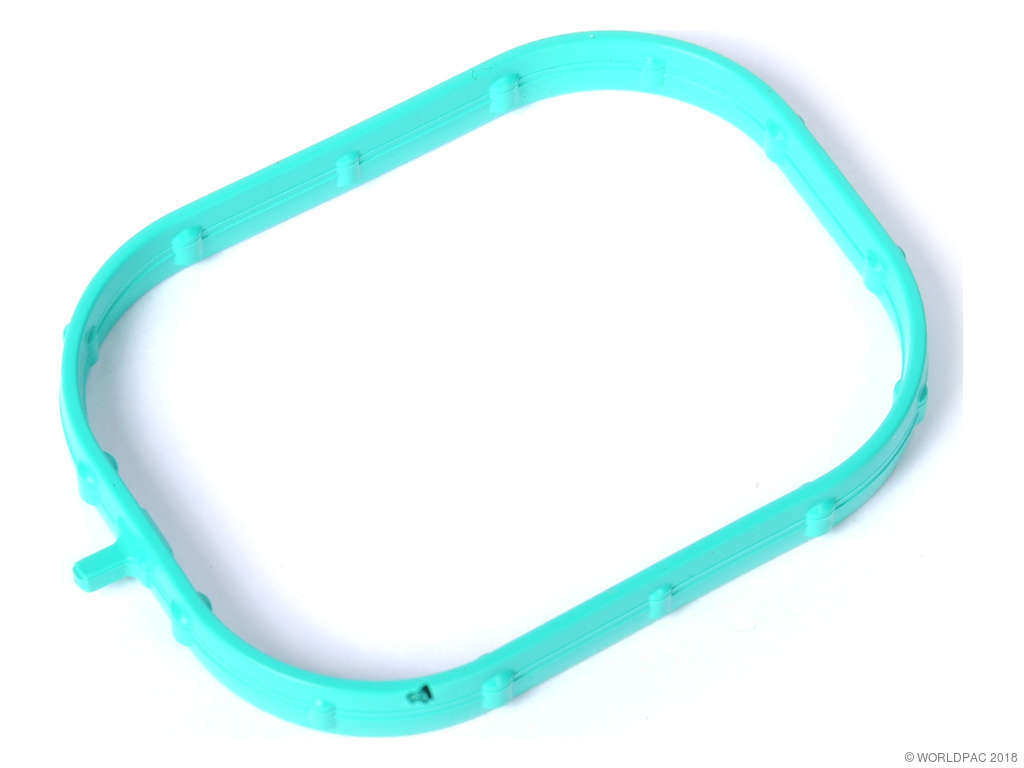
Typical fix: Replace the intake manifold gaskets. It is highly recommended to use the updated metal carrier design gaskets, such as Fel-Pro MS 98016 T, which are more resistant to heat and ethanol.
Est. part cost: $50-$100 - High Fuel Ethanol Content 🟡 Medium Probability TSB #PIP5227 specifically mentions that fuel with alcohol content over 10% (i.e., fuel other than standard E10) can trigger P0171 and P0174 on these vehicles. Some owners report triggering the code after filling up with E15 fuel.
How to confirm: The ethanol content of the fuel needs to be tested with a special tool (J44175, as mentioned in the TSB) or by checking the fuel composition percentage with an advanced scan tool. If the vehicle incorrectly 'thinks' it's running on E85, it can cause fuel trim issues.
Typical fix: If high ethanol content is confirmed, the fuel tank may need to be drained and refilled with standard E10 or E0 gasoline. In some cases, resetting the alcohol percentage with a scan tool is also necessary.
Est. part cost: $0 (plus the cost of new fuel) - Failing Upstream Oxygen (O2) Sensor ⚪ Low Probability → Shop Oxygen Sensor While less common than leaks or MAF issues, the O2 sensor itself can fail. A slow or biased sensor can send incorrect lean signals to the computer.
How to confirm: Use a scan tool to graph the live voltage of the Bank 2, Sensor 1 O2 sensor. A healthy sensor should switch rapidly between approximately 0.1 and 0.9 volts. A sensor that is stuck low, switches slowly, or has a lazy waveform is likely faulty.
Typical fix: Replace the Bank 2, Sensor 1 (upstream) oxygen sensor. It's often recommended to use OEM/ACDelco or other reputable brands like Denso or NTK.
Est. part cost: $40-$100 - Low Fuel Pressure ⚪ Low Probability A weak in-tank fuel pump, a failing Fuel Pump Control Module (FPCM), or a clogged fuel filter can restrict fuel flow, causing a lean condition. The FPCM, which regulates voltage to the pump, is a known failure point on this platform.
How to confirm: Connect a fuel pressure gauge to the fuel rail and check that the pressure is within OEM specifications (typically 55-60 PSI with key on, engine off). A scan tool can also monitor desired vs. actual fuel pressure.
Typical fix: If fuel pressure is low, diagnosis is needed to determine if the cause is the in-tank pump, the FPCM, or a filter. The FPCM is often a plug-and-play replacement. If the pump is faulty, the entire fuel pump module in the tank will likely need to be replaced.
Est. part cost: $250-$500 for a fuel pump, $100-$200 for an FPCM
Rare But Worth Checking
- Cracked PCV Tube or Faulty PCV System: → Shop PCV Valve Hose The Positive Crankcase Ventilation (PCV) system on the L83/L86 engines is integrated into the valve cover and valley plate. Hoses can crack or the internal baffling can fail, creating a significant vacuum leak. A stuck open valve allows excess unmetered air into the intake.
- Exhaust Leak Before the O2 Sensor: → Shop Oxygen Sensor A leak in the exhaust manifold or flange before the upstream O2 sensor can draw in outside air, making the sensor read a false lean condition. These trucks are known for breaking exhaust manifold bolts, especially the rearmost ones, which can cause such a leak.
Diagnosis Steps
- Check for other DTCs. If P0171 is also present, focus on causes that affect both engine banks (MAF, intake gaskets, fuel pump).
- Visually inspect the entire air intake system from the air filter to the throttle body for cracks, loose clamps, or a deformed intake boot.
- Inspect and clean the Mass Airflow (MAF) sensor using a dedicated cleaner. Check the MAF housing for any obstructions or flashing as noted in TSB #PIP5446.
- With a scan tool, observe short-term (STFT) and long-term (LTFT) fuel trims for Bank 2 at idle and at 2500 RPM. High positive numbers (e.g., LTFT > 15-20%) confirm the computer is adding fuel to compensate for a lean condition.
- Perform a smoke test to definitively identify any vacuum leaks, paying close attention to the intake manifold gaskets, PCV hoses, and the brake booster line connection at the intake.
- Test fuel pressure to ensure it meets the manufacturer's specification (around 55-60 PSI KOEO). Check that pressure holds after the key is turned off.
- If possible, test the ethanol content of the fuel or use a scan tool to check the learned alcohol percentage to rule out the issue described in TSB #PIP5227.
- If all other tests pass, graph the Bank 2 Sensor 1 O2 sensor's voltage on a scan tool to check for slow response or failure. A healthy sensor should fluctuate rapidly. 🎬 Watch: Step-by-step diagnosis for lean codes on GM trucks
Parts You'll Likely Need
- Mass Airflow (MAF) Sensor
(OEM #12671610)— A dirty or faulty MAF sensor is a primary cause of lean codes on this platform, and is specifically mentioned in TSB #PIP5446.
Trusted brands: ACDelco, Hitachi, Denso
OEM price range: $95-$160
Aftermarket price range: $60-$120 - Intake Manifold Gasket Set
(OEM #12626354 (Original Design), Fel-Pro MS 97284 (Updated Design))— These gaskets are a common failure point, leading to vacuum leaks that cause P0171 and P0174 codes, especially in cold weather. Upgraded designs are available to prevent repeat failures.
Trusted brands: ACDelco, Fel-Pro, Victor Reinz
Related Codes That Often Appear With This One
- P0171 — This is the code for 'System Too Lean (Bank 1)'. When both P0171 and P0174 are present, it strongly suggests a problem that affects the entire engine, like the MAF sensor, a major vacuum leak (intake gaskets, PCV), or a fuel delivery issue.
- P0300 — This code means 'Random/Multiple Cylinder Misfire'. A severe lean condition can prevent proper combustion, leading to misfires across multiple cylinders.
- P0101 — This code indicates a 'Mass Air Flow (MAF) Circuit Range/Performance' issue. It often appears with P0174 when the MAF sensor is the root cause, as cited in TSB #PIP5446.
Technical Service Bulletins (TSBs) & Recalls
- PIP5446: Mentions harsh shifts and sputtering, linking codes P0101, P0171, P0172, P0174, and P0175 to cast flashing near the MAF sensor.
- PIP5227: Connects codes P0171 and P0174 to fuel with ethanol content over 10%.
Platform-Specific Known Issues
- MAF Sensor Airflow Disruption (TSB PIP5446): → Shop Fuel Injection Air Flow Meter GM issued a technical service bulletin regarding excess plastic 'casting flash' inside the air filter housing near the MAF sensor. This imperfection disrupts airflow, causing the sensor to report incorrect values and triggering lean codes P0171/P0174 and MAF code P0101. The official fix is to replace the air filter housing lid.
- Fuel Ethanol Sensitivity (TSB PIP5227): These direct-injection engines are sensitive to the ethanol content in gasoline. Using fuel with more than 10% ethanol (like E15 or E85, accidentally or otherwise) can cause the system to run lean and set P0174. The fix requires testing the fuel and potentially draining the tank and resetting the fuel alcohol composition value in the ECM.
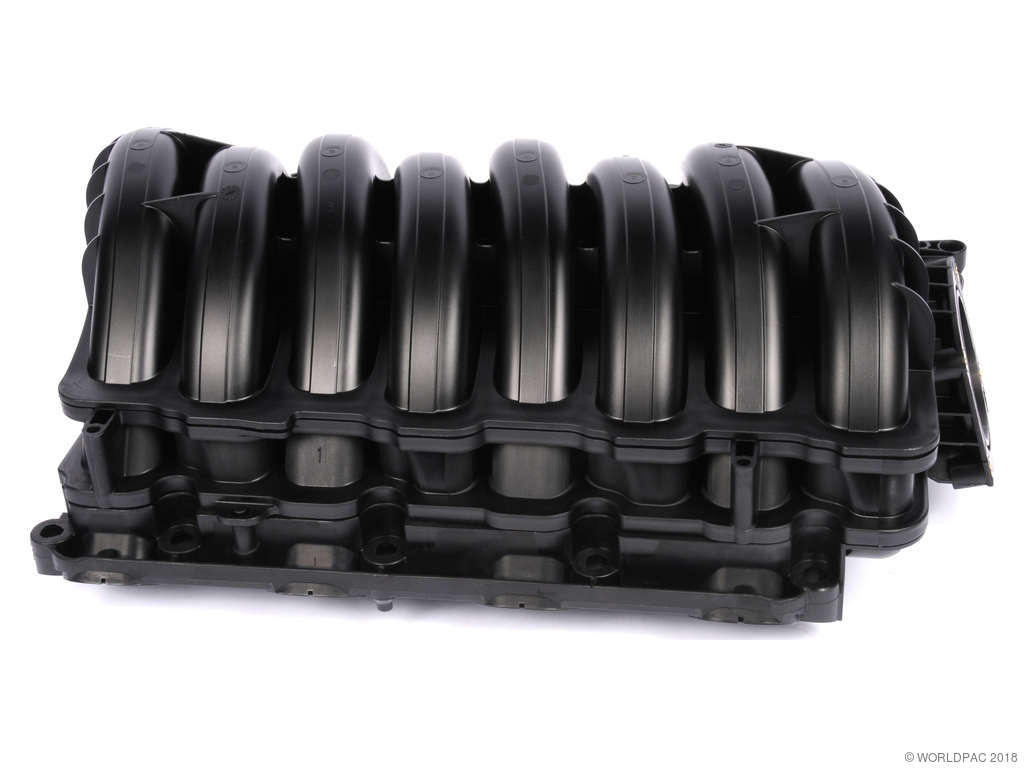
- Intake Manifold Gasket Degradation: → Shop Engine Intake Manifold The original equipment intake manifold gaskets use a plastic frame that becomes brittle and cracks due to engine heat cycles and exposure to ethanol in fuel. This is a very common source of vacuum leaks, which often become more apparent in cold weather. Upgraded gaskets with a metal carrier are available and recommended for the repair.
Mechanic-Grade Diagnostic Values
- Mass Airflow (MAF) Sensor Reading at Idle — expected: Approximately the same grams/second (g/s) as the engine's displacement in liters. For the 5.3L L83, expect ~5.3 g/s. For the 6.2L L86, expect ~6.2 g/s. A general range is 4-7 g/s at warm idle.. Failure: Significantly lower readings can indicate a vacuum leak (unmetered air is entering after the MAF sensor), while significantly higher readings could indicate a sensor fault.
- Fuel Pressure (Low-Side) — expected: 55-60 PSI with Key On, Engine Off (KOEO).. Failure: Pressure below this range indicates a weak fuel pump, failing FPCM, or clogged filter. If pressure drops quickly after the pump primes, the check valve in the fuel pump module is likely faulty, which can cause long crank times.
- Long Term Fuel Trim (LTFT) — expected: Ideally between -10% and +10%.. Failure: Sustained values at or near +25% on Bank 2 will trigger the P0174 code, confirming the computer is at its maximum limit for adding fuel to correct a lean condition.
Scan Tool Commands That Help
- GDS2 / Tech2 or equivalent professional scanner: Fuel Composition Reset — Crucial after discovering incorrect fuel was used (e.g., E85 instead of E10/E15) or if the learned alcohol content is suspected to be incorrect, as noted in TSB #PIP5227. After refilling with the correct gasoline, this function resets the learned value to a baseline (e.g., 3%), allowing the system to relearn accurately.
- GDS2 / Tech2 or equivalent professional scanner: Fuel Trim Reset — After any repair that affects the air/fuel mixture (e.g., replacing a MAF sensor, intake gaskets, or O2 sensor). This command clears the learned long-term fuel trim values, forcing the ECM to start learning from zero and providing immediate feedback on whether the repair was successful.
- GDS2 / Tech2 or equivalent professional scanner: Fuel Injector Balance Test — If a single cylinder on Bank 2 is suspected of being lean (perhaps accompanied by a misfire code like P0302, P0304, P0306, or P0308). This test individually fires each injector and measures the fuel pressure drop to identify a clogged or weak injector.
Wiring & Ground Locations
- G103 — On the front of the passenger's side cylinder head.. This is a primary engine ground. A loose or corroded connection here can cause erratic sensor readings, including from the O2 sensors and MAF sensor, leading to false lean codes. Ensuring it is clean and tight is a critical step in any electrical diagnosis for this code.
- G104 — On the rear of the driver's side cylinder head, often where a braided ground strap connects to the firewall.. Another critical engine-to-chassis ground. A poor connection affects the entire engine management system. Since Bank 2 sensors are grounded through the main engine harness, a poor primary ground can manifest as an issue on one bank.
- Frame Grounds — On the frame, located behind both front wheels.. These grounds are in a terrible location prone to corrosion from wheel splash. While not a direct engine ground, they are part of the vehicle's overall ground plane. Poor grounding here can create electrical noise and voltage differentials that affect various modules, including the ECM and FPCM.
Real Owner Repair Stories
- Tahoe Yukon Forum (2007+ Yukon (logic applies to 2015-2017)) — P0171 and P0174 codes appeared after the first cold snap of the year. Engine ran rough when cold but fine once warmed up.
❌ Tried (didn't work) No other diagnostics were performed as the symptoms strongly pointed to a temperature-related vacuum leak.
✅ What actually fixed it Replacing the intake manifold gaskets resolved the lean codes and rough cold idle. The owner noted the job was a good opportunity to also replace the oil pressure sensor and knock sensors located under the intake manifold. - Diagnostic Guide / Common Repair Story (GMC Yukon (General)) — Persistent P0171/P0174 codes, sometimes with a hiss from the brake pedal area or a hard brake pedal.
❌ Tried (didn't work) A smoke test of the intake manifold came back clean, showing no vacuum leaks., MAF sensor cleaned or replaced., O2 sensors replaced.
✅ What actually fixed it The internal diaphragm of the power brake booster had ruptured. This creates a vacuum leak that a standard smoke test will not find because the booster's check valve prevents smoke from entering. The fix was to replace the brake booster.
"I Checked Everything" — The Actual Cause
- A common scenario where a smoke test reveals no leaks is a failed internal diaphragm in the power brake booster. The check valve on the booster's vacuum line prevents smoke from entering it during a test. However, when the engine is running and creating vacuum, the ruptured diaphragm allows unmetered air to be sucked into the intake manifold, causing a lean condition that is invisible to a smoke test.
OEM Part Supersession History
ACDelco 12626354 (or equivalent)→Fel-Pro MS 98016 T— The original equipment (OE) intake manifold gasket uses a plastic carrier frame which becomes brittle and cracks from engine heat cycles and exposure to ethanol in fuel, causing vacuum leaks. The Fel-Pro MS 98016 T is a widely-used, superior replacement that features a rigid aluminized steel carrier that is impervious to heat and corrosion, preventing repeat failures.
Model Year Variations Within This Range
- 2015-2016: Earlier models in this generation were more prone to initial production issues, including problems with the 8-speed transmission torque converters and axle shafts, which are unrelated to P0174 but relevant to overall vehicle reliability.
- 2015-2016 (5.3L), 2015-2017 (6.2L): A TSB (#PIT5404C) was issued for a squeak or whistle from a 'Passive Exhaust Valve' on these models, most noticeable during V4 AFM mode. While the TSB addresses noise, a leak in this exhaust component before the O2 sensor could potentially allow air to be drawn in, contributing to a false lean reading.
Helpful Videos
We Have This Part in Stock


The information in this article is provided for general reference and educational purposes only. Vehicle specifications, procedures, and part compatibility can vary by production date, trim level, and region. Always consult your vehicle's factory service manual and verify part numbers before purchasing or performing repairs. Safety-critical components such as airbags, seat belts, and braking systems should be installed by a qualified professional.
- Gmc YUKON XL:
- 🧭 Diagnostic Flowchart
- 🎬 Helpful Videos
- 🛍️ Shop This Part
- What's Unique About the 2015-2017 Gmc YUKON XL
- Symptoms You May Notice
- Most Likely Causes
- Rare But Worth Checking
- Diagnosis Steps
- Parts You'll Likely Need
- Related Codes That Often Appear With This One
- Technical Service Bulletins (TSBs) & Recalls
- Platform-Specific Known Issues
- Mechanic-Grade Diagnostic Values
- Scan Tool Commands That Help
- Wiring & Ground Locations
- Real Owner Repair Stories
- "I Checked Everything" — The Actual Cause
- OEM Part Supersession History
- Model Year Variations Within This Range
- 🎟️ Get 5% Off