

P0175 on 2015-2017 Cadillac Escalade 6.2L: System Too Rich Causes and Fixes
On a 2015-2017 Escalade, code P0175 is most often caused by a failing high-pressure fuel pump (HPFP) leaking fuel into the engine oil. This is a known issue for the 6.2L L86 engine, detailed in GM service bulletin #20-NA-200. The fix involves replacing the pump and changing the oil, costing between $700 and $1,500 at a shop. Another known cause is excess plastic in the air filter housing, per TSB #PIP5446A.
- For a 2015-2017 Escalade, P0175 (especially with P0172) is very likely caused by a failing high-pressure fuel pump (HPFP).
- Before replacing any parts, smell the engine oil for gasoline. If it smells like fuel, the HPFP is the prime suspect.
- A definitive diagnosis can be made with a scan tool by disconnecting the PCV line from the intake and observing if the negative fuel trims return to normal.
- Do not replace the oxygen sensors as a first step; they are usually just reporting the problem correctly.
What's Unique About the 2015-2017 Cadillac Escalade
The 2015-2017 Escalade uses a direct-injected 6.2L L86 V8 engine. Unlike older port-injected engines, this platform features a camshaft-driven high-pressure fuel pump (HPFP). A very common and well-documented failure on these engines is the internal seals of the HPFP failing, causing raw fuel to leak into the crankcase. This fuel vapor is then pulled into the intake through the PCV system, creating a strong rich condition that often sets codes for both engine banks (P0172 and P0175). This specific failure mechanism is detailed in GM Service Bulletin #20-NA-200.
Symptoms You May Notice
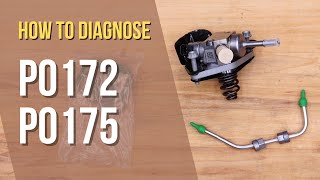
- Check Engine Light is on 🎬 Watch: Real-world diagnosis of P0172 and P0175 on an Escalade
- Poor fuel economy
- Rough or unstable idle
- Strong smell of gasoline from the exhaust or in the engine oil
- Hesitation or lack of power during acceleration
- Black smoke from the exhaust in severe cases
- Engine continues to sputter for a few seconds after turning the key off (dieseling)
- Hard starting, especially when the engine is warm
- Replacing the Bank 2 Oxygen Sensor (O2 Sensor). The O2 sensor is almost always correctly reporting the rich condition, not causing it. The code is triggered because the O2 sensor is doing its job. Replacing it is a common wasted expense unless specific O2 sensor codes are also present.
Most Likely Causes
- Failing High-Pressure Fuel Pump (HPFP) 🔴 High Probability → Shop Fuel Pump This is a widely documented failure on the direct-injected L86 engine. The pump's internal seals fail, leaking fuel into the engine oil. GM issued service bulletin #20-NA-200 for this issue, which applies to the Escalade and its platform mates.
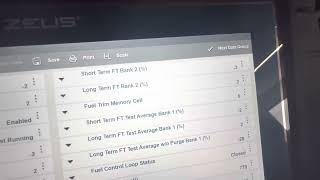
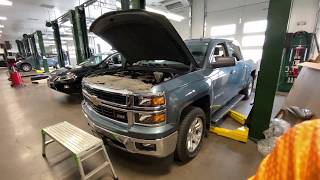
How to confirm: Check the engine oil dipstick for a strong smell of gasoline. The definitive test, outlined in TSB #20-NA-200, is to 🎬 See this video for a walkthrough of the TSB diagnosis disconnect the 'dirty' side PCV hose from the intake manifold, plug the intake port, and watch the short-term and long-term fuel trims on a scan tool. If the highly negative trims (e.g., -20% or more) quickly move toward zero, the HPFP is confirmed to be leaking fuel vapor into the crankcase.
Typical fix: Replace the high-pressure fuel pump and the associated high-pressure fuel line, which is a one-time-use part. A mandatory engine oil and filter change is required to remove the fuel-contaminated oil.
Est. part cost: $300-$600 - Casting Flash in Air Filter Housing 🟡 Medium Probability → Shop Air Cleaner Assembly GM issued TSB #PIP5446A for excess plastic casting flash in the air filter housing lid near the MAF sensor on 2015-2018 models. This defect creates turbulence and disrupts airflow, causing incorrect MAF sensor readings and leading to rich or lean codes.
How to confirm: Visually inspect the inside of the air filter housing lid where the MAF sensor mounts. Look for any rough or excess plastic molding that could interfere with airflow. The TSB provides images for comparison.
Typical fix: Replace the air cleaner assembly lid. The updated part number is 23192713. Alternatively, some owners carefully remove the excess plastic flash with a deburring tool or file. The TSB recommends replacement.
Est. part cost: $50-$100 - Dirty or Faulty Mass Airflow (MAF) Sensor ⚪ Low Probability → Shop Fuel Injection Air Flow Meter Oil from aftermarket 'oiled' air filters or general contamination can coat the sensor element, causing it to under-report airflow and lead to a rich condition. This is a common issue on many vehicles, not just the Escalade.
How to confirm: With the engine off, remove the MAF sensor and inspect the small wires for any dirt, oil, or debris. You can try cleaning it with a dedicated MAF sensor cleaner. If cleaning doesn't work, monitor the sensor's readings on a scan tool; at a warm idle, the g/s reading should be approximately 6.0-8.0 g/s for the L86.
Typical fix: Clean the sensor with MAF sensor cleaner. If the problem persists, replace the MAF sensor.
Est. part cost: $70-$150 - Leaking Fuel Injector(s) ⚪ Low Probability → Shop Fuel Injector
How to confirm: This is more difficult to confirm on a direct-injection engine. A professional may need to perform a fuel injector balance test. A DIY method is to monitor fuel rail pressure on a scan tool after shutting the engine off; if the pressure drops steadily, it could indicate a leaking injector. If only P0175 is present (and not P0172), a single leaking injector on Bank 2 is more likely. Pulling the spark plugs on Bank 2 may reveal one that is black and sooty, indicating the problematic cylinder.
Typical fix: Replace the faulty fuel injector(s) on Bank 2. It is often recommended to replace all four injectors on that bank at the same time.
Est. part cost: $80-$200 per injector
Rare But Worth Checking
- Stuck Open EVAP Purge Valve: → Shop Vapor Canister The EVAP purge valve can get stuck open, allowing unmetered fuel vapors from the gas tank to enter the intake manifold at idle, causing a rich condition. This can be tested by disconnecting the EVAP line to the intake, plugging the intake port, and monitoring fuel trims to see if they improve.
- Incorrect Fuel Alcohol Content Reading: Though more common on earlier models, the L86 is a Flex Fuel capable engine. The ECM can sometimes 'learn' an incorrect, high percentage of ethanol 🎬 Watch: How to troubleshoot GM fuel trim rich conditions in the fuel, causing it to command a richer mixture. This can be checked and reset to its actual value (near 0% for regular gasoline) using a capable scan tool.
Diagnosis Steps
- Connect an OBD-II scanner and confirm P0175 is present. Check if P0172 is also stored, which would indicate a problem affecting both banks.
- Observe long-term fuel trims for both banks. They will be significantly negative (e.g., -15% or lower) if a rich condition exists.
- Smell the engine oil on the dipstick. A strong gasoline smell is a primary indicator of a leaking high-pressure fuel pump (HPFP) diluting the oil.
- Perform a PCV isolation test as per TSB #20-NA-200: Disconnect the PCV hose from the intake manifold, plug the intake port, start the engine, and monitor fuel trims. If they improve dramatically (move from -20% toward 0%), the HPFP is faulty and leaking fuel into the crankcase.
- If the PCV test is inconclusive, inspect the air filter housing for plastic casting flash near the MAF sensor, as described in TSB #PIP5446A.
- Inspect and clean the MAF sensor using a dedicated cleaner. Check its g/s reading at idle with a scan tool.
- If the issue persists and only affects Bank 2, further diagnosis of the Bank 2 fuel injectors for leaks may be necessary. This can be done by observing fuel rail pressure decay after shutdown or by inspecting spark plugs on that bank for heavy carbon fouling.
Parts You'll Likely Need
- High-Pressure Fuel Pump
(OEM #12679090 (or superseded by 12710481))— This is the most common cause of code P0175 (often with P0172) on the 2015-2017 Escalade due to a known issue with internal seal failure.
Trusted brands: ACDelco, Bosch
OEM price range: $400-$600
Aftermarket price range: $250-$450 - High-Pressure Fuel Line — This line connects the HPFP to the fuel rail and is a one-time-use, torque-to-yield part that must be replaced anytime it is disconnected to ensure a safe, leak-free seal.
Trusted brands: ACDelco (GM Genuine)
OEM price range: $30-$50 - Air Cleaner Assembly Lid
(OEM #23192713)— May be required if excess casting flash is found disrupting airflow to the MAF sensor, per TSB #PIP5446A.
Trusted brands: ACDelco (GM Genuine)
OEM price range: $50-$100
Aftermarket price range: $40-$80
Related Codes That Often Appear With This One
- P0172 — System Too Rich (Bank 1). This code for the opposite engine bank often appears with P0175. When both are present, it strongly points to a systemic issue affecting the entire engine, such as the high-pressure fuel pump, MAF sensor, or EVAP system.
- P0101 — Mass Air Flow (MAF) Circuit Range/Performance. This code can appear if the MAF sensor is the root cause, especially if the issue is related to the intake housing flashing noted in TSB #PIP5446A.
- P0300 — Random/Multiple Cylinder Misfire. An extremely rich mixture can foul spark plugs and cause incomplete combustion, leading to misfires across multiple cylinders.
Technical Service Bulletins (TSBs) & Recalls
- #20-NA-200: Diagnostic tip for MIL on with DTC P0172 and/or P0175. It points to the high-pressure fuel pump as a likely cause and provides a diagnostic procedure involving isolating the PCV system. This bulletin supersedes a previous version, PIP5590A.
- #PIP5446A: Identifies excessive casting flash in the air filter housing near the MAF sensor as a cause for various fuel trim and drivability issues (including P0175) on a wide range of 2014-2018 GM trucks and SUVs.
Platform-Specific Known Issues
- A leaking high-pressure fuel pump (HPFP) is a significant known issue, causing fuel to contaminate the engine oil and create a rich condition via the PCV system. This is covered in GM Service Bulletin #20-NA-200.
- Excess plastic molding (casting flash) inside the air filter housing can disrupt MAF sensor readings, as noted in GM TSB #PIP5446A.
Mechanic-Grade Diagnostic Values
- Low-Side Fuel Pressure (In-tank pump) — expected: 45-60 PSI (310-414 kPa).. Failure: Pressure below 45 PSI indicates a problem with the in-tank pump or FPCM and should be addressed before diagnosing the high-pressure system.
- High-Side Fuel Rail Pressure (at idle) — expected: Approximately 300-750 PSI (2-5 MPa). Desired and actual pressure on a scan tool should match closely.. Failure: Pressure that does not hold after engine shutdown can indicate a leaking injector or high-pressure fuel pump. Actual pressure significantly deviating from desired pressure points to a fault in the high-pressure system.
- High-Side Fuel Rail Pressure (under load) — expected: Rises to over 2,000 PSI.. Failure: Pressure does not build appropriately with engine RPM or is significantly lower than commanded pressure.
- Fuel Rail Pressure Sensor Voltage (KOEO, after depressurization) — expected: ~0.5V.. Failure: Voltage is stuck high (e.g., near 5V) or reads a high pressure value when it should be near zero, pointing to a bad sensor or wiring issue.
Scan Tool Commands That Help
- GM GDS2 / High-End Bidirectional Scanner: Fuel Composition Reset — Use this if you suspect the ECM has incorrectly learned a high ethanol content in the fuel, which can cause a persistent rich condition. Resetting the value to match the actual fuel in the tank (typically near 0% for standard gasoline) can instantly correct the fuel trims.
- GM GDS2: Fuel System Depressurize — This command is used to test the fuel rail pressure sensor. With the engine idling, the command is sent, which should stall the engine. If the scan tool's pressure reading does not drop to zero after the stall, the sensor is faulty.
- GM GDS2 / Tech 2: FPCM Duty Cycle Command — Allows a technician to manually command the in-tank low-pressure fuel pump to a specific speed (e.g., 25%, 50%, 75%). This is used to test the functionality of the low-pressure pump and the Fuel Pump Control Module (FPCM) independently of the high-pressure system.
Wiring & Ground Locations
- G103 — Located on the front of the passenger side (Bank 2) cylinder head.. This is a primary engine ground. While not a common cause, a loose or corroded G103 ground can cause erratic behavior in sensors and modules, potentially contributing to incorrect fuel calculations. It's a quick and easy check to rule out electrical issues.
- ECM Connector X1, Pin 44 — At the Engine Control Module (ECM).. This pin provides the control signal to the Fuel Pump Control Module (FPCM). A wiring issue here could affect low-side fuel pressure delivery.
- Fuel Rail Pressure Sensor Connector — Near the rear of the driver's side of the intake manifold on 2014-2016 engines.. This 4-pin connector is for the high-pressure fuel rail sensor. Damage or corrosion here can cause incorrect pressure readings, leading the ECM to make improper fuel adjustments.
Real Owner Repair Stories
- GM-Trucks.com forum user (2015 GMC Sierra with 5.3L EcoTec3 V8 (mechanically similar to Escalade L86 for this issue)) — Check Engine Light with codes P0172 and P0175.
❌ Tried (didn't work) Owner did not list other attempts, went straight to dealer for diagnosis.
✅ What actually fixed it The dealer diagnosed a failing high-pressure fuel pump. The user noted that this part is driven by the camshaft and that a key symptom is fuel contaminating the engine oil.
OEM Part Supersession History
12679090→12711668, 12694529, 12688607.— Likely an internal revision to improve the durability of the seals that were prone to failure and leaking fuel into the crankcase.
Heads up: The part number 12710481 listed in the Pass 2 'parts_most_commonly_needed' appears to be for a fuel injector, not the HPFP. The correct superseding part numbers for the HPFP are different. Always verify the latest part number with a GM dealer using the vehicle's VIN.
Model Year Variations Within This Range
- 2015-2017: There are no significant known variations within the 2015-2017 L86 engines that would alter the diagnosis for P0175. The primary causes (HPFP, MAF/intake flash) are consistent across these model years. The major change came in 2019 with the introduction of the L87 engine, which featured Dynamic Fuel Management (DFM) instead of Active Fuel Management (AFM).
Diagnostic Flowchart
Real Owner Stories
Aggregated from forums and TSBs cited above. Mileages and costs reflect what owners reported in those sources.
2015 Chevrolet Suburban 6.2L L86 V8
Symptoms: Experienced P0172 and P0175 codes. A mechanic friend temporarily fixed the issue by resetting a magnet on the pump, but the codes eventually returned.
What fixed it: Confirmed the need for a complete replacement of the high-pressure fuel pump (HPFP).
Source hint: TahoeYukonForum.com thread titled '2015 Suburban, P0172 & p0175'
2015 Cadillac Escalade 6.2L L86 V8
Symptoms: Vehicle had P0172 and P0175 codes. During a diagnostic PCV isolation test, fuel trims immediately jumped to highly negative values when the PCV was connected and returned to normal when it was plugged.
What fixed it: Definitively diagnosed as a leaking high-pressure fuel pump (HPFP) requiring replacement.
Source hint: YouTube video titled '2015 Cadillac Escalade P0172 and P0175'
Related OBD-II Codes
Frequently Asked Questions
Does GM TSB #20-NA-200 apply to my 2015-2017 Escalade for code P0175?
I smell gasoline on my Escalade's oil dipstick. Is this related to P0175?
What is the PCV isolation test mentioned for diagnosing P0175 on the 6.2L V8?
Can the air filter housing cause a P0175 code on my Escalade?
If I replace the high-pressure fuel pump on my L86 engine, do I need to replace any other parts?
Why would I have P0175 but not P0172 on my Escalade?
Helpful Videos
Used OEM Parts in Stock
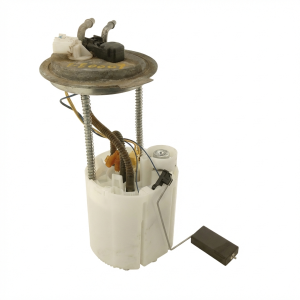
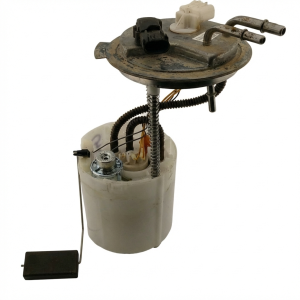
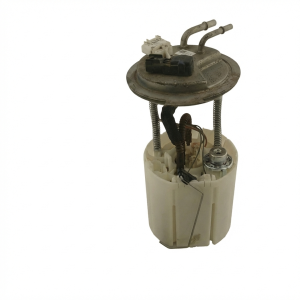
New Aftermarket Parts Available
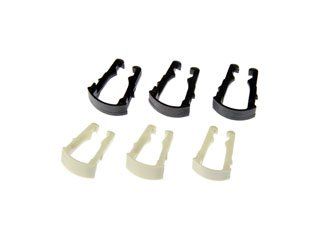


The information in this article is provided for general reference and educational purposes only. Vehicle specifications, procedures, and part compatibility can vary by production date, trim level, and region. Always consult your vehicle's factory service manual and verify part numbers before purchasing or performing repairs. Safety-critical components such as airbags, seat belts, and braking systems should be installed by a qualified professional.
- Cadillac Escalade:
- 🧭 Diagnostic Flowchart
- 🎬 Helpful Videos
- 🛍️ Shop This Part
- What's Unique About the 2015-2017 Cadillac Escalade
- Symptoms You May Notice
- Most Likely Causes
- Rare But Worth Checking
- Diagnosis Steps
- Parts You'll Likely Need
- Related Codes That Often Appear With This One
- Technical Service Bulletins (TSBs) & Recalls
- Platform-Specific Known Issues
- Mechanic-Grade Diagnostic Values
- Scan Tool Commands That Help
- Wiring & Ground Locations
- Real Owner Repair Stories
- OEM Part Supersession History
- Model Year Variations Within This Range
- Real Owner Stories
- 2015 Chevrolet Suburban 6.2L L86 V8
- 2015 Cadillac Escalade 6.2L L86 V8
- Related OBD-II Codes
- Frequently Asked Questions
- 🎟️ Get 5% Off