

P0191 on 2010-2017 Chevrolet Silverado 1500: Fuel Pressure Sensor Causes and Fixes
Code P0191 on a 2010-2017 Silverado usually points to a faulty Fuel Rail Pressure (FRP) sensor or its wiring. However, on this platform, it is often triggered by underlying issues like a failing fuel pump (in-tank or high-pressure) or widespread fuel system contamination, as noted in several GM Technical Service Bulletins. A sensor replacement costs about $50-$100, but a fuel pump can be $800 or more. On pre-2014 models, a failing Fuel Pump Driver Module (FPDM) is also a very common culprit.
- P0191 means the fuel rail pressure sensor's signal is illogical, not just high or low.
- Before replacing the sensor, check its wiring and connector for damage.
- For this specific truck, be aware that GM has issued multiple bulletins (TSBs) about fuel system contamination causing this code.
- On 2014+ models, the high-pressure fuel pump is a common cause and is an expensive part to replace.
- Always check for other codes, as P0087 (pressure too low) or P069E (fuel pump module fault) can provide critical clues to the root cause.
What's Unique About the 2010-2017 Chevrolet SILVERADO 1500
This year range covers two Silverado generations: the GMT900 (through 2013) and the K2XX (2014+). The 2014 and newer models with EcoTec3 engines feature a high-pressure direct injection (DI) fuel system, which is more complex than the previous generation's standard port injection. A key issue highlighted in multiple GM Technical Service Bulletins (TSBs) for these trucks is fuel system contamination causing hard starting, rough running, and setting P0191. 🎬 Watch: Troubleshooting P0191 and P069E codes on your Silverado. This indicates the problem is often more than just a bad sensor and may involve the high-pressure fuel pump (on DI engines), the in-tank pump, or the Fuel Pump Driver Module (FPDM) on GMT900 trucks.
Diagnostic Flowchart
Tap your situation to follow the diagnostic path that matches what you're seeing on this vehicle.
Generation note: This range covers the end of the 2nd generation (GMT900, 2010-2013) and the 3rd generation (K2XX, 2014-2018). The 2014+ models use a direct injection fuel system with a high-pressure mechanical fuel pump, while earlier models use a more traditional port injection system. Diagnostics for the high-pressure side are specific to the 2014+ trucks. A very common failure point on the GMT900 trucks is the Fuel Pump Driver Module (FPDM), often located under the truck near the spare tire, which is susceptible to corrosion and failure.
Symptoms You May Notice
- Check Engine Light is on
- Hard starting or no-start condition
- Rough running or stalling
- Reduced engine power or "limp mode"
- Poor acceleration or hesitation, especially when trying to maintain speed.
- Decreased fuel economy
- Unusual smell from the exhaust
- Replacing the Fuel Rail Pressure Sensor when the actual fault is a weak in-tank fuel pump, a failing FPDM (on pre-2014 models), or contaminated fuel.
- Replacing the in-tank fuel pump when the issue is with the high-pressure fuel pump (on 2014+ models).
- Assuming it's an ignition problem (spark plugs, coils) due to the rough running and hesitation symptoms.
Most Likely Causes
- Faulty Fuel Rail Pressure (FRP) Sensor 🔴 High Probability → Shop Fuel Pressure Sensor The sensor is a sensitive electronic component that can fail over time from heat cycles and vibration. Its internal diaphragm or circuit board can fail, causing erratic voltage output. TSB 20-NA-197 also notes that corrosion at the sensor's electrical connector is a known issue.
How to confirm: Monitor the FRP sensor voltage/pressure on a scan tool with the key on, engine off, and while running. If the signal is erratic, stuck, doesn't correlate with desired pressure, or reads pressure when the system is depressurized, the sensor is likely bad. With the key off, voltage should be around 0.5V; a reading of 4.5V or higher suggests a short.
Typical fix: Replace the fuel rail pressure sensor and inspect the connector for corrosion, replacing it if necessary.
Est. part cost: $40-$100 - Fuel System Contamination 🔴 High Probability Multiple GM TSBs (PIP5151F, 16-NA-102) specifically cite fuel system contamination with debris, water, or even Diesel Exhaust Fluid (DEF) on diesel models as a primary cause for P0191 and related fuel pressure codes. This contamination can damage pumps and clog sensors.
How to confirm: Take a fuel sample from the rail's Schrader valve and inspect it in a clear container for debris, water (which will separate), or other contaminants. TSB 16-NA-102 instructs technicians to inspect the fuel pressure regulator screens for magnetic metal debris, indicating a failing high-pressure pump.
Typical fix: Per TSBs, the complete fuel system needs to be cleaned and flushed. This involves dropping and cleaning the tank, flushing lines, and replacing the fuel filter, fuel pump(s), and potentially the fuel injectors. GM also recommends the regular use of GM Fuel System Treatment PLUS or a TOP TIER Detergent Gasoline to prevent deposit buildup.
Est. part cost: $20 (filter) - $2000+ (pumps, injectors, and labor) - Failing High-Pressure Fuel Pump (HPFP) (2014+ Models) 🟡 Medium Probability → Shop Fuel Pump The direct injection fuel system on 2014+ models relies on a mechanical high-pressure pump driven by the camshaft. These pumps operate under extreme pressure and can wear out, especially if the fuel is contaminated with debris or water, leading to internal pump failure.
How to confirm: Use a scan tool to compare desired versus actual fuel rail pressure while the engine is running, particularly under load. A significant deviation where actual pressure cannot keep up with desired pressure points to a failing HPFP (assuming the low-pressure system is healthy and the sensor is good).
Typical fix: Replace the high-pressure fuel pump. This is an intensive repair.
Est. part cost: $600-$1100 - Failing In-Tank Fuel Pump or Fuel Pump Driver Module (FPDM) (Primarily 2010-2013) 🟡 Medium Probability → Shop Fuel Pump The in-tank electric pump supplies fuel to the engine (or to the HPFP on DI models). If it weakens, it can't supply adequate volume, triggering P0191. On GMT900 trucks (pre-2014), the FPDM, located under the bed near the spare tire, is highly prone to failure from corrosion, which interrupts power to the pump. This is a very common cause for P0191 and P069E on these specific model years.
How to confirm: For the pump, perform a fuel pressure and volume test on the low-pressure side. For the FPDM, a common diagnostic trick is to use jumper wires on the module's connector to bypass it, sending full power to the pump. If the truck starts and runs with the module bypassed, the FPDM is bad.
Typical fix: Replace the in-tank fuel pump module or the Fuel Pump Driver Module. The FPDM is often replaced with an updated part that includes a standoff to prevent moisture buildup.
Est. part cost: $250-$500 (pump), $70-$150 (FPDM) - Wiring or Connector Issue 🟡 Medium Probability The wiring harness to the FRP sensor is in the engine bay and can be exposed to heat and vibration, leading to corrosion, loose pins, or broken wires. TSB 20-NA-197 specifically calls out corrosion in the FRP sensor connector as a cause for P0191 and a host of other fuel pressure codes.
How to confirm: Visually inspect the FRP sensor connector for green corrosion or damage. With a scan tool monitoring the FRP signal, gently wiggle the connector and harness to see if the reading fluctuates. Use a multimeter to check for 5V reference, good ground, and signal continuity at the connector.
Typical fix: Repair the damaged wiring or clean/replace the connector pigtail. Applying dielectric grease can prevent future corrosion.
Est. part cost: $15-$60
Rare But Worth Checking
- Faulty Powertrain Control Module (PCM): → Shop Engine Control Module (ECM) This is extremely rare. The PCM should only be considered after all other possibilities, including sensors, pumps, and wiring, have been exhaustively tested and ruled out.
Diagnosis Steps
- Connect a quality OBD-II scanner to read the code and check for any other stored codes, especially P069E, P0087, or P0088.
- View live data. Focus on 'Desired Fuel Rail Pressure' and 'Actual Fuel Rail Pressure'.
- With the Key On, Engine Off (KOEO), check the FRP reading. It should be at a low, stable baseline. A reading that is maxed out or zero points to a sensor or wiring issue.
- Start the engine. Observe if the actual pressure closely follows the desired pressure at idle and during throttle snaps. Large deviations or erratic readings are a red flag.
- Perform a 'wiggle test' on the FRP sensor's connector and wiring harness while watching the live data to check for intermittent connections.
- If wiring is suspected, inspect the connector for corrosion as per TSB 20-NA-197. Use a multimeter to check for the correct reference voltage (typically 5V) and ground at the connector.
- If the sensor and wiring test good, diagnose the fuel delivery system. For pre-2014 models with code P069E, test the FPDM by bypassing it with jumper wires.
- As per TSBs PIP5151F and 16-NA-102, obtain a fuel sample to check for contamination. If debris is found, the entire system will require cleaning.
- Test the low-pressure (in-tank) fuel pump's pressure and volume to ensure it meets specifications (typically 55-62 PSI for GMT900).
- For 2014+ models, if the low-pressure side is healthy, further diagnosis of the high-pressure fuel pump is necessary, often requiring monitoring pressure under heavy load.
Parts You'll Likely Need
- Fuel Rail Pressure Sensor
(OEM #12679369 (for many 5.3L/6.2L EcoTec3), 12635273 (for some GMT900))— This is the most direct cause and often the first part to be replaced. It directly measures the pressure that the code reports as irrational.
Trusted brands: ACDelco, Bosch, Delphi
OEM price range: $70-$120
Aftermarket price range: $40-$80 - High-Pressure Fuel Pump (2014+)
(OEM #12688607 (supercedes older numbers like 12642623))— On direct injection models, this pump is a common failure point that leads to pressure performance codes like P0191, especially when actual pressure can't meet desired pressure under load.
Trusted brands: ACDelco
OEM price range: $800-$1100
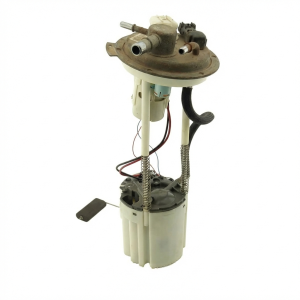
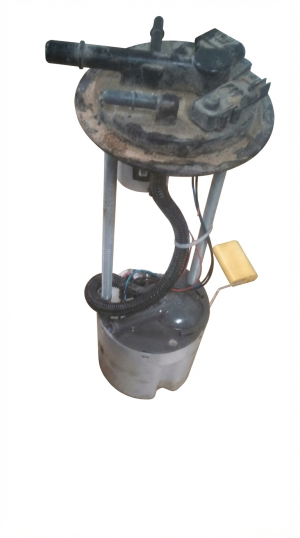
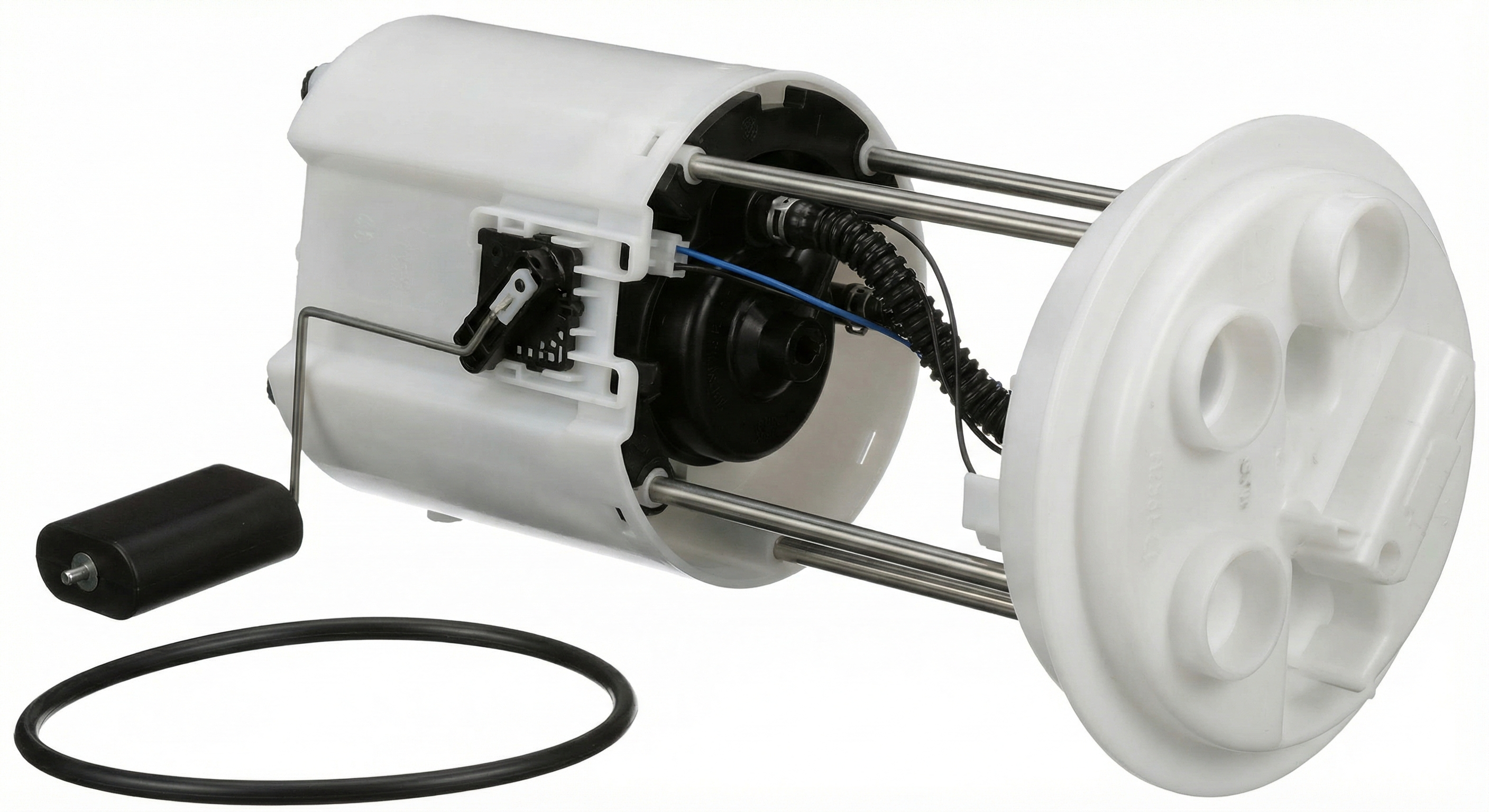
Aftermarket price range: $500-$800 - In-Tank Fuel Pump Module — A weak in-tank pump starves the rest of the system, causing low pressure conditions that trigger P0191. This is a common failure on both generations.
Trusted brands: ACDelco, Delphi
OEM price range: $300-$500
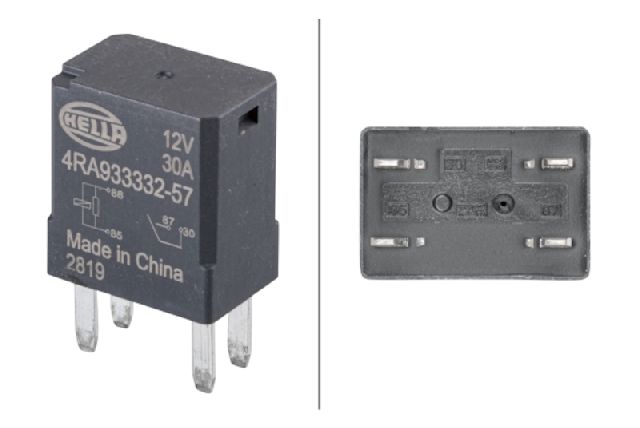
Aftermarket price range: $200-$400 - Fuel Pump Driver Module (FPDM) (pre-2014)
(OEM #23485414 (updated design))— A very common failure on 2010-2013 trucks, this module corrodes and fails, cutting power to the fuel pump and frequently causing P0191 and P069E together.
Trusted brands: ACDelco, Dorman
OEM price range: $80-$150
Aftermarket price range: $50-$100
Related Codes That Often Appear With This One
- P0087 — This code for 'Fuel Rail/System Pressure - Too Low' often appears with P0191 when the underlying cause is a weak pump, FPDM failure, or fuel starvation from contamination.
- P0088 — This code for 'Fuel Rail/System Pressure - Too High' can be set with P0191 if there's a pressure regulator issue or a faulty sensor reading artificially high.
- P069E — This code indicates a fault in the Fuel Pump Control Module (FPDM) and is very commonly seen with P0191 on GMT900 (pre-2014) trucks. If you have both codes, the FPDM is the primary suspect.
Technical Service Bulletins (TSBs) & Recalls
- PIP5151F: Diagnostic aid for hard start, no start, and fuel pressure DTCs (P0087, P0088, P0191) due to fuel contamination.
- 16-NA-102: Procedure to inspect and replace fuel components due to contamination causing hard/no start and DTCs P0087, P0088, P0191.
- PIP4949E: Diagnostic information for hard start/no start conditions with fuel pressure DTCs.
- 20-NA-197: Identifies corrosion at the fuel pressure sensor electrical connector as a cause for P0191 and other fuel-related codes.
Platform-Specific Known Issues
- Fuel Pump Driver Module (FPDM) Failure (2010-2013 GMT900): → Shop Fuel Pump On the earlier generation of this truck range, the FPDM is a notoriously high-failure item. It is mounted under the truck near the spare tire, where it is exposed to moisture, leading to internal corrosion and failure. This typically throws code P0191 along with P069E. The fix is to replace the module, often with an updated design that provides better clearance and protection from moisture.
- Fuel System Contamination (All Years): As documented extensively in GM TSBs, these trucks are susceptible to fuel contamination from various sources like water or debris. This can lead to a cascade of failures, including the in-tank pump, high-pressure pump (2014+), and fouling the FRP sensor. A P0191 code, especially when accompanied by hard starting, often warrants a fuel sample inspection before replacing any parts.
Mechanic-Grade Diagnostic Values
- Low-Pressure Fuel System (2010-2013 GMT900) — expected: 55-62 PSI. Failure: Pressure below 55 PSI, such as 44-45 PSI, indicates a weak in-tank fuel pump or failing FPDM.
- High-Pressure Fuel System at Idle (2014+ K2XX) — expected: ~40 bar (~580 PSI). Failure: Pressure reading near 4.5 bar indicates the high-pressure fuel pump is not functioning.
- High-Pressure Fuel System Max Pressure (2014+ K2XX) — expected: Over 2,000 PSI (up to 15 MPa or 2,175 PSI). Failure: Inability to reach high pressures under load points to a failing High-Pressure Fuel Pump (HPFP).
- FRP Sensor Voltage (Key On, Engine Off) — expected: ~0.5V - 1.0V. Failure: A reading near 0V or close to 5V indicates a faulty sensor or wiring short/open.
- FRP Sensor 5V Reference Circuit Test (GMT900) — expected: 4.8-5.2V. Failure: Jumping the 5V reference (Terminal 3) to the signal circuit (Terminal 1) at the sensor connector should produce 4.8-5.2V on a scan tool. If not, the wiring or Fuel Pump Control Module is suspect.
Hidden / Shadow Codes Worth Checking
- P069E: While not a 'shadow code,' P069E (Fuel Pump Control Module Requested MIL Illumination) acts as a pointer. The ECM sets P069E when the FPCM reports an internal fault. That internal fault is often P0191, which may only be visible when scanning the FPCM directly with a tool like GDS2. (see via A standard OBD-II scanner will see P069E. A professional-grade scanner (like GM's GDS2) may be needed to communicate directly with the FPCM to see the originating P0191 code.)
Scan Tool Commands That Help
- GDS2 / Tech2 (or equivalent professional scanner): Fuel Pump On/Off Command — This bidirectional control is used to verify if the FPCM and the in-tank fuel pump are capable of activating. If the pump does not turn on when commanded, it isolates the fault to the pump, FPCM, or the wiring between them.
- GDS2 / Tech2 (or equivalent professional scanner): Fuel Trim / Injector Balance Test — For 2014+ DI engines, a dealer-level tool can be used to monitor fuel trim levels. A smell of fuel on the oil dipstick combined with skewed fuel trims can confirm that the high-pressure fuel pump is leaking fuel into the crankcase.
Wiring & Ground Locations
- FPDM/FSCM (2010-2013) — Underneath the truck bed, mounted to a frame crossmember, typically near the spare tire.. This location makes the module and its connector highly susceptible to corrosion from road salt and moisture, a primary cause of P0191 and P069E on GMT900 trucks.
- FRP Sensor (2010-2013) — On the driver's side frame rail, mounted in the fuel line below the driver's door.. Its location under the vehicle exposes its wiring and connector to potential damage and corrosion.
- Frame Grounds (G-series) — A key fuel pump ground is on the driver-side frame rail. On 2014+ models, critical grounds are located on the frame right behind both front wheels, a location noted for being hit with tire spray.. A corroded or loose frame ground can cause insufficient voltage to the fuel pump or FPDM, leading to low pressure and performance issues that trigger P0191.
- ECM Connector X1, Pin 43 (2014+) — At the Engine Control Module (ECM). This pin carries the Fuel Rail Pressure Sensor Signal on a Light Blue/White wire for 2015 L83 engines.. This is the specific pin to test at the ECM when diagnosing a suspected wiring break between the sensor and the computer.
Real Owner Repair Stories
- YouTube channel 'DIY Wesley' (2007 Chevrolet Silverado (similar GMT900 platform)) — Intermittent P0191 and P069E codes, low fuel pressure (44-45 PSI), and eventually a crank-no-start condition.
❌ Tried (didn't work) Replaced the frame-mounted fuel rail pressure sensor., Replaced the in-tank fuel pump (this corrected the low pressure but codes remained).
✅ What actually fixed it Replacing the Fuel Pump Driver Module (FPDM/FSCM) located under the spare tire. The owner recommends bypassing the module with jumper wires as a first diagnostic step for a no-start. - 2CarPros Forum User (2011 Chevrolet Silverado) — No-start condition, FPCM not communicating.
❌ Tried (didn't work) Initial checks of grounds and components.
✅ What actually fixed it A broken power wire leading to the FPCM. The owner found the voltage dropped to 2V along the wire. After running a temporary jumper wire, the truck started. The physical break was located inside the wiring loom where it makes a turn under the driver's side under-hood fuse panel. - Car Talk Community User (2016 Chevrolet Silverado 1500) — Recurring P0191 code, truck enters reduced power mode.
❌ Tried (didn't work) Replacing the Fuel Rail Pressure sensor three separate times.
✅ What actually fixed it The story highlights a common misdiagnosis loop. The user did not post a final resolution, but the experience serves as a caution against repeatedly replacing the sensor without diagnosing the entire fuel system (pumps, wiring) as the likely root cause.
OEM Part Supersession History
20850927 (and others like 20791901, 20827745)→20877116 (part of a chain of supersessions)— Revisions to improve reliability and prevent moisture intrusion.
Heads up: These modules are VIN-specific. A used module from a junkyard will not work unless it is reprogrammed to the new vehicle's VIN.12677329 (and many others)→12691016— Multiple revisions to the high-pressure fuel pump for 2014+ DI engines to improve durability.
Heads up: While physically interchangeable, using the latest part number is recommended to benefit from design improvements.
Model Year Variations Within This Range
- 2010-2013 (GMT900): These models use a port injection system. P0191 diagnosis must focus on the low-pressure system (~55-62 PSI), the frame-mounted FRP sensor, and especially the Fuel Pump Driver Module (FPDM) under the bed, which is a very common failure point.
- 2014-2017 (K2XX): These models use Direct Injection (DI). P0191 diagnosis involves both a low-pressure in-tank pump and a high-pressure mechanical pump (HPFP). The system operates at much higher pressures (>2000 PSI). A failing HPFP, its sensor, or fuel leaking past the pump into the oil are common causes.
Helpful Videos
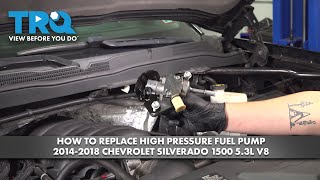
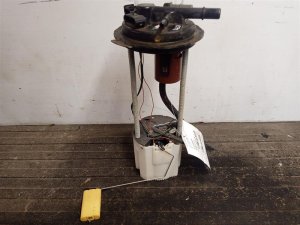
Used OEM Parts in Stock

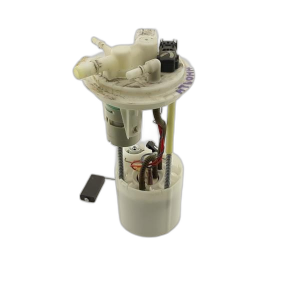
New Aftermarket Parts Available




The information in this article is provided for general reference and educational purposes only. Vehicle specifications, procedures, and part compatibility can vary by production date, trim level, and region. Always consult your vehicle's factory service manual and verify part numbers before purchasing or performing repairs. Safety-critical components such as airbags, seat belts, and braking systems should be installed by a qualified professional.
- Chevrolet SILVERADO 1500:
- 🧭 Diagnostic Flowchart
- 🎬 Helpful Videos
- 🛍️ Shop This Part
- What's Unique About the 2010-2017 Chevrolet SILVERADO 1500
- Symptoms You May Notice
- Most Likely Causes
- Rare But Worth Checking
- Diagnosis Steps
- Parts You'll Likely Need
- Related Codes That Often Appear With This One
- Technical Service Bulletins (TSBs) & Recalls
- Platform-Specific Known Issues
- Mechanic-Grade Diagnostic Values
- Hidden / Shadow Codes Worth Checking
- Scan Tool Commands That Help
- Wiring & Ground Locations
- Real Owner Repair Stories
- OEM Part Supersession History
- Model Year Variations Within This Range
- 🎟️ Get 5% Off