

P0192 on 2015-2024 Ford Edge 2.7L EcoBoost: Fuel Pressure Sensor Circuit Low Causes and Fixes
P0192 on your 2.7L EcoBoost Edge almost always indicates an electrical problem. The most likely cause is a damaged wiring harness for the Fuel Rail Pressure (FRP) sensor, followed by a failed sensor itself. Inspect the wiring for chafing before spending money on parts. A common chafing point is where the harness may contact the A/C suction line.
- P0192 is an electrical fault code. Do not assume you have a fuel pressure problem.
- The most likely cause is a damaged wiring harness, especially where it might rub on an A/C line, followed by a failed FRP sensor.
- Always inspect and test the wiring circuit before replacing the sensor.
- Relieving high-side fuel pressure is a mandatory safety step before replacing the sensor.
What's Unique About the 2015-2024 Ford Edge
The 2.7L EcoBoost is a Gasoline Turbocharged Direct Injection (GTDI) engine, which uses a high-pressure fuel system that can exceed 2000 PSI. While many vehicles can get a P0192 code, Ford's EcoBoost engine family is particularly known for wiring harness issues. The harness can rub against engine components, causing wires to chafe and break. This is such a common failure that Ford issued TSB 19-2339 for the F-150 with the same engine, identifying a specific spot where the FRP sensor harness can rub through on the A/C suction line. This should be the first thing you check, as many owners and shops have unnecessarily replaced expensive fuel pumps or sensors when the real problem was a simple broken wire.
Symptoms You May Notice
- Check Engine Light is on
- Engine stalling, especially at idle or low speeds
- Hesitation or stumbling during acceleration
- Reduced engine power or 'limp mode'
- Hard starting or long crank times
- No-start condition
- Replacing the high-pressure fuel pump (HPFP). The HPFP is a mechanical part, while P0192 is an electrical circuit code. Replacing the pump will not fix a wiring or sensor issue.
- Replacing the in-tank low-pressure fuel pump. This code relates to the high-pressure side of the fuel system.
- Replacing the FRP sensor without first inspecting the wiring harness. If a chafed wire is the root cause, the new sensor will not fix the problem.
Most Likely Causes
- Damaged Fuel Rail Pressure (FRP) Sensor Wiring Harness 🔴 High Probability → Shop Fuel Pressure Sensor Engine vibration and tight packaging can cause the wiring harness to rub against sharp edges. TSB 19-2339 for the F-150 with the same 2.7L engine points to the harness chafing on the A/C suction line. Forum users also report chafing on the back of the cylinder head or near the sensor connector itself. This is a well-documented issue on Ford's 2.7L engine platform.
How to confirm: Visually inspect the entire length of the FRP sensor wiring harness, paying close attention to where it passes near the A/C lines, cylinder head, and any sharp brackets. Look for signs of rubbing, melting, or exposed copper wires. Use a multimeter to check for a 5-volt reference and good ground at the sensor connector with the key on, engine off.
Typical fix: Repair the damaged section of wire using solder and heat-shrink tubing. If the damage is at the connector, replace it with a new pigtail (Motorcraft WPT-1251). Protect the repaired area with high-quality electrical tape or a protective loom and re-route it to prevent future contact.
Est. part cost: $15-$50 - Faulty Fuel Rail Pressure (FRP) Sensor 🟡 Medium Probability → Shop Fuel Pressure Sensor The sensor operates in a high-heat, high-vibration environment and can fail internally over time, causing it to send a voltage signal below the minimum threshold.
How to confirm: If the wiring harness inspection and electrical tests (5V reference and ground) check out, the sensor itself is the likely culprit. You can also monitor the FRP sensor voltage with a capable OBD-II scanner; a reading near zero volts with the key on points to a failed sensor. An intermittent failure can also occur where the sensor works at idle but fails under load.
Typical fix: Replace the Fuel Rail Pressure sensor. This requires relieving the high pressure from the fuel rail first, which is a critical safety step.
Est. part cost: $50-$100
Rare But Worth Checking
- Powertrain Control Module (PCM) Fault: → Shop Engine Control Module (ECM) This is extremely rare. A PCM should only be considered after all other possibilities, including wiring and sensor failure, have been exhaustively ruled out by a professional.
Diagnosis Steps
- Safety First: Let the engine cool completely. The high-pressure fuel system can hold dangerous pressure even when the engine is off.
- Scan for Codes: Confirm P0192 is the primary code. Note any other codes present.
- Locate the Sensor: The Fuel Rail Pressure (FRP) sensor is located on the high-pressure fuel rail on top of the engine, often on the driver's side rail.
- Inspect the Wiring Harness: This is the most critical step. Carefully inspect the entire harness leading to the FRP sensor. Pay special attention to potential chafing points like the A/C suction line (per TSB 19-2339 on related models), the back of the cylinder head, and any sharp brackets.
- Test the Electrical Circuit: Disconnect the sensor. Turn the ignition to 'ON' (engine off). Use a multimeter to test the pins on the harness-side connector. You should find approximately 5 volts (reference on Pin 1), a good ground (near 0 volts on Pin 3), and a signal wire (Pin 2).
- Analyze Findings: If the 5-volt reference or ground is missing, you have confirmed a break in the harness. Find and repair the break. If the reference and ground are good, the sensor is the most likely failure point.
- Replace the FRP Sensor (If Necessary): → Shop Fuel Pressure Sensor If the wiring and circuit are confirmed to be good, replace the FRP sensor. CRITICAL: You must relieve the fuel system pressure before removing the old sensor. This can be done by pulling the fuel pump fuse and running the engine until it stalls. Use a rag to catch any residual fuel spray when removing the sensor.
- Clear Codes and Test Drive: After the repair, clear the DTCs with a scanner and perform a test drive to ensure the problem is resolved.
Parts You'll Likely Need
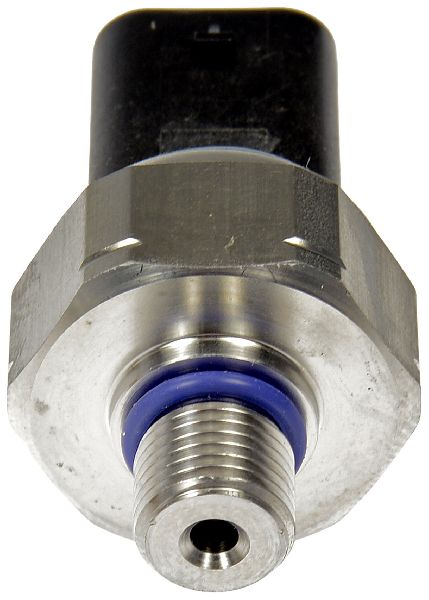
- Fuel Rail Pressure Sensor
(OEM #BU5Z-9F972-B)— This sensor fails internally after heat cycles and vibration, or gets replaced after being misdiagnosed when the wiring was the real issue. It is the second most likely part to be replaced for this code.
Trusted brands: Motorcraft, Bosch
OEM price range: $65-$100
Aftermarket price range: $40-$80 - Wiring Harness Pigtail Connector
(OEM #WPT-1251 (Service #: 3U2Z-14S411-ZYB))— If the wiring harness is damaged right at the connector, replacing the pigtail is the most reliable repair. This is a common repair part for various Ford sensors.
Trusted brands: Motorcraft, Dorman
OEM price range: $25-$40
Aftermarket price range: $15-$30
Related Codes That Often Appear With This One
- P0191 — P0191 indicates a 'Range/Performance' issue with the same sensor. P0192 is a more specific 'Circuit Low' fault, and they can appear together if the sensor signal is both erratic and dropping out completely.
- P0193 — This code for 'Fuel Rail Pressure Sensor Circuit High' is the opposite of P0192. Seeing them together could indicate severe wiring problems or an intermittent short to power and ground.
- P0087 — This code for 'Fuel Rail/System Pressure - Too Low' is a mechanical code. It could potentially be triggered if the PCM defaults to a low-power mode due to the P0192 electrical fault, but P0192 should be diagnosed first.
Technical Service Bulletins (TSBs) & Recalls
- TSB 19-2339: Not for the Edge, but for the F-150 with the same 2.7L engine. It identifies a known wiring harness chafing point on the A/C line that causes P0192/P0193, providing a critical diagnostic clue.
Platform-Specific Known Issues
- While no TSB is issued specifically for the Edge 2.7L and P0192, Ford TSB 19-2339 for the F-150 with the identical 2.7L engine explicitly calls out engine harness chafing on the A/C suction line as a cause for P0192/P0193. This strongly reinforces that inspecting the harness at this specific location is a primary diagnostic check for the Edge as well.
Mechanic-Grade Diagnostic Values
- FRP Sensor Connector Pin 1 (Reference Voltage) — expected: 5V. Failure: Voltage significantly lower than 5V indicates an open or short in the VREF circuit from the PCM.
- FRP Sensor Connector Pin 3 (Ground) — expected: Near 0V (Good continuity to ground). Failure: Voltage above 0V or high resistance to ground indicates a faulty ground circuit.
- FRP Sensor Signal Voltage (KOEO) — expected: ~0.5V. Failure: A reading near 0V triggers P0192. A reading near 5V would trigger P0193.
- Low-Pressure Fuel System Pressure (supplying the HPFP) — expected: 345-827 kPa (50-120 PSI). Failure: Pressure below this range points to an issue with the in-tank pump or Fuel Pump Driver Module (FPDM), though this typically sets other codes like P0087.
- High-Pressure Fuel System Pressure (at idle) — expected: Approx. 200-600 PSI. Failure: While P0192 is an electrical code, a live data reading that is erratic or nonsensical can help confirm a sensor vs. wiring issue.
Scan Tool Commands That Help
- Ford IDS (Integrated Diagnostic System): Fuel System Test > Relative Injector Flow Test — This test can be used after a repair to verify fuel system integrity. It pulses each injector and measures the corresponding pressure drop in the fuel rail. While not a direct test for P0192, a failure here after fixing the electrical fault could point to a secondary mechanical issue that was masked by the sensor fault.
Wiring & Ground Locations
- FRP Sensor Connector — On the high-pressure fuel rail, typically on the driver's side of the 2.7L engine.. This is the primary connection point for testing. Pin 1 is 5V reference, Pin 2 is signal, and Pin 3 is ground. Damage here is common.
- G104 — A primary engine compartment ground, often located on the front of the engine block or cylinder head on the passenger side.. The FRP sensor circuit relies on a clean ground reference. A loose or corroded main engine ground at G104 can cause erratic voltage readings and false sensor codes.
- Harness Chafing Point (from TSB 19-2339) — Where the engine harness may contact the A/C suction line. This TSB applies to the F-150 but is highly relevant due to the identical engine.. This is a known, documented failure point for the FRP sensor wiring that directly causes P0192 and P0193. It should be the first place to inspect visually.
Real Owner Repair Stories
- F-150 Forum user (2016 Ford F-150 2.7L EcoBoost (platform mate)) — Check Engine Light with codes P0192 and P0193, engine stalling.
❌ Tried (didn't work) The user first suspected the sensor itself.
✅ What actually fixed it The user found the wiring harness had chafed through on the A/C line, exactly as described in TSB 19-2339. Repairing the broken wires resolved the codes and stalling issues.
OEM Part Supersession History
BU5Z-9F972-A (also CM5226)→BU5Z-9F972-B (also CM5250)— Standard part revision and improvement. The new part incorporates any engineering updates since the vehicle's manufacture.
Model Year Variations Within This Range
- 2018-2024: The second-generation 2.7L EcoBoost was introduced in 2018, featuring both port and direct injection. While the high-pressure fuel system and P0192 code remain relevant, the engine has hollow camshafts and electronic wastegates. These changes do not directly affect the cause of P0192 but are important to note for overall engine context.
- 2019-2024: For the 2019 model year, the Edge ST (which replaced the Sport trim) paired the 2.7L engine with a new 8-speed automatic transmission, replacing the previous 6-speed. This does not alter the diagnosis for P0192.
Diagnostic Flowchart
Other Known Issues on This Vehicle
Issues unrelated to this code that are worth knowing about as an owner of this generation:
- Leaking Plastic/Composite Oil Pan 🔴 High — Extremely common. The original RTV-sealed pan is known to warp from heat cycles, causing leaks. Onset can be as early as 20,000 miles. (Ref: TSB 24-2345 (for 2015-2017 models), TSB 19-2387 (for 2018-2019 models) detail replacement with an updated pan design.)
- Power Transfer Unit (PTU) Failure (AWD Models) 🔴 High — Common on AWD models. The 'lifetime' gear oil is cooked by the adjacent catalytic converter, leading to fluid breakdown and PTU failure. Often noticed by a burning gear oil smell. Preventative fluid changes every 30,000 miles are recommended. (Ref: No recall, but it is a widely documented failure mode across Ford's AWD platforms.)
- Turbocharger Oil Line Leaks 🟠 Medium → Shop Turbocharger — A frequently reported issue where the oil supply and drain lines for the turbochargers develop leaks, often identified by a burning oil smell or visible drips.
- Valve Cover Gasket Leaks 🟠 Medium — Common at moderate to high mileage. The gaskets degrade from heat, causing oil to leak onto the exhaust or other engine components.
Used vs. New Parts: Buying Guide for This Vehicle
When a used part is the smart pick: A used wiring harness pigtail (WPT-1251) from a junkyard is an excellent, cost-effective choice if the connector itself is damaged. The connector is a common part used across many Ford models, so finding a donor is easy.
Donor-vehicle mileage cap: roughly under 80000 miles for the part to have meaningful remaining life.
What to inspect on the donor part:
- For a pigtail, ensure the plastic isn't brittle and the locking tab is intact.
- Cut the wires long, leaving at least 6 inches to work with.
- For a used sensor, only consider it from a very low-mileage, collision-damaged vehicle. Check for any corrosion on the electrical pins.
OEM-only on this vehicle (don't cheap out):
- Fuel Rail Pressure Sensor (FRP). Given the critical role of this sensor in a high-pressure direct injection system and the relatively low cost of a new OEM part, using a used sensor is not recommended. Aftermarket sensors can have questionable accuracy and longevity.
Aftermarket brands forum-validated for this vehicle:
- Bosch (Often the original equipment manufacturer for Ford fuel system components)
Brands owners have reported issues with on this vehicle:
- No-name, unbranded sensors from online marketplaces should be avoided as their calibration and reliability are unverified.
Real Owner Stories
Aggregated from forums and TSBs cited above. Mileages and costs reflect what owners reported in those sources.
2016 Ford Edge Sport 2.7L
Symptoms: The vehicle was throwing both P0192 and P0193 codes simultaneously.
What fixed it: Investigation of the wiring harness for faults/chafing, as these codes together typically point to a circuit issue rather than just a failed sensor.
Source hint: https://www.fordedgeforum.com/topic/28387-p0192-and-p0193-codes-on-2016-edge-sport-27/
2016 Ford F-150 2.7L EcoBoost
Symptoms: Check engine light with code P0192; shared engine platform with the Ford Edge.
What fixed it: Repairing the wiring harness due to known chafing issues on the 2.7L engine platform.
Source hint: https://www.f150forum.com/f118/2016-2-7-ecoboost-p0192-code-429979/
Related OBD-II Codes
Frequently Asked Questions
Does TSB 19-2339 apply to my 2015-2024 Ford Edge with the 2.7L EcoBoost?
Where is the Fuel Rail Pressure (FRP) sensor located on the Edge 2.7L?
Can I use a used connector to fix the P0192 wiring issue?
What specific wiring areas should I check for damage on my Edge Sport?
Is there a specific part number for the replacement wiring connector?
Are there other common engine issues I should look for while diagnosing P0192?
Helpful Videos
We Have This Part in Stock

The information in this article is provided for general reference and educational purposes only. Vehicle specifications, procedures, and part compatibility can vary by production date, trim level, and region. Always consult your vehicle's factory service manual and verify part numbers before purchasing or performing repairs. Safety-critical components such as airbags, seat belts, and braking systems should be installed by a qualified professional.
- Ford Edge:
- 🧭 Diagnostic Flowchart
- 🎬 Helpful Videos
- 🛍️ Shop This Part
- What's Unique About the 2015-2024 Ford Edge
- Symptoms You May Notice
- Most Likely Causes
- Rare But Worth Checking
- Diagnosis Steps
- Parts You'll Likely Need
- Related Codes That Often Appear With This One
- Technical Service Bulletins (TSBs) & Recalls
- Platform-Specific Known Issues
- Mechanic-Grade Diagnostic Values
- Scan Tool Commands That Help
- Wiring & Ground Locations
- Real Owner Repair Stories
- OEM Part Supersession History
- Model Year Variations Within This Range
- Other Known Issues on This Vehicle
- Used vs. New Parts: Buying Guide for This Vehicle
- Real Owner Stories
- 2016 Ford Edge Sport 2.7L
- 2016 Ford F-150 2.7L EcoBoost
- Related OBD-II Codes
- Frequently Asked Questions
- 🎟️ Get 5% Off