

P0192 on 2008-2016 Volvo XC70: Fuel Rail Pressure Sensor Low Input Causes and Fixes
On a 2008-2016 Volvo XC70, code P0192 is most often caused by a failed fuel rail pressure sensor. Replacing this sensor, typically a Bosch part (OEM P/N: 31272730, Bosch P/N: 0261230110), is a common DIY fix costing between $50 and $100 for the part. However, a corroded Fuel Pump Control Module (PEM) is another significant possibility unique to this platform.
- P0192 on your XC70 most likely means the fuel rail pressure sensor has failed and needs to be replaced.
- Before replacing any parts, check for other codes and inspect the sensor's wiring for damage.
- If a new sensor doesn't fix the issue, the next most likely culprit is the Fuel Pump Control Module (PEM), which is known to corrode and fail.
- Driving with this code can be unsafe, as the engine could stall at any time.
- Replacing the sensor is a manageable DIY job, but replacing the PEM or fuel pump is much more difficult and may require professional help.
What's Unique About the 2008-2016 Volvo XC70
The Volvo P3 platform, which includes the 2008-2016 XC70, is known for fuel pressure sensor failures; it's a common replacement item across multiple engine types. More critically, the Fuel Pump Control Module (PEM/FPCM) is notoriously prone to failure. On earlier P2 models, it was mounted externally where it suffered from corrosion. On P3 models like this XC70, Volvo moved it to the top of the fuel tank. While better protected, it can still fail and is a very difficult part to access, often requiring the fuel tank, driveshaft, and exhaust to be dropped for replacement. A failing PEM can cause low fuel pressure, mimicking a bad sensor and leading to misdiagnosis.
Symptoms You May Notice
- Check Engine Light is on
- Engine is hard to start or requires long cranking time
- Hesitation, stumbling, or loss of power during acceleration
- Engine stalls unexpectedly, sometimes while driving
- Rough or erratic idle
- Reduced fuel economy
- Engine cranks but will not start
- Replacing the fuel pump without first diagnosing the fuel rail pressure sensor and the Fuel Pump Control Module (PEM). A bad sensor or PEM is more likely to be the root cause than the pump itself on this platform.
Most Likely Causes
- Failed Fuel Rail Pressure Sensor 🔴 High Probability → Shop Fuel Pressure Sensor The fuel pressure sensor is a widely documented common failure part on Volvo's P1, P2, and P3 platform vehicles. It is exposed to constant pressure changes and heat cycles at the end of the fuel rail.
How to confirm: Use a scan tool to read live fuel pressure data. Compare this reading to a mechanical fuel pressure gauge connected to the fuel rail's Schrader valve (if equipped). If the scan tool shows an abnormally low reading (e.g., <0.5V) that doesn't match the mechanical gauge, the sensor is bad. On the 3.2L engine, 🎬 See how to replace the sensor on the 3.2L engine. the Schrader valve is on the opposite end of the fuel rail from the sensor. If no gauge is available, check the sensor's vacuum hose for any signs of raw fuel, which indicates an internal diaphragm failure.
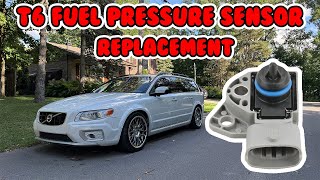
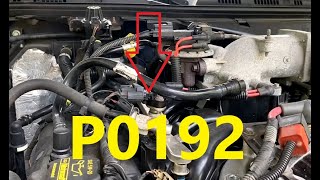
Typical fix: Replace the fuel rail pressure sensor. This involves relieving fuel system pressure (by pulling the fuel pump fuse #22 under the passenger dash and running the engine until it stalls), disconnecting the sensor, removing a single T25 Torx screw, and installing the new sensor. The screw can be in a very tight location, especially on the T6 engine, 🎬 Watch this DIY walkthrough for replacing the T6 pressure sensor. sometimes requiring creative tool combinations like a small wrench on a Torx bit. Lubricate the new sensor's O-ring with synthetic grease or gasoline before installation.
Est. part cost: $50-$150 - Faulty Fuel Pump Control Module (PEM/FPCM) 🟡 Medium Probability → Shop Fuel Pump On P3 platform vehicles, the PEM is located on top of the fuel tank, making it a difficult-to-access part that can still suffer from electronic failure. This is a known issue across several Volvo models of this era, sometimes causing stalling or no-start conditions that trigger fuel pressure codes.
How to confirm: Diagnosis is difficult due to its location. If the fuel pressure sensor and wiring are confirmed good, but there is still no or low fuel pressure, the PEM is a prime suspect. A technician with a Volvo-specific scan tool (VIDA) can attempt to communicate with the module. A lack of communication or specific PEM-related fault codes would point to its failure. VIDA can also be used to run a fuel pump test which is controlled by the PEM.
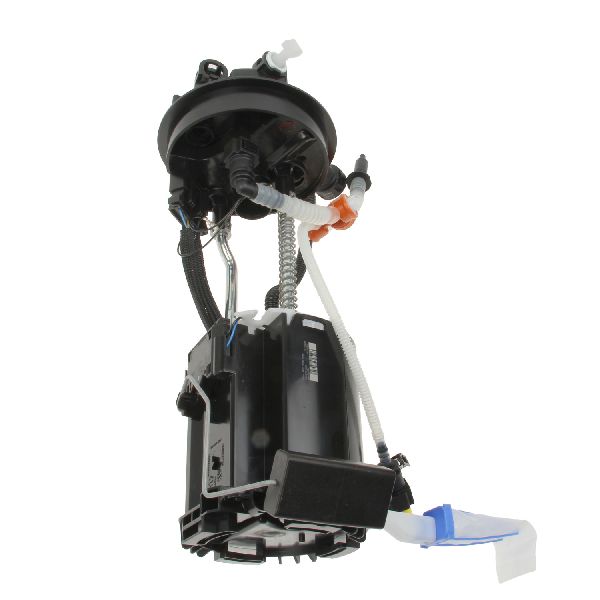
Typical fix: Replace the Fuel Pump Control Module. This is a very difficult job that requires dropping the fuel tank, and on AWD models, the driveshaft and exhaust. A replacement module, whether new or used, does not typically require programming to the vehicle on this platform.
Est. part cost: $250-$450 - Damaged Wiring or Connector ⚪ Low Probability
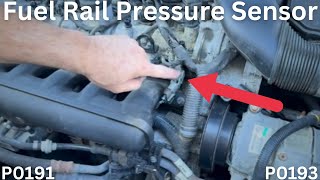
How to confirm: Visually inspect the wiring harness leading to the fuel rail pressure sensor for any signs of fraying, melting, or corrosion at the connector. Use a multimeter to check for the correct 5-volt reference signal, a solid ground, and continuity on the signal wire back to the ECM. A reading below the specified voltage on the signal wire (typically <0.5V) can trigger P0192. 🎬 Watch this guide to understand P0192 causes and fixes.
Typical fix: Repair the damaged section of the wiring harness or clean the connector pins with electrical contact cleaner and apply dielectric grease to prevent future corrosion.
Est. part cost: $5-$50 - Failing Fuel Pump ⚪ Low Probability → Shop Fuel Pump While the pump itself is generally robust, it can be overworked and fail prematurely if the Fuel Pump Control Module (PEM) is malfunctioning or if the fuel filter is severely clogged. Early P3 models (around 2008) had reports of higher fuel pump failure rates.
How to confirm: If the sensor, PEM, and wiring are all confirmed to be good but actual fuel pressure is low (verified with a mechanical gauge), the in-tank fuel pump is likely weak or failing. A technician can also directly power the pump to see if it runs.
Typical fix: Replace the in-tank fuel pump. This is an intensive job that requires removing the rear seats and accessing the fuel tank.
Est. part cost: $300-$600
Rare But Worth Checking
- Clogged Fuel Filter: → Shop Fuel Filter While less common to cause a specific sensor circuit code, a severely clogged fuel filter can restrict flow enough to cause low pressure, triggering the code. It's a relatively inexpensive part to replace as part of diagnosis.
- Faulty Powertrain Control Module (PCM/ECM): → Shop Engine Control Module (ECM) This is very rare, but the PCM can fail and misinterpret the sensor's signal. This should only be considered after all other possibilities, including wiring and all other fuel system components, have been exhausted.
Diagnosis Steps
- Scan for all fault codes. Note any other codes that appear alongside P0192, such as P0190 or PEM-related codes.
- Using a scan tool, observe the live data for 'Fuel Rail Pressure'. A reading near 0 volts or below 0.5V with the key on, engine off, points to a circuit issue.
- Visually inspect the fuel rail pressure sensor and its electrical connector for obvious damage, corrosion, or loose connections.
- If possible, connect a mechanical fuel pressure gauge to the fuel rail's Schrader valve and compare its reading to the scan tool's live data. A significant difference points to a faulty sensor.
- If a mechanical gauge test isn't possible, test the sensor's electrical circuit. With the key on, use a multimeter to confirm a 5-volt reference and good ground at the connector. Check the signal wire for voltage; it should be above 0.5V (check specific specs for your engine).
- Inspect the vacuum line to the sensor (if applicable) for the presence of fuel, indicating a ruptured internal diaphragm.
- If the sensor and its wiring test good, investigate the fuel delivery system. Check the fuel pump fuse (Fuse 22 in the passenger compartment fuse box for an XC70) first.
- If a fuel delivery issue is still suspected, the next component to investigate is the Fuel Pump Control Module (PEM). This will likely require professional diagnosis due to its inaccessibility on top of the fuel tank.
- If all control modules and wiring are good, the issue may be a weak fuel pump or a clogged fuel filter.
Parts You'll Likely Need
- Fuel Rail Pressure Sensor
(OEM #31272730)— This is the most common failure point for code P0192 on this vehicle platform. Note: The OEM number 31272730 was superseded by 31272732 for some applications. The Bosch equivalent is often cited as 0261230110 or 0261230238. Always verify with VIN.
Trusted brands: Bosch, Genuine Volvo
OEM price range: $90-$180
Aftermarket price range: $40-$100 - Fuel Pump Control Module (PEM)
(OEM #30742823)— Fails due to electronic issues, causing a variety of fuel delivery problems including low pressure. Its location on top of the fuel tank makes replacement labor-intensive.
Trusted brands: Bosch, Genuine Volvo
OEM price range: $350-$450
Aftermarket price range: $250-$350
Related Codes That Often Appear With This One
- P0190 — This code indicates a general malfunction in the fuel rail pressure sensor circuit and frequently appears with P0192.
- P0191 — This code indicates the sensor's performance is out of range/specification and can be set along with P0192 if the signal is erratic.
- P0193 — This code for 'Circuit High Input' can appear intermittently if the sensor is failing and sending erratic signals that swing from too low to too high.
- P0089 — This code for 'Fuel Pressure Regulator Performance' can be triggered by a failing PEM, which may also cause the P0192 code.
Technical Service Bulletins (TSBs) & Recalls
- While not a specific TSB for P0192, Volvo issued a recall in September 2009 for the Fuel Pump Electronic Module (PEM) on T6 engine models in the VIN range 0000395 to 0127906 due to incorrect operation, which could cause symptoms related to this code.
Platform-Specific Known Issues
- On the 3.0L T6 engine, the fuel pressure sensor is located in a particularly tight spot, making the single T25 Torx bolt difficult to access without small, specialized tools or creative workarounds.
- On the 3.2L I6 engine, the sensor is more accessible at the end of the fuel rail, and the job is considered more straightforward.
- A recurring issue on P3 platform Volvos is the failure of the Fuel Pump Control Module (PEM). While on earlier P2 cars it was in the wheel well and failed from corrosion, on the P3 it is on top of the fuel tank, making it much harder to replace.
Mechanic-Grade Diagnostic Values
- Fuel Rail Pressure Sensor Signal Voltage (Key On, Engine Off) — expected: ~0.5V. Failure: A reading significantly below 0.5V, often near 0V, indicates a circuit low fault.
- Fuel Rail Pressure Sensor Signal Voltage (Engine at Idle) — expected: ~1.5V - 2.5V. Failure: Voltage that is stuck low (below 0.5V) or does not respond to changes in engine RPM.
- Fuel Rail Pressure Sensor Reference Voltage — expected: 5.0V. Failure: No voltage or significantly less than 5.0V indicates a problem with the ECM or the wiring providing power to the sensor.
- Fuel Rail Pressure Sensor Ground Circuit Voltage — expected: < 0.05V (50mV). Failure: Voltage significantly higher than 50mV indicates a poor ground connection, which can cause incorrect sensor readings.
- Fuel Pressure at Idle (via VIDA) — expected: Approx. 400 kPa (58 PSI). Failure: Readings significantly lower than this target, when commanded by VIDA, can indicate a weak pump or PEM issue.
Hidden / Shadow Codes Worth Checking
- ECM-280B: Fuel pressure sensor - Signal too high. This can appear alongside P0192 if the sensor is failing erratically. (see via Volvo-specific scan tool like VIDA.)
- ECM-280C: Fuel pressure sensor - Signal too low. This is the direct Volvo-specific equivalent of the generic P0192 code. (see via Volvo-specific scan tool like VIDA.)
Scan Tool Commands That Help
- VIDA (Volvo Information & Diagnostic Application): Quick test of fuel pump — After confirming the sensor and wiring are good, this test commands the Fuel Pump Control Module (PEM) to run the fuel pump and displays the requested vs. actual fuel pressure. It's a key step to determine if the PEM is functioning and if the pump can deliver adequate pressure.
Wiring & Ground Locations
- Fuel Pump Fuse (XC70) — Fuse #22 in the fuse box located under the passenger side dashboard.. This fuse powers the fuel pump circuit. Before suspecting a failed PEM or pump, it's critical to check if this fuse is blown. It must also be pulled to relieve fuel pressure before replacing the sensor.
- Fuel Pressure Sensor Connector — At the end of the fuel rail. On the 3.2L engine, it is easily accessible. On the 3.0L T6 engine, it is in a very tight space under the intake manifold runners.. This is the primary point for electrical testing (5V reference, ground, signal wire). Corrosion or damage to the connector or its pins is a common cause of circuit low codes.
Real Owner Repair Stories
- Reddit user u/chase_12803 (2008 Volvo XC70) — Check engine light coming on and off, codes P0190 and P0192. Car struggles and almost stalls after starting on hot days. Lurching while driving as if running out of gas.
❌ Tried (didn't work) Initial diagnosis pointed towards fuel pump, but the user was advised to check the sensor first.
✅ What actually fixed it The user was advised by others that the symptoms and codes were classic signs of a failing fuel rail pressure sensor, which is a very common DIY fix for these symptoms on this platform. The implied fix was replacing the sensor. - NHTSA ODI #10357926 — An owner reported that after multiple incidents where the vehicle was able to restart immediately, the check engine light illuminated with code P0192. Research indicated this code relates to the failure of the vehicle's fuel pressure sensor.
OEM Part Supersession History
8699449, 30756097→31272730— Standard part evolution and updates by Volvo/Bosch.
Heads up: The primary Bosch part number is 0261230110. Another number, 0261230238, is also cited. Always verify fitment with the vehicle's VIN as there can be variations.
Model Year Variations Within This Range
- 2008: The 2008 model year, being the first year of the P3 platform, reportedly had a higher incidence of fuel pump failures compared to later years. While P0192 is a sensor circuit code, a failing pump can sometimes trigger related pressure faults.
- 2011-2016: Post-2010 models received engine updates (e.g., T6 power increased from 281 to 300 hp) and cosmetic changes, but the fundamental fuel system components like the sensor and PEM remained largely the same.
Diagnostic Flowchart
Other Known Issues on This Vehicle
Issues unrelated to this code that are worth knowing about as an owner of this generation:
- Auxiliary/Serpentine Belt Tensioner Failure 🔴 High — Common, especially on D5 diesel engines but also seen on petrol models. Failure can cause the belt to be ingested by the timing belt, leading to catastrophic engine damage. (Ref: Multiple recalls issued for 2007-2011 XC70 D5 models for high wear.)
- Cracked Rear Trailing Arm Bushings 🟠 Medium — A common wear item. Causes squeaking over bumps and can affect rear alignment. The repair is labor-intensive as the bushing is part of the rear knuckle assembly.
- AOC Pump/DEM Failure (AWD System) 🟠 Medium — The Active on Demand Coupling (AOC) pump or its associated Differential Electronic Module (DEM) can fail, resulting in loss of all-wheel drive. Often caused by a clogged pump filter or internal pump/module failure.
- PCV System Clogging/Failure 🟠 Medium — The PCV breather box diaphragm can fail, especially on the 3.2L and T6 engines, leading to a loud whistling noise at idle, oil consumption, and potential oil seal leaks due to excessive crankcase vacuum.
- Leaking Windshield Seal 🟡 Low — A widely reported factory defect where the windshield was improperly bonded, allowing water to leak into the cabin, potentially damaging electronics.
- Excessive Oil Consumption (2010-2012 models) 🔴 High — Some 3.2L and T6 engines from 2010-2012 were prone to excessive oil consumption due to piston ring issues. It is less common than on other Volvo engines but a significant concern for affected model years.
Used vs. New Parts: Buying Guide for This Vehicle
When a used part is the smart pick: A used Fuel Pump Control Module (PEM) can be a cost-effective option, as they do not require programming and are often available from lower-mileage donor cars. Since the P3 module is located on top of the fuel tank, it is protected from the corrosion that plagued earlier models, making used units more reliable.
Donor-vehicle mileage cap: roughly under 100000 miles for the part to have meaningful remaining life.
What to inspect on the donor part:
- For a PEM, check the part number to ensure it matches (e.g., 30742823).
- Look for a donor vehicle from a dry climate to minimize chances of any moisture intrusion, even with the improved location.
- Ask the dismantler about the reason the vehicle was salvaged; avoid donors with rear-end collision damage that could have impacted the fuel tank area.
OEM-only on this vehicle (don't cheap out):
- Fuel Rail Pressure Sensor
Aftermarket brands forum-validated for this vehicle:
- Bosch is the Original Equipment Manufacturer (OEM) for the fuel pressure sensor and PEM. Buying a Bosch-branded part is equivalent to Genuine Volvo but typically costs less.
Brands owners have reported issues with on this vehicle:
- Unnamed, no-brand 'white box' sensors from online marketplaces. These often have high failure rates, incorrect voltage outputs, and can cause more diagnostic confusion.
Related OBD-II Codes
Frequently Asked Questions
Is there a recall for my 2008-2016 XC70 that could cause code P0192?
I have a T6 model. Is replacing the fuel rail pressure sensor more difficult than on the 3.2L engine?
Where is the Fuel Pump Control Module (PEM) located on my P3 platform XC70?
If I replace the Fuel Pump Control Module (PEM), does the new one need to be programmed to my XC70?
What is a simple first check I can do for code P0192 on my XC70?
How can I check the fuel pressure sensor on my XC70 without a fuel pressure gauge?
Helpful Videos
We Have This Part in Stock


The information in this article is provided for general reference and educational purposes only. Vehicle specifications, procedures, and part compatibility can vary by production date, trim level, and region. Always consult your vehicle's factory service manual and verify part numbers before purchasing or performing repairs. Safety-critical components such as airbags, seat belts, and braking systems should be installed by a qualified professional.
- Volvo XC70:
- 🧭 Diagnostic Flowchart
- 🎬 Helpful Videos
- 🛍️ Shop This Part
- What's Unique About the 2008-2016 Volvo XC70
- Symptoms You May Notice
- Most Likely Causes
- Rare But Worth Checking
- Diagnosis Steps
- Parts You'll Likely Need
- Related Codes That Often Appear With This One
- Technical Service Bulletins (TSBs) & Recalls
- Platform-Specific Known Issues
- Mechanic-Grade Diagnostic Values
- Hidden / Shadow Codes Worth Checking
- Scan Tool Commands That Help
- Wiring & Ground Locations
- Real Owner Repair Stories
- OEM Part Supersession History
- Model Year Variations Within This Range
- Other Known Issues on This Vehicle
- Used vs. New Parts: Buying Guide for This Vehicle
- Related OBD-II Codes
- Frequently Asked Questions
- 🎟️ Get 5% Off