

P0193 on 2010-2019 Ford Taurus 3.5L EcoBoost: High Fuel Pressure Sensor Circuit Causes and Fixes
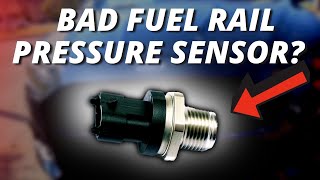
On a 2010-2019 Taurus with the 3.5L EcoBoost, code P0193 is almost always a failed Fuel Rail Pressure Sensor (FRPS). The sensor itself is relatively inexpensive (~$75-$110 for OEM), but it's in a very difficult location, making professional replacement costly due to high labor. A 'circuit high' code means the PCM sees a voltage above the expected range (over 4.5V), which usually points to an internal sensor short rather than a true fuel pressure problem.
- P0193 on the 3.5L EcoBoost Taurus almost always points to a bad Fuel Rail Pressure Sensor (FRPS).
- The easiest way to confirm a bad sensor is to check the fuel pressure reading with a scan tool while the key is on but the engine is off. A high reading indicates a failed sensor.
- This is not a simple DIY job. The sensor is buried at the back of the engine, making replacement very labor-intensive and costly.
- Before approving any repair, ensure your mechanic has confirmed the sensor is bad using the KOEO test to avoid mistakenly replacing the much more expensive high-pressure fuel pump.
- Check for any open recalls, like the one for the fuel pump module on 2013-2015 models, as it can cause similar stalling symptoms.
What's Unique About the 2010-2019 Ford Taurus
The 3.5L EcoBoost V6 is a gasoline direct injection (GDI) engine, which uses both a low-pressure fuel pump in the tank and a high-pressure fuel pump (HPFP) on the engine. This complex system requires precise monitoring, and the high-pressure Fuel Rail Pressure Sensor (FRPS) is a known failure point due to intense heat and pressure cycles. Unlike many other vehicles where this sensor is easily accessible, on the transverse-mounted 3.5L EcoBoost in the Taurus SHO, the FRPS is notoriously difficult to reach. It is located on the fuel rail at the back of the engine against the firewall, often requiring removal of the intake manifold for access, which significantly increases labor time for replacement.
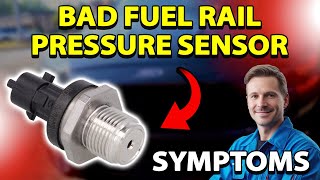
Symptoms You May Notice
- Check Engine Light is on
- Difficulty starting the engine, or engine will not start
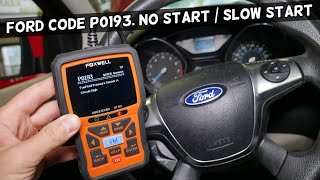
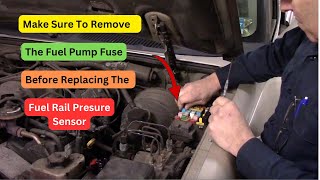
- Engine stalls, especially at idle 🎬 Watch: Diagnosing a Ford that won't start due to code P0193
- Poor acceleration and loss of power
- Rough idling
- Reduced fuel economy
- Hesitation or stumbling under load
- Replacing the High-Pressure Fuel Pump (HPFP) without proper diagnosis. The P0193 code points more directly to an electrical or sensor fault, which is a much cheaper repair than the HPFP.
- Replacing the in-tank low-pressure fuel pump. This code is related to the high-pressure side of the fuel system.
- Ignoring the wiring. A mechanic might replace the sensor only to find the code returns because the actual issue was a short in the harness, which should have been checked during diagnosis.
Most Likely Causes
- Faulty Fuel Rail Pressure Sensor (FRPS) 🔴 High Probability → Shop Fuel Pressure Sensor The sensor is a known high-failure part on the 3.5L EcoBoost platform due to constant exposure to high heat and extreme pressure changes inherent in a direct injection system. Premature failure between 50,000 and 70,000 miles is common.
How to confirm: Use a scan tool to view live data. With the Key On, Engine Off (KOEO), the 'Actual Fuel Rail Pressure' should be very low (<100 PSI). If the reading is stuck at an abnormally high value (e.g., over 500 PSI, or showing max value), the sensor has failed internally. This is the most definitive test. Another method is to disconnect the sensor; if a P0190 code appears, it strongly suggests the original sensor was internally shorted.
Typical fix: Replace the Fuel Rail Pressure Sensor. Due to its location, this is a labor-intensive job often requiring intake manifold removal.
Est. part cost: $60-$110 - Wiring Harness or Connector Issue 🟡 Medium Probability The engine bay environment can cause wiring insulation to become brittle and connectors to corrode over time. The harness is routed in a tight, hot area, making it susceptible to chafing against other components. Manufacturer service bulletin TSB Bulletin #SSM 47337 notes that P0193 can be caused by engine harness chafing at the cylinder head near the connector.
How to confirm: Visually inspect the wiring harness and connector going to the FRPS for any signs of damage, chafing, melting, or corrosion. Unplug the connector and check for 5V reference, a good ground, and test the signal wire for a short to voltage using a multimeter.
Typical fix: Repair the damaged section of the wiring harness or replace the connector pigtail.
Est. part cost: $15-$50
Rare But Worth Checking
- Failing High-Pressure Fuel Pump (HPFP): → Shop Fuel Pump While P0193 is typically an electrical code, a mechanical failure of the HPFP's internal regulator could theoretically cause extreme over-pressurization. This scenario is more commonly associated with code P0088, but it's a possibility. Diagnosis involves comparing desired vs. actual fuel pressure while the engine is running. A P0193 is much more likely to be the sensor or wiring.
- Powertrain Control Module (PCM) Fault: In very rare cases, the fault can be internal to the PCM itself, specifically the circuit that reads the sensor. This should only be considered after all other possibilities, including the sensor and wiring, have been definitively ruled out by a professional technician. TSB Bulletin #SSM 46456 suggests that P0193 may be due to a concern with the reference voltage or signal return circuit.
Diagnosis Steps
- Connect a high-quality OBD-II scanner capable of reading Ford-specific live data.
- Check for any other stored trouble codes. Address those first if they are for primary systems.
- Navigate to the live data stream for the fuel system.
- With the Key On, Engine Off (KOEO), observe the 'Fuel Rail Pressure' (FRP) reading. It should be below 100 PSI. If it shows a very high, fixed number (e.g., >500 PSI), the FRPS is faulty and needs replacement.
- If the KOEO reading is normal, start the engine. Monitor 'Desired Fuel Rail Pressure' and 'Actual Fuel Rail Pressure'.
- If the actual pressure reading is erratic, drops out, or is consistently stuck high while desired pressure changes, the sensor is the most likely culprit.
- If the sensor readings seem plausible, turn off the vehicle and gain access to the FRPS connector. This will likely require significant disassembly.
- Inspect the connector and wiring for any visible damage, corrosion, or loose pins. Pay close attention to areas where the harness might rub against the engine or firewall.
- Using a multimeter with the key on, check for the correct 5-volt reference and a good ground at the connector. Test the signal wire for a short to voltage (it should read near 0V with the sensor unplugged).
Parts You'll Likely Need
- Fuel Rail Pressure Sensor
(OEM #AA5Z-9F972-A)— This is the most common failure point for code P0193 on this engine, failing due to heat and pressure stress. It is an electronic sensor that shorts internally.
Trusted brands: Motorcraft, Bosch, Standard Motor Products (SMP)
OEM price range: $75-$110
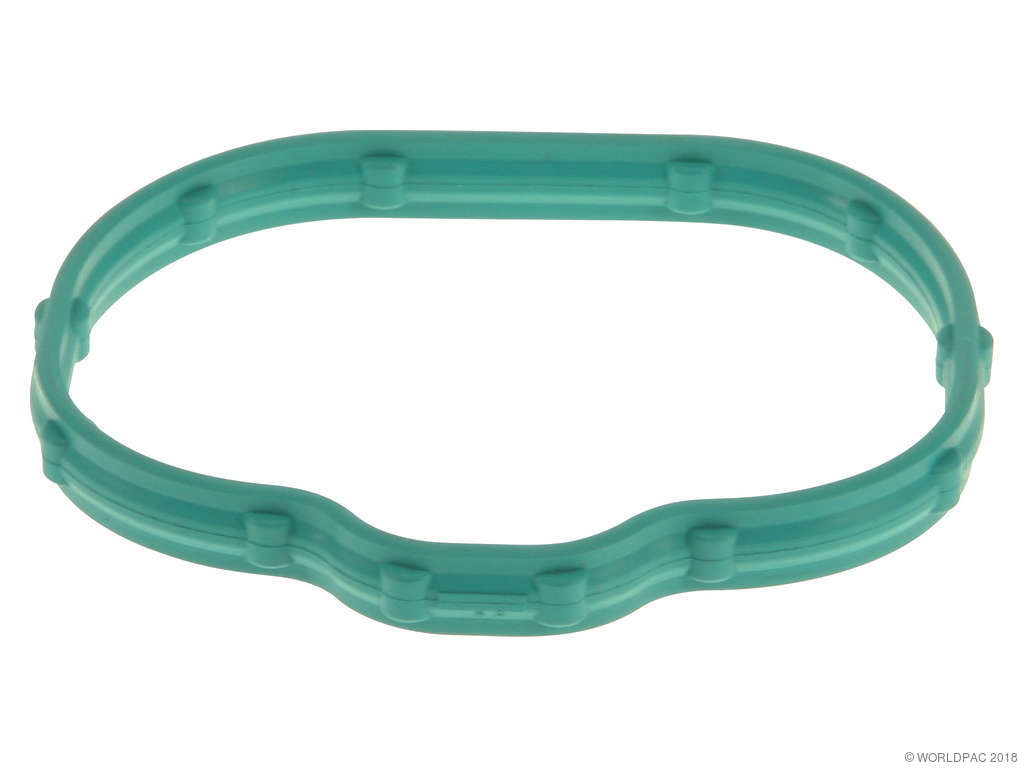
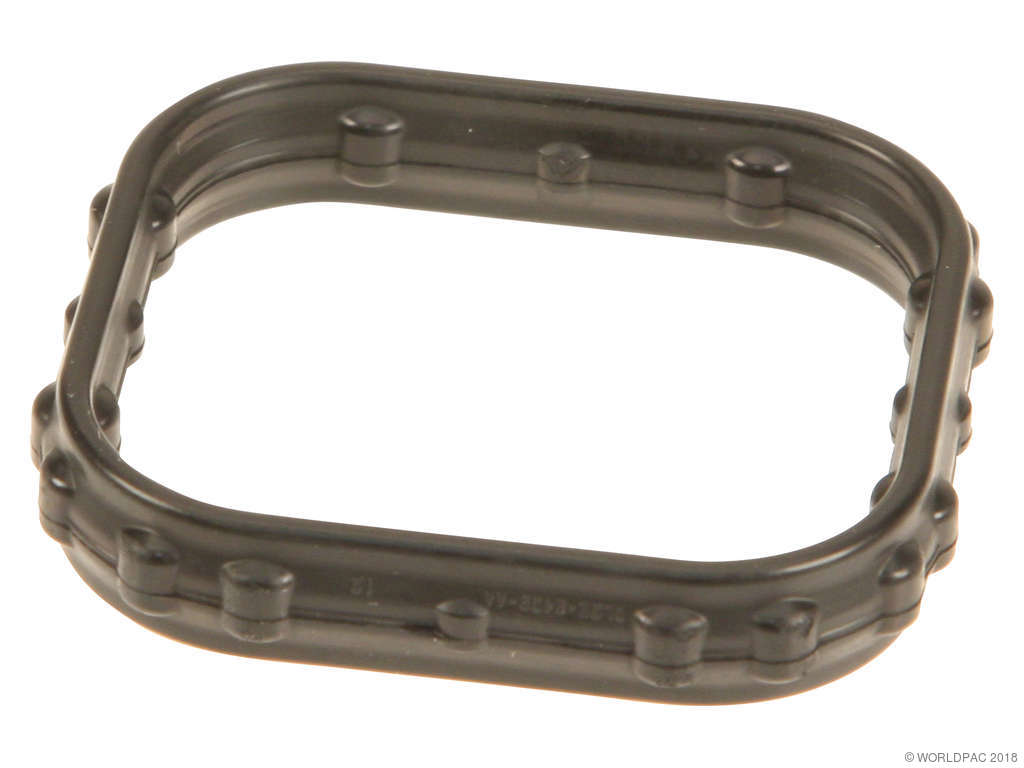
Aftermarket price range: $40-$70 - Upper Intake Manifold Gaskets — If the intake manifold must be removed to access the FRPS, the gaskets should always be replaced to prevent vacuum leaks.
Trusted brands: Fel-Pro, Motorcraft
OEM price range: $30-$50
Aftermarket price range: $15-$30
Related Codes That Often Appear With This One
- P0088 — P0088 means 'Fuel Rail/System Pressure - Too High'. If the FRPS fails and sends a high signal (P0193), the PCM might also interpret this as a true over-pressure condition, setting P0088 simultaneously.
- P0192 — This code means 'Fuel Rail Pressure Sensor Circuit Low'. Seeing it appear with P0193 can indicate an intermittent wiring problem (e.g., a wire that is shorting to ground and then to voltage) or a sensor that is failing erratically.
- P0191 — This code for 'Fuel Rail Pressure Sensor Circuit Range/Performance' can be logged if the sensor's output is irrational or doesn't align with other engine parameters, which can happen as the sensor begins to fail before it shorts high or low.
Technical Service Bulletins (TSBs) & Recalls
- SSM 47337: Mentioned in relation to the 2018 F-150, this Special Service Message addresses diagnostic trouble codes including P0193, indicating it's a known issue Ford has provided guidance on.
- TSB Bulletin #SSM 46351: Notes that some vehicles may exhibit a MIL on with DTC P0193 due to a concern with the reference voltage or signal return circuit of the crankshaft position sensor.
Platform-Specific Known Issues
- Recall 16S31 (NHTSA 16V621000) was issued for the fuel pump electronic module on some 2013-2015 models, which can cause stalling. While it doesn't directly cause P0193, the symptoms can be similar and it's worth checking if your vehicle is affected.
- Real Owner Experience: A user on a Reddit forum with an '05 Taurus (a different generation, but relevant sensor issue) reported recurring P0193 codes despite multiple sensor replacements. Their symptoms also included inaccurate fuel gauge readings and difficulty filling the tank, suggesting a complex electrical or system-wide issue beyond just the sensor.
Mechanic-Grade Diagnostic Values
- FRPS Signal Wire Voltage (Key On, Engine Off) — expected: ~0.5V. Failure: A reading stuck at or near 5.0V indicates an internal sensor short or an open signal wire. A reading above 4.5V for more than a few seconds will set the P0193 code.
- FRPS Signal Wire Voltage (Engine at Idle) — expected: ~1.2V to 1.5V. Failure: Voltage that is erratic, unresponsive to engine load changes, or stuck high.
- FRPS 5V Reference Wire Voltage (Sensor Unplugged, KOEO) — expected: 4.5V to 5.5V. Failure: 0V indicates a broken wire or PCM fault. Voltage below 4.5V suggests a wiring issue or problem with the PCM's voltage regulator.
- FRPS Ground Wire Voltage (Sensor Plugged In, KOEO) — expected: Less than 0.1V (100mV). Failure: Voltage significantly above 0.1V indicates a poor ground connection, which can cause the signal voltage to read artificially high.
- Resistance between FRPS Signal wire and Ground/VREF (PCM disconnected) — expected: Greater than 10,000 ohms. Failure: Resistance less than 10k ohms indicates a short in the wiring harness.
Scan Tool Commands That Help
- Ford IDS (Integrated Diagnostic System): Relative Injector Flow Test — This test can be used to verify the health of the high-pressure fuel system. The PCM pulses each injector and measures the corresponding pressure drop using the FRPS. While not a direct test for P0193, a failure of this test could point to wider system issues, though P0193 is almost always the sensor/wiring.
- Ford IDS (Integrated Diagnostic System): Fuel System Test / Datalogger — Allows for real-time graphing of 'Desired FRP' vs 'Actual FRP'. For P0193, you would expect to see 'Actual FRP' pegged at a maximum value while 'Desired FRP' is much lower, confirming the sensor is reporting an irrational high reading.
Wiring & Ground Locations
- FRPS Connector — On the high-pressure fuel rail, at the rear of the engine against the firewall, underneath the upper intake manifold.. This is the primary connection point for the sensor. The connector itself or the wiring leading to it can become damaged from heat and vibration, causing a 'Circuit High' fault.
- PCM Connector C175B — One of the main connectors at the Powertrain Control Module (PCM), which is located at the rear of the engine compartment, typically on the passenger side of the firewall.. The three wires from the FRPS (5V Reference, Signal, and Ground) terminate at this connector. A continuity test between the FRPS connector and the pins at C175B is the definitive way to rule out a break or short in the harness.
- G104 / G105 — These are major engine bay ground points. G104 is often on the fender apron, while G105 is at the rear of the engine compartment.. The FRPS, like many sensors, relies on a clean ground reference. A corroded or loose connection at one of these primary grounds can cause a floating ground, leading to incorrect voltage readings and codes like P0193.
Real Owner Repair Stories
- Ford Forum user (2011 Ford Flex 3.5L EcoBoost (same platform/engine)) — Intermittent stalling, hesitation, and a P0193 code that would come and go.
❌ Tried (didn't work) Replaced the Fuel Rail Pressure Sensor (FRPS) twice, with the code returning each time.
✅ What actually fixed it A thorough inspection of the wiring harness revealed a spot near the back of the engine where the loom had rubbed through against a metal bracket, causing the signal wire to intermittently short to power. Repairing the damaged wire and protecting the harness with conduit permanently resolved the code. - 2CarPros Forum user (2002 Ford Taurus (different generation, but same code principle)) — Persistent P0193 Check Engine Light.
❌ Tried (didn't work) Replaced the fuel pump, Replaced the fuel rail pressure sensor, Replaced the fuel filter
✅ What actually fixed it The issue was diagnosed as a wiring problem. The advice given was to back-probe the connector to test voltages with the sensor plugged in, which would have revealed an open ground or shorted signal wire, preventing the unnecessary replacement of multiple components. - Owner Report (NHTSA ODI #10593745): An owner reported that their engine light had been on for several months with the only code being P0193 for Fuel Rail Pressure Sensor High Input.
OEM Part Supersession History
AA5Z-9F972-A (Motorcraft CM-5229)→AA5Z-9F972-B (Motorcraft CM-5250)— Improved design for better durability and resistance to heat/pressure cycle failures.
Heads up: The parts are physically interchangeable, but it is highly recommended to use the latest 'B' revision (or the equivalent Bosch part) for longevity. Avoid installing the older 'A' revision if possible.
Model Year Variations Within This Range
- 2010-2019: The 2013 model year marked a mid-cycle refresh for the Taurus, which included a slight power increase for the 3.5L EcoBoost. However, the fundamental design of the high-pressure fuel system, the FRPS sensor part number, its difficult location, and the common P0193 failure mode remained consistent across the entire 2010-2019 production run.
Diagnostic Flowchart
Other Known Issues on This Vehicle
Issues unrelated to this code that are worth knowing about as an owner of this generation:
- Internal Water Pump Failure 🔴 High — Common after 80,000-120,000 miles. Failure can be catastrophic.
- Timing Chain Stretch (Gen 1 EcoBoost) 🔴 High — Can occur as early as 60,000 miles, often presenting as a rattling noise on cold starts.
- Power Transfer Unit (PTU) Failure 🔴 High — Common on AWD models, often failing before 100,000 miles. (Ref: TSB 19-2017 for leaking seals)
- Intake Valve Carbon Buildup 🟠 Medium — A universal issue for GDI engines. Becomes noticeable after 50,000-80,000 miles.
Used vs. New Parts: Buying Guide for This Vehicle
When a used part is the smart pick: For this specific repair, using a salvaged part is NEVER recommended. The only part that might be considered from a donor vehicle is a section of wiring harness or a connector pigtail if the original is damaged beyond repair.
Donor-vehicle mileage cap: roughly under 50000 miles for the part to have meaningful remaining life.
What to inspect on the donor part:
- For a wiring pigtail, ensure the wires are flexible, not brittle, and that the connector locking tab is intact.
- Avoid any parts from a vehicle that shows signs of engine fire, flood, or major front-end collision.
OEM-only on this vehicle (don't cheap out):
- Fuel Rail Pressure Sensor (FRPS)
Aftermarket brands forum-validated for this vehicle:
- Bosch (often the original OE manufacturer for Motorcraft)
- Standard Motor Products (SMP)
Brands owners have reported issues with on this vehicle:
- No-name, unbranded sensors from online marketplaces. The labor cost for this repair is too high to risk using a part with questionable quality control, as failure within a short period is common with cheap alternatives.
Real Owner Stories
Aggregated from forums and TSBs cited above. Mileages and costs reflect what owners reported in those sources.
2005 Ford Taurus
Symptoms: Recurring P0193 codes, inaccurate fuel gauge readings, and difficulty filling the gas tank.
What fixed it: The owner reported the issue persisted despite multiple sensor replacements, suggesting a more complex electrical or system-wide issue.
Source hint: Reddit forum mentioned in vehicle_specific_issues
2011-2016 Ford F-150 3.5L EcoBoost V6
Symptoms: The Fuel Rail Pressure Sensor failed; symptoms typical of the 3.5L platform including erratic pressure readings.
What fixed it: Replacement of the Fuel Rail Pressure Sensor, though the location on the back of the engine made it difficult to reach.
Source hint: Ford F-150 Forums
2010-2019 Ford Taurus 3.5L EcoBoost V6
Symptoms: Technical failure where sensor voltage exceeded 4.5V for more than 2 seconds.
What fixed it: Diagnostic confirmation by disconnecting the sensor to see if P0190 sets, followed by sensor replacement.
Source hint: FordForums.com technical thread
Ford Five Hundred (NHTSA ODI #11234304)
Symptoms: An owner reported that their car showed a P0193 Fuel Rail Pressure Sensor code, while also experiencing issues where they could not reset driver controls because the doors incorrectly showed as open.
What fixed it: Diagnostic investigation into the electrical system; the owner noted P0193 was the only code present.
Related OBD-II Codes
Frequently Asked Questions
Is there a recall for the fuel system on my 2013-2015 Ford Taurus that might be related to P0193?
How can I tell if the Fuel Rail Pressure Sensor has failed internally on my 3.5L EcoBoost?
Why is the Fuel Rail Pressure Sensor failing so early on my Taurus?
Does Ford have any technical guidance for P0193 on newer EcoBoost models?
Is the Fuel Rail Pressure Sensor easy to replace on the 3.5L EcoBoost V6?
Can I use the 'unplug test' to diagnose a P0193 on my Ford?
Helpful Videos
We Have This Part in Stock



The information in this article is provided for general reference and educational purposes only. Vehicle specifications, procedures, and part compatibility can vary by production date, trim level, and region. Always consult your vehicle's factory service manual and verify part numbers before purchasing or performing repairs. Safety-critical components such as airbags, seat belts, and braking systems should be installed by a qualified professional.
- Ford Taurus:
- 🧭 Diagnostic Flowchart
- 🎬 Helpful Videos
- 🛍️ Shop This Part
- What's Unique About the 2010-2019 Ford Taurus
- Symptoms You May Notice
- Most Likely Causes
- Rare But Worth Checking
- Diagnosis Steps
- Parts You'll Likely Need
- Related Codes That Often Appear With This One
- Technical Service Bulletins (TSBs) & Recalls
- Platform-Specific Known Issues
- Mechanic-Grade Diagnostic Values
- Scan Tool Commands That Help
- Wiring & Ground Locations
- Real Owner Repair Stories
- OEM Part Supersession History
- Model Year Variations Within This Range
- Other Known Issues on This Vehicle
- Used vs. New Parts: Buying Guide for This Vehicle
- Real Owner Stories
- 2005 Ford Taurus
- 2011-2016 Ford F-150 3.5L EcoBoost V6
- 2010-2019 Ford Taurus 3.5L EcoBoost V6
- Ford Five Hundred (NHTSA ODI #11234304)
- Related OBD-II Codes
- Frequently Asked Questions
- 🎟️ Get 5% Off