

P0198 on 2017 Volkswagen Golf R: Engine Oil Temperature Sensor High Causes and Fixes
On a 2017 VW Golf R, code P0198 is almost always caused by a faulty Engine Oil Temperature/Level Sensor located in the oil pan. The 'Circuit High' fault indicates an open circuit, often due to internal sensor failure or a loose/damaged connector. Replacing the sensor, which requires an oil change, is the most common fix. A leaking water pump can also cause this code by contaminating the sensor's wiring.
- P0198 on a 2017 Golf R indicates an electrical fault in the Engine Oil Temperature sensor circuit, not that the oil is too hot.
- The most common fix is replacing the combined oil level/temperature sensor in the oil pan, which requires an oil change.
- Before replacing parts, always inspect the sensor's connector for a loose fit or broken locking tab, which is a frequent and cheap-to-fix issue.
- Crucially, inspect the water pump/thermostat housing for coolant leaks, as this is a known platform weakness that can cause the P0198 code by damaging the sensor wiring.
What's Unique About the 2017-2017 Volkswagen GOLF R
The 2017 Golf R uses the EA888 Gen 3 engine, which has a well-documented issue with the plastic water pump and thermostat housing assembly. These components are prone to cracking and leaking coolant over time. The provided NHTSA TSB (VIN-4-A-PIN-2018) links a coolant leak at the pump with the P0198 fault code, suggesting that leaking coolant can contaminate the wiring for the nearby oil temperature sensor, causing the circuit fault. While the primary cause is often the sensor in the oil pan, this secondary cause related to the water pump is a critical platform-specific issue to be aware of during diagnosis.
Diagnostic Flowchart
Tap your situation to follow the diagnostic path that matches what you're seeing on this vehicle.
Symptoms You May Notice
- Check Engine Light is on
- Yellow oil warning light on the dashboard, possibly with a 'Workshop!' message.
- Inaccurate or blank oil temperature reading on the multi-function display.
- Engine cooling fan may run constantly as a protective measure.
- Possible reduced engine power or "limp mode" as a protective measure.
- With a scan tool, live data for oil temperature may show an illogical, static value.
- Replacing the oil pressure switch. This code is for oil *temperature*, not pressure.
- Replacing only the oil temperature sensor without inspecting for a coolant leak from the water pump. If a leak is the root cause, the new sensor or its connection may fail again.
- Assuming the oil pan needs replacement. The sensor is a separate, serviceable part, unless the pan itself is cracked or damaged.
Most Likely Causes
- Failed Engine Oil Level / Temperature Sensor (G266) 🔴 High Probability This is a combined sensor for oil level and temperature located in the oil pan. It is a common failure item on many VW/Audi models with the EA888 engine due to its location and exposure.
How to confirm: After checking the wiring, if power and ground are present at the connector, the sensor is the most likely culprit. Replacement is the most definitive test, as testing the thermistor's resistance through heat cycles is often impractical for a DIYer.
Typical fix: Replace the sensor, which is located on the bottom of the oil pan and held by three 10mm nuts. This repair requires draining the engine oil. The nuts should be torqued to approximately 10 Nm (7.4 ft-lbs).
Est. part cost: $40-$120 - Damaged Wiring or Loose Connector 🟡 Medium Probability The plastic locking tab on the sensor's electrical connector can become brittle and break, allowing the connector to vibrate loose and cause an open circuit. Its location at the bottom of the engine makes it vulnerable to road debris and corrosion.
How to confirm: Visually inspect the connector at the bottom of the oil pan. Wiggle the connector to see if it is loose. Check the wiring harness for any signs of chafing, breaks, or corrosion. A user on the Ross-Tech forums fixed P0196 and P0198 codes by discovering the connector was halfway off due to a broken locking tab.
Typical fix: If the connector is loose due to a broken tab, secure it with a zip tie or safety wire as a durable temporary fix. If the wiring is damaged, repair the affected section. A replacement connector pigtail (part # 3D0973703) is available if the connector itself is damaged.
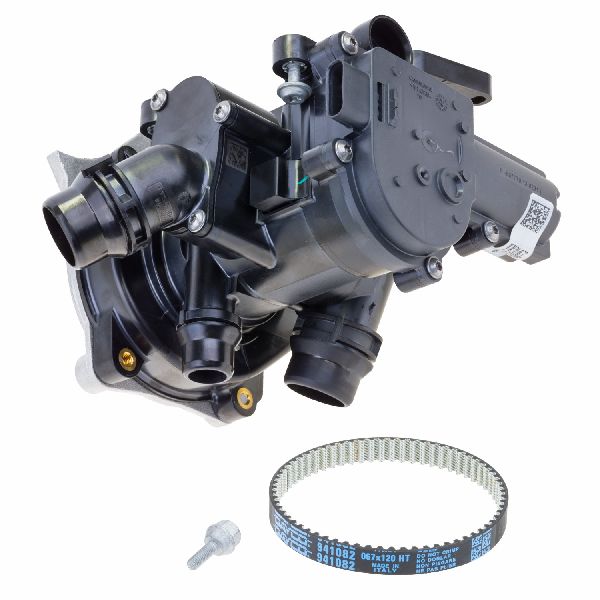
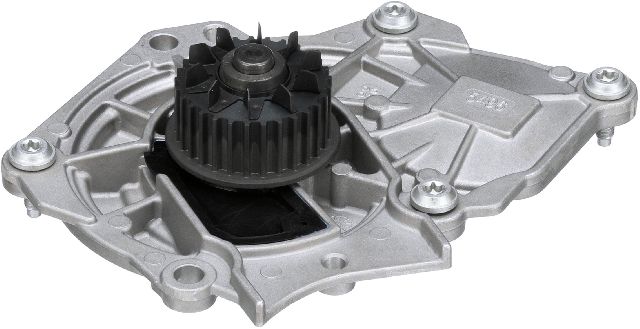
Est. part cost: $5-$30 - Leaking Water Pump / Thermostat Housing ⚪ Low Probability → Shop Integrated Thermostat Housing Assembly The EA888 Gen 3 engine has a known issue with the plastic water pump/thermostat housing cracking and leaking coolant. The NHTSA TSB VIN-4-A-PIN-2018 specifically links coolant leaks at the pump to this fault code. Leaking coolant drips down the engine and can saturate the oil temperature sensor's connector, causing a short or corrosion.
How to confirm: Visually inspect the water pump and thermostat housing area (on the front of the engine, below the intake manifold) for signs of pink/purple dried coolant residue. A faint sweet smell of coolant after driving is also an indicator. A cooling system pressure test can definitively confirm the leak.
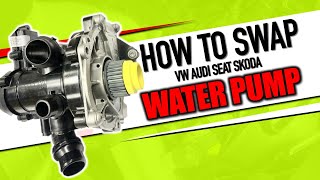
Typical fix: Replace the entire water pump and thermostat housing assembly. It is critical to also replace the oil temperature sensor and clean its connector, as the leaking coolant may have damaged them. Accessing the water pump requires removing the intake manifold. 🎬 Watch: Step-by-step guide to replacing the EA888 Gen 3 water pump.
Est. part cost: $200-$600
Rare But Worth Checking
- Faulty Powertrain Control Module (PCM): → Shop Engine Control Module (ECM) This is extremely rare. The PCM's internal circuit for the sensor could fail, but all other possibilities, especially sensor and wiring issues, should be exhausted before considering PCM replacement.
Diagnosis Steps
- Read the fault codes with an OBD-II scanner to confirm P0198 and any other related codes.
- Visually inspect the area around the water pump and thermostat housing for any signs of coolant leaks (pink/purple crusty residue). This is a known issue mentioned in TSB VIN-4-A-PIN-2018 and a common root cause.
- Safely raise the vehicle and locate the Engine Oil Level/Temperature sensor on the bottom of the oil pan. Visually inspect its electrical connector. Check if it is loose, and inspect the locking tab for damage.
- Inspect the wiring harness leading to the sensor for any signs of fraying, chafing against the oil pan, or contamination from leaking coolant.
- If no wiring or leak issues are visible, use a multimeter to check the connector's pins with the ignition on. On the 3-pin connector, you should find 12V power on Pin 1 and a good ground on Pin 2. The signal wire is Pin 3.
- If power and ground are good, the sensor itself (G266) is the most likely cause of failure.
- If a coolant leak is found, the water pump/thermostat assembly is the root cause and must be replaced. The oil temp sensor and connector should also be cleaned or replaced due to contamination.
Parts You'll Likely Need
- Engine Oil Level / Temperature Sensor
(OEM #06L907660C)— This is the most common component to fail, causing the P0198 code. It is a combined sensor for both oil level and temperature. This part number is widely cited for the EA888 Gen 3 engine.
Trusted brands: Hella, Bosch, NTK, Genuine VW/Audi
OEM price range: $80-$120
Aftermarket price range: $40-$75 - Water Pump and Thermostat Housing Assembly
(OEM #06L121111H (or newer revisions like 06L121111L, 06L121111M))— A known failure point on the EA888 Gen 3 engine. Leaks from this assembly can cause the P0198 code by contaminating sensor wiring, as noted in TSB VIN-4-A-PIN-2018. It's recommended to use the latest revised part number for improved longevity.
Trusted brands: INA, Pierburg, Genuine VW/Audi
OEM price range: $400-$600
Aftermarket price range: $200-$400 - Oil Level Sensor Connector Pigtail
(OEM #3D0973703)— Needed if the original connector is damaged, corroded from a coolant leak, or the locking tab is broken beyond a simple zip-tie fix.
Trusted brands: Genuine VW/Audi, Aftermarket repair kits
OEM price range: $20-$40
Aftermarket price range: $10-$20
Related Codes That Often Appear With This One
- P0196 — P0196 (Engine Oil Temperature Sensor Range/Performance) often appears with P0198 as both codes relate to implausible signals from the same sensor (G266).
- B104129 — This body control module code for 'Oil level thermal sensor - Open circuit/short circuit to B+' is also mentioned in TSB VIN-4-A-PIN-2018 alongside P0198, pointing to the same electrical fault.
Technical Service Bulletins (TSBs) & Recalls
- VIN-4-A-PIN-2018: A general information bulletin from VW that mentions a coolant leak at the coolant pump and lists P0198 as a related fault code along with a yellow oil warning light.
Platform-Specific Known Issues
- The 2017 Golf R features the EA888 Gen 3 engine, which is known for premature failure of the plastic water pump/thermostat housing assembly, leading to coolant leaks. TSB VIN-4-A-PIN-2018 directly connects this coolant leak to the P0198 fault, making it a critical diagnostic check on this specific vehicle.
Mechanic-Grade Diagnostic Values
- G266 Sensor Resistance (NTC Thermistor) — expected: Resistance decreases as temperature increases. Approx. 1.5-2.0 kΩ at 20°C (68°F) and 150-200 Ω at 100°C (212°F).. Failure: Infinite resistance (OL) indicates an open circuit inside the sensor, which is a direct cause for P0198.
- G266 Sensor Connector Pin Voltages (Key On, Engine Off) — expected: Pin 1 (Power): ~12V. Pin 2 (Ground): <1 Ohm resistance to chassis ground. Pin 3 (Signal): Variable voltage, should not be stuck at 0V or >4.7V.. Failure: Voltage on Pin 3 above 4.7V or equal to reference voltage indicates an open circuit, triggering P0198. No voltage on Pin 1 points to a fuse/power issue. High resistance on Pin 2 indicates a bad ground.
Hidden / Shadow Codes Worth Checking
- P0198 00: VW-specific scanners like VCDS or OBDeleven often show an extended description such as 'Engine Oil Temp. Sensor (G8); Open or Short to Plus'. The 'Open or Short to Plus' is more specific than the generic 'Circuit High' and strongly points to a wiring break or internal sensor failure. (see via VCDS, OBDeleven, or ODIS (dealership tool).)
Wiring & Ground Locations
- G266 Sensor Connector (T3b) — On the bottom of the engine oil pan, plugged directly into the sensor.. This 3-pin connector is the most common point of failure. Pin 1 is 12V power, Pin 2 is ground, and Pin 3 is the signal wire. A broken locking tab can cause it to vibrate loose, creating an open circuit and triggering P0198.
- Engine Sensor Ground Point — A primary ground distribution stud for many engine sensors is located on the chassis frame rail, behind the passenger-side headlight or behind the battery.. A corroded or loose main ground point can cause floating voltages and intermittent sensor faults, including P0198, although it would likely be accompanied by other sensor codes.
- Harness Chafe Point — The wiring harness for the G266 sensor runs up the side of the engine block, often routed near the A/C compressor and other accessories.. Forum users have reported the harness chafing against the A/C compressor or engine block, eventually wearing through the insulation and causing a short or break in the signal wire, leading to a P0198 code that is not fixed by sensor replacement.
Real Owner Repair Stories
- Ross-Tech Forums User 'MrNomad105' (2015 VW Golf (MK7 Platform)) — P0196 and P0198 codes present. Scan tool showed default oil temp of -48°C.
❌ Tried (didn't work) Initial diagnosis pointed towards a faulty sensor.
✅ What actually fixed it Upon physical inspection, the electrical connector on the sensor was found to be halfway off due to a broken locking tab. The user pushed the connector back on and secured it with safety wire, which resolved the fault codes permanently. - golfmk7.com forum user experience (paraphrased from multiple threads) (MK7 Golf R / GTI) — Persistent P0198 code, yellow oil warning light.
❌ Tried (didn't work) Replacing the oil level/temperature sensor (G266) did not fix the issue.
✅ What actually fixed it The wiring harness leading from the sensor was found to be chafed and broken near the A/C compressor pulley. The high-vibration area had worn through the wire's insulation over time. Repairing the broken wire by splicing in a new section and re-routing it securely fixed the problem.
OEM Part Supersession History
06L121111H→06L121111J, 06L121111K, 06L121111L, 06L121111M, and newer revisions like 06L121111P.— Continuous improvements by VW to address the high failure rate (cracking and leaking) of the plastic thermostat and water pump housing.
Heads up: All revisions are physically compatible, but it is critical to install the latest available part number to get the most durable version and avoid a repeat failure.06L907660C→No major supersessions noted for this generation.— This part appears to be stable for the EA888 Gen 3 engine.
Helpful Videos
We Have This Part in Stock




The information in this article is provided for general reference and educational purposes only. Vehicle specifications, procedures, and part compatibility can vary by production date, trim level, and region. Always consult your vehicle's factory service manual and verify part numbers before purchasing or performing repairs. Safety-critical components such as airbags, seat belts, and braking systems should be installed by a qualified professional.
- Volkswagen GOLF R:
- 🧭 Diagnostic Flowchart
- 🎬 Helpful Videos
- 🛍️ Shop This Part
- What's Unique About the 2017-2017 Volkswagen GOLF R
- Symptoms You May Notice
- Most Likely Causes
- Rare But Worth Checking
- Diagnosis Steps
- Parts You'll Likely Need
- Related Codes That Often Appear With This One
- Technical Service Bulletins (TSBs) & Recalls
- Platform-Specific Known Issues
- Mechanic-Grade Diagnostic Values
- Hidden / Shadow Codes Worth Checking
- Wiring & Ground Locations
- Real Owner Repair Stories
- OEM Part Supersession History
- 🎟️ Get 5% Off