

P0201 on 2009-2010 Saturn Outlook 3.6L: Injector Circuit Causes and Fixes
On a 2009-2010 Saturn Outlook, P0201 is most often caused by a damaged fuel injector wiring harness chafing against the engine, a known issue covered by GM TSB #PIP4924D. Before replacing the expensive and hard-to-reach fuel injector, thoroughly inspect the wiring harness where it runs over the valve covers and near the intake plenum. A shop repair can cost between $500 and $1,200 due to high labor.
- P0201 on a 2009-2010 Saturn Outlook is an electrical circuit fault for the cylinder 1 fuel injector.
- The most likely cause is NOT the injector itself, but a chafed wiring harness, as noted in GM TSB #PIP4924D.
- Always inspect the wiring harness thoroughly for damage before considering injector replacement.
- Repair is difficult and expensive due to the injector's location under the intake manifold, making professional service highly recommended.
- Do not drive extensively with this code, as it can lead to costly catalytic converter damage.
What's Unique About the 2009-2010 Saturn OUTLOOK
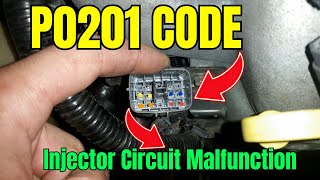
The Saturn Outlook and its GM Lambda platform siblings (Chevy Traverse, GMC Acadia, Buick Enclave) with the 3.6L V6 LLT engine have a well-documented vulnerability. A General Motors Technical Service Bulletin (TSB #PIP4924D) highlights that the fuel injector wiring harness is prone to chafing against engine parts like the intake plenum, valve cover bolts, fuel lines, and the side of the cylinder head. This makes a wiring fault a higher-than-usual probability for code P0201 🎬 Watch: Understanding the P0201 injector circuit malfunction code. on this specific vehicle. Additionally, the direct-injection design places the injectors under the intake manifold, making replacement a labor-intensive and costly job, with estimates often ranging from $900 to $1200.
Diagnostic Flowchart
Tap your situation to follow the diagnostic path that matches what you're seeing on this vehicle.
Symptoms You May Notice
- Check Engine Light is on
- Rough or shaking idle
- Engine misfire, which may feel like a stumble or hesitation
- Noticeable loss of power during acceleration
- Reduced fuel economy
- Vehicle may enter a reduced power 'limp mode'
- Hard starting or stalling
- Replacing the fuel injector without first thoroughly inspecting the wiring harness. Given the known TSB, a simple wiring repair could solve the problem for a fraction of the cost and labor.
Most Likely Causes
- Damaged Fuel Injector Wiring Harness 🔴 High Probability → Shop Engine Wiring Harness As documented in GM TSB #PIP4924D, the harness routing makes it susceptible to rubbing against the intake plenum, cylinder head, fuel lines, or valve cover bolts, causing wires to chafe and create an open or short circuit. The plastic loom can become brittle over time, exposing the wires to damage.
How to confirm: Visually inspect the wiring harness leading to the rear bank of cylinders (firewall side), especially where it makes contact with other engine components. A wiggle test on the harness while the engine is idling may cause the misfire to appear or disappear, confirming a wiring issue. Check for continuity on the control wire from the ECM connector to the injector connector.
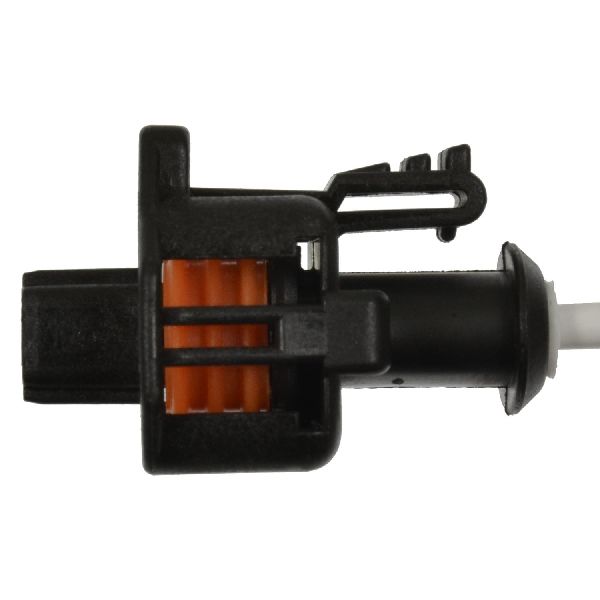
Typical fix: Repair the damaged section of wire using a weatherproof splice (solder is preferred) and heat-shrink tubing. Protect the repair with convoluted plastic loom and secure the harness away from the chafe point to prevent recurrence. If damage is at the connector, a new pigtail (like ACDelco PT2183 or Standard Motor Products S-1024) can be spliced in.
Est. part cost: $5-$40 - Failed Cylinder 1 Fuel Injector 🟡 Medium Probability → Shop Fuel Injector Direct injectors operate under high pressure and can fail electrically over time. The internal solenoid coil can burn out, creating an open circuit (infinite resistance) or short circuit (near-zero resistance).
How to confirm: After confirming the wiring is intact, disconnect the injector and measure its resistance with a multimeter. A reading far outside the typical 11-14 ohm range for the LLT engine indicates a bad injector. This test is difficult as it requires removing the intake manifold. A definitive test is to swap the cylinder 1 injector with another cylinder (e.g., cylinder 3) and see if the code follows (e.g., changes to P0203).
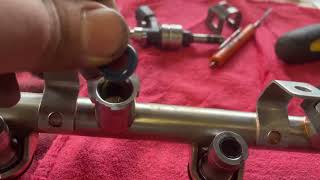
Typical fix: Replace the fuel injector. This requires removing the upper intake manifold. 🎬 See this walkthrough for removing the intake and injectors. It is highly recommended to replace the Teflon seal and decoupler at the same time. It's also wise to replace all injectors on that bank, as the labor is the main cost.
Est. part cost: $80-$200 - Corroded or Loose Injector Connector ⚪ Low Probability
How to confirm: Once the intake is removed for access, inspect the electrical connector for cylinder 1. Check for green or white corrosion, bent or pushed-out pins, or a loose fit. The retaining clip can sometimes fail, leading to a poor connection.
Typical fix: Clean the connector terminals with electrical contact cleaner and apply dielectric grease to prevent future corrosion. If the connector housing or terminals are damaged, replace the connector pigtail.
Est. part cost: $15-$30
Rare But Worth Checking
- Failed ECM Injector Driver: This is rare, but if the wiring and injector both test good, the fault may lie within the Engine Control Module (ECM). The internal transistor that fires the injector can fail. This should be the last resort after all other possibilities are exhausted and typically requires professional diagnosis with an oscilloscope.
- Blown Injector Fuse or Bad Relay: If multiple injector codes are present for one bank (e.g., P0201, P0203, P0205), a blown fuse or faulty relay that supplies power to that injector bank could be the cause. Check the under-hood fuse box for any fuses related to fuel injectors.
Diagnosis Steps
- Scan the vehicle for all DTCs. Note if P0301 or any other injector codes are present.
- Locate cylinder 1. On the transversely mounted 3.6L V6, the rear bank (against the firewall) is cylinders 1-3-5 from passenger side to driver side. Cylinder 1 is on the passenger side, closest to the firewall.
- Perform a thorough visual inspection of the fuel injector wiring harness. Pay close attention to the known chafe points identified in TSB #PIP4924D: where the harness runs over the valve covers, near the intake plenum, around fuel lines, and against the cylinder heads.
- If the engine can idle, carefully wiggle the harness in various spots to see if you can induce or stop the misfire, which would confirm a wiring issue.
- If wiring appears intact and the fault persists, the next step requires accessing the injector itself by removing the upper intake manifold. This is a labor-intensive step.
- Once the injector is accessible, disconnect it and test its resistance with a multimeter. Compare the reading to the manufacturer's specification (typically 11-14 ohms for the LLT engine). An open circuit (infinite resistance) or a short (near-zero resistance) confirms a failed injector.
- If the injector resistance is good, use a 'noid light' to test for an electrical pulse at the injector connector while cranking the engine. No flash indicates a problem upstream in the wiring or the ECM.
- A more advanced diagnostic step is to swap the cylinder 1 injector with another accessible injector (e.g., cylinder 3). Clear the codes and run the engine. If the code changes to P0203, the injector is faulty. If P0201 returns, the problem is in the wiring or ECM.
- If all tests point away from the injector and wiring, the final step is to suspect a faulty ECM, which requires professional diagnosis.
Parts You'll Likely Need
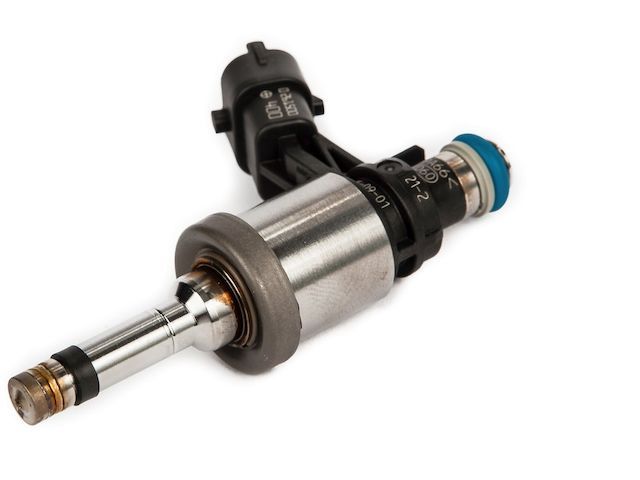
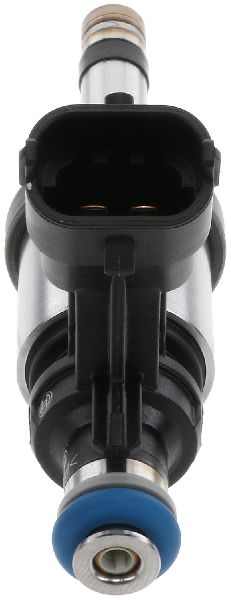
- Fuel Injector
(OEM #12638530)— This is the component that fails if the wiring harness is found to be in good condition. Due to the high labor cost to access it, it's critical to diagnose correctly before replacing.
Trusted brands: ACDelco, GM Genuine Parts, Bosch
OEM price range: $130-$200
Aftermarket price range: $80-$150 - Intake Manifold Gasket Set
(OEM #MS97240-1 (Fel-Pro), MS19966 (Mahle))— The intake manifold must be removed to access the fuel injectors. The gaskets are single-use and must be replaced 🎬 Watch: DIY guide for intake manifold and tune-up service. to prevent vacuum leaks.
Trusted brands: Fel-Pro, ACDelco, Mahle, Victor Reinz
OEM price range: $40-$70
Aftermarket price range: $25-$50 - Injector Connector Pigtail
(OEM #PT2183 (ACDelco))— If the wiring is damaged right at the connector, or the connector itself is corroded or broken, splicing in a new pigtail is the correct repair.
Trusted brands: ACDelco, Dorman
OEM price range: $25-$40
Aftermarket price range: $15-$25
Related Codes That Often Appear With This One
- P0301 — P0301 means 'Cylinder 1 Misfire Detected'. Since P0201 indicates the injector circuit has failed, no fuel is delivered to cylinder 1, which directly causes it to misfire.
- P0203, P0205 — If codes for other injectors on the same bank appear simultaneously, it strongly points to a shared problem like a damaged harness affecting multiple wires or a blown fuse/relay for that bank.
- P2146 or P2149 — These codes indicate a fault with an entire bank of injectors ('Fuel Injector Group A/B Supply Voltage Circuit'). If one of these appears with P0201, it strongly suggests a widespread wiring short or a problem with the ECM driver for that bank, as also noted in TSB PIP4924D.
Technical Service Bulletins (TSBs) & Recalls
- PIP4924D: Addresses engine misfires and various injector circuit DTCs, advising technicians to inspect the fuel injector wiring harness for chafing against engine components like the intake plenum, valve covers, and fuel lines.
- PI0090: Although for a different GM model, this bulletin also details a P0201 code caused by wire chafing near the alternator, instructing technicians to repair the wire and add protective tubing, highlighting a common failure pattern.
Platform-Specific Known Issues
- GM Technical Service Bulletin #PIP4924D explicitly documents that the fuel injector wiring harness is prone to chafing on the 3.6L engine, leading to codes like P0201. This is a primary diagnostic path that should be investigated before assuming the injector
Mechanic-Grade Diagnostic Values
- Fuel Injector Coil Resistance (3.6L LLT Engine) — expected: 11-14 Ohms when engine coolant is between 50-90°F (10-32°C).. Failure: A reading of infinity (Open Loop), near-zero (short), or a significant deviation between injectors indicates a failed injector.
- High Pressure Fuel System Pressure — expected: Can range from 500 PSI at idle to over 2,000 PSI under load.. Failure: This is not a direct test for P0201, which is electrical, but provides context for the system's operating parameters.
- Injector Circuit Inductive Kick Voltage — expected: A spike of approximately 50-90 Volts when the ECM grounds and then releases the circuit.. Failure: Absence of this spike, or a much lower voltage, when viewed on an oscilloscope, points to a problem in the ECM's driver circuit or wiring.
- Low-Pressure Fuel System Pressure — expected: 55-60 psi (380-410 kPa) at the fuel rail test port with the key on, engine off.. Failure: While not a direct cause for the electrical P0201 code, incorrect low-side pressure can indicate other fuel system health issues.
Scan Tool Commands That Help
- GM Tech 2 or GDS2: Fuel Injector Balance Test — This is a definitive test to identify a mechanically failing (clogged/leaking) injector when electrical tests pass. The tool commands each injector to fire for a precise duration and measures the corresponding fuel pressure drop. An uneven pressure drop for cylinder 1 confirms a faulty injector.
- GM Tech 2 or GDS2: Cylinder Power Balance / Injector Kill — This function allows a technician to disable individual injectors one by one while the engine is running. When a healthy cylinder is disabled, there should be a noticeable drop in RPM. If disabling cylinder 1 causes no change in engine RPM, it confirms that cylinder was not contributing, which is expected with a P0201 fault.
Wiring & Ground Locations
- G105 / G107 — Located on the engine block or cylinder head, often on the left (driver's) side, sometimes near the transmission bellhousing or starter.. These are primary grounds for the Engine Control Module (ECM). A loose or corroded connection at these points can cause a host of erratic electrical issues, including false sensor readings and incorrect operation of injector drivers, potentially leading to a P0201 code.
- Fuel Injector Harness Chafe Points — The harness running to the rear bank of injectors (Bank 1) where it passes over the valve cover, near the EVAP purge solenoid bracket, and against the side of the cylinder head.. This is the specific failure location noted in TSB #PIP4924D. The vibration of the engine causes the harness to rub through its protective loom and wire insulation, creating an open or short in the cylinder 1 injector circuit.
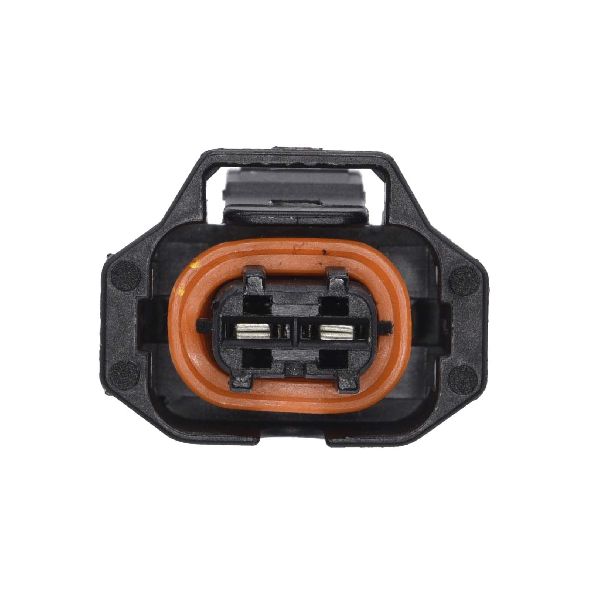
- Cylinder 1 Injector Connector — On the fuel rail, connected to the rearmost injector on the passenger side of the engine, against the firewall.. This is the final connection point. The two pins are for the supply voltage and the ground-side control signal from the ECM. Testing for voltage and the pulse signal occurs here.
Real Owner Repair Stories
- GMTNation Forum User (GMC Envoy (similar GM platform)) — Running rough, missing badly, codes P0201, P0301, and P0300.
❌ Tried (didn't work) Swapped coils and spark plugs between cylinders; the misfire code did not move., Tested injector resistance (ohms), which was good., Checked wiring harness for continuity and shorts, which also tested good initially.
✅ What actually fixed it After pulling the intake manifold, the user found the injector wiring loom was crispy and looked chewed on. Despite testing good for continuity, they replaced all injectors and the injector wiring harness, which solved the problem. This highlights that a visual inspection revealing heat damage or brittleness can be as important as an electrical test.
OEM Part Supersession History
12638530→12669384— Standard part lifecycle update, likely for minor revisions in manufacturing or materials.
Heads up: The original part number 12638530 and its ACDelco equivalent 217-3445 are correct for the 2009-2010 LLT engine. The superseding part should be cross-referenced by VIN to ensure compatibility.
Model Year Variations Within This Range
- 2009-2011 (LLT Engine) vs 2012+ (LFX Engine): The fuel injectors have different electrical resistance. The 2009-2010 Outlook with the LLT engine uses high-impedance injectors (~11-14 Ohms), while later models with the LFX engine use low-impedance injectors (~1.2-1.8 Ohms). Using the wrong diagnostic value will lead to an incorrect diagnosis.
Helpful Videos
We Have This Part in Stock


The information in this article is provided for general reference and educational purposes only. Vehicle specifications, procedures, and part compatibility can vary by production date, trim level, and region. Always consult your vehicle's factory service manual and verify part numbers before purchasing or performing repairs. Safety-critical components such as airbags, seat belts, and braking systems should be installed by a qualified professional.
- Saturn OUTLOOK:
- 🧭 Diagnostic Flowchart
- 🎬 Helpful Videos
- 🛍️ Shop This Part
- What's Unique About the 2009-2010 Saturn OUTLOOK
- Symptoms You May Notice
- Most Likely Causes
- Rare But Worth Checking
- Diagnosis Steps
- Parts You'll Likely Need
- Related Codes That Often Appear With This One
- Technical Service Bulletins (TSBs) & Recalls
- Platform-Specific Known Issues
- Mechanic-Grade Diagnostic Values
- Scan Tool Commands That Help
- Wiring & Ground Locations
- Real Owner Repair Stories
- OEM Part Supersession History
- Model Year Variations Within This Range
- 🎟️ Get 5% Off