

P0202 on 2006-2013 Audi A3 2.0T: Injector Circuit Malfunction Cylinder 2 Causes and Fixes
On a 2006-2013 Audi A3 2.0T, code P0202 is most often caused by a failed fuel injector in cylinder 2. A faulty injector wiring harness, which becomes brittle from engine heat, is the second most likely cause. Expect to pay around $40-$80 for a quality aftermarket injector (Bosch is an OEM supplier). Before replacing parts, swap the injector from cylinder 2 with another cylinder to see if the fault code follows the injector.
- P0202 on your A3 2.0T FSI is an electrical fault, most likely a bad injector or brittle wiring.
- Always swap the suspect injector to another cylinder to confirm if the injector is the problem before buying parts.
- The injector wiring harness is a known weak point on this engine due to heat degradation; inspect it carefully.
- Driving with a flashing check engine light can cause expensive catalytic converter damage.
- When replacing an FSI injector, the Teflon seals must also be replaced using a special tool.
What's Unique About the 2006-2013 Audi A3
The 2.0T FSI (Fuel Stratified Injection) engine in the Audi A3 (8P generation), specifically the EA113 series (like the BPY engine code), is a direct-injection design. While efficient, these engines are known for carbon buildup on intake valves and injectors. More specific to this code, the wiring harness that connects to the fuel injectors is routed in a high-heat area of the engine bay. Over many years and heat cycles, the insulation on these wires becomes extremely brittle, cracks, and flakes off, leading to shorts or open circuits. This harness degradation is a very common failure point on this platform and a primary cause for P020x codes.
Symptoms You May Notice
- Check Engine Light is on (may be flashing if a misfire is severe)
- Rough or uneven idle
- Engine misfires, especially under load.
- Noticeable loss of power and poor acceleration.
- Increased fuel consumption.
- Smell of unburned fuel from the exhaust.
- Engine may be hard to start or may not start at all.
- Replacing the spark plug or ignition coil for cylinder 2. While these parts can cause a misfire (P0302), they will not cause an injector circuit code like P0202, which is specifically an electrical fault detected by the ECM for the injector circuit.
Most Likely Causes
- Failed Fuel Injector (Cylinder 2) 🔴 High Probability → Shop Fuel Injector The internal coil windings of the injector can fail, creating an open circuit or high resistance. While carbon buildup is a known issue on FSI engines, electrical failure is the direct cause for a P0202. These injectors operate under high pressure and temperature, leading to eventual failure.
How to confirm: Swap the cylinder 2 injector with one from another cylinder (e.g., cylinder 1). Clear the codes and run the engine. If the code changes to P0201, the injector is faulty. If P0202 returns, the issue is with the wiring or ECM. A multimeter can also be used to check the resistance of the injector's internal coil. A good injector will have a specific resistance (typically 1.4-1.8 ohms for FSI, much lower than TDI injectors), while a failed one may show infinite resistance (open circuit).
Typical fix: Replace the faulty fuel injector and its single-use Teflon seals. It is often recommended to replace all four injectors at the same time, especially on higher mileage vehicles, as they tend to fail around the same time. Using a special tool to resize the new Teflon seals is critical for preventing leaks.
Est. part cost: $40-$120 per injector - Damaged Injector Wiring or Connector 🟡 Medium Probability The engine wiring harness, particularly the sub-harness for the fuel injectors, is exposed to extreme heat and becomes brittle over time. The insulation cracks and falls off, especially at the connectors, causing wires to short against each other or the engine, or to break entirely (open circuit). This is a very well-documented issue on the 2.0T FSI BPY engine.
How to confirm: Carefully perform a visual inspection of the wiring harness leading to cylinder 2's injector. Gently flex the wires to see if the insulation crumbles. Check for any signs of cracking, melting, or corrosion. Check the connector for a secure fit and clean pins. Use a noid light on the cylinder 2 connector; it should flash when the engine is cranked, confirming a pulse signal from the ECM. If no pulse is present, the wiring or ECM driver is the issue.
Typical fix: Replace the injector connector pigtail or, more commonly, the entire fuel injector sub-harness. Due to the widespread brittleness, repairing a single wire is often a temporary fix. An updated harness repair kit may be available. Part number 06F971627 is a common repair harness for this engine family.
Est. part cost: $15-$50 for a pigtail, $100-$200 for a full injector harness
Rare But Worth Checking
- Faulty Engine Control Module (ECM): → Shop Engine Control Module (ECM) This is the least likely cause. The internal driver circuit for the injector within the ECM can fail, but this is rare. All other possibilities, especially the injector and wiring, must be exhaustively ruled out before condemning the ECM. This typically requires professional diagnosis, which may involve an overlay of the wiring from the ECM to the injector to confirm the ECM is at fault.
- Faulty Low-Pressure Fuel Pump Control Module: The low-pressure fuel pump in the tank is controlled by a dedicated module (J538). On the A3, this is located under the rear seat. While a failure here typically affects all cylinders and might throw different codes (like P2146/P2149), an intermittent or failing module could potentially cause erratic voltage supply to the entire fuel system, which might manifest as a single injector circuit fault under specific conditions. This is an edge case but worth considering if direct injector and wiring checks are inconclusive.
Diagnosis Steps
- Read the fault codes with an OBD-II scanner to confirm P0202 and note any other codes present, such as P0302.
- Perform a careful visual inspection of the wiring harness and connector for fuel injector #2. Look for obvious signs of damage, such as cracked/crumbling insulation, melted plastic, or corrosion on the connector pins.
- If wiring appears intact, test the injector. The easiest field test is to swap the cylinder 2 fuel injector with another one (e.g., cylinder 1).
- Clear the codes, start the engine, and let it run. Re-scan for codes.
- If the code has moved to P0201 (Cylinder 1 Injector Circuit), the fuel injector itself is faulty and must be replaced.
- If code P0202 returns, the problem lies in the wiring or the ECM. To test the injector's resistance directly, disconnect it and use a multimeter set to Ohms. Compare the reading to the other injectors. A significant difference or an open circuit (infinite resistance) confirms a bad injector. A known good resistance for FSI injectors is very low, around 1.4-1.8 Ohms. TDI injectors have a much higher resistance (around 200k Ohms), so do not confuse the specs.
- To test the wiring, use a noid light on the cylinder 2 injector connector. It should flash when the engine is cranked, indicating the ECM is sending a pulse signal.
- Use a multimeter to check for 12V power on one pin of the connector (with ignition on) and check for continuity to ground on the other wire leading back to the ECM (this is the pulse ground).
- If all wiring tests pass and the fault does not move with the injector, the ECM may be faulty. This is rare and should be confirmed by a professional before replacement.
Parts You'll Likely Need
- Fuel Injector
(OEM #06F906036A)— This is the most common cause of a P0202 code on this engine. The internal coil fails, creating an open circuit. This part number is specific to the FSI engine.
Trusted brands: Bosch (OEM), Hitachi
OEM price range: $100-$150
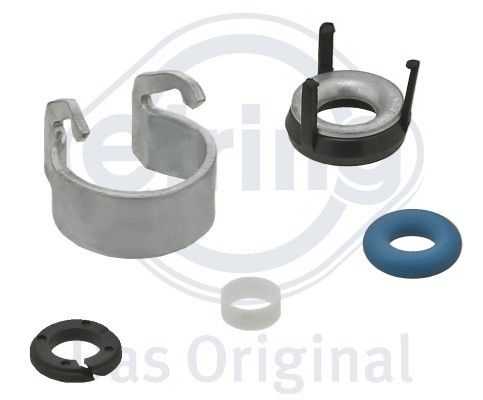
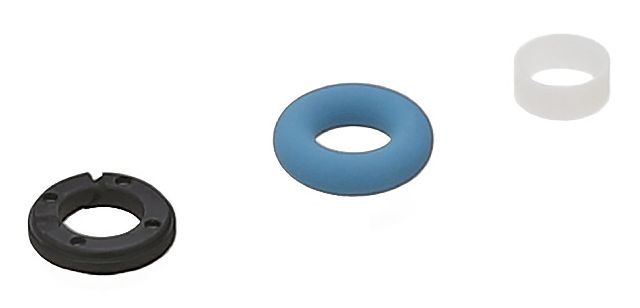
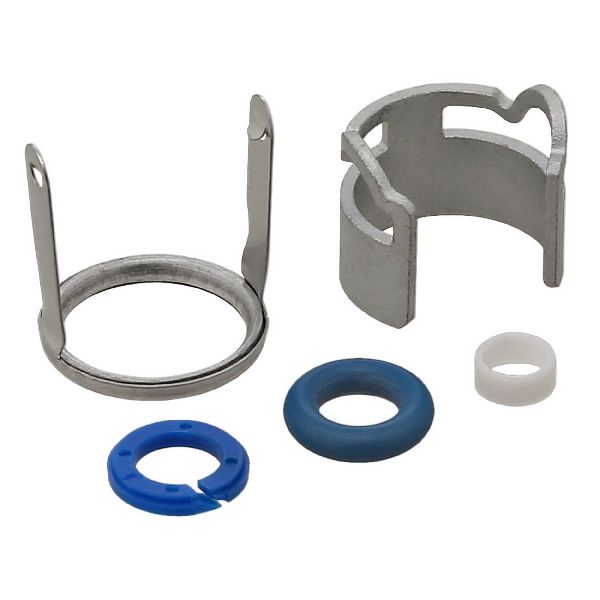
Aftermarket price range: $40-$80 - Fuel Injector Seal Kit
(OEM #06D998907)— The Teflon seals on FSI injectors are single-use and must be replaced anytime an injector is removed and reinstalled to prevent fuel and compression leaks. A special tool is required to properly install and size the new seals.
Trusted brands: Bosch, Elring, Victor Reinz
OEM price range: $15-$25
Aftermarket price range: $10-$20 - Fuel Injector Wiring Harness Repair Kit
(OEM #06F971627)— If the wiring is found to be brittle and cracked, replacing the entire injector sub-harness is the most reliable repair. Verify fitment before ordering.
Trusted brands: Genuine VW/Audi
OEM price range: $150-$250
Aftermarket price range: $75-$125
Related Codes That Often Appear With This One
- P0302 — This code means "Cylinder 2 Misfire Detected." Since P0202 indicates a problem with the fuel supply to cylinder 2, a misfire is a direct and expected consequence.
- P0201, P0203, P0204 — If multiple injector circuit codes are present, it is more likely to be a widespread wiring issue (like a failed injector sub-harness), a problem with the power supply/ground for the injectors, or a failing ECM rather than multiple injectors failing simultaneously.
- P2146, P2149 — These codes for 'Fuel Injector Group A/B Supply Voltage Circuit/Open' point to a problem with the power supply to a bank of injectors, rather than an individual injector's control circuit. If seen with P0202, this strongly suggests a wiring harness issue, a faulty fuel pump control module, or a bad ground connection common to the injectors.
Technical Service Bulletins (TSBs) & Recalls
- TT 97-18-02: 'Cylinders 1,2,3 or 4 - Injector Circuit Faults P0201, P0202, P0203 or P0204' - Recommends inspecting the injector harness and its connections for faults.
Platform-Specific Known Issues
- A Volkswagen/Audi Technical Tip (TT 97-18-02) was issued for injector circuit faults (P0201-P0204) on other models, pointing to harness connection issues as the cause and advising inspection of the 8-pin injector harness and its connections. While not for the A3 specifically, it confirms VAG is aware of injector harness problems.
- A user on the Ross-Tech forums with a 2006 A3 2.0T BPY described how their injector wiring harness insulation crumbled apart while performing other maintenance, leading to misfire codes. This is a real-world example of the common harness failure.
Mechanic-Grade Diagnostic Values
- Fuel Injector Coil Resistance (FSI Engine) — expected: 1.4 - 1.8 Ohms. Failure: A reading of 0 Ohms (short circuit) or infinite/OL (open circuit).
- Injector Pulse Width (ms) at idle — expected: ~1-5 ms. Failure: A value of 0 ms for cylinder 2 would indicate the ECM has shut down the injector. Significantly different values from other cylinders can also indicate a problem.
- Fuel Trim at Idle (Additive) - VCDS Block 032 — expected: -10% to +10%. Failure: A large positive value (e.g., >10%) can indicate the ECU is trying to compensate for a lack of fuel, which could be caused by a faulty injector. However, P0202 is an electrical code, so trims are a secondary symptom.
- High-Pressure Fuel Rail Pressure at Idle - VCDS Block 106 — expected: ~50 bar (725 PSI). Failure: While not a direct indicator for P0202, erratic or low pressure could point to wider fuel system issues. This check is more for ruling out other problems.
Scan Tool Commands That Help
- VCDS (Ross-Tech): Engine -> Output Tests — This allows the user to sequentially test various engine outputs, including the fuel injectors. With the engine off, you can command each injector to fire and listen for an audible click. This can help confirm if the injector is mechanically responding to the ECM's signal.
- VCDS (Ross-Tech): Engine -> Meas. Blocks -> Group 032 — To check long-term and short-term fuel trims. While P0202 is an electrical fault, seeing how the ECU is adapting fuel delivery can provide context about the engine's overall health and response to the fault.
- VCDS (Ross-Tech): Engine -> Meas. Blocks -> Groups 106, 140, 230 — To monitor high-pressure fuel rail pressure. This helps differentiate a single injector circuit issue from a systemic fuel pressure problem affecting all cylinders.
Wiring & Ground Locations
- Injector Harness Connector (8-pin) — Located under the intake manifold, near the throttle body. This connector serves as the junction between the main engine harness and the dedicated injector sub-harness.. This is a critical point for testing. Instead of removing the intake manifold to access the injectors directly, you can perform resistance and voltage tests for all four injectors at this single connector if you have the pinout. A forum post mentions an 8-wire connector for the injectors under the throttle body.
- Ground Point 12 — On the left side of the engine compartment, on the frame rail/longitudinal member.. This is a primary grounding point for components in the engine bay. A corroded or loose connection here can cause a host of intermittent electrical issues, including injector circuit faults. Always check major grounds when diagnosing electrical codes.
- Ground Point 671 — On the front of the left longitudinal member.. Another key engine bay ground point. Verifying that the main engine harness grounds are clean and tight is a crucial step that is often overlooked.
- D140 - Connection (injectors) — This is a designation within the wiring diagram for a splice or connection within the engine pre-wiring harness that distributes power to the injectors.. A failure at this internal harness connection could cut power to one or more injectors, leading to circuit codes. This is not a physically accessible connector but a point of failure within the harness itself.
Real Owner Repair Stories
- Ross-Tech Forums user (2006 Audi A3 2.0T FSI BPY, ~141k miles) — Flashing CEL, random misfires, and a specific P0304 (Cylinder 4 Misfire).
❌ Tried (didn't work) Replaced PCV system and various gaskets to fix vacuum leaks., Replaced N205 valve., Swapped ignition coils and spark plugs with no change in the misfire location.
✅ What actually fixed it The user reported that while handling the wiring harness near the back of the engine, the insulation "crumbled back where it passes the rear toward turbo" and noted "a lot of chaffing and cracked insulation on wires." Although the user was still diagnosing a misfire code (P0304) and not an injector circuit code, this is a direct, first-hand account of the exact wiring harness degradation that is the primary cause of electrical codes like P0202 on this platform. The fix is to repair or replace the injector wiring harness.
OEM Part Supersession History
06F906036A→06F906036F— Part revision, likely for improved reliability or manufacturing process changes. The 'F' revision is often cited as a more robust injector.
Heads up: Both are generally compatible with EA113 FSI engines, but it is best practice to replace injectors as a full set with the same part number and revision to ensure balanced fuel delivery.
Model Year Variations Within This Range
- 2006-2008.5: These years primarily used the EA113 engine (e.g., BPY code), which is timing belt-driven and known for the brittle injector harness issue and cam follower wear on the high-pressure fuel pump. The fixes in this guide are most applicable here.
- 2008.5-2013: These later years transitioned to the EA888 Gen 1/2 engine (e.g., CCTA/CBFA codes). This engine is timing chain-driven and has its own set of common issues, such as timing chain tensioner failure and higher oil consumption. While it can still suffer from injector faults, the brittle wiring harness is less of a signature failure than on the EA113.
Diagnostic Flowchart
Other Known Issues on This Vehicle
Issues unrelated to this code that are worth knowing about as an owner of this generation:
- HPFP Cam Follower Wear 🔴 High — Extremely common. Considered a maintenance item. Should be inspected every 10,000-15,000 miles. Failure can destroy the high-pressure fuel pump and camshaft. (Ref: VW/Audi has TSBs regarding fuel pressure codes that recommend inspecting the follower first.)
- PCV Valve Failure 🟠 Medium — Common failure, especially on higher mileage vehicles. Can cause a loud whistling noise, high oil consumption, rough idle, and boost leaks. (Ref: An updated PCV design was released to address the high failure rate of the original diaphragm.)
- Intake Valve Carbon Buildup 🟠 Medium — Inevitable on all direct-injection engines. Requires manual cleaning (walnut blasting) every 60,000-80,000 miles to restore performance and prevent misfires.
- Diverter Valve (DV) Failure 🟠 Medium → Shop Turbocharger — The original diaphragm-style DV is prone to tearing, causing a loss of boost pressure. It's a common failure, especially on tuned vehicles. (Ref: An updated piston-style DV (from the Mk6 GTI) is a common and recommended upgrade.)
- High Oil Consumption 🟠 Medium — Some level of oil consumption is considered normal by Audi, but excessive consumption can be caused by PCV issues or, in more severe cases, worn piston rings. (Ref: There was a class-action lawsuit for oil consumption on the later EA888 engine, but the EA113 can also consume oil.)
- Timing Belt and Water Pump 🔴 High — This is a critical maintenance item. The timing belt, tensioners, and water pump must be replaced at the manufacturer's recommended interval (typically 90k-110k miles). Failure of the belt is catastrophic for the engine.
Used vs. New Parts: Buying Guide for This Vehicle
When a used part is the smart pick: For this repair, using used parts is generally not recommended. The primary failure modes for both the injector (internal wear) and the wiring harness (heat/age degradation) mean that a used part from a donor vehicle is likely to have a limited remaining lifespan or suffer from the same issues.
Donor-vehicle mileage cap: roughly under 80000 miles for the part to have meaningful remaining life.
What to inspect on the donor part:
- If considering a used injector, only purchase from a reputable source that has professionally cleaned, flow-tested, and warrantied the part.
- For a wiring harness, visually inspect for any signs of cracking, crumbling insulation, or previous repairs. If it's not flexible and looks new, pass on it.
OEM-only on this vehicle (don't cheap out):
- Fuel Injector Wiring Harness: Due to the high heat environment and specific failure mode, a new Genuine VW/Audi or OEM-quality replacement harness is the only reliable long-term fix.
Aftermarket brands forum-validated for this vehicle:
- Bosch (Fuel Injectors - OEM supplier)
- Hitachi (Fuel Injectors)
Brands owners have reported issues with on this vehicle:
- Unknown, no-name brand injectors from online marketplaces. Fuel delivery is critical, and poorly manufactured injectors can cause poor performance, engine damage, or fuel leaks.
Real Owner Stories
Aggregated from forums and TSBs cited above. Mileages and costs reflect what owners reported in those sources.
2006 Audi A3 2.0T FSI BPY
Symptoms: The injector wiring harness insulation crumbled apart while performing other maintenance, leading to misfire codes.
What fixed it: Replacement of the injector wiring harness due to brittle insulation.
Source hint: Ross-Tech Forums - '2006 Audi A3 2.0t FSI BPY - #4 misfire' (May 12, 2021)
Related OBD-II Codes
Frequently Asked Questions
Does Technical Tip 97-18-02 apply to my Audi A3 if I have an injector circuit fault?
What is the specific resistance I should look for when testing the cylinder 2 injector on my 2.0T FSI?
Is there a specific part number for the injector harness repair on the BPY engine?
Why is the wiring harness on the 2006-2013 Audi A3 2.0T prone to causing P0202?
Should I replace just the cylinder 2 injector or all of them?
Are there any special tools required to fix a P0202 injector failure?
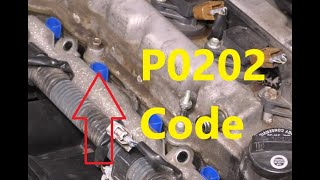
Helpful Videos

We Have This Part in Stock

The information in this article is provided for general reference and educational purposes only. Vehicle specifications, procedures, and part compatibility can vary by production date, trim level, and region. Always consult your vehicle's factory service manual and verify part numbers before purchasing or performing repairs. Safety-critical components such as airbags, seat belts, and braking systems should be installed by a qualified professional.
- Audi A3:
- 🧭 Diagnostic Flowchart
- 🎬 Helpful Videos
- 🛍️ Shop This Part
- What's Unique About the 2006-2013 Audi A3
- Symptoms You May Notice
- Most Likely Causes
- Rare But Worth Checking
- Diagnosis Steps
- Parts You'll Likely Need
- Related Codes That Often Appear With This One
- Technical Service Bulletins (TSBs) & Recalls
- Platform-Specific Known Issues
- Mechanic-Grade Diagnostic Values
- Scan Tool Commands That Help
- Wiring & Ground Locations
- Real Owner Repair Stories
- OEM Part Supersession History
- Model Year Variations Within This Range
- Other Known Issues on This Vehicle
- Used vs. New Parts: Buying Guide for This Vehicle
- Real Owner Stories
- 2006 Audi A3 2.0T FSI BPY
- Related OBD-II Codes
- Frequently Asked Questions
- 🎟️ Get 5% Off