

P0203 on 2009-2014 Buick LaCrosse: Injector Circuit Fixes & Causes
P0203 on a Buick LaCrosse means a fault in the cylinder 3 fuel injector circuit. The most common causes are a faulty fuel injector or a damaged wiring harness, which is a known issue on these vehicles per a GM TSB. Expect to pay $40-$120 for a new injector, with DIY repair being easy on 3.8L V6 engines but difficult on 3.6L V6 engines due to the injector's location under the intake manifold.
- P0203 points specifically to an electrical issue with the cylinder 3 injector circuit, not an ignition problem.
- Before buying parts, thoroughly inspect the injector wiring harness for damage, as this is a known issue on these cars per a GM TSB.
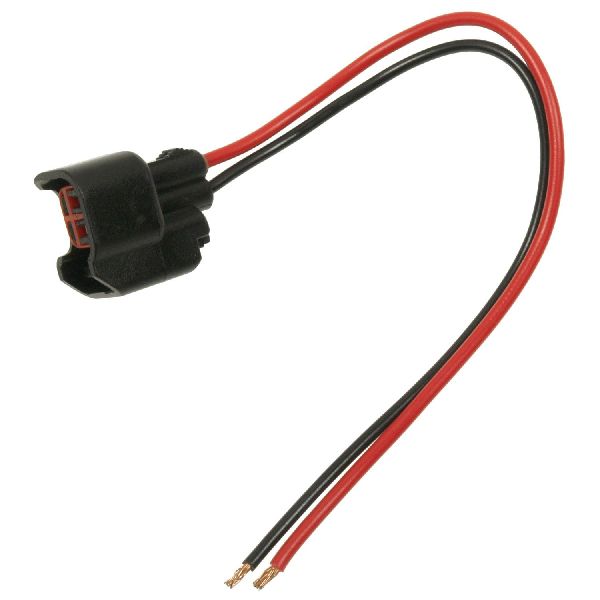
- The most likely parts needed are a new fuel injector or a wiring connector pigtail.
- Be aware of which engine your LaCrosse has. The repair is much more difficult and costly on the 3.6L V6 than on the 3.8L V6 due to the location of cylinder 3.
What's Unique About the 2009-2014 Buick LACROSSE
For the 2009-2014 LaCrosse, the key issue is the location of cylinder 3, which differs dramatically between engines. On the 2009 model's 3.8L V6, cylinder 3 is conveniently located in the front, making diagnosis and replacement simple. However, on the 2010-2014 models with the transverse 3.6L V6, cylinder 3 is on the rear bank (Bank 1) against the firewall, requiring removal of the intake manifold for access. 🎬 See this walkthrough on removing the 3.6L intake manifold. Additionally, a widely-cited GM Technical Service Bulletin (TSB #PIP4924D) specifically calls out the injector wiring harness on these vehicles as being prone to chafing and damage against engine components, which can trigger this code.
🎬 Watch: Understanding the causes and fixes for the P0203 code.Diagnostic Flowchart
Tap your situation to follow the diagnostic path that matches what you're seeing on this vehicle.
Generation note: The 2009-2014 range covers two LaCrosse generations. The 2009 model is the final year of the first generation (2005-2009) and primarily used the 3.8L V6. The 2010-2014 models are the second generation (2010-2016) and used different engines, most commonly the 2.4L I4 and the 3.0L/3.6L V6. This distinction is critical for locating cylinder 3 and sourcing the correct parts, as the 3.6L V6 requires significant labor to access the rear bank injectors.
Symptoms You May Notice
- Check Engine Light is on
- Engine runs rough or idles poorly
- Noticeable engine misfire or hesitation during acceleration
- Reduced engine power and sluggish response
- Decreased fuel economy
- Hard starting or extended cranking
- Engine may stall, especially when coming to a stop
- Erratic movement of the RPM needle on the tachometer
- Replacing the spark plug or ignition coil for cylinder 3. While these can cause a misfire (P0303), the P0203 code specifically points to an electrical fault in the fuel injector's circuit, not the ignition system. Always diagnose the P0203 code first when it appears with P0303.
Most Likely Causes
- Damaged Fuel Injector Wiring or Connector 🔴 High Probability → Shop Fuel Injector A specific GM Technical Service Bulletin (PIP4924D) highlights that the fuel injector wiring harness is susceptible to rubbing through (chafing) against the intake plenum, valve cover bolts, fuel lines, or the side of the cylinder head. Other bulletins like 21-NA-149 also point to chafing against the ECM/TCM bracket, upper control arm, and shock tower bolt. This can cause an open or short circuit, which is a very common trigger for P0203 on this platform.
How to confirm: Visually inspect the entire length of the wiring harness leading to the cylinder 3 injector. Pay close attention to points where the harness touches other engine components, as noted in TSBs. Check the injector's electrical connector for corrosion, bent/loose pins, or a loose fit. A "wiggle test" on the harness and connector while the engine is running may cause the misfire to change, indicating a wiring fault.
Typical fix: Repair the damaged section of wire using solder and heat-shrink tubing. If the connector is damaged, replace the connector pigtail. In cases of widespread damage, the entire injector harness may need replacement.
Est. part cost: $15-$50 for a connector pigtail - Faulty Cylinder 3 Fuel Injector 🔴 High Probability → Shop Fuel Injector Fuel injectors can fail electrically (internal coil shorts/opens) or mechanically (clogging). While not unique to this platform, it is a frequent failure point after wiring issues are ruled out.
How to confirm: After confirming the wiring is good, test the injector. You can check its internal resistance with a multimeter (see specific values below). The most definitive test is to swap the cylinder 3 injector with another cylinder's injector (e.g., cylinder 1). Clear the codes and run the engine. If the trouble code moves to the new cylinder (e.g., P0201), the injector is faulty.
Typical fix: Replace the cylinder 3 fuel injector. It is highly recommended to replace the O-rings and seals for any injectors that are removed. On the 3.6L V6, since the intake manifold must be removed, many owners choose to replace all three rear-bank injectors at the same time to save on future labor.
Est. part cost: $40-$130, depending on engine - Faulty Powertrain Control Module (PCM) ⚪ Low Probability → Shop Engine Control Module (ECM)
How to confirm: This should be the last resort after definitively ruling out the injector and all wiring. A professional shop can use advanced tools to test the injector driver circuit within the PCM. If a noid light shows no pulse at the injector connector and the wiring has been verified as good from the connector to the PCM, the PCM is the likely culprit.
Typical fix: Replace and program the PCM. This typically requires a professional with the correct software.
Est. part cost: $300-$800
Rare But Worth Checking
- Loose or Corroded Fuel Rail Pressure Sensor Connector:
Diagnosis Steps
- Verify the code with a reliable OBD-II scanner. Check for any other codes, especially P0303 or other injector codes (P020X).
- Identify your engine (3.8L, 3.6L, or 2.4L) to determine the location of cylinder 3. For the transverse 3.6L V6, the rear bank (against the firewall) is Bank 1, containing cylinders 1, 3, and 5 from passenger to driver side. The front bank is Bank 2 (2, 4, 6).
- Perform a thorough visual inspection of the fuel injector wiring harness for any signs of chafing, melting, or damage, as noted in TSB PIP4924D. Pay special attention to where the harness contacts the intake manifold, valve covers, and fuel lines.
- Inspect the electrical connector at the cylinder 3 injector for corrosion, damage, or a loose connection. Ensure the locking tab is secure.
- Use a noid light to test for a pulse signal at the injector connector. With the engine running, the light should flash, indicating the PCM is sending a signal. If there is no flash, the problem is in the wiring or PCM. Note: For Direct Injection engines (LLT/LFX), a standard noid light may not work due to the higher voltage (65V); a lab scope is the definitive tool.
- If a pulse is present, turn off the engine and use a multimeter to check the resistance of the fuel injector. Compare the Ohm reading to another cylinder's injector. A reading that is significantly different or shows an open circuit (infinite resistance) indicates a bad injector.
- If accessible, swap the cylinder 3 injector with an adjacent one (e.g., cylinder 1). Clear the codes and run the engine. If the code changes to P0201, the injector is confirmed to be the faulty part.
- If the wiring and injector test good, and there is no pulse signal, the wiring harness must be checked for continuity between the injector connector and the PCM connector. If the wiring is good, the issue may be a rare fault with the PCM's injector driver.
Parts You'll Likely Need
- Fuel Injector (3.6L V6, 2012-2014 LFX)
(OEM #12634126)— Specific injector for the later second-generation V6 engine. This part number is confirmed for 2012-2016 LaCrosse models with the 3.6L V6.
Trusted brands: ACDelco (GM OE), Bosch, Standard Motor Products
OEM price range: $90-$130
Aftermarket price range: $50-$80 - Fuel Injector (3.0L/3.6L V6, 2010-2011 LLT)
(OEM #12638530)— Injector for the early second-generation V6 engines. Superseded by part numbers like 12669384.
Trusted brands: ACDelco (GM OE), GB Remanufacturing
OEM price range: $80-$120
Aftermarket price range: $45-$75 - Fuel Injector (2.4L I4)
(OEM #12633789)— This is the most common failure point after ruling out wiring damage. This part number is for the 2.4L I4 engine.
Trusted brands: ACDelco, Bosch, Standard Motor Products
OEM price range: $80-$120
Aftermarket price range: $40-$70 - Fuel Injector (3.8L V6, 2009)
(OEM #217-2255)— This is an ACDelco kit part number for the first-generation 3.8L V6 engine.
Related Codes That Often Appear With This One
- P0303 — P0303 is 'Cylinder 3 Misfire Detected'. Since the P0203 code indicates a problem with fuel delivery to cylinder 3, it almost always results in a misfire in that same cylinder.
- P0200 — 'Injector Circuit Malfunction'. This is a more general code that may appear alongside P0203 if there is a broader issue with the injector system or wiring harness.
- P0201, P0202, P0204, P0205, P0206 — If multiple injector circuit codes are present, it strongly suggests a wiring harness issue (like the chafing described in TSB PIP4924D) or a PCM failure, rather than multiple injectors failing simultaneously.
Technical Service Bulletins (TSBs) & Recalls
- PIP4924D: Warns of a Service Engine Soon light and misfire with various injector codes (including P0203) due to the fuel injector wiring harness rubbing through against engine components. This TSB applies to 2009-2013 models with the 3.0L and 3.6L V6 engines.
Platform-Specific Known Issues
- TSB #PIP4924D specifically warns of a chafed fuel injector wiring harness on 2009-2014 LaCrosse models (among other GM vehicles), which can cause a range of injector circuit codes, including P0203. Common chafe points are against the intake plenum, valve cover bolts, and fuel lines.
- The difficulty of this repair is highly dependent on the engine. On the 2009 3.8L V6, cylinder 3 is in the front bank and easy to access. On 2010-2014 3.6L V6 models, cylinder 3 is on the rear bank against the firewall, requiring removal of the upper intake manifold for access, significantly increasing labor time and complexity.
Mechanic-Grade Diagnostic Values
- Fuel Injector Resistance (3.6L LFX V6, 2012+) — expected: 1.9 - 2.3 Ohms at 68°F (20°C). Failure: A reading of OL (infinity) or significantly outside this range indicates an internal injector fault.
- Fuel Injector Resistance (3.0L LF1 / 3.6L LLT V6, 2010-2011) — expected: Approx. 11.8 - 12.6 Ohms. Failure: A reading of OL (infinity) or significantly outside this range indicates a failure.
- Injector Pulse Width (at idle) — expected: 2 - 4 milliseconds (ms). Failure: A value of 0 or one that is fixed and unresponsive suggests a control circuit problem.
- Injector Circuit Voltage (Key On, Engine Off) — expected: Battery voltage (approx. 12V) on the power feed wire at the injector connector.. Failure: Low or no voltage indicates a problem with the power supply circuit to the injectors.
- Injector Circuit Voltage (Direct Injection, GDI) — expected: The PCM capacitively charges the circuit to ~65 volts before firing.. Failure: A standard 12V test light or multimeter is insufficient. A lab scope is required to verify the 65V charge and ground pulse.
Scan Tool Commands That Help
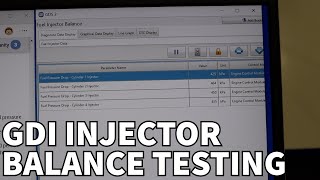
- GDS2 (GM Global Diagnostic System 2): Injector Balance Test — This automated test can be used on Direct Injection (LLT/LFX) engines. The tool commands the high-pressure fuel pump to prime, then pulses each injector individually and measures the corresponding pressure drop in the fuel rail. It provides a PSI or kPa value for each cylinder, allowing a direct comparison of injector performance to identify a weak or clogged injector without removing it from the engine.
Wiring & Ground Locations
- J108 — In the engine wiring harness, approximately 5 cm (2 inches) from the breakout to the fuel injector 3 connector. (2009 5.3L V8 specific, but indicates GM's documentation style).. This is a factory-identified junction point in the wiring harness near the injector. Damage or corrosion at this internal splice could cause an open or high resistance in the circuit for cylinder 3, directly causing a P0203 code.
- G103 — Located at the left rear of the engine compartment on the cowl, above the brake booster.. This is a major ground point that provides the ground for the BCM, IPC, and DLC. While not a direct engine ground, a poor connection here can cause bizarre electrical issues throughout the vehicle, potentially affecting module communication and diagnostics.
- Main Engine Ground — On many GM V6 engines, a primary engine-to-chassis ground is located on a bell housing bolt stud, near the transmission dipstick.. A loose or corroded main engine ground can cause high resistance in the entire engine management system. The ECM may struggle to find a stable ground path, which can affect the injector driver circuits and lead to intermittent or multiple circuit codes.
Real Owner Repair Stories
- ScannerDanner Forum (2011 Buick LaCrosse 3.6L V6) — Misfire on cylinders 3, 4, and 6. Code P1255 was also present.
❌ Tried (didn't work) Cleaned all injectors., Performed resistance test on injectors (they seemed fine)., Used a noid light and confirmed injectors were not being pulsed., Performed a continuity test on the wiring harness from injectors to ECM (wiring was good).
✅ What actually fixed it The ECM was not grounding the injector circuits. Replacing the Engine Control Module (ECM) resolved the issue.
OEM Part Supersession History
12638530→12669384— Standard part update/revision by GM.
Heads up: Part 12638530 is specified for the 2010-2011 LaCrosse with the 3.6L LLT V6. The superseding part 12669384 is listed as a replacement. Always verify by VIN, but these are generally interchangeable for service.
Model Year Variations Within This Range
- 2009-2011: These models typically use the 3.6L LLT V6 engine. This engine uses a higher resistance fuel injector (approx. 11.8-12.6 Ohms) and a Bosch ECM. The specified injector part number is often 12638530.
- 2012-2014: These models use the updated 3.6L LFX V6 engine. The LFX features an integrated exhaust manifold, a composite intake, and uses a Delphi ECM. The fuel injectors are a lower resistance design (approx. 1.9-2.3 Ohms). While wiring chafe issues persist, the specific injectors and ECM are different from the earlier LLT engine.
Helpful Videos

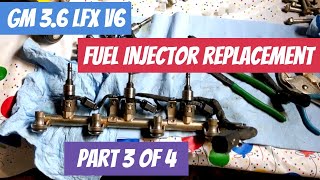
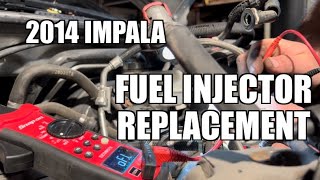

We Have This Part in Stock


The information in this article is provided for general reference and educational purposes only. Vehicle specifications, procedures, and part compatibility can vary by production date, trim level, and region. Always consult your vehicle's factory service manual and verify part numbers before purchasing or performing repairs. Safety-critical components such as airbags, seat belts, and braking systems should be installed by a qualified professional.
- Buick LACROSSE:
- 🧭 Diagnostic Flowchart
- 🎬 Helpful Videos
- 🛍️ Shop This Part
- What's Unique About the 2009-2014 Buick LACROSSE
- Symptoms You May Notice
- Most Likely Causes
- Rare But Worth Checking
- Diagnosis Steps
- Parts You'll Likely Need
- Related Codes That Often Appear With This One
- Technical Service Bulletins (TSBs) & Recalls
- Platform-Specific Known Issues
- Mechanic-Grade Diagnostic Values
- Scan Tool Commands That Help
- Wiring & Ground Locations
- Real Owner Repair Stories
- OEM Part Supersession History
- Model Year Variations Within This Range
- 🎟️ Get 5% Off