

P0203 on 2005 Buick LeSabre 3.8L V6: Injector Circuit Malfunction Causes and Fixes
On a 2005 Buick LeSabre, code P0203 almost always points to a failed fuel injector for cylinder #3. It's an accessible, DIY-friendly repair on the front bank of the engine. Expect to pay $40-$80 for a quality aftermarket injector.
- P0203 indicates an electrical fault with the cylinder 3 fuel injector, not a problem with spark or compression.
- The most common fix is replacing the cylinder 3 fuel injector.
- On the 2005 LeSabre's 3.8L V6, cylinder 3 is in the front, making it relatively easy to access for DIY repair.
- Always test the circuit with a noid light or multimeter before replacing parts to confirm the diagnosis.
- Driving with a flashing Check Engine Light can cause costly damage to your catalytic converter.
What's Unique About the 2005-2005 Buick LeSabre
The 2005 LeSabre uses the famously durable GM 3.8L V6 engine, specifically the 3800 Series II (L36). For code P0203, the key advantage on this platform is accessibility. The engine is mounted transversely (sideways), and cylinder #3 is located on the front bank of cylinders, near the radiator. This makes the injector and its wiring much easier to access for testing and replacement compared to injectors on the rear bank against the firewall.
Symptoms You May Notice
- Check Engine Light is on (may be flashing if misfire is severe)
- Engine runs rough and shakes (misfire)
- Noticeable loss of power and poor acceleration
- Rough idle
- Reduced fuel economy
- Engine may be hard to start or may stall
- Black smoke from the tailpipe or a smell of raw fuel.
- Replacing the spark plug or ignition coil for cylinder 3. While these parts can cause a misfire (code P0303), they will not cause an injector circuit code like P0203. The P0203 code is specifically for an electrical fault in the fuel injector circuit, not a combustion or ignition issue.
Most Likely Causes
- Failed Cylinder 3 Fuel Injector 🔴 High Probability → Shop Fuel Injector After many years and heat cycles, the internal coil windings of the injector can fail, creating an open or short circuit. This is the most common failure point for a P0203 code on this engine.
How to confirm: Measure the resistance of the fuel injector 🎬 Watch: How to test fuel injectors with a multimeter with a multimeter. It should be within the manufacturer's specified range (typically 11-14 ohms for this engine). Compare the reading to an adjacent injector (e.g., cylinder 1 or 5). An out-of-spec or open-circuit reading (OL) confirms a bad injector. Alternatively, swap the #3 injector with the #1 injector, clear the codes, and see if the fault code changes to P0201. If it does, the injector is faulty.
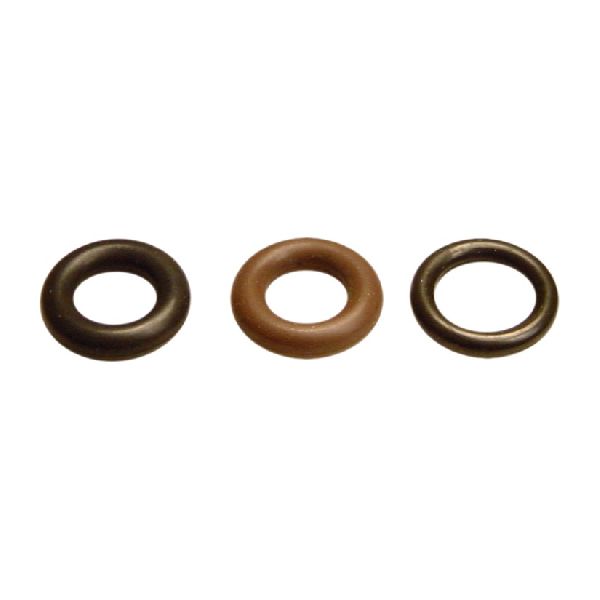
Typical fix: Replace the cylinder 3 fuel injector. It's often recommended to replace the O-rings on adjacent injectors at the same time and apply a light coat of vasoline or clean motor oil to the new O-rings to prevent tearing during installation.
Est. part cost: $40-$150 - Damaged Wiring Harness or Connector 🟡 Medium Probability Engine bay heat and vibration can make the plastic wiring loom and connectors brittle over time, leading to chafed wires or loose pins in the connector. The locking tab on the connector is particularly known for breaking.
How to confirm: Visually inspect the wiring going to the cylinder 3 injector for any signs of melting, chafing, or breaks. Unplug the connector and check for corrosion or bent/loose pins. Use a 'noid light' to test for a pulse signal at the injector connector while the engine is cranking; no flash indicates a wiring or PCM issue. A 'wiggle test' on the harness while the engine is idling can also help identify an intermittent short.
Typical fix: If the connector is damaged, replace it with a new pigtail connector. If the wire is broken, repair the damaged section of the harness using solder and heat-shrink tubing 🎬 See this walkthrough on fixing injector circuit malfunction codes for a durable repair.
Est. part cost: $10-$30
Rare But Worth Checking
- Faulty Powertrain Control Module (PCM): → Shop Engine Control Module (ECM) This is the least likely cause. The internal driver circuit for the injector can fail. This should only be considered after the injector and wiring have been definitively ruled out as the cause. In some rare cases, a sharp tap on the PCM with a dead-blow hammer has been known to temporarily restore function, indicating an internal PCM fault.
Technical Service Bulletins (TSBs) & Recalls
- TSB Bulletin #PIP4924D: A manufacturer service bulletin notes that certain vehicles may have the Service Engine Soon Malfunction Indicator Lamp on accompanied by a misfire. Technicians may find Diagnostic Trouble Codes P0201 through P0206, including P0203, as well as related injector circuit codes like P0261 or P0267.
Diagnosis Steps
- Connect an OBD-II scanner to confirm P0203 is the active code and check for any other codes, like P0303.
- Locate cylinder #3. On the 3.8L V6, it is the middle cylinder on the bank closest to the radiator.
- Visually inspect the wiring harness and connector for the #3 fuel injector. Look for obvious signs of damage, such as melted plastic, chafed wires, or corrosion. Check that the connector is fully seated.
- Disconnect the electrical connector from the #3 injector. Insert a 'noid light' into the connector and have a helper crank the engine. The light should flash steadily, indicating the PCM is sending a signal. If it does not flash, the problem is in the wiring or the PCM. If it flashes, the problem is likely the injector itself.
- If the noid light flashes, turn the ignition off. Use a multimeter set to Ohms (Ω) to measure the resistance across the two pins of the fuel injector. A good injector for this engine should read between 11 and 14 Ohms. If the reading is infinite (Open Loop/OL) or near zero (short), the injector has failed and must be replaced.
- As a final confirmation, you can swap the fuel injector from cylinder #3 with the one from cylinder #1 (the front-most cylinder). Clear the codes and run the engine. If the code returns as P0201 ('Injector Circuit Malfunction - Cylinder 1'), you have confirmed the injector is the faulty component.
- If the noid light did not flash and the wiring appears intact, check for continuity on the two wires from the injector connector back to the PCM connector to rule out a hidden wire break. You will need a wiring diagram for your vehicle to identify the correct pins at the PCM.
- If the injector and wiring are confirmed to be good, the issue may be a rare failure of the PCM's injector driver.
Parts You'll Likely Need
- Fuel Injector
(OEM #217-1601)— This is the most common cause of a P0203 code, due to internal electrical failure of the injector's coil.
Trusted brands: ACDelco, Delphi, Bosch, Standard Motor Products
OEM price range: $90-$150
Aftermarket price range: $40-$80 - Fuel Injector Connector Pigtail
(OEM #PT2135 / 88862217)— The plastic locking tab on the original connector can become brittle and break, or the terminals can corrode, causing a poor connection. This part allows you to splice in a new connector.
Trusted brands: ACDelco, Dorman, United Automotive
OEM price range: $25-$35
Aftermarket price range: $10-$20
Related Codes That Often Appear With This One
- P0303 — P0303 means 'Cylinder 3 Misfire Detected.' A P0203 will almost always cause a P0303 because the injector circuit fault prevents fuel from being delivered, leading to a misfire.
- P0300 — P0300 means 'Random/Multiple Cylinder Misfire.' If a wiring issue is intermittent or affecting a shared power or ground wire for the injectors, it can sometimes trigger a general misfire code along with the specific P0203.
Platform-Specific Known Issues
- Heat-Soak Related Failure: Some owners on forums report that the P0203 and accompanying P0303 misfire only appear after the engine has warmed up, run for a while, and then been shut off for a short period (heat soak). This suggests the injector's internal coil is failing only when it reaches a high temperature. A cold resistance test might read as normal in this case. One owner of a 2002 Buick Regal with the same 3.8L engine experienced this exact scenario, which was resolved by replacing the #3 injector.
Mechanic-Grade Diagnostic Values
- Fuel Injector Coil Resistance — expected: 12.0 Ohms (high-impedance). Some sources state a range of 11.4-13.4 Ohms.. Failure: A reading of infinite (OL) indicates an open circuit, while a reading near zero indicates a short. Any reading significantly outside the 11-14 Ohm range suggests a faulty injector.
- Injector Pulse Width (Live Scan Data) — expected: 1-5 milliseconds (ms) at warm idle, increasing with engine load.. Failure: A missing or erratic pulse width reading for cylinder 3 confirms a circuit or control issue.
- Injector Balance Test (Tech 2 Scanner) — expected: The fuel pressure drop for each injector should be within 20 kPa (3 psi) of the average pressure drop of all six cylinders. 🎬 Watch: Professional fuel injector balance and coil testing guide. Failure: An injector with a pressure drop significantly different from the others is either clogged (low drop) or leaking (high drop).
- Injector Control Circuit Voltage (at PCM) — expected: A clean 12V square wave pattern on an oscilloscope when the engine is running.. Failure: Absence of voltage, a steady 12V, or a steady ground signal indicates a failed PCM injector driver.
- Injector Harness Wire Resistance — expected: Less than 1.0 Ohm from the PCM connector pin to the injector connector pin.. Failure: Resistance higher than 1.0 Ohm (or infinite/OL) indicates a break or corrosion in the wire.
Scan Tool Commands That Help
- GM Tech 2 / Professional Bidirectional Scanner: Injector Balance Test — To functionally test and compare the flow rate of all injectors. The PCM pulses each injector while monitoring the drop in fuel rail pressure. This can identify a mechanically clogged or failing injector that might pass a simple resistance test.
- GM Tech 2 / Professional Bidirectional Scanner: Cylinder Power Balance / Injector Kill — To confirm which cylinder is misfiring while the engine is running. By disabling the cylinder 3 injector, a technician can listen for a change in engine RPM. If there is no change when the injector is disabled, it confirms that cylinder was not contributing power.
- Professional Bidirectional Scanner: Injector Activation Test — With the engine off, this command sends a signal to the injector to make it 'click'. Hearing the click confirms the injector's internal solenoid is mechanically capable of moving and that the wiring to it is intact. No click points to a wiring or injector failure.
Wiring & Ground Locations
- Cylinder 3 Injector Control Wire — This is a Pink/Black wire at Pin RA1 of the RED PCM connector. The PCM itself is located inside the air cleaner housing.. This is the specific wire that the PCM uses to ground and fire the #3 injector. Testing for continuity and signal on this wire is essential for differentiating a wiring problem from a PCM problem.
- Injector Power Feed — All injectors on Bank 1 (cylinders 1, 3, 5) are typically fed power from a shared Pink wire that is hot in RUN and START. This power comes from an underhood fuse.. While a failure here would likely trigger codes for all three cylinders on the bank (P0201, P0203, P0205), an intermittent fault in the harness near the #3 injector breakout could uniquely affect it.
- Main Engine Ground (G101/Bell Housing) — A primary ground connection for the engine block is located on a bell housing bolt near the starter. Another source identifies G101 on the lower front of the engine block as a ground for the PCM.. A poor main engine ground can cause a voltage differential between the engine block and the chassis, leading to erratic behavior in sensors and actuators, including the injectors and the PCM that controls them.
- Injector Driver PCM Ground — Specific Tan/White wires that ground the PCM's injector driver circuits directly to the engine block.. These are dedicated grounds for the injector control circuits. A poor connection on these specific ground wires could cause issues isolated to the injector drivers.
Real Owner Repair Stories
- AutomotiveForums.com user 'claimed4all' (2002 Buick Regal GS 3.8L Supercharged (same engine family)) — P0203 and P0303 codes, severe misfire, and flashing check engine light. The problem ONLY occurred after the engine was warm, shut off for a short time (e.g., one hour), and then restarted (heat soak).
❌ Tried (didn't work) The user's initial post was seeking advice before trying fixes.
✅ What actually fixed it The forum consensus, based on the classic heat-soak symptoms, was a failing #3 fuel injector whose internal coil windings were opening up when hot. The user was advised to replace the injector, which is the standard fix for this specific symptom pattern. - AliExpress Product Description / Case Study (2002 Buick Regal GS with 124,000 miles) — Initial P0203 code. After replacing only the #3 injector, the engine developed hesitation under light throttle two weeks later.
❌ Tried (didn't work) Replacing only the single failed injector.
✅ What actually fixed it The root cause of the new hesitation was a fuel imbalance. The five old, degraded injectors were delivering 12-15% less fuel than the one new injector, causing high fuel trims (+18% on Bank 1). This story illustrates the common professional recommendation to replace fuel injectors as a complete set to ensure balanced fuel delivery.
OEM Part Supersession History
88862217→PT2135— Standard GM part number consolidation.
Heads up: One source also lists OEM Part Number 88988814 as an alternative for the PT2135 pigtail. All refer to the same 2-pin connector.
Diagnostic Flowchart
Real Owner Stories
Aggregated from forums and TSBs cited above. Mileages and costs reflect what owners reported in those sources.
2002 Buick Regal GS 3.8L Supercharged
Symptoms: P0203 and P0303 codes only appeared after the car was driven, sat for an hour, and was restarted, indicating a heat-soak related injector failure.
What fixed it: Replaced the #3 fuel injector.
Source hint: AutomotiveForums.com - 'P0203 & P0303 when engine is warmed up'
2003 Buick Century 3.8L
Symptoms: Experienced misfires and multiple simultaneous injector codes (P0203, P0204, and P0205).
What fixed it: Traced the issue to a fault in the wiring harness rather than individual injectors.
Source hint: 2CarPros.com - 'misfires and codes P0203,p0204 and P0205'
Related OBD-II Codes
Frequently Asked Questions
Where is cylinder 3 located on my 2005 Buick LeSabre 3.8L V6?
What should the resistance of a good fuel injector be on the 3800 Series II engine?
My P0203 code only appears after the engine warms up and sits for a bit. Is this normal?
How can I confirm if the P0203 code is caused by a bad injector or bad wiring on my LeSabre?
Are the wiring connectors prone to failing on the 2005 LeSabre?
Helpful Videos
We Have This Part in Stock


The information in this article is provided for general reference and educational purposes only. Vehicle specifications, procedures, and part compatibility can vary by production date, trim level, and region. Always consult your vehicle's factory service manual and verify part numbers before purchasing or performing repairs. Safety-critical components such as airbags, seat belts, and braking systems should be installed by a qualified professional.
- Buick LeSabre:
- 🧭 Diagnostic Flowchart
- 🎬 Helpful Videos
- 🛍️ Shop This Part
- What's Unique About the 2005-2005 Buick LeSabre
- Symptoms You May Notice
- Most Likely Causes
- Rare But Worth Checking
- Technical Service Bulletins (TSBs) & Recalls
- Diagnosis Steps
- Parts You'll Likely Need
- Related Codes That Often Appear With This One
- Platform-Specific Known Issues
- Mechanic-Grade Diagnostic Values
- Scan Tool Commands That Help
- Wiring & Ground Locations
- Real Owner Repair Stories
- OEM Part Supersession History
- Real Owner Stories
- 2002 Buick Regal GS 3.8L Supercharged
- 2003 Buick Century 3.8L
- Related OBD-II Codes
- Frequently Asked Questions
- 🎟️ Get 5% Off