

P0203 on 2012-2018 Fiat Freemont: Injector Circuit Malfunction Causes and Fixes
This code indicates an electrical fault in the cylinder 3 fuel injector circuit. The most common cause is a faulty fuel injector, followed by wiring issues. Expect to pay $50-$150 for a new injector and plan for 1-2 hours of DIY labor for the 2.4L engine, or 3-5 hours for the 3.6L V6 due to intake manifold removal.
- P0203 on a Fiat Freemont points specifically to an electrical problem in the cylinder 3 fuel injector circuit.
- The most likely culprit is the fuel injector itself, which has failed internally. This can be confirmed by swapping it with another cylinder's injector.
- The Fiat Freemont is a rebadged Dodge Journey; repairs and parts are identical for shared engines (2.4L I4, 3.6L V6).
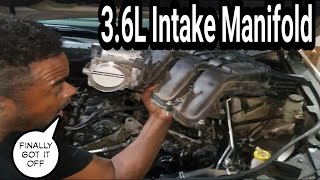
- On the 3.6L V6 engine, replacing the cylinder 3 injector is a significantly more involved job, as it requires removing the upper intake manifold.
What's Unique About the 2012-2018 Fiat Freemont
The Fiat Freemont is a rebadged Dodge Journey, and they share the same engines and electronic systems, particularly the 2.4L 'World' I4 and the 3.6L 'Pentastar' V6 in some markets. Therefore, diagnostic information, common problems, and repair procedures for the Dodge Journey with the same engine are directly applicable. A significant vehicle-specific issue for the 3.6L V6 is that accessing the cylinder 3 fuel injector (part of the front bank) requires removing the entire upper intake manifold, making the repair more complex and time-consuming.
Symptoms You May Notice
- Check Engine Light is on.
- Engine misfiring, which may feel like a shudder or stumble.
- Rough or unstable idle.
- Hesitation or lack of power during acceleration.
- Reduced fuel economy.
- Difficulty starting the engine or stalling.
- Fuel smell from the engine bay or exhaust.
- Replacing the spark plug or ignition coil for cylinder 3. While these parts can cause a misfire (P0303), the P0203 code specifically points to an electrical fault 🎬 Watch: Understanding the causes and fixes for the P0203 code. in the injector circuit, not the ignition system. It is common for P0303 to appear alongside P0203, but P0203 indicates the root cause is fuel-related.
Most Likely Causes
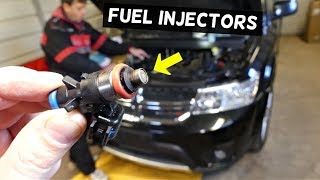
- Faulty Cylinder 3 Fuel Injector 🔴 High Probability → Shop Fuel Injector Fuel injectors are wear-and-tear items that can fail electrically (internal coil) or mechanically (clogging) over time. The internal coil winding can develop an open or short, causing this specific electrical code.
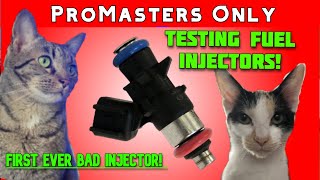
How to confirm: Swap the cylinder 3 injector with an injector from another cylinder (e.g., cylinder 1). Clear the codes and drive the vehicle. If the code changes to P0201, the injector is confirmed to be faulty. Alternatively, use a multimeter to check the injector's resistance; it should be within the manufacturer's specified range (typically 11-16 ohms for these engines). An open circuit (infinite resistance) or a reading far outside the spec 🎬 See how to test Pentastar 3.6 fuel injectors with a multimeter. indicates a bad injector.
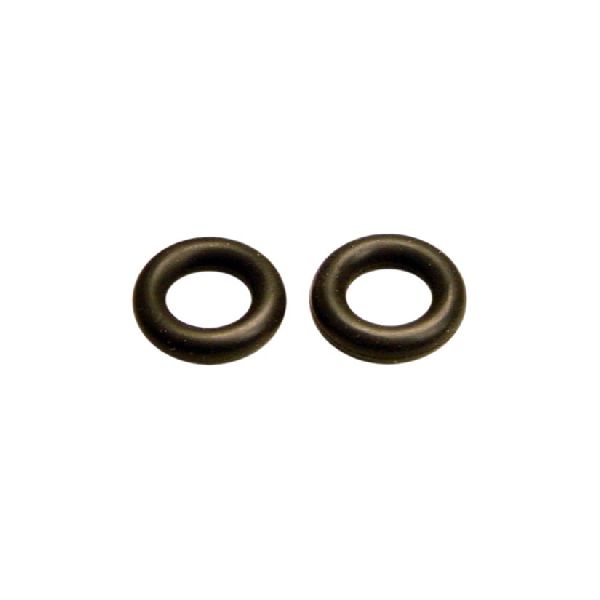
Typical fix: Replace the faulty fuel injector. It is highly recommended to replace all O-rings and seals for the injector being serviced. On the 3.6L V6, it is also best practice to replace the upper intake manifold gaskets since it must be removed for access.
Est. part cost: $50-$150 - Wiring or Connector Issue 🟡 Medium Probability The engine bay is a high-heat environment, which can make wiring insulation brittle over time. Vibrations can also cause wires to chafe or connectors to become loose. The injector harness connector itself can fail, or wires can break near the connector due to repeated heat cycles and vibration. A known recall for some Journey models involved the engine wiring harness rubbing on the transaxle mount, which could cause a short.
How to confirm: Visually inspect the wiring harness and connector for cylinder 3's injector. Look for any signs of damage, burning, corrosion, or loose pins. Use a 'noid light' to plug into the injector connector; it should flash when the engine is cranked, indicating the PCM is sending a signal. If the noid light does not flash, the problem is in the wiring or the PCM. Wiggle the harness while the engine is running to see if it induces a misfire, indicating an intermittent connection.
Typical fix: Repair the damaged section of the wiring harness or replace the connector pigtail. Clean any corrosion from the connector terminals and apply dielectric grease to prevent future moisture intrusion.
Est. part cost: $10-$30
Rare But Worth Checking
- Powertrain Control Module (PCM) Failure: → Shop Engine Control Module (ECM) This is the least likely cause. The PCM's internal driver for the injector circuit can fail, but all other possibilities should be exhausted before condemning the PCM. This is an expensive part and requires programming to the vehicle. A PCM failure might also trigger codes for multiple injectors on the same bank, not just one.
Diagnosis Steps
- Confirm the presence of the P0203 code using an OBD-II scanner. Note any other codes, especially P0303.
- Locate cylinder #3. For the 2.4L I4, it's the third cylinder from the front (belt side). For the 3.6L V6, it's the middle cylinder on the front bank (radiator side).
- Visually inspect the fuel injector at cylinder 3 and its electrical connector for any obvious damage, corrosion, or loose connections.
- Check the wiring harness leading to the injector for signs of chafing, melting, or breaks. A recall (08V-247) was issued for some model years due to the harness rubbing on the transaxle mount.
- Perform an injector swap. Swap the cylinder 3 injector with the cylinder 1 injector. Clear the codes, run the engine, and rescan. If the code changes to P0201, the injector is bad. If P0203 returns, the problem is in the wiring or PCM.
- If a noid light is available, disconnect the injector and plug the light into the connector. Crank the engine and verify if the light flashes, which confirms the control circuit from the PCM is working. If it flashes, the injector is the likely culprit. If it does not flash, the issue is upstream in the wiring or PCM.
- If the injector is suspected, measure its resistance with a multimeter. A good injector for the 3.6L engine should read around 12 Ohms; the 2.4L should be between 11-18 Ohms. An open circuit (OL) or very high/low resistance confirms a failed injector coil.
- If the injector swap points to a wiring issue, perform a continuity test on both wires from the injector connector back to the PCM connector. Check for opens (no continuity) and shorts (continuity to ground or to the other wire).
Parts You'll Likely Need
- Fuel Injector
(OEM #05184085AD (for 3.6L V6))— This is the most common failure point for a P0203 code, where the internal coil of the injector fails.
Trusted brands: Mopar, Bosch, Standard Motor Products
OEM price range: $100-$180
Aftermarket price range: $50-$120 - Fuel Injector Connector Pigtail — If the connector is brittle, cracked, or has corroded terminals, it must be replaced to ensure a solid electrical connection to the new injector.
Trusted brands: Mopar, Dorman
OEM price range: $20-$40
Aftermarket price range: $10-$25 - Upper Intake Manifold Gasket Set (3.6L V6 only) — Required when replacing the fuel injectors on the 3.6L Pentastar V6, as the intake manifold must be removed to access the fuel rail and injectors.
Trusted brands: Fel-Pro, Mopar, Mahle
OEM price range: $30-$50
Aftermarket price range: $15-$30
Related Codes That Often Appear With This One
- P0303 — This code means 'Cylinder 3 Misfire Detected'. Since the P0203 code indicates the injector for cylinder 3 isn't working correctly, that cylinder won't get the right amount of fuel, leading to a misfire.
- P0300 — This code for 'Random/Multiple Cylinder Misfire' can appear if the injector issue is intermittent or if the resulting imbalance from one dead cylinder causes minor misfires on others.
Technical Service Bulletins (TSBs) & Recalls
- TSB 18-069-15 REV A: Involves a software flash for the PCM on 3.6L models for various powertrain diagnostic and system improvements. While not directly for P0203, keeping the PCM software updated is a general best practice recommended by the manufacturer.
- NHTSA Campaign 18V332000: A recall related to a PCM software flash to fix a cruise control issue. This highlights that PCM software updates are common for this platform.
Platform-Specific Known Issues
- Intake Manifold Removal on 3.6L V6: → Shop Engine Intake Manifold On the 3.6L Pentastar V6 engine, the fuel injectors for cylinders 1, 3, and 5 are located under the upper intake manifold. To replace the cylinder 3 injector, the entire manifold must be removed. 🎬 Watch: Step-by-step fuel injector replacement for the 3.6 V6 engine. This adds significant time and complexity to the job compared to the 2.4L engine, where the injectors are easily accessible. This procedure is detailed in multiple DIY videos for the Dodge Journey.
- TIPM and Fuel Pump Relay Issues: While less common for a single injector code, older Chrysler/Dodge platforms are known for issues with the Totally Integrated Power Module (TIPM), which houses the fuel pump relay. A faulty relay (often internal to the TIPM) can cause fuel delivery problems. This is more likely to cause issues with all injectors (e.g., P0200) or a no-start condition, but is worth noting for broader platform context.
Mechanic-Grade Diagnostic Values
- Fuel Injector Coil Resistance (3.6L Pentastar V6) — expected: 12.0 - 12.5 Ohms. Failure: A reading of OL (Open Loop), near-zero resistance (short), or a value significantly different from the other injectors.
- Fuel Injector Coil Resistance (2.4L World I4) — expected: 11 - 18 Ohms. Failure: A reading outside this range, or one that is not consistent with the other three injectors.
- Injector Power Supply Wire Voltage (Key On, Engine Off) — expected: ~12.6V (Battery Voltage). Failure: Low or no voltage indicates a problem in the power supply circuit from the ASD relay.
- Injector Pulse Width at Idle (Scan Tool Live Data) — expected: ~1-3 ms. Failure: A value of 0 ms for cylinder 3, or a value significantly different from other cylinders, indicates a control problem.
- PCM Injector Driver Circuit (3.6L V6) — expected: The PCM grounds the Brown/Light Blue wire at pin 10 of the C2 connector to fire the injector.. Failure: A constant ground or no ground signal when checked with a noid light or oscilloscope points to a PCM or wiring issue.
Scan Tool Commands That Help
- wiTECH (or compatible advanced scanner): Injector Activation Test / Actuator Test — After confirming power to the injector, this command allows you to manually fire the #3 injector with the engine off. You should hear a distinct click. If it clicks, the PCM driver and wiring are likely good, pointing to a clogged or mechanically failed injector. If it doesn't click, it confirms an electrical fault in the circuit or the injector coil itself.
Wiring & Ground Locations
- Cylinder 3 Injector Connector (3.6L V6) — Middle connector on the front fuel rail, under the upper intake manifold.. This is the primary connection point to test. Pin 1 (Brown/White) is the power feed from the ASD relay. Pin 2 (Brown/Light Blue) is the control (ground) wire from the PCM.
- PCM Connector C2, Pin 10 (3.6L V6) — This is the specific pin on the Powertrain Control Module that sends the ground signal to the cylinder 3 injector.. If a noid light test fails, checking for continuity between this pin and Pin 2 of the injector connector is the definitive test for the control wire.
- Engine Wiring Harness Chafe Point — Near the transaxle mount.. A recall (08V-247 / H21) was issued for potential chafing of the engine wiring harness in this area, which could lead to a short circuit and various electrical faults, including injector circuit codes.
Real Owner Repair Stories
- YouTube Channel 'Electrical Car Repair LIVE' (Dodge Journey 3.6L Pentastar V6 (year not specified, but within the 2011-2019 range)) — Check engine light on, car misfiring and shaking, feeling unstable.
❌ Tried (didn't work) The video focuses directly on diagnosis and replacement.
✅ What actually fixed it The video diagnosed a P0201 code (Cylinder 1) but the procedure is identical for P0203. The problem was fixed by replacing the faulty fuel injector. After replacement and clearing the codes, the engine ran smoothly with no check engine light. - YouTube Channel 'YOUCANIC' (2016 Dodge Journey 3.6L Pentastar V6) — Check engine light with codes for P0201 and P0204 (Injector Circuit Open for Cylinders 1 and 4).
✅ What actually fixed it The technician replaced all six fuel injectors as a preventative measure since two were confirmed bad and the intake manifold was already removed. After replacement, live data showed all injectors actuating correctly and the misfires were gone.
OEM Part Supersession History
5184085AC / RL184085AC→05184085AD— Standard part revision and update by the manufacturer.
Heads up: The parts are interchangeable. 05184085AD is the latest revision for this application.
Diagnostic Flowchart
Used vs. New Parts: Buying Guide for This Vehicle
When a used part is the smart pick: A used fuel injector from a reputable salvage yard can be a cost-effective option, especially if you can verify the donor vehicle's mileage. Since this is a common part across many Chrysler/Dodge/Jeep 3.6L engines, availability is high. It is not recommended to buy used wiring connectors, as they are often brittle.
Donor-vehicle mileage cap: roughly under 80000 miles for the part to have meaningful remaining life.
What to inspect on the donor part:
- Check for low mileage on the donor vehicle if possible.
- Inspect the injector tip for heavy carbon buildup.
- Ensure the plastic connector body is not cracked or brittle.
- Verify the O-rings are present, though they should always be replaced with new ones before installation.
- Ask the seller if they can test the resistance for you; it should be around 12 ohms for the 3.6L.
OEM-only on this vehicle (don't cheap out):
- Powertrain Control Module (PCM) - Used PCMs can be difficult or impossible to reprogram to a new vehicle's VIN and security key, making a new or professionally refurbished, VIN-matched unit the only reliable option.
Aftermarket brands forum-validated for this vehicle:
- Bosch (often the OEM supplier)
- Standard Motor Products (SMP)
- Mopar (OEM)
Brands owners have reported issues with on this vehicle:
- Unnamed, no-brand injectors from online marketplaces should be avoided, as their quality control, flow rates, and coil resistance can be inconsistent, potentially causing performance issues or recurring codes.
Real Owner Stories
Aggregated from forums and TSBs cited above. Mileages and costs reflect what owners reported in those sources.
2014 Dodge Journey Crossroad 3.6L V6 — 160000 miles
Symptoms: suddenly began running rough, engine lights came on
What fixed it: Replaced all fuel injectors with parts purchased from Amazon.
Source hint: Reddit r/MechanicAdvice
2017 3.6L Journey
Symptoms: intermittent P0203 and P0303 codes
What fixed it: After replacing the spark plug and coil didn't work, the suggested fix was replacing the cylinder 3 fuel injector. Another user confirmed that swapping the injector to another cylinder is the definitive test to confirm a bad injector.
Source hint: DodgeJourneyForum.com
Related OBD-II Codes
Frequently Asked Questions
Is it difficult to replace the cylinder 3 fuel injector on my 3.6L V6 Freemont?
Where is cylinder #3 located on my Fiat Freemont's engine?
Is there a recall for a wiring issue that could cause code P0203?
What is the correct resistance for a fuel injector on my Freemont?
Could a bad TIPM cause just the P0203 code?
Will a PCM software update fix my P0203 code?
Helpful Videos

We Have This Part in Stock


The information in this article is provided for general reference and educational purposes only. Vehicle specifications, procedures, and part compatibility can vary by production date, trim level, and region. Always consult your vehicle's factory service manual and verify part numbers before purchasing or performing repairs. Safety-critical components such as airbags, seat belts, and braking systems should be installed by a qualified professional.
- Fiat Freemont:
- 🧭 Diagnostic Flowchart
- 🎬 Helpful Videos
- 🛍️ Shop This Part
- What's Unique About the 2012-2018 Fiat Freemont
- Symptoms You May Notice
- Most Likely Causes
- Rare But Worth Checking
- Diagnosis Steps
- Parts You'll Likely Need
- Related Codes That Often Appear With This One
- Technical Service Bulletins (TSBs) & Recalls
- Platform-Specific Known Issues
- Mechanic-Grade Diagnostic Values
- Scan Tool Commands That Help
- Wiring & Ground Locations
- Real Owner Repair Stories
- OEM Part Supersession History
- Used vs. New Parts: Buying Guide for This Vehicle
- Real Owner Stories
- 2014 Dodge Journey Crossroad 3.6L V6 — 160000 miles
- 2017 3.6L Journey
- Related OBD-II Codes
- Frequently Asked Questions
- 🎟️ Get 5% Off